Home Blog Page 35

Foreign Mercenaries Will Worsen the Boko Haram Insurgency

0


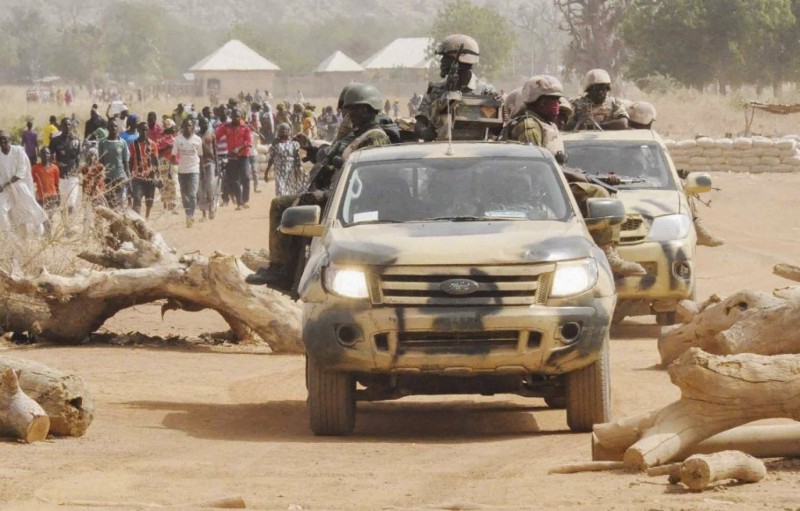
Nigerian Soldiers in Chibok

The government declined to officially comment on the recruitment of foreign troops from South Africa and the former Soviet Union.


By Andrew Noakes | The AfricaPaper

Seven years ago, a group of US private military contractors massacred a crowd of unarmed civilians at a busy traffic junction in Baghdad. The contractors, who were employed by the notorious private security firm Blackwater, killed 17 people using heavy machine guns and grenades.

Together with the torture scandal at Abu Ghraib in 2003, the incident became one of the most ignominious episodes in the Iraq War. It solidified anger towards the US and added fuel to the fire of Iraq’s insurgency. That year, 2007, ended up being the bloodiest for US forces in the entire war, with nearly 1,000 American soldiers killed.

When photographs of Western-looking private military contractors atop armored vehicles in north-east Nigeria appeared on Twitter a couple of weeks ago, they sent shivers down the spines of analysts, for whom the memory of the Blackwater atrocities was still fresh.

The photographs were followed by reports of a South African military advisor being killed by Nigerian troops in a friendly-fire incident, and then by explosive reports in the New York Times and Voice of America that Nigeria has hired hundreds of foreign mercenaries to clear Boko Haram out of its northeastern strongholds.
The reports include claims that mercenaries from South Africa, Ukraine and Georgia are carrying out night-time ground attacks against Boko Haram and conducting airborne bombing runs against the insurgents.

The Nigerian government has denied the reports, claiming the mercenaries are simply advisors who are training soldiers to use and maintain newly acquired military equipment.
It’s unclear how much the reports are exaggerated. But Boko Haram, an Islamist insurgency now in its sixth year, had the Nigerian army on the run up until February. The sudden reversal in fortunes in recent weeks, with the Nigerian government pushing Boko Haram out of almost all its former territory in Borno, Adamawa and Yobe states, seems remarkable.

Saviours of Borno?

It’s easy to think foreign mercenaries might be the quick-fix solution Nigeria needs to stop Boko Haram. Last year, as the insurgents rampaged through the countryside capturing town after town throughout the northeastern region, the Nigerian army seemed overwhelmed.

Hampered by badly maintained equipment, insufficient resources, and inadequate training, soldiers often had little choice but to flee the communities they were tasked with protecting. Mercenaries offer an obvious solution – if the Nigerian army can’t defeat Boko Haram, hire one that can.

The arrival of Western military advisors in northeast Nigeria may have set Boko Haram back militarily, but in the long term, it could be a political gift for them
And Borno state badly needs a quick solution to Boko Haram, as it has been the worst hit by the group’s violence. At the end of last year, the insurgents had pushed the government out of as much as 70 per cent of the state’s territory. Those left behind in the areas controlled by Boko Haram were subjected to forced conscription, summary executions and rape.

The population of Borno’s capital city, Maiduguri, is swollen with people who have fled Boko Haram’s terror. Its residents, new and old, have been living under the threat of an imminent Boko Haram takeover for months. Anecdotal evidence suggests some are relieved to see foreign advisors intervening to protect them.
One former resident of the city told me last week that his friends who remain there are ‘happy to see them [foreign advisors]’, while a local human rights activist told me ‘they are being celebrated as saviours’. But the true picture is likely to be more mixed.

Fueling Insurgency

When US troops first rolled into Baghdad in 2003, many Iraqis were seen celebrating the end of the regime, but the images obscured a more complex reality. That lesson should be instructive for Nigeria.

Boko Haram was not always a militant group. It was originally a grassroots movement of Salafi Muslims based in Maiduguri. The group first became violent after security forces attacked its members who were attending a funeral in the city in 2009. After a series of skirmishes, its founding leader, Mohammed Yusuf, was summarily executed. Boko Haram thereafter dedicated itself to armed insurrection.

Before the violence, Boko Haram operated freely out of a mosque in Maiduguri, where Yusuf would preach. In his sermons, he blamed colonialism and the West for the moral corruption of Islam and Nigeria, saying in one sermon that because of ‘the Europeans destroying Islam and its values… the Europeans created the situation in which we [Nigerian Muslims] ï¬nd ourselves today.’

He argued contemptuously that when the colonial powers withdrew from Africa, they ‘insisted on the secular nature of the contemporary state and established democracy and human rights in all sorts of different places. Islamic flags and symbols were replaced with national flags and symbols. The sharia, Qur’an and Sunna were replaced with secular law.’

Yusuf’s anti-Western sermons were popular with locals in Maiduguri, and the group’s mosque was often well attended. Before 2009, Boko Haram is believed to have had thousands of members who identified with its political and religious messages.

Though some may now welcome the foreign military advisors to Maiduguri, there is clearly also a constituency there for Boko Haram’s stridently anti-Western sentiments.
Indeed, anti-Western insurgencies can be counted on to become a lot more popular once Western boots are on the ground. The arrival of Western military advisors in northeast Nigeria may have set Boko Haram back militarily, forcing them to return to their hideouts in the countryside and wage the guerrilla war they are more used to fighting, but in the long term, it could be a political gift for them.

In recent months, the insurgency has struggled to attract voluntary recruits and stay on the right side of public opinion, due to its increasingly brutal tactics.
The arrival of Western soldiers on Muslim lands may well reverse that trend, bringing Boko Haram more support, swelling its ranks of fighters and reinvigorating the insurgency for a war not just against the Nigerian state but, if the insurgents can set the narrative the right way, against the old colonial enemies.

The Right Side of Public Opinion

To avoid fueling the fire of insurgency even more, the foreign military advisors would do well to stick to the mission the Nigerian government claims to have given them – to train, advise and maintain equipment. They should stay as far away from combat zones as possible.

Public opinion is only likely to turn sharply against them once events require assigning blame. The moment Western soldiers start killing Muslim civilians, whether accidentally or deliberately, the slide will begin. Human rights abuses and atrocities in particular are a lightning rod for hostile public opinion.

Nigeria could badly do without a foreign mercenary scandal like Blackwater. Though foreign advisors may have a positive role to play away from the battlefield, ultimately only the Nigerian government and armed forces can win the war against Boko Haram.

If foreign mercenaries get directly involved in this fight, now or in the future, the short-term gains on the ground could soon be eclipsed by the dire long-term consequences.

The AfricaPaper: Andrew Noakes is a counter-terrorism expert, human rights activist, and Director of the Nigeria Security Network.
Local and National Groups Search for Missing Boy

0


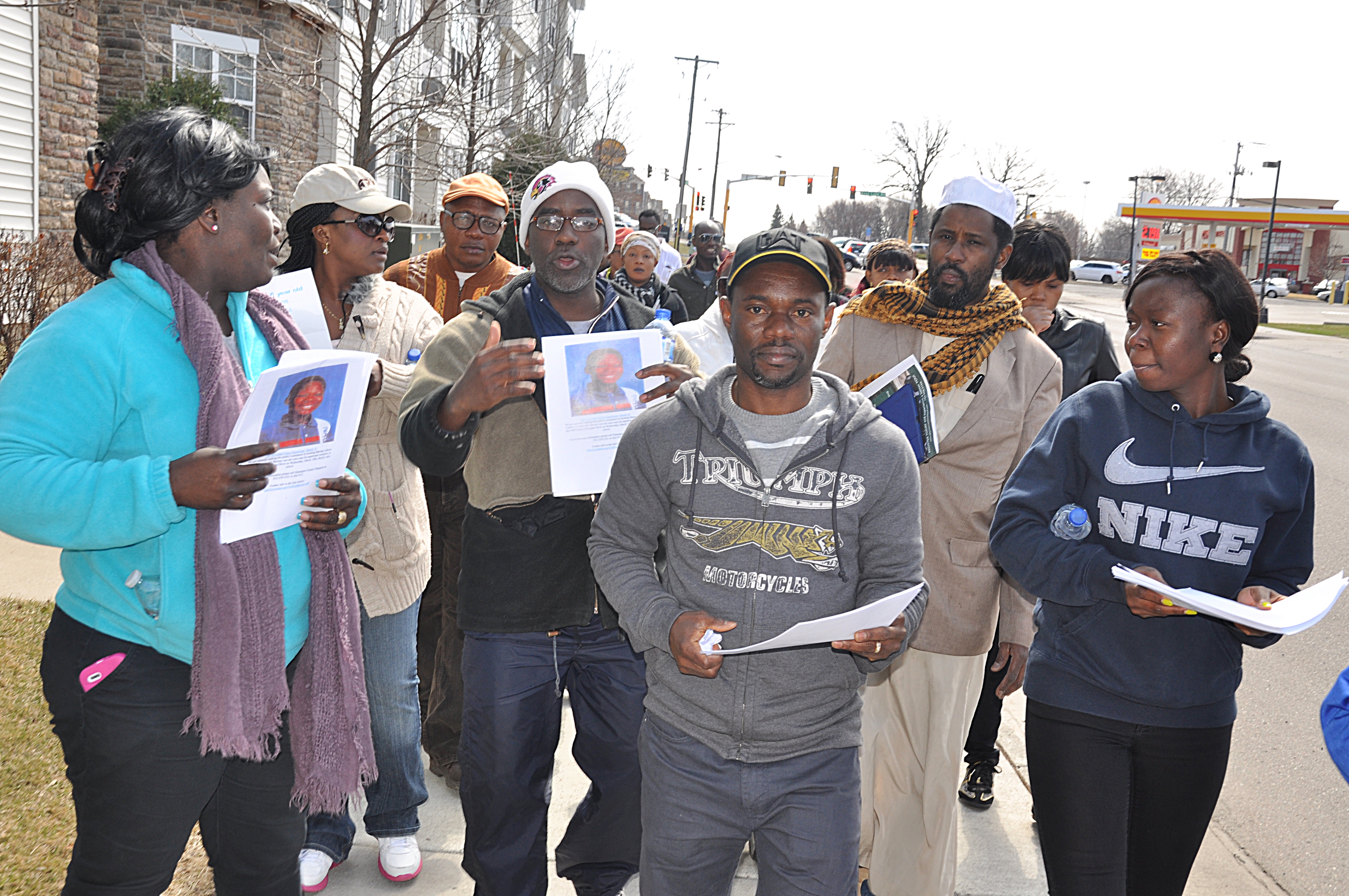
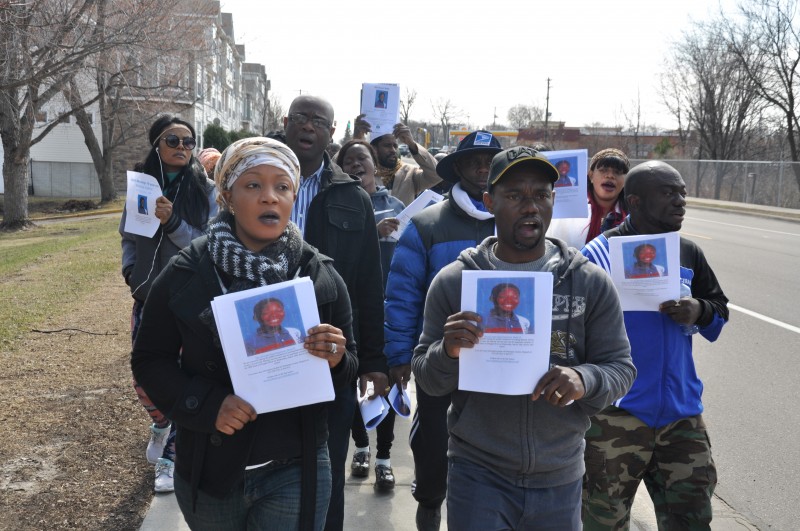
Pierre and Yamah Collins lead search for missing son. All photos (c) The AfricaPaper

By Issa A. Mansaray | The AfricaPaper

Crystal, Minn – “I’m the last to sleep and the first to wake up,” Pierre Collins, 33, father of the missing 10 year-old Barway Edwin Collins, told The AfricaPaper about his worries and his sleepless nights since his son disappeared on a Wednesday afternoon on March 18. Collins and African community leaders said their search will continue till they bring Barway back home.

Volunteers help search for missing boy. . All photos (c) The
Volunteers help search for missing boy. All photos (c) The AfricaPaper, 2015

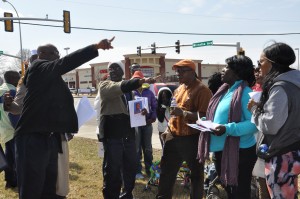
On Saturday morning at about 11:30 a.m, more than 80 people gathered at the Cedarwood Apartments, 5450 Douglas Drive, N., where the family of the missing boy resides, to start the search along Bass Lake road and Winnetka. Lead by Pierre Collins and his wife, Yamah Collins, the volunteers combed the bushes and ponds around Sumter Ave. N and 58th Ave. N.

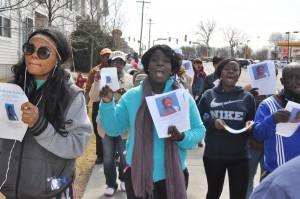
They also placed posters on walls and poles along Bass Lake Road, stopping vehicles to distribute flyers, and then went to local stores in Crystal. As they walk along the streets, knocking doors, and apartments, they chant the search slogan “Bring Barway back today!”

Barway Collins, emigrated to Minnesota in 2011 joining his father from the West African nation of Liberia. He was last seen on a security camera footage released by the Crysta police. He was wearing a black jacket, white T-shirt, long black pants, and red shoes. Barway was carrying a red backpack that day.

Victoria Peabody (center) holding a Barway poster, Photo- Issa Mansaray, The AfricaPaper

“Today’s search is to reach out to people, work along the streets, collecting names and phone numbers of volunteers for the next search,” said Alhaji Mohamed Alpha Bah, representative from the Minnesota Task Force Against Ebola. “Going from block to block and reinforcing the search for Barway.” Bah added that this is what all the volunteers want to achieve before the end of the day.

At about 3:30pm, Shelia Smith from Missing Advocates lead another search group along the North Mississippi Regional Park. About 150 volunteers were separated into groups of tens, with brief instructions on how to conduct a proper search and ensure that potential evidence is not compromised. Friends and families also joined the search at the Island of Peace Park along the Mississippi River bank.

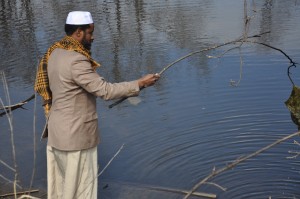
Alhaji Mohamed Bah, search the pond.
Alhaji Mohamed Bah, searches a pond.

The aim is to “solidify and coordinate the search for Barway instead of having splinter groups,” said Alhaji Bah.

Shelia Smith, with 14 years of experience in missing individuals, including children was joined by David Singleton, Commissioner of Public Safety. The search coordinated by the Minnesota Community Policing Services for Missing Persons was lead by Singleton. The search was considered as a “search and rescue,” almost three weeks after Barway Edwin Collins disappeared.

Why Nigeria is turning to South African Mercenaries to help fight Boko Haram

0


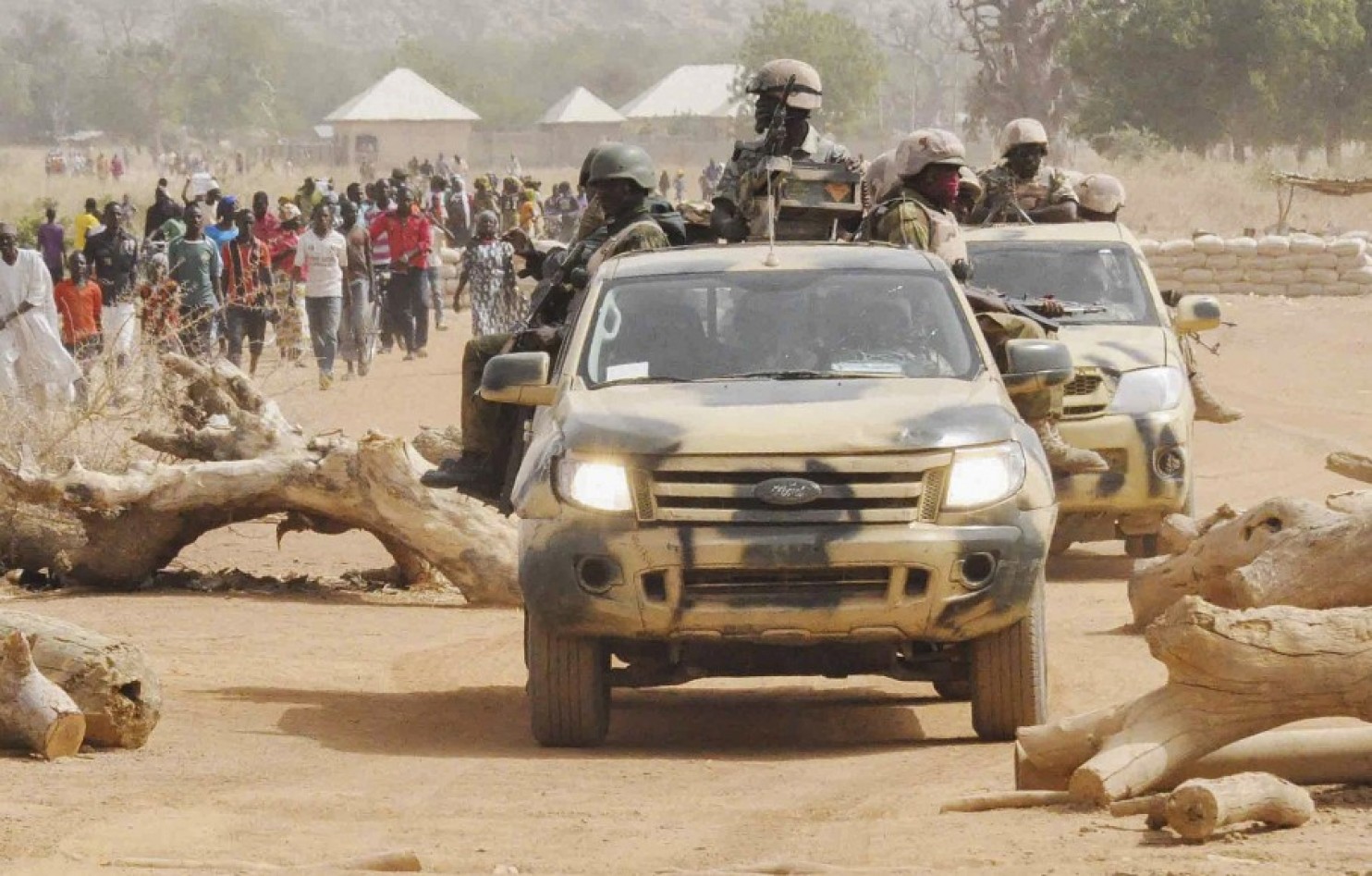
The Nigerian army patrols in Chibok, Borno State. There are reports South African mercenaries have joined them. Henry Ikechukwu/EPA


Nigeria has drafted “hundreds of mercenaries from South Africa” in its fight against Boko Haram. South Africans have a long-standing reputation as being among the best mercenaries in the world, and have been present in one form or another in most African conflicts for the past two decades.

Nigeria’s President Goodluck Jonathan and his army are under pressure to curtail the Islamist militant group’s activities before the presidential elections on March 28. But the Nigerian security and military forces have been embroiled in scandal after scandal ranging from corruption and desertion to human rights abuses. All this has effectively restricted their ability to act decisively against the designated terrorist organisation, which has thrived in the north east of the country over the past three years.

On the Frontline

The use of South African mercenaries is a logical step for Jonathan’s government who has been battling the insurgency with little success. These men have a track record of providing quality counter-terrorism training through various pop-up private military and security companies. They have assisted several governments in overcoming insurgencies in Angola, Sierra Leone, Iraq and Afghanistan.

South African soldiers have extensive experience conducting mobile operations in hostile environments and can provide immediate access to airpower. This is particularly useful in fighting Boko Haram in the Sambisa Forest, a dense area approximating 60,000 square kilometers in the northeast of the country which has become the insurgents’ stronghold.

According to the Institute for Security Studies in Pretoria, former members of the South African Air Force have been operating gunships mostly based out of Maiduguri, and have flown “a huge number of sorties, including nocturnal operations, with great success”. The mercenaries appear to have adopted a rather low profile, attacking usually at night and pulling out in the morning for the Nigerian government to claim credit. This suggests a deliberate desire to maintain a low profile and shows that the contractors are working closely with the Nigerian armed forces throughout this process.

The South African National Defence Force denied that any of their soldiers were deployed in Nigeria, and in January the defence minister, Nosiviwe Mapisa-Nqakula, warned that citizens found to have fought abroad will be prosecuted upon their return. South Africa has strict anti-mercenary laws, known as the Regulation of Foreign Military Assistance Act, although these do not cover security consultancy services.

Threats of legal action have never deterred mercenaries from carrying out their trade however. In early March, the newspaper Beeld reported that at least 100 South African mercenaries have been assisting in the fight against Boko Haram over the past six months.

The death of a former South African soldier Leon Lotz in Borno on March 9 confirmed the involvement of Apartheid-era ex-military personnel supporting the fight against Boko Haram.

History of Mercenary Activity

Mercenaries in the Angola civil war. STR/EPA

South African mercenaries are often linked to the now defunct private military company Executive Outcomes (EO) which carried out relatively successful operations in Sierra Leone and Angola in the 1990s. The company is generally associated with South Africa’s Apartheid-era government as its employees were active in several unpopular covert and counter-insurgency missions as part of the infamous 32 “Buffalo” Battalion.

Although the company no longer exists, its founder, Eeben Barlow, still takes on consultancy contracts in security and defence and has voiced his opinion that only Africans can solve Africa’s problems. While it cannot be confirmed whether he has been working for the Nigerian government, a mission of this kind would surely appeal to him.

Former EO mercenaries, such as Cobus Claassens, have built successful security companies in Nigeria. Although their involvement in the conflict is not public, it would be surprising if the Nigerian government had not already turned to their expertise.

Recent military victories reported in the press suggest that Boko Haram has been significantly weakened in the past few weeks. This is partially thanks to the participation of an 8,700-strong multinational army of Chadians, Nigeriens and Cameroons who have (finally) joined the fight against Boko Haram and recaptured a number of towns from the militants.

The successes of the Nigerian army are very likely due to the support of the South Africans and Eastern Europeans who have been hired to train the troops, boost morale, and act as a force multiplier to quickly defeat Boko Haram.

The use of mercenaries is controversial in Africa, where these men have been hired in attempts to topple governments (in Equatorial Guinea and the Comoros) or prop up unpopular governments (in Angola or recently in Libya). Private military companies such as US firm Blackwater have also left the industry with a bad reputation due to human rights abuses in Iraq. This is unlikely to be the case in Nigeria given that the South Africans are very aware of the importance of local support for intelligence gathering in counter-insurgencies, and will take pains to maintain good relations with the Nigerians.

Mercenaries are never a long-term solution, as they do not address the root causes of the crisis – in this case the regional appeal of Boko Haram as a credible alternative to a perceived illegitimate and disinterested government. This is not Goodluck Jonathan’s objective however, in hiring the mercenaries. Rather, he needs a quick and immediate solution to curtail the violence Boko Haram has been waging in the northeast, and he needs demonstrable results by polling day. At least, with the South Africans, he can be sure that they will be chasing the next adventure out of Nigeria, leaving him with a powder keg of a country and an election to win.

The AfricaPaper:

Caroline Varin is a lecturer in Security and International Organizations at Regent’s University London and author of ‘Mercenaries, Hybrid Armies and National Security: Private Soldiers and the State in the 21st Century’. Previously, she taught at Richmond University and at the London School of Economics. In addition to teaching, Caroline is the conference organizer for the LSE Global South Unit and edits the Working Papers Series

Buhari Wins – but the new president of Nigeria faces an enormous challenge

0


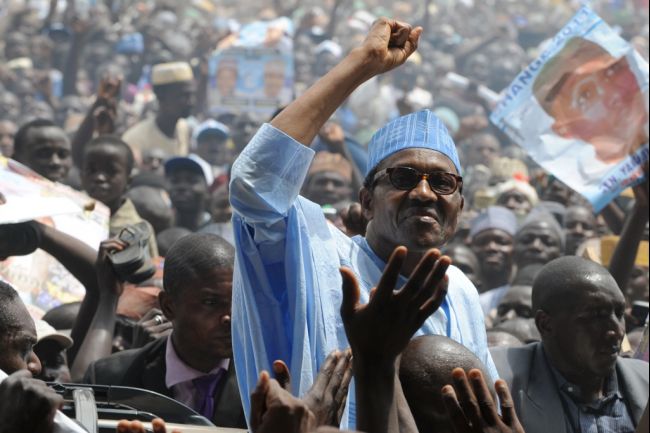
General Muhammadu Buhari (center)

By Catherine Gegout | The AfricaPaper

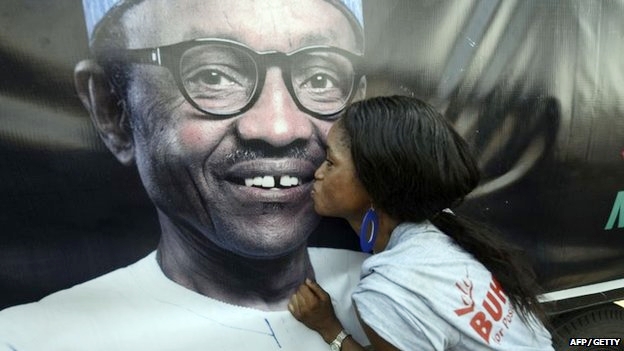
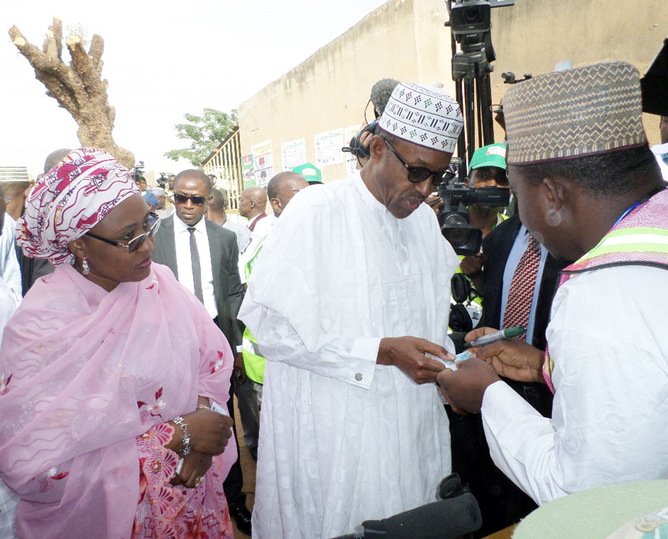
Nigerians have chosen General Muhammadu Buhari, a former military ruler, over incumbent Goodluck Jonathan, to be their president. Following an election that saw 41 people killed in the north of the country, Goodluck conceded defeat, and congratulated Buhari on his victory.
Buhari’s military regime from 1983 to 1985 was draconian: he systematically repressed freedom of expression through the jailing of journalists, radical public intellectuals, and student protesters. He is now saying that “the global triumph of democracy has shown that another and a preferable path to change is possible.”
Nigerians and the international community will be watching whether this time around Buhari will work for the common good in Nigeria.

Corruption and crisis

The general political and economic situation in Nigeria is problematic. Nigeria is home to a corrupt government. According to Transparency International, Nigeria is ranked 136 out of 175 states in terms of perceptions of corruption. Women are underrepresented in political affairs: until now, the House of Representatives had only one female principal officer, and only 7% of the 362 members were women. The House of Representatives committee on women has called for more participation from women in the nation’s politics. We will now see if the new government responds to this demand.

The economy is in crisis: Nigeria has an unhealthy dependence on its oil exports, which represent more than 80% of its national income. There has now been a drop in oil prices, which means that public sector jobs will have to be cut; 24% of Nigerians are unemployed. Nigeria must double its investment in infrastructure, and improve its power sector, the water and sanitation sector, its road networks, and its air transport safety.

General Muhammadu Buhari  WinsNigeria has to be serious about health. The World Health Organisation recommends that governments spend 15% of their budget on health, but Nigeria spends only 6% of its budget. Nigeria had 40,000 pregnancy-related deaths a year account for approximately 14 percent of the world’s total in 2012.
Northern exposure

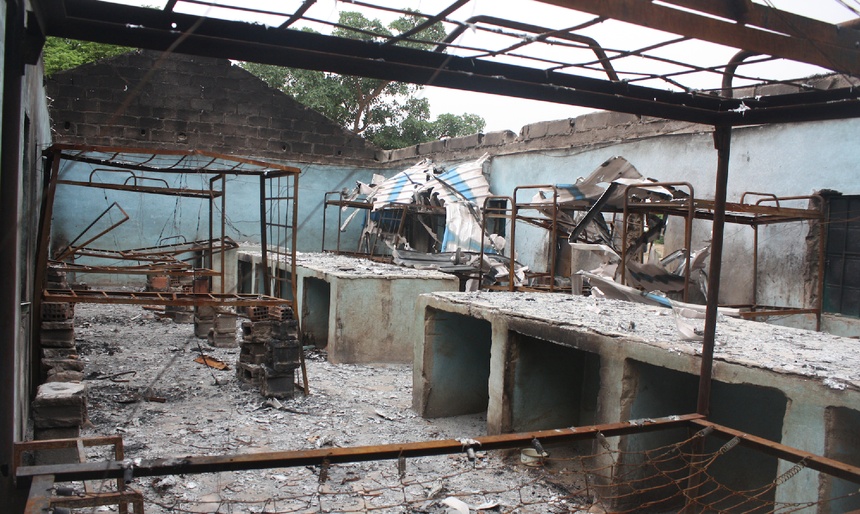
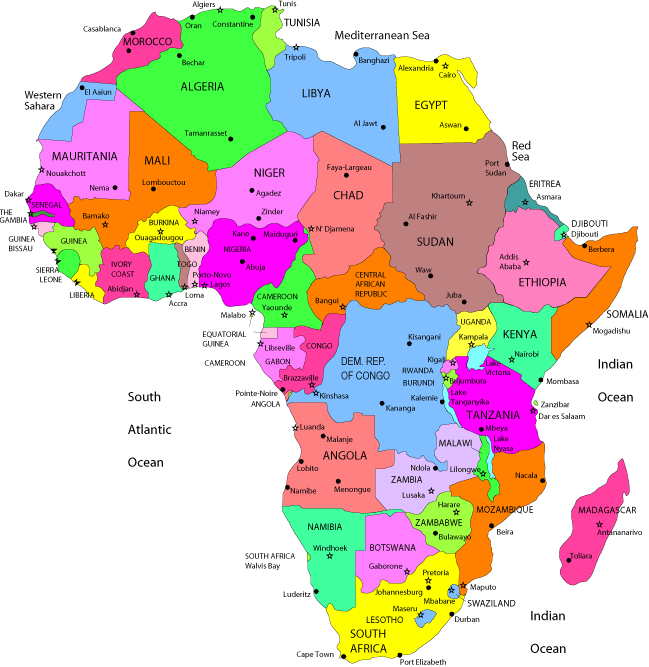
The situation in northern Nigeria is critical. Since 2014, more than 6,000 civilians have been killed by Boko Haram. Around one million Nigerians have been forcibly displaced within the country, and 200,000 have fled to Cameroon, Niger or Chad. Colonel Joseph Nouma of the Maroua Defence Regiment in the Nigerian army told the IRIN news service:
When you go to border villages, all you see are women and children and old people. Young [men], between the ages of ten and 45 are no longer there. They are across the [Nigerian] border with Boko Haram militants.

In the north, regional actors have been more active than the Nigerian government in fighting Boko Haram. With the approval of the African Union, Nigeria and its neighbours – Chad, Niger, Cameroon and Benin – have deployed a 8,700-strong Multi-National Joint Task Force (MNJTF) to fight around 4,000-6,000 Boko Haram Islamist militants.
Presidents from the Economic Community of Central African States (ECOWAS) pledged in early 2015 to create a US$87m emergency fund for military, medical, and logistical support for the MNJTF. Nigeria’s current president expects Boko Haram to be defeated within a month. However, even with the presence of regional allies, Boko Haram is likely to go into hiding and conduct a guerrilla campaign.

Past Policy Vacuum

The way the government has addressed violence in the north has been abysmal: very few measures have been taken. Muslim clerics identified lack of good governance as the primary reason Boko Haram succeeded in recruiting members. According to a US official, “they warned that similar crises would occur if the government failed to address social problems.”

In terms of social measures, when Boko Haram started fighting in 2009, a “societal reorientation programme” was created in the north. However, according to one US official, this programme only made it possible for Boko Haram to “recruit more members”, as it had no impact on the population’s well-being.
Military action against Boko Haram has been deplorable, probably because Boko Haram had clear connections to the government. The Nigerian army committed serious human rights violations in its response to Boko Haram. Hundreds of civilians and suspected Boko Haram members have been killed, and detainees have died in military custody.

In 2015, President Jonathan’s national security adviser, Sambo Dasuki, only mentioned the creation of a single social policy – in Kuje prison in the capital Abuja which aims at deradicalising former insurgents. The new government will have to develop social policies to reduce inequalities in order to prevent further violence.

What the new government has to do

The economic involvement of the Nigerian government is inadequate. Only half of the investment projects in the north were completed in 2014.
In 2015, the government created a US$133m emergency fund for the north in order to finance 94 different projects such as road construction, railways, energy and agriculture, but the precise use of this fund remains to be seen.
The new president will have to address three long-standing and critical issues in the north: economic development, education and health. Economic development is needed to counter Boko Haram, which is paying men around US$700-a-month to join its ranks.

The Economy

The new government must tackle the difficult issue of unemployment which, among all age groups, is at least 75%. Many young people, especially recent graduates, say it is impossible to find decent work. For the few who do have a job, the minimum wage is US$70 a month. The new government will also have to address the lack of economic resources and food in the north.

The new government will have to prioritize education. When Boko Haram started attacking civilians in 2009, it was known to oppose ‘western education models’. But young men fighting for Boko Haram could not have had much knowledge of education. In 2011 in northern Nigeria, half of the men had no education at all, only 7% completed primary education and only 6% completed secondary education. Education in the north should therefore be a priority for whoever has power next. This is not only important for men but essential for women: in 2011, 65% of women had no education, 6% completed primary education and 3% completed secondary education.
The new president will also be held accountable for improving health in the north. Clinics are under-staffed and women are ten times more likely to die in childbirth than in the south.

With these conditions Boko Haram filled a vacuum. The militants will now be much harder to remove but the next government can take steps to start tackling the problems that allowed them to gain a foothold.

The AfricaPaper: Catherine Gegout has major research interests in international relations theories and European politics, with a focus on European foreign and security policies. More recently, her attention has focused upon European military and economic intervention in Africa, and the role of the International Criminal Court. She received her PhD from the European University Institute in Florence, Italy.

“60 Minutes” Under Fire for Misinformation on Africa

0


The AfricaPaper | USA

USA – Hundreds of American academics have accused the CBS’ “60 Minutes” of making black Africans look dumb in their reporting, especially the reporting of Lara Logan, the South African correspondent who concocted the false story on Benghazi, but was unfortunately raped during the Arab spring eruptions in Egypt’s Tahir square. CBS suspended her for some time. Below is the letter that Prof. Howard French, theformer New York Times award winning correspondent in Africa for many years started circulating and signed by hundreds of others. See the letter to CBS below:

Misinformation on Africa

VOICELESS

60 Minutes has managed, quite extraordinarily, to render people of black African ancestry voiceless and all but invisible” in a series of recent segments, says a letter penned by Howard W. French and signed by more than 150 people that was emailed to 60 Minutes exec producer Jeff Fager and posted on the blog A Glimpse of the World. French, who spent most of his 23-year career at The New York Timesas a foreign correspondent, now is an associate professor at the Columbia University Graduate School of Journalism, where he has taught journalism and photography since 2008.

In the letter, the signers most notably dinged the CBS newsmagazine for a segment in which Lara Logan went to Liberia last year to cover the ebola epidemic in that country. “In that broadcast, Africans were reduced to the role of silent victims. They constituted what might be called a scenery of misery: people whose thoughts, experiences and actions were treated as if totally without interest,” the letter scolds. “Liberians were shown within easy speaking range of Logan, including some Liberians whom she spoke about, and yet not a single Liberian was quoted in any capacity” though Liberians not only died of ebola, many of them contributed to the fight against the disease, including doctors, nurses and other caregivers, some of whom died in the effort. “Despite this, the only people heard from on the air were white foreigners who had come to Liberia to contribute to the fight against the disease.”

Back when that report aired in November, French tweeted: “Not a single African voice in @60Minutes piece from Liberia on ebola. Not remotely acceptable? We see a father whose son is dying. No quote.”

LETTER

Today, in his letter to Fager, he complained:

“Taken together, this anachronistic style of coverage reproduces, in condensed form, many of the worst habits of modern American journalism on the subject of Africa. To be clear, this means that Africa only warrants the public’s attention when there is a disaster or human tragedy on an immense scale, when Westerners can be elevated to the role of central characters, or when it is a matter of that perennial favorite, wildlife.”

Speaking of wildlife, the letter also smacked the newsmag for two segments it said were “remarkably similar…featuring white people who have made it their mission to rescue African wildlife. In one case, these were lions, and in other, apes. People of black African descent make no substantial appearances in either of these reports, and no sense whatsoever is given of the countries visited, South Africa and Gabon.”

In all these segments, the letter said, “Africans themselves are typically limited to the role of passive victims, or occasional brutal or corrupt villains and incompetents; they are not otherwise shown to have any agency or even the normal range of human thoughts and emotions. Such a skewed perspective not only disserves Africa, it also badly disserves the news viewing and news reading public.”

In the letter, the group says American views of Africa, a continent of 1.1 billion people, “are badly misinformed” and blamed “the mainstream media.”

A 60 Minutes rep sent Deadline a statement, saying, “60 Minutes is proud of its coverage of Africa and has received considerable recognition for it. We have reached out to Mr. French to invite him to discuss this further and we look forward to meeting with him.”

The statement did not specify which of its reports about Africa it was referencing, but a Bob Simon report titled Joy In The Congo,” about the only all-black orchestra in Central Africa, won a Peabody Award and two Emmys in 2013, and Scott Pelley’s “Africa Mercy,” about a hospital ship that repaired Africans’ cleft palates and other problems relating to the jaw or face, won a News Emmy.

SIGNATORIES

Here is the full list of signatories to the letter:

Howard W. French, Associate Professor, Columbia University Graduate School of Journalism; author of China’s Second Continent and A Continent for the Taking: The Tragedy and Hope of Africa

Fatin Abbas, Manhattanville College

Akin Adesokan, Novelist and Associate Professor, Comparative Literature and Cinema and Film Studies, Indiana University Bloomington

Anthony Arnove, Producer, Dirty Wars

Adam Ashforth, Department of Afroamerican and African Studies, University of Michigan

Sean Jacobs, Faculty, International Affairs, Milano, The New School and Africa is a Country.

Teju Cole, Distinguished Writer in Residence, Bard College/Photography Critic, The New York Times Magazine

Richard Joseph, John Evans Professor of International History and Politics, Northwestern University

Leon Dash, Swanlund Chair Professor in Journalism, Professor, Center for Advanced Study, University of Illinois at Urbana-Champaign

Michael C. Vazquez, Senior Editor, Bidoun: Art and Culture from the Middle East

Achille Mbembe, Professor, Wits University and Visiting Professor of Romance Studies and Franklin Humanities Institute Research Scholar, Duke University

M. Neelika Jayawardane, Associate Professor of English Literature at State University of New York-Oswego, and Senior Editor of Africa Is a Country

Adam Hochschild, author

Eileen Julien, Professor, Comparative Literature, French & Italian, African Studies, Indiana University Bloomington

Mohamed Keita, freelance journalist in NYC, former Africa Advocacy Coordinator of the Committee to Protect Journalists (CPJ)

Aaron Leaf, Producer, Feet in 2 Worlds, The New School

Dan Magaziner, Assistant Professor, History, Yale University

Marissa Moorman, Associate Professor, Department of History, Indiana University

Sisonke Msimang, Research Fellow, University of Kwazulu-Natal.

Achal Prabhala, Writer and Researcher, Bangalore, India.

Janet Roitman, Associate Professor of Anthropology, The New School

Lily Saint, Assistant Professor of English, Wesleyan University.

Abdourahman A. Waberi, writer and Professor of French and Francophone Studies George Washington University

Binyavanga Wainaina, Writer

Chika Unigwe, Writer

James C. McCann, Chair, Department of Archaeology, Professor of History, Boston University

Susan Shepler, Associate Professor, International Peace and Conflict Resolution, School of International Service, American University

Peter Uvin, Provost, Amherst College

G. Pascal Zachary, professor of practice, Arizona State University

Cara E Jones, PhD, Assistant Professor of Political Science, Mary Baldwin College

James T. Campbell, Edgar E. Robinson Professor of History/Stanford University

Nii Akuetteh, Independent International Affairs Analyst, Former Executive Director of OSIWA, the Soros Foundation in West Africa

Mary Ratcliff, editor, San Francisco Bay View National Black Newspaper

James Ferguson, Susan S. and William H. Hindle Professor, Stanford University

Alice Gatebuke, Rwandan Genocide and War survivor. Communications Director, African Great Lakes Action Network (AGLAN)

Max Bankole Jarrett, Deputy Director, Africa Progress Panel Secretariat

Mohamed Dicko, retired Computer Applications Analyst in St Louis, Missouri

Mojúbàolú Olufúnké Okome, Ph.D., Professor of Political Science, African & Women’s Studies, Brooklyn College, CUNY

Adam Ouologuem

John Edwin Mason, Department of History, University of Virginia

Dele Olojede, newspaperman

Dr. Jonathan T. Reynolds, Professor of History, Northern Kentucky University

Daniel J. Sharfstein, Professor of Law, Vanderbilt University

Claire L. Adida, Assistant Professor of Political Science at the University of California San Diego

Lisa Lindsay, University of North Carolina

Anne-Maria B. Makhulu, Assistant Prof. of Cultural Anthropology and African and African American Studies, Duke University

Karin Shapiro, Associate Professor of the Practice African and African American Studies, Duke University

Garry Pierre Pierre, Executive director of the Community Reporting Alliance, New York City

Lynn M. Thomas, Professor and Chair, Department of History, University of Washington

Martha Saavedra, Associate Director, Center for African Studies, University of California, Berkeley

Kathryn Mathers, Visiting Assistant Professor, International Comparative Studies, Duke University

Siddhartha Mitter, freelance journalist

Alexis Okeowo, Contributor, The New Yorker and The New York Times Magazine

Susan Thomson, Assistant Professor of Peace and Conflict Studies, Colgate University

Nicolas van de Walle, Maxwell M. Upson Professor of Government, Cornell University

David Newbury, Gwendolen Carter professor of African studies, Smith College

Charles Piot, Professor, Department of Cultural Anthropology & Department of African and African American Studies Co-Convener Africa Initiative, Duke University

Adia Benton, Assistant Professor of Anthropology, Brown University

Gregory Mann, historian of francophone Africa, Columbia University

Anne Pitcher, University of Michigan

Howard Stein, University of Michigan

Adam Shatz, London Review of Books

Peter Rosenblum, professor of international law and human rights, Bard College

Timothy Longman, African Studies Center Director, Chair of Committee of Directors, Pardee School of Global Studies, Associate Professor of Political Science, Boston University

Laura E. Seay, Assistant Professor, Department of Government, Colby College

Robert Grossman, Producer

Daniel Fahey, Visiting Scholar at UC Berkeley, and served on the UN Group of Experts on DRC from 2013-2015

Jennie E. Burnet, Associate Professor of Anthropology, University of Louisville

Kim Yi Dionne, Assistant Professor, Smith College

Lonnie Isabel, Journalist

Karen L. Murphy

Ann Garrison, Pacifica Radio reporter/producer and contributor to SF Bay View, Black Agenda Report, Black Star News, Counterpunch, Global Research

Ryan Briggs, Assistant Professor, Department of Political Science, Virginia Tech

Yolande Bouka, PhD, Researcher, Institute for Security Studies

Elliot Fratkin PhD, Gwendolen M. Carter Professor of African Studies, Department of Anthropology, Smith College

Gretchen Bauer, Professor and Chair, Department of Political Science and International Relations, University of Delaware

John Woodford, journalist

Frank Holmquist, Professor of Politics, Emeritus, School of Critical Social Inquiry, Hampshire College

Alice Kang, Assistant Professor, Department of Political Science, Institute for Ethnic Studies – African and African American Studies, University of Nebraska-Lincoln

Michel Marriott, journalist, author

Jennifer N. Brass, PhD, Assistant Professor, School of Public & Environmental Affairs, Indiana University

Séverine Autesserre, Department of Political Science, Barnard College, Columbia University

Jill E. Kelly, Assistant Professor, Clements Department of History, Southern Methodist University

Dr. Meghan Healy-Clancy, Lecturer on Social Studies and on Women, Gender, and Sexuality, Harvard University

Dayo Olopade, journalist, author

Mary Moran, Colgate University

Sharon Abramowitz, UFL

Rebecca Shereikis, Interim Director, Institute for the Study of Islamic Thought in Africa, Northwestern University

Barbara B. Brown, Ph.D., Director of the Outreach Program, African Studies Center, Boston University

Jeffrey Stringer

David Alain Wohl, MD, Associate Professor, The Division of Infectious Diseases, University of North Carolina at Chapel Hill

Andy Sechler, MD, Instructor in Medicine, Harvard Medical School

John Kraemer, Assistant Professor, Dept of Health Systems Admin. & African Studies Program, Georgetown University

Barbara Shaw Anderson, Associate Director, African Studies Center, Lecturer, Department of African, African American, and Diaspora Studies, African Studies Center, University of North Carolina

Adrienne LeBas, Assistant Professor of Government, American University, DC

Catharine Newbury, Professor Emerita of Government, Smith College

Ana M. Ayuso Alvarez, Epidemiology Programme applied to the Field, M. Art (Anthropologist)

Cynthia Haq MD, Professor of Family Medicine and Population Health Sciences, University of Wisconsin School of Medicine and Public Health

Aili Tripp, Professor of Political Science & Gender and Women’s Studies, University of Wisconsin-Madison

Gloria Ladson-Billings, Professor, Department of Curriculum & Instruction, Kellner Family Professor in Urban Education, University of Wisconsin

Anne Jebet Waliaula, PhD, Outreach Coordinator, African Studies Program, University of Wisconsin-Madison

Judith Oki, Salt Lake City, UT, former Capacity Building Advisor for Rebuilding Basic Health Services, Monrovia, Liberia

Sandra Schmidt, PhD, Assistant Professor of Social Studies and Education, Teachers College, Columbia University

Emily Callaci, Assistant Professor, Department of History, University of Wisconsin-Madison

Louise Meintjes, Assoc Prof, Departments of Music and Cultural Anthropology, Duke University

May Rihani, Former Co-Chair of the United Nations Girls’ Education Initiative (UNGEI), Author of Cultures Without Borders

Tejumola Olaniyan, University of Wisconsin-Madison

Selah Agaba, Doctoral Student, Anthropology & Education Policy Studies, University of Wisconsin

Casey Chapman, Wisconsin

Ted Hochstadt, Returned Peace Corps Volunteer (Lesotho)

Kah Walla, CEO – STRATEGIES!, Cameroon

Kofi Ogbujiagba, journalist, Madison, Wisconsin

Matthew Francis Rarey, Visiting Assistant Professor of Art History, University of Wisconsin-Milwaukee

David B. Levine, consultant in international development, Washington, DC

Claire Wendland, Medical Anthropologist, University of Wisconsin-Madison

Frederic C. Schaffer, Professor of Political Science, University of Massachusetts Amherst

Joye Bowman, Professor and Chair, Department of History, University of Massachusetts Amherst

Cody S. Perkins, Ph.D. Candidate, Corcoran Department of History, University of Virginia

Eric Gottesman, Colby College Department of Art

Lynda Pickbourn, Ph.D., Assistant Professor of Economics, School of Critical Social Inquiry, Hampshire College

Kate Heuisler, Phnom Penh, Cambodia

Henry John Drewal, Evjue-Bascom Professor of African and African Diaspora Arts, Departments of Art History and Afro-American Studies, University of Wisconsin-Madison

Sarah Forzley, lecturer in the English department at the University of Paris 10- Nanterre (France)

Laura Doyle, Professor of English,University of Massachusetts-Amherst

Ralph Faulkingham, PhDEmeritus Professor of Anthropology (and former Editor, The African Studies Review), University of Massachusetts Amherst

Dr. Jessica Johnson, University of Massachusetts Amherst History Department

Joseph C. Miller, University of Virginia ret.

Sean Hanretta, Associate Professor, Department of History, Northwestern University

Iris Berger, Vincent O’Leary Professor of History, University at Albany

Jackson Musuuza, MBChB, MPH, MS, PhD student in Clinical Epidemiology, University of Wisconsin Madison

Dr. Anita Schroven, Researcher, Max Planck Institute for Social Anthropology, Halle/Saale, Germany

Prof. Dr. Baz Lecocq, Chair of African History, Humboldt University of Berlin, Germany

Monica H. Green, Professor of History, Arizona State University

Sandra Adell, Professor, Department of Afro-American Studies, University of Wisconsin-Madison

Pamela Feldman-Savelsberg, Broom Professor of Social Demography and Anthropology Director, African and African American Studies Program, Acting Chair, Department of Sociology and Anthropology, Carleton College

Michael Herce, MD, MPH, University of North Carolina at Chapel Hill, Centre for Infectious Disease Research in Zambia (CIDRZ)

Satish Gopal MD MPH, UNC Project-Malawi (Director, Cancer Program), UNC Institute for Global Health & Infectious Diseases

Mina C. Hosseinipour, MD, MPH, Scientific Director, UNC Project, Lilongwe Malawi

Cliff Missen, M.A.

Director, WiderNet@UNC and The WiderNet Project, Clinical Associate Professor

School of Information and Library Science, University of North Carolina, Chapel Hill

Groesbeck Parham, Professor, UNC (working in Zambia)

Norma Callender, San Jose

Harry McKinley Williams, Jr., Laird Bell Professor of History, Carleton College

Robtel Neajai Pailey, Liberian academic, London

Rose Brewer, professor, University of Minnesota

Fodei J. Batty, Ph.D., Assistant Professor of Political Science, Quinnipiac University

Graham Wells, MS. PE, (Professor, Retired), Dept of Mechanical Engineering, Mississippi State University

CHOUKI EL HAMEL, Ph.D., Professor of History, School of Historical, Philosophical and Religious Studies Arizona State University

Obioma Ohia, Postdoctoral Fellow, University of Maryland Department of Physics

Paschal Kyoore, Professor of French, Francophone African/Caribbean Literatures & Cultures

Director, African Studies Program, Gustavus Adolphus College, Saint Peter, Minnesota

Preston Smith, Chair of Africana Studies. Professor of Politics, Mount Holyoke College

Catherine E. Bolten. Assistant Professor of Anthropology and Peace Studies. The Joan B. Kroc Institute for International Peace Studies, University of Notre Dame

Michael Leslie, associate professor of telecommunication, College of Journalism and Communications, University of Florida

Agnes Ngoma Leslie, Senior Lecturer and Outreach Director, Center for African Studies, University of Florida

Martin Murray, Urban Planning and African Studies, University of Michigan

Laura Fair, Associate Professor of African History, Michigan State University

Noel Twagiramungu, Post-doctoral Research Fellow, World Peace Foundation, The Fletcher School, Tufts University