Home Blog Page 14

ECOWAS Mission Says Election is Credible, But NGC And C4C Doubt Provisional Results


By Abubakarr Kamara | The AfricaPaper

Freetown, Sierra Leone – While international observers are declaring that the elections in Sierra Leone were credible, two political parties have registered their dissatisfaction over the provisional results filtering in from various news outlets and some civil society and groups.

Irregularities
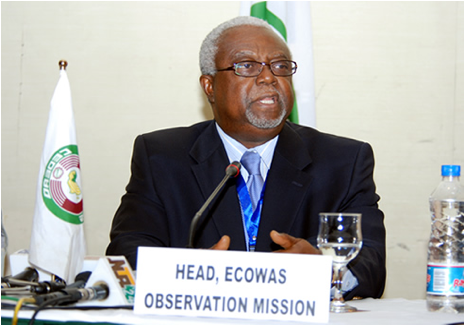
A t is shown in the water.
DR. AMOS C. SAWYER. Photo: Abubakarr Kamara/The AfricaPaper

Dr. Amos C. Sawyer, head of the ECOWAS observer mission in Sierra Leone has in a press briefing in Freetown declared that despite the isolated cases of violence and irregularities during the campaign period, the general elections have so far been free, fair and credible.

Sawyer, a former interim President of Liberia said the vast majority of Sierra Leoneans, who wished to vote were provided the required freedom and space to exercise their constitutional rights to vote or to be voted for in the election.

“The preparation of the 2018 elections, the conduct of the electioneering campaign, as well as the processes on election day, up until the release of the results of the four elections by the responsible officials at the polling stations, were free, fair, and credible,” said Sawyer, head of the ECOWAS observer mission in Sierra Leone.

Political Intolerance

He however cited challenges such as the high political intolerance that preceded polling day, media polarization on partisan basis and the controversial vehicular restriction among issues to be looked into by the new government.

“While the restriction on vehicle might have improved on security, it also prevented some voters from exercising their franchise because they could not access their voting centers. It also hindered the movement of some local observers who couldn’t reach certain locations on time,” said Sawyer.

He assured the public that they will continue to monitor the situation as NEC continues counting while urging all stakeholders, including the political party leaders and their supporters to refrain from distributing speculative results and to continue to respect due process and rule of law.

The ECOWAS Commission deployed a 65-man observer team, including 15 long-term observers, who have been in the country as early as Feb. 15 this year.

Grave Concerns
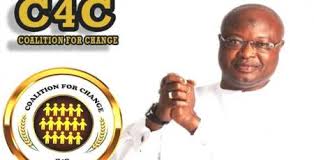
A t is shown in the water.On the other hand, two political parties; the National Grand Coalition (NGC) and the Coalition for Change (C4C) have expressed grave concerns over the provisional results being aired on radios and TV stations.

In a joint press statement, both the C4C and the NGC says they have grave concerns that “the results emerging will fail to reflect the will of the people of Sierra Leone” adding that such results would fall far short of the expectations the people of Sierra Leone had for the poll.

Dr Julius Spencer, Spokesperson for the NGC said the risk is that doubts about the credibility of that election will translate into “a lack of legitimacy for the next government.”

“Our own internal checks revealed that the process does not reflect anything close to free, fair, transparent and credible polls. We call upon the National Electoral Commission to fully address these issues prior to release of official results,” said Spencer.

Climate of Fear
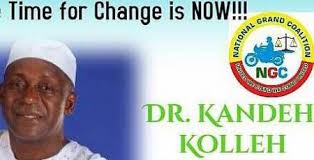
A t is shown in the water.
NGC Presidential Candidate

A statement by the spokesperson for both the NGC and C4C parties stated that their concerns include the fact that some of their party agents were prevented from witnessing the counting; scuffles and fracas led to the eviction of party agents in some polling stations and a “climate of fear and intimidation pervaded many polling stations, further undermining the credibility of the elections.”

“To our surprise, two different Results Reconciliation Forms (RRFs) were used during the process. This discrepancy further undermines our faith in the process and we are investigating this matter. We call upon all those announcing provisional results to fully investigate and confirm the accuracy of these results, taking account of the risks of misinforming the public.

We also call upon local and international observers to take note of these concerns as they formulate their reports. We acknowledge the concerns expressed by our members and Sierra Leoneans in general and urge them to remain calm as we try to resolve these issues,” the press release stated.

Verified Results

Meanwhile, the National Electoral Commission Spokesperson, Albert Massaquoi says the commission will soon announce its first set of verified results. He denied any wrongdoing from NEC with regards the RRFs noting also that no party was excluded from the counting of ballots.

He said NEC staff asked some party agents out of the counting room in polling stations, where they observed that two or more people from one political party are in the room while other political parties have none of their agents in.

“In that case, the NEC officials would ask one of those two to give chance to the other political party, whose agent is outside. This is to ensure that the counting room is not over crowded and every party is represented,” said Massaquoi. |TAP|
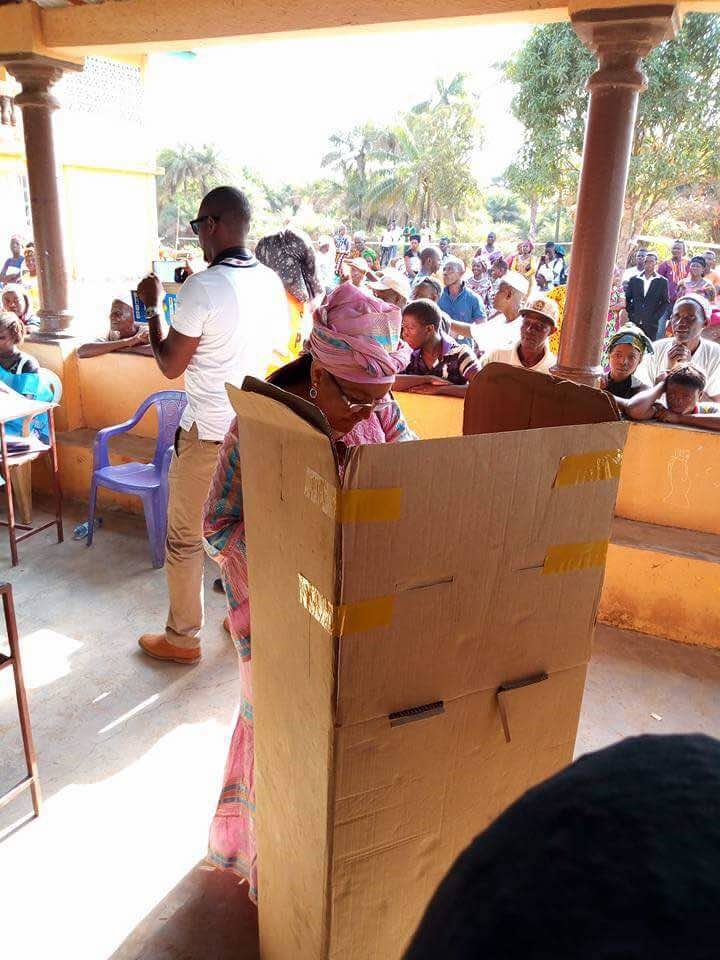
Sierra Leone Secretly Holds First Blockchain-Powered Presidential Vote


As police surrounded the opposition SLPP leader’s house, authorities in the capital, Freetown said the suspected “hacking” of votes. The government never talked about the Blockchain-Powered vote. Here, TAP brings you what really happened.

By Michael del Castillo | The AfricaPaper

Freetown, Sierra Leone – Behind the scenes of Sierra Leone’s presidential election Wednesday, a second, perhaps larger milestone was quietly achieved.

As voters in the nation’s most populous Western District lined up to cast votes in what had been a heated campaign between 16 candidates, unbeknownst to them, blockchain voting startup Agora was helping keep track of it all, and through its proprietary distributed ledger, providing unprecedented insight into the process.

Permissioned Blockchain

In what, by all accounts, appears to be a world’s first for the emerging technology, Agora, accredited by Sierra Leone’s National Election Committee used a private, permissioned blockchain – one inspired by the technology that backs bitcoin and other cryptocurrencies – to oversee the results of a national election in real time. It then relayed the data to individuals entrusted to oversee and verify the nation’s democratic process.

However, for Agora, the elections could be step one in an even larger plan to launch amore decentralized version of its technology, and the startup boasts that it’s already in conversations with a number of other nations interested in hosting future elections.

Indeed, as even such stalwarts of democracy as the U.S. have proven their susceptibility to elections fraud, the Sierra Leone election – exactly because it was so hotly contested – could prove to be a landmark of sorts, if blockchain can overcome just a few more hurdles.

“You’re looking at a country that you probably wouldn’t normally expect to be the first to use transparent voting tech,” said Agora’s newly appointed COO, Jaron Lukasiewicz, who previously founded Coinsetter.

He told CoinDesk:

“A country like Sierra Leone can ultimately minimize a lot of the fall-out of a highly contentious election by using software like this.”

Blockchain Register

Sierra Leone elections

But while the voting may be over, the test for blockchain is, in some ways, just beginning.

As this article was being completed, Agora, a Switzerland-based foundation, was in the process of manually counting the votes and logging them on a blockchain.

“Voters complete their votes on paper ballots and then our team with impartial observers register them on the blockchain,” explained Lukasiewicz, who formally joined the foundation in January after first joining as an advisor.

Stepping back, though, not only is this the first time blockchain has been implemented in a

national election, it’s also the first live implementation for Agora’s stack of blockchain services -what the foundation calls “skipchain” technology, designed to reach consensus with each node only seeing part of the blockchain.

The lowest level of the stack consists of “write-permissioned” nodes operated by Agora and third-party witnesses,Red Cross,École Polytechnique Fédérale de Lausanne (EPFL) and the University of Freiburg, as well as “read-only” nodes that let anyone observe the data.

And while the act of counting votes certainly introduces a number opportunities for fraud, Agora CEO Leonardo Gammar was on-location to help manage the operation as voter IDs were checked against Sierra Leone’s National Electoral Committee’s voter registration list. Future implementations, he said, may be even further decentralized by logging some data on the bitcoin blockchain.

According to Gammar, the firm is in conversations with multiple other nations in Africa and Europe and is pursuing a business model where they aim to provide their customers a 70 percent discount on their current cost.

“It has been incredible to play a role in helping Sierra Leone’s citizens exercise their democratic rights, and to help their country maintain a transparent democracy,” Gammar said, adding:

“I strongly believe that this election is the beginning of a much larger blockchain voting movement.”

Kind of Peaceful

On a more skeptical note, the election took place within context that transcends tech.

Viewed by one Sierra Leone native and current political risk analyst, the election was little better – or worse – than any of the previous three general elections. Blockchain or no blockchain, he finds little has changed since the end of a bloody civil war that resulted in the deaths of an estimated 50,000 citizens.

Abdul Deensie, who was born in Sierra Leone, left in 1997, five years before the civil war had ended. Eventually, he joined as a fellow with the Congressional Black Caucus Foundation and got a job at USAID, an independent agency that administers federal aid around the world.

Now, Deensie has been corresponding with several “sources on the ground” in Sierra Leone, as well as watching social media and news broadcasts closely, and he says that little he’s seeing about the election process has changed.

Skeptically, Deensie pointed to Sierra Leone’s “control of corruption” score, an annual rating of nations determined via a number of indicators, as something that was perhaps more important than the use of a novel technology.

Citing a history of failing scores in this category (this year Sierra Leone’s government rated worse than half the governments measured) and scattered reports of intimidation, he concluded ambivalently:

“The election itself, I believe, beside these little skirmishes, we can give it a pass as free and fair.”

Sierra Leone elections

Election History

But according to Lukasiewicz, such skepticism was exactly what led the government to approach his foundation in the first place.

While Sierra Leone does have a history of largely peaceful general elections since its civil war, a number of violent incidents were reported in the days leading up to the event.

Further doubt was cast on the integrity of the leading All People’s Congress (APC) party, when the nation’s Accountant General found a reported $5.7 million in aid money had gone missing, leading to accusations of fraud and corruption.

Facing such concerns about the reliability of the election, national authorities implemented military support provisions that placed police in the streets, and the national electoral commission has been posting updates on its blog about difficulties with the voting process.

Still, Lukasiewicz said the current Sierra Leone government wanted to create an extra layer of transparency by using Agora’s blockchain technology. In total, 17,745 sealed voting boxes were used, with 37 exhibiting various problems, according to the commission’s site.

“We’re coming in with fully auditable code, fully auditable voting processes,” Lukasiewicz said. “We’re really bringing something to the table where a voter themselves can audit the election.” |TAP|

The AfricaPaper: Many thanks to Michael del Castillo. A full-time member of the Editorial Team at CoinDesk, Michael covers cryptocurrency and blockchain applications. His writing has been published in the New Yorker, Silicon Valley Business Journal and Upstart Business Journal. Michael is not an investor in any digital currencies or blockchain projects. He has previously held value in bitcoin. Photos: Sierra Leone voting image via Shutterstock

Counting Continues in Sierra Leone … Political Parties Claim Winning the Polls at First Ballot


By Abubakarr Kamara | The AfricaPaper

Freetown, Sierra Leone – Though official results from the National Electoral Commission (NEC) are yet to be released, both the ruling All People’s Congress (APC) party and the main opposition, Sierra Leone People’s Party (SLPP) have claimed winning the polls on the first ballot. Anticipating there won’t be a runoff.

55 Percent

A t is shown in the water.
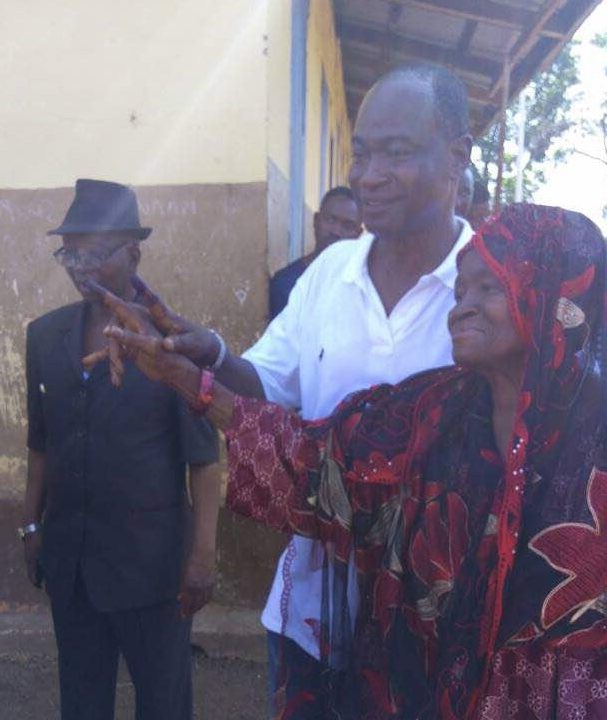
Dr. Samura Kamara and mother after voting in his village, Kamalo. Photo Abubakarr Kamara/The AfricaPaper

The country’s election law states that a presidential candidate has to meet the threshold of55 percent in the first ballot to win the presidency, otherwise, the first two candidates will have to battle it out in a ‘first past the post’ runoff elections.

Mohamed Gibril Sesay – Research and Manifesto Chairman for the Presidential Campaign Committee of the APC said his party now leads the SLPP by 72, 410 votes according to results from the APC Coalition Centre.

“So far, out of the collated 2,817 polling stations representing a little over 25 percent of the 11,222 polling stations, the APC has 325,814 and the SLPP has 253,404 votes. The NGC has 45,752 and the C4C 21,697,” Mr. Sesay disclosed.

He further stated that a considerable number of the results are still pending; most of which are in the APC strongholds. He therefore expressed optimism that his party will win the elections with over 55 percent.

20 Percent

The SLPP Publicity Secretary, Lawrence Lahai Leema says his party needed 20 percent of valid votes casted in the North and in the West to meet its 55 Percent threshold to win the elections adding that they have got more than that.

A t is shown in the water.
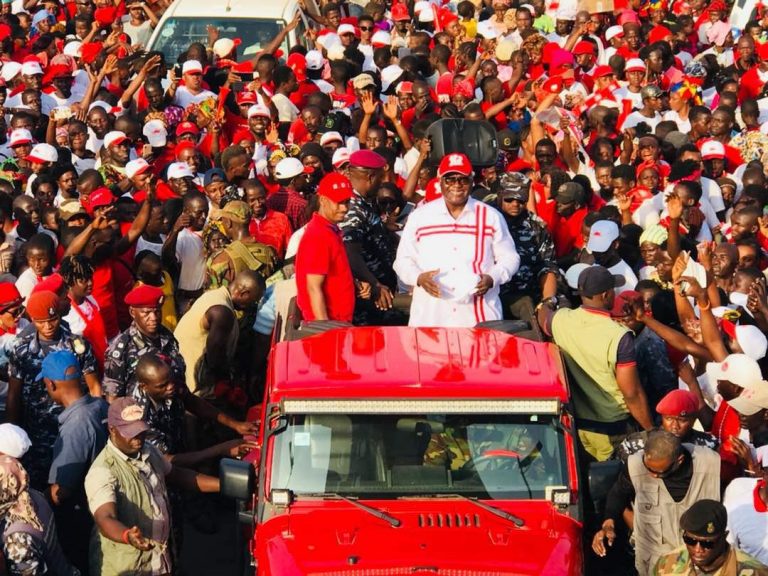
Maada Bio. Photo: Abubakarr Kamara/The AfricaPaper

“This is very possible due to the impact we created in Falaba and Kambia districts in the north. The maximum gains we have made in the Western Area alone has already earned us the 55 percent threshold and beyond. Runoff is not possible in this election,” Leema said confidently.

Claims

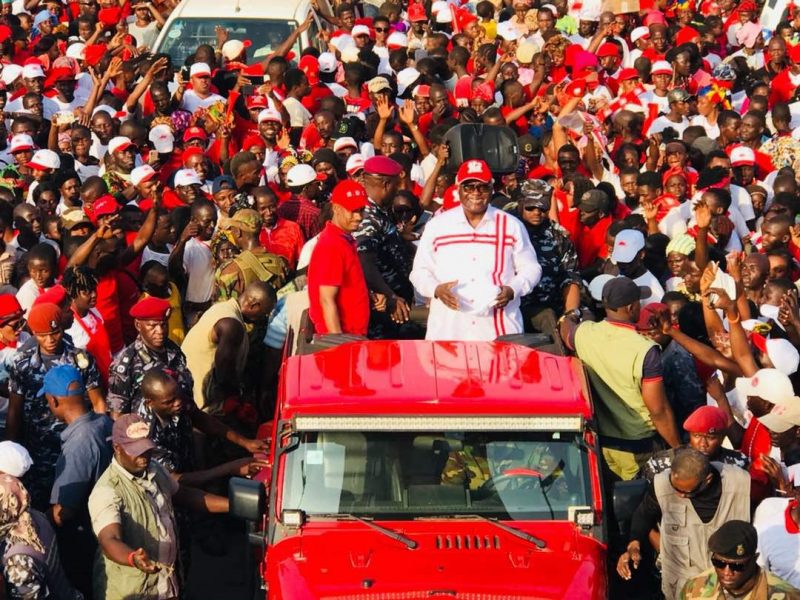
The SLPP Chairman, Dr Prince Harding was on radio Thursday morning calling on his supporters to come out in their numbers and jubilate, claiming they have already won the general elections.

“We have come a long way to achieve this and I therefore implore you to come out and celebrate because according to our party’s collation center, we have won the elections. We are now waiting for NEC to officially announce the result,” Chairman Harding claimed.

Observers

Meanwhile, the National Election Watch (NEW), which claims to have over 10,000 national and international observers deployed in all polling stations around the country, has projected a runoff. According to the group, no political party will meet the 55 percent threshold at the first ballot.

Though the NEW spokesperson, N’golo Katta acknowledged the fact that only the National Electoral Commission can declare official results, says it used Parallel Vote Tabulation (PVT) tools, that provides accurate and timely information on the conduct of an election and counting at polling stations to reach its conclusion.

”NEWwishes to assure the public that it has empirical evidence to support this projection,” said Katta. |TAP|

As Polls Close in Sierra Leone … Tension Arises between Police and the SLPP


By Abubakarr Kamara | The AfricaPaper

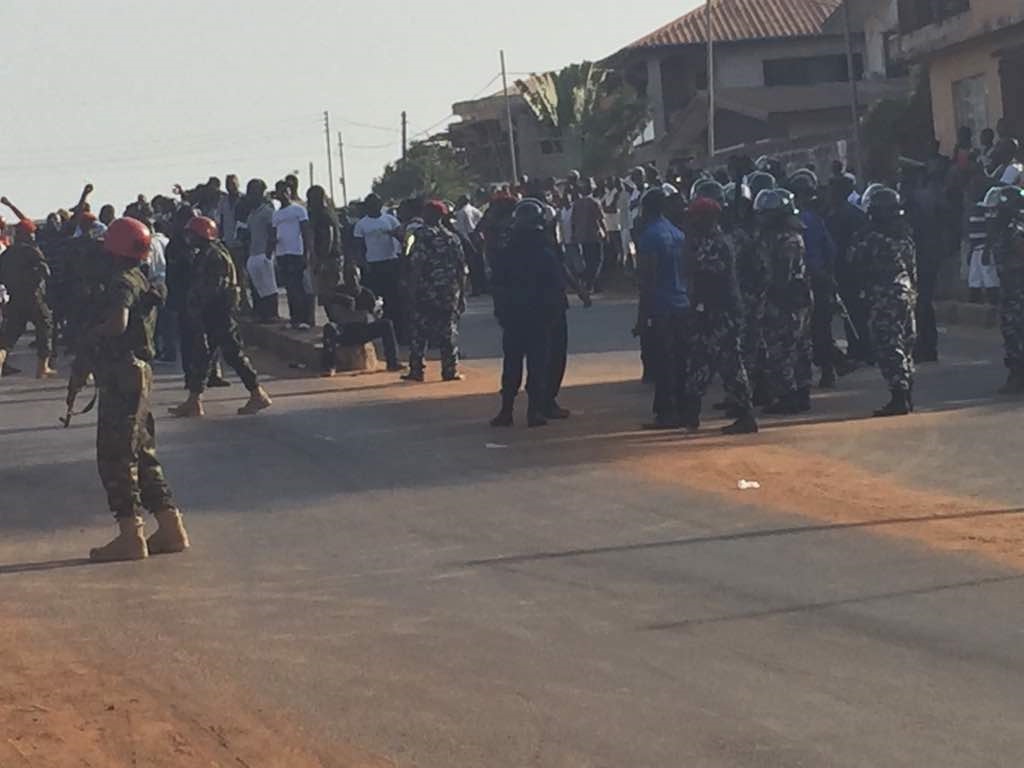
Freetown, Sierra Leone – Local police surrounded the office of Retired Brigadier, Julius Maada Bio, the leading opposition candidate of Sierra Leone People’s Party, shortly after polls were closed at 1700 hours GMT on Wednesday evening.

A t is shown in the water.
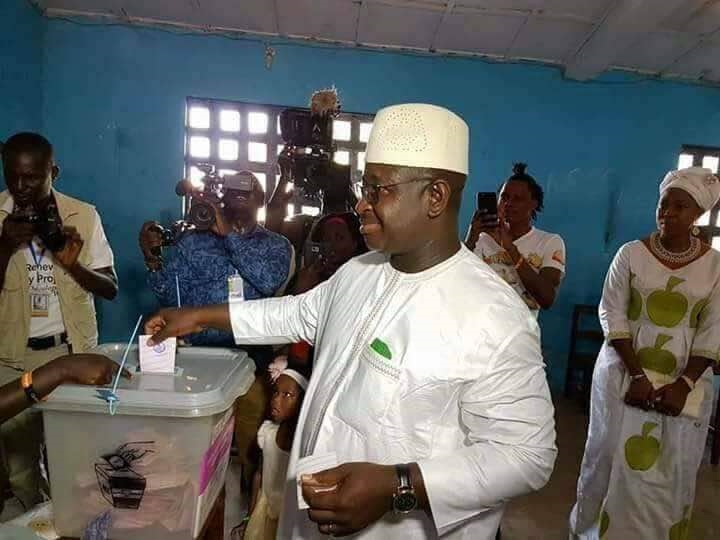
Rtd. Brigadier Maada Bio after voting in Freetown. Photo: Abubakarr Kamara /The AfricaPaper

According to Police Officer Mohamed Kamara, head of the Criminal Investigations Department (CID), they had intelligence that some people were in Mr. Bio’s office which he described as an “unfinished structure” poised to hack election results accessing the National Electoral Commission (NEC) database.

Kamara said though the police had a search warrant on the property, they were denied entry to do their work.

Tactics

The SLPP Presidential Campaign Chairman, Alie Kabba blamed the incumbent for the incident.

“This is one of the many tactics of the APC to intimidate us but we refused to be intimidated. We will resist any distraction from the election especially now that the ballots are about to be counted,” he noted.

Kabba stated that what they had in the building was a tally center, which every other party and some election observer are doing. He noted that they had trained thousands of party agents across the country and that the tally center was to collate results as they are coming in.

Volatile

A t is shown in the water.
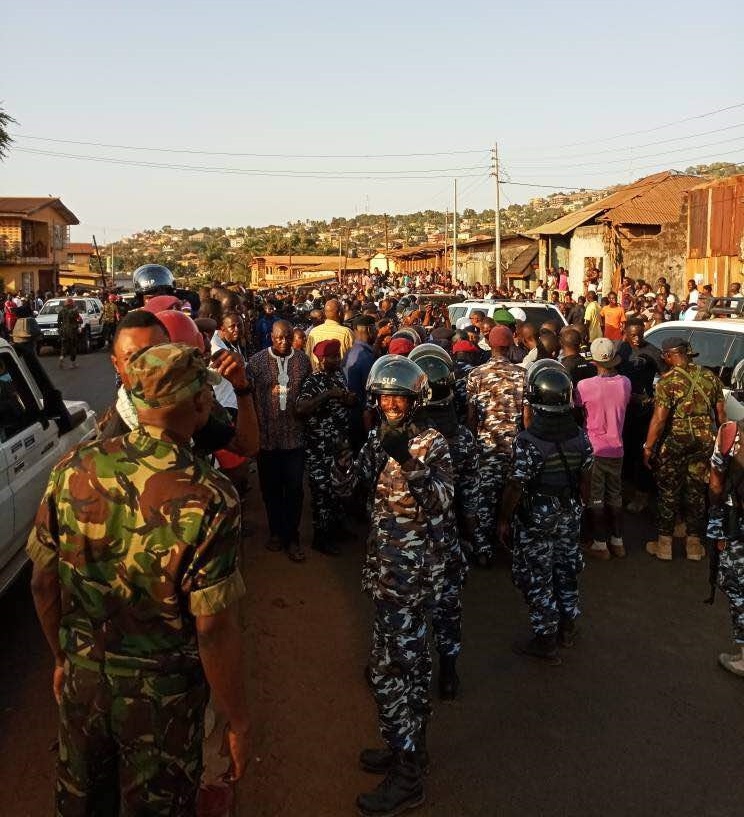
Armed police officers surround Maada Bio’s house. Photo: Abubakarr Kamara /The AfricaPaper

The ruling All People’s Congress (APC) party Presidential Spokesman, Abdulai Barraytay denied his party’s involvement in the incident, noting that the police have a responsibility to maintain law and order in the country and to ensure peace and security before, during and after the elections.

The situation was however remedied by the timely intervention of the former Ghanaian President and head of the Commonwealth election observer mission to Sierra Leone, John Mahama. He diffused what one civil society activist, Joseph Conteh described as a “potentially volatile situation.”

Mahama went into the building to confirm the SLPP assertion of a tally center. A NEC Spokesman Albert Massaquoi denied knowledge of the incident.

“Our system cannot be hacked as it is basic and manual,” Massaquoi said. “Had the police contacted us, we would have let them know that this is practically impossible.”

Stronghold

Meanwhile, provisional results have started trickling in from mainly the Independent Radio Network (IRN), which is a combination of majority of the radio stations around the country.

A t is shown in the water.According to the provisional results, both the ruling APC and the main opposition SLPP maintain their traditional Northwest and Southeast stronghold respectively with the National Grand Coalition (NGC) making gains in Kambia and Bo districts while the Coalition for Change (C4C) is making gains in Kono districts. |TAP|

Sierra Leoneans Vote To Elect New Leader


By James Fasuekoi | The AfricaPaper

Freetown, Sierra Leone – After months of fierce political campaigns, vicious personal attacks and sporadic allegations of corruptions, and in some instances accusations of lack of experience, millions of Sierra Leoneans will go to the polls today to elect the country’s new leader in 10 years.

Term-limit

Outgoing president Ernest Bai Koroma, who has led the country since 2007, is term-limited. His All People’s Congress party, named Samura Kamara, a former foreign minister as its candidate. Former military junta, Julius Maada Bio, who ruled the mineral-rich, but money-poor country for about three months in 1996, and a member of the National Provisional Ruling Council that seized power in 1992, will run for the Sierra Leone People’s Party.

Candidates

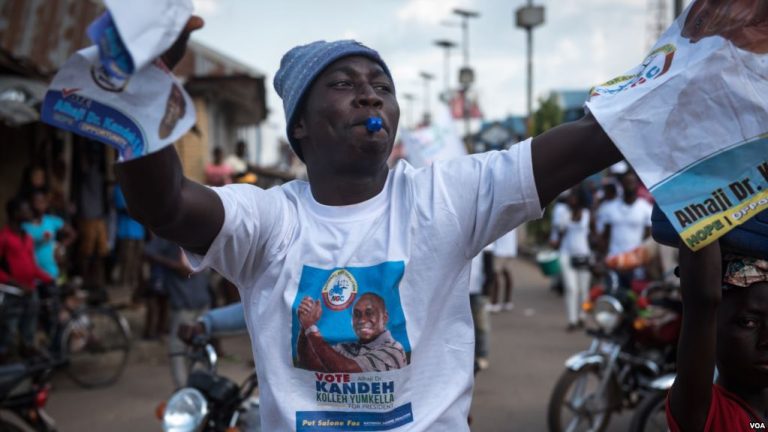
Kandeh Yumkella, Agricultural economist, and former United Nations Under Secretary General, will lead the National Grand Coalition. The three men are among 16 candidates vying to replace Mr. Koroma, who easily won the 2012 election by 58.7 percent, beating Mr. Bio by 21.3 percent.

Mr. Yumkella, who has made some inroads in unlikely communities in a political system that is largely divided along tribal and regional lines, is likely to force a runoff.

Corruption

Mr. Koroma, who is largely credited to have improved electricity supply, free health care for toddlers, and for 6 percent economic growth in 2015, has continued to defend his legacy while others accused his government of corruption including millions of dollars in foreign donations to fight Ebola that killed more than 4,000 people.

Today’s election is likely to draw large turnout. More than 80 percent of registered voters, one of the highest in Sub-Saharan Africa, are expected to vote. |TAP|

Reviews