Home Blog Page 15

Landmark Case Forces Mauritania to Prioritize Eliminating Slavery


Minority Rights Group International (MRG) in London gained an exciting win for the anti-slavery movement in Mauritania. Slavery based on descent remains widespread in the West African country, and the anti-slavery struggle has mainly been left to international and local human rights organizations. In this story, Emma Eastwood, Senior Media Officer at MRG, reports the rights group’s scored victory.

By Emma Eastwood | The AfricaPaper

Late last week the African Committee of Experts on the Rights and Welfare of the Child (ACERWC) made a landmark ruling in the case of Said and Yarg Salem against Mauritania. The case was brought by UK based Minority Rights Group International (MRG) and Mauritania’s oldest anti-slavery organization, SOS Esclaves.

Widespread Slavery

In the first ever such case in the country, two brothers born into slavery in Mauritania, sued their former masters for slavery.
A t is shown in the water.
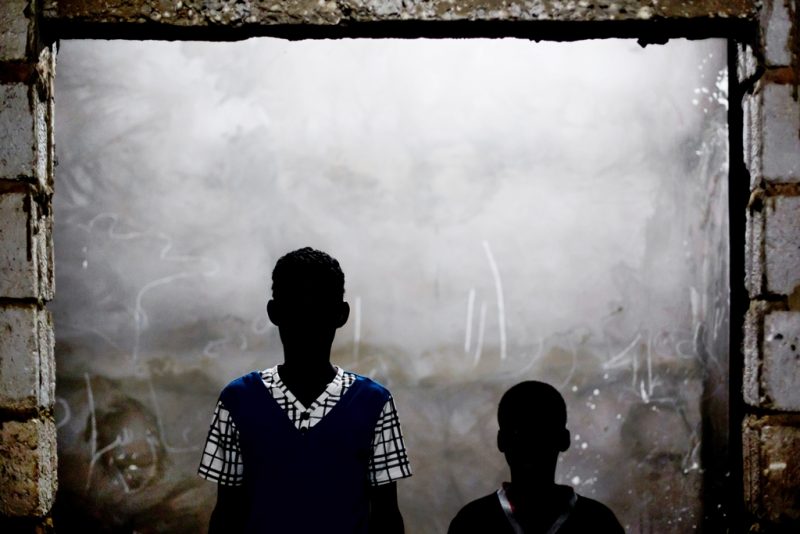
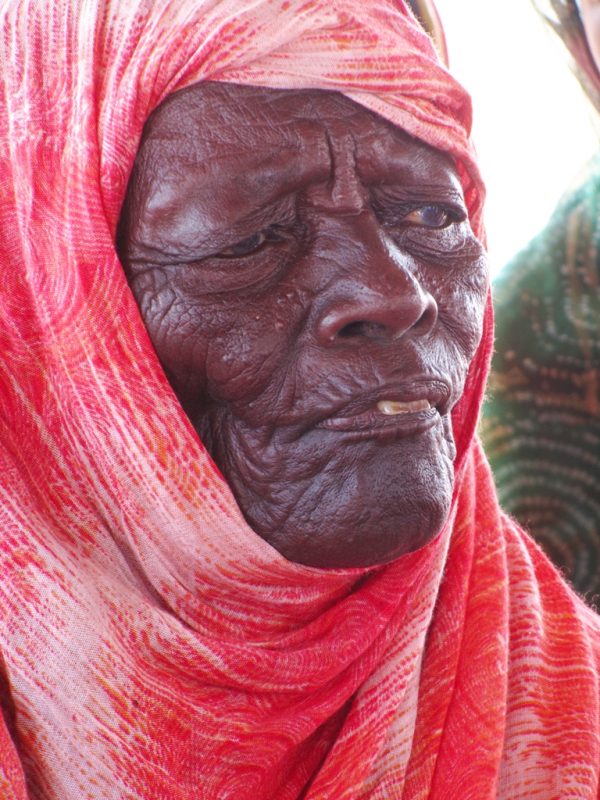
Said and Yarg Salem against Mauritania in Anti Slavery Case. Photo: Michael Hylton/MRG

The ACERWC found that Mauritania’s authorities have failed to prevent, investigate, prosecute, punish and remedy the widespread practice of slavery, which particularly affects the ethnic Haratine community. Ruling that Mauritania’s Anti-Slavery Law does not provide adequate protection against slavery in practice, it found the state to be in violation of its obligations to protect children’s rights under the African Children’s Charter.

Prosecuting Perpetrators

The landmark decision now requires Mauritania to provide the two child victims with compensation, psychosocial support and education, and ensure that all the perpetrators are brought to justice. It must also take wider steps to eradicate child slavery in Mauritania, including providing special measures for child victims and making the elimination of slavery a priority. The decision has major implications for anti-slavery activists in Mauritania and around the world.

“This ruling has the potential to bring about real change in how Mauritania addresses the criminal prosecution of slavery in Mauritania,” says Lucy Claridge, MRG’s Legal Director and member of the team presenting the case to the Committee in 2016.

Generational Slavery
A t is shown in the water.
Michael Hylton/MRG

In Mauritania slave status is passed down from mother to child, and the brothers, Said Ould Salem (born 2000) and Yarg Ould Salem (born 2003), automatically became slaves to the El Hassine family at birth.

The boys managed to escape their enslavement in April 2011, and in November that same year, their master, Ahmed Ould El Hassine, was found guilty in the Criminal Court of Nouakchott of holding the brothers in slavery and depriving them of schooling. In the first and only successful prosecution under Mauritania’s 2007 anti-slavery legislation, he was sentenced to two years imprisonment and ordered to pay compensation of MRO 1.35 million [USD 4,700].

Minimal Sentence

The sentence and the amount of damages awarded were far below the tariff of five to ten years imprisonment provided for in the 2007 anti-slavery law and were appealed by the State Prosecutor in 2010. Additionally, El Hassine was released from jail pending the appeal, which did not take place until shortly after the submission of the case to ACERWC.

In November 2016, the Court of Appeal increased the level of compensation awarded to the boys, but their former slave owner’s sentence remained unchanged, requiring him to serve only the remainder of his original two-year sentence.

Appeal Court
A t is shown in the water.
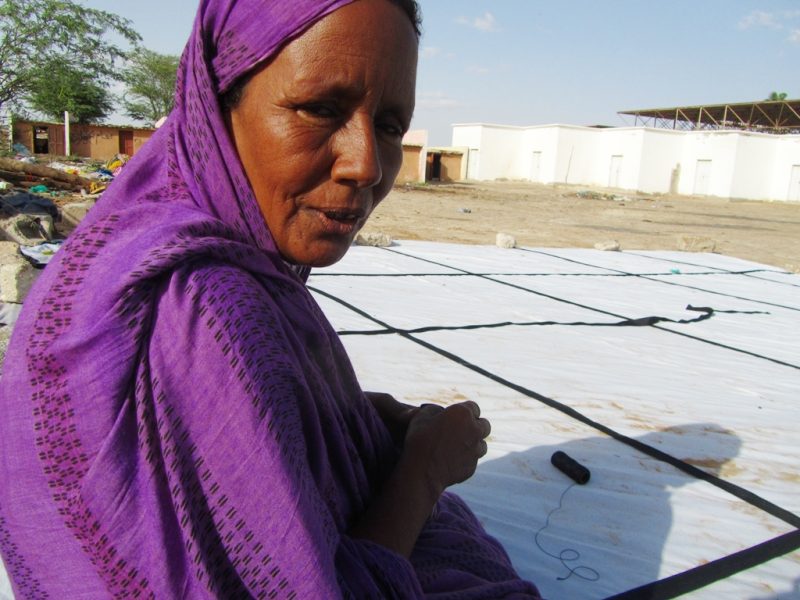
A Haratine woman in Nouakchott. Photo: Michael Hylton/MRG

With the support of MRG and their lawyer, the boys appealed to the Supreme Court.

“We are hopeful that this ruling from the ACERWC will have a positive bearing on the ongoing appeal before the Mauritanian Supreme Court, and other criminal complaints of slavery which are currently stagnating in the Mauritanian courts,’ says Claridge.

Haratine, or Black Moors, comprise about 40 percent of Mauritania’s 4.5 million population. Even though not all of them are currently enslaved, they are the most disenfranchised community in the country and suffer discrimination, marginalization and exclusion due to their historic membership of the ‘slave caste.’

Entrenched Slavery

Mauritania has the most entrenched system of slavery in the world. Even though the government says this practice no longer exists, MRG experienced and observed that slavery continues in the country.

Despite the official abolition of slavery in 1981, it is estimated that around 18 percent of Mauritania’s population live in slavery today, treated as the property of their masters, living under their direct control and receiving no payment for their work. |TAP|
University of Liberia’s Refusal to Register Students Sparks Protest in Monrovia


In Liberia’s capital, Monrovia, Police Fired Warning Shots Near the Presidential Palace to Disperse the Protest. President George Weah Intervenes to Calm Tense Students. The AfricaPaper’s Associate Editor James K. Fasuekoi was there and sends this report.

By James K. Fasuekoi | The AfricaPaper

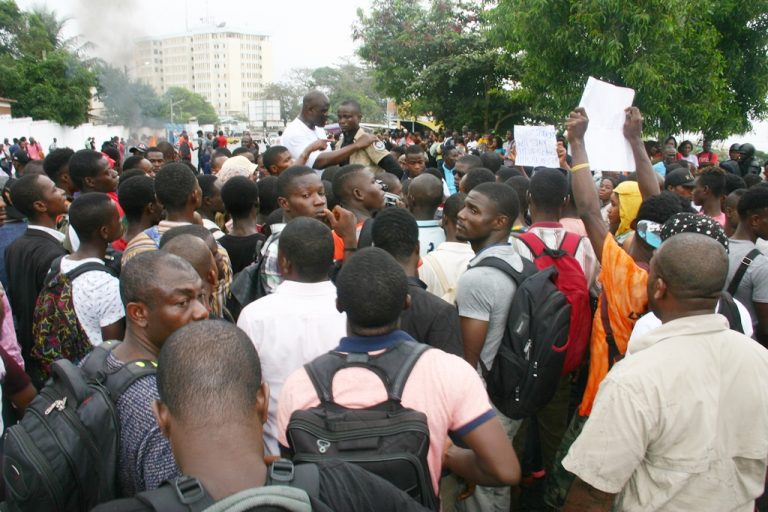
MONROVIA, Liberia – A student protest that attracted hundreds of people on to the streets of Monrovia demanding the resignation of the president of the University of Liberia remained unresolved despite government intervention.

Protest

A t is shown in the water.
Students Protest in Liberia. Photo: James Fasuekoi /The AfricaPaper

Many in Liberia’s capital and abroad view Friday’s and Monday’s protests by students as the first major political test for President George Manneh Weah.

A number of police officers sustained injuries and at least eight students were arrested as a result of the unrest.

Mr. Weah had sent an emissary earlier Friday to negotiate with the students to return to their campus, but the request was rejected with students demanding they wanted to meet with him. Weah has been in office less than three weeks in Africa’s oldest republic.

Riot Police

A t is shown in the water.
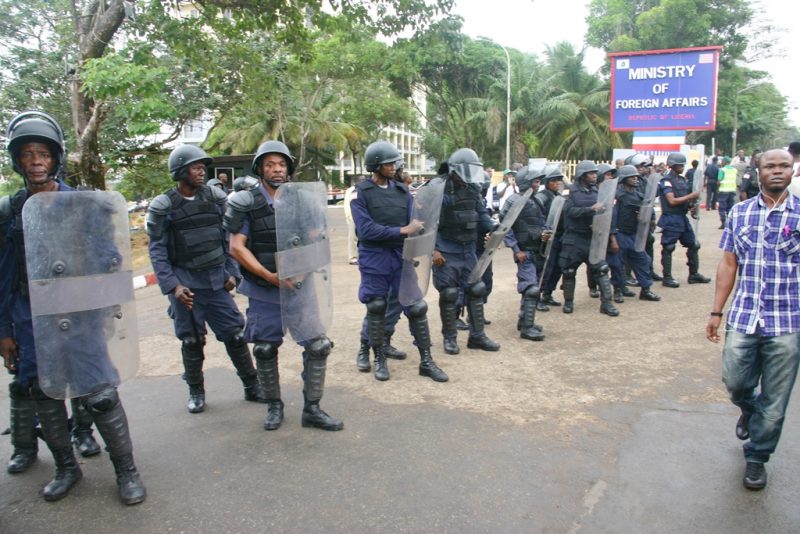
Police in Riot Gears. Photo: James Fasuekoi /The AfricaPaper

Police Chief Patrick Toe Sudue also intervened to get the rioting students change course, but has been unsuccess. Riot police fired a warning shot, followed by the discharge of teargas near the presidential palace Monday morning in attempt to disperse a large crowd of rioting students from the University of Liberia demanding the resignation of the university’s president, Dr. Ophelia Weeks.

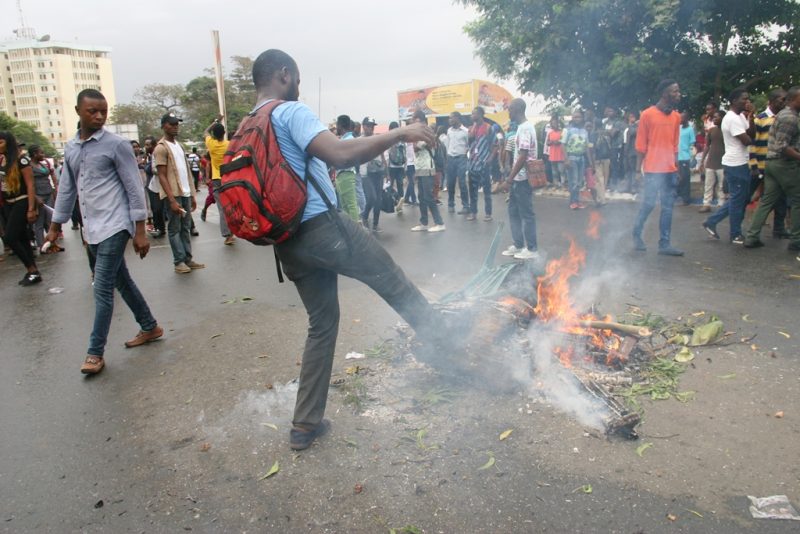
Students set up roadblocks for the second time in three-days. The students hurled stones at the police, smashing windshields of passing cars, including the government’s assigned vehicle belonging to Liberia’s House Speaker Bhopal Chambers. Speaker Chamberswas heading to work at the Capitol Building when his mini convoy came under attack.

Admission

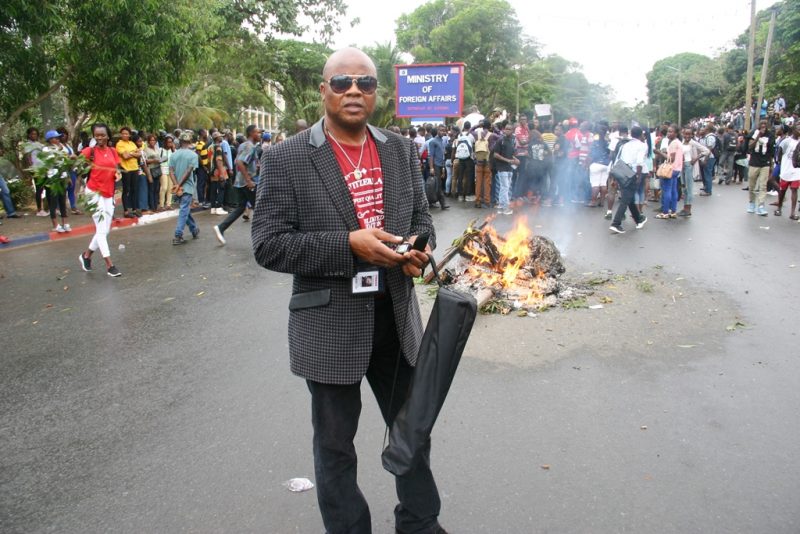
The incident occurred opposite the Liberian Foreign Affairs Ministry, once used by former president Ellen Johnson Sirleaf as a substitute to the main presidential palace which is just a few hundred feet from the rioting scene. This is also the main travel route for President Weah, and is considered the main reason the student decided to block the road to get Mr. Weah’s attention.

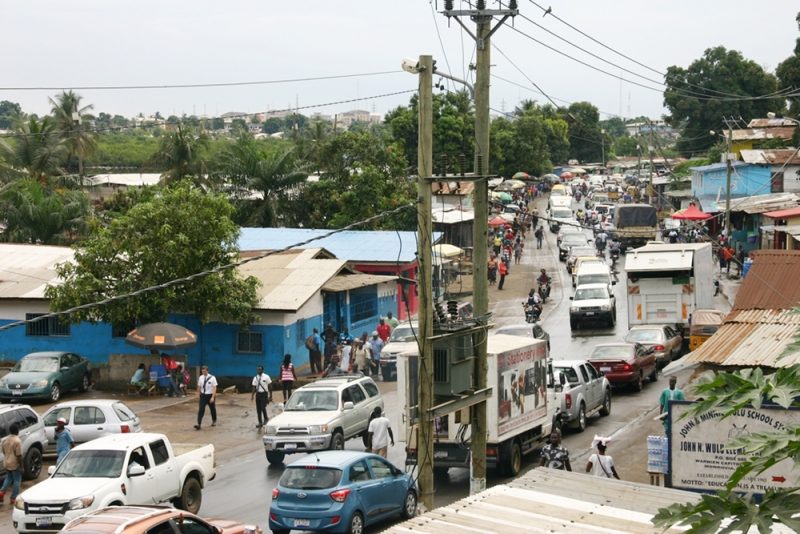
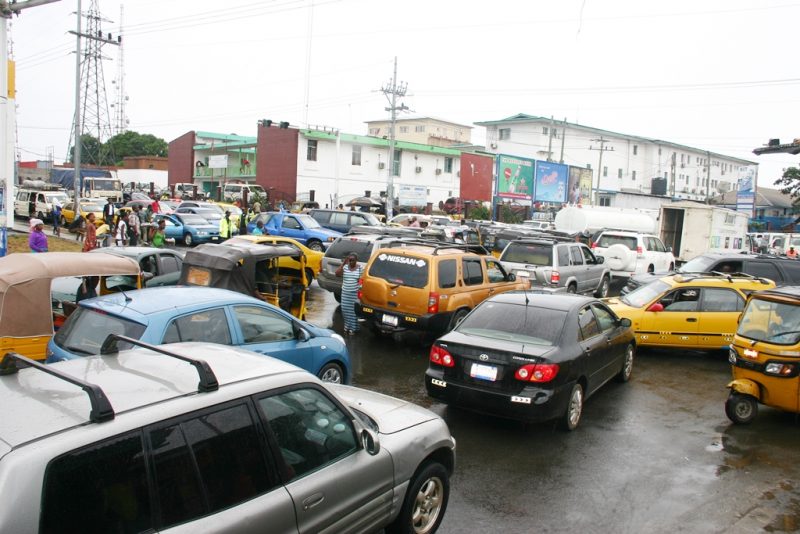
Monday’s incident paralyzed normal flow of activities on the south-west end of the capital city, Monrovia, thereby causing a huge traffic jam for several hours causing police to redirect traffic toward nearby Jallah’s Town, the only second exist route to the city’s Sinkor suburb.

House Speaker Chambers later sought the attention of the authorities of the University of Liberia (UL) on the matter and was spotted leaving the building that houses the office of the college’s president, Dr. Ophelia Weeks. Our Associate Editor had gone to see Dr. Weeks whom students accused of denying admission to 8,000 of their comrades who registered late Nov. 2017.

A t is shown in the water.
Traffic Jam as Students Protest. Photo: James Fasuekoi/The AfricaPaper

Emergency

Dr. Weeks was away from the university’s main campus and was reported to be holding an emergency meeting with student leaders, education officials as well as her UL staff on the Fandell University Campus, outside of Monrovia.

The Liberia National Police also reported that two of its offIcers responding to the protest from the Police Support Unit (PSU) suffered serious wounds and were being treated at a local hospital in the capital.

“Police officers responding to the riot scene were attacked by the rioting UL [University of Liberia] students with stones and foreign materials, which the LNP described as unacceptable and has the potential to undermine the rule of law and frighten potential visitors to the country,” said the police, in a statement released last night.

Arrested

At least eight UL students were arrested Monday following the protest but have been released to the custody of their lawyer who is expected to accompany them when they appear today for a hearing.

The UL students started their protest last Friday, was due to what some called “Dr. Weeks'” insensitivity to the plights of some 8000 students who had already started the process of admission but were reportedly rejected by the college without “good reasons.”

“Weeks has chosen to consider just 2,000 students out of 10,000 who previously paid their fees on or before November 25, 2017. The action of Dr. Weeks does not only contravene the Board’s mandate, but it is not in the best interest of both the University of Liberia and the state, especially the pro-poor agenda of our government,” stated a statement released by student leaders, Martin K. N. Kollie and Butu Levi, both secretary General and Chairman for the university’s Student Unification Party (SUP).

Roadblocks

A t is shown in the water.
Traffic Jam as Students Protest. Photo: James Fasuekoi /The AfricaPaper

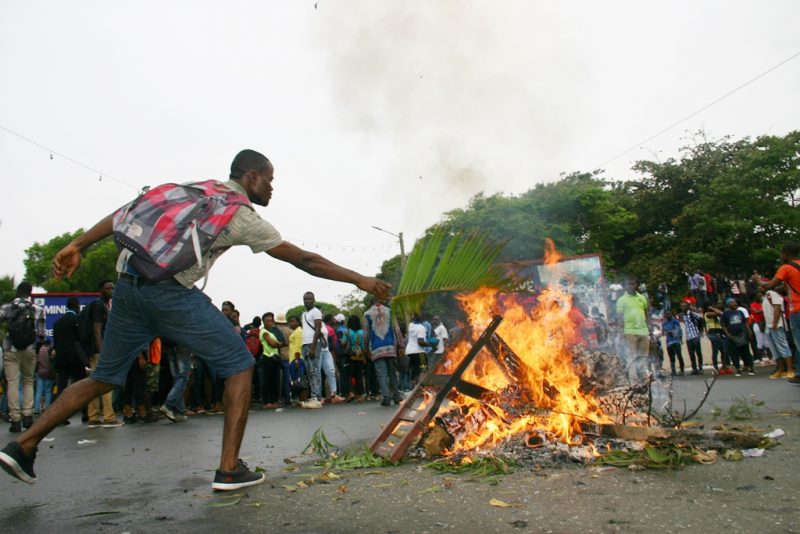
The students, during last Friday’s protest, set up roadblocks and burned tires and other objects such as chairs and tree branches opposite Foreign Ministry on United Nation Drive, adjacent to the University of Liberia’s main campus.

SUP’s Secretary Kollie who spoke to The AfricaPaper Tuesday evening via phone disclosed he along with his party’s Chairman Butu Levi and another student leader met with Liberia’s new president, George Manneh Weah and expressed their grievances surrounding the refusal by the UL administration to admit the 8,000 student into the state-run university.

Illiteracy

A t is shown in the water.
Student in action. Photo: James Fasuekoi /The AfricaPaper

Mr. Kollie sounded optimistic and said that as a result of Tuesday’s meeting with President Weah, the college has agreed to register the “8,000” students in a country that is well known to carry high illiteracy and poverty rate in the West African region despite its abundant mineral resources a country of 4.8 million people. The admission, according to Kollie, will run from Feb. 7, 2018 through March 10, 2018.

Questioned by this writer as to whether the students would back down from their early request demanding to President Weah to “fire” or replace current college president, Dr. weeks, Kollie said they would halt protest temporarily while admission of the students takes place and would later present a formal letter to request the removal of Dr. Weeks as president. |TAP| Africa’s Newspaper of Record.

A t is shown in the water.
TAP’s James K. Fasuekoi in Liberia. Photo: The AfricaPaper

The AfricaPaper: James K. Fasuekoi is Associate Editor at The AfricaPaper currently in Liberia.

Hugh Masekela, South African Jazz Master Dies at 78


By Alie B. Sheriff | The AfricaPaper

Hugh Masekela, the legendary South African and international jazz maestro died yesterday at 78 after years of battling with prostrate cancer, according to his family.

Jazz

A t is shown in the water.
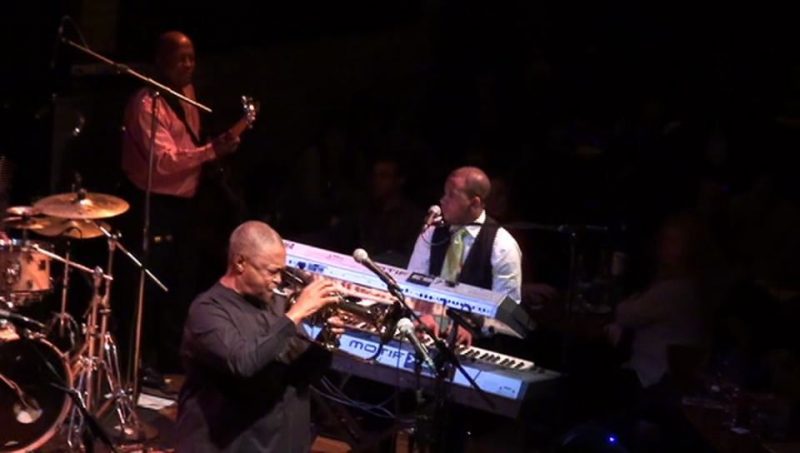
Hugh Masekela at the Dakota Club, MN, USA. Photo: Issa Mansaray/The AfricaPaper

“Mr. Masekela was one of the prisoners of jazz music in South Africa whose talent was recognized and honored internationally over many years,” South African President Joseph Zuma said in a statement released shortly after the musician’s death.

“He kept the torch of freedom alive globally fighting apartheid through his music and mobilizing international support for the struggle for liberation and raising awareness of the evils of apartheid.”

Collaborate

A t is shown in the water.
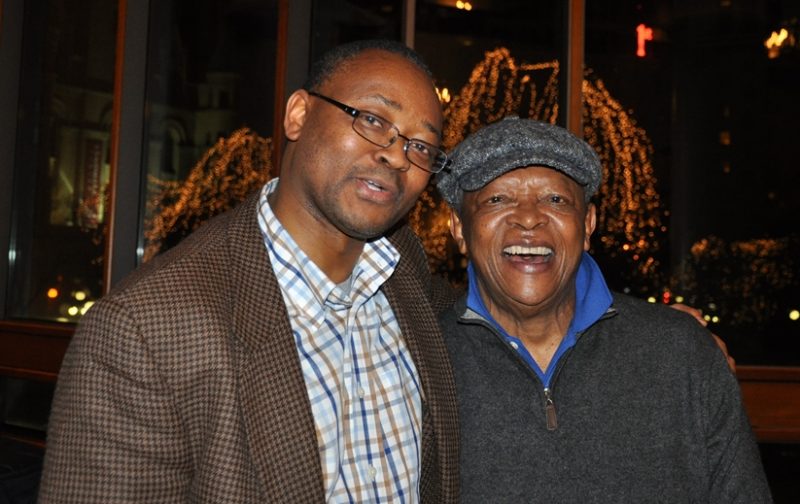
Hugh Masekela (R) and Issa Mansaray, The AfricaPaper’s editor at Ordway, MN, USA. Photo: Alice Mansaray/The AfricaPaper

Over his music career, Masekela collaborated with such names as Bob Marley, Harry Belafonte, Paul Simon, with whom he appeared on the Graceland album tour, Fela Kuti, and ex-wife Miriam Makeba.

The trumpeter and composer spent several years in exile from his native, becoming one of the leading international activists against apartheid.

Work

Masekela lived and worked with other African musicians in Liberia, Guinea, Ghana, and Botswana before returning home in 1990, after the release of Nelson Mandela from prison.

Masekela received the Order of Ikhamanga in gold, the highest medal of honor after performing in front of his home crowd at the 2010 FIFA World Cup opening ceremony.

http://https://vimeo.com/44287296

|TAP|Africa’s NewsPaper of Record

WORLDVIEWS: SIERRA LEONEAN REALITIES AND PEOPLE IN THE DIASPORA


A t is shown in the water.
Alhaji Mbaimba Turay

By Alhaji Mbaimba Turay| The AfricaPaper

I consider recent attempts by Sierra Leoneans in the diaspora to fix the problem in Sierra Leone as too little too late. The government has been emboldened by the silence, complicity and passivity of able and competent Sierra Leoneans who have been looking the other way.The current disparate treatment of a certain class of Sierra Leoneans is the logical consequence of leaving a government that is said to be democratically unchecked for a very long time. Here are some of the opportunities that were squandered by Sierra Leoneans especially those in the diaspora:

Political Fraud

The second senior most position in the country – Vice President- was affected and Sierra Leoneans did not shout on top of their voices. Many Sierra Leoneans gave the government a blank check to misuse power.

Ebola Funds

Sierra Leoneans heard about improprieties in the way the Ebola funds were siphoned, and they did not do much. Ebola is not an ordinary disease, it is one that can wipe out a whole nation. The government was unprepared, untrained, and slow to respond To the people during Ebola, but enjoyed misusing the Ebola funds.

Misused Donations

Sierra Leoneans have not probed aggressively into the use of the mudslide donations. Recently many of the mudslide victims were kicked out of three government camps. The government is yet to pay them their little allowances.

Imposed Burden

Sierra Leoneans allowed the government to impose the burden on Sierra Leoneans in the diaspora to travel to Sierra Leone with all the inconvenience and costs just to register and vote. Alternatively, the government could easily and with adequate funding have registered the Sierra Leoneans in the countries that they are and allow them to vote where they are. As for Guinea, Benin and other African countries.

Selection

Some Sierra Leoneans have made the Government to become too comfortable with selection instead of election and the product is the President virtually selecting the APC flag bearer. Everone grumbled, but most are now supporting the selected candidate.

Bad Apples

The Sierra Leonean diaspora goodwill has been undermined by the bad apples that returned to Sierra Leone. While some of them had to deal with animosity from the home – based who are often opposed to changes – “the diasporans” have come across as desperate individuals who are ready to do anything to make their way. By so doing they have lost their respect and fed the stereotype against “diasporans” generally.

Fierce Struggle

Some Sierra Leoneans in the diaspora have also involved themselves in fierce struggle among themselves to pave their way for their return home. This struggle has undermined the way “diasporans “are perceived by the politicians and the government. By so doing they have lost their credibility in the eyes of the government. The diaspora has failed to provide an alternative to the sycophancy, tribalism and improprieties for which some of the home based have been known.

Constitutional Review

Sierra Leoneans did not seize the opportunities presented by the establishment of a constitutional review committee to unearth some of the discrepancies in the 1991 constitution and in the government. The disparate treatment of dual citizens and the ineligibility of some incumbent Ministers and MPS and probably even the President (provided the speculation of British nationality is true).

I-Don’t- Care

The I-don’t-care attitude of Sierra Leoneans when the President makes himself a Chairman for life in a potent and a viable political party in the country. Nobody is appreciating the dangers!

Hajj Saga

The rapidity with which Sierra Leoneans have forgotten about the Hajj Scholarship saga. Hajj is important to Muslim families in Sierra Leone and a blunder in this area should have been treated a lot more seriously.

Death Beds

Going to any government hospital in Sierra Leone? You sign your death warrant. Old infected beds, unsensitized work heath environment, lack of trained medical professionals, expensive medical drugs.

Poor Education

The government continues to undermine the country’s educational system by not paying teachers and lecturers for months. Sierra Leone is breeding the next generation of illiterates, and lacking in new technology to enhance education. Some in the diaspora blindly support the government and invite APC speakers who talk about cutting their speech “as short as a mini skirt.”

Squandered Opportunity

I cannot list every squandered opportunity. However, it is noteworthy that one way you make dictators and perpetrate injustice is by doing nothing or saying nothing when you should have done so. This last-minute rush by Sierra Leoneans to fix the Sierra Leonean problem especially that relating to dual citizens is like giving first-aid post mortem. The need to clarify and speak truth to power arose a longtime ago but Sierra Leoneans at home and abroad did not rise fully to the occasion. Today the government, a subdivision or agent has/have become too powerful and do not care who is hurt even if you are a Sierra Leonean in the diaspora.

The AfricaPaper: Alhaji Mbaimba Turay, esq. is The AfricaPaper/AIIR’s Legal Advisor and Columnist.


AFRICA’S CONTRIBUTION TO USA: Major US College Installed Its First Black President


FROM OUR ARCHIVES – AFRICA’S CONTRIBUTION TO USA

By Alie B. Sheriff | The AfricaPaper

Fulton, MO – In the late 1970s, the euphoria that surrounded Nigeria’s second republic that ended military dictatorship and welcomed the country’s first civilian government in years, was evident in most part in the West African nation.

Journey

There were signs of renewed hope with the advent of democracy. But, for young Benjamin Ola Akande, the journey to acquire western education and, perhaps, to secure a better future had just begun. Nearly two weeks after the country’s historic election on August 11, 1979, Akande left Ibadan for the United States. He had no aspiration to become a college-level administrator, but that recently changed when he was installed as president of Westminster College in Fulton, MO, in the nation’s heartland.

Akande 53, replaced George B. Forsythe, who retired after 10 years at the university.

“It has been a long journey,” Akande said, a few days before his installment as the 21st president of the 165-year-old liberal arts college.

Inauguration

The inaugural ceremony was held Oct. 31, with more than 1,000 students, staff and relatives, some from as far as Nigeria in attendance.

In his inaugural speech, Akande promised to implement some important changes to the college’s system. One such change would be enhancing Westminster College’s reputation as a global institution that has for years attracted international students. There were also echoes of public-private partnerships.

Akande, who served as an Economics professor and dean of the George Herbert Walker School of Business and Technology at Webster University in St. Louis, has one other reason to celebrate.

National Security

Since becoming president at Westminster College, the institution has added a new major that he believes will attract traditional and non-traditional students to the burgeoning programs. According to Akande, the National Security degree program will focus on leadership and innovation, and is open to students pursuing careers in national security, homeland security, intelligence or cyber security. Akande, however, recognized the result as a collective effort by the college at large.

“We are a college that can emphatically state what our strengths are,” Akande said. “We have been validated by the marketplace,” he added, alluding to a recent report by SmartAsset, a national financial technology company, which ranked Westminster College in Fulton, MO in the Top Five for students pursuing college education where graduates earn high starting salaries.

Partnership

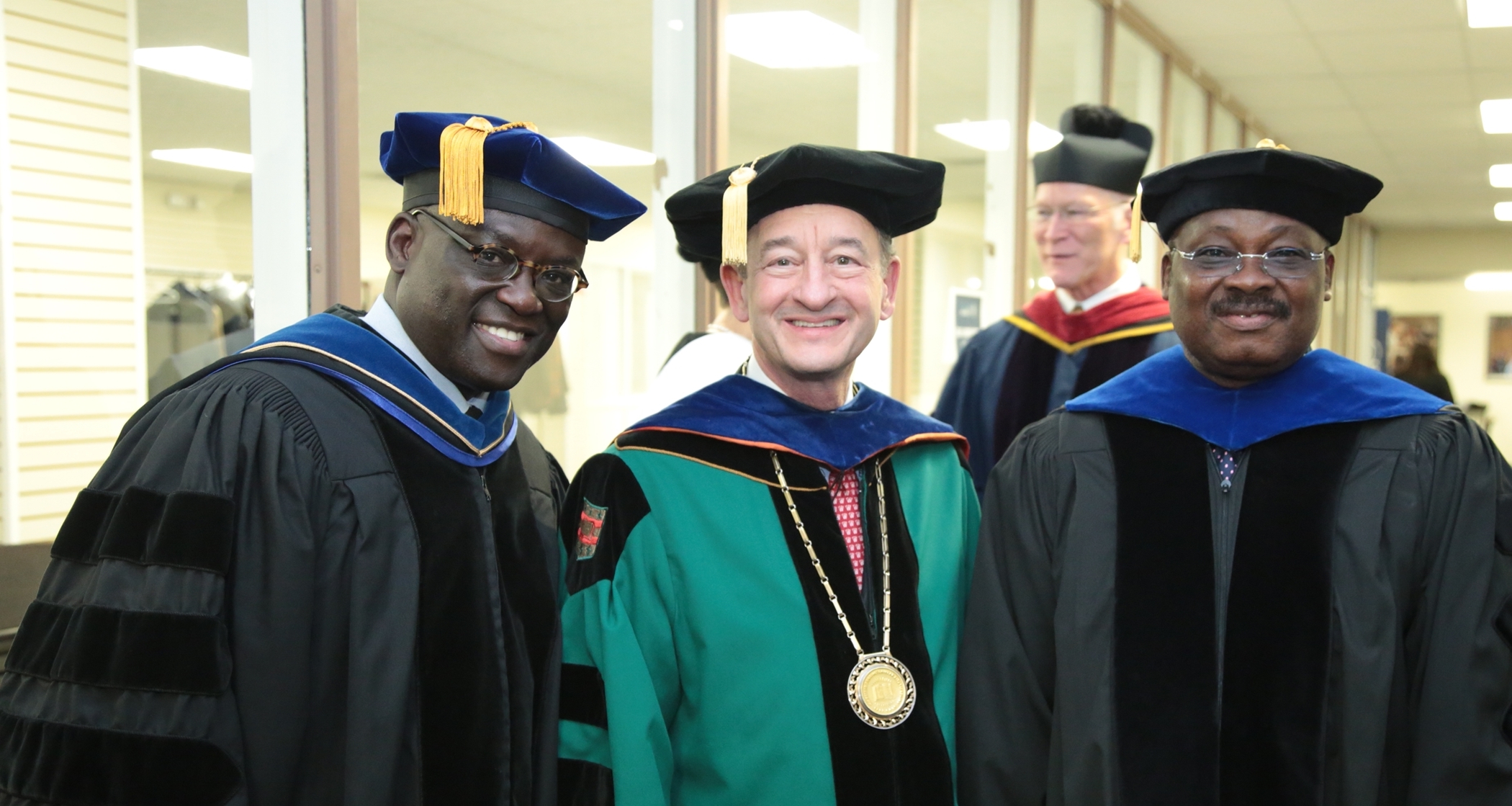
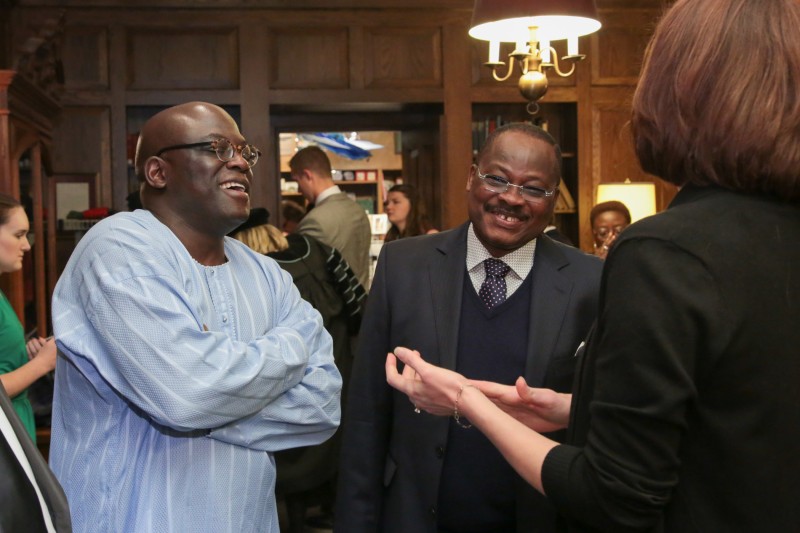
From left, Dr. Akande and Gov. Ajimobi enjoying a lighter moment with Jennifer Bondurant, of Westminster College following the installation ceremony. Photo submitted - TAP
From left, Dr. Benjamin O. Akande, and Gov. Ajimobi enjoying a lighter moment with Jennifer Bondurant, of Westminster College following the installation ceremony. Photo: Tu Square Studio

Akande is optimistic about exploring opportunities beyond the Fulton campus. It is not surprising that former Nigerian Senator Isiaka Abiola Ajimobi, the Executive Governor of Oyo State, representing the Federal Republic of Nigeria, attended Akande’s inauguration.

During his remarks, Ajimobi announced an academic partnership between Westminster College and Oyo State. The Nigerian institution funds and oversees Samuel Ladoke Akintola University of Technology, a public university in Ogbomoso in southwest Nigeria.

The bilateral partnership, which will start next September, will focus on technology, cyber security and science, Ajimobi said.

“We believe that we have made a concerted effort, and we have to take education to wherever it’s needed,” Akande told The AfricaPaper days before his installment. “It is not confined to Fulton.”

Challenges

Akande humbly admitted there are challenges ahead for an institution renowned for hosting world leaders such as Russia’s Mikhail Gorbachev. The college is also the venue of British leader Winston Churchill’s “Iron Curtain” speech in 1946 with President Harry S. Truman in attendance.

“This is no easy task because ‘status quo’ has a large constituency,” Akande said. “Yet, we cannot let the chains of ‘status quo’ prevent us from fulfilling our future … to embrace a broad spectrum of possibilities and to create a truly exceptional place … one that doesn’t forsake the past, but builds on it.”

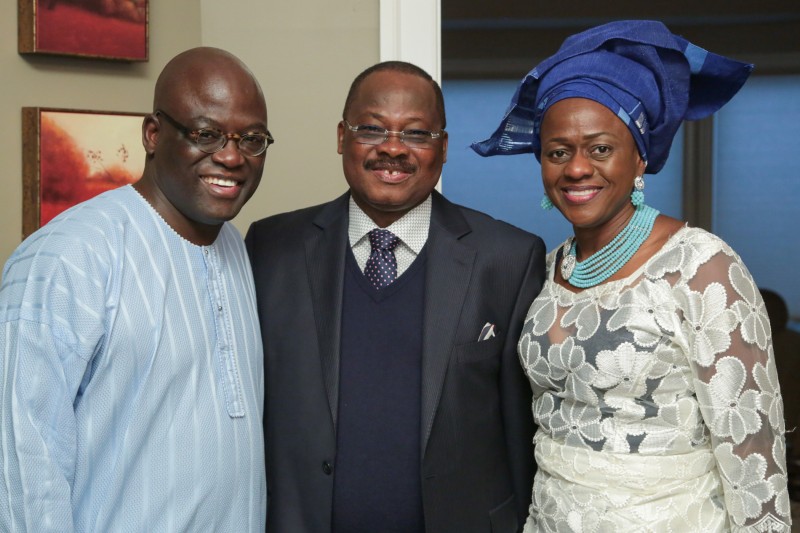
From left, Dr. Akande, Gov. Ajimobi, and Akande's wife, Bola Akande. Photo: Tu Square Studio.
From left, Dr. Benjamin O. Akande, Gov. Ajimobi, and Akande’s wife, Bola Akande. Photo: Tu Square Studio.

New Ideas

In his inaugural remarks, Akande urged students, staff and the Board of Trustees to be open to new ideas that are “bold and forward looking,” describing his vision for the college as “next practice” instead of the acclaimed “best practice.” He also encouraged his audience to move beyond their comfort zones.

Credential

Akande, a Nigerian-born U.S. citizen, is the first African-American president at Westminster College. He attended Wayland Baptist University in Plainview, Texas, where he earned a bachelor’s degree in business administration. Akande has master’s degrees in public administration and economics and a doctorate in economics from the University of Oklahoma. He also holds a postdoctoral degrees from Harvard and Oxford.

Credit

The son of a Baptist Minister, Akande credited his father, Rev. Dr. S.T. Ola Akande, of Ibadan, Nigeria for his hard work, leadership and academic success. Days before his inaugural speech, Akande told The AfricaPaper that he is fortunate to have listened to his father.

He recalled his father advising him of the new culture that he was about to experience, “the people,” “American history,” “hard work” and “ethics” as a completely different phenomenon from his upbringing as he prepared to leave his hometown.

“I did this without losing my identity,” Akande said. “I did not try to become someone else.”

|TAP| Africa’s Newspaper of Record

The AfricaPaper: Alie B. Sheriff is The AfricaPaper’s Political and Business Editor.