Home Blog Page 16

“Keep Hope Alive,” Says Jesse Jackson as he gives trophy to East African Youths


By Issa Mansaray | The AfricaPaper

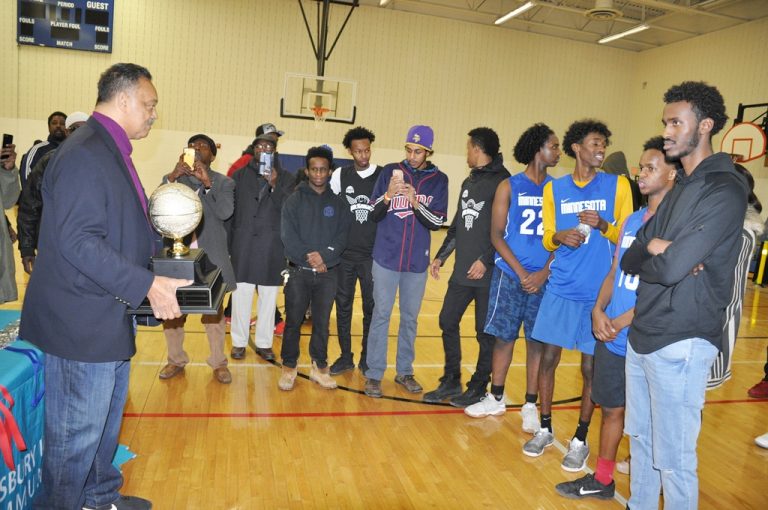
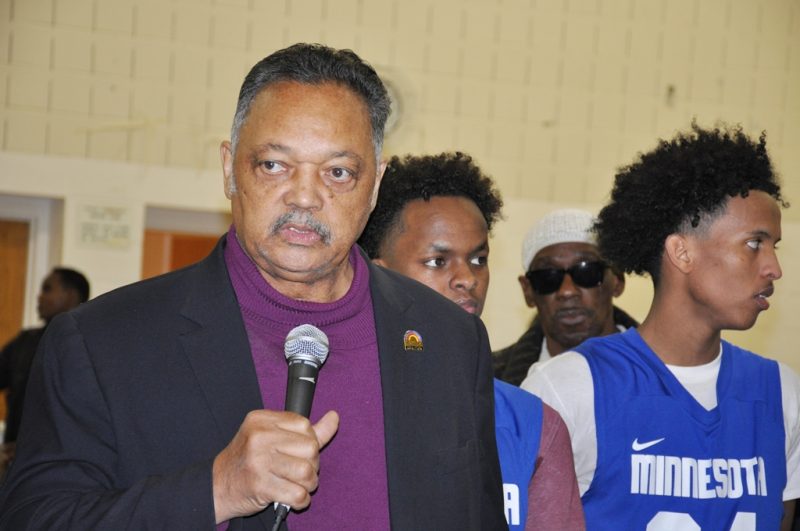
Cedar Riverside, Minn – Civil Rights Activist, the Rev. Jesse Jackson, has called on the Somali American community to “keep hope alive” as he expressed concerns over the ongoing debate on immigration, health care, and unemployment in Black communities.
A t is shown in the water.
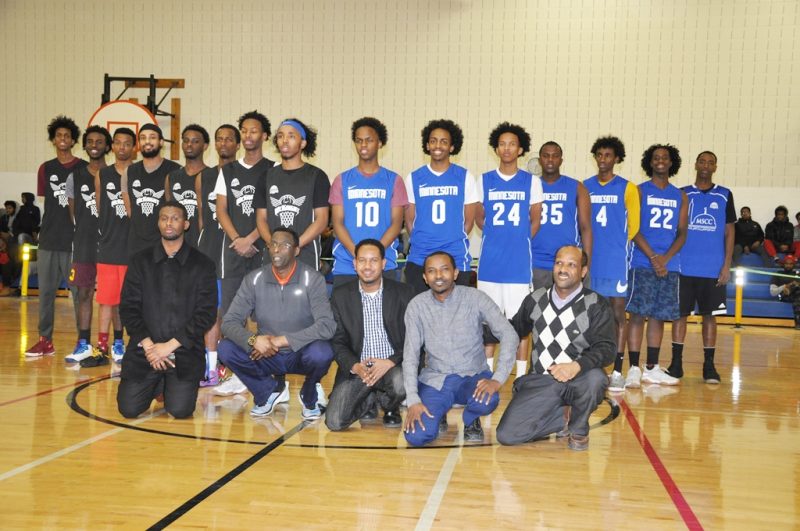
Roseville and St. Paul teams with organizers. Photo: Issa Mansaray/The AfricaPaper

Access

Mr. Jackson was very critical about the unfair treatment of immigrants in the U.S., the lack of access to quality health care in minority communities, and the staggering unemployment rate in Black communities. Unemployment rate for Black Americans is 6.8 percent, which is more than the national average of 4.1 percent.

Mr. Jackson made those comments last Saturday, as he honored the Somali-American youth basketball players at Brian Coyle Center. The civil rights activist, who was the guest of honor, presented the championship trophy and other awards to the aspiring basketball players.

Prize

The St. Paul team took home the top prize, making it the third consecutive wins since 2015. Saturday’s match drew a large crowd in support of the home team from Roseville, but fell short to the visitors, who won by 68-60, earning the St. Paul team the right to keep the coveted trophy permanently. This year’s event brought together eight teams from various Somali communities in the metro area.

A t is shown in the water.
Winners – St. Paul team. Photo: Issa Mansaray/The AfricaPaper

“It was a team effort, team defense,” said Mohamed Khalif, one of the players from the St. Paul team. “We got in and, we won three times in a row.”

Khalif, who was celebrating his team’s winning, has yet to decide whether he plans to take part in next year’s event. “It depends on the team,” he said. “We might come, or we might not. If we come, hopefully we’ll get a better competition.”

Game

Referee Abdinoor Farah was pleased to see the best team win. He recalled the intensity and speed in which the two teams were playing. “It was a very intense game” He said. “It was hell of an experience. That almost gave [me] grey hair as a referee in a game with youth full of energy.”

Farah, like many others who came from various neighborhoods saw the event as a symbol of unity and celebration of the Somali culture.

“It was a great environment for me and everybody that was here,” he said.

A t is shown in the water.
Roseville moves the ball, but lost. Photo: Issa Mansaray/The AfricaPaper

Mahdi Abdi expressed gratitude, and thanked everyone that attended the event.

The St. Paul team includes – Mustafa Ali, Adnan Guled, Mohamed Khalif, Jama Bulhan, Amar Abdulkhadir, Abdifatah Mohamed and Abdirahman Arab. Playing for Roseville were Mohamed Salah, Mukhtar Adan, Ali Ali, Mahad Haji, Shirwa Guled, Zakariya Abshir, Mohamed Ali, and Liban Abdi.

About 11 fouls were counted against the defending champions – St. Paul, and the Roseville team carried the highest number of 14 fouls.

Mr. Abdi said they want to continue the tournament to engage players from 15 to 25 years old. He believed these group of people needed most attention, safe environment, mentors, needing help to keep them away from at risk activities.

A t is shown in the water.
The Roseville team. Photo: Issa Mansaray/The AfricaPaper

Support

Brain Coyle center continues to support many youths with activities year-round. According to Abdirahman Mukhtar, many of these youths do not have the means to go away for holidays or vacations outside the city while schools are closed. Therefore, they must keep them busy with high quality and structured activities indoors and outside.

“The community and the youths are very happy about it,” Mr. Abdi said. “The community was engaged, it is part of it, and they enjoyed it.”
A t is shown in the water.
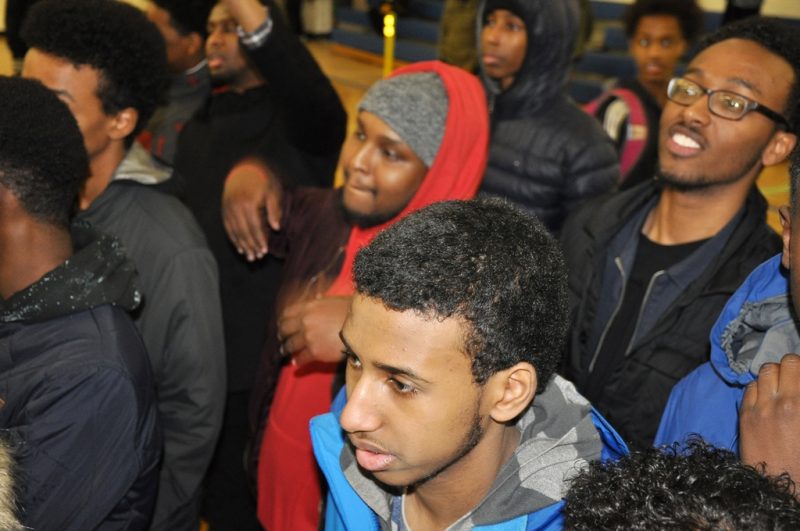
Spectators: The community was enraged. Photo: Issa Mansaray/The AfricaPaper

The Brain Coyle Center, once known for series of gun violence and gang attacks among youths, has seen some positive changes as more and more youths turned to activities such as youth’s sports and cultural events. Each year, the tournament has brought together scores of Somali immigrants and their families to a single venue to celebrate their culture.

New Generation

Most of the players and attendees at Saturday’s basketball finals were youths from a new generation of young Somali Americans with a drive to advance themselves and to participate in all spheres of life. The games and tournaments are part of the learning skills for leaderships, access and opportunity for young people according to the organizers.
A t is shown in the water.
Rev. Jesse Jackson speaking to the East African youths. Photo: Issa Mansaray/The AfricaPaper

Located in the heart of the Cedar Riverside, the Brian Coyle Center serves over 7,200 people in a neighborhood also known as “Little Mogadishu.”

Abdirahman Mukhtar, Youth Program Manager at Brian Coyle Center said most of the youths were given roles to run the game smoothly. He believes it helps them to learn leadership and builds their confidence.
A t is shown in the water.
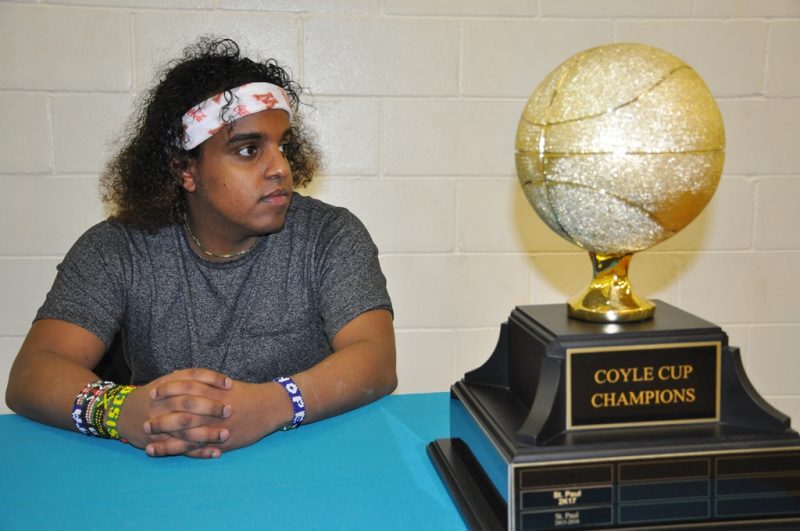
Sisco waits for the winners. Photo: Issa Mansaray/The AfricaPaper

Abdurazak Omar, fondly know as Sisco played background Somali music to entertain the players before and after the game. On the table left from Sisco, Abdul Hussein who is FANS scholar from Brian Coyle Center youth program keeps track as scorekeeper. Mukhtar said they look forward to helping more youths at the Center.

“It is a way of keeping them busy and to enable them learn skills that they can apply in their work life,” Mr. Mukhtar said.|TAP| Africa’s Newspaper of Record
Sierra Leone Mudslide Survivors Living Back in Danger Zone


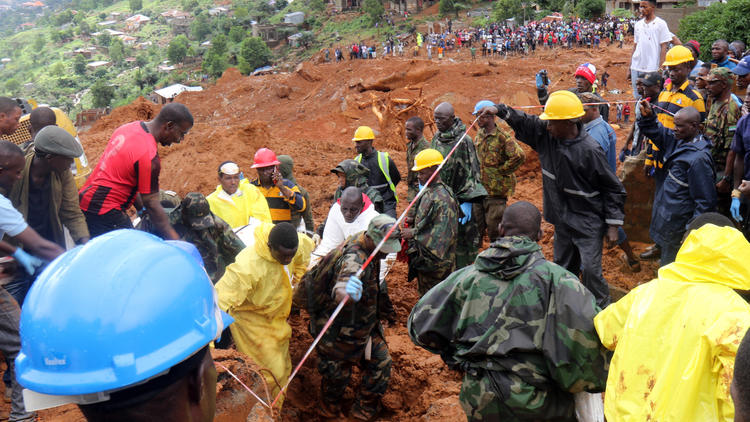
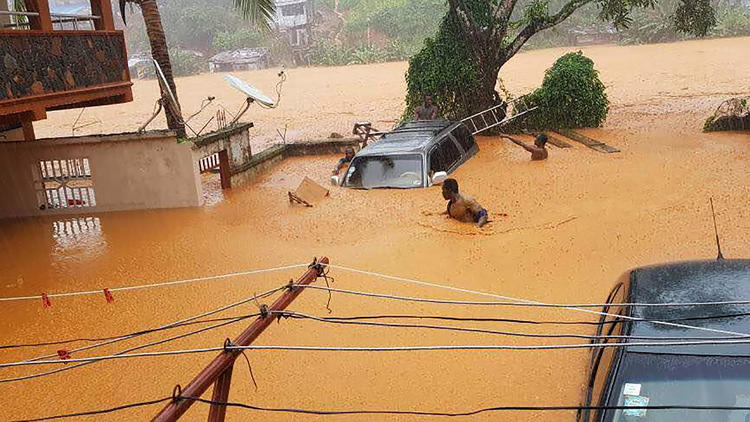
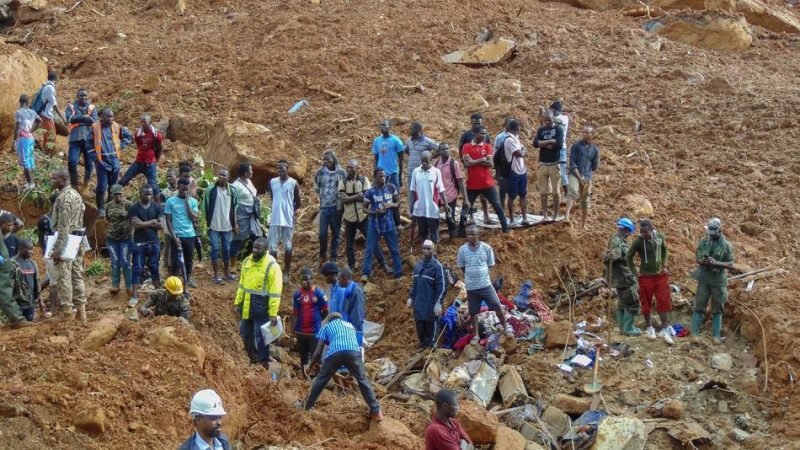
Freetown, Sierra Leone – Four months after the landslides that killed her husband and more than a thousand others, Mariama Kamara has returned to the mountainside that collapsed onto their home to live in an unfinished building.
Kamara is one of hundreds of Sierra Leoneans recently kicked out of three government camps set up in the wake of the August 14 disaster, when heavy rains caused the partial disintegration of Sugar Loaf mountain, now a red rock scar looming over the country’s capital.
That day, heavy rains lashed the slopes left bare by chronic deforestation in Freetown, and huge boulders suddenly detached, rolling onto informal settlements, crushing shacks and enveloping entire households in the Regent district in red mud.
A t is shown in the water.“We are back again at Regent, trying to pick up what is left after the disaster,” Kamara told AFP, breastfeeding her eight-month-old son while sitting on a cinder block. Handed $280 by the British government and the World Food Programme to start a new life as a widow with three young children, the 27-year-old felt she had little choice but to return to the danger zone she had fled.
“I sold some of the handouts to pay transport fare for my two children to go to my mother, until I find a suitable place,” she explained, describing how she ended up living in one of four unrecognised settlements in the Regent area. There are fears another landslide could strike Regent when the next rainy season rolls around.

The School With No Roof

Despite the lack of sanitation and shelter, a school still operates in the ruined mountain district, with around 300 children learning to read and write in a building with no roof, doors or windows. Many of the students were orphaned in August.

Francis Abu Sankoh, a community leader, said the government had told him everyone eking out a precarious living had to get out by mid-November, but he refused to co-operate.

“We will not force these people to leave while they still have nowhere else to stay,” he told AFP, saying he knew of nearly 200 households living in half-finished structures in Regent.

Relief workers are meanwhile exhausted after four months filling in for a government that is too under-resourced to carry out basic disaster management, with the Red Cross handing out its own payments of $300 to 1,000 people in late December.

A t is shown in the water.“We have played our part to respond to the emergency, and it is time to release the affected victims,” said Father George Crisafulli, Country Director for Don Bosco Fambul, an orphanage turned halfway house for homeless Sierra Leoneans.

“It is the responsibility of government to provide financial support and housing for them,” Crisafulli added, as he prepared for the imminent departure of around 100 pregnant women and new mothers.

He noted that the government had promised to give financial assistance to child victims via a mobile money wallet, but they were yet to receive anything. Children who lost their parents would remain at the centre, he said.

Some orphaned children were taken in by families, but many are too poor to feed another mouth while facing their own dire straits, said Cecelia Mansaray a project officer for British charity Street Child.

“People are still suffering months after the disaster,” she said. “We have cases of people in unfinished buildings around Regent, Kaningo and Kamayama who had no place to go after they had left the emergency camps.”

Long Road to Mile Six

In the last 15 years, four major floods have affected more than 220 000 people in Sierra Leone and caused severe economic damage, according to a World Bank report issued in September.

This summer’s was the deadliest yet: 1 141 people were declared dead or unaccounted for, according to official figures.

The World Bank estimates that $82.41m is needed over the next three years for the recovery, or about 2.2% of GDP, including rebuilding the six health centres and 59 schools affected. Access to clean drinking water is also a serious problem.

Efforts to resettle flood victims in previous years have failed, as the government has directed them to Mile Six, an area without transport links, running water or electricity – even if it is safe from the weather – meaning residents soon drift back to dangerous neighbourhoods that have easier commutes.

Ismail Tarawali, Head Coordinator of the Office of National Security (ONS) which oversaw relief efforts, has accused some families of making “fake claims” for survivor packages.

In the medium to long term, Tarawali said affected households would be given extra relief – if there was money to pay for it.

Meanwhile 52 affordable houses with basic facilities are also under construction at Mile Six, and a mortgage scheme will be developed for survivors who had valid land permits for their damaged houses, he said.

But eligibility will likely only apply to a tiny fraction of the victims, while the rest will find themselves back where they already were, living on the edges of society with everything to lose from next year’s floods.

The AfricaPaper: With special thanks to our colleagues at AFP in Paris, France

Ethiopian-Somali Officials Say Region is Progressing


By Issa Mansaray | The AfricaPaper

Bloomington, Minn – More than 1,000 people with ties to the Ethiopia-Somalia area in the Horn of Africa last week gathered at the Marriott Hotel in Bloomington to welcome government officials from their region amidst recent tensions between major clans over the region as an independent nation.

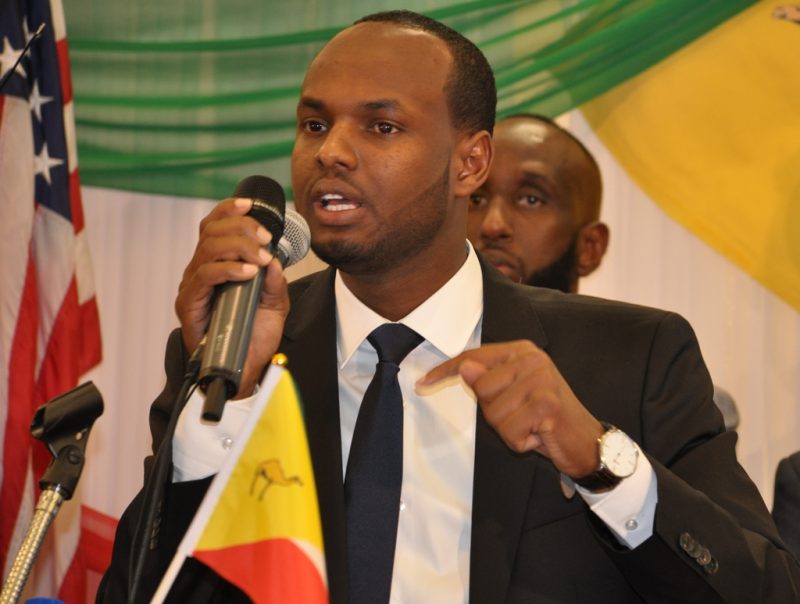
The delegation led by Majida Mohamed Mohomud, Acting Minister of Agriculture and Livestock, and Hon. Khadar Abdi Ismali, arrived in Minnesota Dec. 17.

Updates

A t is shown in the water.
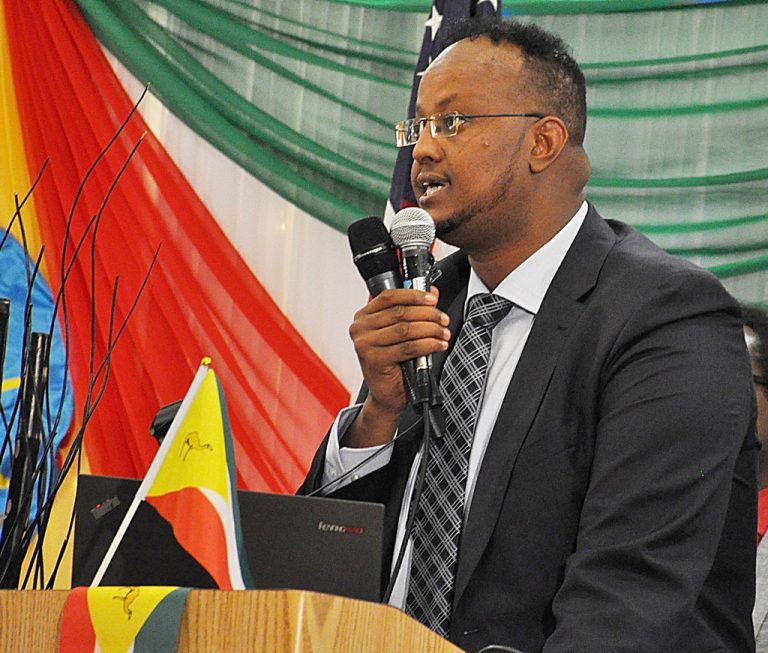
Abdi Mahad, Head of the ESKS Administrative Bureau of Jigiga. Photo: Issa Mansaray/The AfricaPaper

Organizers said the East African leaders came to the Twin Cities to listen to the region’s citizen, and to provide insights on government activities and progress over the past decade in the embattled region. At the town hall-style gathering on Dec., 23, attendees were given the opportunity to share their thoughts on regional stability, tribal conflicts and business development. This is not the first time that President Abdi Mohamed Omar’s government has sent delegation to the Twin Cities, a home to more than 5,000 Ethiopian-Somalis in the U.S.

Outreach

A t is shown in the water.
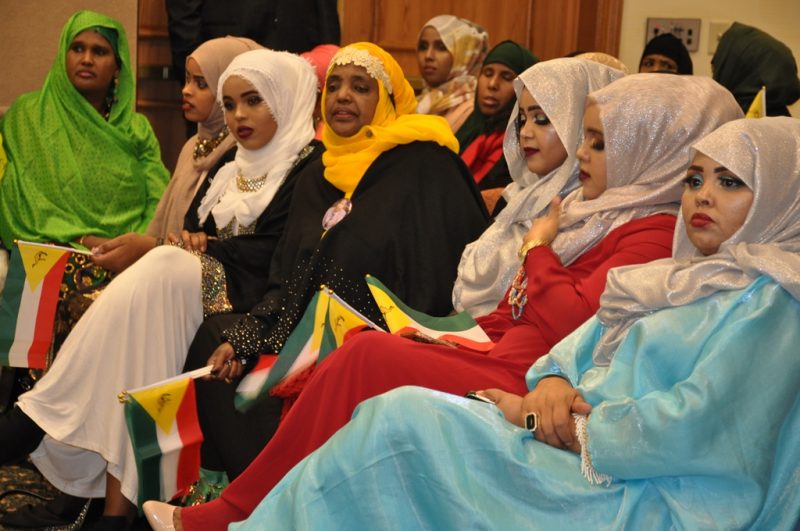
A cross section of Ethiopia-Somali Women. Photo: Issa Mansaray/The AfricaPaper

Many saw the ministers’ visit as an opportunity to clarify some of the misunderstanding between the tribes and the government. Ismali said the government has continued to create jobs and stir economic developments throughout the region.

“It is an outreach from the government to the people from the region, Europe, and America,” said Liban Ahmed, a student. “This helps to make the connections between the community and the government. To travel and come over to talk with the community. Often, they do, and we do appreciate that.”

Before the arrival of the delegation, major clans in the Twin Cities declared independence. But during his visit, Ismali, stay the course, reassuring peace, adding that their visit was not geared to represent any clan or group of people, but all people from the Ethiopia-Somalia region.

Ismali like the other speakers denied claims of “government arresting opposition relatives back home,” and simply referring to the allegation as “propaganda.”

Progress

A t is shown in the water.
Majida Mohamed Mohomud. Photo: Issa Mansaray/The AfricaPaper

Most Somalis were sheltered in Ethiopia during the 1977-1978 conflict. Many settled in the Ethiopian region that has become their home. At last week’s gathering, the reaction by many participants was joyful and relaxed. Many agreed that they liked what the government is doing in terms of helping people and developing the East African region.

The region has experienced recent drought, and Ismali said the government is addressing the problem. Other delegates shared similar sentiments.

Speaking mostly in his native language, Abdi Ismali stated that the government has increased its budget, encouraged foreign investment, reviewed its investment laws, and has worked to invite international industries in the region. Ismali added that the government has created about 20,000 jobs in recent years, a figure that many saw as encouraging in one of the largest region.

Focus

Abdi Mahad, the Acting Head of ESRS, said the government is working hard to eliminate drought, develop the region’s infrastructure in hopes to spur economic growth. He further discussed government’s plans to revitalize education, healthcare, and hoped for permanent peace.

Mr. Khadar Abdi Ismali’s comments drew praises and horrible recollections from some of the attendees.

“Twenty-six years ago [May 28, 1991] the freedom fighters of Alliance for Freedom and Democracy (AFD) liberated millions of Ethiopians from a fascist government that was cruel to its people for decades,” said Hashim Yonis, one of the event organizers.

“Our grandfathers, grandmothers, fathers, mothers, brothers and sisters were those who were dehumanized just because of who they were. Today under President Abdi Mohamed Omar, the region is excelling in all sectors.”

Reassured

A t is shown in the water.
Ibrahim Adam Mahad, Minister of Education. Photo: Issa Mansaray/The AfricaPaper

Abdi Mohamoud Omar, president of the Somali region in Ethiopia joined the town hall meeting via telephone. Like the other speakers, the leader reassured his people about the progress his government is making in the region. Omar, who also serves as, head of the ruling Ethiopian Somali People Democratic Party, said his government is open to suggestions from its citizens.

The delegation will spend two weeks in Minnesota meeting groups from the region and community leaders.

“The outreach to the community you serve in foreign lands and at home is very important,” said Liban Ahmed.

The Ethiopia-Somali delegation to Minnesota includes Abdi Mahad, Head of the ESKS Administrative Bureau of Jigiga; Guled Ali Kahin, Director General of the Ethiopian-Somali Region Agro-Pastoral Research Institute, and Ibrahim Adam Mahad, Minister of Education. |TAP|Africa’s Newspaper of Record

Liberia’s Vice President Concedes Election: ‘It Has Never Been About Me’


| The New York Times

MONROVIA, Liberia – After allegations of election fraud and a delayed runoff that raised fears about a constitutional crisis, Vice President Joseph Boakai of Liberia accepted defeat in the country’s presidential election on Friday and offered his support to the new government.

“I congratulate the winner, Ambassador George Manneh Weah, and pray that God will guide and guard him as he takes upon the onerous responsibility of steering the affairs of our nation,” Mr. Boakai said outside his party’s headquarters in Monrovia.

By conceding the race to Mr. Weah, a former international soccer star, Mr. Boakai helped pave the way for the first democratic transition of power in the West African country in more than 70 years. President Ellen Johnson Sirleaf is stepping down after two terms as Africa’s first democratically elected female president.

Unofficial election returns released on Thursday tallying more than one million votes showed that Mr. Weah won by a wide margin, receiving 61.5 percent of the vote compared with Mr. Boakai’s 38.5 percent. Turnout was low, with around 56 percent of registered voters casting ballots, in part because the election was scheduled for the day after Christmas.

On Friday, the outgoing vice president traded confrontation for conciliation in making what he said was a decision for the good of the country, and dismissing the idea of challenging the results in court.

“I reject any temptation of imposing pain, hardship, agony and uncertainty on our people,” he said, alluding to past conflicts in Liberia’s transitions of power. “My name will not be used as an excuse for one drop of human blood to be spilled in this country.”

“It has never been about me, it has always been and should always be about Liberia,” he added, urging Liberians to reconcile.

Mr. Weah has said he would not comment until the National Elections Commission officially declared him the winner. He is expected to take office in January.

When the preliminary results pointing to Mr. Weah’s victory were announced, Liberians took to the streets and cheered. Many returned to the streets after Mr. Boakai’s concession speech.

Mr. Weah, a senator who also ran for president in 2005 and for vice president in 2011, placed first in a crowded field in the first round of voting, winning 38.4 percent of the votes. Though his support was stronger than most analysts had expected, it was not enough to win outright.

As the date of the runoff approached, Mr. Boakai and his supporters within the governing Unity Party asserted that Mrs. Sirleaf had interfered in the election, accusations she denied. The vice president and the third-place candidate, who won just under 10 percent, took their case all the way to the Liberian Supreme Court, delaying the final vote by two months.

The election’s peaceful conclusion was seen by some as a milestone for the fledgling democracy, which was founded almost two centuries ago by freed American slaves but has not seen a peaceful transition of power since 1944.

Ibrahim al-Bakri Nyei, 30, a doctoral student in Liberian politics, came of age during a 14-year civil war that left 250,000 dead and the nation’s infrastructure destroyed. On Friday, he said he was “very proud.”

“It builds my confidence in the future of my country that I will also have the opportunity to participate in the democratic process,” he said, adding, “If members of my generation are to ascend to power, it should not be through the barrel of a gun.”

With an ailing economy and a young population yearning for jobs and a decent education, Mr. Weah, whose only experience in government has been his three years as a senator, has many challenges ahead of him.

Mr. Nyei, for one, will be watching closely.

“We will look very keenly to see how the next government upholds the rule of law, upholds freedom of expression and fundamental human rights,” he said, “to ensure this democratic process is not reversed.”

The AfricaPaper: Our sincere thanks to The New York Times for this story

George Weah Wins Liberia’s Presidency, Unofficial Results Show


MONROVIA, Liberia – For decades, Liberia has waited through war and strongmen for a peaceful democratic transfer of power. On Thursday, as the last ballots in a presidential election were being tallied, that appeared to be on the verge of happening.

Unofficial elections returns showed that George Weah, a former international soccer star, defeated the sitting vice president, two former warlords and his own ex-girlfriend and won the right to succeed the first woman democratically elected as president of an African country.

It was Mr. Weah’s third bid to lead Liberia, a nation founded almost two centuries ago by freed American blacks. He will succeed Ellen Johnson Sirleaf.

In electing Mr. Weah, Liberian voters are investing in him hopes that he can build on one certain accomplishment of Mrs. Sirleaf: keeping the country out of war. But Mrs. Sirleaf’s government has also been plagued with corruption charges, high unemployment and a shambolic health system that is still trying to regain its footing after the devastation of the 2014 Ebola epidemic, which killed more people in Liberia than anywhere else.

Mr. Weah, 51, will take over the running of Liberia without Mrs. Sirleaf’s long history of public service. His only experience in government office has been his three years as a senator, representing Monrovia, a time during which his opponents criticized him for failing to speak up during legislative sessions.

Unlike Mrs. Sirleaf, who came to power in 2005 after 35 years on the global scene, Mr. Weah will not be able to call on an international network of allies to help. When Mrs. Sirleaf was trying to rescue the Liberian economy, she got her country’s $4.7 billion debt erased. When her country’s health system needed help fighting Ebola, Mrs. Sirleaf got President Barack Obama to send 3,000 American troops to Liberia.

Mr. Weah’s global contacts are primarily in the international soccer world, and he recently credited Arsène Wenger, coach of the English powerhouse Arsenal Football Club, with mentoring him when he was a soccer player in Europe. Whether Mr. Weah can use his sporting credentials to help build roads and schools and bring back jobs will be among his biggest challenges. It also remains to be seen whether he will continue to allow the level of freedom of speech that has characterized Mrs. Sirleaf’s tenure.

But Mr. Weah successfully navigated his latest campaign to become president. In the weeks leading up to the runoff presidential election on Tuesday, Mr. Weah’s opponent, Vice President Joseph Boakai, accused President Sirleaf of secretly orchestrating his defeat. The vice president went all the way to the Liberian Supreme Court with his charges and managed to delay the final runoff election by two months.

Mr. Weah responded by stepping back, keeping his supporters off the streets and remaining quiet as the drama unfolded around him.

The runoff, originally set for October, was finally scheduled for the day after Christmas. That is a day when many voters might be expected to be recuperating at home after the holiday – and the result was as many people expected. Voter turnout was low. It was a last-gasp effort by the vice president’s forces to save him from defeat, critics in Monrovia said. But in the end it did not work.

Liberia’s National Elections Commission announced on Thursday that Mr. Weah, with 98 percent of votes counted, was beating Mr. Boakai handily. Mr. Weah had 61.5 percent of the more than one million votes tallied, while Mr. Boakai had 38.5 percent, the commission announced.

The elections commission stopped short of declaring Mr. Weah the outright winner at a news conference on Thursday, with officials saying they would have final results soon. But at Mr. Weah’s Congress for Democratic Change Party headquarters, hundreds of people with crackling radios held to their ears erupted over the results.

In Gibraltar, the Monrovia neighborhood where Mr. Weah grew up, residents on Thursday spoke about how their slum was now a “president’s community.”

“People can classify our community, saying that’s so-so gronah people living here, and today this community is coming to produce a president,” said Veronica Doe, 46, using a Liberian-English reference to street boys.

Ms. Doe, a mother of seven, said she had played kickball on the same dusty soccer field as Mr. Weah in the 1980s. Now she sells small plastic bags of water out of a cooler, one of the thousands of market women who drive the local economy.

Next to her stall, a narrow alleyway edged by concertina wire led to the modest house where Mr. Weah was raised by his grandmother, which is now occupied by other tenants. Women sold charcoal, biscuits and bread on the stoop and children ran around.

Mr. Weah’s is a rags-to-riches story. He emerged from the slums of Gibraltar with an uncanny ability to weave behind a soccer ball all the way up the pitch, and eventually gained fame as a world-class striker for the Italian team A.C. Milan. He won the soccer world’s greatest individual honor, the Ballon d’Or, and was named by FIFA, soccer’s governing body, as the African Player of the Century.

He never got to compete in the World Cup, because Liberia was engulfed by civil war, instigated by President Charles Taylor, during the height of Mr. Weah’s soccer years and was unable to muster up 10 other players good enough to qualify.

Mr. Taylor is now locked up in a British prison for war crimes. But in the surreal world of Liberian politics, Mr. Weah’s running mate, who will now presumably be his vice president, was Mr. Taylor’s ex-wife, Jewel Howard Taylor.

Ms. Taylor caused a stir early in the election campaign when she told reporters that although her ex-husband was no longer involved in Liberian politics, he still had promises that needed to be kept. She called for putting Mr. Taylor’s agenda “back on the table.”

The resulting uproar led Mr. Weah’s party to muzzle Ms. Taylor, and she became more circumspect on the campaign trail.

Mr. Weah, meanwhile, was running against an ex-girlfriend, a model turned philanthropist named MacDella Cooper who says he is the father of her third child.

But his behavior during his third election bid converted many former skeptics. In his first two campaigns, which he lost to Mrs. Sirleaf, Mr. Weah’s youthful supporters were criticized for threatening their opponents with violence. Many young men who supported him went through the streets of Monrovia, chanting “No Weah, No Peace,” and getting into fights.

For 43 days in 2005, Mr. Weah himself protested Mrs. Sirleaf’s election. It was only under heavy pressure from the international community and local authorities, who dismissed his allegations of fraud, that he finally accepted the election results to “allow peace,” he said, in Liberia.

This time around, with Mr. Boakai claiming that Mr. Weah’s lead in the polls was a result of fraud, the candidate took the high road. His youthful supporters stayed off the streets. Even when the runoff election was delayed by Mr. Boakai’s complaints, Mr. Weah’s supporters stuck with the electoral process.

On Thursday, they were reaping the rewards. Richard M. Nahas, 20, a Weah supporter, said he had high expectations of Mr. Weah.

“I want him to bring job opportunities and to build the economy of the country – that’s the main thing now we need,” said Mr. Nahas, dressed in a yellow Cameroon national team soccer jersey.

Clair MacDougall reported from Monrovia, and Helene Cooper from Washington.

The AfricaPaper: Our sincere thanks to The New York Times for this story