Home Blog Page 17

IDEAS: Tech Tools Empower Family Caregivers to Do Less


By Deb Taylor | The AfricaPaper

One doesn’t need to ask too many questions before hitting at the heart of a person’s personal connection with caregiving. In fact, it happens to me on a daily basis as I talk with individuals about what I do and the organization I work for. You see, I am the CEO of a local nonprofit called Senior Community Services. Our mission is to develop, coordinate and provide services that help meet the needs of older adults and support their caregivers. My work certainly does make for an easy segue into the caregiver conversation, but don’t let that stop you! Everyone has a caregiver story.

Caregivers

As first lady Rosalynn Carter once said, “There are only four kinds of people in the world – those who have been caregivers, those who are caregivers, those who will be caregivers, and those who will need caregivers.”

According to the National Alliance for Caregiving and Evercare, family caregivers are the foundation of long-term care nationwide, exceeding Medicaid long-term care spending in all states, but caregiving is hard work. The average number of hours family caregivers spend caring for their loved ones is 20 hours per week and 60% of family caregivers are balancing those duties while still employed. It’s no surprise that 40-70% of family caregivers have clinically significant symptoms of depression. Thankfully, there are numerous technologies out there that can make family caregivers jobs a lot easier and much less stressful.

Tools

You can find one of those tools right here at Senior Community Services, www.CareNextion.org. CareNextion is a free, easy-to-use website allowing your family members and other care groups to easily communicate, share schedules and find assistance for your loved ones. This tool enables you to bring together the support needed to help your loved one live a vital and engaging life, while also sharing some of the responsibilities with other members of your loved ones care circle. CareNextion helps family caregivers in a variety of ways.

Because it’s an online tool, CareNextion allows you to keep family and friends near and far in the loop. It saves you time and energy by allowing you to share tasks such as rides to the doctor, meals, visits, etc. with your care team without having to play phone tag. You simply send out one request that gets pushed out in an email to everyone on your care team. From there, any of the recipients may pick up the task right from the email request, which will then display as a filled request for everyone else. CareNextion also aids with creating more organized and clear communication with its shared calendar and journal features. Journal records can easily be printed so they can be shared at doctors’ appointments as well. CareNextion is also equipped with a vetted list of trusted organizations that can provide a variety of services for your loved one. In addition to all these online tools, CareNextion gives family caregivers twenty-four-seven access to an experienced, licensed social worker.

Technology

Another great technology that is just hitting the market is Assured Living by Best Buy. Assured Living is a variety of non-intrusive, in-home sensors for older adults that provide insight for family caregivers into their loved ones daily activities, such as movement and sleep patterns. Over time, the sensors will begin to pick up activity trends and notify you, as a trusted family caregiver, if something changes.

Assured living can provide wellness insights by using the data to discover patterns in your loved ones activities, which allows you to have more informed conversations with your loved ones. You can learn if they are locking doors, going to the fridge or medicine cabinet at the appropriate times and much more. A variety of sensors make it possible for Assured Living packages to be highly customized to you and your older adults wants and needs. You, as the caregiver, also have the power to customize which notifications about your loved one are most important.

Peace of Mind

The beauty of Assured Living is that it not only gives you peace of mind, but also allows your loved one to maintain their independence. Voice automation makes daily tasks such as turning on and off lights, locking doors and changing the temperature a breeze and automatic reminders take the worry out of remembering important tasks such as taking medication. Your loved one will enjoy the independence and privacy they deserve, while you get the peace of mind knowing that they’re okay.

The combination of these two powerful caregiving tools will give you the ability to stop unnecessary worrying, reduce stress, and share the caregiving responsibilities with others.

If you’re reading this article and you’re not a family caregiver at the moment, I invite you to do a little digging and find someone in your circle who is a family caregiver. You won’t have to go very far, I promise. You might be giving them just the support they need at just the right time.

If you are reading this article and would like to learn more about either of the aforementioned tools, please call: 952-541-1019.

The AfricaPaper: Deb Taylor is the CEO of Senior Community Services and its Reimagine Aging Institute, a nonprofit that helps older adults and caregivers navigate aging to maintain independence and quality of life. www.seniorcommunity.org


Mugabe: An African Dictator Falls From Grace


By Henry Kijimwana Mhango | The AfricaPaper

Harare, Zimbabwe – Avoiding impeachment and imminent military takeover, Robert Mugabe, gave up power last Tuesday after 37 years of despotic rule, making him the longest serving political leader in modern African history.

His successor, Emmerson Mnangagwa, was sworn in last Friday, hours following Mugabe’s resignation. Mr. Mugabe fired his former ally and vice president November 6. Many in the capital believed Mr. Mugabe’s decision to dismiss Mr. Mnangagwa, who had been in hiding in neighboring South Africa, may have precipitated the military intervention that forced the 93-year-old’s historic resignation.

Mugabe, who rose to power as a freedom fighter, has been the only leader that south African nation of more than 16 million people has known since independence from Great Britain in 1980.

During his inaugural address, Mnangagwa, the man once known as ‘Crocodile’ promised to end corruption and to resuscitate his country’s ailing economy. Corruption – Zimbabweans believe is Everywhere in the corridors of power, and the business sectors as in other African countries.

Troops Seized Power

A t is shown in the water.
Military tanks in Harare, Zimbabwe. Photo: Henry K. Mhango/The AfricaPaper

Before Mr. Mugabe’s resignation, the fate of the country rested in the hands of the military, who for days occupied strategic areas within the capital Harare, as rumors of military takeover swirled throughout the capital like wildfire.

The rumors, however, were put to rest when Military commander General Constantino Chiweng, called on everyone to remain calm. But the general was quick to criticize Mugabe, and his action against Mr. Mnangangwa, in what many thought was a power play to make his wife Grace Mugabe, his successor.

Prior to Mnangagwa’s inaugural, soldiers closed government offices, courts, parliamentary buildings, and occupied the national TV station.

“We want to deal with people committing crimes that are causing social and economic suffering in Zimbabwe,” said Major General Sibosiso Mayo, one of the many soldiers who led the march against Mr. Mugabe.

In support of the military, thousands marched alongside armoured vehicles and troops on the streets jeering , booing and chanting anti Mugabe songs.

Outside the parliament building and along the streets of Harare, civilians hugged soldiers in an outpouring support.

House Arrest

Mr. Mugabe, who was under house arrest together with his family, was hoping to maintain his hegemonic power as he tried various negotiation tactics, but time and the political tide in the country were against him. The military though maintained it was protecting the embattled leader from enemies.

A t is shown in the water.
Arrested Zimbabwean finance minister Ignatius Chombo. Photo: Henry K. Mhango/The AfricaPaper

Prior to being placed under house arrest, gunshots were fired around Mugabe’s home amidst explosions by the military who took control of a number of key places.

The unusual military activities sent shockwaves to foreign embassies who ordered their employees to remain indoors till the situation normalizes.

While claiming that the soldiers’ mission was just to bring sanity in the current political atmosphere, Moyo dismissed allegations that the troops were trying to take over the government.

“To the civil servants, as you are aware, there is a plan by the same individuals to influence the current purging that is taking place in the political sphere to the civil service. We are against that act of injustice and we intend to protect everyone of you against that,” said Major General Moyo.

Many perceived the military events as a start of civil unrest in Zimbabwe as they thought the stubborn Mugabe would not surrender power.

“We were relieved with shock yesterday to hear on radio and TV that he has reigned,” said Reverend Hendreson Mwangolera, a resident of Harare.

Mwangolera described the military activity as a clear indication that the people had been in fear and oppression throughout Mr. Mugabe’s regime.

“The celebrations clearly showed how people hated him though Mugabe knew nothing about the inner feeling of the people. For the first time the people had to speak out their feelings. He took Zimbabwe as his estate and the people as his tenants,” Mwangolera said.

A t is shown in the water.
Zimbabwe’s new President Emmerson Mnangagwa. Photo: Henry K. Mhango/The AfricaPaper

Dan Msowoya, a renowned international political commentator expressed optimism about Zimbabwe’s political revolution, and warned that “the events have sent shock waves to other African Presidents with bad leadership styles.”

“Change is possible in Zimbabwe now. Those people in Zimbabwe were under siege by Mugabe and are free again to think and to plan for their nation,” Msowoya said .

Democratic Process

Despite widespread jubilations, some people are in doubt whether Mugabe’s downfall would bring a better economic change to the southern country.

“We have supported Mnangagwa through mass demonstration. Now that he takes over, we expect him to lead democratic process that will ensure a prosperous Zimbabwe,” said one opposition leader, who wants to remain anonymous.

“Mugabe was just heading ZANU-PF policies. If opposition feel his departure means new era of running government affairs it would be naïve as activists suggest,” said Jonathan Jere, a Malawi-based Journalism trainer.

“Come elections, ZANU-PF will still use the existing party strategies and policies to campaign,” Jere said.

Mr. Jere warned that a government of national unity is the best way for the new government to gain donor confidence and improve the fragile economy. |TAP|Africa’s Newspaper of Record

The AfricaPaper: Henry K Mhango is The AfricaPaper’s Central Africa Correspondent.

WORLDVIEWS: Volunteers Create Worlds


By Yossef Ben-Meir | The AfricaPaper

Morocco, Marrakech – A world created is one that begins with a path taken by an individual who gives time, energy, thought, and care without personal material return to people seeking a genuine change. The volunteer-of-oneself may begin this journey with heavy concern over the unknown, with boundless belief in the infinitely possible and with even outright alienation from the people to benefit. The giver-without-recompense may start a dialogue within oneself, asking why am I here, what can I do that really matters, and must I do this and feel cold, tired, hungry, and alone?

True Ideal

The passage of time, persistence, and remaining true to the ideal of service-to-others leads to people’s familiarity with the volunteer. Stories of joy and hardship are sometimes shared, dreams and fears may be expressed, and trust emerges from the people’s observations of the volunteer during setting after setting. Finally, the people’s acceptance opens a pathway for creation.

There can be no set timetable for this new path to development becoming open. Social and environmental factors that are understood, that could take a lifetime to precisely identify, or that are oftentimes uncontrollable, bear upon the pace at which a volunteer’s service may become supported by the people. At a certain point, however, a moment is reached after the volunteer passes an unacknowledged and informal trial set by the community when they become willing to gather for a meeting, facilitated by the volunteer. At this time, there are methods – call them participatory, action research, community management, or by more than 100 other names – that assist the local participants in assessing their priority needs and viable project options.

Key Role

The volunteer plays a key role in launching this analytical process taken by the community. The giver to local sustainable change helps to coordinate a suitable time and location for people to meet. The volunteer works to ensure that all people – women and men, homeowners and homeless, youth and retirees, all and one – are part of the conversation about the first and following initiatives they create. The volunteer shares information about prospective public and civil, local and distant, partners to a given development project. The volunteer organizes the community’s data, searches for synergies, writes proposals, identifies funding – and builds the capacities of the people so that they can carry forward this change process for themselves.

What exactly is the new world created from this evolving experience? An empowered path taken by the people; a discovery of a future far more fulfilling than the future prior imagined; new and changed relationships derived from a new and changed sense-of-self; and a new world gained from livelihoods derived from one’s own production that is achieved in conjunction with others. In Morocco – where I have given as a Peace Corps and civil society volunteer and then supported others in their giving – this means women’s healing and legal recourses from abuse, drinking water in schools and deserts, organic fruit trees stopping eroding places, university students once volunteers facilitating change and now employed to accomplish change, and Muslim, Christian, and Jewish people restoring together their sacred sites as a strategy for poverty-alleviation. It involves program and policy advocacy at all levels to advance the sustainable development the nation has envisioned for itself. It means consequences that we can measure, and generational ones that have yet to enter our imagination.

Difficult Path

For many volunteers, they may not have to blaze that initial beginning difficult pathway to new worlds, the winding road with its enough measures of doubt, misunderstanding, and even risk. They may instead find a placement to help already-accepting-others to further along an existing development pathway to transformation, or maybe even evaluate the tangible empowerment changes that have been generated by new projects.

In any case, there are also new worlds formed for and by the selfless traversing of the volunteers. They may be introduced to a profession that provides the wonderful flexibility to promote the people’s self-growth. Their studies may take an action-orientation which recognizes that to explain a social problem without improving the situation leaves the research design incomplete. They move along a new way they would not have otherwise, meeting people, forming relationships, and affecting communities never before projected. They discover more of themselves, love more themselves and others, and find higher meaning that a harsh reality cannot take away. They become filled with the people’s stories, and can with time and the accumulation of the narratives communicate on behalf of the marginalized.

Volunteer

Advocates of including service in schools and the workplace remind us that we are three times more likely to volunteer if we are asked to do so. With December fifth’s International Volunteer Day mobilizing thousands of volunteers, let’s join this chorus and energy that will forge better worlds that reflect our giving-selves and the sustainable projects that are just steps away.

The AfricaPaper: Dr. Yossef Ben-Meir is president of the High Atlas Foundation and a sociologist. Ben-Meir (author) and project partners visiting the Aboghlou women’s cooperative in the Ourika Valley, Morocco.

“Gen. Jungle Jabbah” is Guilty, Says Jury


By Editors | The AfricaPaper

Philadelphia, PA – It has been almost two decades, but it looks like justice was finally served to hundreds of Liberians who lost loved ones in a senseless civil war that left more than 200,000 dead and nearly 500,000, displaced.

A t is shown in the water.
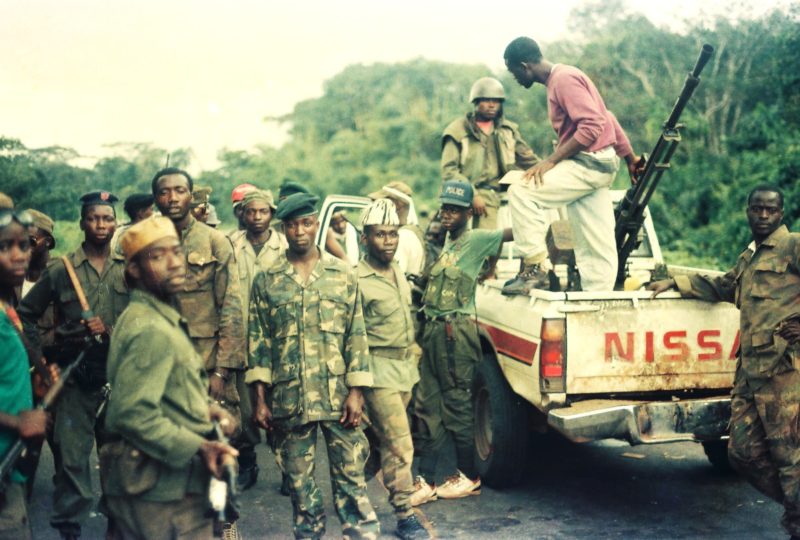
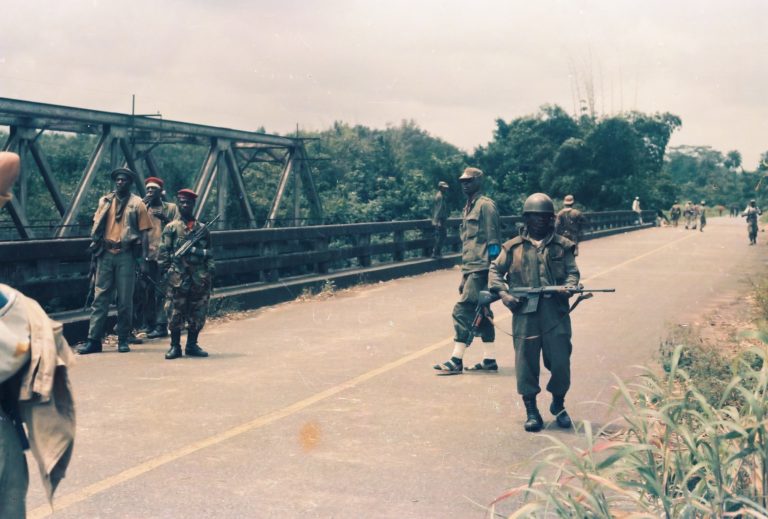
In this 1992 filed photograph across the Po River Bridge, near Combat Camp, ULIMO rebel fighters showed off a heavy weaponry they captured from Taylor’s NPFL forces during the battle over Tubmanburg in western Liberia.
Photo: James K. Fasuekoi/The AfricaPaper

It took less than two hours of deliberations Wednesday when a 12-man jury found Mohammad Jabateh, a former warlord, guilty of federal immigration fraud.

Verdict

The historic verdict took eight days in which jurors listened to witnesses, some of whom traveled from as far as Liberia. Witnesses said Jabateh, 51, ordered the killings, enslavement, and raping of several females, some as young as 13-years-old. Others accused the embattled former rebel leader of committing cannibalism, while others recounted atrocities during the 1989 and 1997 civil war.

Jabateh faces 30 years prison sentence and could face deportation upon release. U.S. District Judge Paul S. Diamond has yet to set a sentencing date. Outside the courthouse, dabbing her eyes with a fold tissue, and surrounded by a small group of supporters, Nafisa Saeed, told reporters she was not surprised at the jury’s decision.

“I don’t think the process was fair,” she added. “It was the superpower of the earth against one man.”

There are no indications that Gregory J. Pagano, Jabateh’s attorney would appeal yesterday’s outcome.

A t is shown in the water.
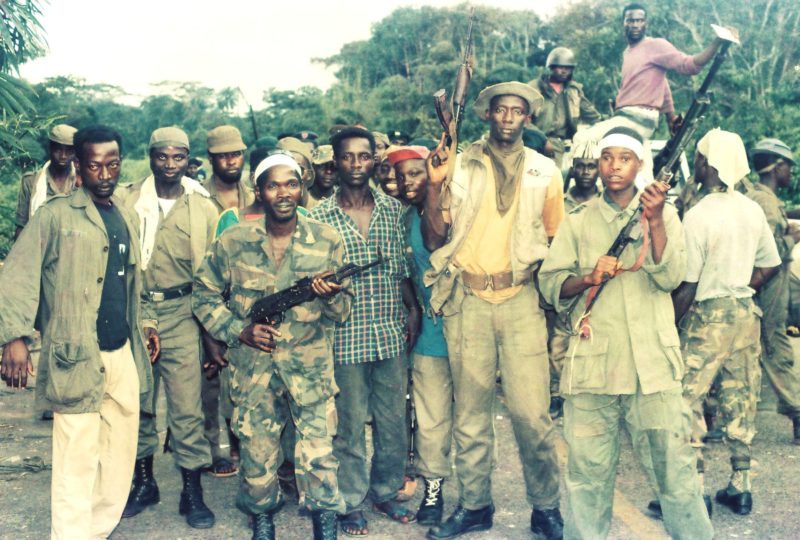
A mix of Mandingo-Krahn ULIMO rebel soldiers posed for a photo at their Po River guard post near Combat Camp. Photo: James K. Fasuekoi/The AfricaPaper

“We disagree with the jury’s verdict,” Pagano said shortly after the verdict. “But we of course accept it and respect it. We’re going to prepare for sentencing.”

Painful Testimonies

After two weeks of listening to detailed but sometimes painful testimonies from the witnesses, the 12-member jury on Wednesday were convinced that the Liberian warlord Mohammed Jabateh, known to many as “Jungle Jabbah” was guilty on all four counts of fraud and perjury.

“I am hopeful that it won’t be long we will see the creation of a war crimes court soon,” says Jacob S. Kwateh, Secretary General of Movement of Liberian Against Corruption (MOLAC).

“All Liberians should be calling for the establishment of a war crimes court because it is in the best interest of our country and its development (I.e. human, infrastructure, rule of law, etc.). Sierra Leone did it. They prosecuted those who committed human rights violations, we can learn a lesson or two from Sierra Leone and muster the courage to create a war crimes court in Liberia.”

United States Federal agents arrested Jungle Jabbah last year March-April and charged him of committing fraud and perjury at the time Jabateh filed for an asylum 1997-98. Federal authorities said that Jabateh didn’t tell the whole truth about his role in Liberia’s first brutal war from 1989-1997, during an interview with US Immigration personnel.

Zebra Commander

Jabateh served as Zebra Battalion commander in the rebel United Liberation Movement for Democracy (ULIMO) between late 1992 till 1994, the time the faction split into ULIMO-K and ULIMO-J, and thereafter, again served in the ULIMO-K (predominately Mandingo), as rebel commander.

Testimonies were provided in the case during the past two weeks by more than 15 witnesses, including two Liberian journalists who covered the civil wars. Witnesses focused on Cape Mount, Bomi, and Gbarpolu counties – most of the villages and towns such as Lofa Bridge, Weasua, and Bopolu, are located in a region rich in gold, diamond and timber.

Jabateh was placed in charge of this gold and diamond mining region by the ULIMO-K’s faction leader, Gen. Alhaji G.V. Kromah one of his tribesman.

World Copyright

The AfricaPaper, USA, 2017. All rights reserved. Photos and text may not be published, broadcast, rewritten, redistributed or used in any form without the written permission of The AfricaPaper, and AIIR. We take legal action for any copyright infringement.

|TAP| Africa’s Newspaper of Record

NOTE: A Special print edition of Jabateh’s case will be published by The AfricaPaper soon

Jury Selected for Jabbateh’s Long Road to Justice


Defense To Fly in Four Witnesses From Liberia

By Issa A. Mansaray | The AfricaPaper

Philadelphia, PA – In court, the man’s life is completely in the hands of the law. He did not smile for the jury that would decide his fate. More than 50 individuals were questioned for jury function. At the end, sixteen were selected to serve as jurors in an immigration fraud, and war crime case against former Liberian ULIMO rebel commander, Mohammed Jabbateh, known by his nom de guerre as “Jungle Jabbah.”

Trial Starts

His trial starts on Tuesday, Oct. 3. Many of the former warlord’s family members and friends showed up in court to support him. In April last year many volunteered to put up their homes costing from $150,000 to $250,000 to come up with the bail bond of $1million when Jabbateh first appeared in court for immigration fraud and war crime charges .

Silent political tensions here still run high, and almost everyone interviewed holds an opinion about the case. With the trial in full stream this week, The AfricaPaper observes that the number of his supporters showing up for the hearing believe he is “an innocent man.” They informed Jabbateh’s lawyer that they want to fly in four witnesses for the defense team in preparing Jabbateh this time to face some of his victims almost two decades after Liberia’s bloody war. The US government promised to continue the hunt for former warlords and criminals that tormented civilians in West Africa for several years.

Rule of Law

“Mr. Jabbateh’s arrest and court trial for alleged violation of human rights abuses in Liberia is a great beginning for the rule of law and subsequent creation of a war crimes court in Liberia,” said Jacob S. Kwateh, Secretary General for the Movement of Liberians Against Corruption (MOLAC) in Minnesota. “More importantly, it is a sad but hopeful news for war victims, especially those whose family members Mr. Jabbateh might have allegedly and directly violated.”

At the battle front, he (Jabbateh)had no mercy for anyone but himself, his victims recall in court documents. He ruined many lives. And then he jumped ship to the US. Jabbateh falsely stated to immigration authorities that he had never participated in any wars or war crimes. He lied. After years of investigations, Jungle Jabbah now stands trial for his alleged war crimes committed in Liberia, and his lies to immigration officials in the US more than 15 years ago.

The jury selected on Monday will determine his fate after hearing the case from both the plaintiff and the defense in the case the United States of America vs. Mohammed Jabbateh respectively.

Disappointed

Many Liberians are still disappointed that their country never summed up the courage to open a court to try war crimes, and those responsible for the carnage in the West Africa nation. Few years ago, Liberia’s warlord-president Charles Taylor was tried and locked up in Netherlands for war crimes committed in neighboring Sierra Leone.

In court, his relatives and family members say he was a “good man.”

“They [ULIMO] fought to actually get our freedom and to liberate us. But they are not war criminals,” said Mamadi Kromah, the family spokesperson at a press briefing outside the courthouse.

When Kromah was asked if that means the government witnesses are lying, he quickly opined that, “Everybody wants to come to the United States of America. If I was in Liberia struggling where people live on fifty cents per day …. and called to come and testify. I would use that opportunity to come to America and testify. So at least I can come here and work and take care of my family.”

|TAP| Africa’s Newspaper of Record