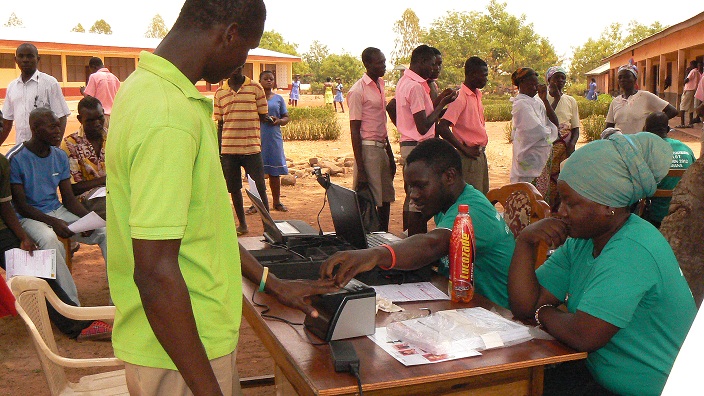
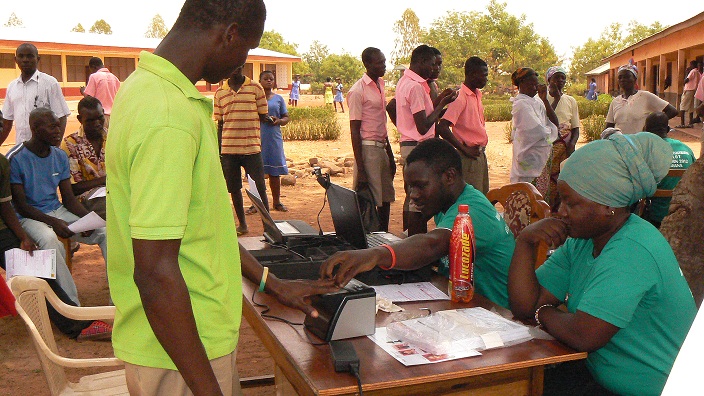
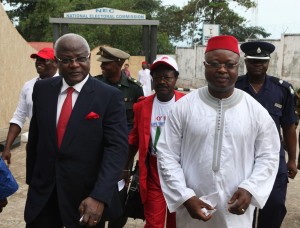
Sierra Leoneans Prepare for Election Day Photo: The AfricaPaper (TAP)
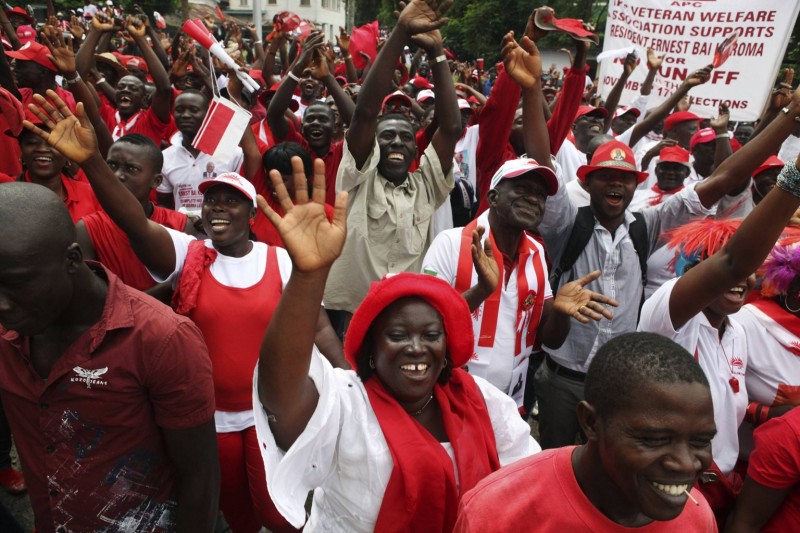
As citizens of the West African nation wake to an election morning, NEC says it has recruited 70,000 Polling Staff. Our correspondent reports how Sierra Leone is preparing for it Election Day.
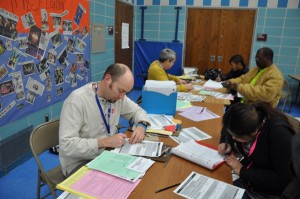
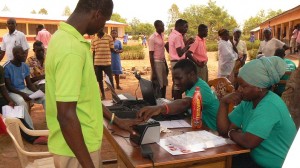
FREETOWN, Sierra Leone – The National Electoral Commission (NEC) announced in Freetown that it has recruited an estimate of 70,000 polling staff nationwide. Many have been trained at wards and polling centers on electoral polling and counting procedures.
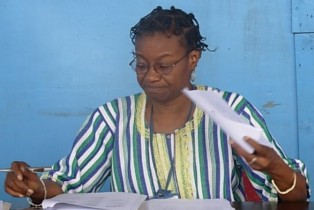
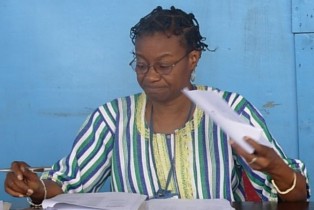
Dr. Christiana Thorpe Photo: TAP
Ballot Papers
“NEC is on top of situation and things are going as planned. Ballot papers for the elections arrived on Monday 5th November 2012 at the Lungi International Airport and was witnessed by relevant stakeholders,” said Dr. Christiana A. M. Thorpe, NEC Chairperson “I received the final consignment of four trucks at Government Wharf on Tuesday morning while the next consignment is due by the end of the week.”
The announcement came at a press conference on Tuesday Nov. 6 at the Commission’s Tower Hill headquarters in Freetown.
Vehicular Movement
However, in a bid to restrict vehicular movement on Election Day, the Dr. Thorpe said only accredited vehicles displaying stickers provided by NEC will be authorized to ply the routes between 7:00 AM to 7:00 PM.
“Party flag bearers can be accompanied by three vehicles with no more than four people each,” Said Thorpe, who she further stated that, “They will be required to return home after voting.”
To alleviate transportation challenges on polling day, the Commission has engaged the services Sierra Leone Road Transport Corporation (SLRTC) buses, with sponsorship from the Rokel Commercial Bank, American Chamber of Commerce, and Sam King Group, to ply routes along major streets in Freetown and some district headquarter towns on polling day free of cost.
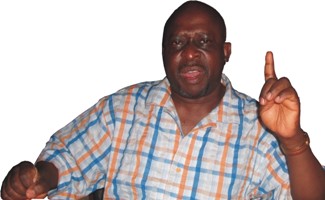
Albert Joshua Carew, CDP Leader. Photo: TAP
Commuters
From 24 buses acquired, 11 will be allocated in the Western Area, of which, nine will commute within Freetown and two between Waterloo and along the Peninsular unto Goderich. Two buses each will be allocated for Bo, Kenema and Makeni Cities, one bus each for Pujehun, Koinadugu, Port Loko, Kambia, Bonthe-Mainland, Tonkolili and Moyamba Districts.
“Commuters will not pay for the bus services but must produce voter ID cards to gain access and two NEC staff will be on duty to verify voter ID cards and also to supervise operations on board the buses,” said Dr. Thorpe. “Priority will be given to the aged, physically challenged, pregnant women and lactating mothers.”
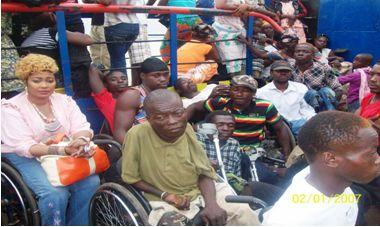
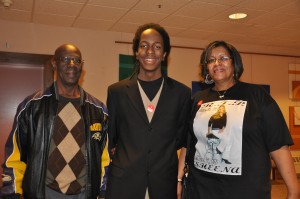
Disabled posed with DIFSIL Executive Director Photo: TAP
Democratic Rights
Various representatives from the registered political parties were asked by The AfricaPaper to comment on the polling-day arrangements, and agreed with the conditions. However, the representative from Citizen Democratic Party (CDP) was quick to note that the blind and amputees were not given preferential treatment in the execution of their democratic rights.
“I was hoping to see a mechanism put in place to enable the blind and amputees vote without the aid of another person. But NEC says, they are not prepared for that and it is their right to provide it,” said Joshua Albert Carew, CDP Presidential Candidate.
Registered Voters
Meanwhile, some 2,692,695 registered voters will decide on November 17, who among the nine presidential candidates will lead the country for the next five years. There are 9, 493 polling stations with 2, 995 voting centers nationwide.
The president may invoke Military Action to Civil Power (MACP) if election violence erupts on the Election Day.
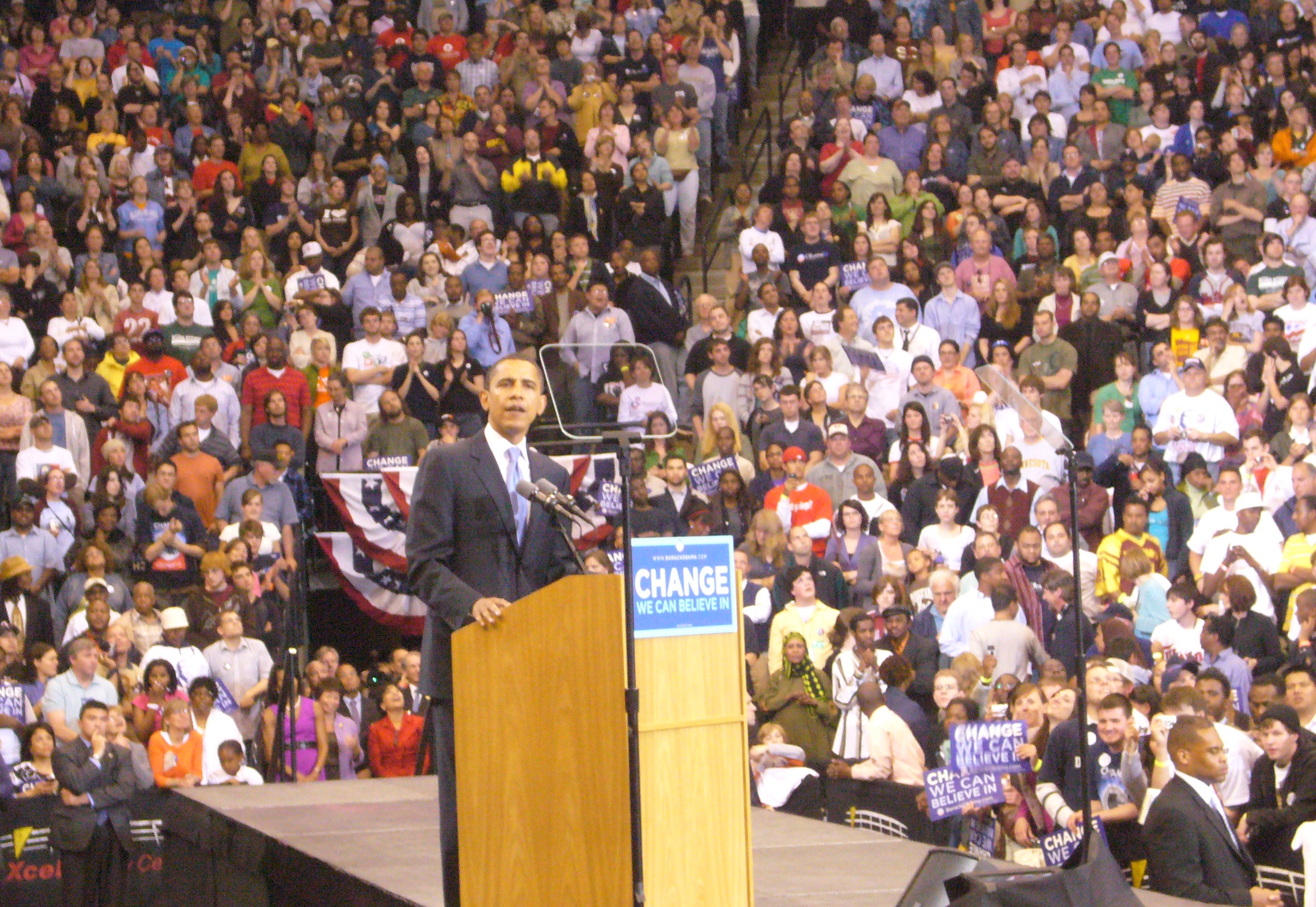
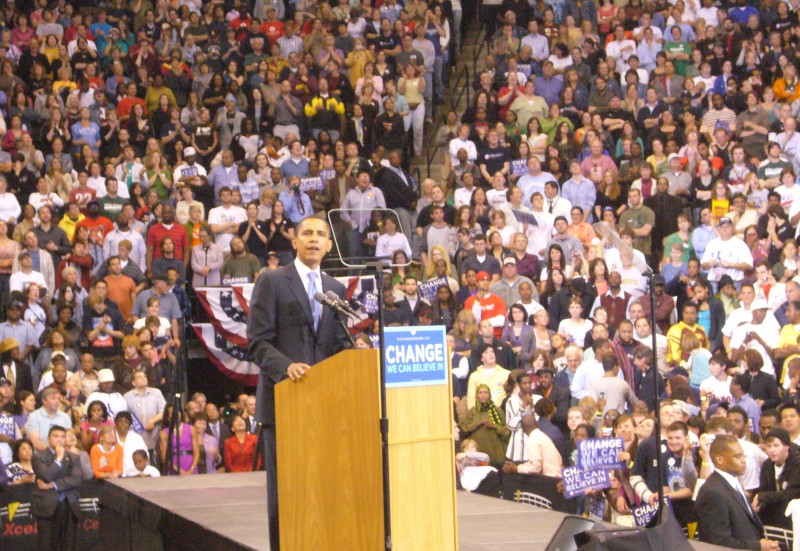
President Obama in Minnesota Photo: The AfricaPaper, 2008
The AfricaPaper | USA
By George E. Curry
WASHINGTON – After riding to victory in Ohio on the strength of his successful auto bailout plan and a come-from-behind victory in Virginia and possibly Florida, President Barack Obama was re-elected on Tuesday to a second term.
Electoral College
Obama was ahead of Republican challenger Mitt Romney Tuesday night by approximately 1 million votes in the general election, but is expected to win the Electoral College by a much larger margin when electors meet on Dec. 17 to officially determine who becomes the next president of the United States. Of the 538 electors, Obama needs only 270 to win. He is poised to collect approximately 322 votes in the Electoral College to Romney’s 206. If that figure holds up, it will be down from the 365 electoral votes Obama won in 2008.
First Black President
Mr. and Mrs. Obama in Minnesota, 2008 Photo – The AfricaPaper
Not only did Obama become the first Black president in 2008, he also becomes the first African-American to win a second term in the House House. Following in the footsteps of Bill Clinton and George W. Bush, his election marks the third consecutive time a U.S. president has been re-elected to a second term.
Although experts had predicted a long night before a victor would be declared, CNN announced Obama as the projected winner at 11:18 p.m., EST. With the outcome still unknown at the time in swing states Florida, Ohio, Colorado, Virginia and Nevada, the Buckeye state put Obama over the top.
Obama swept to victory by reassembling his progressive coalition of Blacks, Latinos, youth, unmarried women, Jews, union members and gay men and lesbians.
Speaking to cheering supporters in Chicago, Obama said: “While our journey has been long, we have picked ourselves up. We have fought our way back. And we know in our hearts that, for the United States of America, the best is yet to come.”
Blacks and Latinos voted overwhelmingly in favor Obama, with the president again earning more than 90 percent of the African-American vote and 71 percent of Latinos, according toexit polls.
Women Favored Obama
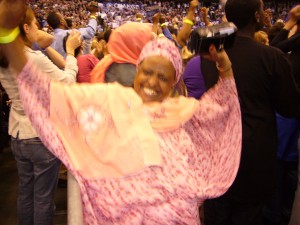
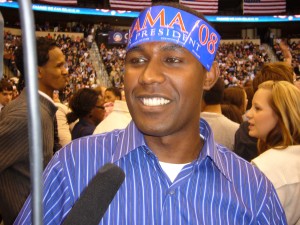
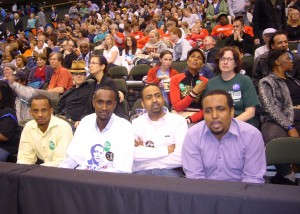
Obama supporter in Minneapolis Photo: The AfricaPaper, 2008
Women favored Obama 55 percent to 43 percent, about the same as it was four years ago (56 percent). But there was a sharp division among females, with unmarried women preferring Obama 68 percent to 30 percent and married women backing Romney 53 percent to 46 percent.
Among White voters, Romney led Obama 58 percent to 40 percent, three points better than John McCain’s showing in 2008. Obama received only 36 percent of the White male vote, compared with 41 percent four years ago.
Blacks of every age group proved that they had Obama’s back: 18-29 (91 percent), 30-44 (94 percent), 45-64 (93 percent) and 65 and above (93 percent).
Obama did better with families earning less than $50,000 a year, Romney did slightly better with middle class voters and held a wider margin among those earning $100,000 or more. Obama again won the youth vote, though by a smaller margin than four years ago.
Swing States
Obama and Vice President Joe Biden carried most of the swing states, including: Michigan, Romney’s birthplace; Massachusetts, where Romney served as governor; New Hampshire, where Romney has a summer home; Wisconsin, the home state of Congressman Paul Ryan, the Republican vice presidential nominee, as well as Ohio, Colorado, Pennsylvania, Nevada, and Virginia.
Obama was leading Romney in Florida by about 45,000 votes, or 0.53 percentage points, as of early Wednesday morning. At that time, 99 percent of the state’s 8.27 million votes had been counted.
In a brief speech in Boston, Romney said, “I so wish that I had been able to fulfill your hopes to lead the country in a different direction. But the nation chose another leader. So Ann and I join with you to earnestly pray for him and for this great nation.”
Majority
In Praise of Obama-care Photo: The AfricaPaper
Democrats maintained their majority in the Senate and Republicans kept their grip on the House. In closely watched races, two Republicans who had made controversial remarks about “legitimate rape” and abortion – Todd Akin in Missouri and Richard Mourdock in Indiana – were defeated in their Senate contests. Elizabeth Warren, an outspoken liberal, defeated Republican incumbent Scott Brown in Massachusetts. Rep. Tammy Baldwin will become the first known lesbian to serve in the U.S. Senate after defeating former Gov. Tommy Thompson in Wisconsin.
In a major surprise, conservative Republican Congressman Allen West was trailing Democrat Patrick Murphy 159,959 to 157,578 with 99 percent of the vote counted as of Wednesday morning. West’s district was redrawn to include more Republican voters but apparently that won’t be enough to save his seat.
Another Black conservative, Saratoga Springs, Utah Mayor Mia Love, lost her bid to unseat Rep. Jim Matheson, losing by less than 3,000 votes.
Affordable Care
Obama’s re-election probably means that the Affordable Care Act, also known as Obamacare, probably will not be repealed as Republicans had hoped.
The president, who made two Supreme Court appointments in his first term, will most likely get an opportunity to make another appointment to the court, possibly two. Depending on who retires from the court, Obama’s appointments could alter the direction of the court, which has been drifting to the right.
His first challenge will be a budget showdown with Republicans, who want to reduce the deficit solely through spending cuts. Obama, on the other hand, is insisting on a combination of cuts and increased revenue, including repeal of the Bush tax cuts that favor the wealthy.
Exit polls showed that the economy was the top issue on voters’ minds. Although 76 percent of voters said the economy is poor or “not so good,” 54 percent approve of the way President Obama is doing his job.
Voters Blame George W. Bush
Voters blame George W. Bush more than Obama for the sluggish economy
The polls showed that voters blame George W. Bush more than Obama for the sluggish economy. Voters also said they trust Obama more than Romney to protect the middle class.
Obama’s re-election victory set off a round of speculation about what Republicans need to do to remain competitive in national politics.
Republican strategist Alex Castellanos said on CNN, “This is not just going to be a loss for Mitt Romney…This is going to be a repudiation of the Republican Party. Democrats moved to the middle – new Democrats – and they transformed their party. Republicans are still the party of ‘no.’ We’re not seen as having enough solutions.”
Another CNN analyst, David Gergen, said Obama needs to make some major concessions to Republicans, but James Carville disagreed, saying elections have consequences.
Since the election, everyone has been speculating on whether Tuesday’s outcome will increase the prospect of House Republicans working more closely with the White House. Although no one claimed to have the definitive answer to that question, there were signs than the rancor between the president and conservatives is not likely to evaporate soon.
Questions
Some conservatives started raising questions about the size of Obama’s victory, saying he should not interpret the results as a mandate. They didn’t raise similar questions in 2000 when George W. Bush was declared the winner after receiving 500,000 fewer popular votes than Al Gore, his Democratic challenger.
And Donald Trump was being, well, Donald Trump.
He tweeted about a dozen rants, including: “We can’t let this happen. We should march on Washington and stop this travesty. Our nation is totally divided!”
He said in another one, “The electoral college is a disaster for a democracy.”
The Electoral College has its roots in the U.S. Constitution.
“Article II, Section I of the Constitution, as amended in 1904 by the 12th Amendment, sets forth the requirements for election of the President and Vice President,” said a Congressional Research Service report. It said the Constitution “authorizes each state to appoint, by whatever means the legislature chooses, a number of electors equal to the combined total of its Senate and House of Representatives delegations, for a contemporary total of 538, including three electors for the District of Columbia.”
State electoral votes are reported to Congress, which usually meets in a joint session on Jan. 6 following a presidential election. However, because Jan. 6, 2013 falls on a Sunday, Congress will probably meet the following Monday or Tuesday.
A winning smile for Obama Photo: The AfricaPaper
Popular Election
Vice President Joseph Biden, as president of the Senate, will preside over the joint session. He will open the electoral vote certificates from each state in alphabetical order and pass the certificates to four vote counters or tellers, two appointed by the House and two appointed by the Senate. After the votes are counted, the results will be announced by the vice president.
The electoral outcome has matched the popular vote in 47 of the 51 presidential elections since ratification of the 12th Amendment in 1804. The exceptions were 1876, 1888 and 2000 when George W. Bush was declared president after losing the popular vote to Al Gore. No candidate won the majority of the Electoral College vote in 1824, leaving the election of the president to the House of Representatives.
As Trump’s comments show, the debate will continue over whether the Electoral College should be replaced by direct elections.
The Congressional Research Service report noted, “Proponents of direct popular election argue that it is simple, democratic, and foolproof: the candidates with the most popular votes would win under any conceivable circumstance. Opponents, and defenders of the electoral college, claim that the existing system is an integral and vital element in the U.S. federal system, that it contributes to a stable and ideologically diverse two party system, and that it has delivered the ‘people’s choice’ in 47 of 51 presidential elections since the 12th Amendment came into effect in 1804–what they characterize as an excellent track record.”
George E. Curry, former editor-in-chief of Emerge magazine, is editor-in-chief of the National Newspaper Publishers Association News Service (NNPA) and editorial director of Heart & Soul.
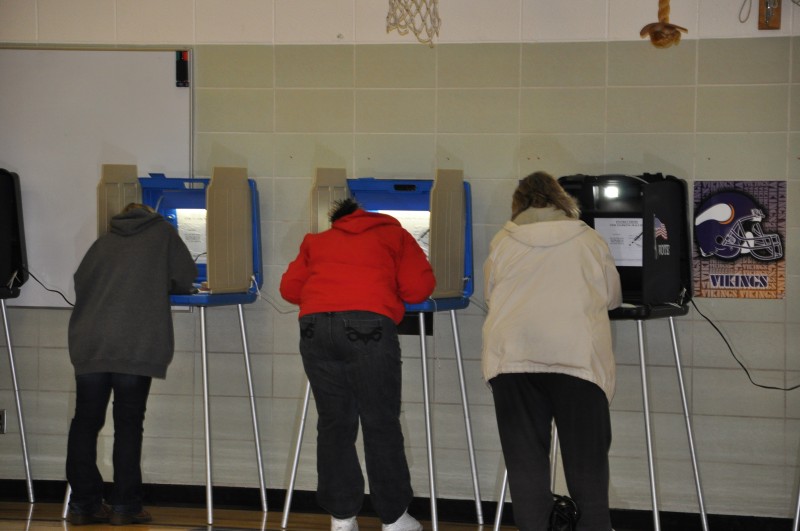
Minnesota – Polling stations opened as earlier as 7:00 a.m. in Minnesota. As time approaches midday, voters streamed into different precincts to vote for their candidates. For some, it is the first time voting in a US presidential election that hangs on a knife edge between the Democrats and the Republicans.
With slim margins, the US election is keeping the country’s heartbeat at a fast pace. Politician analysts say “It is too close to call.”
Van Hale
Best Voting Systems
As students file in to vote in this year’s election, Electoral Chair Carol Van Hale says “Minnesota has one of the best voting systems.” Without problems from students at the University of Minnesota Coffman Memorial Union, Van Hale says they are bracing for a long night.
Stem Cell
The Jones Family
At the Brooklyn Park Methodist Church, Loretta Jones and her family voted for President Obama. Jones says it is their own way of saying thanks to a president who supported Stem Cell research that would have helped their sick daughter. Jones’ 18-year old son said he is a first-voter in an election in which every vote counts.
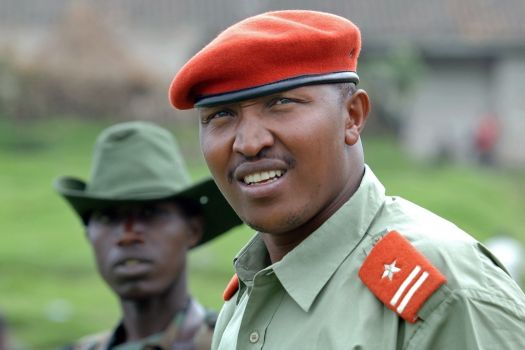
An eruption of militia-based violence in the eastern Democratic Republic of Congo reflects a longer-term pattern of failure by national and international agencies. The effects are now being felt among diaspora communities in Europe as well as citizens in the region. The roots of violence must be addressed if the cycle is to be ended, says Andrew Wallis. Français.Militia leader Bosco Ntaganda
By Andrew Wallis
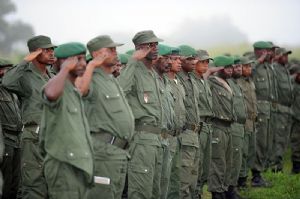
Congo (DRC) – There are many images that convey the complexity of the situation in the Democratic Republic of Congo (DRC) and this crisis-torn region of Africa. The sight of 280 fully armed Rwandan special forces dressed in Congolese army fatigues, striding purposefully across the border back into their homeland from the DRC in early September 2012 is but one.
The withdrawal is the latest phase in the efforts of regional and international actors to resolve the immediate damage caused by the revolt of the M-23 militia (see “DR Congo: the politics of suffering“, 5 September 2012). But a longer-term settlement requires much more: ending the violence and restarting the political process, thereby giving the population of the North and South Kivu regions – who are almost forgotten amid all the high-profile accusations – a chance to live securely and peacefully. This in turn raises the pressing need to ditch the blame-game. For too long, making short-term political capital from the crisis has become the default position for all sides – states, NGOs, the United Nations, extreme nationalist groups, and the international media. The appalling consequences have been felt by civilians in the region and in diaspora communities in Europe.
The M-23 and Kinshasa
In the view from the DR Congo’s capital Kinshasa, the M-23 revolt was caused by the international-community’s insistence that the militia leader Bosco Ntaganda should be arrested and transferred to the International Criminal Court (ICC) in The Hague for trial over alleged war crimes.
The Ntaganda issue was ostensibly dealt with under the Nairobi peace agreement of 2009 with the DRC president, Joseph Kabila. This provided for Ntaganda’s full integration – along with other former members of the Congrès national pour la défense du peuple (CNDP) militia – into the Congolese army (the Forces Armées de la République Démocratique du Congo [FARDC]). Rwanda was also party to the agreement and assisted the integration progress, but the latter was in essence a Congolese government issue.
In February-March 2012, after the request came to arrest Ntaganda, DRC officials met their Rwandan counterparts to gain support for his detention and to help facilitate the movement of ex-CNDP soldiers now serving with FARDC into other areas of the DRC. It is noteworthy here that the UN force in the region – the United Nations Organisation Stabilisation Mission in the Democratic Republic of Congo (Monusco) – was deployed next to Ntaganda and could itself easily have made the arrest on behalf of the international community and the ICC. Instead, on 7 April, Ntaganda – after hearing rumours that he would be held – disappeared with 200 men.
What happened next is unsurprising, as the revolt mushroomed from a small-scale mutiny into a regional (and national) threat. Was this because Ntaganda is a trusted military genius? Unlikely, because he is a figure disliked even by those in his own ranks, and certainly lacks the “messianic” charisma of former CNDP leader, Laurent Nkunda. More probable is that the success of the revolt, in its ability to recruit widely from among differing ethnic groups, lies in the deep discontent within the ranks of the FARDC.
The causes of this unrest include poor pay and conditions, and command disorganisation that the revolt has vividly highlighted. What started as a movement of less than 200 soldiers has now become a far broader and ethnically diverse problem. More than 80% of M-23 soldiers are estimated to be from the Hutu, Bashi, Nande, and Barega groups, with even members of President Kabila’s own protection services defecting and joining the rebels. The fact that the FARDC could not arrest one man or quickly terminate the revolt in its early days – even when assisted by thousands of Monusco troops – displays its failure as a credible military unit.
For some time, ex-CNDP officers now integrated into the FARDC had been complaining that Kabila’s government had failed to implement basic tenets of the 2009 agreement. They cited the massacre of fifty of their colleagues who had already been redeployed from Kivu to Dungu in Orientale Province. No DRC government investigation had occurred and they now feared the same would happen if they too were transferred from their “home” territory.
This context helps explain how Kinshasa can displace political embarrassment over the large-scale defections from the FARDC: namely, by attributing the success of the M-23 revolt to Rwandan interference. It is very likely that M-23 has recruited Congolese Rwandan refugees who had fled across the border to camps in Rwanda; who have longstanding grievances over the DRC government’s failure to grant them the land rights, the citizenship and the anti-discrimination protection that they had sought for decades; and who have now taken the opportunity to fight Kinshasa’s forces.
But it is far harder to find proof that well-trained and heavily armed Rwandan troops are present across the border, and it is surprising that UN or United States satellite or other visual surveillance evidence has not been used to verify – or deny – their existence.
The FDLR: Taking aAvantage
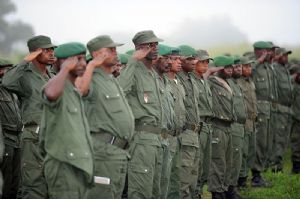
Congo’s FDLR Soldiers
The media and government focus on M-23 has been good news for the Front Démocratique pour la Libération du Rwanda (FDLR) and other militias looking to gain economically from the crisis. The presence of the FDLR in the region has been the main security bugbear for both Banyamulenge (Congolese Tutsi settlers) and the Rwandan government.
An agreement with Kabila’s government to defeat the FDLR had led to the deployment of Rwandan special-service troops in the bush for the past two years, serving alongside two companies of the FARDC’s special forces; it was the remaining two companies of this contingent (those referred to at the start of this article) that began to be withdrawn at the end of August 2012, as a result of the crisis between the DRC and Rwandan government over the M-23.
This makes it somewhat ironic that from May to August 2012, Congolese politicians (notably foreign minister Raymond Tshbanda) had called on the UN to take action against Rwanda for alleged interference in Kivu, even when Rwandan troops had been continuing this joint operation on Congolese soil (and when in private there have been meetings between the two sides). Their presence showed a confusion within the Kinshasa government, with its spokesman Lambert Mendé Omalanga having denied initially they were still fighting alongside the FARDC in Kivu.
The danger now is that politics have ended this joint anti-FDLR operation – and with the searchlight on the latter’s activities turned off, that militia violence against the civil population will be free to escalate. The UN High Commissioner for Human Rights, Navi Pillay, issued a report on 29 August citing massacres of hundreds of women and children in forty-five separate attacks on villagers by FDLR militiamen, and reprisal attacks by the Raia Mutumboki militia. This report and attacks have received almost no media coverage.
It is also notable that while the ICC demanded that Ntaganda be handed over (the pretext for the revolt), it has been far less proactive in pressing the DRC government to hand over FDLR leader Sylvestre Mudacumura, who is also wanted in the Hague for similarly appalling war crimes. Again, for political reasons, the international media and human-rights groups have been eerily silent on Mudacumura compared with the wealth of attention on Ntaganda.
Earlier in 2012, the ICC made a surprising judgment in releasing the FDLR’s executive secretary Callixte Mbarushimana, citing “a lack of evidence”. This former UN employee is also wanted in Kigali for alleged direct involvement in the Rwandan genocide. More than twenty people have given sworn statements of his complicity in the killing of his own UN colleagues of Tutsi background.
The Violence in the Diaspora
The revolt of M-23 has sparked far greater questions concerning ethnic diversity and toleration in both the DRC and within diaspora communities in Europe and north America. In Europe, the gathering momentum of “les combattants” (‘fighters’) – a number of autonomous extremist nationalist Congolese groups that campaign, often violently, against Joseph Kabila and his Rwandan counterpart Paul Kagame, has led to a number of outrages on the streets of Brussels and Paris.
In July a 22-year old Rwandan student had his jaw broken on the metro as he returned home after being attacked by a group of combattants in military fatigues; another young Rwandan was admitted to intensive care after being stabbed in the stomach, and a girl had her head badly burned. The Congolese group is also being blamed for violent assaults on several Rwandans in Paris who had come to greet President Kagame on a visit to the city in September 2011; attacks on Rwanda’s embassies in Europe and a “declaration of war” outside the Paris embassy in July.
The “fighters” are also accused of widespread attacks against moderate or pro-Kabila politicians such as that on DRC senate leader Léon Kengo when he visited Paris in December 2011. The fact that Brussels alone is home to a diaspora community of around 150,000 Congolese and 40,000 Rwandans means there is a clear danger that extremists can use the highly volatile situation in the DRC to justify ethnically-based violence in Europe.
Bishop Elysée, a highly inflammatory preacher and former assistant to Bishop Kutino in Kinshasa, has used his position in the Congolese community to publish a number of youtube videos calling on combattants in Britain, Belgium, France, north America and South Africa to kill Tutsis wherever they are. His diatribes, laced with biblical references, insist that all Tutsi families must be destroyed and all Congolese of Rwandan heritage should be hounded from Congo and killed. His message has, for survivors of the genocide, a chilling resonance to the words of the speakers on the Hutu hate-radio station RTLM in 1993-94. While it may be easy for those outside the Congolese-Rwandan communities to dismiss such attacks as the rantings of a crazed ideologue, it is clear they have an effect on fomenting yet more ethnic hatred.
The Fallout of Crisis
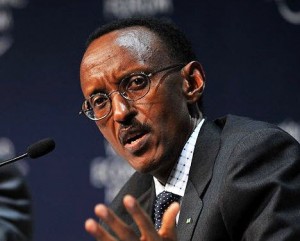
President Paul Kagame
Rwanda has in the eighteen years since the 1994 genocide prided itself on establishing strong internal and external security. Its overarching objective is to keep the Hutu extremist militia (the FDLR) from destabilising and threatening the border region. President Kagame has adamantly refused to countenance a “Waziristan-esque” borderland which threatens Rwandan villages and towns with attacks, as took place in the 1990s. This indeed would threaten the vital economic trade and commerce that now flows to and from the DRC-Rwandan border through to Mombasa and Uganda.
But beyond this, there seems a clear mantra that Kigali is also deeply concerned that long-term Rwandan settlers in the Kivus in the east of the DRC, are threatened by rooted prejudice based on their ethnicity, which the crises of 2008 and 2012 have only exacerbated. There are a growing number of refugee camps inside Rwanda, home to displaced Banyarwanda who have fled from Kivu.
Kabila’s government in Kinshasa, around 1,600 kilometres away from Goma, is in an entirely different situation from that in Kigali. The government, after surviving a highly disputed election at the end of 2011, is in a far weaker state politically; this has fostered indecision and a lack of the radical, clear policy decisions needed to change the decades of economic, social and security problems that blight the country.
In the initial short term, the current crisis has played well for Kabila, in allowing him to shift the political agenda onto troubles in the east, and onto Rwanda in particular. The difficulty now is the ongoing crisis allows critics of the Kinshasa government (many of whom believe it should not even be in power) to use the Kivu situation as just one more stick against it – rather than to seek a constructive solution.
The supporters of the veteran opposition leader and failed presidential candidate, Étienne Tshisekedi, are cranking up nationalist rage on the Kivu crisis. It is reported that “in Kinshasa, people in Gombe district sing religious anthems and change the words to include phrases such as ‘Lord, kill Kabila as you killed his father’ and jump on cars singing the ‘Zaïroise‘, the national anthem of the late President Mobutu Sese Seko’s era.”
The Other Fronts
But the situation in the east is far from Kabila’s only concern.
Kinshasa has recently been battling insecurity not just in the Kivus, but in Bas-Congo, Bandundu in the west, Katanga in the south, and Kasai. Angolan troops have made numerous incursions allegedly to find and neutralise FLEC (Front for the Liberation of the Enclave of Cabinda) rebels. In May 2011 the FLEC occupied twelve villages in Bandundu, displacing 18,000 people in a dispute over a small diamond-rich area of territory claimed by Angola; and over some years they have forcibly expelled tens of thousands of Congolese migrants looking for a better life in a country with a GDP twenty-four times that in their homeland.
Kabila needed Angolan support from its president, José Eduardo dos Santos, during the DRC’s civil war of 1998-2003, and then to help win the presidential election in 2007. He has been mindful, even with these breaches of his borders, not to directly accuse the Angolan leader. Even while the Congolese media has demanded firm action against Angolan enemies – as it has this summer in another context with M-23 – the president in Kinshasa has stayed quiet.
In Katanga, an area of previous strong support for Kabila, opponents are gathering strength and even mentioning secession from the state should the government “fail to allot the Province the 40% share of national tax revenue stipulated by the 2006 constitution. Kabila’s move to appoint his younger brother Zoe as Governor of the province to replace incumbent Moïse Katumbi Chapwe is not helping matters.”
Kabila personally has made few major public pronouncements on the ongoing M-23 situation, but has been talking to Kagame on a number of occasions behind the scenes (a positive sign). While he seems reluctant to criticise the Rwandan president, other senior members of his government have made high-profile speeches and interviews condemning Rwanda for arming and even providing recruits for M-23. Much of the information used has come from a UN Group of Experts [GoE] report that, to Kigali’s evident disgust, was leaked before the Rwandan government had been able to see or comment on it.
In a further twist to the many conspiracy theories and blame for the crisis, Steve Hege, the head of the GoE, was shown to have written a number of highly inflammable articles in favour of the FDLR – which is on the US’s list of international terrorist groups. Hege himself, besides swiftly removing his pro-FDLR articles from his blog, has remained silent on the controversy, as has the UN. The affair is a striking embarrassment for an organisation whose own impartiality in the context of the eastern DRC is already in question.
The UN recently admitted to allowing Monusco aircraft to be used to fly members of the FARDC to visit local Mai Mai militia in a bid to recruit them to fight the M-23. Congolese foreign minister Raymond Tshibanda later denied the FARDC was working with the Mai Mai, which has its own appalling human-rights record. This encourages more questions about why Monusco then flew them to the meeting.
The problems of progress
Both Rwanda and the DRC are suffering politically and economically from the events of the past few months. An end to the crisis and a long-term resolution of the issues underlying the M-23 revolt cannot come soon enough. The bloodshed and upheaval in the Kivus has inflicted yet more trauma on the local population, and this is now spreading to diaspora communities. The only winners are extremist groups using the crisis to promote their own ethnic or political agenda, or (in the case of militias such as the FDLR) to continue to attack the civilian population and loot mineral resources.
The Amani ceasefire of 2008 that ended the previous crisis failed because it was based on a military solution. This time, a political solution is desperately needed, one that involves talks between Kigali and Kinshasa, and (as urgently) between Kinshasa and the Congolese Tutsi community and M-23. There has to be compromise by the DRC government rather than the usual political manoeuvring, for the latter will result only in short-term peace (at best) followed by the emergence of a new Nkunda or Ntaganda in a couple of years’ time. The new process must tackle fundamental problems, including why so many FARDC units have mutinied. This means a radical overhaul of army pay, discipline and condition, ensuring recruits do not need to live off the people they are supposed to be protecting or to join revolts against the government they are meant to be serving.
It is also vital that the two main armed groups of most concern to the respective governments in Kinshasa and Kigali – M-23 and the FDLR – are eradicated by military and political means.
A start has been made by the agreement in Kampala on 8 September among the International Conference on the Great Lakes Region (ICGLR) to establish a “neutral” force to monitor the borders and stamp out all the militia groups. Rwanda and the DRC will each contribute three officers to an expanded Joint Verification Mechanism [JVM], with other ICGLR states – Angola, Burundi Tanzania, Uganda, Kenya, Sudan, Zambia, the Central African Republic and Congo – providing the other observers.
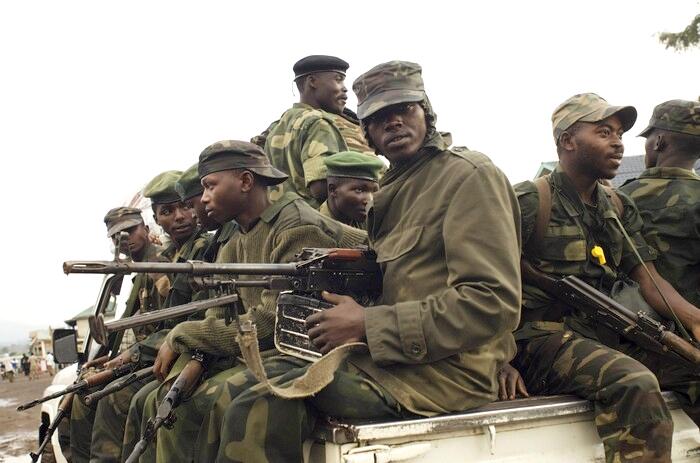
M23-rebels sit at the back of a pick up truck
Moreover, an emergency special meeting on the Kivu crisis will take place on 25 September at the UN under the eye of secretary-general Ban Ki-moon. The need for a neutral military force to engage all the destabilising militia groups in the region will be high on the agenda. The DRC is insisting that Rwanda, Burundi and Uganda should not be part of this military force, but should have only an observer role (which Kigali has agreed to). However, Rwanda is keen for a regional solution to this regional problem, pointing out that Tanzania has already promised troops to any military mission.
In July, Kabila called instead for the expansion of Monusco to fight the militias. This seems less likely, in part because this would mean a change to Monusco’s “stabilising” mandate and a highly expensive operational budget; but also because of the UN’s record of failure to stop even one militia group, its previous corruption scandals, and what many see as its partiality.
It would already be hard enough to finance, organise, and deploy a truly neutral force (and one seen to be neutral by all sides) that can deal with the militias. But it remains equally clear that the M-23 issue needs a political solution. The dilemma for Kabila and his government is that the problems in the east are no longer a distraction from the broader sources of political and social unrest in the DRC – rather, they have become a now most unwelcome addition. Even the removal of Ntaganda, if accompanied by any political conciliation with M-23 and the community it represents, could be interpreted by the nationalist opposition in Kinshasa as yet another “sell-out” to “foreigners”.
Tthe leaders of La Francophonie – including France’s president, Francois Hollande – will descend on Kinshasa on 12 October 2012 for the organisation’s fourteenth summit. Its theme is “Francophonie: environmental and economic stakes in the face of global governance”. For President Kabila it is a chance to show himself on a global stage and portray his country in a positive light. Kabila will attempt to shrug off internal opposition jibes about the allegedly rigged 2011 election and growing unrest over the use of internal-security apparatus to “disappear” critical journalists, politicians and lawyers.
But away from the summit’s grandstanding and distraction, Kabila needs to persuade himself and his party that a long-term resolution of the Kivu crisis is in the interest of both the local population, the country and his presidency. As the International Crisis Group report of late 2010 concluded: “The historic, demographic, land, ethnic and economic causes of the conflict in Kivu are not always seen as the strategic stakes in the peace negotiations…A different conflict resolution approach centred on the Congolese population is needed.”
There is possible short-term political and financial damage in pursuing a long-term approach. But to seek to eliminate the militias via military action will be vain and counterproductive unless the very reasons for their existence are addressed. If the crisis-cycle is to be halted, the perceived and real grievances between differing ethnic groups in the region, and the deep-seated suspicion that state security and administration are used against the populace rather than for their benefit, have to be understood and tackled.
The AfricaPaper: Many thanks to Andrew Wallis for this report. First published on openDemocracy.
London & Freetown – In the late 1980s, a common joke told on the streets of Freetown was: “What did Sierra Leoneans read by before they had candles? … Electricity!” By then, life expectancy in Sierra Leone was one of the lowest in the world. Infant mortality was amongst the highest. The literacy rate was just 15%. Since 1978, the country had been a one party state. The effects of a collapse in world prices for Sierra Leone’s exports were compounded by decades of economic mismanagement and endemic corruption. When Albert Margai left office in 1967, after three years as prime minister, he was worth an estimated US$250m – despite receiving an annual salary of just US$4,000. In 1985, when President Siaka Stevens stood down, he is said to have amassed a fortune of US$500m. The Bank of Sierra Leone, in contrast, held US$196,000 in its foreign reserve accounts. Salaries of lower level public officials went unpaid. Hospitals, schools and roads fell into disrepair. In 1991, the United Nations ranked Sierra Leone last of 160 countries in its Human Development Index. The country was taking its final steps towards war.
Unrecognizable
On the eve of the November 2012 presidential, parliamentary and local council elections, Sierra Leone is often depicted as a country unrecognizable from a quarter of a century ago. Since the civil war officially ended in 2002, consecutive national elections have been won by different parties. When Ernest Bai Koroma and his All People’s Congress (APC) party were elected in 2007, the incumbent Sierra Leone People’s Party (SLPP) accepted defeat – albeit reluctantly. In 2005, the United Nations’ largest deployment of peacekeepers – numbering 17,500 at its peak – was withdrawn. In 2012, Sierra Leone committed 850 peacekeepers to the African Union Mission in Somalia (AMIS). International hotel chains Radisson and Hilton Worldwide have signed agreements to open outlets in 2013 and 2014 respectively. Free health care for pregnant women, nursing mothers and children under five was introduced in April 2010. According to some estimates, Sierra Leone’s economy will grow by 34% in 2012 due, in large part, to the onset of iron ore exports.
Infrequent Occurrence
Dr. Christiana Thorpe
The achievement of voting the opposition to power in 2007 – an infrequent occurrence in Africa – was tarnished by virulent accusations of fraud and manipulation. The decision by the National Electoral Commission (NEC) to nullify votes cast at polling stations with over 100% voter turn-out provoked outrage from the incumbent party. Of the 477 invalidated polling stations, 426 were in electoral strongholds of the SLPP. The party accused the NEC’s Chief Commissioner, Christiana Thorpe, and the international community of connivance in an orchestrated scheme for regime change. The NEC maintained that, in the absence of a provision in the electoral law specifying the body mandated to annul votes in instances of unambiguous electoral malfeasance, it had the de facto right – and responsibility – to do so. It also insisted that the annulled votes would not have affected the final outcome of the election. The SLPP countered that only the Supreme Court has the authority to cancel votes.
“Credible elections start with credible voter registration”
For the 2012 elections, the principal way the NEC has sought to mitigate electoral fraud is by implementing a system of biometric voter registration. “Credible elections start with credible voter registration”, remarked Christiana Thorpe during a presentation at Africa Research Institute in London in July 2011. Rather than manually registering voters before each election, biometrics enable creation of a permanent electronic register which can be updated as new voters become eligible or existing ones die. The system captures unique data – thumb prints and facial features – in addition to personal details, and can identify whether someone has registered more than once by centrally matching thumb prints. The NEC’s determination to improve the integrity and transparency of the electoral process is laudable.
Biometrics
Biometric registration
The shortcoming of biometric technology is that it counters the symptoms – not the causes – of electoral fraud. Biometrics cannot detect whether a registrant is underage, or determine an individual’s nationality. There is also no evidence of a deliberate strategy by any political party to rig elections through multiple registrations. All previous electoral registers have contained names of the deceased, the underage and foreign nationals – but the most significant type of electoral misdemeanour has been physical stuffing of ballots and false recording of results by temporary election workers. Both parties, when in power, have used their position to fund political campaigns and buy voters. This practice remains widespread. Political parties continue to organise and condone the intimidation of voters, often perpetrated by their youth wings. Biometric technology offers little scope to tackle these transgressions. Elections are more than just a technical exercise.
Political Advantage – “Winner Takes All”
For many, elections – and the preceding campaigns – provide the true measure of how Sierra Leone has progressed. As yet the fundamental character of political competition in Sierra Leone has not been altered. Identity, not ideology or policy, remains the paramount factor. Ethnic and regional voting blocs – sustained by entrenched patronage networks and corruption – are as rigid as ever. The APC draws majority support from the Temne, Limba and other northern tribes, and Krios of the Western Area, while the SLPP are favoured by the Mende and tribes of the south-east. Elections are regarded as “winner takes all” contests with defeat entailing exclusion and disadvantage for the losers, and their regions.
The past is still utilised in pursuit of political advantage. Shortly after Julius Maada Bio was elected leader of the SLPP in July 2011, there were renewed calls for an inquest into the December 1992 executions of 26 people suspected of plotting to overthrow the government. The extra-judicial executions – by firing squad – were ordered by the National Provisional Ruling Council (NPRC), which had itself seized power by force in April 1992. Britain promptly suspended aid to Sierra Leone. Maada Bio, one of the chief architects of the NPRC coup, was heavily implicated in the executions. In January 1996, Maada Bio ousted NPRC leader Valentine Strasser and for a short time was head of state. With former members of the NPRC junta now prominent within the SLPP, the calls for an inquest were viewed as brazen political manoeuvring by Koroma and the APC.
In 2011, when Michael von der Schulenburg, then Executive Representative of the UN Secretary-General in Sierra Leone, criticised the proposed inquest, relations with President Koroma soured. In 2012, in a leaked UN document, Schulenburg noted “there can be little doubt that the decision of the President to force my early departure will be seen – rightly or wrongly – by virtually every Sierra Leonean as an effort to remove a potential obstacle to his re-election and as an opening the door to manipulating the election outcome in his favour.”
“Thank You Tour”
Political parties still use violent means to achieve political goals. Election campaigns for the 2007 elections were tarnished by clashes organised by the upper reaches of the APC and SLPP. A return to war was never probable, but President Ahmed Tejan Kabbah threatened to suspend the vote and impose of a state of emergency. On 9th September 2011, during a “thank you tour” to SLPP supporters, Julius Maada Bio’s convoy was pelted with rocks by mobs of APC supporters in the southern city of Bo. Maada Bio required stitches to the head. SLPP mobs retaliated by setting fire to the APC district office and residential properties. A public enquiry concluded that the violence was both premeditated and orchestrated by elites of both parties. The government’s recent purchase of US$4.5 million of predominantly military grade weapons caused a public outcry due to suggestions that they were intended for the Operational Support Division (OSD) of the police – a force which within living memory had been used by President Siaka Stevens as a personal paramilitary unit. After much public – and international – pressure, the government transferred the weapons to the army for use by Sierra Leonean peacekeepers in Somalia.
“Attitude is Everything”
President Bai Koroma and his Vice Sam Sumana
Sierra Leone remains beset with privation that pre-dates the civil war. Koroma’s insistence that “attitude is everything” – a slogan ubiquitously plastered across billboards in the capital – offers little solace to Sierra Leoneans who were promised a “peace dividend”. In reality, many people find themselves in a similar financial predicament to that of pre-war days. Hype regarding the country’s economic potential and the unprecedented scale of investment in the mining sector have raised expectations – but offered few discernible benefits to ordinary Sierra Leoneans. The purchasing power of low income earners has halved since 2007. Food prices have spiraled. A cholera epidemic concentrated in the slums of Freetown had killed 392 residents by September 2012. Youth unemployment remains endemic.
Anything New?
Sierra Leone’s 2012 elections are unlikely to reveal anything new about the country and its politics. President Koroma is expected to win a second term, but not because he has transformed the country’s economy. The incumbent has deployed clever tactics, co-opting proxy parties – including the Revolutionary United Front Party – to carry out political dirty work, and enticing high profile SLPP politicians to defect, most notably veteran Tom Nyuma formerly of the NPRC. The contest is proving harder fought than Koroma – and many in the international community – anticipated. Efforts to dismiss Maada Bio as a relic of Sierra Leone’s authoritarian past have met with resistance due to his popularity amongst “youth” and the military. But despite his charismatic appeal, many in the country consider Maada Bio to have more style than substance.
“Authoritarian Developmentalism”
In Sierra Leone, the process of building a modern democratic state after a decade of war has been heavily contested. Important progress has been made, particularly in the area of electoral management. But legacies of identity politics, violence, corruption and inequality have been – and will continue to be – harder to overcome. While the economy has grown, it is structurally little different to its pre-war incarnation. The notion that African countries like Sierra Leone should pursue a model of “authoritarian developmentalism” in order to hasten wealth and job creation is fanciful. Sierra Leone’s government budget is minuscule, about US$500m per annum, most of which is from donors who insist on democratic and liberal economic reforms in exchange. The government is not in a position to adopt political and economic policies that will inevitably be unpopular with donors. Nor does it possess the human capital or institutions to successfully implement such measures.
What is certain is that any further consolidation of democratic reforms will be intimately tied up with the state of the country’s economy. But the imperatives of how to create employment and distribute wealth more equitably have been keenly avoided by Sierra Leone’s political class.
The AfricaPaperis grateful to Jonathan Bhalla and Sareta Ashraph for this special report.
Jonathan Bhalla is Research Manager at Africa Research Institute
Sareta Ashraphlived and worked in Freetown, Sierra Leone from 2003-2009. She maintains a keen interest in the country’s history and returns there regularly. Sareta is currently writing a book on the conflict in Sierra Leone.
In April 2011, Africa Research Institute published “Old Tricks, Young Guns: Elections and Violence in Sierra Leone”. To download a copy, please click here.