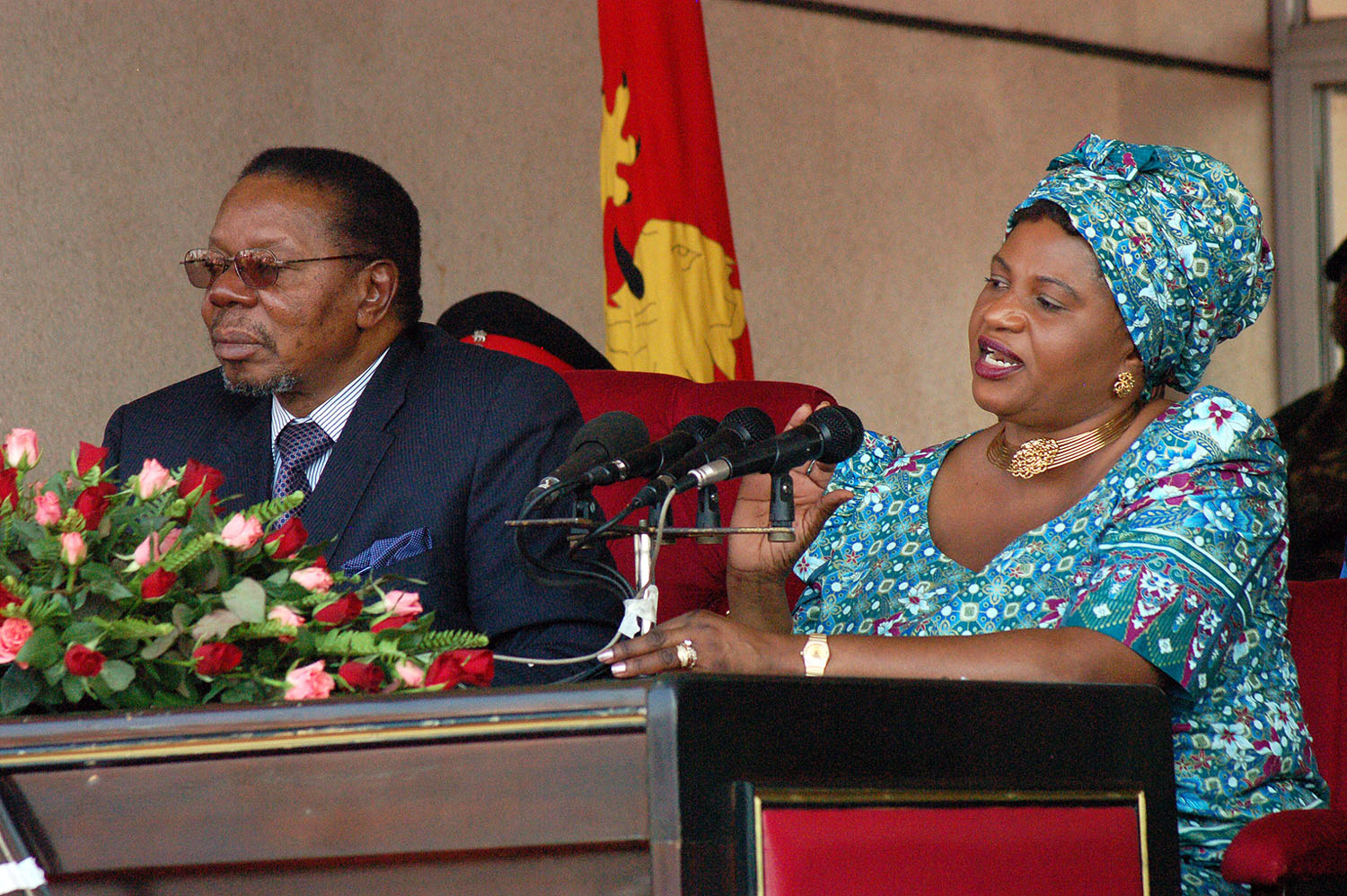
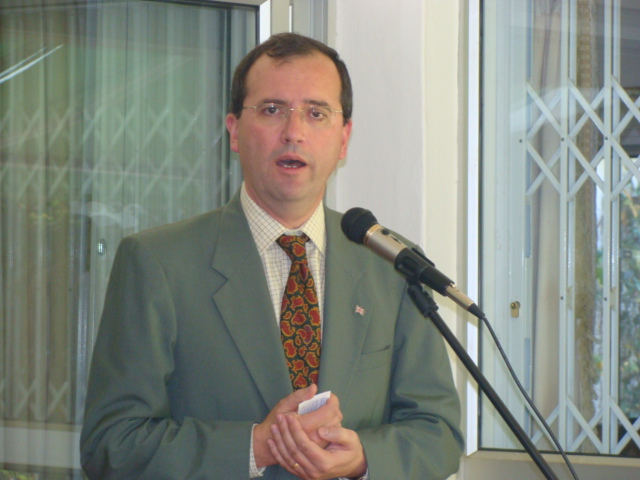
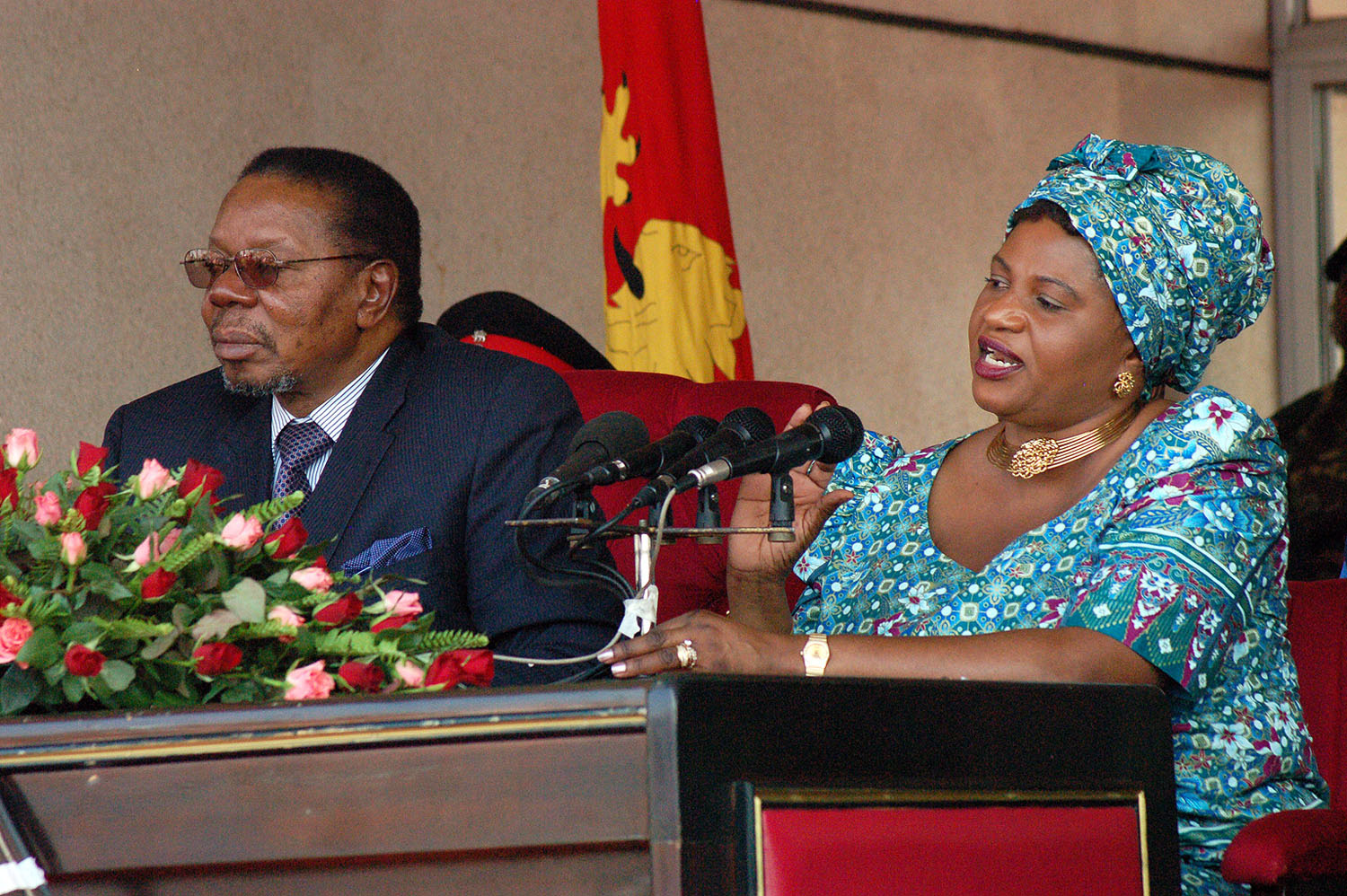
Mabvuto Banda | MalawiExpelled British High Commissioner to Malawi speaking two weeks ago
Lilongwe – United Kingdom (UK) is reviewing its 47 years of bilateral relationship with Malawi after the southern African nation expelled its Commissioner over a leaked diplomatic cable that described President Bingu wa Mutharika as a dictator.
“I have asked my officials, working closely with their colleagues elsewhere in government, to review rapidly the full range of our wider relationship with Malawi,” William Hague, Britain’s foreign affairs secretary announced in a statement in response to Malawi’s decision to expel High Commissioner Fergus Cochrane-Dyet.
The review could potentially see the UK suspending aid to Malawi, a country which is heavily dependent on foreign aid, with donor funding accounting for about 40 percent of official receipts.
“President Mutharika is becoming ever more autocratic and intolerant of criticism. In a public speech on 6 March, he called for his supporters to go to the streets to fight his critics to bring discipline in this country…” in part, reads Cochrane-Dyet’s cable from Lilongwe to London expressing fear of Mutharika’s dictatorial tendency.
The leaked diplomatic cable published in Malawi’s weekly Weekend Nation, also described Mutharika as combative. This irked Mutharika who in protest gave Cochrane-Dyet 72 hours to pack and leave the country.
“Every country has a right to demand the withdrawal of a diplomat if his or her activities are not seen to be compatible with the host nation,” observed former diplomat John Chikango, “But, with Britain, if I were the president, I would not go that way. You do not call diplomats and carpet them; you are always diplomatic with them.”
In retaliation, UK expelled Flossie Gomile Chidyaonga, Malawian charge d’ affaires in London on instructions from Foreign Affairs Secretary William Hague.
Leading economists fear that the on-going review by the British would likely see the UK deciding to withhold aid and join the Germans who are already withholding budget support.
President for the Economic Empowerment Action Group (EEAG) Lewis Chiwalo said the deportation, apart from impacting negatively on foreign aid, would potentially wipe out all the economic gains Malawi has made in recent years and consequently hurt the poor.
Malawi President Bingu wa Mutharika addresses a press conference with his wife Calista a day after he expelled the British diplomat
“A big chunk of our foreign exchange comes from overseas and mainly from OECD [Organisation for European Economic Cooperation]…I fear that the review may mean the suspension of budget support which would be disastrous for our country,” said Ben Kalua, economics professor at the University of Malawi.
Malawi has in the last five years enjoyed a relative economic boom growing at an average seven percent and inflation reduced to single digits. Interest rates have gone down to an all time low of 13 percent from 25 percent in the same period.
Mutharika has been heavily criticised by both local and international rights groups for trying to suppress free speech and minority rights.
“It’s embarrassing for the president to go ahead and expel a British diplomat because it only confirms that he is really intolerant to criticism. After all, we stand to lose big time than the British,” noted Luke Phiri, a Malawian public worker.
Germany is withholding part of the budget support for this financial year in protest against a law preventing same sex marriages and another law which empowers the minister of information to ban newspapers publishing material deemed bad for the public.
“Culturally, its disrespectful and un-Malawian to chase a visitor from your home…” said local trader Susan Ligomeka, 46, in the capital Lilongwe. “This may end up hurting us the poor and not the president and his cronies who live in luxury.” TAP
In a race to help the poor in Africa, Madonna promised to build an academy for vulnerable girls, but break their hearts and left them in limbo.
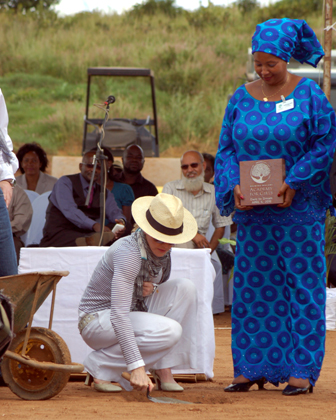
Madonna prepares to lay a foundation brick to mark the first phase of construction of the school last year
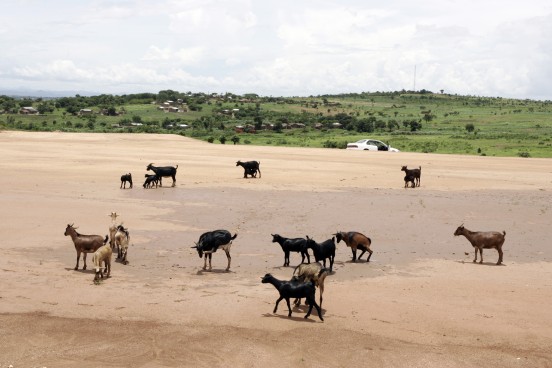
Lilongwe–The Malawi government is investigating US pop star, Madonna, for abruptly abandoning the construction of a multimillion dollar academy that was to benefit thousands of school age girls in this African nation.
Deputy Minister of Education Songazauzu Salijeni said in an exclusive interview with The AfricaPaper that the government is not happy with Madonna and her associates because a lot of money was raised in the USA to build the school in Malawi.
“We hear that $18 million was raised to build the school which was estimated to cost about $10 million…,” said Salijeni raising concerns for the first time since Madonna, announced her decision to abandon the project late last year. “We would like to know where this money is and why Madonna decided to stop such a promising project.”
Madonna Louise Ciccone had promised to build Raising Malawi Academy for Girls (RMAG) to educate 500 girls for free. Many people had welcomed the pop star’s benevolent gesture and have eagerly awaited the construction of the school in a country, where only 27 percent of girls make it through secondary school.
The academy for girls, modeled on Oprah Winfrey’s South African school, was being built in the poor village of Chinkhota, about 15 kilometers outside the capital Lilongwe.
The failed project has saddened many girls who cherished hopes of gaining education in her academy. The announcement caught everyone by surprise causing anger among villagers who have deserted their homes to pursue opportunities at the construction site.
“Madonna never consulted us on her decision and frankly, we are not happy with this,” Salijeni stressed.
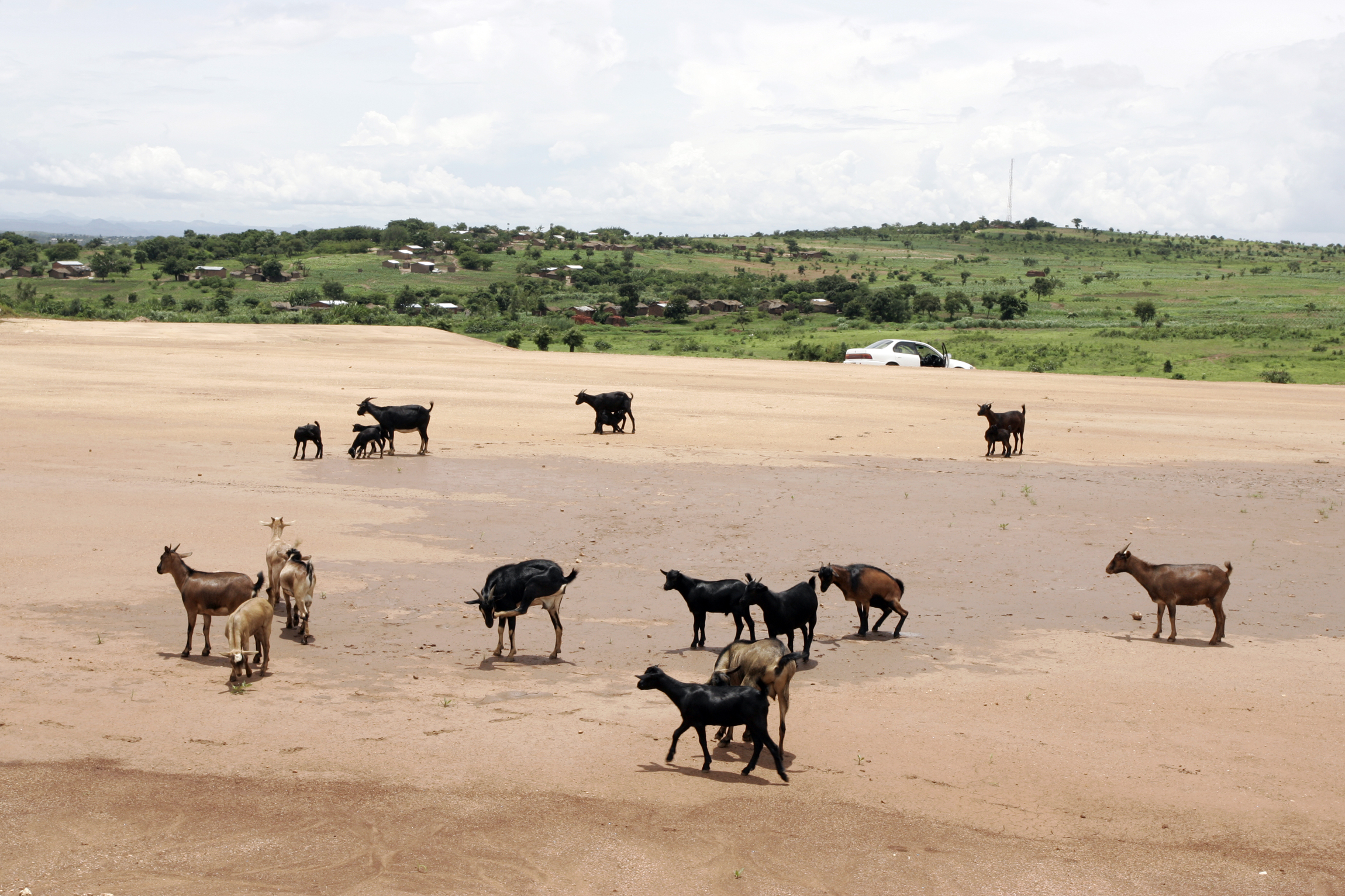
Goats play on the abandoned site of the Raising Malawi Academy for Girls
Raising Malawi Inc (RMI) co-founded by Madonna together with film director Michael Berge, started fund raising in the USA for the school. But last year, the pop diva decided to change the organization’s focus and direction saying that she wanted to increase its effectiveness.
In efforts to increase the effectiveness of RMI, Madonna partnered her charity with the Global Philanthropy Group (GPG) – a business that works with high net worth individuals, charitable foundations, and governments on philanthropic initiatives.
The government is not the only institution that is angry with the artist. Eight of her former workers have taken legal action against RMI and RMAG where they were employed. Madonna challenged the court action and asked the court to have her charity struck out from the case.
But on Aug. 12, 2011, the Industrial Relations Court dismissed her arguments and ruled that the former employees can sue her charity for non payment of wages. They are seeking compensation for unfair dismissal and payment of their terminal benefits.
In his ruling Judge Jack Nriva said that it would be premature to remove Raising Malawi Inc from the case because several issues of employee, employer relationship, economic realities and group liability have been raised.
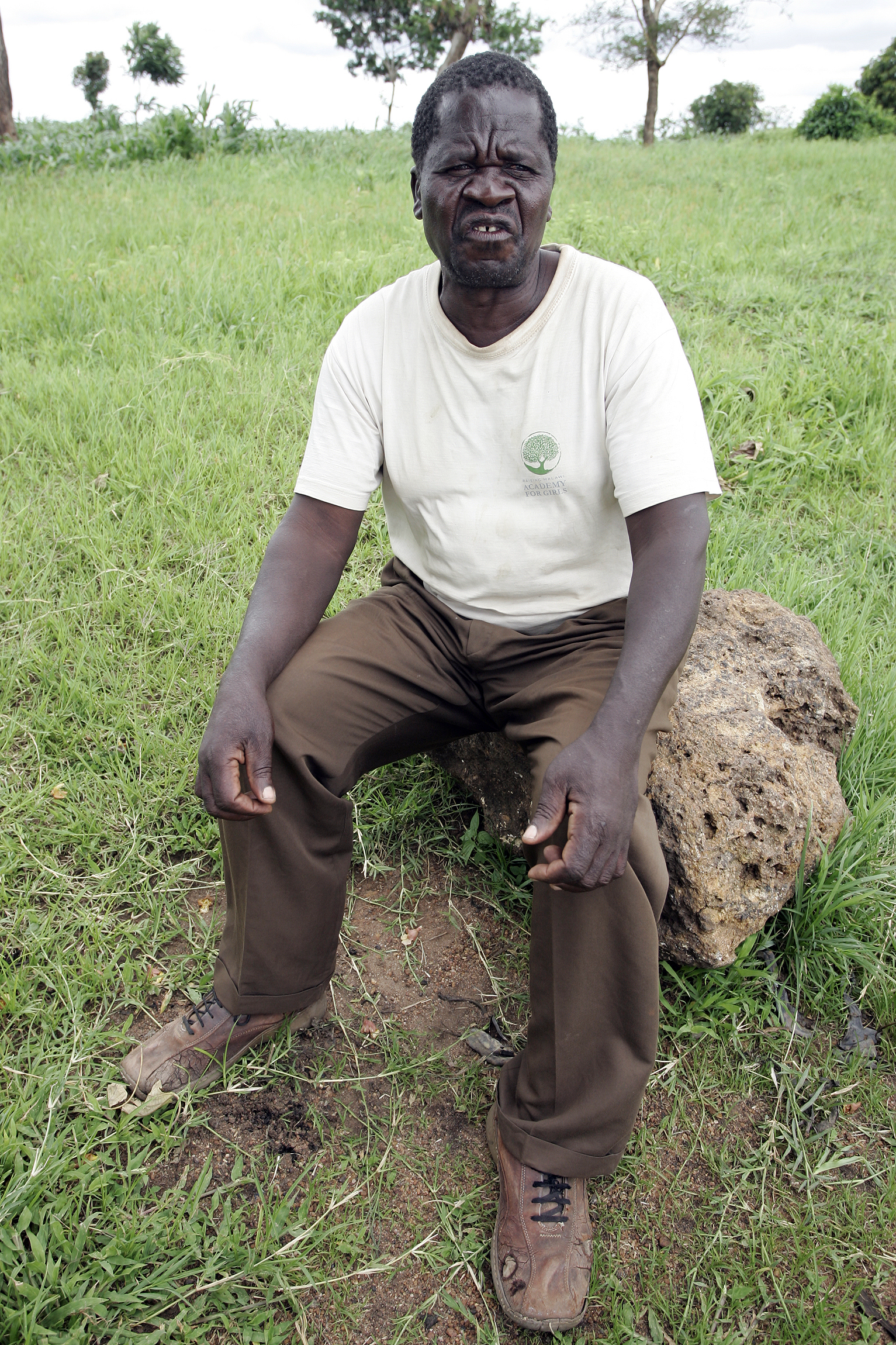
Village headman Essau_Chinkhota
“I believe the application to remove Raising Malawi Inc as party herein ought to be, and is hereby dismissed. In the glimpse of what has transpired in the affidavit evidence, I believe it would be less prejudicial to RMI if they are maintained as party to the proceedings,” said Judge Nriva.
Earlier, Madonna’s lawyers Davies Njovu of Savjani & Company, Malawi’s oldest and richest law firm, told the Industrial Relations Court that there was nothing unfair about the termination of the applicants’ employment since termination of employment was necessitated by genuine economic reasons. Mr. Njovu added that the school project was mismanaged and that the pop star had to cut her losses by stopping the project and sacking everyone.
In her statement in which she announced that she had abandoned the project, Madonna, 56, alleged to have spent $3.8 million for the Raising Malawi School project, but a number of former employees told the court that only $854,630 was deposited into the Malawi-based bank account since it was opened in August 2009.
Madonna’s action sparked anger among local farmers who were forced to surrender their farmland for the school project.
“The last two years have been very difficult for us, we could not grow enough food because our land was given to Madonna despite our protests…we want it back,” said village headman Essau Chinkhota.
In New York, Madonna’s spokesperson, Liz Rosenberg, has yet to respond to calls or emails from The AfricaPaper in response to this story. |TAP|
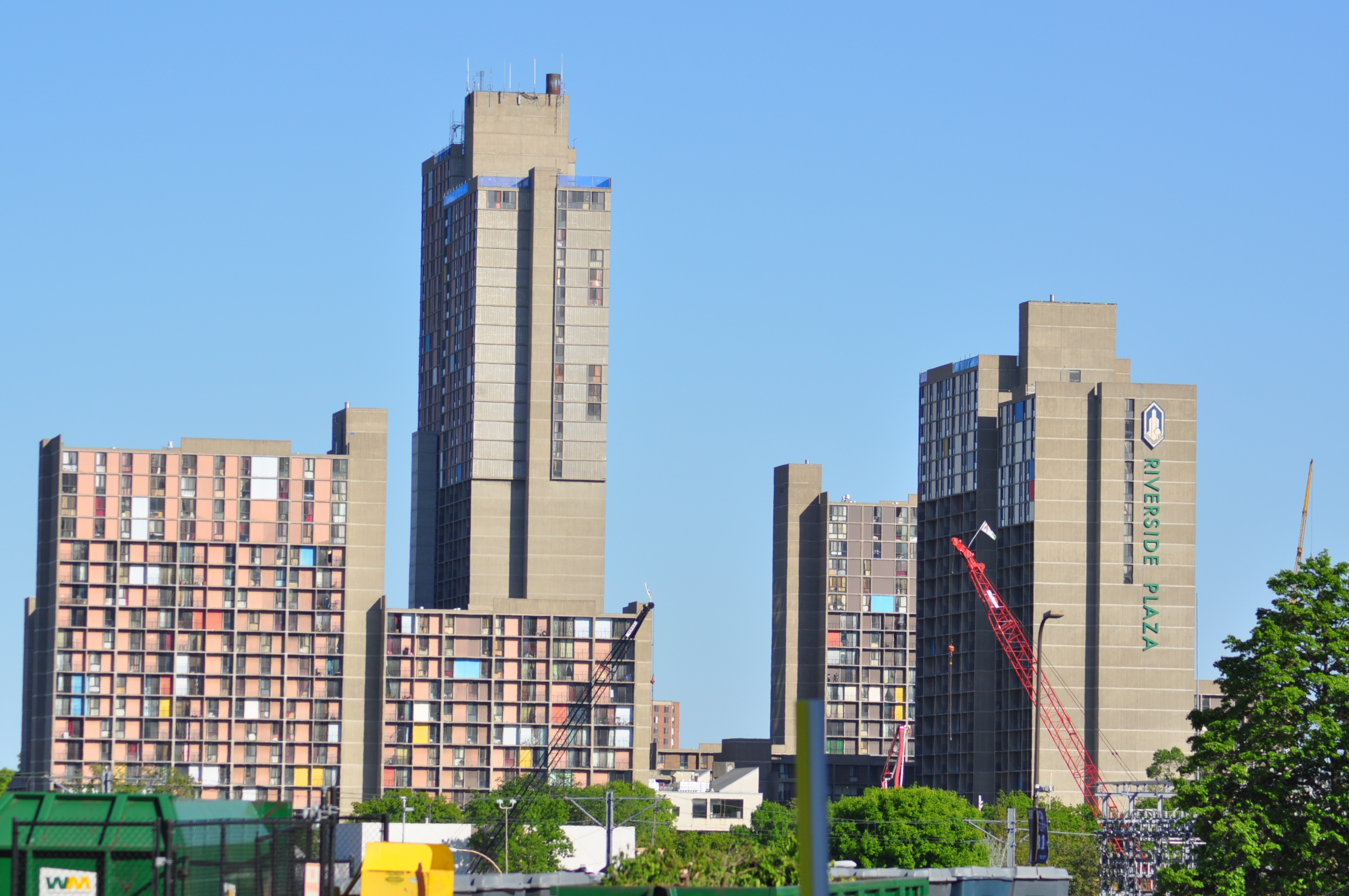
Minneapolis, MINN – Near downtown Minneapolis, the Riverside Plaza rises above the intersection of highways 35W and I-94. With its faded, multicolor concrete panels, Riverside Plaza has become home to many East African immigrants, mostly from Somalia and Ethiopia, leading to its common nickname “Little Mogadishu.” A major renovation of the complex is highlighting just how much the Plaza means to the people who live there.
“Parents watch their children from windows. The metro is half a block away from the buildings,” said Tsehainesh Woldemicheal, who moved to the Plaza three years ago. “It is like living in Africa. Some think they are home and this place belongs to them.”
The 11 connected buildings designed by architect Ralph Rapson have towered over the Cedar-Riverside neighborhood since 1970. Close to the main campus of the University of Minnesota, the complex provides accommodations for people of all ages, genders and incomes.
Though Riverside’s original mission of providing accommodation for 30,000 didn’t happen, it has become a success in its own way by providing schools in the facilities that give new immigrants a start in Minnesota. Over the years, Riverside Plaza, fully occupied for four decades, has been a vibrant and lively community to foreigners.
These days there is ongoing construction everywhere. Few months ago, developer George Sherman launched a $132 million refinance and renovation project that promises to change the outlook of Riverside Plaza. The two-year renovation includes repainting the multicolor panels to their original primary colors, reworking the grounds, expanding the Charter School, flats, and an overhaul of the heating, plumbing systems and aging elevators.
In 2010, Riverside Plaza was included in the national Register of Historic Places in Minnesota, providing additional tax breaks for Sherman Associates. The renovation project is expected to provide about 300 construction jobs, including 100 plumbers. After the utility fixes, Sherman Associates hopes to save $1 million annually on energy and water.
“Some people call it a slum and other derogatory names. For me what comes to mind is Home Sweet Home,” said Fuad Ali, a recent graduate from U of M. “No matter where I go, when I see the high-rise buildings, I know where to go and where home is.”
Burhan Mohumed
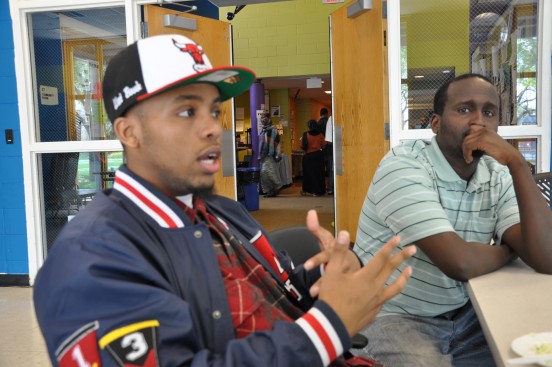
“I have been here for 14 years. The place is still the same, except that people have to move in and out,” said Burhan Mohumed, a sociology student at the U of M. “There hasn’t been any significant change in the neighborhood. The buildings are old.”
Described by its critics as the “Sky Ghetto,” the buildings’ residents have been mainly low-income immigrants, first from Asia and later from East Africa. Many continue to search for opportunities to build their lives and provide good educations for their children. More than 200 students from the Plaza attend the colleges and nearby University of Minnesota. Some Somali residents who fled from the bloody war and carnage that ravaged their country have raised their children to become doctors and lawyers from the heart of the Riverside Plaza.
Residents’ feelings are mixed about the renovation project itself. Some youths complained about being left out of the process and given limited information about the ongoing activity in their families’ apartments. Elders, in turn, show their flats to visitors in appreciation, clearly pleased with the project.
At “C” or Chase Building, Tsehainesh Woldemichael said she used to clean snow from her living room, but now that her windows have been replaced she looks forward to no more of that next winter. She is happy with her renovated apartment.
“They changed the whole cabinet, the sink, toilets and bathtubs in other apartments,” said Woldemichael, a three-year resident at the Plaza. “They painted walls, waxed the floors. Next month, they [Sherman Associates] are going to change the elevators.”
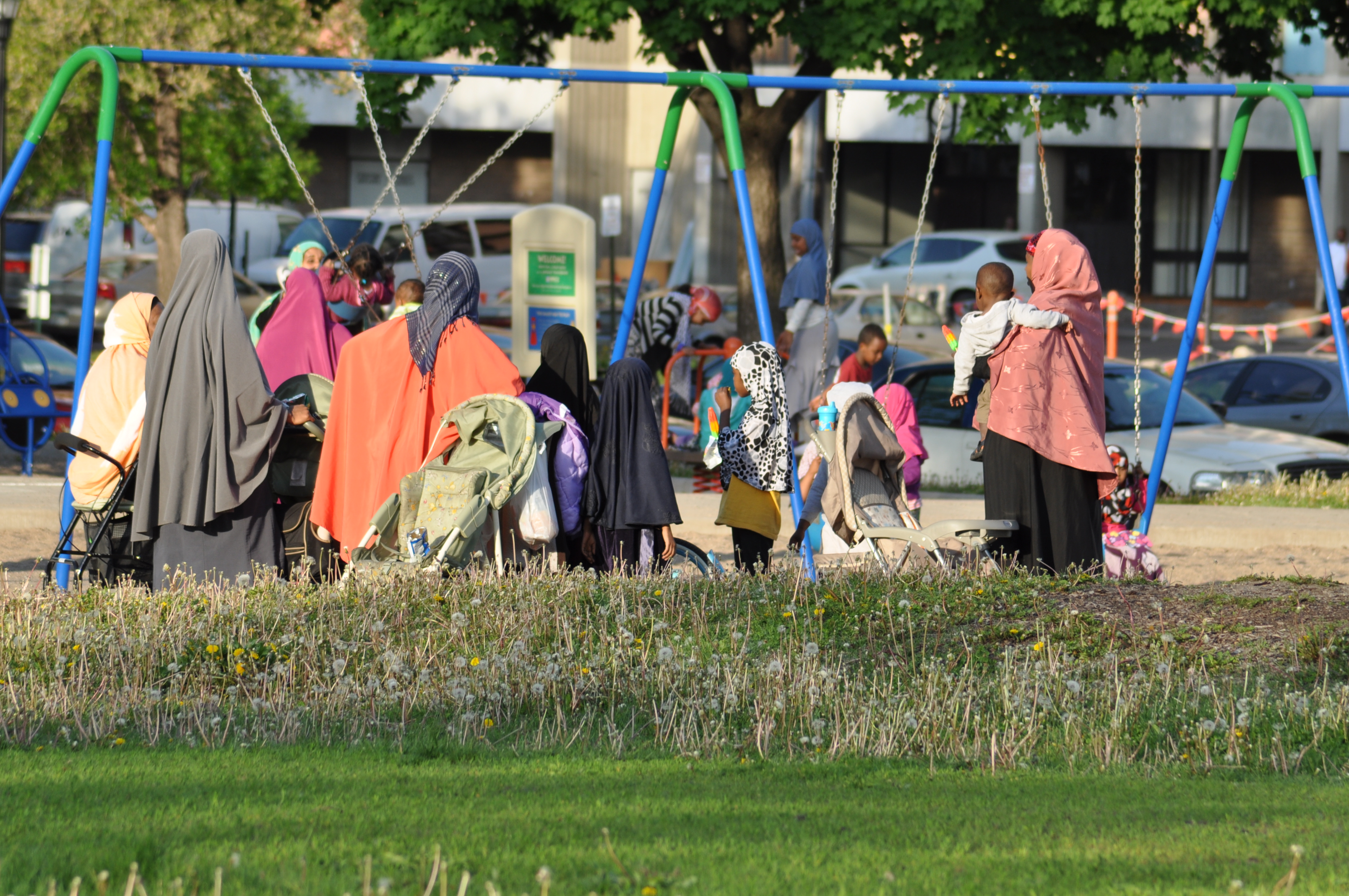
Unlike immigrants who look forward to moving after spending a few years in a particular location, those interviewed by The AfricaPaper see Riverside Plaza as their permanent home and never think of leaving. “That is why this place is called ‘Little Mogadishu’ – it is like home,” said Woldemichael.
Tsehainesh Woldemichael and her children at Riverside
Security is a concern to residents, but many agreed that it is not as bad as it is portrayed to the public. The buildings will be provided with new security cameras. For now, the police and campus security continue to patrol the area.
“It is very affordable to everyone,” said Woldemicheal, a mother of three. “This place is a wonderful place to raise kids. The police are doing their best to keep it safe.”
Housing about 5,000 residents, 80 percent of them from East Africa, the huge complex angers many of its neighbors. But for almost 40 years, it has eased the Twin Cities housing burden by providing many affordable units. Almost half of the Plaza’s 1,303 apartments are listed as Section 8 Units, and an estimated 85 percent are considered affordable housing for tenants with incomes of 50 percent or less than the average metro income.
In recent news interviews, George Sherman, president of Sherman Associates, which owns the Plaza, said, “The system was designed poorly when it was built, and it’s been deteriorating for a long time.” Riverside Plaza clearly needs fixing: residents complain that they have to wait for almost half an hour for the water to heat up in the morning and sometimes have to spend another half-hour waiting for overcrowded elevators.
The renovation adds to these problems: “We are making a lot of sacrifices by using one elevator for 25 floors,” said Woldemichael. “We had to move or relocate to another building for about a month while they were renovating my apartment.”
Residents were relocated to the F, M, and E buildings while their apartments were worked on. Some with many kids said cleaning and moving crews were provided to help them move to and from their apartments. Most of those employed by Sherman Associates are residents from the complexes.
“It’s a job [to move] next door,” said Woldemichael, who was initially worried about moving her belongings and children. “I had five people to pack and unpack.”
Nationwide, lack of new public housing and crumbling of old complexes are pushing authorities to engage in renovating huge residential buildings similar to Riverside Plaza. Leaky ceilings, mold and sticky floors were a common sight before the Plaza renovation. Coupled with these problems, the buildings are cold in winter and uncomfortably hot in summer.
The views of many residents, especially those who were relocated, are that they expect more changes and more minority workers in the renovation project. According to Mohumed, many see trucks driving in and out of their neighborhood but have no idea what is going on beyond being asked to relocate to other buildings.
“We want to sit down with Sherman, have a meeting with him as youths, and see how this construction is going on,” said Mohumed, 21. “We really don’t know what is going on. If you are in my house working on something, I want you to communicate with me about the next step.”
He added that there hasn’t been any such communication beyond the recent opening telling the community leaders about the construction. Many said it is difficult for them to navigate in their own neighborhood because of the construction. Property manager Mimi Gibson did not respond to our requests for an interview. Sherman Associates’ marketing and communication department didn’t returns calls for this story.
“For most of us who are Muslims coming from Somalia, our culture is here, our religion is here, grocery stores, and mosque,” said Burhan Mohumed. “We have been here for more than 12 years without thinking of leaving.” |TAP|
Minneapolis, MINN – When Osama bin Laden declared war on America in 1999, he was a little known terrorist in America. But Africans already knew about him and his al-Qaeda group. They had already staged bomb attacks in Mali, Kenya, Tanzania, Somalia and Uganda.
In the Twin Cities, when President Barack Obama announced that U.S. Special Forces had killed bin Laden, the terrorist leader who tormented many Africans as well as Americans, Kenyan fitness trainer Liz Nyamwamu remembered her uncle Enock Omweno.
“I came home [one day] and my dad told me that they [terrorists] had killed one of my uncles in the embassy bombing,” said Nyamwamu. “It was very sad. Many of those killed are breadwinners in their families.”
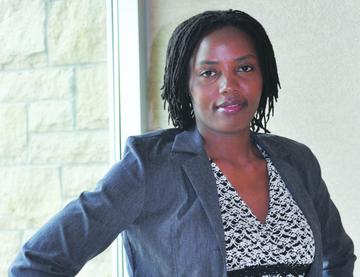
Liz Nyamwamu
Omweno was killed while at work in a corporate office close to the U.S. embassy in Kenya’s capital, Nairobi. About 224 people, mostly Kenyans, were killed, and an unspecified number were maimed in the simultaneous al-Qaeda bombings of U.S. embassies in Nairobi and Tanzania’s capital Dar es Salaam in 1998.
In Kenya, few people met to commemorate the 10th anniversary of the bombing by bin Laden’s al-Qaeda in Africa, said Nyamwamu, who called her relatives a day after the president’s announcement.
The pain bin Laden left still lingers; since then, many things have changed for people in the East African nations. “Before, you could just walk into the U.S. embassy and talk to officials,” said Nyamwamu. “But now, you have to make an appointment before you go there.”
Wounded victims and families of those killed were promised compensation, but Nyamwamu and others believe many were never compensated. Those who sustained major injuries were given medical help at the initial stage, but those services were cut back after few months.
“People in Kenya are relieved but fear that it will happen again,” said Nyamwamu. “The Kenyan government is still caught in politics and has less time to address the problems of those hurt or killed in the bombing besides giving speeches.”
The victims felt that the U.S. didn’t help them, so there are bitter feelings, according to Kenyans and Tanzanians interviewed.
When bin Laden’s group attacked the World Trade Center in 2001, the scale of his destruction was unimaginable. He and his terrorist cohorts have been accused of thousands of killings around the world. Critics say bin Laden may be dead, but his legacy remains, and al-Qaeda stands as an institution that continues to terrorize in different parts of the world.
Reportedly, bin Laden was shot twice in the head. Even with jubilation at his death in cities across the U.S., apprehension over continued terrorism has not faded away. Political analysts opine that it is not yet over but hope bin Laden’s demise is a signal for others.
African leaders whose countries were attacked welcomed the news, and Kenya’s president Mwai Kibaki said it is justice for bin Laden’s victims. Al-Qaeda networks reportedly also operate in Algeria and Niger.
“Today my thoughts are with the families of those bin Laden murdered in the September 11 terrorist attacks,” said MN Congressman Keith Ellison in a media statement. “Even before 9/11, bin Laden killed Americans and others at the U.S. embassies in Kenya and Tanzania, and on the USS Cole.”
After 9/11 the world came together to support the United States. U.S. authorities warn that despite the death of bin Laden, the war on terrorism must go on. Pakistan has been accused of playing a double role in providing intelligence to track down bin Laden.
President Obama’s huge concentration on al-Qaeda’s leader paid off, sending the Republican Party into disorder talking about U.S. security. The attack on bin Laden was guarded with utmost secrecy that surprised Pakistan and was an extreme embarrassment to the government, since he lived 35 miles from the capital, Karachi, and close to the country’s military complex.
Relatives of Kenyans, Malians and Tanzanians killed in the U.S. embassy bombings in Africa released anger and pain when President Obama announced the death of bin Laden. For them, too, it has been a long time coming.
“The people can’t get back their families,” said Nyamwamu. “It is still very frustrating.” |TAP|
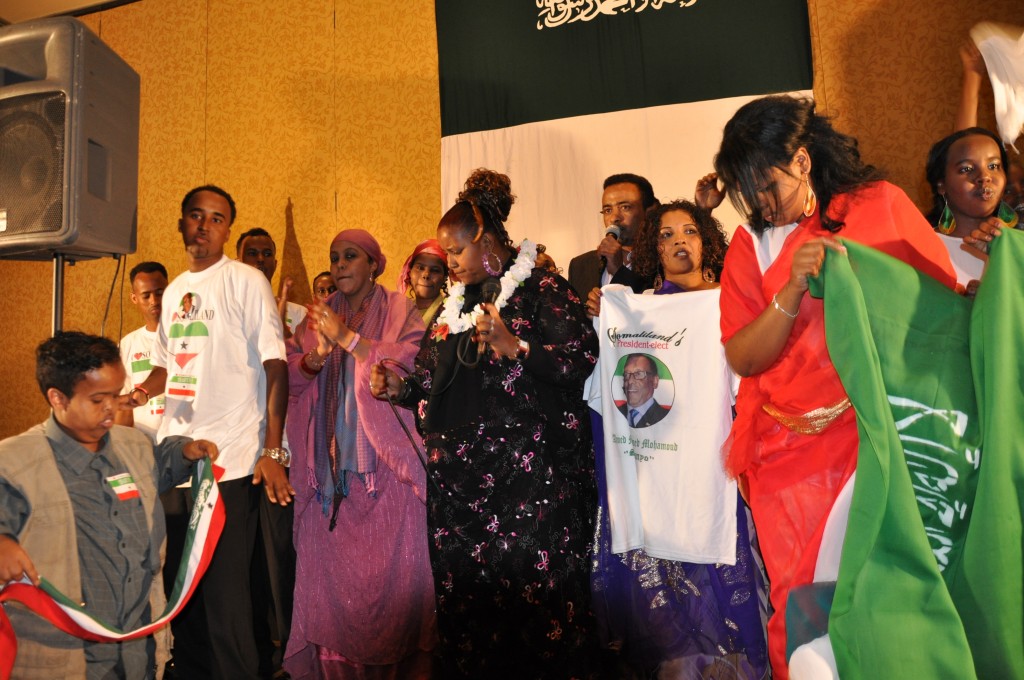
Minneapolis, MINN – In late July last year, hundreds of Somalilanders in Minnesota gathered at the Hilton Hotel in downtown Minneapolis to celebrate elected President Ahmed Mohamed “Silanyo” Mohamoud’s victory in Somaliland.
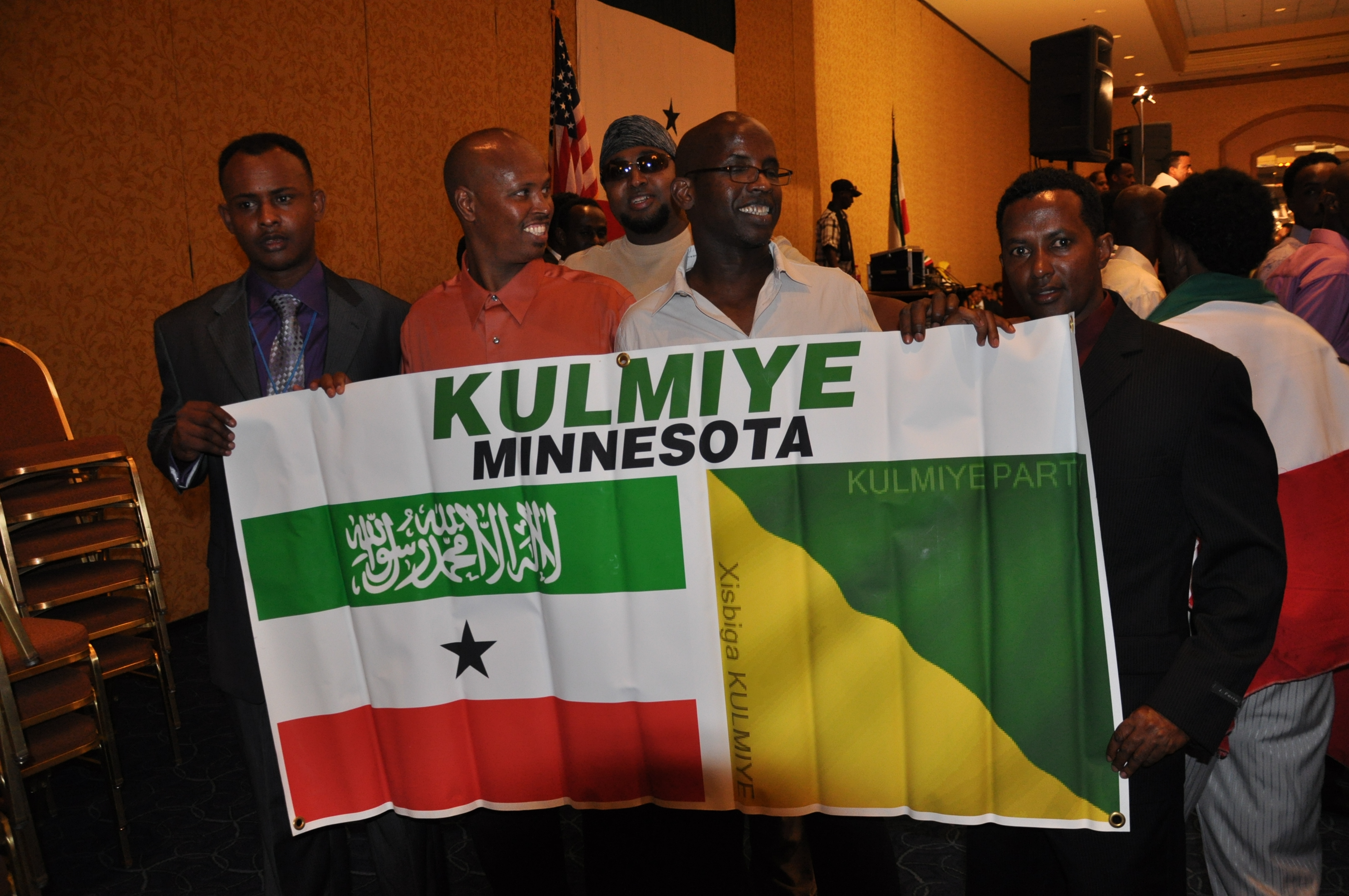
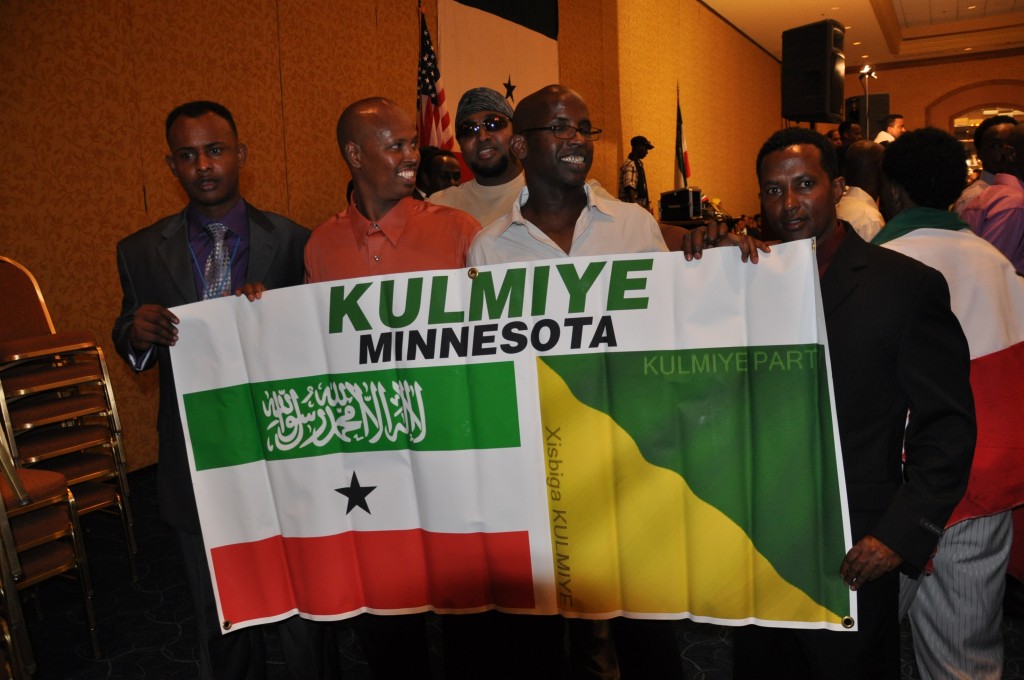
After President Silanyo, as he is commonly called, defeated incumbent Dahir Riyale Kahin in June elections, Somalilanders in Minnesota said it was time to celebrate and reflect on the country’s future. Hundreds of people from Somaliland, the breakaway republic, gathered to listen to a recorded video message from President Silanyo and members of his Kulmiye political party based in Minnesota.
Still struggling to be recognized, Somaliland’s recent election has been declared as free and fair by local and international observers. The Washington-based International Republican Institute (IRI), which monitors elections around the world, also reported the election as free and fair.
In his video message to the Minnesota group, Mr. Silanyo, who holds a degree from the University of Manchester, promised to unite the country and engage the estimated six to eight thousand Somalilanders to help develop the country.
Saad I. Samatar, one of the speakers at the Hilton, reminded the Somaliland community of the importance of a lean government with small departments with no more than 13 ministries.
“Democracy comes from within. We can’t import democracy from London, Washington or Paris,” said Samatar, a reference and archives librarian at Hennepin County Library. “We had, and should have, our homegrown democratic system.”
As the crowd patiently waited for the night discussions to end, black metallic speakers staged on the podium blasted music from their homeland. Women dressed mostly traditionally and men in both traditional and western attire coming from different parts of Minnesota listened and applauded the various speakers. Later, some joined the youth on the dance floor.
At the Hilton, where President Silanyo met many in the Somaliland community to raise funds for his election a few years ago, Samatar and others urged the new government to use the Diaspora community as a resource base for education, economic development, and technology transfer.
In his inauguration ceremony on July 27, President Silanyo promised to improve the economy and work closely with the international community. He appointed 20 ministers and six deputies, describing it as the smallest cabinet in the history of Somaliland.
Somaliland’s presidential election was the first in seven years after a series of delays. In 1991, Somaliland declared its independence and separated from the rest of Somalia. The self-declared breakaway republic runs its own internal and external affairs, but still struggles to receive international recognition.
According to the constitution, Silanyo is allowed to serve five years in office. He faces multiple problems that include unemployment, a country still awash in poverty, and the insurgent and political turmoil around Somaliland’s boarders and neighboring Puntland, a semi-autonomous enclave that did not participate in the election.
“We want to change the government,” said Ismail M. Jama, co-founder and second chairman of the local branch of the Kulmiye party. “The new government should be accountable and transparent.”
Samatar, Jama and others echoed the views of those present. They want the new government to pay special attention to the justice system, human rights for all Somalilanders, and respect for neighboring states.
President Silanyo and his supporters promised to be transparent and reform the country’s slow-paced development. Lacking resources, and funds, the Kulmiye party turned to its supporters in the Diaspora.
Minnesota serves are the main base for the Kulmiye party with 13 branches in North America (10 in USA, and three in Canada). It is estimated that about six to eight thousand Somalilanders live in the Twin Cities.
“This is the heart of the Kulmiye party,” said Jama. “Our task was to help provide resources and ideas to the party.” Jama added that Kulmiye supporters in the Diaspora donated about $500,000 to the Kulmiye Party in Somaliland.
“The campaign is over now,” Axmed Nur Fahia, Kulmiye party chairman in Minnesota. “We need all Somalilanders to join hands, work together, and forgive each other. |TAP|