Home Blog Page 12

African Women Scientists Seek Solutions To Food Insecurity


By Henry Owino | The AfricaPaper

Nairobi, Kenya – There is a major concern of low representation of female scientists coming from Francophone and Anglophone countries in Africa on research and food security issues.

This disquiet comes as a result of thousands of African families go to bed without food. Yet, the problems could be solved by same shelved women scientists. Close to 80 percent of smallholder farmers in Africa are women who understands food security situation better despite seclusion by male counterparts.

Livelihoods

Agriculture is the principal source of livelihoods for over two-thirds of the population in sub-Saharan Africa (SSA), majority being women. Patriarchy plays a role in segregating women scientists from debating and giving views on modern agriculture to food security.

Although women scientists play major role in agriculture and agribusiness in the continent, they remain largely marginalized in the sector. Women insists that for Africa to become food secure and feed itself, women researchers must be involved in all agricultural decision making and food policy at all levels.

The women scientists made these remarks at the launch of African Women Agricultural Research and Development (AWARD) held in Nairobi, Kenya.

Partnerships

The women scientists also signed US $1 million dollar partnerships with Agropolis Foundation. The donation is meant to support the implementation of the new AWARD Pan African fellowship initiative in Kenya.

According to Dr. Wanjiru Kamau-Rutenberg, Director of AWARD, the AWARD Fellowships offer career-growth opportunities to Africa’s leading women agricultural scientists to ensure that a growing cohort of capable, confident and influential African women scientists are available to lead critical advances and innovations in the agriculture sector.

“Agropolis Foundation’s funding of US $1 million (Ksh 102 million) will support AWARD in structuring its fellowship activities to maximize interactions between female scientists from francophone and Anglophone Africa,” Wanjiru affirms.

“Let me say the partnership marks the launch of a new round of fellowships that will not only see us expand into francophone Africa, but also beyond. This year, we will include women scientists from the Pacific, Southeast Asia and Europe.”

Dr. Wanjiru said the two organizations share the same vision of supporting African agriculture and African women scientists for the continent’s prosperity.

Fellowship

According to the Food and Agricultural Organization (FAO) reports, in Francophone Africa, women perform 47 percent of the agricultural labor, but only 16 per cent of the agricultural research labour force is female.

“This partnership will result in a number of AWARD Fellows being hosted in research laboratories in Montpellier (France), and to contribute to AWARD’s expansion in Francophone Africa,” said Dr. Pascal Kosuth, Director, Agropolis Foundation.

This year’s AWARD Fellows includes women scientists who have been sponsored by various institutions. Since 2008, AWARD Fellowships have directly benefited 1,158 agricultural scientists of who 84 percent of are women from over 300 institutions.

Currently, women in Agriculture for business are therefore challenging East Africa Community (EAC) governments and Common Markets for Eastern and Southern Africa (COMESA) to involve female scientists in research and food security policy.

Bureaucracy

The women are also calling upon the governments to soften bureaucracy involved in trade across the countries. They argue if all governments are sincere with the organization’s formation, there is need to soften borders transits of agricultural produce.

The women in agribusiness complained of rigid paperwork involved that hinders fair and quick movement of commodities across the borders. They claimed their farm produce are highly perishable and requires fast delivery to the target market for end users.

“Let the governments walk-the-talk if the aim of this newly launched Pan African Program is to maximize the interactions between female scientists from Francophone and Anglophone Africa. It is the best way to expand it to include other women scientists from the Pacific, Southeast, Asia and Europe,” Joyce Mutindi, a farmer from Makueni laments.

The eligible Francophone countries for the Pan-African AWARD Fellowship include Benin, Burkina Faso, Burundi, Cote d’Ivoire, Madagascar, Mali, Senegal and Togo.

Challenges

According to Journal of Gender, Agriculture and Food Security published last year, female researchers offer different perceptions from their male counterparts, and their input provides an important view in addressing the unique and pressing challenges of female farmers hence the need for agricultural research agencies and governments to include them.

Full-time female researchers in Francophone Africa are few and low numbers of female scientists in the continent with less than 20 percent.
A t is shown in the water.
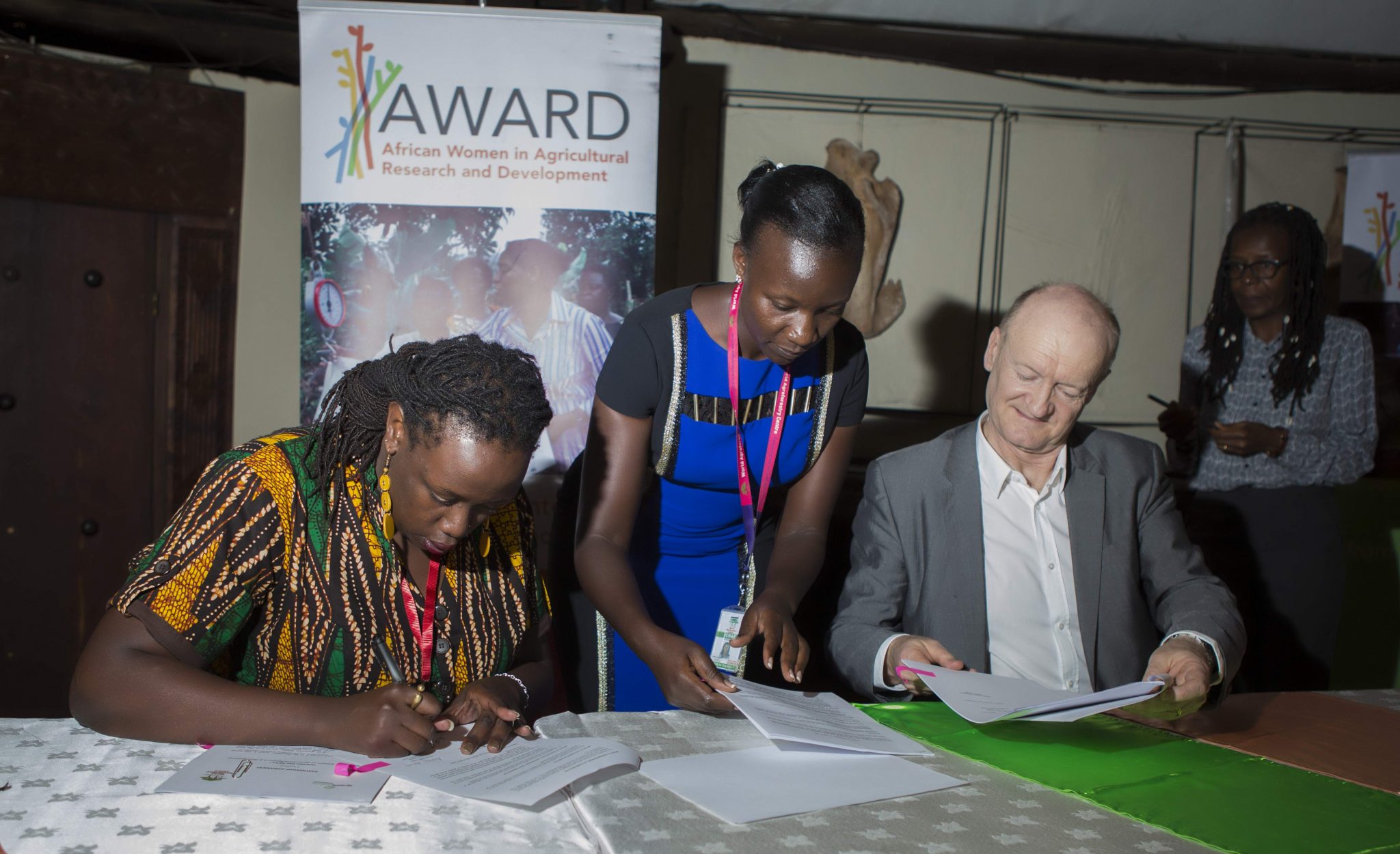
Dr. Wanjiru Kamau-Rutenberg, Director of the Award Fellowships with Dr. Pascal Kosuth, Director, Agropolis Foundation signs the agreement document. Photo: Henry Owino/The AfricaPaper

Further, very few Francophone African women are in advanced degree programs, weakening the pipeline to agricultural research positions. Even when they do earn advanced degrees, they tend to do so later in life and hence have only 15 years of services to community before retirement.

The fellowship is projected to bring together fellows, mentors and fellow’s menses from Francophone, Anglophone and also women scientists who have been sponsored by their institutions with their expertise.

Institutions

Some of the institutions include the International Livestock Research Institute (ILRI) the Pacific Community (PC) and the Australian Centre for International Agricultural Research (ACIAR) to building science skills and developing leadership capacity.

“Renewed political attention to agricultural development in Africa and the recognition of the role of women has provided an opportunity for key actors such governments, private sector, development partners, researchers among others to engage freely in various countries,” Caroline Thande explained.

Thande confirmed that it sustains and increase successful interventions and models in the sector. Again it supports innovations with promising potential that generate positive social and economic empowerment of women in large scales.

She emphasized poverty reduction, linking smallholders to markets and gender equality as major issues for this new development programs in Kenya, which are key considerations of the ACIAR strategy.

“For instance CIAR has the capacity to address irrigation, drainage and salinity management in major cropping systems and this is an important focus of the research program,” Thande asserts.

Disadvantaged

Thande said ACIAR is already working in dairy and horticulture sectors in Pakistan, so the other goal of its collaboration is to improve livelihood systems for the rural poor in Kenya. This is where majority of such small-scale farmers live.

“We shall strive on increasing gains and benefits for small-scale and poor farmers and other disadvantaged groups with greater involvement of women, dissemination of results and maximizing project impacts,” she assures women scientists.

Flexibility will provide a mechanism for addressing additional sectors such as vegetables and animal fodder, as well as agricultural research and development issues and enhanced sustainable capacity building. |TAP| Africa’s Newspaper of Record

Sunshine In Sierra Leone – How the APC Lost The Election

0


Ruling Party Candidate Refuses to Concede Defeat … Says Party Plans to Take Court Action

By Abubakarr Kamara | The AfricaPaper

Freetown, Sierra Leone – Losing presidential candidate in the Sierra Leone’s runoff election, Dr. Samura Wilson Mathew Kamara of the ruling All People’s Congress (APC) party is yet to concede defeat to his opposition opponent, Rtd Brigadier Julius Maada Bio, despite the National Electoral Commission declaring the latter as the president-elect of the Republic of Sierra Leone.

Seeking Redress

Kamara was speaking in a national broadcast on Wednesday evening, shortly after the pronouncement of the election results by the NEC Chairman.

“The party will seek redress in the courts of law to have the election result overturned. There were evidences of massive ballot-stuffing, over-voting, fraudulent voter registers and other electoral irregularities,” said Kamara.

Deputy Minister of Sports in the outgoing All People’s Congress (APC) party, Ishmael Al-Sankoh Conteh described the elections as the “most criminal elections ever conducted in the world.”

“APC is a unique opposition with a majority seats in Parliament and controls the capital city Council. This is the first time in the history of modern politics. We are going to regroup and come back again to take our rightful position in governance,” Conteh added.

Party’s Complacency

A t is shown in the water.
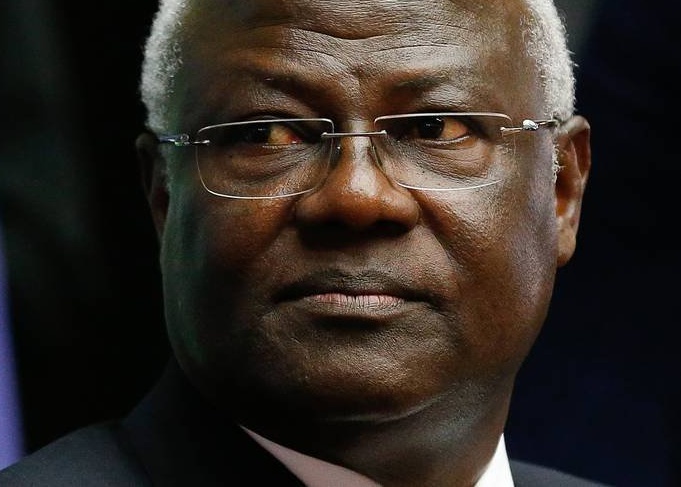
Former President Earnest Koroma. Photo: The AfricaPaper File

Meanwhile, supporters partly blame on the party’s complacency and the silent malice among its hierarchy for the loss. While some are of the opinion that it was due to their individual show of recklessness in governance, majority believe that the international community played a pivotal role in gifting the opposition the victory.

“It is as if there was an agreement back in 2007 between the outgoing President and the International community that no political party should rule the country for more than 10 years. I know we are going to lose the elections from the day Ernest Bai Koroma imposed Samura Kamara on us,” said Abdul Bangura, an APC executive member.

Inactive Members

Mariatu Conteh, an APC executive member said 85 percent of the party’s national executive members did not join the campaign trail while most among the 15 percent that joined were never active.

“They did not take part because they thought they or their respective candidates have been deprived of the party’s leadership by the outgoing president. What they failed to realize is the fact that party interest comes before self. Now that they are in the opposition, I’m sure they would learn their lessons the hard way,” said Conteh. |TAP| Africa’s Newspaper of Record
Former Military Junta Leader Wins Presidency In Sierra Leone


After Swearing In As New President, Julius Maada Bio Promises Unity, Cohesion And Disciplined Leadership. The AfricaPaper’s Correspondent Was There And Reports From The Capital, Freetown.

By Abubakarr Kamara | The AfricaPaper

Freetown, Sierra Leone – Chief Justice, Abdulai Charm has sworn in new President, Rtd Brigadier Julius Maada Bio at the Radison Blu Hotel in Freetown, shortly after the National Electoral Commission (NEC) Chairman, Mohamed Nfa Alie Conteh declared him winner in a tightly contested poll which both local and international observers have described as “free, fair and credible.”

Verbal Exchanges and Violence

Bio was among a group of young soldiers that ousted the All Peoples Congress (APC) in a military coup in 1992. He won with 1, 319, 406 (51.81 percent) in the March 29 election runoff while his opponent from the ruling party APC, Dr. Samura Kamara secured 1, 227, 171 (48.19 percent) of the votes.

The campaign was characterized by ugly verbal exchanges and sporadic violence on both sides, with the opposition accusing the APC of using police and the military to intimidate them.

Police reported several attacks on candidates and supporters on both sides while international observers reported some “violent issues” on both sides, which saw heightened security measures in the March 31st polls.

Voters New Direction

“This is the dawn of a new era. The people of this great nation have voted to take a new direction. We are honoured and privileged to serve the new government of Sierra Leone. We have only one country, Sierra Leone, and we are all one people,” president elect Bio said shortly after being sworn in.

A t is shown in the water.
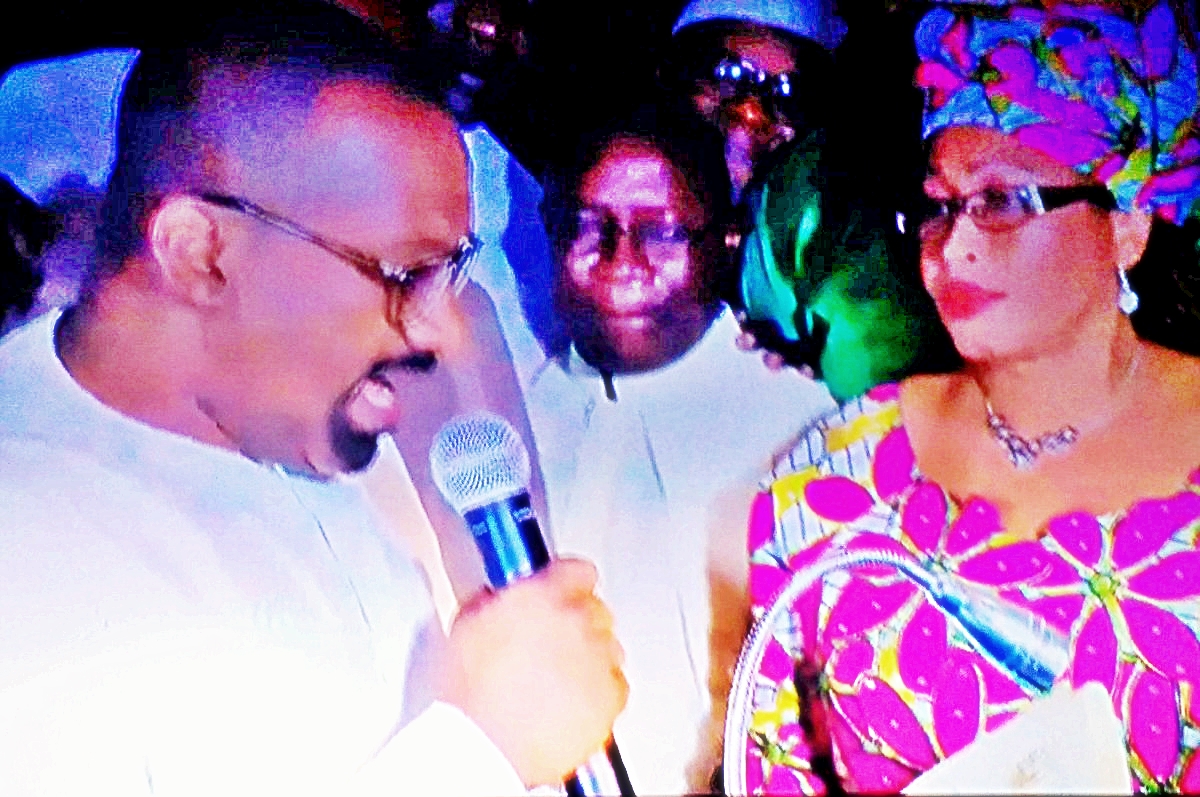
Vice president Juldeh. Photo: Abubakarr Kamara/The AfricaPaper

“Be rest assured that, I will be President of all Sierra Leoneans. I will promote national unity, cohesion and disciplined leadership,” he added.

Bio’s running mate, Dr Juldeh Jalloh was also sworn in as the country’s vice president.

Uphill Task of Rebuilding

The new government faces an uphill task of rebuilding the country’s economy that suffered serious setback after the Ebola epidemic that claimed more than 4,000 lives and a global slump in prices on Iron ore and its varieties, which have left thousands of people jobless. Last year’s mudslide woes also had its toll on the Sierra Leone economy.

National Grand Coalition (NGC) presidential candidate, Dr. Kandeh Yumkella and the Alliance Democratic Party (ADP) leader, Mohamed Kamarainba Mansaray were among those that have already congratulated the new president.

Time to Develop Sierra Leone

“Congratulations His excellency Julius Maada Bio and team. The people have spoken! Now, we must unite our country and move on! It’s time for Sierra Leone’s development,” Dr Kandeh Yumkella.

The ADP leader also expressed a similar compliment but requested Parliament to be more vigilant for the good of the nation.

Meanwhile, outgoing president, Ernest Bai Koroma and his vice president, Victor Bockarie Foe have on Thursday afternoon welcomed president Julius Maada Bio and his vice president, Juldeh Jalloh to the State Lodge. |TAP| Africa’s Newspaper of Record
Detectives Cleared Murdered Woman’s Son As Hunt for Killer Continues in Liberia


By James Kokulo Fasuekoi | The AfricaPaper

Coon Rapids, Minn – A young man taken along with several men into custody by Liberian Police Detectives for questioning in the gruesome murder of his Liberian-American mother, Joyce Jaywheh in the West African nation has been cleared by detectives, according to his father.

News And Relief

The deceased-victim’s husband, Mr. William Jaywheh, broke news of his son’s release to the relief of scores of sympathizers during a family meeting at his Coon Rapids, Minnesota, home where his late wife resided with him before she traveled to Liberia.

“A detective in Liberia called and informed me that detectives (referring to Liberian investigators) have cleared my son and he’s free,” Jaywheh told a house jammed packed with sympathizers on Sunday evening.

Suspected Killer

A t is shown in the water.
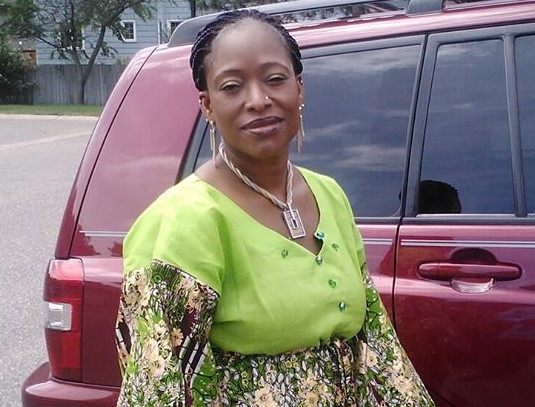
Francois Browne. Liberia National Police says Browne killed Joyce in the ELWA area. They believe he is now on the run and ask the public for any information leading to his arrest. Photo: The AfricaPaper File

Detectives working on Joyce’s murder case have meanwhile released photo and name of the prime suspect in the killing as “Francois Browne.” He’s believed to be on the run and Liberian Police and the victim’s family have asked for help from the public to arrest him.

Mrs. Joyce Jaywheh, 53, was ghastly murdered at dawn on March 24, this year, at the couple’s home located on ELWA Road, Paynesville in Liberia.

Motive for the murder is still unclear as police detectives continue investigation. The murder happened less than twenty-four hours after she celebrated her birthday in their home protected by concrete walls. The incident as a result, has left people to question general security situation in the capital, Monrovia.

Gruesome Death

Liberian Police said that Joyce’s attacker(s) chopped her head and “sliced her throat” during their encounter as she was found in her master bedroom. Police reported that they recovered the deceased’s stolen truck, including a generator in the nearby Thinker’s Village, along Roberts International Highway. The properties are said to have been stolen by Joyce’s killer(s) and abandoned in the area as investigators closed in.

The brutal murder stunned hundreds in the vicinity and it made local community leaders to once more begin to reconsider reinforcing vigilante groups to protect lives, a source told this paper. The incident sent panic and fear among Liberians home and overseas.

“This kind of killing will cause many people to stay away from Liberia if the government doesn’t take action to put a stop to it,” said one middle age Liberia woman who joined many at the Jaywheh’s Coon Rapids residence on Sunday to sympathize with the bereaved family.

Killer On The Run

Mr. Jaywheh explained that a US Embassy mediator who updates his family on development pertaining to the ongoing investigation had informed him that the killer is still on the run.

Police are pursuing the suspected murderer and a family source told The AfricaPaper that detectives in Liberia were stepping up efforts in the investigation and hopped to get a better outcome.

Mr. Jaywheh disclosed his family has given permission to detectives working on the case to release photographs and names of the prime suspect in murder case of his beautiful wife.

He said detectives had sought permission from him so they could share the suspect’s name and photograph to the public, a technique they believe could turn up some clues that could help in the investigation.

Appeal To The Public

Appearing distraught, Mr. Jaywheh appealed to the public to assist with any information pertaining to the whereabouts of the prime suspect, adding, “Let’s turn our pains to power and bring the killer to justice.”

Barely has Jaywheh finished when the victim’s sister identified as “Nana” took the stage to buttressed the family’s call to bring the suspected murderer to justice.

“Many people have gone to Liberia and got murdered and they were reduced only to statistics and the killers were never found; my sister will not be a statistic,” Nana said in the loudest manner as the people silently responded in agreement.

Bloody Civil War

The West African nation experienced a bloody civil war in the 90s, unparalleled to any other war in the region in recent years. It spilled over to neighboring Sierra Leone and caused the death of tens of thousands of people in both countries.

Although the war ended in Liberia 2003, it destroyed the country’s infrastructure and left the nation struggling with serious socio-economic problems including high unemployment, increase in prostitution and armed robbery. Liberia in many parts has become lawless.

Burial In Minnesota

Meanwhile, the family disclosed during Sunday’s meeting that they have reached the conclusion to bring Joyce’s body to Minnesota for burial and that her remains should be arriving on April 15. Funeral is scheduled for April 21, following a night of wake keeping on Friday, April 20.

During the meeting, committees were set up with volunteers or people appointed as head to help provide services during the service. The committees include, transportation, food preparation, flowers and decoration, souvenirs, publicity and communications, photography and video recording, ushers, program and music. Venues for the wake keeping would be released later.

Kind And Friendly

Late Joyce Jaywheh, the husband noted, got many acquaintances through her kindness and friendliness when she was alive. Because of that they expect a large crowd to attend her funeral services in Minnesota. The family encourages friends, sympathizers and well-wishers to join either committees and help give the deceased a decent burial.

The family is also expected to open accounts at the following banks, Wells Fargo, Bank of America, as well as PayPal and Cash Out where people can make donation for the home-going.

For the funeral attires, the family suggested a red scarf be worn by all women and a red bow or tie for all men who will attend the funeral. This is being done to honor the deceased whose favorite color the family said, is red. |TAP| Africa’s Newspaper of Recorder

Sierra Leone: Mixed Feelings After NEC Announces Election Runoff


By Abubakarr Kamara | The AfricaPaper

Freetown, Sierra Leone – There seems to be mixed feelings among Sierra Leoneans at home and abroad over final results in the recent concluded general elections in the country.

Rigging

A t is shown in the water.
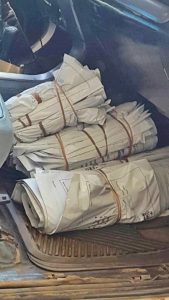
Ballot papers stuffed in a car

An investigation by the TAP’s correspondent in Sierra Leone revealed that while many people agreed the elections were largely peaceful, others think that some NEC staff had conspired with the ruling party to rig the election; ohers accused some NEC staff of siding with the opposition SLPP.

Campaign Manager for the SLPP, Dr. Alie Kabba accused NEC Western Area Commissioner, Miatta French of aiding the APC to rig the elections in some parts of the country by inputting the wrong data on the NEC tally machines.

“We urge NEC to investigate the conduct of Miatta French who has been intimidating the staff and this is a matter of great concern to the SLPP,” said Dr. Kabba.

Accusation

On the other hand, many APC supporters had been accusing the NEC boss, Mohamed Nfa Alie Conteh. They alleged that he had rigged the elections in favour of the opposition. Though there was no official accusation by the APC party, their Presidential candidate, Dr. Samura Mathew Wilson Kamara reminded NEC of their responsibilities in his statement after the announcement of the results.

A t is shown in the water.
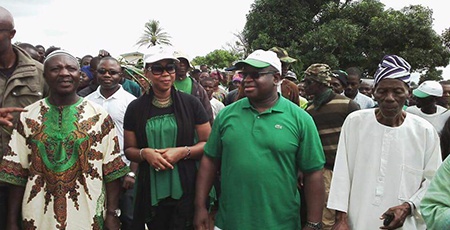
APC Campaign days before election.

“To the National Electoral Commission, your constitutional mandate is to ensure that the will of the people is respected in the discharge of your duties. I therefore urge you to carry out your duty diligently and judiciously,” said Kamara.

A spokesperson from NEC however dismissed the allegations, stressing it is “untrue.”

“We want to assure the general public that any NEC official found wanting for any election malpractice will face the full penalty of the law,” said Albert Massaquoi, NEC spokesperson.

Assurance

Soon after Mr. Massaquoi’s assurance, several opposition parties began expressing doubt regarding the integrity of the entire electoral exercise, the results of which came out Tuesday evening. Alhaji Chief Samuel Sam Sumana leader of the Coalition for Change, dubbed “C4C,” was among a group of oppositions to register his misgiving about the results.He praised Sierra Leoneans for carrying out a peaceful election on March 7, but his party is not happy with the results announced.

A t is shown in the water.
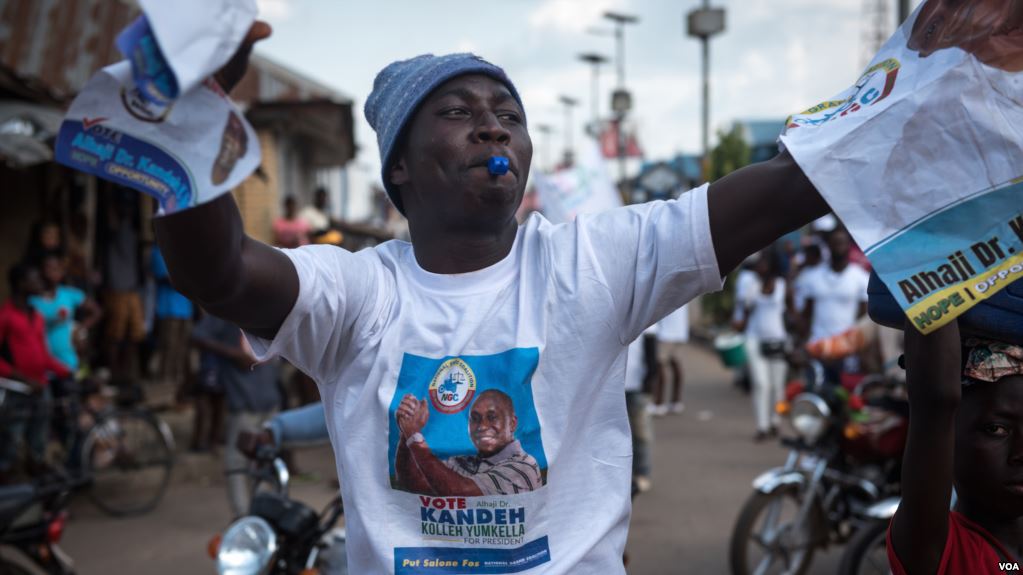
A supporter of the National Grand Coalition waves campaign posters during a rally in Bo, Sierra Leone, on March 4, 2018. (J. Patinkin/VOA)

“I was surprised to hear them announce 01 for the C4C in a polling station that I, my mother and other family members voted. However, we are going to use the courts to remedy the situation,” said Sam Sumana.

Unity

The run-off, now confirmed, both the ruling APC and the main opposition SLPP are working tirelessly to recruit a large chunk from the other 14 political parties for the run-off, which will be decided by a simple majority and not on percentage.

This is highly encouraging news for political pundits in Sierra Leone, who have been advocating for a government of national unity.

“A government of national unity will promote national cohesion and ensure that the best human resources available across all political parties are effectively utilized for the development of the country,” said John K. Hassan, a university lecturer.

Mixed Feelings

A t is shown in the water.
Maada Bio. Photo: Abubakarr Kamara/The AfricaPaper

Meanwhile, high-level talks are ongoing between political parties and their respective members but there are also mixed feelings among members of especially the National Grand Coalition (NGC) and the Coalition for Change (C4C) as to where their respective parties should throw their weight.

“Jigsaw Puzzle”

While some favor the APC, others prefer the SLPP and this has been described by a political analyst as a “jigsaw puzzle” which can only be fixed after polling day.

“There is no guarantee that Dr. Kandeh Kolleh Yumkella and Chief Samuel Sam Sumana can move even 50 percent of their respective voters to the party of their choice in the run-off. Some will prefer not to vote while majority will prefer voting on ethnic or regional lines as we’ve seen in the past elections in the country. I advise them to stay neutral and allow their supporters to vote their choice,” said Hassan. |TAP|