Home Blog Page 37

Kidnapped Nigerian Girls: Boko Haram’s Chibok

0


In the Land of Nigeria's Kidnapped Girls
In the Land of Nigeria’s Kidnapped Girls


By Chika Oduah | The AfricaPaper

Chibok, NIGERIA – A journey to the village of Chibok, where insurgents hide in the bush as families mourn the loss of their daughters.
On Monday morning, May 12, I sat in the backseat of a Toyota Corolla, headed to Chibok. With a satin abaya draping my body in a sheath of black, and my hair curled underneath a black chiffon hijab, my careful effort to blend into northeastern Nigeria’s conservative, predominately Muslim society appeared to be working. The soldiers who peered into the backseat gave me casual glances, waving us past checkpoint after checkpoint.

“This is the heartland of Boko Haram,” said the governor of Borno State when I visited him in the state capital of Maiduguri along the way. A month earlier, militants from the radical Islamist group had seized a secondary school in Chibok and kidnapped almost 300 female students. The town had quickly become an emblem of a region in crisis, where insurgents attack churches and mosques and kill children in their sleep while shouting “Allahu akbar.”

Disappearing Into the Sambisa Forest

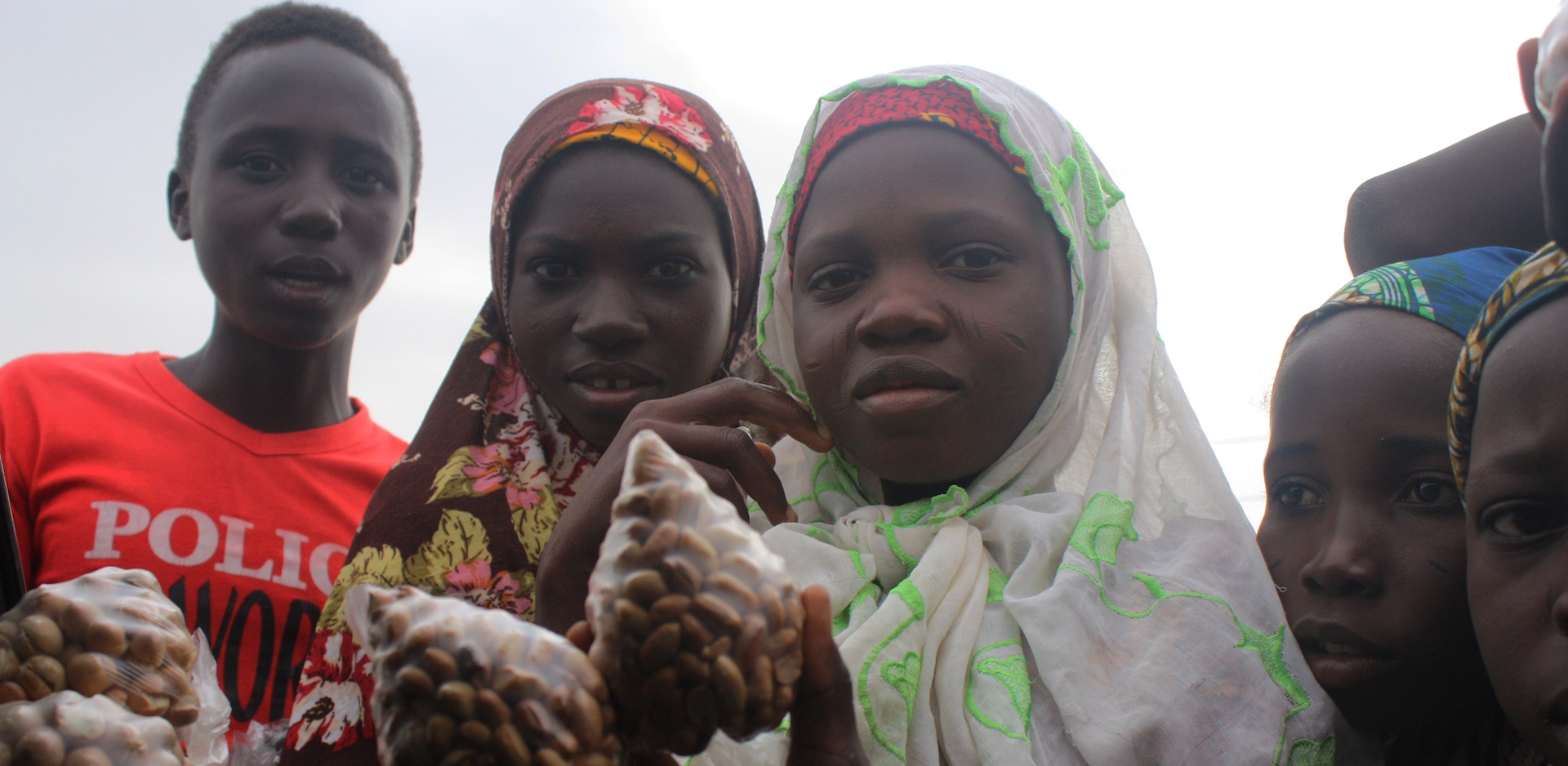
When I set out for Chibok–a three-day journey from the Nigerian capital of Abuja–I’d encountered children selling peanuts and sachets of water along the road. Those who had nothing to sell simply held out their palms. “Allah ya kiyaye, Allah ya kiyaye,” they’d said, muttering prayers in the Hausa language for Allah to grant us a safe journey. I’d been warned about the dangers of the trip: Boko Haram hide in the bushes along the road to Chibok, waiting for lonely cars to pass by. They cross the street to get from one end of the surrounding fields to the other, and they shoot at cars as they go, before disappearing into the Sambisa Forest.
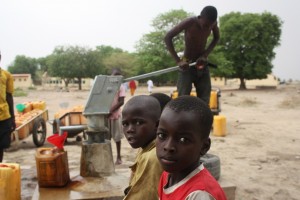
Boys pump water on the campus of the girls' secondary school in Chibok. Photo: Chika Oduah/TAP)
Boys pump water on the campus of the girls’ secondary school in Chibok. Photo: Chika Oduah/TAP)

“From this point of the journey, everything from here is Sambisa,” explained one of my companions, Daniel Wadai, a lawyer and Chibok native I’d met in Abuja at one of the daily #BringBackOurGirls rallies. From the passenger’s seat, he gestured to the left, just above our driver’s head. I turned to look and saw small bushes stuck in the sand and a few scattered trees. I had expected to see a dense grove of trees.

“This is not a forest,” I said. “No. It’s not the forest that the media is painting it to be,” Wadai replied.

Dogonyaro, acacia, and baobab trees flashed by in a blur, as the Sahelian landscape grew drier and flatter. Yellow flowers broke the monotony of the green and brown landscape. And then, suddenly, we were surrounded by cows making their way across the road. One of them stopped by my window. I looked into its big, moist eyes, admiring its shiny, reddish brown coat. Our driver continued on undaunted, carefully weaving the car through the horde. A battered blue station wagon drove up alongside us, and its driver said something to us in Hausa before speeding away.

Cows: The spirit of Boko Haram

“He told us we should never drive close to the cows,” Wadai explained. “He said that the spirit of Boko Haram can enter the cows. So we should always wait for the cow to cross the road.” He laughed. I was puzzled. Wadai continued. “It’s a common belief here. They believe that Boko Haram sends its spirit inside the cows.”

For people here grappling with a palpable fear of fighters with no clear agenda and no set targets on their path of destruction, Boko Haram had taken on supernatural qualities. The group had completely wiped out villages like Bulabulin. There, weeds grew freely in farm plots. Cooking pots lay overturned in the dirt. On our way to Chibok, I counted three telecom masts, but I couldn’t pick up a network signal on my phone. Boko Haram had destroyed the area’s infrastructure, too.

We soon reached the town of Damboa, where a battalion headquarters stood next to the abandoned construction site of a housing development. At the checkpoint there, sunburned guys who appeared to be in their twenties–all civilians who had volunteered as vigilantes–clenched guns, machetes, and bows and arrows.

“Where are you going?” they asked. “Where are you coming from?”

“Chibok, Maiduguri,” the driver answered.

“They are tired of Boko Haram coming to make trouble and now they are fighting back,” Wadai told me. “Enough is enough.”

The Treacherous Journey
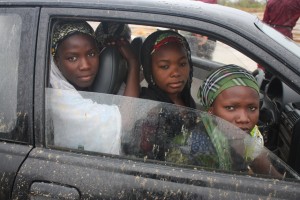
Three of the escaped schoolgirls head to the state capital of Maiduguri to help with the investigation. Photo Chika Oduah/TAP

Damboa had once been a hotspot for Boko Haram recruitment, explained a stringer for an international news agency who was traveling with us, and whom I’ll call “Dayo.” Now, many of the boys there, having renounced their membership in the militant group, were trying to rid the town of Boko Haram.

Monday is market day in Damboa, and the town was bustling. Vegetable sellers congregated along the roadside. A butcher sliced meat on a wooden plank as women waited for his cuts. Lean dogs scurried about. Men stood languidly in line in the heat, as civilian fighters inspected the men’s fingers for trigger marks–signs of heavy gun usage that could out them as Boko Haram members.

We left Damboa, turning onto a pothole-ridden dirt path known as Chibok road. Here, I came closer to Sambisa than I had ever been before. Now there were no checkpoints in sight. We had clearly embarked on the most dangerous leg of the journey. And then our car came to a halt.
The driver, a silent type, didn’t respond when I asked him what had happened. Instead, he pumped the accelerator. Nothing. Wadai asked, “Is it the fuel pump?” The driver got out, lifted the hood, and peered into the belly of the car. Dayo looked nervously at the bushes on the left. “This is still Sambisa right?”

“Yes, all of this is Sambisa,” Wadai answered. Both of them left the car and stood next to the driver. I stayed inside, watching the bushes vigilantly. Five long minutes passed, and we were still stuck. Finally, the engine sputtered back to life and we drove on, deeper into a landscape devoid of villages and people. We rode silently, looking out the windows for any sign of danger.
“Are those people running?” Dayo asked, alarmed. I saw the outlines of two people making their way along the edges of Sambisa.

“No,” Wadai said, pointing out that they were biking.

At 15 minutes before noon, the car stalled once more. The fuel pump was busted, Dayo and Wadai concluded. We let the engine cool down before starting it again, which worked–until it didn’t. When the car stopped for a third time, we headed back to Damboa and found a mechanic. Leaving the car with the driver, we hired someone who agreed to take us to Chibok. The going rate was 3,000 Nigerian naira ($18).

In Chibok

We arrived in Chibok covered head to toe in sand from one of the village’s fierce sandstorms. Amid the dust, a sign for the government-run secondary school marked the site of Boko Haram mass kidnapping. A guard let us through the school’s gate without much fuss, and we made our way across the rubble through a series of burned-out classrooms. Nearby, three people were sitting under a mango tree surrounded by charred debris: the school’s principal, Asabe Kwambura, and two administrators, who were waiting for a government delegation to arrive and investigate the incident.
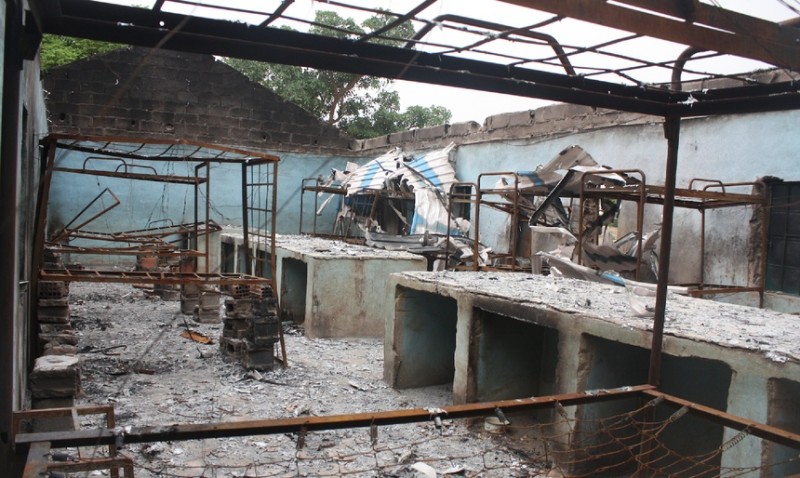
Bare bed frames fill the ruins of the school from which Boko Haram abducted over 200 schoolgirls. (Chika Oduah)Kwambura greeted me, lifting her purple veil and wiping tears from her eyes. She projected confidence, though I sensed it was withering. “They are our girls,” she told me. I asked if the Nigerian military had been protecting the school on the night of the attack. Kwambura said no–the school had its own watchmen, and one had been guarding the main gate while the other was posted at the girls’ residence. I was stunned. A government school in a state under emergency rule had been left with no government-authorized security. Young girls had been sleeping in their rooms without any solid assurance of safety.

Two matrons led us to the girls’ residence, where I saw bare bed frames and shards of glass on the floor. Standing in the bedrooms, I imagined the girls’ screams as they were snatched away. I pictured them disappearing with their kidnappers into the night.

In Chibok, I found a close-knit community in mourning–families gathering together at dawn and then heading to a dozen or so churches and a handful of mosques scattered around the village to pray for the girls to return. At night, Esther Yakubu–a mother of five, including 15-year-old Dorcas Yakubu, who was among the kidnapped students–crouches on her knees and clutches her Bible. “God is not dead. He is alive,” she told me, and then prayed: “God bring her back.”

No Impact of Defense Budget

Esther misses her daughter’s presence. “I like her by my side always,” she said. “Anytime I think about her, I bust out crying. That’s all I do everyday.” Sitting with her husband in the family’s cozy living room, as daylight beamed through two narrow windows, Esther told me that she and Dorcas spoke either in person or on the phone every day, and that Dorcas had been planning to take a course on how to sew garments. Ten-year-old Marvelous was sitting on the floor as we spoke. I asked him about Dorcas, and he mumbled, “I am still crying and praying.”
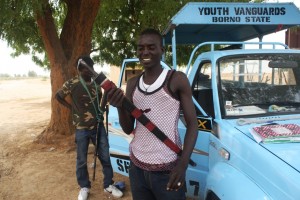
Members of an anti-Boko Haram civilian militia on the road from Maiduguri to Chibok. Some of these vigilantes are former members of the insurgency. (Chika Oduah)Outside, on the patio, I met Dorcas’s younger sister, Happy, who was carrying pails of fresh rainwater. Happy was angry. “I want to leave [Nigeria] because they are not taking care of us,” she told me. Residents here cannot feel the impact of the federal government’s estimated $5 billion defense budget.

On my way to the home of Lawan Zanna–whose daughter, 18-year-old Aisha, had been kidnapped by Boko Haram–I met a gang of giggling girls jumping in shapes they had drawn in the sand. It looked like a game of hopscotch. Wadai told me it was called elgalagala. The girls jumped and twirled and laughed with glee. I stopped to take pictures and they posed like fashion models.
At Zanna’s home, I sat cross-legged on a red straw mat on the patio as he told me how he and the other parents had marched through Sambisa in a fruitless search for their daughters. Hawa, 19, showed me the bedroom she shared with Aisha. A large bed took up more than half of the room; plastic suitcases and laundry baskets were piled along the walls.

In a low voice, Hawa described Aisha. “My junior sister has respect,” she said. “She is a very quiet girl.”

Farewell Prayer

Back on the patio, Zanna, was on his knees, praying to Allah. I said my goodbyes, and left the family to mourn.

My last stop that day was at Lydia Pogu’s family compound. Lydia had managed to run away from her abductors after the attack in April. Sitting with Dayo and me on a wooden bench, she described how Boko Haram fighters had stormed the school asking for food and dragging the girls onto trucks. With a friend, Lydia had jumped out of her truck and landed on her stomach, before fleeing the scene. She told me she never wants to go to school again. She wants to farm the land instead.

By this point, our driver had returned from the mechanic’s shop in Damboa, and he drove us to Wadai’s family home in Chibok, where we’d be spending the night. I sunk onto a couch, weighed down by sadness. I thought about the principal and her gutted school; about Lydia and her harrowing escape; about Happy’s bitterness, Marvelous’s hope, and Esther’s continuous tears.

The next morning, we left Chibok, but not before stopping at the home of the oldest man in the village, Bitrus Dawa Kulaha Abugar Woshanta Umar Ibn Elkanemi, or Bitrus Dawa for short. He tells everyone he was born in 1910. We spoke about the first time he saw white people–Christian missionaries–in Chibok, in 1923; about the 1967-1970 Nigerian civil war, when he was working as a teacher; about how corrupt, unethical Nigerian leaders had degraded the country. Raindrops interrupted our conversation.

“That dirt road is impossible in the rain,” Wadai told me, urging me to wrap things up with Dawa. I ducked into the car, where Dayo was already waiting. The driver snaked through the mud until the car stalled–yet again. Dayo yelled in frustration and the driver silently opened his door. With his pants folded up to his knees, he began to walk around aimlessly. We stayed there for almost 10 minutes, until Wadai took the wheel and nudged the car out of the mud.

The Escape

We came across a group of cars that were also stuck, and I recognized Lawan Zanna and Esther Yakubu’s husband, who burst into smiles when they saw me. They were transporting Lydia and four other girls who had escaped from Boko Haram to Maiduguri at the request of the government, in the hopes that the girls could identify abducted classmates who had appeared in a video released by the militant group.

Some of the girls in the car had, like Lydia, jumped out of the trucks, while others had hidden in the bushes or clung to tree branches as the vehicles drove off. “We are not happy until our friends come back,” Lydia said.

We helped the other cars out of the mud and proceeded on the road together in a convoy. Eventually, we reached the first major checkpoint.

A soldier asked us where we were going, and where we were coming from.

“Maiduguri, Chibok.”

“Chibok! You people passed the night in Chibok?” He shook his head, incredulous. “Someone like you is not supposed to pass there.”
“Why not?” said Wadai. “It’s my village.”

The AfricaPaper: Correspondent Chika Oduah is an independent journalist and photographer based in Abuja, Nigeria. She works as a television news producer. Chika has reported from Central America, across the United States and presently covers the West Africa region for international news outlets.

OPINION: Ageism, the persistent ‘ism’

0


By Deb Taylor | The AfricaPaper

Deb Taylor is CEO of Senior Community Serv
Deb Taylor is CEO of Senior Community Services

We frequently hear about racism and sexism in our culture, but we hear little about another persistent ‘ism’ – ageism. As our society grows older, due to the large number of retiring baby boomers, ageism remains a growing challenge and concern.

Negative Comments

Researchers at Yale University were disturbed when they compiled negative comments about older adults that were posted by young people on Facebook. Elders’ mobility and debilitation accounted for three-quarters of the comments. Here are a few examples: ‘”Old people are a pain in the (expletive).” “They are a burden on society.” “They are cheap and smell of (expletive)…they are senile, they complain about everything, they couldn’t hear a dump truck…,”‘ according to the Yale study.

A study by Duke University researchers found that 80 percent of seniors had experienced ageism in the form of comments about memory or physical impairments. Nearly one-third of the respondents reported being ignored or not taken seriously because of their age. An AARP survey found that 64 percent of seniors have witnessed or experienced age-based discrimination on the job.

Hurtful

These negative stereotypes are quite literally hurtful. Yale psychologist Becca Levy, PhD found that older adults with more positive self-perceptions of aging lived nearly eight years longer, and enjoy better memory and balance, compared to those with negative self-perceptions.

Here’s the reality; the vast majority of seniors are largely self-sufficient, middle-class consumers, with time and talents to share with others.

We need to work harder to engender more positive views of older adults. Visit most any senior care campus and you’ll find many employees of African origin. These individuals typically have a reverence for elders in their culture. They love their work and consider it a calling. In Africa, they will tell you, elders usually live with their families.

Reshape Views

We can reshape our view of our friends and neighbors who are now in the autumn of life. Age stereotypes are typically internalized as early as age four and reinforced over childrens’ lifetimes. Let’s begin by being better examples for our children and grandchildren – they listen to us and model what they hear.

Seniors still have much to contribute to our communities. At age 80, Minneapolis resident Ellen Boroughf lives vitally and maintains a blog about her aging experience at www.thecontentedalfie.com. The pen name she selected – with a twinkle in her eye – was The Old Baguette.

Author Laura Ingalls Wilder published her first book at age 64 and her last at 76. Famous test pilot Chuck Yeager was 75 when he made his last flight as a consultant.

Doing More

We can do more to appreciate what improves with age and what we can continue to offer the community, rather than viewing the natural aging process as unusual and unsatisfying.

And when aging does begin to take a toll, rather than falling prey to feelings of irritation or impatience toward older adults, let’s respond with our better nature and do as they did when we were children. They patiently answered our questions, held our hand, showed us new things, and walked with us on the journey.

Truth is, we stand on their shoulders and they deserve all we can do to assist them in their time of need. Older adults deserve to be treated with respect and dignity.

Let’s Reimagine Aging so every person is valued. We’ll all be better for it.

The AfricaPaper: Deb Taylor is CEO of Senior Community Services (www.seniorcommunity.org) and its Reimagine Aging Institute, a nonprofit that advocates for older adults and helps seniors and caregivers maintain their independence through free or low-cost services.

Sierra Leone’s Ebola Orphans


Ebola Orphan
Ebola Orphan

As the virus continues to wreak havoc in the country, it leaves a trail of more than 800 Orphans in Sierra Leone. From the capital, Freetown our correspondent reports.

By Abubakarr Kamara | The AfricaPaper

Freetown, Sierra Leone – With schools yet to reopen since it last closed in June this year, hundreds of children in Sierra Leone, who have been orphaned by the Ebola outbreak still do not know whether they could go to school again.
Bonjolo, 12 and Juliet Lansana, 9 have been taken in by their grandfather, after their parents died of Ebola in their little village of Kissi Teng in the Kailahun district, east of Sierra Leone. Both children are in school and despite the ‘supposedly’ free education for children their age, their parents have been doing all in their capacity to make them comfortable in school. Now as orphans, their world has changed.

Rehousing

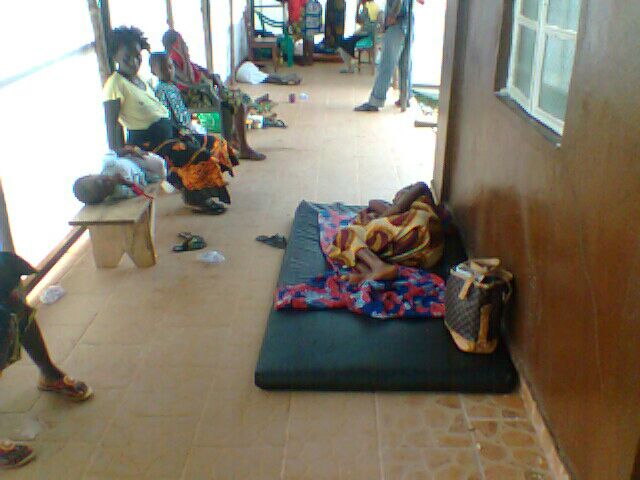
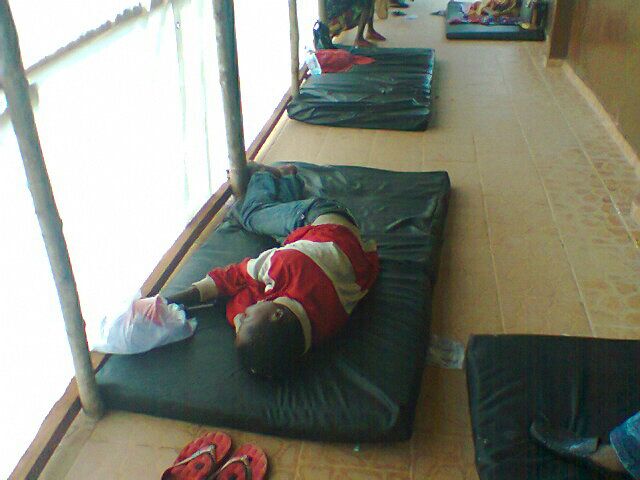
An Ebola Center in Kenema

Bonjolo and Juliet’s case is not unique as hundreds children nationwide suffer a similar fate. According to UNICEF, more than one hundred children in Kailahun district alone need to be rehoused after either or both of their parents died of Ebola.
Laygbay Lillian Amadu, Gender and Advocacy Officer at the Ministry of Social Welfare said the Ebola outbreak in Sierra Leone has made more than 813 children nationwide complete orphans since the outbreak in May this year.
“The ministry is currently identifying and mobilizing children whose parents had succumbed to the Ebola Virus Disease, as well as those who had survived the virus,” said Amadu. “After we are satisfied that they are free of the virus, we hand them over to humanitarian organizations such as SOS, Ben Hirsh, Don Bosco and Save the Children among others to take care of them.”
She further stated that the ministry has established interim care centers in Bo and Kenema to provide psychosocial counseling to orphans, adding that the National Commission for War Affected Children Centre, which would be used to house some Ebola orphans is currently on rehabilitation.

Wiped Out

Zainab Sesay, a nurse at the Ebola center in Freetown was carrying a fourteen-month baby girl whom she called Princess Sesay. Princess was still being breastfed when her mother died of Ebola in August and since they couldn’t trace her family, Zainab consented to take care of her.
“I felt very sorry for the little kid who after 21 days was declared free of Ebola,” said Sesay. “Her whole family has been wiped out by this dreaded virus and I was left with no alternative, but to take care of her.”

Child Protection Officer at the Save the Children, Fatou Fomba says they have been working with the Ministry of Social Welfare, Gender and Children’s Affairs to find foster parents for these kids noting that under normal circumstances, people do want to take care of really vulnerable children.
“But in this ‘era of Ebola’, some families aren’t coming forward to claim their children, because of either fear or the general chaos,” she said. “And when people know that a child has lost his or her parents to the Ebola virus, no one will want to take them for fear of being victimized.”

Stigma

Another Ebola center

‘I feel I have no future’: Thousands orphaned by Ebola face stigma
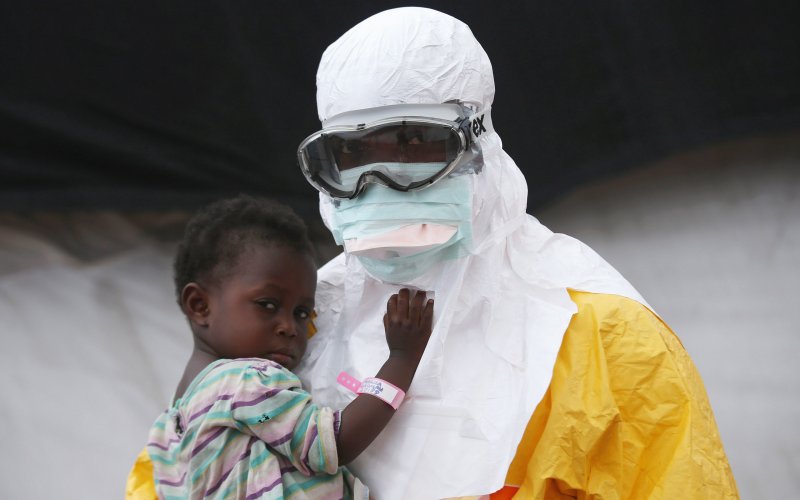
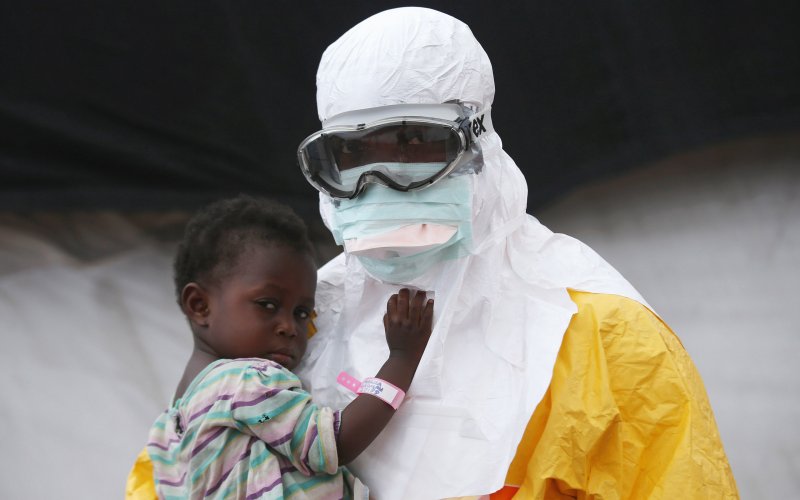
In Sierra Leone, children who survive Ebola or whose parents died from the virus are often shunned. Many children reach the treatment center dazed with pain or traumatized. Recently, a seven-year-old arrived after an 11-hour drive, during which her mother died.

“It’s terrifying for young children,” says Malcolm Hugo, a psychologist at the 80-bed center where dozens of staff in anti-contamination suits work. Earlier that day, he had discovered that another seven-year-old survivor had been having nightmares since being released. “I remembered [that case] very clearly because his brother died in the night and he’d stayed with the body all night.”

Amused

Yet bonds form even amid the misery. In a tent for those recovering, a talkative man wearing a heavy gold chain played up to amused doctors during the lunch break.
“I’m the president of the Ebola center!” he joked. Later though, when no one was watching, he gently encouraged a frail boy to finish his food. Mothers who have lost their own children sometimes care for young ones, doctors say.

“The hardest part of the job is telling parents their children have died, or separating children from their parents,” says Hugo.

A home was needed for a teenager, the medic said down the line. Did she have a family available by tomorrow? By the time the hour was up, three sets of children needed shelter.

Caregivers

Other pressing child welfare issues have been put on hold as agencies and the government struggle to rehouse the stream of child survivors, despite an emergency rapid registration of potential caregivers.

Crucial long-term funding hasn’t materialized, Monasch says. A recent grant from the UK government has boosted the organization, but “basically only local well-wishers are funding UNICEF”. For now, temporary caregivers receive rice, secondhand clothes for the children, toiletries and a small stipend, while regular financial help from the government and UNICEF is being considered. The ministry of social welfare has opened a temporary five-room shelter for children in Kailahun.

“No Touching”

Nevertheless, there are signs of hope, says Rosina Mahoi, a case officer with UNICEF. “Even a man in the village will know about the 21 days [virus incubation period]. Now, people observe and see if the kids are OK. Based on that, they come around.”

Growing acceptance came too late for 15-year-old Musu Allieu, whose parents both died of Ebola. Traumatized, she fled her step-grandmother’s home, where she complained that neighbors shunned them. Her two younger siblings coped better. Amidu, five, and Hawa, three, have been taken in by their step-grandmother.
As Mahoi visited one afternoon, Amidu waved shyly as Hawa bounded up, forcing her step-grandmother to shout out a reminder about the “no touching” rule in force in the town.

“You know,” she said, smiling. “People here now call her [Hawa] ‘how are you’ because she’s always running up to everyone and asking, ‘how are you?'” TAP

Abortion: A Conservative Nation’s Problem. Should it be Legalised?

0


By Joseph Kayira | The AfricaPaper

Juliana Lunguzi. Photo TAP File

MALAWI – Abortion is a contentious issue in Malawi. A restrictive law on abortion has created a heated debate on whether or not policymakers should conduct wider consultations on the issue that is already dividing a conservative nation. In this interview with The AfricaPaper (TAP), Juliana Lunguzi (J.L), Malawi Congress Party legislator and chair of the Malawi Parliamentary Committee on Health gives her views on abortion in Malawi.

TAP: There are fresh calls for total legalization of abortion in Malawi. What are your views?

J.L: First, my view is that the whole issue of abortion revolves around life and if any decision must be made on this vital issue, Malawians themselves, not an agency, nor an NGO nor a government ministry, should decide.

Second, there are so many ways of soliciting wider input into this debate that leaving out the Malawi public would, in my view, be inexcusable.

Third, and this is the thrust of all my arguments is that we should comprehensively deal with the causes before treating the symptoms.

TAP: Are there any serious challenges that would call for a review of the law on abortion as it stands today?

J.L: Serious challenges or no serious challenges, to solve this and any problem, we must study the underlying causes and find a way or ways to deal with the causal factors.

TAP: Do we really need to legalize abortion?

J.L: There are some who think this [legalizing abortion] is the way to go, and there are others who feel the opposite. My take is that this question should not just be framed as a “yes” or “no” question.

Both sides: the proponents and opponents must make their cases and then and only when Malawians have assessed the merits and demerits of legalising abortion, based on the values that they hold as Malawians, should we move on to decide whether to maintain the status quo or to change.

TAP: How serious are cases of abortion in Malawi?

J.L: There was a study that I participated in. From a purely health perspective, the issue is serious and unsafe abortions are indeed burdening the health sector and contributing to maternal deaths.

TAP: Do we have numerous cases of backstreet abortions in Malawi?

J.L: Yes they happen. At health facility level, there is evidence that the backstreet abortions in the country are numerous. And these numerous backstreet and often unsafe abortions return to haunt hospitals when cases are already complicated.

TAP: Do you think there have been enough campaigns to inform Malawians about the dangers of unsafe abortion?

J.L: It depends. I have seen evidence of campaigns at policy level, and at this level people are aware of the dangers of unsafe abortion. The challenge is at community level [and especially amongst youths] where dialogue has not been that intensive.

Why? Because abortion is a very sensitive subject and more or less a taboo. This is further complicated by the fact that, in most cases, the act that results in the unwanted pregnancy which necessitates the abortion is out of “socially acceptable” forms of union.

This is a fact. Sadly and unfortunately, at household and community level we would rather bury our heads, ostrich style, than face these sad facts head on.

And because you hardly hear issues of sexual intercourse and reproductive health being discussed at household level, unwanted pregnancies occur, followed by the question of whether or not to abort.

This is why I insist that the campaign and awareness raising needs to be at household and community levels. Escalating the debate on “whether or not to legalise abortion” to policy and legislative levels is jumping the gun or putting the cart before the horse because, abortions do not happen at policy and legislative levels. Unsafe abortions are made in our schools, on our streets, in our choirs, in our households, in our villages etc. and hence the preventive discussions ought to take place at community level and the causative actions candidly avoided or mitigated against.

TAP: What is your view on abortion and the right to life?

J.L: I believe that everyone has a right to life. Therefore, personally I am not pro-abortion, legalized or not. What I am eager focus on is prevention of unprotected sexual intercourse, abstinence, and the promotion family planning methods including use of condoms, starting with young people who really need this information.

If for whatever reason someone had a compelling reason to abort, they should be counseled and helped quickly to avoid complications and deaths. Remember, I believe that everyone has a right to life. Even those people itching and needing to abort, have a right to life. And as such we must ensure they live.

Let me use this chance to urge you, the media, to inform the masses about availability of services that can prevent unwanted pregnancies and hence unsafe abortions and to teach our people how to access services if the abortion has already happened. No one should die needlessly.

TAP: How should Malawi handle the issue of abortion?

J.L: We should invest in and increase sensitization and advocacy at community levels on prevention [of unwanted pregnancies] and the availability of services and options before giving a blank cheque to “unprotected” sex which, to an extent, is the root cause of the subsequent unsafe abortion.

TAP: Do we know the extent to which abortion is affecting safe motherhood and lives of women and girls?

J.L: Yes. A study was done on the magnitude of challenges arising from unsafe abortion and abortion was identified as one of the leading causes of maternal deaths and disability.

According to a study in 2009, approximately 18,700 women in Malawi were treated in health facilities for complications of induced abortion in 2009. An estimated 67,300 induced abortions were performed, equivalent to a rate of 23 abortions per 1,000 women aged 15–44 and an abortion ratio of 12 per 100 live births.

The abortion rate was higher in the North (35 per 1,000) than in the Central region or the South (20–23 per 1,000). The unintended pregnancy rate in 2010 was 139 per 1,000 women aged 15–44, and an estimated 52% of all pregnancies were unintended.

TAP: Your final word?

J.L: The best way to deal with issues of maternal health, which abortion belongs to, is to bring the conversation down to where people are and talk about prevention, prevention and more prevention. The media, the state, the faith community, the private sector and civil society must make services available to eradicate unwanted pregnancies without which we would not be here debating about unsafe abortions.

Youths and those still in the productive age should take control of their lives and learn to be responsible for their actions and choices. For every action, it is said, there is a reaction. You cannot drink whiskey and expect to stay sober.

Further, we should be candid with our young ones.

Interventions are needed to help women and couples avoid unwanted pregnancy, and hence reduce the need for unsafe abortion and decrease maternal mortality. If we deal with the underlying causes at household and community level, we will not waste time treating or talking about the symptoms of a larger problem. TAP

Charlie Hebdo: ‘Four dead’ in Niger protest

0


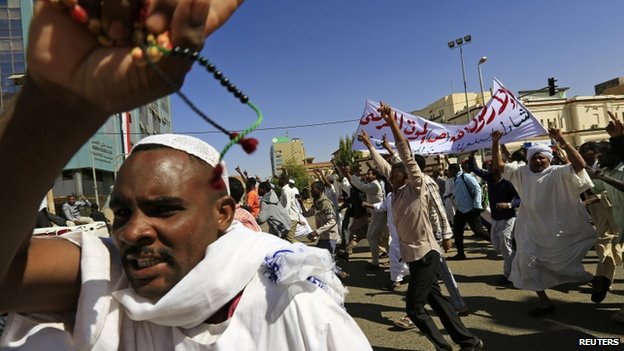
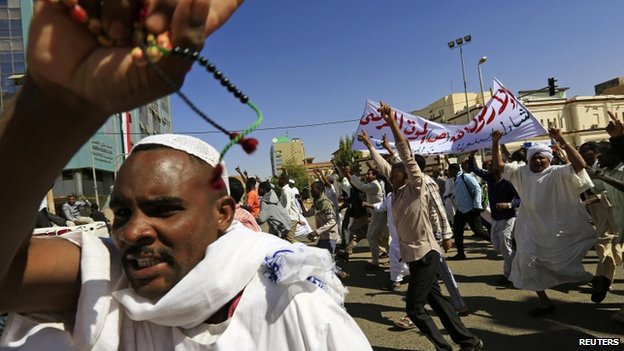
Protests against the magazine have taken place across the Muslim world, including Sudan (pictured)

At least four people have been killed in violent protests against French magazine Charlie Hebdo in Niger’s second city of Zinder, officials say.

A number of churches and the French cultural centre were among several buildings raided and set alight.

Friday saw protests across the Muslim world over the magazine’s publication of a cartoon of the Prophet Muhammad.

It comes more than a week after gunmen carried out a massacre at the French magazine’s offices in Paris.

Twelve people were killed in the attack, carried out by two French Muslims angry over earlier depictions of Muhammad in the magazine.

The cover of the magazine’s latest edition, published after the attack, featured a cartoon of the Prophet Muhammad weeping while holding a sign saying “I am Charlie”.

Protests against the magazine were also seen on Friday in Pakistan, where protests turned violent in Karachi, the Sudanese capital of Khartoum and the Algerian capital, Algiers.

‘Charlie is Satan’

One policeman and three civilians were killed in the protests in Zinder after Friday prayers, a police source told Reuters.

“Some of the protesters were armed with bows and arrows as well as clubs. The clashes were very violent in some places,” the source added.

Agence France-Presse quoted a minister as saying dozens of people had been injured.

Local residents told Reuters that demonstrators had set fire to churches and raided shops that were run by Christians.

“The protesters are crying out in local Hausa language: Charlie is Satan – let hell engulf those supporting Charlie,” a local shopkeeper said by telephone.

The French cultural centre there also came under attack.

The centre’s director, Kaoumi Bawa, said an angry crowd of around 50 people had smashed the building’s door and set fire to the cafeteria, library and offices.