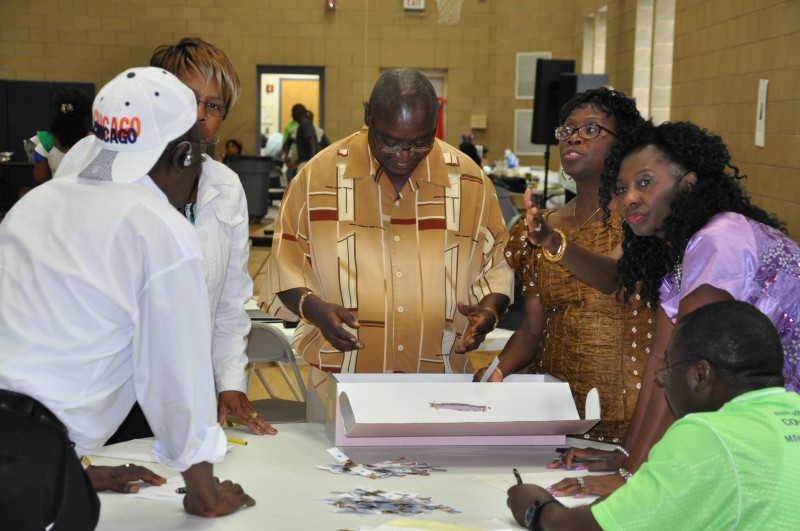
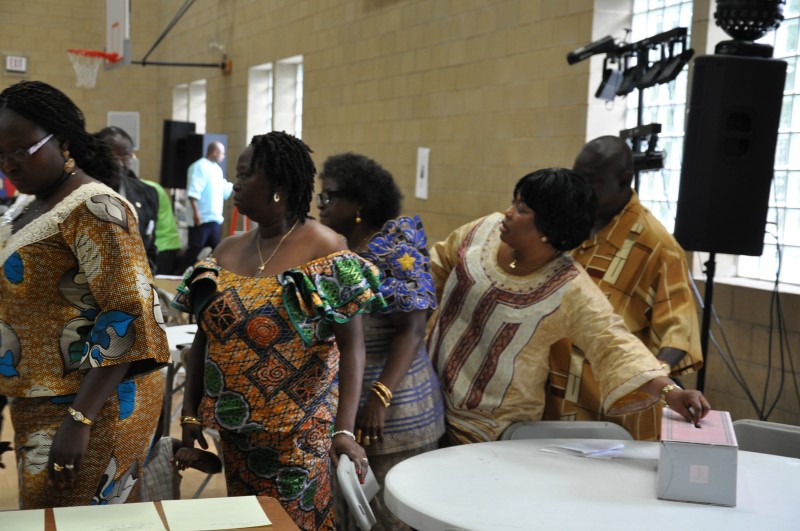
MINNESOTA – Meeting in the Twin Cities for its annual National and International Convention on Aug. 3O through Sept. 1, 2013, Tegloma members from all chapters voted and elected Mr. Mustapha Sheriff as new Chairman of Tegloma Federation, Inc.
VOTE
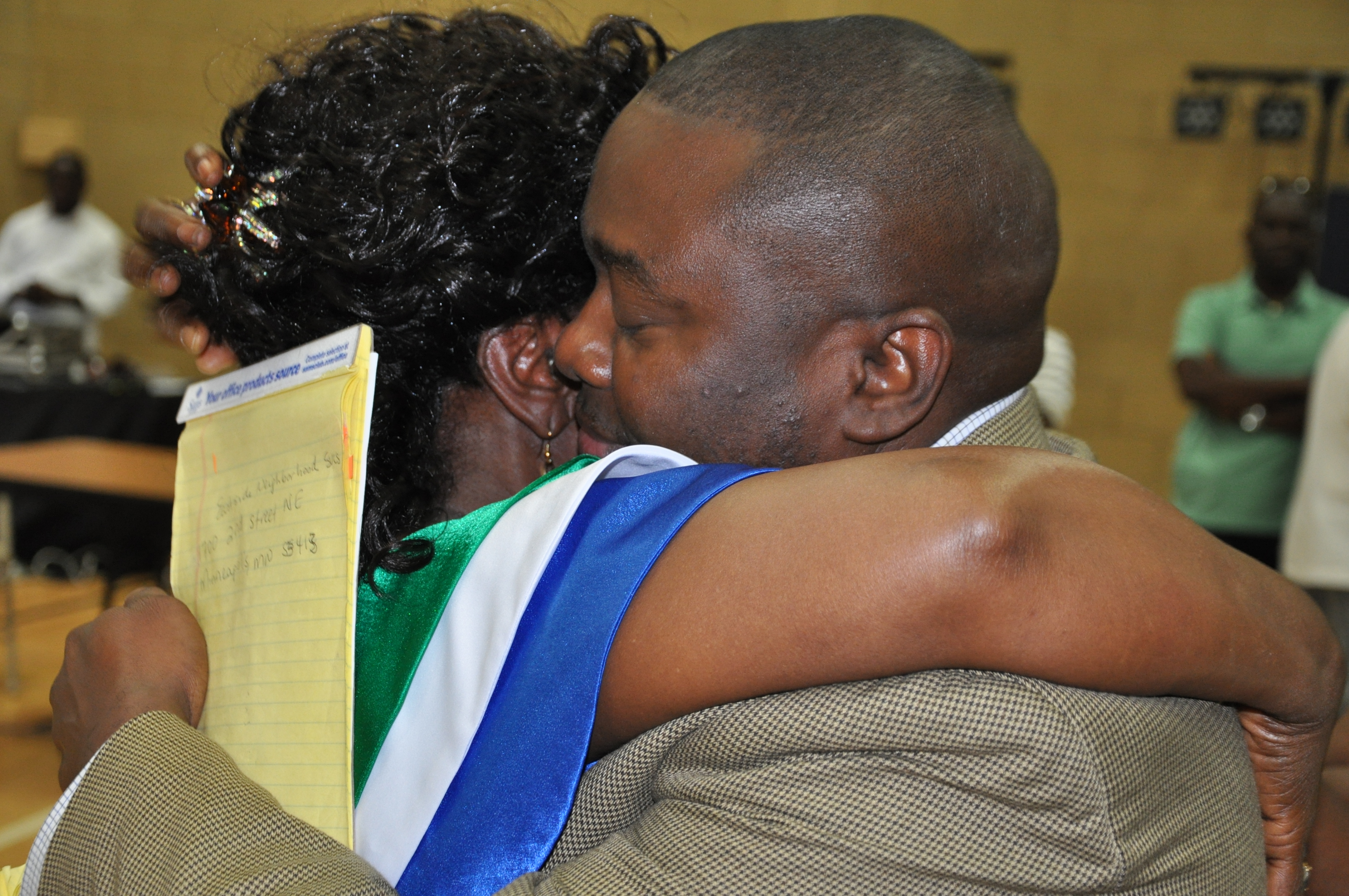
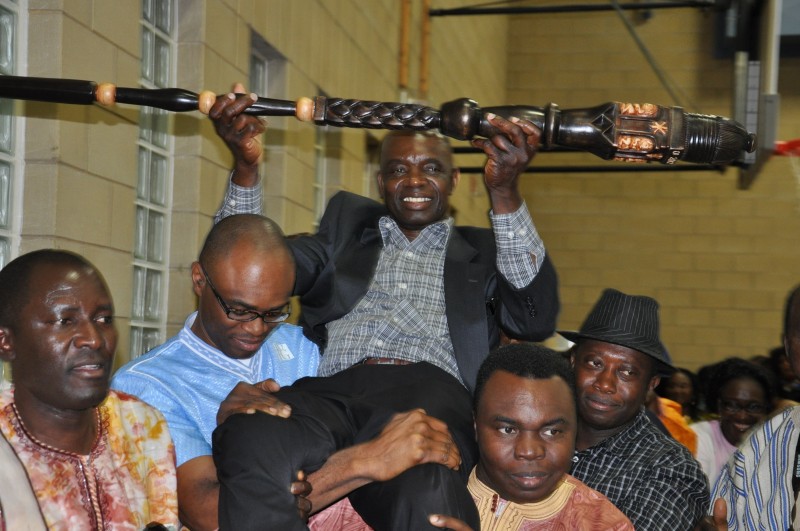
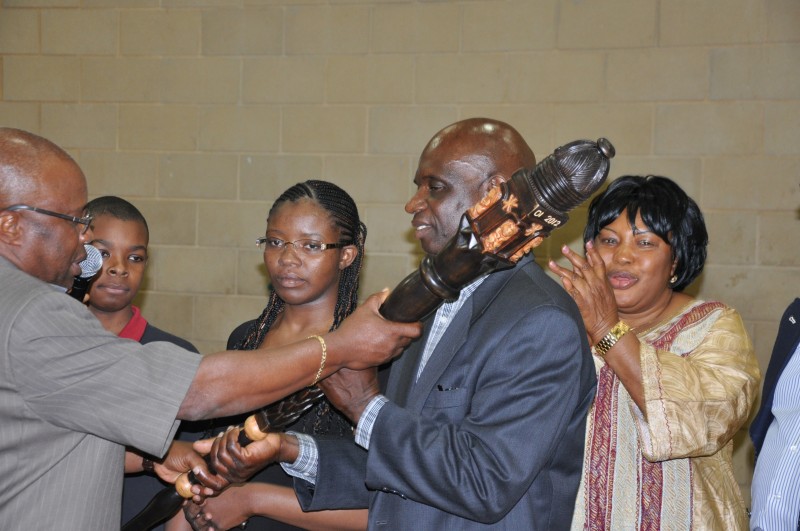
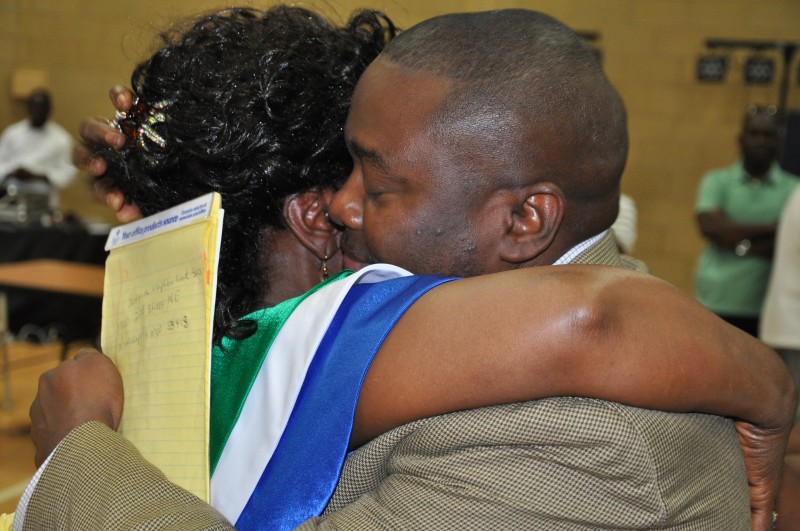
Mr. Sheriff, an accountant by profession will serve a two-year term in office leading Tegloma and all its 25 chapters. He defeated Julia Hawa Conteh, former president and chief of Tegloma New York and New Jersey Chapter. Sheriff won 87 votes, and Conteh gained 49 votes. Mr. Sheriff was sworn in on Sunday evening and handed the organization’s staff to symbolize his authority.
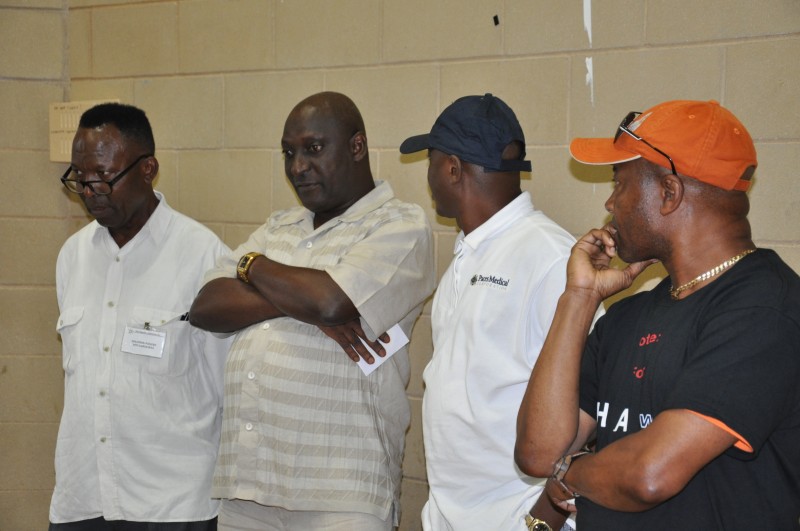
TENSE EVENING
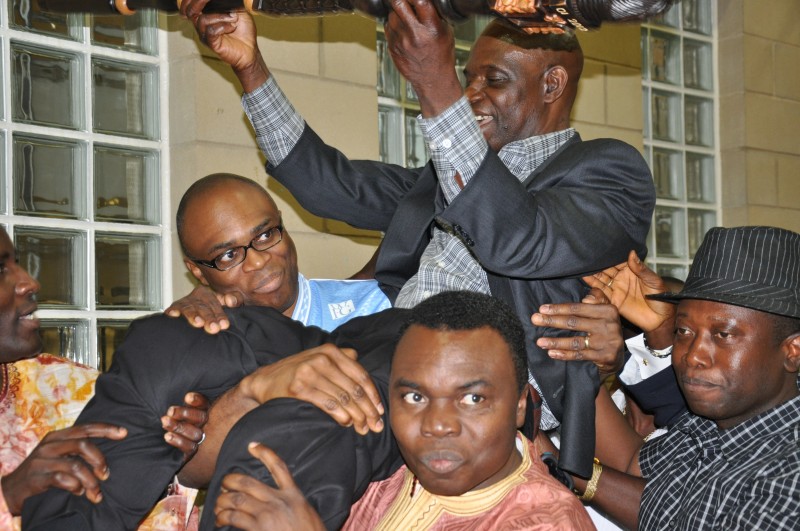
It was a tense evening that ended in a cultural celebration as Sheriff was carried shoulder-high. The hall erupted into a traditional dance to honor Tegloma’s new leader. Sheriff’s supporters and majority of those present congratulated him after Conteh delivered a graceful concession speech promising to work with the new chairman and all members of the organization. Tegloma, one of Sierra Leone’s most vibrant social organizations abroad, was formed in Washington, D.C. in the mid 1970s to assist Sierra Leoneans (mostly southeastern) in the US. It is now viewed by many as a pressure group for development in the country.
The Election Commissioners, Chief Madam Josephine Ladipo (Dallas); Mr. Shcku Sheriff (Minnesota); Mrs. Angela Bhonapha (TONCA) and Chief Victor Tarmoh (DC) were praised for conducting an election that Conteh said was “fair and transparent.” TAP
ON CAMERA:
TEGLOMA’s ELECTION EVENING
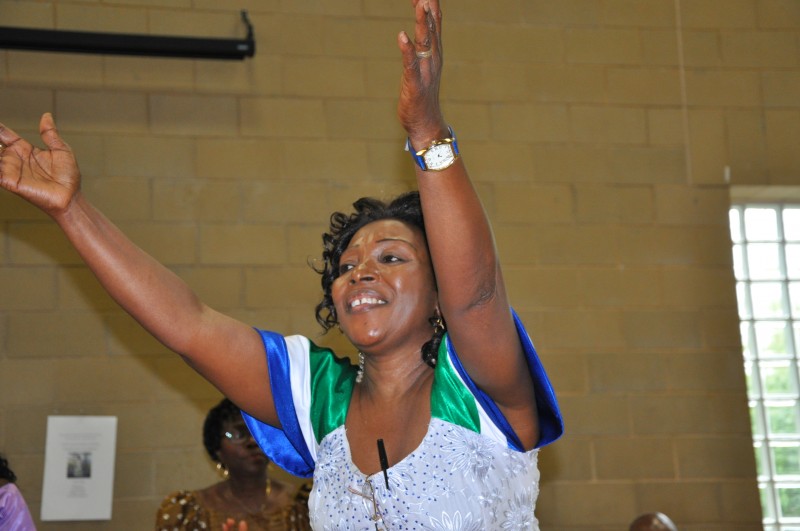
Julia Hawa Conteh, former president and chief of Tegloma NY/NJ chapterThe victor – Mustapha Sheriff
Every vote counts
VotingTense moments: Members wait for the result
Sheriff receiving the Tegloma staff
Defeated? – There Is always another time to win!
The AfricaPaper will cover different angles of this story. All photos copyright The AfricaPaper, 2013.
Italy’s Two-front War against Xenophobia and Sexism
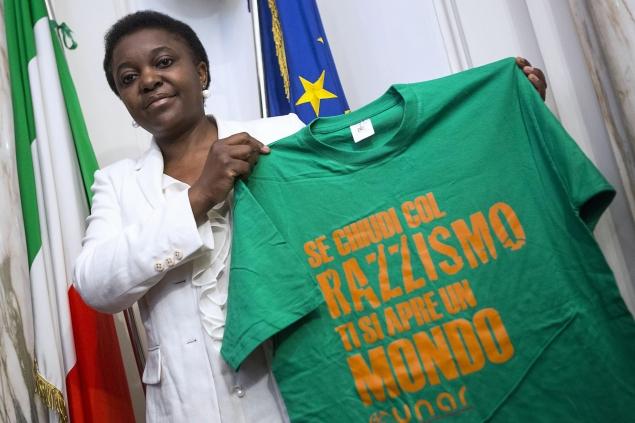
Attacks on Cecile Kyenge, Italy’s first black minister, reveal interlocked legacies of xenophobia and sexism that continue to manifest in Italian public life.
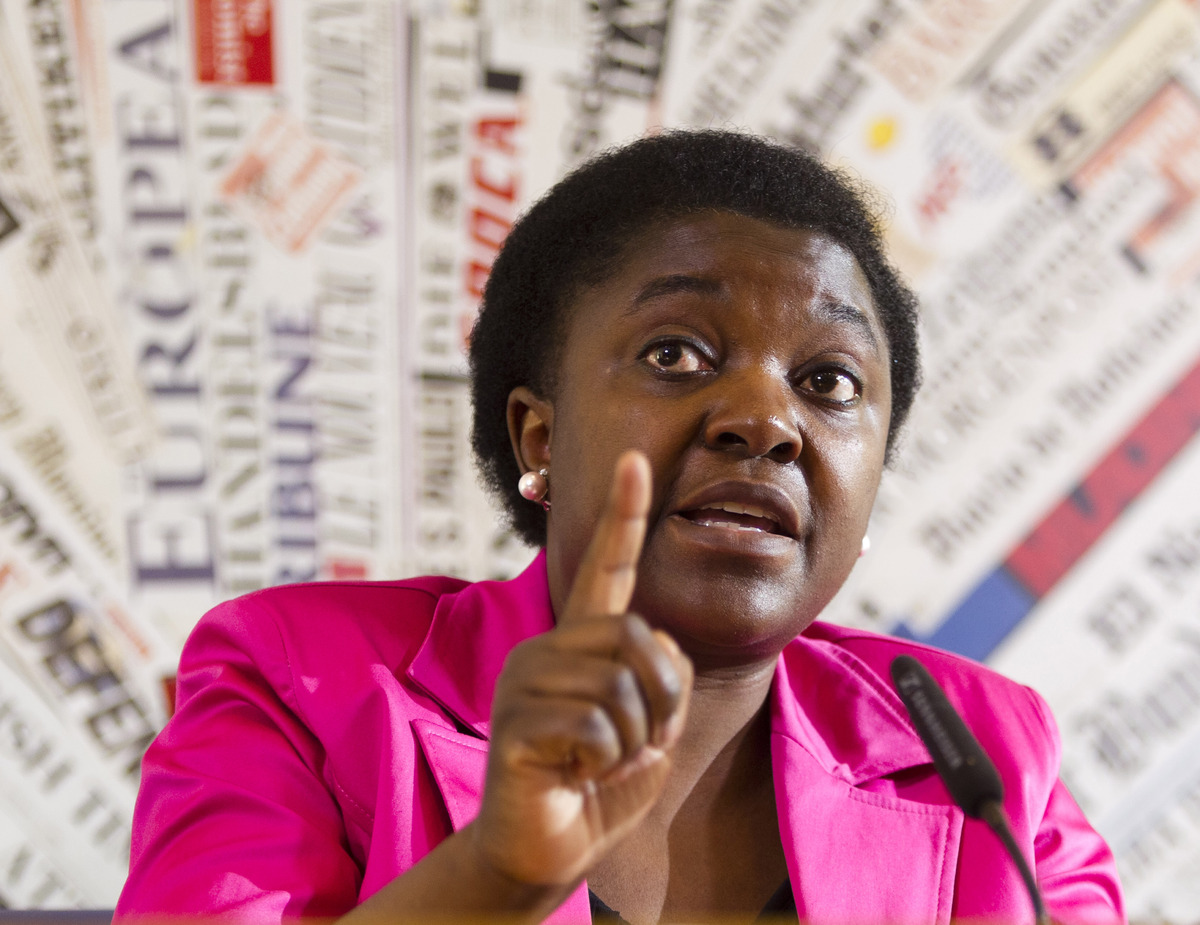
In its latest attempt at establishing the grounds for a meaningful and civil political debate, Italy’s extreme-right and xenophobic movement Forza Nuova (New Force) staged a protest on July 27 against Minister for Integration Cecile Kyenge, Italy’s first black minister, on her visit to a Democratic Party festival in Emilia Romagna, leavingthree mannequins covered in fake bloodwith the banner reading: Immigration Kills. As the minister reached the stage a few from the audience stood up tothrow bananas towards her. While Forza Nuova claimed it had nothing to do with the latter accident – and owned up instead to the macabre display of the three corpses – the latest racist ignominy against Kyenge only piles up to the series of disgraceful attacks which have seen the Minister ridiculed, insulted and threatened ever since her appointment in April this year.
Calling Kyenge an Orangutan?
Only two weeks earlier, on July 14, vice-president of the Senate and senior leader of right-wing party Lega Nord (Northern League) Roberto Calderoli was given the opportunity of brushing his repertoire of ever-insightful political commentariescalling Kyenge an orangutanbefore a rally of the League’s disciples. Admittedly, Calderoli is not new to moments of such pristine wisdom.
“Offensive” Comments
Already in February 2006, then head of the Ministry for Reforms, Calderoli attempted a strip while giving a TV interview only to show a copy of theDanish cartoons ridiculing prophet Mohammadprinted on his t-shirt. The joke led to an assault against the Italian consulate in Benghazi, Libya, which caused the death of 11 and injured 25. But while in 2006 Calderoli had the decency of resigning and spare the political stage from his gems for a while, this time things went otherwise.
Two days after likening Kyenge to a primate, Calderoli apologised before the Senate for what he admitted were “wrong” and “offensive” comments. But that was all. Roberto Maroni, the League’s leader, thought that was more than enough and no further action should be taken. Put otherwise, Calderoli should not (and indeed, did not) resign.
Shamelessly Feeds Into Racist
Italy Racism
For all its inhumanity, the most concerning point here is not that Italy’s vice-president of the Senate called one of his colleagues an orangutan, but that that very vice-president is member of a party which, alongside a panoply of others, shamelessly feeds into racist narratives as a life-long elixir. Already in 2012, speaking before a group of university students, Maroni candidly confessed the League began to resort to racist discourses as soon as it was clear “this would guarantee us votes”. Riddled with internal feuds, corruption scandals and the fall from grace of its founder and guru, Umberto Bossi, whose son used the party’s money to acquire cars and university diplomas, the League’s credibility before its electorate sunk from an 8.3% at the 2008 presidential elections to the abysmal 4.1% of this year’s round. Perhaps now more than ever, racism is one of the last few weapons the League may use to appeal to its increasingly disenfranchised people.
Racism is Becoming Integral
The worry is that Calderoli’s zoological analogies hide a much more complex and ongoing process through whichracism is becoming integralto the way politics can be conducted. In his first attempt at an apology, the vice-president of Senate claimed he “was speaking at a rally”, and those were “rally words”, a “joke” – possibly a very unhappy one – that was nonetheless “told at a rally”, and part of a much more “articulated assessment of the Minister’s programme”. Whether or not Calderoli’s larger argument truly was a masterpiece of rhetoric and critical engagement, the risk is to see politics turning into a spectacle, an ethics-free no-mans-land wherein delivering a hate-speech is just another part of the show, and as such should be intended. Likening a Minister to a monkey based on the colour of her skin (or claiming, as yet another enlightened League MP Mario Borghezio didearlier this year(that she is an “anti-Italian” a “Zulu” that ought to “go back to where she came from”) is not only possible, but more worryingly somewhat condonable, as long as it is part of a political performance which need not be concerned with the weight of the statements it champions.
Brutal Vilification
But this is no fiction. It is a brutal vilification perpetrated by a system which has never truly come to terms with those who did not fit into its preconceived categories. Cecile Kyenge is Italy’s first black minister. But she is also, even more fundamentally, a woman in power, one whose stature would hardly square with the image of women as mere appendages to a male-dominated political stage.
Banana Attacks
Cecile Kyenge
As the bananas landed towards her at the Democratic Party festival, all Kyenge remarked was that it was a “sad waste of food”. And in spite of the League’s never-ending xenophobic delirium, she still insists Italy is not a racist country. For a system which has grown accustomed, and routinely fed into, the idea of women as its sexualised and silent ornaments, Cecile Kyenge is its anathema. She defies the erotic hues through which women politicians have often been painted. And she is not afraid to speak up.
The Campaign
Only a few days before the presidential elections in February 24-25 this year, Berlusconi’s People of Freedom party began promoting a campaign to appeal to Italy’s women and secure their support at the ballot box. The campaign, promoted across a number of newspapers, was summed up in a page-long manifesto titled “I am a woman, I am not a doll”, and signed by a number of Berlusconi’s female devotees who claimed they were tired of being considered brainless objects, and had a voice of their own. Remarkable as it sounds, the manifesto included a picture of three women printed in the middle of the page, smiling confidently at the prospects yet another chapter of Berlusconi’s rule. Unfortunately, minutes after the campaign began appearing all over the country, a handful of twitter users discovered that not only did the three not sign up for Berlusconi’s women-friendly initiative, they had nothing to do with it whatsoever, but were three perfectly unknown faces that had been copy-pasted from an advertising agency specialised in selling smiling, optimistic-looking people to be photoshopped in catalogues. In choosing to allegedly “give women a voice”, the people of Freedom Party had only ended up suffocating it further.
Hardly be Silenced
Kyenge is part of a new wave of women politicians whose voice can hardly be silenced, let alone overlooked. Along with the President of the lower house Laura Boldrini, with whom she shares the same political orientation, she stands in constant tension with the masculine dogmas of a political arena in which women stand as its peripheral decorations – and as such are treated.
Sexual Offences and Death Threats
When Boldrini revealed, earlier this May, the amount ofsexual offences and death threatsshe is a daily target of across the web, a large fraction of the political establishment decided to respond with a nauseating and ill-informed counter-attack against Boldrini’s comments on the differences between virtual threats and any other forms of sexist violence, fearing she would propose restrictions on freedom of speech throughout the net. What was truly at stake was the need to fight violence against women, a malaise which Italy is yet to find a cure to. And what was possibly most frightful was not the sheer fact that Boldrini had been attacked, and constantly so, but the nature of those attacks. A chauvinist system could only defend itself the only way it new. Boldrini had to be re-sexualised, turned back into a man’s object of desire and punished for having dared to transcend the role she had been relegated to. Photoshopped with her throat cut, gang-raped, defecated upon, she had to be put back in her place.
Victim
On June 13 Kyenge was herself victim of a similar treatment. But this time the perpetrator was no man. Dolores Valandro, a Northern League female member working in the municipality of Padua, posted on her Facebook account she wished Kyenge were “raped, so that she could know what it truly means to be a victim of such violence”. And as Valandro wasexpelled from her partythe very same night by the League administration, so too was Angelo Romano Garbin, a colleague from the other side of the political spectrum (incidentally, a member of Boldrini’s party) who reacted to Valandro’s offence wishing she too were “gang-raped by twenty black men to see how she reacts”.
“Growing Barbarism”
Commenting on Calderoli’s insult, President of the Republic Giorgio Napolitano spoke against the “growing barbarism” in Italy’s civil life. All their courage and determination notwithstanding, Kyenge, Boldrini and all other women fighting for a sexism-free society are up against a dire challenge – the risk to witness this sense of barbarism being tacitly normalised. It is time for Italy to come to terms with its illogic fear of the other. A two-front war against xenophobia and sexism is a gender-neutral struggle, one which must be won for the sake of everyone’s respect and dignity.
The AfricaPaper: Thanks to Leonardo Goi for this report. Mr. Go1 is studying for an MPhil in Development Studies at the University of Oxford. He is Print Editor of the Oxonian Globalist
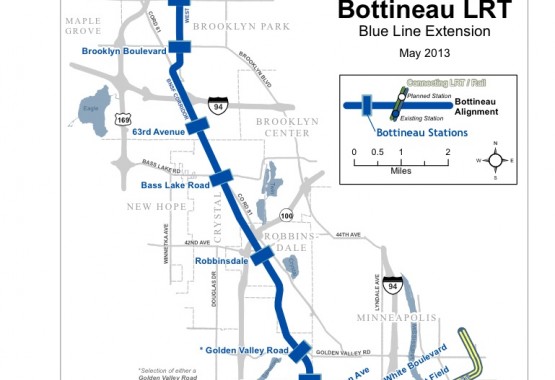
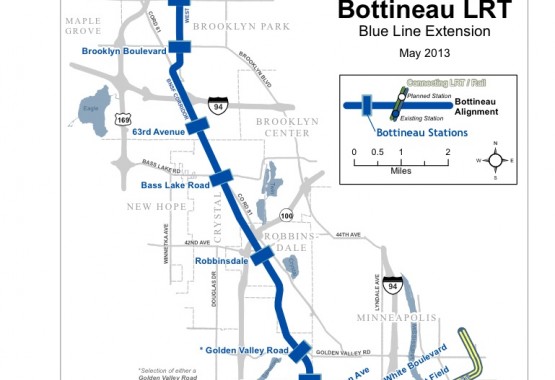
How do health, transit, and land use intersect?This is the question posed by the Bottineau Health Impact Assessment (HIA).
HEALTH IMPACT ASSESSMENT
Hennepin County received funding to conduct a health impact assessment along the 13 mile Bottineau Transitway, the proposed route of the Metro Blue Line extension. The proposed light rail project will extend from downtown Minneapolis through North Minneapolis and the northwestern suburbs of Golden Valley, Robbinsdale, Crystal, and Brooklyn Park.
PUBLIC COMMENTS
Public comment on the report draft is currently being accepted through September 15, 2013.Received comments will be incorporated into the final report which is scheduled for release this December.
FULL REPORT
Kids
The full, 130-page draft of the Bottineau HIA is available online at www.hennepin.us/bottineauhia. Physical copies of the full draft and summary are available for review at the following Hennepin County Library locations: Brookdale, Brooklyn Park, Golden Valley, Rockford Road, and Sumner. Copies are also available for review in the community development departments at Brooklyn Park, Crystal, and Golden Valley, as well as the Robbinsdale City Hall.
FEEDBACK
The publiccan provide feedback on the contents of this report in the following ways:
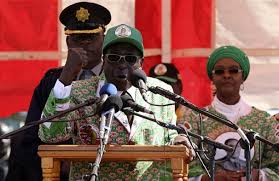
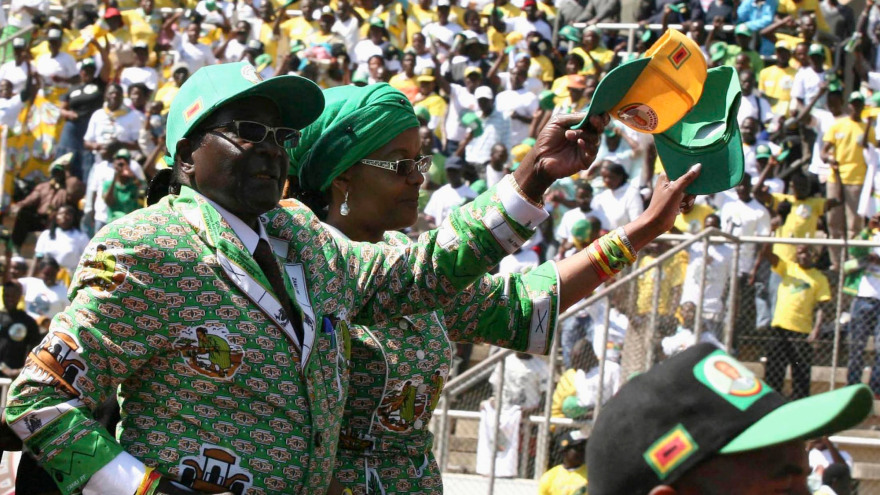
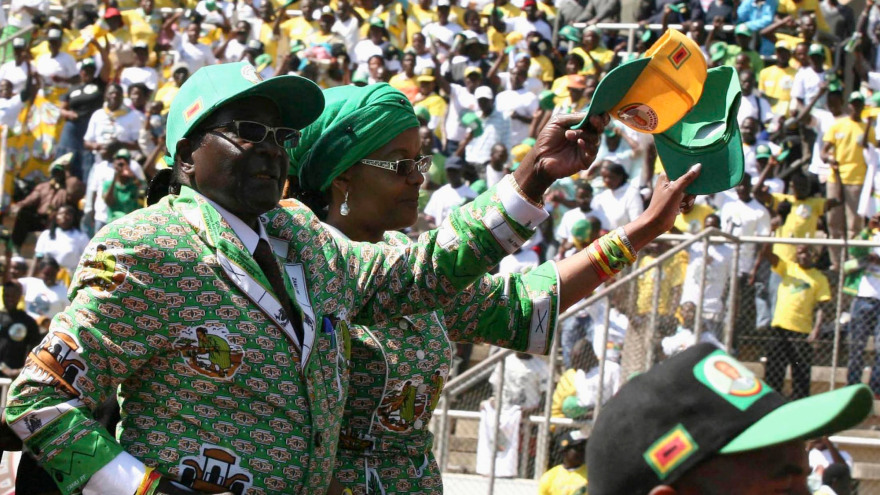
Zimbabwe’s veteran leader Robert Mugabe seeks a fresh five-year mandate in today’s elections. Mugabe held campaign rallies in almost all the country’s 10 provinces to drum up support for himself and his party, which has been in power since independence from the British in 1980.
Lessons
But this is not the same old campaign. At 89, Mugabe knows it is probably his last and he has modeled his appeal to voters on his legacy and contributions in Zimbabwe’s fight for independence.
Critics say the speeches essentially amount to historical lessons as his central message focuses on the past, about his contribution to Zimbabwe’s liberation struggle against white minority rule.
Farewell
For Mugabe, it is a farewell he is bidding to his countrymen and the continent and an attempt to leave a lasting impression as an iconic revolutionary in Africa. Despite the hostile relations between the west and Mugabe, his stature in the African political landscape is huge and has inspired many those countries whose economies and land are still in the hands of the former colonizers
Independence
Besides helping Zimbabwe gain independence in the first place, Mugabe spearheaded a land reform program in 2000, taking away land from white commercial farmers and redistributing it to the black Zimbabweans. The central theme during that exercise was that total independence can only be achieved through economic independence.
Campaign
This electoral campaign dwells on that theme once again, positioning Mugabe as a man against the world, as a man who has defeated whites, as a man who managed to give his people land, as a leader who stood up to the US and Britain.
Sanctions
Even after these countries imposed sanctions on Zimbabwe, he has been undeterred. For the people of Zimbabwe, Mugabe’s policies are unpopular and have only helped Zimbabwe’s economy plunge. His tenure has also been characterized by iron-rule and suppression of human rights. Though Zimbabweans are hopeful that election results will not be in favor of Mugabe, they place little credibility in the election results amid reports of rigging. By now, they know: It’s all in the hands of Mugabe anyway.
The AfricaPaper: Blessing Vava works for the National Constitutional Assembly, a nonprofit in Zimbabwe.
By Brian Latham, Franz Wild and Godfrey Marawanyika | Harare
Harare – Most Zimbabwean polling stations closed in an election that will decide whether President Robert Mugabe will extend his 33-year rule amid claims by his opponents that a flawed electoral roll threatened a free vote.
Voting in Zimbabwe
Both Mugabe, 89, and his main challenger, Morgan Tsvangirai, 61, said they’re confident of victory and will respect the result. While balloting for the southern African nation’s president and 210 members of parliament was due to end at 7 p.m. local time, electoral commission chairwoman Rita Makarau said turnout was high and polling booths would remain open as long as needed “even if takes us to midnight.”
Voting was largely free of the violence that marred the last Mugabe-Tsvangirai contest in 2008. Tsvangirai led the first round of that election before he pulled out of a run-off saying about 200 of his supporters had been killed.
“After all the conflict and stalemate, the suspicion, the hostility, I think there is a sense of calmness that finally Zimbabwe will be able to move on again,” Tsvangirai said after voting with his wife in Harare’s Mt. Pleasant suburb.
The ballot will end a coalition government accord arranged in 2009 by the 15-nation Southern African Development Community after an aborted election the year before. The deal left Mugabe, who’s led Zimbabwe since independence from the U.K. in 1980, as president and named Tsvangirai prime minister. The electoral commission’s failure to release the voters’ register prompted complaints by Tsvangirai’s Movement for Democratic Change.
Election ‘Illegal’
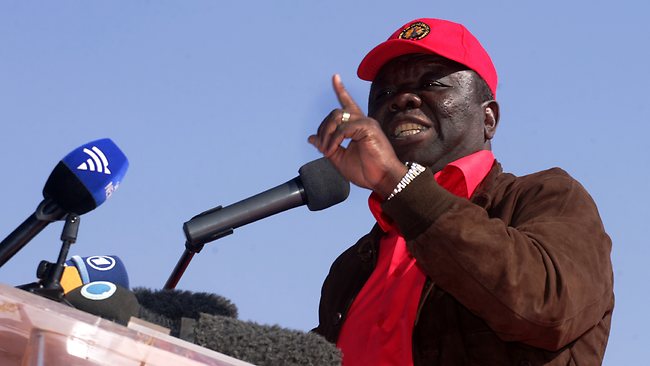
Morgan Tsvangirai
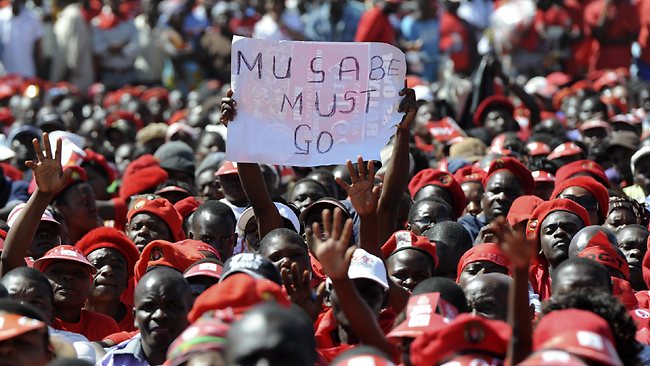
“We have stated clearly that these elections are illegal and unfair,” MDC Secretary-General Tendai Biti told reporters yesterday in the capital, Harare. “Despite that, we are absolutely certain we will win.”
Makarau told reporters in Harare that the election was “free and fair.”
As many as 2 million people have been excluded from the electoral roll, and in some cases a third of voters were turned away from polling stations, he said.
Mugabe dismissed the claims as “politicking” in remarks to reporters after he voted.
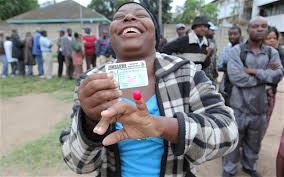
Dzikamai Tafumani, a 39-year-old mother of three in Harare’s Mabvuku township who supports Tsvangirai, said she wasn’t able to vote because her name didn’t appear on the voters’ roll at four polling stations.
“We are suffering in Zimbabwe,” said Tafumani, who works in a high school. “We get paid peanuts. Tsvangirai helped us a lot during the unity government. Mugabe wants us to die. It’s not a free and fair election.”
Voters’ Roll
MDC supporters
The electoral register remained the most contentious issue in the vote. The Zimbabwe Electoral Commission printed 8.7 million ballots for the elections, while there are 6.4 million registered voters, according to Makarau.
Former Nigerian President Olusegun Obasanjo, who’s leading observers from the African Union, called the elections “peaceful, orderly and free and fair.”
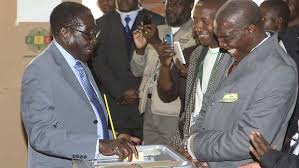
Emerging after casting his ballot in the Highfield township outside Harare, Mugabe waved a pink-inked finger showing he had voted toward reporters and said he still had plenty of work to do.
“I’ve got lots of things to do — repair our industries, which have collapsed,” he said. “There’s much work to be done in the mining sector.”
Mugabe and his Zimbabwe African National Union-Patriotic Front forced mining companies such as Impala Platinum Holdings Ltd. (IMP) and Anglo American Platinum Ltd. (AMS) to cede a majority share of their local assets to black Zimbabweans or the government. The southern African nation has the world’s second-biggest platinum and chrome reserves as well as deposits of diamonds, gold and coal. Tsvangirai has promised to repeal the measure.
Mugabe Education
Mugabe votes
“Mugabe educated us really, so how can he expect us to believe his party will make us rich owners of huge mines and banks,” said Rudo Kaseke, 28, a seamstress in Harare’s eastern Mabvuku suburb. “We know how things work because he educated us and now he’s promising things that we know can’t happen thanks to his education. It’s very strange.”
During the life of the power-sharing government, ministers from the MDC helped to steer Zimbabwe out of recession and slow inflation that had soared to 500 billion percent, according to the International Monetary Fund. The economy has expanded every year since 2009, with Finance Minister Biti predicting 3.4 percent growth this year.
Biti abolished the Zimbabwe dollar in favor of a multi-currency system using mainly the U.S. dollar and the South African rand.
Mugabe’s Zanu-PF retained control of the security forces.
The electoral commission said on July 13 that it will announce results of the presidential vote by Aug. 5. The process took about a month in 2008. It hasn’t set a date for results from the parliamentary ballot to be released.
“There’s been little violence, which itself is suspicious because it means some other plan is being made to win,” said Pleasance Matibenga, a 30-year-old male nurse in Harare. “You won’t find anyone at ease or confident until all this is over. This country is never-ending stress and uncertainty.”
The AfricaPaper: Many thanks to Brian Latham, Franz Wild, and Godfrey Marawanyika in Harare for this report.