Home Blog Page 6

Op-Ed: Why Adesina Should Remain President of African Development Bank Despite Calls for New Leadership

AU, ECOWAS BACKS AfDB PRESIDENT, AKINWUNMI ADESINA FOR REELECTION AS THE UNITED STATES CALLS FOR FRESH PROBE

By Kola King | The AfricaPaper 

Abuja, Nigeria – The three-member Independent Review Panel led by former President of Ireland, Mary Robinson has cleared the President of African Development Bank (AfDB), Akinwunmi Adesina of corruption allegations. The Panel dismissed 16 allegations raised against him by whistleblowers in the Bank. Other members of the Panel include former Gambian Attorney General Hassan Jallow and the World Bank’s Integrity Vice -President, Leonard McCarthy.

“The Panel concurs with the findings in respect of all allegations against the president and finds that they were properly considered and dismissed by the Committee,” it stated in a document dated July 27. Furthermore, the Panel wrote, “It appears to us to be an undue burden to expect the holder of high office in an international organization, to prove a negative, in the absence of sufficient grounds.”

Clearance

The clearance by the Independent Review Panel will serve as a major boost for Dr. Akinwunmi Adesina’s reelection in August. The findings seem a rebuff to the US Treasury Secretary Steven Mnuchin who instigated a fresh probe, having rejected the initial findings of the AfDB Ethics Committee. So far there’s been no reaction from the United States that pushed for a fresh independent probe of the allegations raised by whistleblowers.  

Dr. Adesina has been in the news lately for the wrong reasons. Many had wondered who wanted Adesina’s head? And what is the motive?  Despite being exonerated from allegations of unethical conduct by a committee set up by the bank’s Board of Governors, the United States and some non-regional members of the bank called for a fresh, independent probe of Adesina. Perhaps this may suggest that the non-regional members want a greater stake in how the bank is being run.  Regardless of his travails, Adesina has displayed admirable competence and he seems to know his onions.
A t is shown in the water.
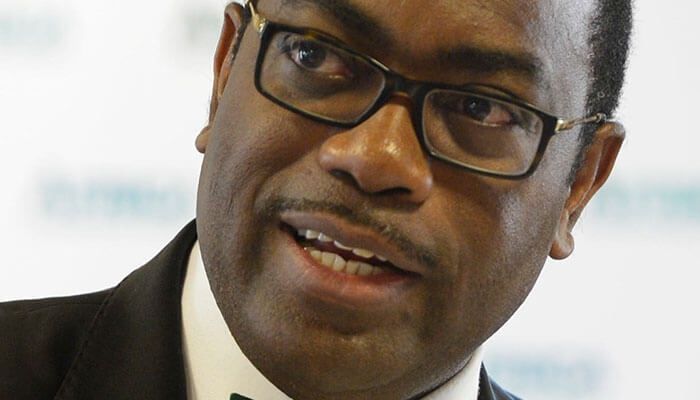
African Development Bank (AfDB) President Akinwumi Adesina speaks during an interview with Reuters in Dar es Salaam, Tanzania August 17, 2019. Picture taken August 17, 2019. REUTERS/Emmanuel Herman

Within a short time, Adesina has changed the narrative of developmental financing for the continent. All throughout his international career, Adesina had cultivated a clean image both as a technocrat and scholar. His tenure as Nigeria’s Minister of Agriculture was without blemish. In fact, he was one of the most outstanding ministers in the Jonathan administration, which he served from 2011 to 2015.  So, what is wrong? 

So far, the Bank has consolidated its role as the continent’s premier development finance institution, a knowledge and research center, and the preeminent voice for African development issues. Since the AfDB views corruption, fraud, and other sanctionable practices as highly inimical to the achievement of its mandate, the bank has set up the Integrity and Anti-Corruption Department (IACD) which has the overriding mandate to carry out independent investigations into allegations of corruption, fraud and other sanctionable practices in Bank Group Financed Operations. IACD became operational in 2006, and its mandate is reflected in its independence, authority, access, and operations provided in its terms of reference.

Battle

Now, Adesina is fighting the battle of his life as a group of whistleblowers within the bank has cast aspersion on his reputation. To inquire into the allegations, the bank set up a committee to investigate him, and later the committee found him blameless of all allegations leveled against him. But the United States wants an independent investigation to revisit all the allegations leveled against the president of the bank, “so as to uphold high standards of ethics and governance,” according to US Treasury Secretary, Steven Mnuchin.

Notwithstanding all this, Adesina has repositioned the bank to serve Africa’s best interest. He has facilitated credit for African governments to build infrastructure, reduce poverty, and develop agriculture. Adesina has also addressed the current health and economic impacts of the coronavirus pandemic on the African continent. In March, the AfDB issued a $3 billion social bond to help African countries deal with the consequences of the coronavirus pandemic. The bank also has approved a $10 billion relief package for 2020, of which $6.9 billion will be financed by AfDB and the remainder through its concessional lending window. More importantly, the bank’s 81 stakeholders have pledged extra funds to more than double its capital of $208bn (170 bn Pounds). Adesina is the eighth elected President of the AfDB. He was elected on May 28, 2015. He’s up for reelection as the Chief Executive of the AfDB for another five-year term in August. 
A t is shown in the water.
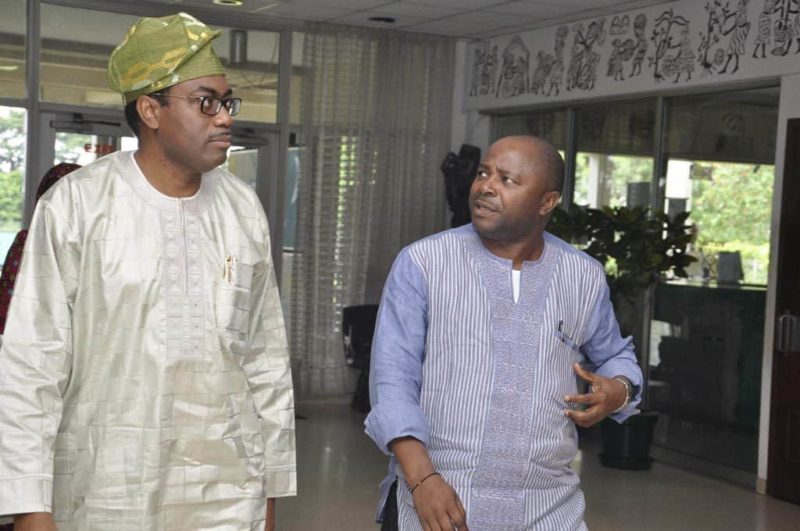
Akinwumi Adesina, AfDB president (left) and Nteranya Sanginga, IITA DG (right) discuss.

Under his watch, AfDB has been ranked fourth out of 47 global development institutions on its Aid Transparency index by Publish What You Fund (PWYF), a London based transparency agency. The index is the only independent measure of aid transparency among the world’s major development agencies. What is more, the index places the Bank in the highest category of transparency along with other world-class institutions such as the World Bank, the Asian Development Bank, and UNDP. Publish What You Fund ranked the Bank ‘very good’- The highest of the five categories used to assess organizations’ transparency. The ranking is based on several criteria including finance and budgets, basic information data, organizational planning, and performance.

Advocate

“As large quantities of aid are being reallocated to deal with the Covid-19 emergency, the transparency of international aid is more important than ever,” said Gary Foster, CEO of PWYF, which has produced the index each year since 2011. 

Only recently, S&P Global Ratings affirmed AfDB’s ‘AAA/A-1+’ long and short term issuer credit assessment of the AfDB with a stable outlook…”We are therefore affirming our ‘AAA’ long term issuer credit rating on the AfDB,” S&P Global stated. Furthermore, the rating agency stated that “The Bank has a very strong financial risk profile, capital adequacy, liquidity, extraordinary shareholder support and adequacy of its governance and management. (www.afdb.org. press release).

It is important to note that AfDB represents the bank that lends exclusively to African governments, representing one of the few non-China led and Western-funded approaches to development on the continent. Adesina is perceived as an eloquent advocate for Africa and the bank, and a good fundraiser to boot. He commands a lot of goodwill and respect from both international finance capital institutions and governments all over the world.

Re-election 

Many believe Adesina deserves a second shot at the presidency, considering his innovative approach and bottom-up development approach to Africa. Already both the African Union and the ECOWAS group have thrown their weight behind Adesina affirming their confidence in his leadership of the bank and supporting his bid for reelection. Fifty-four African countries are members of the bank. In this connection, ECOWAS stated that “In recognition of the sterling performance of Dr. Akinwunmi Adesina during his first tenure in office as President of the AfDB, the authority endorses his candidacy for a second term as the President of the bank.”

As expected, President Muhammadu Buhari had declared that “Nigeria stands solidly behind Akinwunmi Adesina in his re-election bid as the President of the African Development Bank. We will work with all leaders and stakeholders in AfDB to ensure that he is re-elected on the strength of his achievements during his term.” 
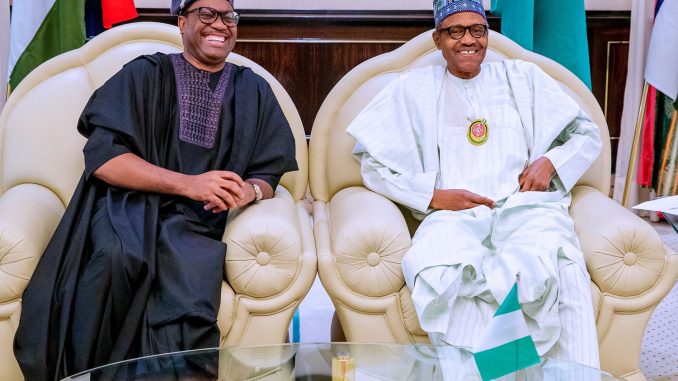
A t is shown in the water.
AfDB President, Akinwunmi Adesina, during his visit to Nigeria’s President Muhammadu Buhari, at the Presidential Villa, Aso Rock, Abuja. Photo: Aso Rock

Entering the fray, former Nigerian President, Olusegun Obasanjo has equally joined the bandwagon of those rooting for Adesina and kicked against the demand by the USA for a fresh, independent probe. In his letter to 12 former African presidents, Obasanjo said that Africa must stand up and not allow its institutions to be unduly controlled by non-African countries. According to him, “The bank has witnessed tremendous growth under Adesina’s leadership and has doubled its capital base since he took over.” 

In a statement signed by fifteen former African presidents, including Olusegun Obasanjo and Goodluck Jonathan of Nigeria, the African statesmen described Adesina as the “pride of the continent,” and they lauded him for taking the bank to enviable heights. “No nation, regardless of how powerful, has veto power over the AfDB, and no nation should have such power,” they added. 

Displeasure 

But it appears some members of the Board of Governors are up in arms against his candidature. For one, the United States of America, which is one of the 27 non-regional members of the bank, and its second-largest shareholder, has expressed its displeasure over his candidacy for the simple reason that whistleblowers within the bank had petitioned the Board, claiming that Adesina runs the organization with impunity and that contracts were tinged with corruption.  In a letter dated May 22, 2020, to Ms. Kaba Niale, Chairman Board of Governors, Steven Mnuchin, faulted the decision of the committee to totally exonerate Dr. Adesina of all allegations, saying it was not yet time to make such a decision.
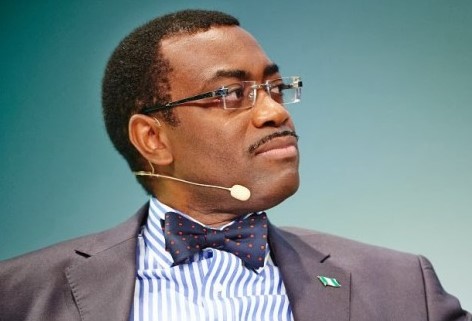
A t is shown in the water.
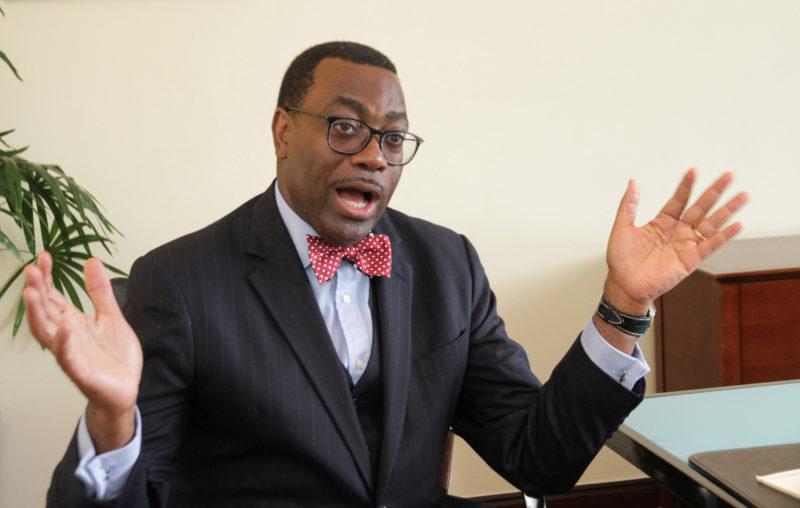
Adesina at an AfDB event. Photo: AfDB

Despite the fact that the Board had set up a committee to investigate all the allegations leveled against Adesina, after which the committee gave Adesina a clean bill of health, still the US has expressed reservations about the outcome of the investigations and called for more thorough and detailed investigations. The Chairman of the Board of Governors, Kaba Niale, who is also the Ivorian Minister of Planning and Development, had proposed “adopting the conclusions of the investigation by declaring that the president is totally exonerated of all allegations made against him.” Yet when the US Treasury Secretary, Steven Mnuchin mounted pressure, the AfDB Board reversed itself and caved into America’s demands. 

“We fear that the wholesale dismissal of all allegations without appropriate investigation will tarnish the reputation of this institution as one that does not uphold high standards of ethics and governance,” Mnuchin wrote. “Therefore, the US cannot support dismissing the allegations at this stage.”

Investigation

The AfDB board meeting is said to have agreed to an independent investigation into the allegations concerning Mr. Adesina’s conduct after Denmark, Sweden, Norway, and Finland supported the US position, Bloomberg news agency reported. The Board had remarked that the bureau must be allowed to carry out its duty and deliver justice on the matter. 
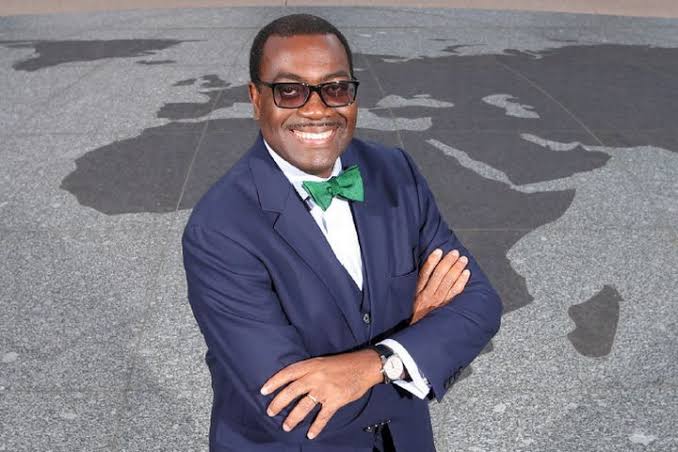
A t is shown in the water.
Adesina. Photo: AfDB

However, the Nigerian government has rallied support for the President of AfDB. A letter by the Nigerian Minister of Finance, Zainab Ahmed, urged the board of the AfDB to ignore calls for an in-depth investigation of Adesina. Ahmed urged Chairman of the Board, Kaba Niale to follow laid down processes to protect and preserve the bank. 

“The call for an independent investigation of the president is outside of the laid down rules, procedures, and governance system of the bank and its articles as it relates to the code of conduct on ethics for the president,” Ahmed stated. “As a bank, we must uphold the rule of law and respect for the governance systems of the bank.”

Allegations

Earlier the Ethics Committee Chairman, Takuji Yano, a Japanese national had produced an eight-page report on April 26 that deemed “baseless,” “unsubstantiated” or “unproven,” the allegations made by a group of employees of the bank against the institution’s President, Akinwumni Adesina. The Ethics Committee has dismissed all the allegations in their entirety. Therefore, the Ethics Committee in its report to the bank’s Board of Governors on May 5, concludes that the complaint received on Jan. 19, “was not based on any objective and solid fact.”

The Ethics Committee Chairman explained that he reached this conclusion, with the help of information verbally communicated to the committee by the Director of the Office of Integrity and Anti-Corruption (PIAC) and by the bank’s auditor general during the committee’s meetings on  March 26 and April 2. Yano criticizes the whistle-blowers for not having provided any supporting evidence for their claims. When they were asked to do so, they “declined on the grounds that they wished to conserve their anonymity,” Yano concludes in his report.

Petition

In a petition by a group of whistleblowers, Dr. Adesina was accused of 20 breaches of the bank’s code of conduct, including “unethical conduct, private gain, an impediment to efficiency, preferential treatment, a major conflict of interest and involvement in political activities,” among others. The group, which noted their allegations were in line with AfDB’s whistleblowing policy, said these activities adversely affected the confidence and integrity of the bank.

Dr. Adesina in his response maintained that he was innocent of all allegations of fraud leveled against him. He added that he believed a just, transparent, and fair process would prove his innocence. “I am confident that fair and transparent, and just processes that respect the rules, procedures and governance systems of the bank, and the rule of law, will ultimately prove that I have not violated the Code of Ethics of this extraordinary institution,” he said. 
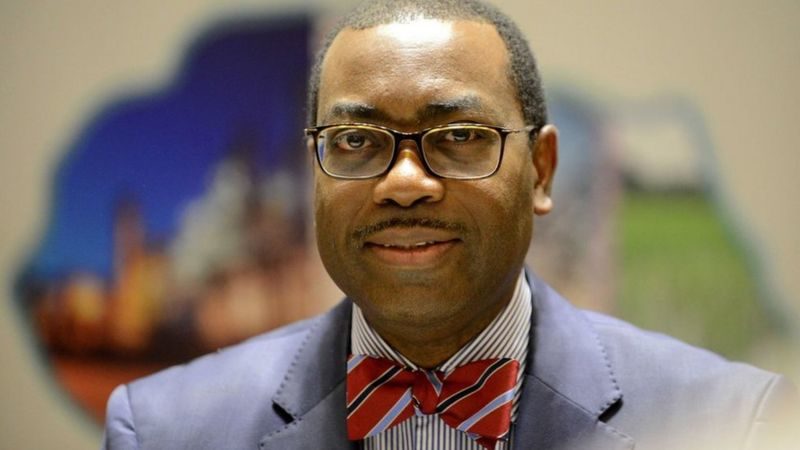
A t is shown in the water.
Adesina. Photo credit: Reuters

To this end, Adesina had produced detailed explanations to debunk all the grave allegations brought against him. In the 260-page document, Adesina severely condemns the methods used by the whistle-blowers. He described their complaint as “gratuitous and not based on any objective and proven facts,” and should be dismissed by the Committee. 

“The purpose of the complaint is not to report fraud, corruption or other acts of misconduct,” says Adesina. “Quite the contrary, it has other hidden motives. The idea that other people are acting in concert with the whistleblowers is not pure speculation.” 

Whistleblowers

Most of the allegations brought against Adesina include those relating to the two awards he received between 2017 and 2019, the World Food Prize and the Sunhak Peace Prize. The whistleblowers criticized him for not giving the prize money ($750,000) to the bank, as the bank had covered both his travel expenses and those of the large delegation that accompanied him. Adesina maintains that he donated the prize money from the two awards to help create the World Hunger Fighters Foundation and that the president’s children and spouses in attendance at these events paid their own way, rather than the bank. 

Favoritism 

Lastly, he explains that the AfDB staff did not attend the event because the president was the recipient of the World Food Prize, but because the bank was promoting the launch of its Technology for Africa Agricultural Transformation (TAAT) during these events.

Commenting on the TAAT initiative, a funding program for Africa’s agriculture sector, Adesina throws more light on payment, which the whistleblowers consider to be dodgy, of a negotiated contract of $5 million signed with Syngenta, a Swiss seed company. Although the condition under which the contract was awarded did, in fact, violate the terms of an agreement signed between the bank and TAAT, Adesina claims that the primary purpose of his intervention was to protect the bank’s reputation, as it had received threats of legal action, and to ensure both the quality of the project and future compliance with contractual rules.

In his rebuttal, Adesina posits that “His predecessor had given notice and he was entitled to a month of holiday pay. To ensure the continuity of the post, Fregene began working the moment his predecessor ceased performing the duties of his office.”

“As president [it is incumbent on me], to make sure that sound decision in the bank’s best interest is being taken in order to protect the bank’s reputation and ensure that it isn’t at risk of legal action which could harm its reputation and jeopardize its privileges and immunities,” Adesina submitted in his memorandum.
A t is shown in the water.

“Should it surprise the world that we’re getting a second investigation backed by no African country? What does that say about the other countries that have lined up behind the United States,” declared Debisi Araba, who worked with Adesina in the Nigerian government and was also an intern at the bank while doing his Ph.D. in 2009.

On Martin Fregene being hired in May 2017 and appointed as Adviser to the Vice-President on Agriculture, Human and Social Development, Adesina declared that Fregene is not his brother-in-law as claimed by the whistleblowers. Even so, Fregene was promoted Director of the Department of Agriculture and Agro-Industry only seven months later, while his predecessor was still serving as director. An audit report dated Nov 2019 indicated that the promotion did not comply with internal rules and that it resulted in the AfDB paying two salaries for the same post.

Also, on claims of “favoritism” that Nigerians had supposedly benefited from Adesina’s administration, the Ethics Committee itself backed Adesina, noting that two other countries, one African and the other “non-regional” each have “more officials at the bank than Nigeria does.” 

“He’s due to run unopposed but you want to muddy the waters with this stain of corruption. I believe he will be vindicated,” Araba added.

Neutral 

Barbara Burungi, the bank’s former lead economist in Nigeria, stated that “Mnuchin’s move is significant because it has now cast the limelight on governance issues and on the importance of an in-depth investigation to uphold the integrity of the AfDB.” According to her, “There are very few people that were willing to stick their necks out.” 

Meanwhile, the Board of Governors has appointed an Independent Panel made up of three “neutral, honest, high-caliber” persons to review the report of the internal Ethics Committee of the AfDB that cleared Adesina of all the allegations leveled against him. The Panel would not open up a new investigation. Former President of Ireland and ex-United Nations Human Rights Commissioner, Ms. Mary Robinson has accepted to serve as chairperson of the committee of three that would handle the review.  Other members are Hassan B. Jallow and Leonard F. McCarthy. The panel is expected to submit its report within a period of two to four weeks.

 Imperialistic

Critics have described the ongoing crisis in the bank as one of imperialistic interference, neocolonialism, and Western plot against Africa’s interests, which is aimed at blocking Africa’s access to cheap credit, short-circuit its progress and impose Western imperialism through the backdoor. This is why this goes beyond the boardroom intrigues surrounding the departure of some senior executives of the bank as Adesina consolidates his power and authority on the institution, positioning himself for a smooth transition to a second term. Others have tied Adesina’s travails to the comments made by the President of the World Bank, David Malpass, who criticized the AfDB and other multilateral financial institutions for lax credit standards purportedly driving profligate African lenders towards debt distress.

On the contrary, Bright Simons, a policy analyst, and think-tank executive, writing in The Africa Report argue that the capital structure of the AfDB, with over 90% of the subscribed capital being ‘callable'(in basic terms, ‘pledged’) rather than paid in (similar to other MDBs in that regard), imposes a uniform burden on all its members, including the non-borrowing “foreigners, to backstop the large amounts of money the AfDB borrows to lend out to the “home” countries, some of who cannot obtain loans from even concessional lenders like the World Bank. Furthermore, he says, globalization of sovereign finance appears to be at play, which lays emphasis on strong governance systems and strict lending practices.

Support

Despite a fresh independent investigation into allegations raised against him, which is at the bidding of the US and some non-regional members of the board, Adesina can count on the support of the 54 African regional members of the board, who have also condemned the fresh probe of the president. Whether Adesina’s reputation would remain intact will depend on the outcome of the fresh investigations being pushed by the US and some non-regional members. Still, the stakes are high. With Africa’s strong backing, Adesina looks good to clinch another five-year term as president of the AfDB, provided he comes out clean in the ongoing probe by the bank. 
A t is shown in the water.
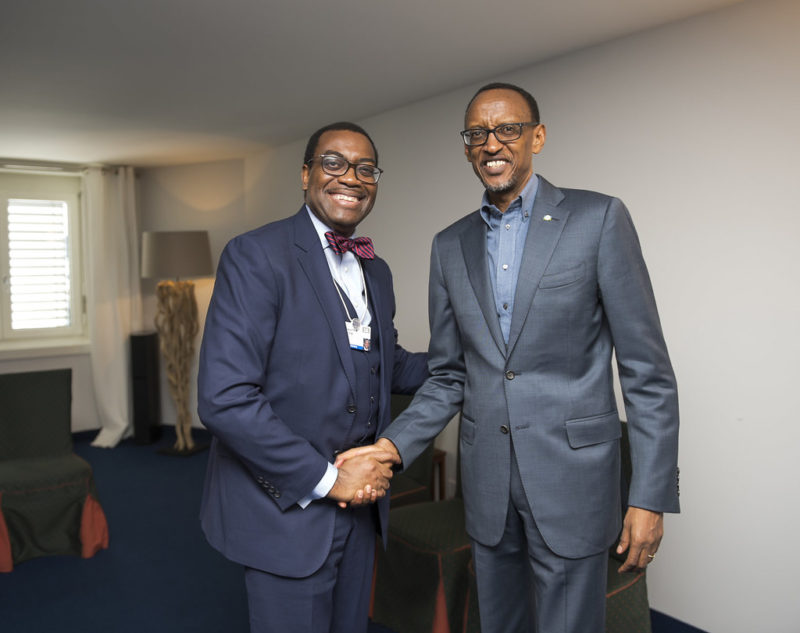
Adesina and President Paul Kagame of Rwanda. Photo: Rwanda

Indeed, Adesina is one of Africa’s brightest stars. Prior to his current appointment, he was Nigeria’s Minister of Agriculture and Rural Development from 2011 to 2015 during which he implemented bold policy reforms in the fertilizer sector and pursued innovative agriculture investment programs to expand opportunities for the private sector. During his tenure, he turned that lackluster ministry into a vibrant and dynamic set up and repositioned agriculture as a goldmine that is waiting to be tapped. Adesina not only galvanized the youth, but he was also able to raise an army of agriculture entrepreneurs through his support and commitment to the revamping of that critical sector of the economy.

Expert

Adesina is a distinguished developmental economist and agricultural developmental expert with 25 years of international experience. He was previously Vice-President [Policy and Partnerships] of the Alliance for Green Revolution in Africa (AGRA). He was also Associate Director (Food Security) at the Rockefeller Foundation in New York, where he worked for a decade (1998-2008) in senior leadership positions, including Regional Office Director and Representative for Southern Africa. Adesina was Principal Economist and Social Science Research Coordinator for International Institute of Tropical Agriculture (IITA), Principal Economist and Coordinator of the West Africa Rice Development Association (WARDA).

Awards

Adesina has received a number of global awards for his leadership and work in agriculture. Adesina received the Sunhak Peace Prize for achievements in promoting food security in Africa through agricultural innovation. In 2010, the United Nations Secretary-General, Ban Ki-Moon appointed him as one of 17 Global Leaders to spearhead the Millennium Development Goals, along with Bill Gates and President Paul Kagame of Rwanda. He was named the Person of the Year by Forbes Africa magazine in 2013.

Adesina earned a B.Sc. first-class degree in Agricultural Economics from the University of Ife (Obafemi Awolowo University) in 1981. He obtained his Ph.D. in Agricultural Economics in 1988 at Purdue University in the United States, where he won the outstanding Ph.D. Thesis Award for his research work. He also won the prestigious Rockefeller Foundation Social Science Post-Doctoral Fellowship in 1988, which launched his international career in global agricultural development. TAP


IPI Mourns Loss of Former Board Member Mallam Isma’ila Isa Funtua

0

Long-time media executive led host committee of IPI’s 2018 World Congress

Vienna, Austria – The International Press Institute (IPI), a global network of editors, media executives and leading journalists for press freedom, today expressed sadness at the death of Nigerian media executive and former IPI Executive Board member Mallam Ismaila Isa, who passed away on July 20 at the age of 78.

Isma’ila Isa Funtua was born in 1942 in Funtua Katsina, Nigeria. He studied at Ahmadu Bello University, Zaria, Nigeria, University of Manchester, UK, and later at the National Institute for Policy and Strategic Studies, Kuru, Nigeria.

In January 1975 he became personnel manager of the 10,500 strong United Nigerian Textiles Ltd. (now Plc). Later, under Nigeria’s civilian government, he was appointed Federal Minister of Water Resources. In 1987 he joined the New Africa Holdings Ltd. (publishers of The Democrat newspaper) as managing director and chairman of the editorial board. He also served as publisher of the paper.

Isa joined IPI as a member in 1992 and served on the IPI Executive Board as a special adviser from 1997 to 1999 and as a full member from 1999 to 2007. He was named an IPI Fellow by the General Assembly in Belgrade in 2008.

“Mr. Isa’s demise is a huge loss to the global IPI community and journalism in Nigeria”, IPI Executive Director Barbara Trionfi said. “His contribution to IPI and press freedom will always be remembered by our network.”

Mr. Isa was a generous contributor to IPI’s Press Freedom Fund and hosted the IPI Executive Board Meeting in Abuja in 1999. In 2018 he headed the Host Committee that organized the first-ever IPI World Congress in Nigeria.

A t is shown in the water.

Remembering Rep. John Lewis As A Man Of Faith Who Inspired Others

By Hamil R. Harris | Religion Unplugged

USA – Amid arduous decades of protest, fiery oratory, and stoking the flames of Social Justice in Congress, Rep. John Lewis never forgot his call as an ordained minister of the gospel. He did what was extraordinary in the name of loving people he didn’t even know.

One day when I worked full time at The Washington Post, my cell rang, and I thought that it was my mother in Pensacola, Fla. I had no idea on the other end was Rep. Lewis, who spotted a photo of a chubby Boy Scout in uniform on my mother’s piano.

“Young man I am at your mother’s house,” said Lewis, who had been brought there by my cousin, Rev. Maurice Roland, former pastor of the John the Baptist Church in Pensacola. Roland dropped by to introduce Lewis and to meet my mother. He and Lewis were classmates at Fisk University.

I have thought about that moment since Lewis died last week. He went from Fisk, where he majored in Religion and Philosophy, to lunch counters in Nashville where he staged sit-ins with other students.

Lewis, the son of sharecroppers from Troy, Ala., would graduate from Fisk and go on to the American Baptist School of Theology and, instead of becoming a pastor, he would become the leader of the Student Nonviolent Coordinating Committee.

In the 1960’s, he would cross paths with Rev. C.T. Vivian, 95, a veteran Civil Rights warrior, who died last week of natural causes in Atlanta. Vivian also studied at the American Baptist School of Theology in Nashville, Tenn. (now called American Baptist College).

A t is shown in the water.
(L-R) Lafayette, Forrest E. Harris, President
American Baptist College, and Re. John Lewis. Photo:
American Baptist College

In 1959, Lewis met James Lawson, who was teaching Gandhi’s nonviolent, direct action strategy to the Nashville Student Movement. Those who also studied about non-violence included activists Diane Nash, Bernard Lafayette, James Bevel and Lewis who were students at Fisk University and Tennessee State University. They would go on to organize nonviolent sit-ins at lunch counters in Nashville.

As Director of Affiliates for the Southern Christian Leadership Conference, Vivian’s job was to recruit local people to engage in protest in racist and segregated venues in hopes of drawing national media attention.

“I almost got killed in St. Augustine,” said Vivian in an interview I had with him backstage of the Kennedy Center when he was being honored in 2015 by the DC Choral Arts Society.

I was glued to every word because Vivian, like Lewis, was living history and I felt obligated to cover the annual musical tribute to Martin Luther King where every year veterans of the Civil Rights movement were honored from Julian Bond to Bryan Stevenson of the Southern Poverty Law Center.

I was fixed with my microphone rolling as Vivian talked about June 22, 1964, when he and other Civil Rights workers staged a “wade-in” on a segregated beach in St. Augustine, Fla. He said after being confronted by an angry mob wielding clubs, “I almost drowned.”

On June 19, three days earlier, the managers of the Monson Motor Lodge in St. Augustine poured what was thought to be acid into the pool after blacks and white protesters jumped in. 

These two incidents would focus national attention on St. Augustine and helped to convinced uncommitted members of Congress to sign the Voting Rights Act of 1964.

But the battles were far from over. 

On March 7, 1965, Lewis and Rev. Hosea Williams, led more than 600 peaceful protestors across the Edmund Pettus Bridge in Selma to Montgomery in a call for voting rights for people of color in the state.

As soon as marchers crossed the Alabama River they were attacked and beaten by Alabama state troopers during a confrontation that would be known as “Bloody Sunday.”

The news of the incident was shown on TV outlets across the country and, as a result, Congress passed the Voting Rights Act of 1965 and President Lyndon Baines Johnson signed the bill into law.

During the height of the Movement, from 1963 to 1966, Lewis was named Chairman of the Student Nonviolent Coordinating Committee (SNCC). SNCC was largely responsible for organizing student activism in the Movement, including sit-ins and other activities.

At the age of 23, Lewis was a speaker at the historic March on Washington in August 1963, where Martin Luther King delivered his “I Have a Dream” speech.

While Lewis welcomed “Good trouble,” I remember other times when he advocated for the people in such a humble way. 

“Officer is it okay if we stand right here to look at the flower,” said Lewis and other members of Congress as they stood on the East front of the US Capitol and paid their respects on July 24, 1998, after United States Capitol Police officers Jacob Chestnut and Detective John Gibson were killed by Russell Eugene Weston, Jr., who entered the Capitol and opened fire.

It was early on a Saturday in October of 2003 when I met Congressman Lewis at 4th and Constitution for a stand-out interview with MSNBC about his feelings in regard to the DC Sniper driving around the Washington DC area and killing people at random.

I will never forget early Jan. 31, 2006, when I was in Jackson International Airport in Atlanta when I ran into Lewis and he told me that Coretta Scott King had died of ovarian cancer and heart failure in a small hospital in Mexico.

Moments later, I skipped my flight and my aunt took me to the Martin Luther King Center for Non-Violent Social Change where I ran into Rev. Rafael Warnock the new pastor of Ebenezer Baptist Church, which was led by the King family.

I reminded Warnock of the interview in the church alley as he talked about the passing of Vivian and Lewis, who was a member of Ebenezer.

“John Lewis was a spiritual giant walking among us,” Warnock said on Monday, during a phone interview. “He wrestled with the call to ministry in his youth but instead of preaching sermons he became a sermon for all the world to see.” 

What stood out to me most in regard to Lewis was that he put principles over politics and for that he was respected by Republicans and Democrats. At the height of the 2008 Presidential campaign I learned during a gathering President George W. Bush hosted at the White House it wasn’t certain that Lewis was going to endorse Hillary Clinton for president.

“Call me next week,” Lewis said.

That weekend, former President Bill Clinton attended a rally for his wife at the Temple of Praise in Southeast D.C. Lewis announced, days later, that he would endorse Obama. 

In what was described as a “stunning upset,” in The New York Times Lewis defeated Civil Rights Activist Julian Bond on Sep 3, 1986·to be the Democratic nominee for Congress and he would go on to beat the Republican in the heavily Democratic district.

But in 2012, Lewis and Bond joined D.C. Delegate Eleanor Holmes Norton on stage at Busboys and Poets in D.C. as the greying members of SNCC talked about lessons they gleaned from the Civil Rights movement. Bond died in 2015.

“We came not out of anger but a sense of hope and faith that we could change people,” Lewis said. “We have the capacity to change and to grow and our movement was based on truth, love and reconciliation. We wanted to redeem the soul of America, a more perfect union.”

Congressman Lewis might not have preached as many sermons as other Civil Rights pastors, But he gave us numerous lessons because of the life that he led, and I will never forget him as a journalist. 

The AfricaPaper/AIIR: This story was originally published by Religion Unplugged. With permission for The AfricaPaper to publish.

Hamil Harris contributes to outlets such as The Washington Post, USA Today, The Christian Chronicle and the Washington Informer. Harris is an Adjunct Professor at the University of Maryland College Park and has been a lecturer at Morgan State University. Harris is minister at the Glenarden Church of Christ and a police chaplain. A longtime reporter at The Washington Post, Harris was on the team of Post reporters that published the series “Being a Black Man.” He also was the reporter on the video project that accompanied the series that won two Emmy Awards, the Casey Medal and the Peabody Award.

First-Person Narrative: My Experience With the Covid-19 Testing

0

As the Coronavirus continues to ravage across the USA, hospitals and health facilities demand that their staff submit test results. The testing experience is not comforting, but Dr. Nanah Sesay went for it. A good read in TAP’s First-Person Narrative.

By Dr. Nanah Sesay | The AfricaPaper 

On June 23, 2020, as I was busy consulting residents in one of my assigned buildings, the staff was busy deciding on confronting me about my COVID-19 status.

Blunt Request

Upon arriving at the nurses’ station, one of the staff asked me to provide my COVID-19 result. Baffled by the blunt request but also aware of the mindset of the environment, I decided to play it safe by responding in a calm and cooperative manner.

I informed the staff that I have never been tested and does not have any symptoms of COVID-19.

State Law

Before I could proceed with explaining my probability of contracting the infection, the staff interrupted me saying, it is a state law that we test all healthcare workers for COVID-19 in this facility.

Assessing the staff demeanor, determination, and unwavering behavior, I asked about their testing schedule and showed my willingness to comply.

Since my schedule did not match with their testing schedule, I then called my primary care physician to schedule a test. I was given an appointment for the next day at 0900.

Testing Day 

A t is shown in the water.
Dr. Nanah Sheriff Fofanah-Sesay. Photo: The AfricaPaper File

On June 24, 2020, I arrived at the location on time and was instructed to remain in my car with the windows closed via a loud-speaker. One of the staff asked me to press my ID card on my car window for a snapshot. But before the snap-shot of my ID was taken, I got yelled at for attempting to open my car window to ask a question.

Following that, the staff on the first booth instructed me to park my car on number three of the second booth. After parking, another staff dressed in full PPE (head cover, face shield, mask, shoe cover, gloves, and jumpsuit) arrived from the third booth.

Shaky Leaf

This was where it got interesting. This staff is responsible for collecting the sample but he was practically shaking like a leaf in the middle of hurricane Katrina.

Maintaining social distancing as much as he could, he showed me the kit and went on to verify my identity. He then explained the procedure and asked me to open the window of my car half-way. In addition, he asked me to put my mask down, and place both my hands on the steering wheel.

Upon complying with all his instructions, he then placed a portable pulse-oxygenation probe on my right index finger.

“Oh Sorry”

The pulse ox read 86 % and stayed on that number even after taking deep breaths. Normal pulse ox. is 94% to 100 %. At this point, he got more anxious and informed me that he will call the physician to assess me further.

But before leaving to call the physician, I decided to advance by finger further into the pulse- ox probe and the numbers quickly changed from 86% to100%.

Upon noticing the changes, he then said in excitement, “oh it is coming up.” I then replied, “it is coming up because my finger was at the tip of the probe.” He responded, “oh sorry.”

Testing Time

As if what I have been through is not uncomfortable enough. This man asked me to bend my head backward and he quickly inserted the COVID-19 swab deep down my left nostril leaving the swab in for 30 to 40 seconds prior to pulling the swab out.

During the insertion and dwelling of the swab, I can feel this neuropathic pain traveling from my left parietal head (left side of the head) through my entire spine. After pulling the swab and packaging it, he informed me that it will take three-to-five days for the results.

Visual Changes

Later that day, I began to experience visual changes in my left eye but decided to wait for the result before making an appointment for an ophthalmologist evaluation.

Not All is Lost

On June 28, 2020, I received an email to view my results via my private medical portal and the results showed:

VALUE- Not detected.

REFERENCE RANGE – Not detected.

Future Testing 

I then called for an ophthalmologist appointment. I also emailed my boss and decisively informed her that I will only participate in future testing via oropharyngeal (saliva) method and not the nasopharyngeal (nasal) method and I meant every word of this.

Hope you will find it easier than me when you decide to test for COVID-19. TAP.

The AfricaPaper/AIIR: Dr. Nanah Sesay covers Community Health and COVID-19 for The AfricaPaper.

Gambari: Buhari’s New Chief of Staff

0

Ambassador Ibrahim Gambari,75, a Prince of the Gambari royal family, Ilorin, Kwara State, in Nigeria’s Middle-Belt, was appointed May 13, 2020, as Chief of Staff to Nigeria’s President Muhammadu Buhari. A man of many talents, Gambari is a scholar, diplomat, statesman, and author of several scholarly publications. Gambari understands world politics and diplomacy in the international arena, but with political turmoil in some West African countries, Gambari has to keep Nigeria calm and far from the COVID-19 pandemic across the world. The AfricaPaper’s Kola King profiles the President’s man in Abuja, Nigeria.  

By Kola King | The AfricaPaper 

Abuja, Nigeria – Ambassador Ibrahim Gambari’s appointment as Chief of Staff to President Muhammadu Buhari came out of the blues. No one saw it coming; he was not in the reckoning for the job. Speculations had centered on other candidates perceived as close confidants of the president. By job description, that position is more or less an assistant to the President.

“I have no doubt that he will succeed in this onerous assignment. I urge all Nigerians to support him,” says Dr. Bukola Saraki, former Senate President and also former Governor of Kwara State, Gambari’s home state. Saraki described Gambari as a decent man, cerebral academic, and distinguished diplomat, adding he has the necessary pedigree that will help to do well on the job. 

Yet the stakes were upped because the office had taken on outsized importance. The late Abba Kyari had advanced the innocuous position, bestowing upon it an aura and power far beyond the range of that office. Abba Kyari seemingly wielded so much power for being in the good graces of the president such that many began to view him as the de facto president. Indeed, it appeared the President had given Abba carte blanche to run things and he was on the ball.

Technocrat and Diplomat 

A t is shown in the water.
Ambassador I. Gambari. Photo: Kola King /The AfricaPaper

Gambari’s appointment comes like a breath of fresh air. He is a tried and tested technocrat and diplomat. Gambari is one of Nigeria’s global brands whose role as an astute diplomat has kept the nation’s flag flying in the international arena. An ambassador extraordinaire, he is one of Nigeria’s most respected diplomats and statesmen. His exceptional performance as a diplomat and administrator is globally acknowledged. 

“He is a good choice. We congratulate him and will expect him to hit the ground running,” says Barrister Olusegun Bamgbose, a senior lawyer and National Coordinator, Concerned Advocates for Good Governance.

Gambari has had the unique distinction of serving seven Heads of State in different capacities as well as two UN Secretary-Generals. Above all, he towers head and shoulder above other candidates touted for the position of Chief of Staff which became vacant following the death of Mallam Abba Kyari. His latest appointment is a fitting tribute to his excellence, dexterity, diplomatic prowess, and administrative acumen.  

The Scholar

He is a meticulous scholar and has a vast appetite for hard work and toil. Gambari attended Kings College, Lagos for his Advanced Level GCE and the London School of Economics, obtaining B.Sc. [with a focus in International Relations] in 1968. He obtained a Ph.D.1974 in Political Science and International Relations from Columbia University, New York, USA. He began his teaching career as a lecturer at the Queens College, City University of New York, followed by an Associate Professorship at the State University of New York. He returned to Nigeria in 1977 and joined the Ahmadu Bello University as a Senior Lecturer. He became an Associate Professor in 1980 and a full professor in 1983. 

He left an indelible mark as a brilliant scholar, rising to the zenith of academic attainment as a professor of Political Science at the Ahmadu Bello University in the 80s. Afterward, he left the ivory tower for the practical world of diplomacy and realpolitik as the Director-General of Nigeria Institute of International Affairs and later Minister of Foreign Affairs under the military administration of Major General Muhammadu Buhari in 1984. He pursued an activist foreign policy under Gen Buhari and later the regime recognized the Sahrawi Arab Democratic Republic (SADR) and fought for SADR to be recognized by the Organisation of African Unity (OAU), the forerunner of African Union (AU). 

Service and Honor

In no small measure, Gambari’s distinguished record of service in the United Nations where he served as Nigeria’s Permanent Representative has brought recognition and honor to his homeland. He has had the distinction of several firsts. He is one of the longest-serving Ambassadors to the UN, having served from 1990 to 1999. He was the first Under-Secretary-General of the UN and later Special Adviser on Africa from 1999 to 2005. At the heart of the anti-apartheid struggle, Ambassador Gambari served as Chairman UN Special Committee against Apartheid on whose platform he mobilized the world, and worked in concert with African governments to coordinate the UN policy to eradicate apartheid,  which subsequently led to the release of the globally acclaimed freedom fighter and leader of the African National Congress (ANC), Nelson Mandela and that in turn systematically sounded the death knell of the apartheid regime.  

With his rising diplomatic profile, he was appointed Head of UN Political Affairs from 2005 to 2007 during which several reforms were carried out in that august body. He was Special Envoy on Cyprus, Zimbabwe, and Angola. He acquitted himself with distinction as the Joint Special Representative of the Secretary-General and Chairperson of the UN and African Union Hybrid Commission (UNAMID) Joint Peace Keeping Force in Darfur, South Sudan, described as the largest UN military operations ever undertaken since its inception. 

He was also the UN Special Envoy to Angola where he brokered peace between the ruling People’s Movement for the Popular Liberation of Angola (MPLA) and the National Union for the Total Independence of Angola (UNITA). As UN Special Envoy to Myanmar, Gambari was able to resolve the political impasse there which had turned a hard nut and eventually secured the release of the World’s most famous political detainee Aung San Suu Kyi, a Nobel Peace Prize laureate, diplomat, politician and author held in detention between 1989 and 2010 by the military brass hats in Yangon, Myanmar.

International Endorsement

Besides, he scored many successes on several peace missions under the aegis of the UN. In recognition of his distinguished service in the battle against apartheid in South Africa, he was awarded the highest honor set aside for non-citizens, the Order of the Companions of O.R. Tambo in 2012, in South Africa by President Jacob Zuma for his outstanding contribution to the dismantling of the squalid apartheid policy enunciated by the discredited white minority regime in South Africa.  He was presented with the Campaign Against Genocide Medal by the Republic of Rwanda, July 2010. He is currently Chairperson, Panel of Eminent Persons of the Africa Peer Review Mechanism.

A t is shown in the water.
President Muhammadu Buhari. Photo: Kola King / The AfricaPaper

Little wonder, his appointment as the Chief of Staff to President Muhammadu Buhari has elicited widespread endorsement from both home and abroad. Even the opposition Peoples Democratic Party (PDP) has welcomed his appointment and poured fulsome praise on him. Gambari brings to the table gravitas, unmatched experience, exposure, international goodwill, and global connection. He is a bridge-builder. He comes along with an unblemished record of service both as a public servant and an international diplomat. 

An architect of peace and expert at conflict resolution, his skills at resolving conflicts globally will be stretched to the limits as he takes on his new responsibility and leverage on his diplomatic skills to help defuse the extraordinary security challenge stacked against the state, ranging from farmers-herders conflict, the insurgency in the northeast and general insecurity which has compromised and stymied peace in some parts of Nigeria. 

Understanding and Support   

Having served as a Special Adviser to the UN Secretary-General, Gambari returns to familiar turf. While at the UN he helped coordinate and organize the activities of the UN Secretary-General, the world’s foremost international civil servant, diplomat, and CEO all rolled into one, whose functions among others are to coordinate and integrate the activities of the whole complex UN organ and see that the machinery runs smoothly and efficiently, which in turn determines the overall success of the Secretariat as a whole.  In short, the Special Adviser leads the efforts of the UN system at a high political level to promote understanding and support. He also builds bridges between the UN Member States, the civil society, the private sector, and the media. 

“Cool, calculated, humble, respectable, highly cerebral, and focused. He is a well-groomed diplomat, teacher, former minister, researcher, and international civil servant,” said The Chairman of The Knowledge Hub, Mr. Lekan Fadina who has known Gambari for almost three decades.  

Fadina says Gambari believes that leaders must show examples and deal with the people with fairness. Adding that Gambari frowns at the abuse of public office and believes service to humanity is the greatest service of man.

The upshot is that from the glorious complexity of the UN system, Gambari is now poised to lead the charge in running the office of the president. The Chief of Staff serves as an assistant to the president, oversees the actions of the staff, manages the president’s schedule, manages the flow of information into the Presidency, protects the interest of the president, and decides who is allowed to meet the president. Essentially, as an informal presidential counselor and adviser, Gambari’s vast administrative experience, his stint as a renowned diplomat and technocrat will serve him in great stead in his new assignment. His credentials as a nationalist who has always held the banner of unity aloft will serve him well as he tries to weigh and balance competing group interests against moral responsibility for the whole.  He will do well to nudge the president to see the parts as a sum of the whole. 

A t is shown in the water.
Power: Aso Rock Villa. Photo: Kola King / The AfricaPaper

Foreign Policy

In ways large and small, Gambari has demonstrated his commitment to global peace, good governance, democracy, human rights, and development which is attested to by founding the Savannah Centre for Diplomacy, Democracy and Development (SCDDD), a think-tank dedicated to research, training and public policy debate on the nexus between diplomacy, democracy, and development. As foreign minister during Gen Buhari’s military regime, he redefined Nigeria’s foreign policy on the concept of concentric circles where the country is at the epicenter in terms of security, prosperity, and well-being, followed by our neighbors, Africa and the rest of the world. Furthermore, he envisages Nigeria leading Africa from the front by ensuring peace and stability and building a strong and resilient economy that will help project its power and prestige. 

It is important to recall that as Foreign Minister under the Buhari military administration it was his task to defend the government against charges of xenophobia over the expulsion of about one million illegal migrants mostly Ghanaians from Nigeria in May 1984. Earlier the Shagari administration had in Jan. 1983 expelled over two million illegal migrants blaming them for widespread unemployment and crimes. Though the expulsion order was the brainchild of the Internal Affairs ministry, Gambari had disclosed in an interview that even though a collective Cabinet decision, yet the Ministry of Foreign Affairs had opposed it because back then Africa was the centerpiece of Nigeria’s foreign policy. Gambari frowns at xenophobia saying it undermines the spirit of African solidarity, unity, and brotherhood. He is of the view that migrants in any part of Africa should not be identified as scapegoats when nations face economic downturns.  

Friend of Dictators   

Despite his glittering credentials, critics of Gambari have described him as a friend of dictators. 

“My army of critics refer to me as Gambari Special Envoy to world dictators. My response is very simple, that somebody has to talk to these dictators because you don’t make peace only with your friends,” said Gambari, in response to his critics in an interview. 

“You have to make peace with your enemies and critics. And my job is to try to make peace with what I call the difficult regimes and those who violently disagree with them in terms of mediating.” 

Insider and Outsider

Though a battle-tested diplomat, Ambassador Gambari is the typical insider who is also the quintessential outsider, having stayed so long in the international diplomatic circuit where he operated within a system and process that was predictable and conventional. He would require extraordinary skills to navigate a terrain that is opaque and far from being predictable. His ability to navigate his way through the swamp of politics, party apparatchiks, and interest groups will determine the level of his success. He has his work cut out for him which is to help the president reset and recalibrate the priorities of his administration so that all parties are united on a common agenda. Besides the urgency of the moment call for muscular diplomatic fence-mending measures to douse tension and assure stakeholders of the president’s commitment to the common good.

All said and done, none has questioned Ambassador Gambari’s competence, capacity, and know-how. With that in mind, it is only reasonable to expect that Gambari will place at the disposal of the president his boundless energy, zest for excellence, patriotic fervor, and credentials as a nationalist and statesman in order to move the nation to greater heights. As an academic, administrator, diplomat, and peacemaker, Gambari offers solidity and stability to the Buhari administration. And it is a fitting tribute that former UN Secretary-General, Mr. Ban Ki Moon has described Gambari as a great asset to Nigeria. That is eloquent testimony to Gambari’s skill and finesse as an accomplished diplomat and statesman. TAP

The AfricaPaper/AIIR: Kola King is the Managing Editor of Nigeria Now, a news and public policy magazine based in Abuja. King joins The Africapaper and AIIR to cover Nigeria and neighboring countries.