Home Blog Page 25

Opinion: Protecting Seniors from Schemes and Scams

0


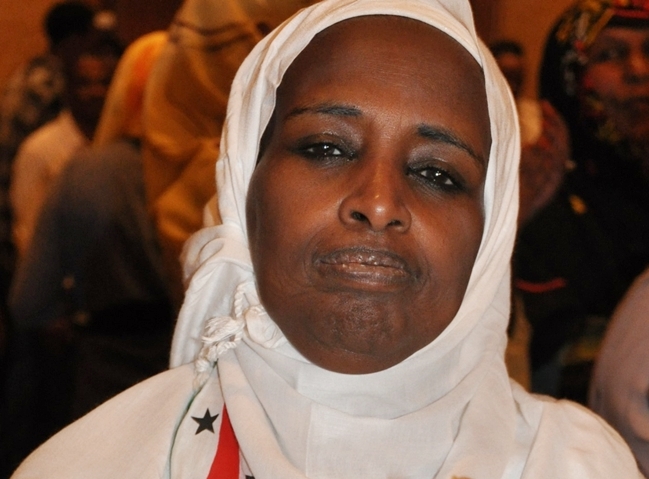
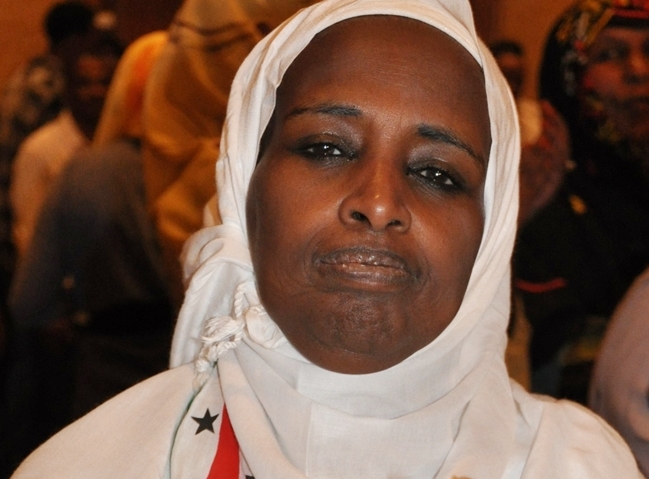
An elder from Somaliland in Minneapolis. Photo: Issa Mansaray/The AfricaPaper

By Deb Taylor | The AfricaPaper
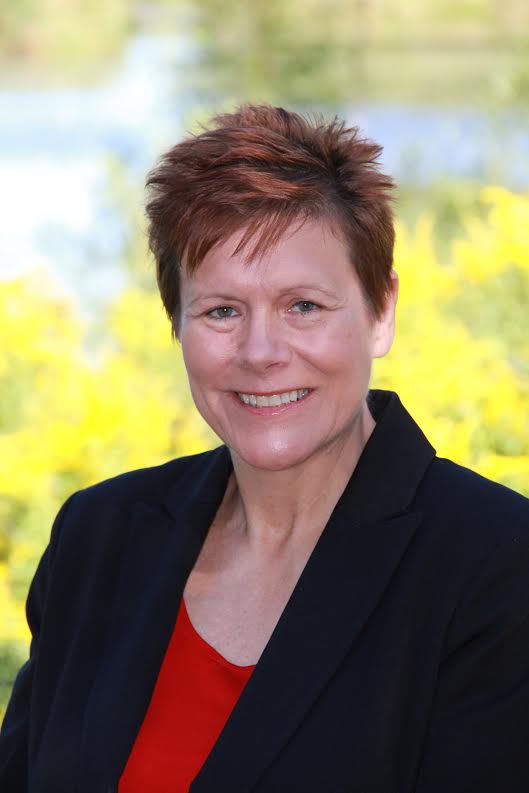
Deb Taylor is CEO of Senior Community Serv
Deb Taylor is CEO of Senior Community Services

Dwight, 74, is more cautious now after being stung by a classified advertisement he saw in an online magazine. The ad promised $100 in legal currency for $50. Dwight (naively) felt it was a good deal so he dashed off a check for $50 and mailed it to a post office box in Colorado. Soon, an official looking envelope arrived and Dwight tore it open to find several bills. He was ecstatic, until he took a closer look. He’d received Portuguese escudo notes. Unsure what to do with this foreign currency, Dwight took the cash to the foreign currency section at a downtown bank. A teller told Dwight that, yes, this is $100 in legal Portuguese currency, but based upon the exchange rate his $50 had purchased 62 cents worth of foreign currency. Dwight’s dream deal had turned into a nightmare.

Targets

Many too-good-to-be true schemes arrive via the Internet and telephone, and trusting seniors are often easy targets. They grew up in an era when people were more trusting and could take someone at their word.

But criminals are creative and know how to manipulate older adults. They may call pretending to be a government representative, accusing the senior of failing to show up for jury duty, or reporting there’s a warrant out for their arrest. Out of fear, the senior may relinquish their social security number and other private information. Then, the scammer has information to create a false identity for profit.

Con Artists

Consumers in all fifty states have received phone calls from criminals purporting to be IRS agents. They charge the senior has unpaid back taxes which, if not paid, will result in arrest, a lawsuit, or suspension of their driver’s license.

That’s why it’s important for seniors to file a tax return annually, even if their earnings are under the income limit for filing. In 2013, the IRS sent out almost three million fraudulent refunds to con artists who had filed returns in the names of unwitting consumers. If you file a return, it’s easier for the IRS to discover fraudulent returns filed under the same name.

Unsavory

It’s important to protect confidential information. Trusting seniors may have private information readily available and ripe for the picking by unsavory service workers.

The theft of sensitive information can be the start of a troubling and frustrating case of identity theft.

With so much shopping being done online, it’s vital for family and caregivers to help track purchases and payments made by seniors. If some credit card payments are suspect, call the credit card company to report the fraudulent charge and have it removed from the bill. Be sure to ask for a replacement credit card with a new number.

Shameful

The obituary scam is especially shameful. Con artists scour newspapers online and call family members demanding money for a supposed debt that the deceased left behind. Another version targets widows who answer the doorbell to find a fake delivery person holding a box supposedly ordered by the deceased. The widow pays and receives the package, and upon opening discovers a brick or equally useless old magazines and newspapers.

Be watchful and ready to help if seniors you know are targeted. Talk with them about how they may become easy prey. It’s a good way to Reimagine Aging and save the billions of dollars lost annually to fraud.

The AfricaPaper: Deb Taylor is CEO of Senior Community Services (www.seniorcommunity.org) and its Reimagine Aging Institute, a nonprofit that advocates for older adults and helps seniors and caregivers maintain their independence through free or low-cost services.
At 100, a Harlem Convent Struggles to Survive


By Benjamin Parkin | The AfricaPaper

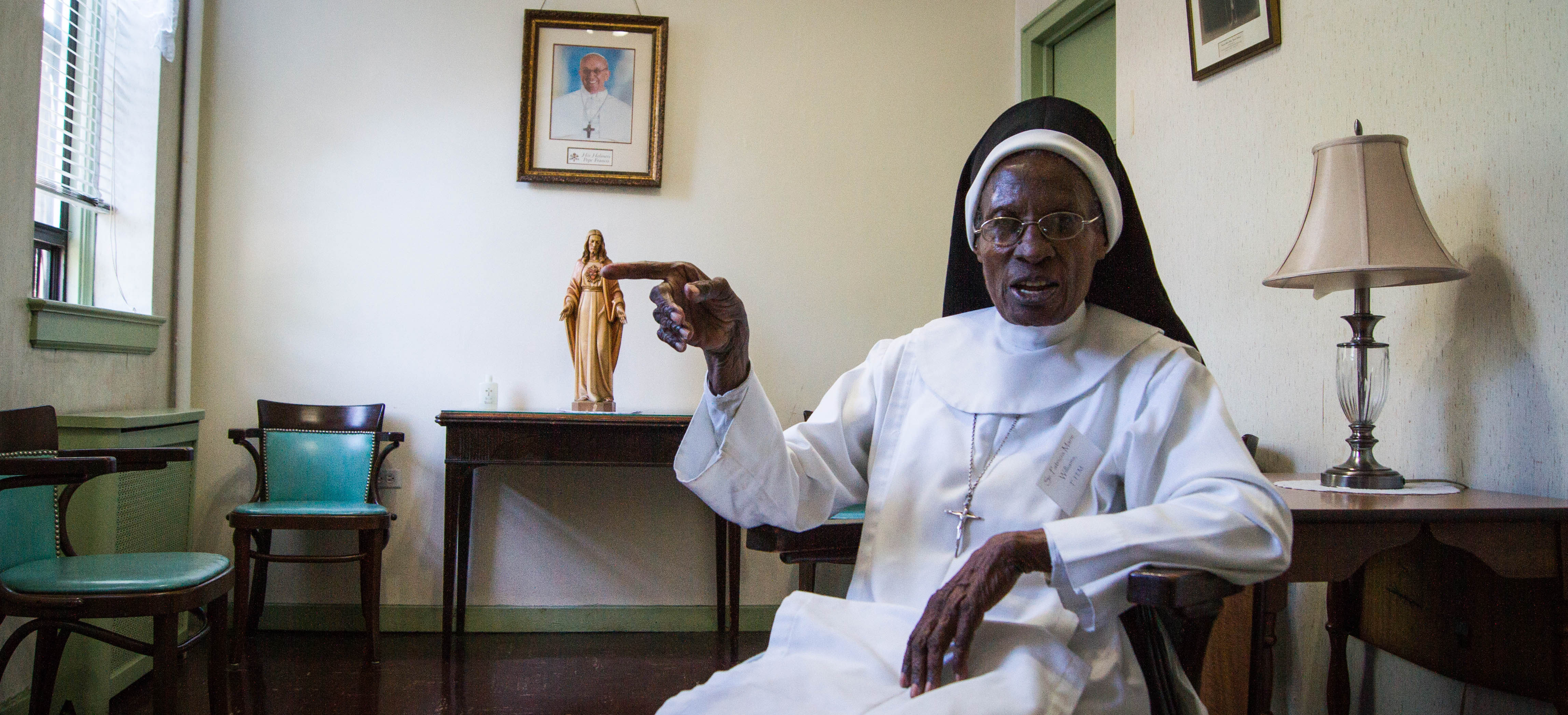
Harlem, New York – Sister Patricia Marie Williams grins as she recounts her favorite biblical stories, from the Prodigal Son to Adam and Eve. Soft sunlight spills into the room, sparsely decorated with a portrait of Pope Francis and a cross.On Saturday, Sister Patricia celebrates 70 years as a member of the Franciscan Handmaids of Mary, an order of black nuns based in Harlem. The Handmaids, too, are approaching an important milestone: their 100th anniversary.

Uncertain

But the order’s future is uncertain. Once numbering as many as 80 sisters, by last year their numbers had dwindled to 14, with an average age of 81. Only three nuns now live in the four-floor Harlem convent on West 124th Street, its dark second story entirely unoccupied.

“If we don’t get more members, we will die,” says 90-year-old Sister Patricia, who came to Harlem from St. Croix, Virgin Islands, in 1945.

Across the country, female religious orders have experienced a “severe decline,” reports Mary L. Gautier, a senior research associate at Georgetown University’s Center for Applied Research in the Apostolate. A recent study she co-authored showed a 73 percent drop, from a peak of over 181,000 sisters in 1965 to less than 50,000 last year. Eight percent of United States nuns are African American or black, the Handmaids being one of three remaining black female orders.

“With a lack of personnel, advanced age, decreasing health and decreasing numbers, what should we do?” says Sister Gertrude Lilly, the Handmaids’ congregation minister.

Handmaids

The entrance of the Handmaids' historic convent on West 124th Street, opposite Marcus Garvey Park. Photo: Benjamin Parkin
The entrance of the Handmaids’ historic convent on West 124th Street, opposite Marcus Garvey Park. Photo: Benjamin Parkin

The Handmaids were founded in segregated Savannah, Georgia, in 1916, in response to a proposed law that would prohibit white nuns from teaching black children. The law didn’t pass, so the Franciscan Handmaids came to the burgeoning African-American center of Harlem in 1923.

“The Franciscan Handmaids became the major center of Catholicism in Harlem,” says Jamie Phelps, former director of the Institute for Black Catholic Studies at Xavier University.

The nuns focused on education, working at a number of nurseries and schools in Harlem. Today, the nuns care for 31 children at St. Benedict School, all 2 and 3 years old.

“Since the early 1900s, they’ve been taking in children who otherwise would be left alone,” says Chet Whye, director of the non-profit Harlem4 Center for Change and former president of the St. Benedict parents’ association. “They’re responsible for so many generations in Harlem.”

Before retiring, Sister Patricia served as St. Benedict’s education director. “She is soft spoken, but very deliberate, and a fierce protector of children and their rights,” says Whye.

“I love to tell the children the creation story,” says Sister Patricia. “I say to their parents, ‘Take care of them. They are our future.'”

As she talks, the convent’s silence is broken only by the laughter of children. She walks into the convent’s play area, its bright primary colors a contrast to the sober hallways of the nuns’ quarters, and firmly separates two children who are beginning to fight.

Revitalize

Elsewhere around the convent, hand rails and ramps reflect the sisters’ advancing ages. Five recently moved into Jewish Home Lifecare in the Bronx; the order has become too small to care for its elderly. In 2010, Sister Mary Celine Graham, 83, was killed as a bystander during a car chase in Harlem.

The remaining nuns are contemplating whether to leave their convent, located opposite Marcus Garvey Park in the historic Mount Morris district.

“Now that we are very few, the house is too large,” says Sister Gertrude. “We are considering what to do.”

She is leading efforts to revitalize their congregation. Last year, “we were deciding whether to fold up or continue,” she says. “Most of us were convinced we would close.”

However, she cited Pope Francis, the first pope from a religious order in over a century, as inspiration to continue. “We are looking for innovative ways to expand the mission instead of closing,” she says.

The rate of decline of women in religious orders has begun to slow since 2010, according to Gautier. “There is at least an element of renewed interest,” she says, but “it’s too early to tell.”

The altar in the convent's chapel. Photo:Benjamin Parkin
The altar in the convent’s chapel. Photo:Benjamin Parkin

Members

Originally from Nigeria, Sister Gertrude has been trying to bring new members from West Africa. Sister Mary Temi, 34, is one of three who recently arrived from Nigeria, all vital additions to the aging order.

“My sisters welcomed me more than my expectations,” says Sister Mary. “They are so loving.” Coming from a Catholic home, she wanted to be a nun since she was 19 and first heard about the Handmaids online.

Once predominantly an order of African-Americans, the Handmaids began recruiting sisters from abroad in 1998, the first coming from West Africa. No American-born nuns have joined since 2001, but the order has opened a convent in Owerri, Nigeria, enlisting three sisters so far.

Gautier has identified 3,500 international sisters based in the United States.

“We know we’re just touching the tip of the iceberg,” she says. “It adds to the richness of the church.”

In the convent, West African statues line the mantelpieces along with Western Catholic figures. “It’s like beginning afresh with a new community,” says Sister Gertrude, expressing confidence about reviving the order.

Sister Patricia sits in her office, a calendar of Nelson Mandela placed prominently on her shelves. Due to her own declining health, she, too, must soon decide whether to leave the convent and join her retired sisters at Jewish Home Lifecare.

“We are in such a beautiful location – Harlem,” she says. “I came here for God.”

|TAP| Africa’s Newspaper of Record.

The AfricaPaper: Correspondent Benjamin Parkin is a post-grad journalism student at Columbia University in New York. He previously worked in Brazil, France and the UK for international and local media organizations including The Guardian, Al Jazeera English, RioOnWatch and The Culture Trip.

FLOOD: Victims Concern Over Disease Outbreak


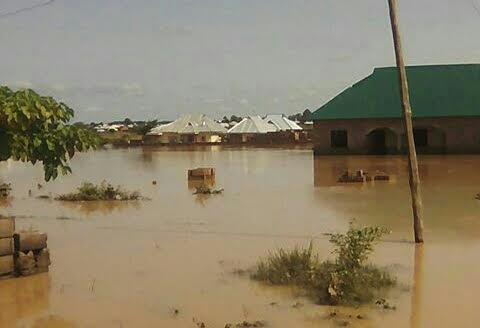
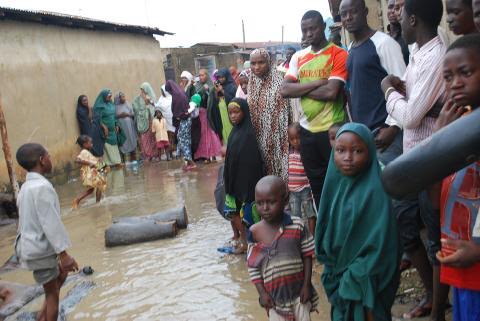
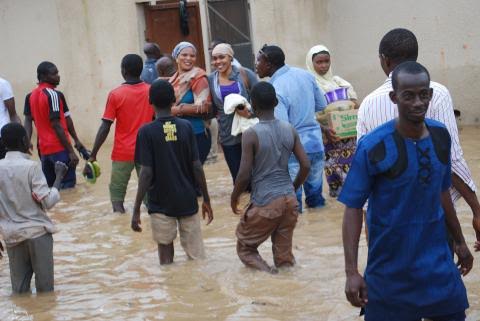
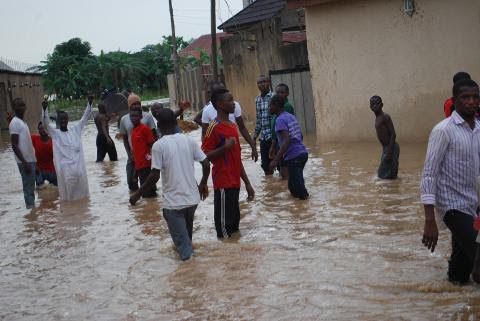
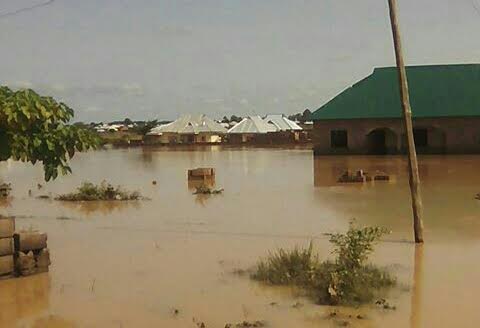
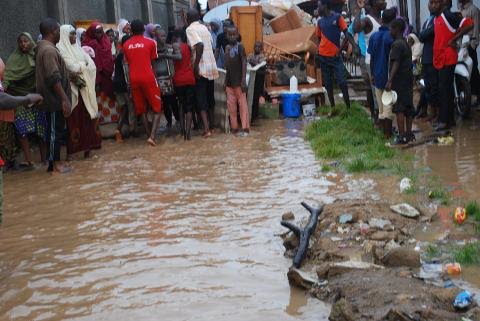
Hundreds of people  displaced by  flood across Northern Nigerian.  Photo: Mohammad Ibrahim/The AfricaPaper
Hundreds of people displaced by flood across Northern Nigerian. Photo: Mohammad Ibrahim/The AfricaPaper

By Mohammad Ibrahim | The AfricaPaper

Kaduna, Nigeria – Residents of flood-ravaged communities in Kaduna state have expressed health concerns over their unkempt environments since the flood waters came their way over two week ago leaving 12 people dead and hundreds homeless.

Stench

They have been battling with stench from lost valuables such as food and clothing. Furniture, mattresses, cars among others were some of their valuables caught up in the flood.

Troubled victims now wake up daily mopping, and sorting out wet documents which they say has not been easy.

The water, apart from salvaging their living, didn’t spare the dead as well. The cemetery in Tudun Wada, Kabala Costain suburb area of the state capital was overrun by the flood waters.

And the youths who operate a car washing factory around the graveyard were sent out of business for some time.

Disease

Kaduna, the flood displaced dozens of people. Photo: Mohammad Ibrahim/The AfricaPaper

“We are out of business since the waters took over our shops. We are now back only to battle with stench oozing from forcefully exhumed corpses,” said Auwal Adam. “Our major concerned now is our health because we are afraid of disease outbreak.”

Residents now urged state authorities to help out in the area before any outbreak of diseases.

They feared that their communities may serve as breeding places for mosquitoes and other health threatening ailments.

“We are afraid of Mosquitoes and other health threatening ailments. So, we need help. We don’t know what to do because we have children,” said Madam Mary Bako a flood victim. “Our lives are in danger. We are waiting for government to come to our aid because everything we owned have gone.”

Awash

 Kaduna, the flood dozens of farm lands. Photo: Mohammad Ibrahim/The AfricaPaper
In Kaduna, the flood destroyed houses. Photo: Mohammad Ibrahim/The AfricaPaper

Another victim and a resident of Barnawa GRA, Hajiya Karimatu Aminu said it was the first time in 30 years of her stay in the area that she witnessed such a flood.

“The flood washed away almost everything we labored for. We only thank God, no life was lost in my family,” said Aminu.

Stephen Graig a victim expressed anger for the failure of the emergency agencies to assist them.

Medical

“Emergency Agencies could not do anything to help us. There were mosquitoes everywhere and this can lead to malaria,” said Graig.

“If not for God intervention we would have lost so many lives as no medical assistance given to us as we returned home. I’m not happy with the situation. The government [agencies] are not doing anything to help us.”

Submerged

Kaduna, the flood dozens of farm lands. Photo: Mohammad Ibrahim/The AfricaPaper
Kaduna, the flood washed out farm lands. Photo: Mohammad Ibrahim/The AfricaPaper

Hajiya Ramatu, a housewife said she became worried when houses at her neighborhood were submerged.

“I became very worried to see most houses on my street submerged in water,” Ramatu to The AfricaPaper. “I was scared to return home because of the level of damages caused by the flood.”

The flood badly affected states – Kano, Katsina, Sokoto, Kebbi, Zamfara, Kaduna, Jigawa, AdamAwa, Yobe, Gombe and Bauchi, are still struggling to help displaced victims.

Displaced

Flood displaced hundreds of people in Kaduna. Photo: Mohammad Ibrahim/The AfricaPaper

Kaduna State Emergency Management Agency (SEMA) said 30,000 persons were displaced with over 2,000 houses submerged, and farm produce destroyed in 10 local government areas of the state.

“Kaduna flood was one of the worst in the history of the state, 10 out of the 23 local councils were affected,” said Ezekiel Baba-Karik, SEMA’s Executive Secretary. “We have been creating awareness to the people based on the prediction of Nigeria Meteorological Agency.

“Some houses don’t have good drainage system and some people dump refuse indiscriminately and compound the problem,” Baba-Karik told The AfricaPaper.

Warning

Zonal Coordinator of NEMA North-West Zone, Musa Ilallah said the agency had thought it wise to educate people on the dangers of flood.

“Floods have claimed many lives, and most times it comes in the night when people are asleep. Lives were lost two years ago when there was heavy flood,” said Ilallah.

NEMA Director General Sani Sidi said about 16 local government in Jigawa, 17 local government in Kebbi, almost 20 local government in AdamAwa, and other States mentioned above in NIMET prediction are so far affected.

“We warned the people about possible flood but they never take our warning seriously,” said Sani Sidi. “People must desist from building their houses in flood prone areas.”

|TAP| Africa’s Newspaper of Record.

The AfricaPaper: Mohammad Ibrahim is The AfricaPaper’s correspondent in Nigeria, covering Kaduna.

Hunger Looms in Malawi


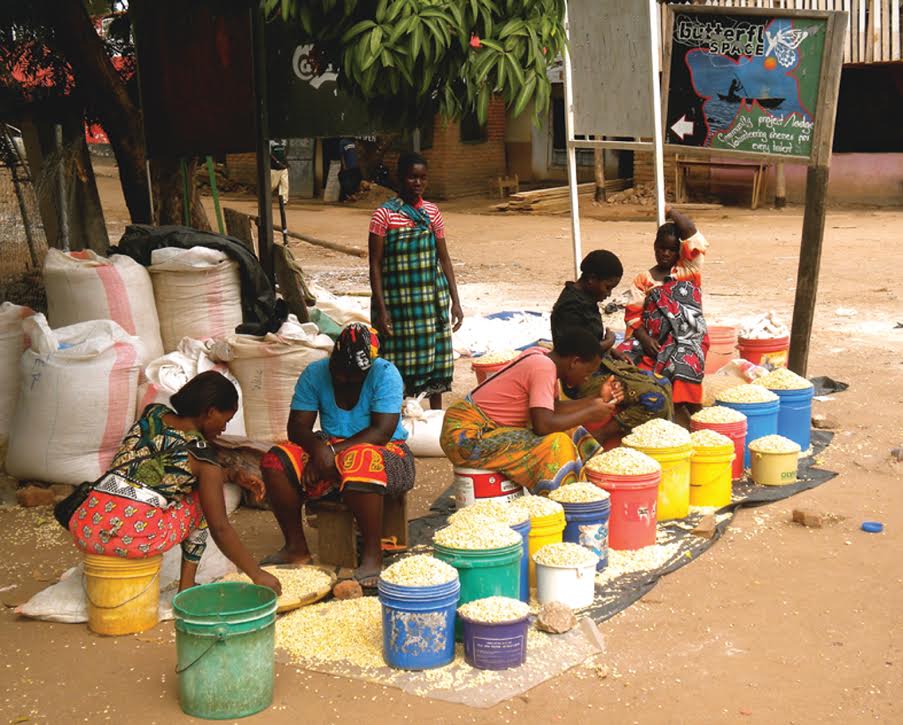
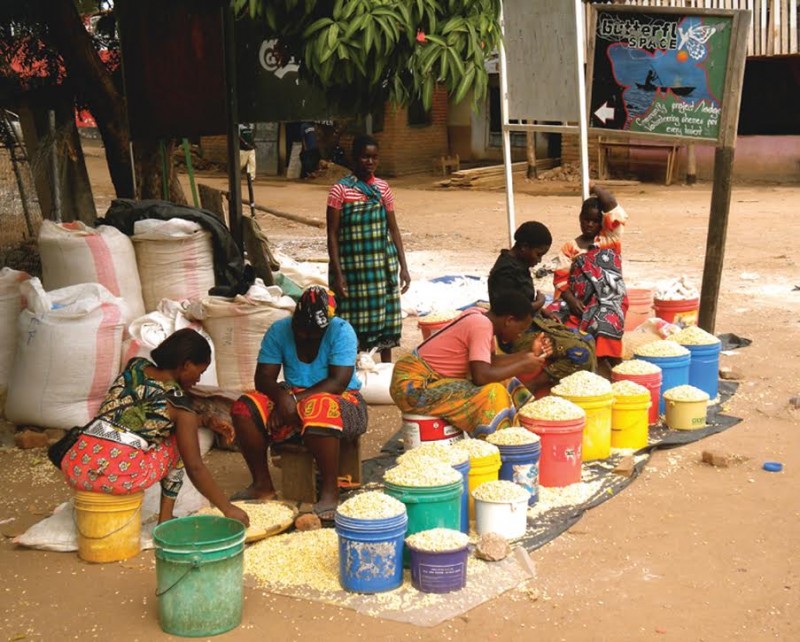
Food Market. Photo The AfricaPaper/Joseph Kayira

By Joseph Kayira | The AfricaPaper

Blantyre, Malawi – More than 2.8 million people will face hunger in Malawi following severe floods and drought that ruined this year’s harvest, the Malawi Vulnerability Assessment Committee (MVAC) figures show.

The MVAC, comprising government, donors and non-governmental organizations, carried out a food security assessment exercise between June and July this year which revealed that 17 per cent of Malawi’s 16 million-population need food aid.

Malawian President Peter Mutharika has already appealed to the international community to intervene. He has indicated that the country needs US$146.378 million to implement the Food Insecurity Response Plan.

“From the onset of the rains in mid-December 2014 through mid-January 2015, the country received continuous rainfall that led to the worst flooding in many years,” Mutharika said. “The floods affected about 1.1 million people. It damaged people’s property and public infrastructure and at least 64,000 hectares of crop fields throughout the country. 101 people were killed and 172 people were reported missing.”

Unpredictable Weather

The floods early this year were the worst in living memory. The washed away homes, food stocks and ruined fertile land. At least 64,000 hectares of crop fields throughout the country mostly in southern Malawi were affected. About 1.1 million people were affected.

Soon after the floods in January, the season was characterized by intermittent rainfall and prolonged dry spells in most parts of the country.

“The combination of the delayed onset of rains, the worst floods, the intermittent rainfall and the prolonged dry spells at critical stages of maize development, led to a food deficit of 223,723 metric tonnes for the first time since the introduction of the Farm Input Subsidy,” Mutharika said.

The Farm Input Subsidy Programme of FISP was introduced in 2005 to help poor farmers afford seed and fertilizers. Over the years Malawi has enjoyed bumper yields largely due to FISP. In 2007, the once drought-hit country turned into a donor in 2007 when it donated maize to Swaziland and Zimbabwe.

But all that is history and there seem to be not enough food for everyone. While some crops managed to withstand the floods, they succumbed to intense dry spells in the following months, making survival difficult for the most vulnerable.

Swift Response

According to MVAC, 2.8 million people will not meet their annual food requirements during the 2015/2016 consumption period between the months of October and March, representing 17 per cent of the country’s 16 million people.

“Although there has been people facing hunger in recent years, the situation this year is the worst in many years” Mutharika emphasized. “Government has developed the 2015/2016 Food Insecurity response Plan. The response plan requires a total of US$146.378 million,” Mutharika said.

To kick-start the mitigation exercise the Malawi government has already purchased 30,000 metric tonnes of maize from neighboring Zambia. Officials are negotiating to buy additional 26,000 metric tonnes.

The United Nations’ World Food Program (WFP) is already gearing up to respond to the crisis. WFP country representative, Coco Ushiyama says life-saving food and cash-based transfers have been given top priority in the response plan which is designed to protect lives and prevent hunger.

“It is also vital to secure already hard-won development gains in areas such as health and education. People in some affected districts have already started selling their livestock to make ends meet. Women are also engaging in more firewood and charcoal selling, which degrades the environment and further aggravates the fragile climate,” says Ushiyama.

WFP Relief

Since the end of last year, WFP has provided relief assistance to avert hunger in households hit by poor rainfall during the 2013/14 growing season and the floods in early 2015. This operation has already reached more than one million vulnerable people. “Additional contributions are urgently needed,” says Ms. Ushiyama. “We have an innovative toolbox to respond – including food and cash-based transfers.”

Timely funding is essential for an efficient and effective response, especially to enable the prepositioning of food stocks by November, ahead of the rainy season, in rural areas where road access may be cut off.

Ushiyama said a swift response is imperative to save children’s lives and prevent worsening under-nutrition, particularly stunting among children. “Stunting not only limits people’s growth, but also their cognitive development, and has far-reaching effects on health and productivity over a lifetime.”

A recent Cost of Hunger in Africa report for Malawi estimated 42 percent, and that figure is among the highest in the region. |TAP| Africa’s Newspaper of Record.

The AfricaPaper: Joseph Kayira is The AfricaPaper’s correspondent in Malawi, covering Blantyre.

Coach Tetteh Names 21-man Squad Against Chad

0


Sierra Leone team at the airport getting ready for departure. Photo: The AfricaPaper/ Abubakarr Kamara

By Abubakarr Kamara | The AfricaPaper

Freetown, Sierra Leone – Sellas Tetteh, Sierra Leone’s head coach, has named a 21-man squad for both home and away encounters against Chad in the first preliminaries of the 2018 World Cup qualifiers.

Match

The Leone Stars will play away in N’djamena on Oct.10, while the return leg will be in Port Harcourt, Nigeria, three days later. CAF placed a ban on Sierra Leone home matches in Freetown due to the Ebola epidemic, that claimed more than 13,000 lives in the country as a whole.

“This team is full of potentials and after working with the local contents for a while, I think it’s important to include more foreign based players with experience,” said Coach Tetteh. “We are going to Chad to get a very good result that will put us at a vantage point for the second leg encounter.”

Trainer

The 58-year Ghanaian trainer had included 15 foreign-based players on his list. But due to injuries and rejection, he was left with 11 foreign-based and 10 home based players.

MLS highest goal scorer, Kei Kamara resigned from the national team few days ago while Shrewsbury Town’s Sulay Kaikai rejected the invitation. George Kweku Davies, and David Simbo also pulled out in the eleventh hour due to injuries.

“I’m very much disappointed that Kei had to pull out at this crucial moment. Yes, he was part of my game plan but now that he has made such decision, I have no alternative but to move ahead,” said Tetteh. “Yes, I have confidence in this squad and I’m convinced they have the potential to do great things. As for those injured, it’s all part of the game. We are moving forward.”

Away

Sierra Leone team at the airport getting ready for departure. Photo: The AfricaPaper/ Abubakarr Kamara

The away leg in N’djamena will be Tetteh’s second time serving as head coach since he took over in August on a three-month loan agreement between the Sierra Leone Football Association and the Ghana Football Association.

In September, the U-20 World Cup winning coach called up 13 home-based players in his 20-man squad against the reigning African champions, Cote d’Ivoire and drew goalless in Port Harcourt.

Meanwhile, the 28-man delegation has left Freetown for Chad this morning and are expected to arrive in N’djamena on Wednesday morning.

Team

Goalkeepers:Solomon Zombo Morris (US Quievilly, France), Mohamed Kanu (LPRC Oilers-Liberia), Unisa Koroma (East End Lions FC)

Defenders:Umaru Bangura (Dinamo Minsk, Belarus), Mustapha Dumbuya (Patrick Thistle-Scotland), Sulaiman Bangura (Unattached), Mohamed Kamanor (FC Kallon), Kempson Fofanah (East End Lions FC), Yeami Dunia (FC Johansen), Abu Suma (FC Johansen), Sheriff Suma (Raevan-Azerbaijan)

Midfielders:Mohamed Kamara (Bolton Wanderers, England), John Kamara (Aris-Greece), Abdul Sesay (OPS, Finland), George Mattar (FC Johansen), Kwame Quee (FC Johansen), Alfred Nyuma (Central Parade FC)

Strikers: Abu Kanu (Mighty Blackpool FC), Alhaji Kamara (Norrkoping-Sweden), Mohamed Bangura (AIK Solna-Sweden), Christian Moses (FC Kallon-Sierra Leone).

|TAP| Africa’s Newspaper of Record.

The AfricaPaper: Abubakarr Kamara, based in Sierra Leone’s capital Freetown, is The AfricaPaper’s West Africa Correspondent.