Home Blog Page 31

Liberia: Passports and Bad Diplomacy

0


Passport delays at Liberia’s NY Consulate hampers travel…an operation marred by unnecessary red-tape bureaucratic procedures. In New York, The AfricaPaper’s James Fasuekoi takes a look inside the Liberian Consulate.

By James Kokulo Fasuekoi | The AfricaPaper
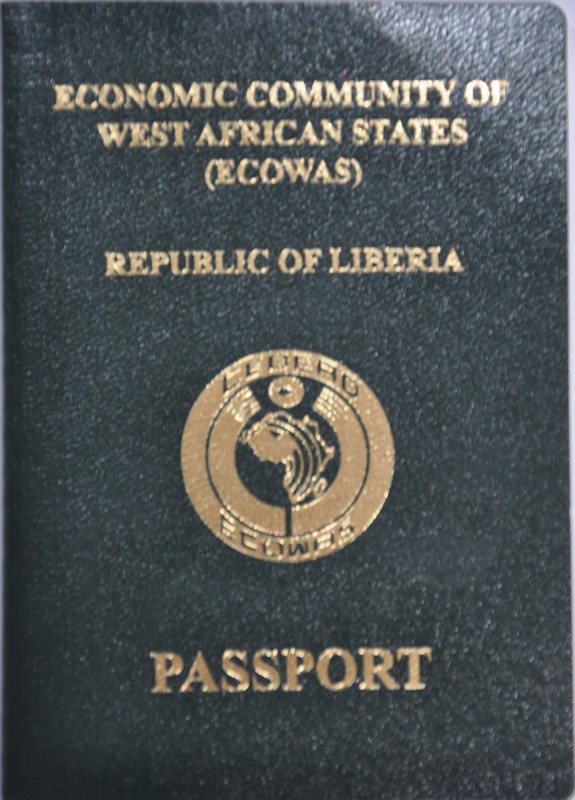
New Liberian biometric passport. Photo  James Fasuekoi
New Liberian biometric passport. Photo James Fasuekoi

Manhattan, New York – If you are a Liberian residing in the United States, and in need of Liberian travel documents to fly out of the country at a short notice, the Liberian consulate at 866 United Nations Plaza, New York City, isn’t the place to go. That’s because, operation at the embassy is marred by red-tape bureaucratic procedures so much that scores seeking new ECOWAS Liberia biometric passports to travel have been forced to cancel their trips due to delay.

In Shambles

Our staff writer who visited the Liberian embassy last month in an attempt to obtain a passport that would facilitate his travel abroad, observed that the process to get a travel document from there can sometime be awfully slow. Although information at the consulate’s website indicates duration to be between 3-6 weeks, some can actually take two months or more.

In addition, The AfricaPaper also discovered that the diplomatic mission is in shambles. The consulate section where interviews are done appears too small for customers. Besides, several customers complained the interview process is characterized by a total lack of courtesy and privacy, situations that caused them to feel frustrated. At the center of it all is one Kim Greene-Konneh, a vice counselor at that embassy.

Terence and Klubozumo

On April 14, 2015, a Liberian, Terence W. made a follow up visit to the consulate in New York, having applied for a passport online. Like other applicants, Terence went through the interview process and after a few hours, left for home, hopping to get his passport through the mail to enable him travel in time.

But, when contacted on May 20, Terence told TAP that his passport came in his mail three weeks later. Of the many passport seekers who apply for Liberian travel documents at the consulate weekly, Terence seems to be among the lucky ones because, for some, the processing period might take up six weeks to two months.

Another Liberian who prefers only his first name – Klubozumo, from the New York-New Jersey area wasn’t so lucky. Klubozumo’s passport, according to his wife, took more than two months before he finally received it.

But before then Klubozumo, worried that he could likely miss his scheduled trip to East Africa due to delay as his traveled date approached, returned to the consulate and applied for a Lessee Passé just as the first month ended. The Lasse Passé which should have been done immediately instead, took another week before he got it. His wife told TAP at the embassy that, it happened because her husband went back for a third time and insisted he would not leave till he gets his temporary travel document.

Personal Experience

On the same April 14, I had gone to the New York Consulate to go through the application and interview process to obtain a travel document in order to facilitate my trip abroad. The new procedure through which one can get a Liberian passport has become very tedious and of course costly apart from a $205.00 fee being charged by both the embassy in Washington, D.C., and consulate in New York .

Having received a green-light for my trip at short notice and seeing there wasn’t no vacation time left at hand on the job, I was forced to turn what would normally be a four-day journey (to and fro) by car from Minneapolis, Minn., to New York City, into a three-day trip and often risked driving between sleep and wake.

But what was perhaps more disappointing was after a counselor informed me that the normal processing period for a new Liberian passport could take from 3-6 weeks. They said that expedited services only apply to visa processing and passport renewal/extension, and not replacement of old Liberian passport with the new ECOWAS designated biometric type.

I quickly pleaded with Kim Greene-Konneh to treat my case as an exception and speed up the process due to the urgency and important nature of the trip which was scheduled for April 28. Konneh refused at first and remarked in the presence of customers, “We [staff] go by rules here …we don’t do things the Liberian way.” That meant I would have to wait out the 3-6 weeks duration like every other applicant.

Meeting Konneh

Following an initial interview, I later sought audience with Kim Konneh in her office during which I gave her a better insight about my then pending trip abroad, placing emphasis on the trip’s timing and urgency. I also showed her emails from the inviting party as proof of authenticity. She then dubbed my case a “special case,” and advised me to wait and stay last so she could address my passport matter. I agreed.

After finishing application process and interviews, I left without any assurance from Konneh as to when it would be ready. The two weeks that followed I bombarded the consulate with phone calls. Hananatu Tunis, a young office assistant, and courteous woman, received bulk of my calls and in turn passed them on to Konneh as messages.

At one point, Konneh picked up my call, and at another time, she responded to a voice message from me to let me know how far the process had gone. Before then I had thought that the consulate had new unprocessed passports available at its New York Consulate that could be issued out to applicants at any moment but that wasn’t the case.

Under the new system, as gathered, the new passports being issued to applicants here can be processed in Liberia based on the number of application submitted with paid fees. Afterwards, the passports are then shipped to the United States and mailed to the owners. Sounds ridiculous!

In spite of the numerous calls and frantic effort, mine finally arrived on April 29, in the mail. Exactly a day after my scheduled trip expired. Mine apparently, was quicker and some might even say I was perhaps one of the luckiest persons.

Crowded Consulate
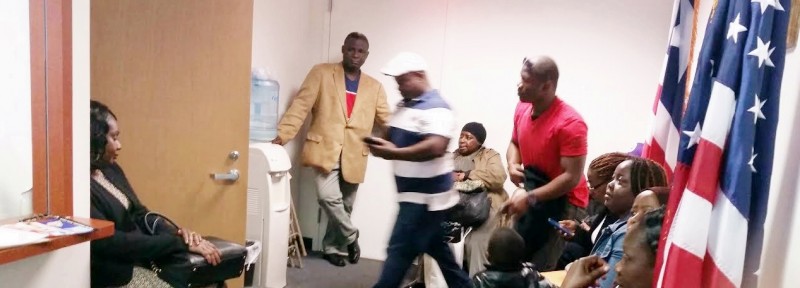
Passports and visas applicants waiting turns to be interviewed at Liberia New York Consulate recently. Photo: James Fasuekoi/The AfricaPaper

The consular section at the New York Embassy where interviews are conducted appears just too tact to hold ten or more persons. Yet on any business day, one can count 14 to 15 customers occupying the small room at any given time. And often, chairs are in short supply, thus leaving some with no alternative but to standing in the room.

On my April 14 visit, about 16 customers (including non-Liberian visa seekers), waited there patiently to be served. More than half were forced to stand for at least an hour or more while waiting for their passports or visas to be processed.

The consular office is a tiny space that customers are forced to sit in circle, where one could even stretch his hand and reach out to the person sitting in front of him or her.

Lacking Privacy

The distance between the customers and the main counter where the interview takes place isn’t more than a four yard stretch. As a result, every customer in the room gets to listen to the interviews thereby keeping a record of the life stories of fellow passport and visa applicants.

There’s never anything like “privacy” and it’s practically like a nurse or a doctor having a patient to explain his or her medical condition before a crowd of patients in a hospital waiting room, something that would contradict HIPPA rules, thereby resulting to serious lawsuit in these United States.

Such unprofessional and “open style” interview or treatment caused Liberians, and Liberian-Americans present at the embassy made them grumbled among themselves with some openly voicing out their disapproval in hearing distance of the embassy staff.

Humiliation

Of the numerous interviews carried out by Kim Konneh on April 14, one in particular that every visitor will vividly remember is that of a middle aged Liberian woman whose grandparents were Ghanians. She said the grandparents later resettled in Liberia where they bore her father.

She told the interviewer that she spent a very short time in Liberia before she migrated with her father to the United States years before the country’s brutal war struck. Her father, she maintained, later died in the U.S. This situation she said left her with a thin memory of her native Liberia except for schools she attended.

Though the lady spoke with a clear Liberian accent, she had difficulty convincing Konneh regarding her Liberian nationality in her quest to acquire a Liberian passport. Her interview was gluing and in most cases, demeaning.

She was requested to tell places she lived and schools attended in Liberia as well as friends she may have had prior to coming to the United States.

Konneh’s point was that just by one being born in Liberia onto a family with foreign origin doesn’t make one a Liberian. But the more the lady sought to provide a proof of her nationality, the more Konneh pressed further for more evidence.
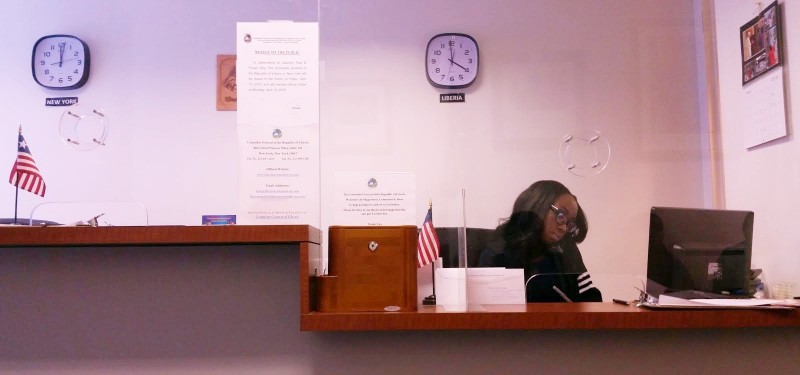
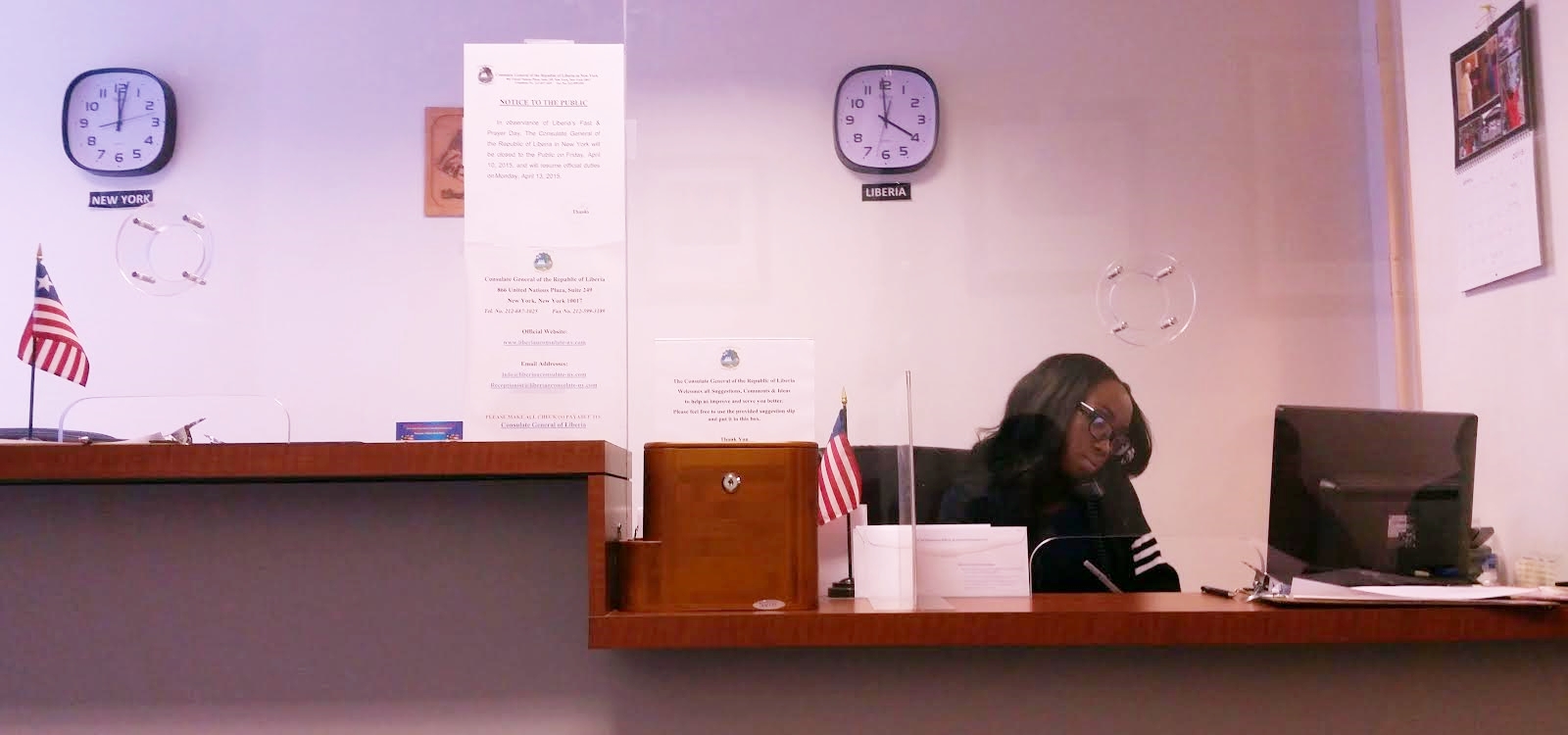
Office assistant Hanna Tunis responding to a call. Photo: James Fasuekoi/The  AfricaPaper
Office assistant Hanna Tunis responding to a call. Photo: James Fasuekoi/The AfricaPaper AfricaPaper

Liberian Constitution

When the woman cited the St. Theresa Convent School in Monrovia as the place she acquired her early education, Konneh asked the lady: “Don’t you know your constitution?” in an apparent reference to the section of the Liberian Constitution under Chapter IV, Article 28 which states below in parts:

“Any person, at least one of whose parents was a citizen of Liberia at the time of the person’s birth, shall be a citizen of Liberia; provided that any such person shall upon reaching maturity, renounce any other citizenship acquired by virtue of one parent being a citizen of another country.”

In another incident, Kim Konneh was heard telling another Liberian-American woman “Don’t you read your constitution?” The lady had gone to the embassy to seek visa for her American born child she plans to take along to Liberia. But for some reason, she purchased only a one-way air ticket for the child.

According to US law, before a parent can have an American citizen who is a minor to travel out of the country, he or she must provide a round-trip air ticket for the person. Confronted over this by Konneh, applicant explained, her husband had died and due to that she was taking the child to Liberia for now but would get her back to the states afterward when she readjust.

Konneh set forth one condition in order to give the child a Liberian Visa. The child’s mother was requested to write a letter to the consulate and state reasons why she couldn’t buy round-trip ticket for the child at this time.

The mother refused on ground she couldn’t write and instead asked the vice counselor to write on her behalf.

“Arrogant Diplomat”

What some see as interesting and problematic about the vice counselor during these interview sessions firstly, is her habit to interject a bloated image of herself regarding her academic background, coming down to how she trained at the Foreign Affairs Ministry for the job she’s currently performing.

Secondly, she seems to hold the belief that everyone born in Liberia, whether schooled or not, ought to have a clear interpretation of the constitution to his finger-tip, not to mention academicians like lawyers, doctors, politicians and journalists, which of course is far from the truth. Such behaviors had some leaving with the impression that Konneh is an “arrogant diplomat.”

Many Liberian-Americans, who watched both interviews, scorned Counselor Konneh for her “interrogative style” interview. Some even compared them to the demeaning ways counselors at the US. Embassy in Monrovia often conduct interviews with people who seek visas to enter the United States.

They complained and criticized Kim Konneh for what some termed her “lack of courtesy and respect” for fellow Liberians during her interview process. A man who preferred not to be named argued: “She [Konneh] treats Liberians as if they are foreigners seeking visa or travel document to visit the homeland.”

“Americans, on the other hand hold their citizens in high-esteem and would never treat their fellow Americans in such humiliating ways, so why will Mrs. Konneh treat Liberians with disrespect,” remarked another applicant.

Preference for US citizenship

Due to the current terrible state of processing passport at the consulate, many Liberians who previously felt reluctant about applying for US citizenship appear now to have changed their minds.

A few who were spotted venting their emotions in the presence of the embassy’s staff said they will go ahead to seek U.S. citizenship without delay in order to cut off the “unnecessary bluff.” As they spoke, vice counselor Konneh and her staff continued work behind the thick bullet-proof glass panel that separates an interviewee from the interviewer.

Liberians, mostly naturalized Americans, or hold dual citizenship, normally obtain Liberian travel documents for travel purposes and the reasons are twofold: The first is, it prevents one from overusing his US passport when traveling overseas in that it also attracts financial extortion and is highly sought by criminals. The next is it helps eliminate the usual US $200.00 or more for a visa fee especially for numerous countries in Africa, including Liberia.

Examples from Nigeria and U.S.

In and outside of Liberia New York Embassy, the argument continues that while other countries like the United States and Nigeria seek to make things like passport processing for their respective citizens cheap and accessible, Liberia and its officials, on the hand, have the habit of making things harder for Liberians always.

The U.S. for example, has made its passport accessible and affordable more than ever before so much so that one can even take advantage of “Same day processing” otherwise referred to as 24 hours service around the US, with only a few exception to States such as Florida and perhaps, California.

In addition, there are varieties of expedited services that could take only eight business days or less for the passport to arrive just by paying a little extra which is fair than pay a fortune. Almost every postal office within every neighborhood in the United States now serves as a passport bureau where Americans can even walk and apply for passport, pay a minimum fee of $60.00 and expect it within two weeks or less for regular service.

For Federal Republic of Nigeria, it decided to transport its Washington D.C. passports crew to Minneapolis, Minnesota, (the US state with the highest African immigrants), last year to give out to her citizens the same ECOWAS passports for as little as US$50.00 each. The team was in the state for days and the exercise was meant to cut down unnecessary travel expenses, inconveniences as well as loss time on the job for her people because that government seems to considers the interest of its citizens paramount.

Weeks before the passport team could arrive in Minneapolis, the embassy’s officials had sent out announcements to their people at every African worship center in the state regarding the crew’s visit, urging all Nigerians to carry their children as well as grandchildren who might desire a Nigerian travel document, to get it at the same rate.

Criminals Taking Advantage

The tedious process that Liberians in the U.S. presently face in order to obtain Liberian travel documents has opened doors for certain unscrupulous individuals back home in Liberia to exploit fellow Liberians living abroad, particularly, the United States.

For example, a Liberian man who goes by the initials GC, persuaded me some time ago to send him money so he could process a passport for me in Liberia. This is despite the fact that one of my close relatives who lives in Liberia, checked it out and told me the new process couldn’t work without my presence in Monrovia.

But GC, aware of how desperate I needed a new passport to travel, assured anyhow he could get me one. All that he needed me to do is, pay an extra amount beyond the “official fee” which was US$23.00 at the time. He charged a total of US$125.00 and explained the amount would also covered “expedited services” since according to him, I was unable to be physically present in Liberia for the fingerprints process.

That was in late February when we had the conversation. GC works with the Liberia’s National Bureau of Immigration and Naturalization (BIN). Also a man I personally met through my children when I was in Liberia in 2012. He assured that he had a contact at the passport bureau to do the work.

For me, this was good news for it could save me from a lot of things. Meaning, it would prevent me from buying air tickets for about $450.00 to $500.00 at short notice in order to fly to New York City and back. It meant also that I didn’t have to worry about taking days off work, nor did I need to pay for car rental while in New York. Besides, it would also stop me from paying US $205.00, for the same product (passport) now sold at $50.00 in Liberia.

Without hesitation, on March 5, 2015, I wired the money to GC via MoneyGram in the amount he had requested, then texted him the controlled number to collect the money. He texted back the next day at exactly 3:20 p.m. Liberian time and confirmed he received the money. Since then almost three months the passport hasn’t been processed nor has GC discussed about refunding me.

He no longer calls, and doesn’t pick up my calls. Although GC, prior to sending the money often called me almost daily. GC isn’t alone in this act; there are other “GCs” and victims and one won’t know till he starts to discuss his personal experience with people within the Liberian community.

In all, I spent more than $1,000.00 just to obtain a Liberian passport. That’s excluding lodging, in addition to using my personal vehicle to avoid payment of car rental charges to and fro New York.

MFA Could Minimize Losses

The Ministry of Foreign Affairs (MFA) of the Republic of Liberia has the power to minimize the ridiculous cost for travel, plus the constant headaches Liberians all over the United States currently experience just to travel to and fro New York and Washington D.C. in order to obtain a Liberian passport. That is if the ministry’s officials are interested at all doing so.

They could choose either of the following two options. They can choose to adopt the Nigerian example. Or MFA could establish a system whereby both Liberia consulates in New York and Washington D.C., would have Liberian passport applicants do their biometric and fingerprints at a local police station or FBI headquarters and then submit same to the consulate.

This method is credible and it is the same system local law enforcement agents including the FBI, use to do criminal background checks for certain jobs here. If considered, it could prevent people from traveling long distances and spending a fortune, like in the case of this writer, in order to get a Liberian passport. TAP

The AfricaPaper: James Kokulo Fasuekoi is Associate Editor for The AfricaPaper. He can be reached at: fasu@fbg.358.myftpupload.com
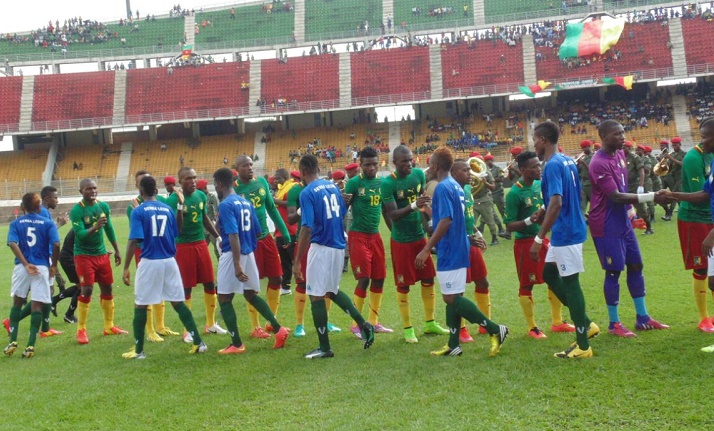
 

Sierra Leone’s Olympic Team Performs Despite Ministry’s Refusal to Fund

0


SL-Team

By Abubakarr Kamara | The AfricaPaper

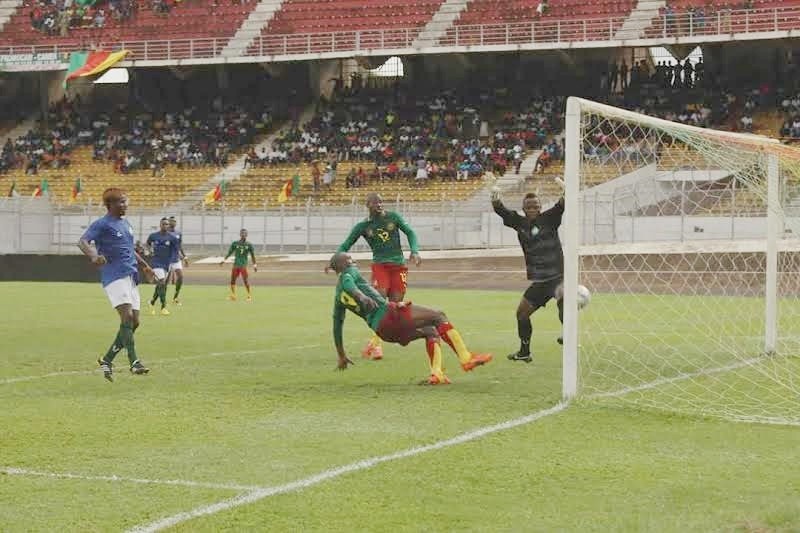
Yaoundé, Cameroon – Sierra Leone’s Under-23 team eliminated their Cameroonian counterparts on Saturday May 30, after forcing the latter to a one all draw in Yaoundé, Cameroon to progress to the final qualifying stage of the CAF Olympics Qualifiers.

Government Refused Funding

Despite government’s refusal to finance the young Leone Stars, the Sierra Leone Football Association (SLFA) managed to send a 32-man delegation to Cameroon for both its home and away matches in Yaoundé. The young Stars played goalless (0-0) at home in the first leg last weekend in Yaoundé, and Barrie’s late penalty gave the visitors the away goal advantage in the second leg.

Sierra Leone's Under-23 team eliminated their Cameroonian counterparts. Photo Abubakarr Kamara/The AfricaPaper
Sierra Leone’s Under-23 team eliminated their Cameroonian counterparts. Photo Abubakarr Kamara/The AfricaPaper

Closed Range

Cameroon’s Young Lions got the curtain raiser in the 35th minute when Joseph Yanki’s volley dropped right in the heart of the Sierra Leone penalty area and Lazio’s Joseph-Marie Minala notched from closed range.

Sierra Leone came closed to level the score twice before the break, but Abdul Bangura failed to notch a through pass from Kwame Quee in the penalty area and Christian Moses shot from closed range blasted wide over the crossbar.

Two Goal Attempts

When play resumed, Kwame Quee made two attempts on goal in quick succession, but the Cameroonian goalie parried both to safety while Abdul Bangura’s header did not cause any threat to the goalie.

However, the Young Stars won a free kick midway into their opponent’s half in the 85th minute and Badara Kella blasted the ball into the wall in the penalty area. As players from both sides scrambled to take possession of the ball in the penalty area, a Cameroon defender handled the ball and penalty was awarded.

Sorie Barrie’s penalty was parried into play but the skipper side kicked the rebound for the much needed equalizer in the 88th minute.

Jubilant Sierra Leonean  team. Photo - Abubakarr Bundu - The AfricaPaper
Jubilant Sierra Leonean team. Photo – Abubakarr Bundu – The AfricaPaper

Very Difficult Opponent

“We put our hearts into these matches and we are very happy that we have crossed a very difficult opponent. We will continue to stay together as a team and play for the good of our country. We hope to take this team to a major competition and I’m sure we will go through our next target,” Sorie Barrie says in a post-match conference.

The young Sierra Leonean squad under the supervision of Coach John Keister will battle it out with their Algerian counterpart in the third and final round of the Olympic qualifiers.

The winner will be one of the eight teams to play in the finals in Senegal from 5-19 December this year and the top three in that tournament will represent the continent in the 2016 Olympics in Rio de Janeiro, Brazil. TAP

The AfricaPaper: Abubakarr Kamara is The AfricaPaper’s correspondent in West Africa.

MCA Energy Project to Bring Economic Hope to Malawians


US funded Millennium Challenge Account power project is intended to help improve Malawi’s power capacity, economy and reduce poverty status among the people, but for now observers have to wait and see the results. Our correspondent reports.

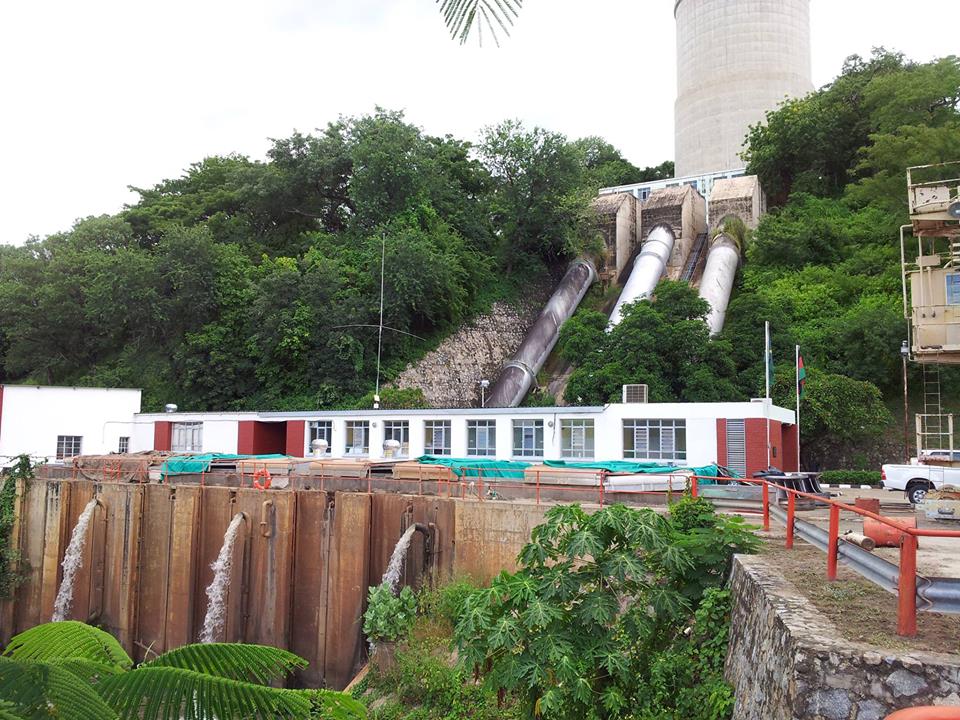
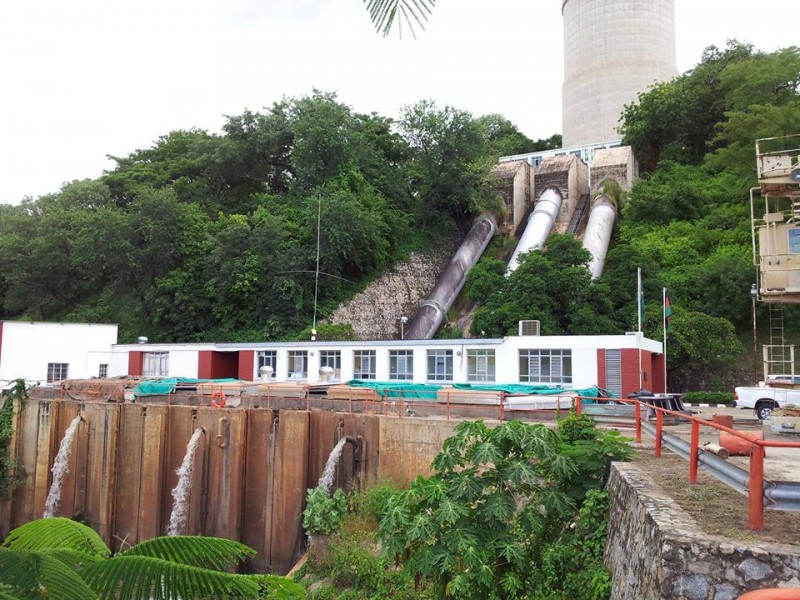
One of the power supply stations to be upgraded through  the project. Photo: Henry K. Mhango /The AfricaPaper
One of the power supply stations to be upgraded through the project. Photo: Henry K. Mhango /The AfricaPaper

By Henry K. Mhango | The AfricaPaper

Lilongwe – Malawians are hopeful that the US $350.7 million Millennium Challenge Corporation (MCC) compact will reduce energy challenges and achieve high economic growth for one of Africa’s underdeveloped countries.

Paraffin Burners

About 80 percent of the country’s population live in rural areas, with the majority using paraffin burners locally known as Kaliboyi or Nyale for lighting their houses due to the country’s low power capacity and high poverty levels.

The country’s installed power supply is now pegged at 351 megawatts (MW), against the 360 MW demand, and estimates indicate that the country will require not less than 1,000 MW of power by 2018.

However, the US funded project being implemented by the Millennium Challenge Account Malawi (MCA) is expected to increase the power capacity to nearly 1,000 MW hence most people hope the project will improve their living standards upon completion.

“The compact will improve the availability and quality of the power supply by increasing the throughput capacity and stability of the national electricity grid, and increasing efficiency of the hydro power generation.” says Chief Executive Officer for MCA Malawi Susan Banda

She told the private sector and other stakeholders at the compact briefing meeting that the project is estimated to contribute about US$ 832 Million (which is almost the annual national budget for Malawi) in the next 20 years, through various economic activities.

“The estimated economic rate of return is ranging from 18.7 to 24.6 Percent during the compact implementation period with the inter-connector as the potential investment to come during the period.”

One of the power supply stations to be upgraded through  the project. Henry K. Mhango
One of the power supply stations to be upgraded through the project. Henry K. Mhango

Great Opportunity

The Project started in September 2013 and is expected to phase out in 2018. Meanwhile, one of Africa’s leading electrical construction and transmission, CONCO Ltd has described the project as a great opportunity for Malawi since it will enable the country to export the surplus power to neighboring countries like Zimbabwe, Zambia and Tanzania.

“This is a big investment for Malawi, and may probably be a major foreign exchange earner for the country since most of its neighboring countries have low power capacity, and will be scrambling for the Malawi’s surplus power,” Site Manager for the company Leon Rensburg told The AfricaPaper.

The project is currently in the construction phase. Major activities include rehabilitation, upgrading and modernizing the Electricity Supply Corporation of Malawi’s generation, transmission and distribution assets in most urgent need of repair, to improve the capability of the transmission system, and increase the efficiency and sustainability to preserve existing generation.

For instance, power experts are now refurbishing the Nkula and Kapichila power plants which generate about 98 percent of Malawi power, to reduce outages caused by the condition of the assets, and maximizing power output.

Recruiting and Deadlines

With three years remaining, the institution is doing everything possible to catch up with the deadline, and is now recruiting contractors to carry out construction works of upgrading the backbone of power transmission network, to improve the quality and reliability of supply throughout the country.

The activity will include construction of 400 Kilovolts power line from Phombweya in the capital Lilongwe, which covers central and southern regions, and another 132 KV line parallel to the existing 65KV and 33 KV lines in the northern region.

This work is supposed to complete within eighteen months, but the CONCO Ltd. Site Manager, who is also competing for the contract bids, says the period is not enough, considering that construction materials will be transported through land since Malawi is landlocked.

“Cargo clearing usually takes long time at the border and this will likely delay completion of the project, unless government moves in to speed up the clearing process especially for the project’s construction materials,” lamented Leon Van Rensburg.

In addition, Leon Van Rensburg observed that there are a lot of activities to be involved during the construction power transmission substations such as leveling the sub-stations’ catchment areas, which may not be completed within the deadline.

Doubling Production

Soon after completion of this activity, about one million people will be connected to electricity, and the magnitude of the private sector’s benefits. It is estimated that companies are now making $577 as profits from their production per day, but the project’s power capacity increase will boost the company’s production and increase their daily profits to $841.

Reacting to the development, Chief Executive Officer for Mzuzu Coffee Manufacturing Company, Harrison Kaluwa says, the increase of the power capacity will help the private sector especially manufacturing industries to double their production.

“This will help us to be manufacturing our products right in areas where we get raw materials, thereby creating more job opportunities for the young people,” he said during the compact stakeholders meeting.

Former Minister of Natural Resources, Energy and Mining, Atupele Muluzi recently, said the project will contribute to the taking off of most of the country’s mining projects which the country is banking on to spur up its ailing economy.

Inadequate Energy

A document released by the Ministry also disclosed that the mining industry alone requires 752 Megawatts to operate while ESCOM only produces 350 for the whole nation.

“Several multi-billion Malawi Kwacha mining projects are failing to start in earnest due to inadequate energy as the county’s derisory capacity to generate electricity frustrates investments in the sector,” quotes the document.

The document cites the country’s Kayelekera Uranium Mine being managed by Paladin Africa Ltd, as a major project affected by the inadequate power capacity. It has resorted to using diesel engine generators to top up the required 12 megawatts for its operation.

“Another project is the Sand mineral and Processing Mine that needs 500 megawatts,” Adds the paper.

Less for Rural Malawians

However, despite the country’s expected economic prospects by the project, the rural masses feel there is little for them to benefit since government says electricity usage rates will go up after the completion of the project.

“It is already difficult for people in rural areas like here to access power because its charges are very high to get connected,” says a local community leader Group Village Headman, Chimbilima Gondwe in the remote, Bwengu area in Rumphi district.

He adds “The most unfortunate thing is that government will increase the tariffs after the project instead of cutting it to enable the poor equally access power, and stop destroying trees which are the major source of energy for about 80 percent of Malawians.” TAP

The AfricaPaper: Based in Malawi, Henry K. Mhango writes for The AfricaPaper. He has worked for various media organizations including the state Malawi News Agency, the Big Issue Malawi Magazine, Capital Radio Malawi, and International Network of Street News Service (UK). His work has also been published by The Guardian (UK). He covers politics, economy, human rights, environment and development for The AfricaPaper.

Kenyatta’s Apology Breaks Important Ground, Now Comprehensive Action Is Needed

0


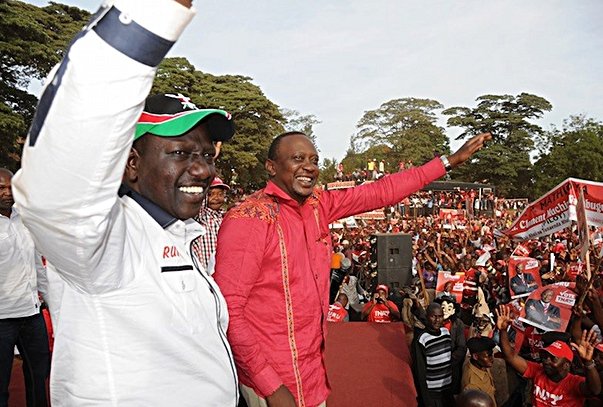
kenya-uhuru-ruto-rally

By Christoper Gitari | The AfricaPaper

Nairobi, Kenya – President Uhuru Kenyatta’s apology to victims of “all past wrongs” on behalf of himself and current and past governments broke new ground. In his State of the Nation address, Kenyatta asserted full acceptance of responsibility for the failure of past governments to protect Kenyans from violations and committed to remedying the harms they have suffered.

Moving Forward

The move signifies an important step in Kenya’s process of moving forward from mass atrocities. It also helps give meaning to government efforts to repair victims of violence and show that their dignity and suffering are taken seriously.

The final report of Kenya’s Truth, Justice, and Reconciliation Commission (TJCR) had identified the necessity of a sincere and reconciliatory public apology from the government. Thus, Kenyatta’s speech has instilled hope that the government will go further to implement other recommendations, including reparations for victims.

Crucial Leadership

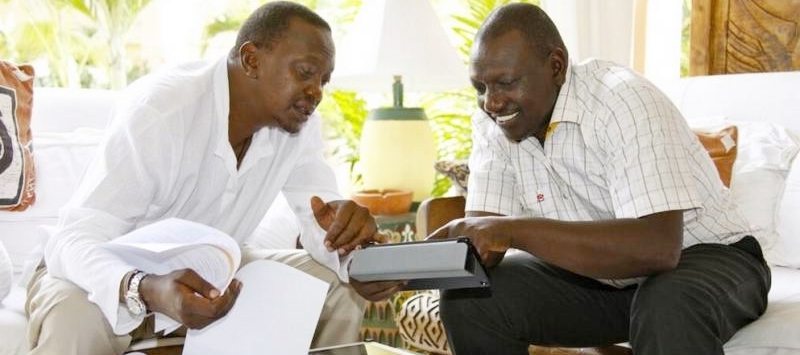
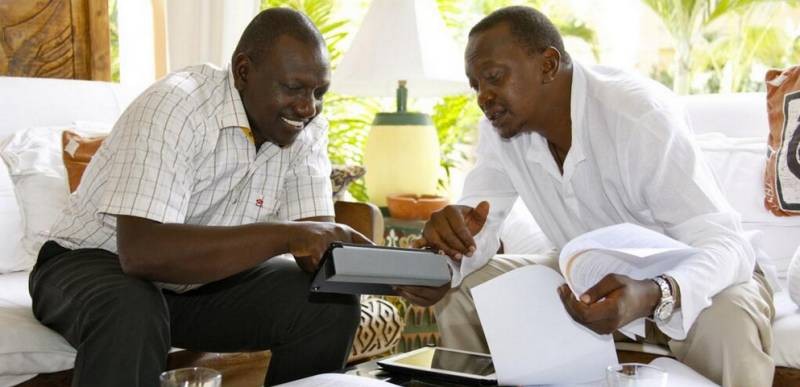
L-to-R Ruto and Presidentn Kenyatta

In his speech, Kenyatta requested that Parliament make it a priority to convene and discuss the entire TJRC’s final report and oversee the implementation of its recommendations by the Executive. This is a promising line of action, which will depend on Parliament’s ability to fill a crucial leadership role by providing guidance and a conducive political environment for carrying out needed initiatives and reforms.

The President explicitly placed responsibility on the Treasury to finance a relief fund for victims of past wrongs. This is crucial because victims have long advocated and waited for such funds.

Nyayo House

Even some victims who have successfully brought cases before the High Court against the government for serious violations still await compensation. These include victims of the Nyayo House Torture Chambers, who were tortured and subjected to starvation and beatings by state actors while in detention in the basement of Nairobi’s Nyayo skyscraper, under President Daniel Moi’s government.

The President’s directive to create a relief fund is commendable, but it must be supported by concrete measures to ensure that the beneficiaries can participate in the design and implementation of the fund, as well as accountability around its management.
Now, the leaders of other institutions identified by the TJRC as implicated in violations must acknowledge the harms inflicted on victims by those institutions. According to the TJRC’s final report, these include the Chief Justice of Kenya, the Chief of the Kenya Defense Forces, the Director General of the National Intelligence Service and the Inspector General of Police.

Different Tone

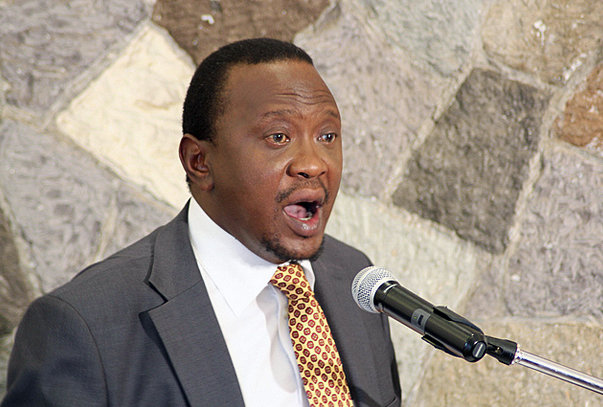
Uhuru KenyattaWhile the President’s statement presents a different tone, and seems backed with some substantive action, he appears to remain uncommitted to the issue of criminal justice. He indicates that he is advised by the DPP that evidence will be hard to come by and the prosecutions are unlikely to be successful. This somewhat detracts from the overall sense of hope and good faith in the speech.
Instead of surrendering to the apparent lack of evidence it would complete an otherwise hopeful picture if the President supported the creation of a specialized unit dedicated to review proceedings thus far and developed an intelligence-led investigation into serious violations of human rights.

Real Test

Kenya’s government must now follow through with solid reforms and initiatives for rebuilding the dignity of those who have suffered most. The real test will be in the government’s efforts to implement recommendations from the TJRC Report expediently and comprehensively and for the justice system to carry out sophisticated, intelligence-led investigations, of which it is more than capable. Adding these actions to his welcome words will really begin to heal the nation. TAP


The AfricaPaper: Christoper Gitari is Head of Office for ICTJ’s Kenya Program


Simelane Case Illustrates Failure of South Africa to Pursue Accountability for Apartheid Crimes

1


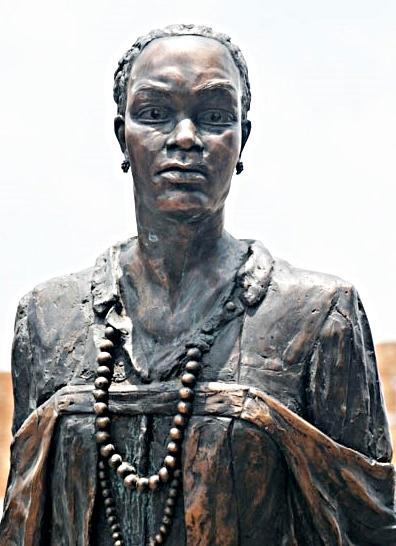
PHOTO: Statue of anti-apartheid activist Nokuthula Simelane, who was tortured and disappeared in 1983 by Security Police, in her home town of Bethal, South Africa. (South Africa House of Memory)

The AfricaPaper | New York

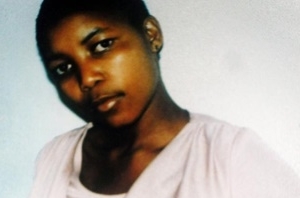
New York, USA – In 1983, 23-year-old South African university grad and anti-apartheid activist Nokuthula Simelane was forcibly abducted, tortured and disappeared by members of the Security Branch of the South African police. Her body has never been found. Thirty-two years later, her family continues to fight for justice and to bring closure to her case. Last week, Simelane’s sister Thembi Nkadimeng filed an application calling on the National Director of Public Prosecutions and the Minister of Justice to refer the case to a formal inquest before the Pretoria High Court.

Waiting for Justice

The Simelane case has enormous significance for hundreds of South African families who still wait for justice in the murders of their loved ones–particularly those whose cases were recommended for prosecution by the Truth and Reconciliation Commission.

In this podcast, ICTJ Director of Communications Refik Hodzic speaks with Senior Program Advisor Howard Varney, who also works with the Southern Africa Litigation Centre and is one of the lawyers assisting the Simelane family with their case.

In the conversation with Hodzic, Varney explains that the Simelane case compels South African authorities to face up to their responsibilities following the amnesty provisions that formed a part of the country’s ground-breaking transitional justice process. While many of those who came forward during the Truth and Reconciliation Commission (TRC) to speak their truth were given amnesty, those who did not apply or were denied amnesty were meant to be held accountable for their crimes.

Listen

Download | (13.72 MB)

Unfortunately, South African authorities have not pursued their obligations to prosecute those who were not granted amnesty. “In this case, those obligations are both legal and moral. The obligations must in fact be met, because a failure to do so not only disrespects the legacy of South Africa’s transition, but it also deeply undermines the human dignity of the families of these victims,”says Varney.

Cases Not Pursued

The Simelane case, however, is not an isolated case. Upon its closing, the TRC recommended investigations and possible prosecutions in up to 400 cases, and turned over the files on more than 500 missing persons. According to Varney, the majority of these cases have not been pursued–and not for lack of evidence. Many have speculated that the possibility of political interference is to blame.

“It is by no means an accident that the TRC cases have not seen the light of day,” says Varney. In the recent past, the government took the position that the cases should not be pursued, and placed obstacles in the paths of the National Director and the prosecutors. No cases have been taken since September of 2007.

Judicial Inquest

Meanwhile, the Simelane family is pushing for a judicial inquest before the High Court so that their lawyers will be able to subpoena and cross-examine the perpetrators as a means to discovering the truth. Depending on the outcome, the Director of Public Prosecutions may then decide whether or not to prosecute those the court finds responsible. The family also seeks a declaration of their rights under the South African constitution, which upholds the right to human dignity, equality and the rule of law.


The AfricaPaper: This piece is published with help from the International Center for Transitional Justice (ICTJ) in New York.

PHOTO: Statue of anti-apartheid activist Nokuthula Simelane, who was tortured and disappeared in 1983 by Security Police, in her home town of Bethal, South Africa. (South Africa House of Memory)