Over the past few weeks, I’ve had people at speaking engagements ask me if I thought the Islamic State or some other militant group is using Ebola as a biological weapon, or if such a group could do so in the future. Such questions and concerns are not surprising given theintense media hype that surrounds the disease, even though only one person has died from Ebola out of the three confirmed cases in the United States. The media hype about the threat posed by the Islamic State to the United States and the West is almost as bad. Both subjects of all this hype were combined into a tidy package on Oct. 20, when the Washington Post published an editorial by columnist Mark Thiessen in which he claimed it would be easy for a group such as the Islamic State to use Ebola in a terrorist attack. Despite Thiessen’s claims, using Ebola as a biological warfare agent is much more difficult than it might appear at first blush.
The 2014 Outbreak
In the past, there have been several outbreaks of Ebola in Africa. Countries included Sudan, Uganda, the Republic of the Congo and the Democratic Republic of the Congo, and several comparatively small outbreaks occurred in Gabon as well. In most cases, people who handled or ate animals infected with the disease started the outbreaks. “Bushmeat,” or portions of roasted meat from a variety of wild animals, is considered by many to be a delicacy in Africa, and in a continent where hunger is widespread, it is also a necessity for many hungry people. After several months of medical investigations, epidemiologists believe the current outbreak most likely began when a two-year-old child in Guinea touched or perhaps ate part of an infected animal such as a bat or monkey.
The source of the disease means it is highly unlikely that some malevolent actor intentionally caused the latest outbreak. Besides the fact that the current outbreak’s cause has been identified as a natural one, even if a transnational militant group such as the Islamic State was able to somehow develop an Ebola weapon, it would have chosen to deploy the weapon against a far more desirable target than a small village in Guinea. We would have seen the militants use their weapon in a location such as New York, Paris or London, or against their local enemies in Syria and Iraq.
As far as intent goes, there is very little doubt that such a group would employ a biological weapon. As we noted last month when there was increased talk about the Islamic State possibly weaponizing plague for a biological attack, terrorist attacks are intended to have a psychological impact that outweighs the physical damage they cause. The Islamic State itself has a long history of conducting brutal actions to foster panic.
In 2006 and 2007, the Islamic State’s predecessor, al Qaeda in Iraq,included large quantities of chlorine in vehicle bombs deployed against U.S. and Iraqi troops in an attempt to produce mass casualties. The explosives in the vehicle bombs killed more people than the chlorine did, and after several unsuccessful attempts, al Qaeda in Iraq gave up on its chlorine bombings because the results were not worth the effort. Al Qaeda in Iraq also included chemical artillery rounds in improvised explosive devices used in attacks against American troops in Iraq on several occasions. Again, these attacks failed to produce mass casualties. Finally, according to human rights organizations, the Islamic State appears to have recently used some artillery rounds containing mustard gas against its enemies in Syria; the group presumably recovered the rounds from a former Saddam-era chemical weapons facility in Iraq or from Syrian stockpiles.
The problem, then, lies not with the Islamic State’s intent but instead with its capability to obtain and weaponize the Ebola virus. Creating a biological weapon is far more difficult than using a chemical such as chlorine or manufactured chemical munitions. Contrary to how the media frequently portrays them,biological weapons are not easy to obtain, they are not easy to deploy effectively and they do not always cause mass casualties.
The Difficulty of Weaponization
Ebola and terrorism are not new. Nor is the possibility of terrorist groups using the Ebola virus in an attack. As we have previously noted, theJapanese cult Aum Shinrikyo attempted to obtain the Ebola virus as part of its biological warfare program. The group sent a medical team to Africa under the pretext of being aid workers with the intent of obtaining samples of the virus. It failed in that mission, but even if it had succeeded, the group would have faced the challenge of getting the sample back to its biological warfare laboratory in Japan. The Ebola virus is relatively fragile. Its lifetime on dry surfaces outside of a host is only a couple of hours, and while some studies have shown that the virus can survive on surfaces for days when still in bodily fluids, this requires ideal conditions that would be difficult to replicate during transport.
If the group had been able to get the virus back to its laboratory, it would have then faced the challenge of reproducing the Ebola virus with enough volume to be used in a large-scale biological warfare attack, similar to its failed attacks on Tokyo and other Japanese cities in which the group sprayed thousands of gallons of botulinum toxin and Anthrax spores. Reproducing the Ebola virus would present additional challenges because it is an extremely dangerous virus to work with. It has infected researchers, even when they were working in laboratories with advanced biosafety measures in place. Although Aum Shinrikyo had a large staff of trained scientists and a state-of-the-art biological weapons laboratory, it was still unable to effectively weaponize the virus.
The challenges Aum Shinrikyo’s biological weapons program faced would be multiplied for the Islamic State. Aum Shinrikyo operatives were given a great deal of operational freedom until their plans were discovered after the 1995 sarin attacks on the Tokyo subway. (The group’s previous biological weapons attacks were so unsuccessful that nobody knew they had been carried out until after its members were arrested and its chemical and biological weapons factories were raided.) Unlike the Japanese cult, the Islamic State’s every move is under heavy scrutiny by most of the world’s intelligence and security agencies. This means jihadist operatives would have far more difficulty assembling the personnel and equipment needed to construct a biological weapons laboratory. Since randomly encountering an infected Ebola patient would be unreliable, the group would have to travel to a country impacted by the outbreak. This would be a difficult task for the group to complete without drawing attention to itself. Furthermore, once group members reached the infected countries, they would have to enter quarantined areas of medical facilities, retrieve the samples and then escape the country unnoticed, since they could not count on randomly encountering an infected Ebola patient.
Even if Islamic State operatives were somehow able to accomplish all of this — without killing themselves in the process — Ebola is not an ideal biological warfare vector. The virus is hard to pass from person to person. In fact, on average, its basic reproductive rate (the average amount of people that are infected by an Ebola patient) is only between one and two people. There are far more infectious diseases such as measles, which has a basic reproductive rate of 12-18, or smallpox, which has a basic reproductive rate of five to seven. Even HIV, which is only passed via sexual contact or intravenous blood transmission, has a basic reproductive rate of two to five.
Ebola’s Weakness as a Weapon
The Ebola disease is also somewhat slow to take effect, and infected individuals do not become symptomatic and contagious for an average of 8-10 days. The disease’s full incubation period can last anywhere from two to 21 days. As a comparison, influenza, which can be transmitted as quickly as three days after being contracted, can be spread before symptoms begin showing. This means that an Ebola attack would take longer to spread and would be easier to contain because infected people would be easier to identify.
Besides the fact that Ebola can only be passed through the bodily fluids of a person showing symptoms at the time, the virus in those bodily fluids must also somehow bypass the protection of a person’s skin. The infectious fluid must enter the body through a cut or abrasion, or come into contact with the mucus membranes in the eyes, nose or mouth. This is different from more contagious viruses like measles and smallpox, which are airborne viruses and do not require any direct contact or transfer of bodily fluids. Additionally, the Ebola virus is quite fragile and sensitive to light, heat and low-humidity environments, and bleach and other common disinfectants can kill it. This means it is difficult to spread the virus by contaminating surfaces with it. The only way to infect a large amount of people with Ebola would be to spray them with a fluid containing the virus, something that would be difficult to do and easily detectable.
Thiessen’s piece suggested that the Islamic State might implement an attack strategy of infecting suicide operatives with Ebola and then having them blow themselves up in a crowded place, spraying people with infected bodily fluids. One problem with this scenario is that it would be extremely difficult to get an infected operative from the group’s laboratory to the United States without being detected. As we have discussed elsewhere, jihadist groups have struggled to get operatives to the West to conduct conventional terrorist attacks using guns and bombs, a constraint that would also affect their ability to deploy a biological weapon.
Even if a hostile group did mange to get an operative in place, it would still face several important obstacles. By the time Ebola patients are highly contagious, they are normally very ill and bedridden with high fever, fatigue, vomiting and diarrhea, meaning they are not strong enough to walk into a crowded area. The heat and shock of the suicide device’s explosion would likely kill most of the virus. Anyone close enough to be exposed to the virus would also likely be injured by the blast and taken to a hospital, where they would then be quarantined and treated for the virus.
The AfricaPaper:Scott Stewart supervises Stratfor’s analysis of terrorism and security issues. Before joining Stratfor, he was a special agent with the U.S. State Department for 10 years and was involved in hundreds of terrorism investigations.
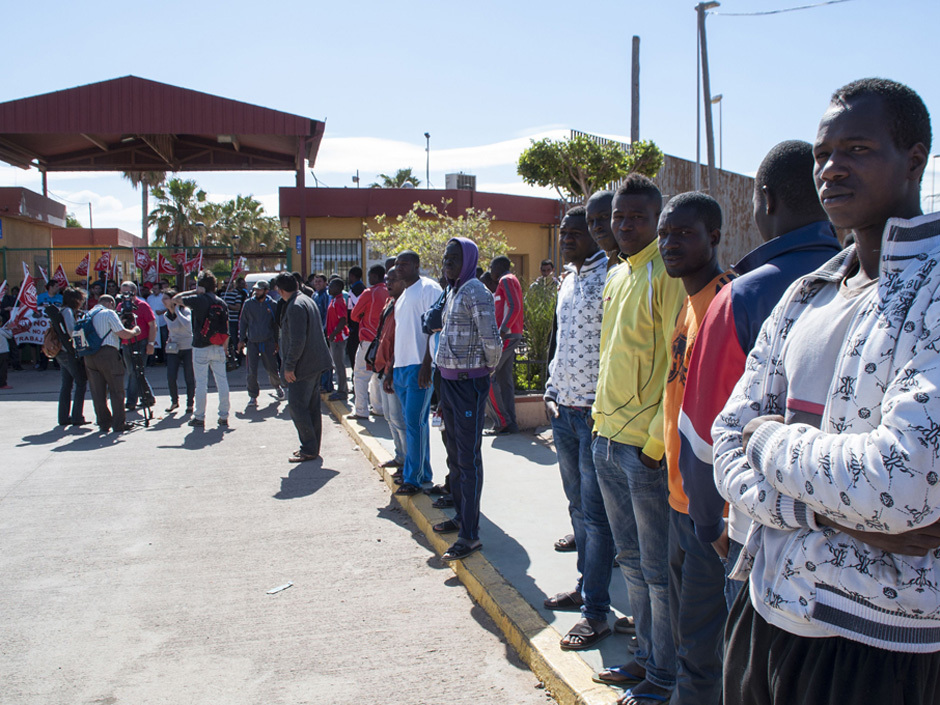
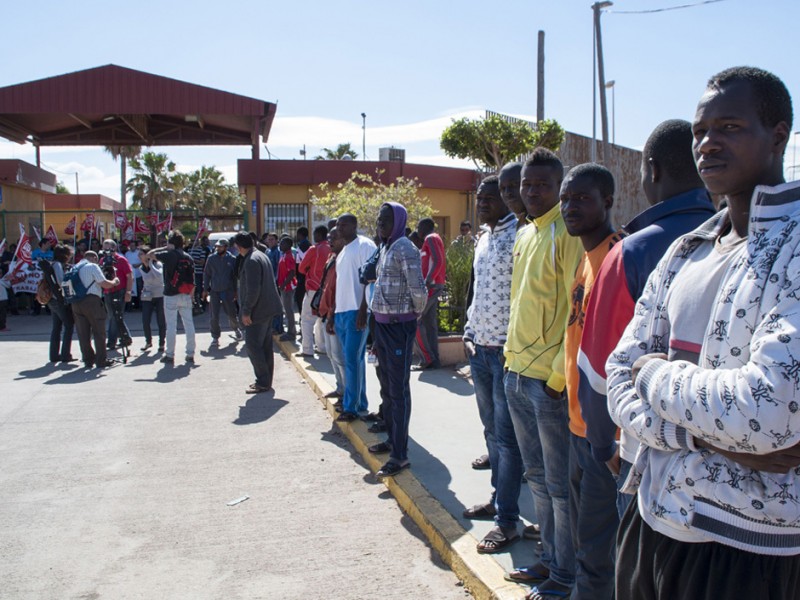
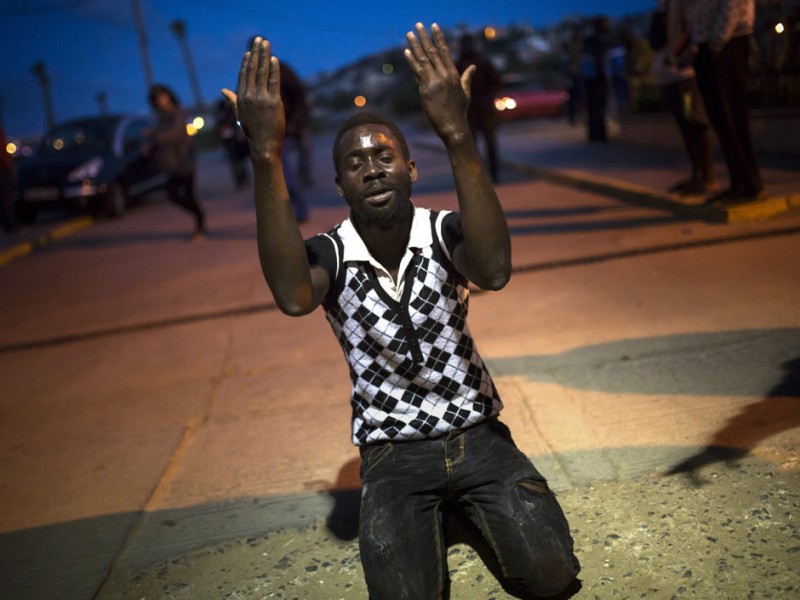
Would-be immigrants stand outside the Centre for Temporary Stay of Immigrants (CETI), following a morning assault in Melilla, on May 28, 2014. About 500 African migrants leapt a towering, triple-layer border fence to cross from Morocco to the tiny Spanish territory of Melilla today, one of the biggest breaches in nearly a decade, officials said. AFP PHOTO/ JESUS BLASQUEZJESUS BLASQUEZ/AFP/Getty Images
Policy on migration in Europe bears more relationship to ideology than evidence. And humanity is sorely lacking.
Brussels – The Monday morning of 15 September saw another two migrant boats sink, with more than 700 people–mostly from Syria, Egypt and Sudan–killed on their way from Africa to Europe. What follows is always hard to bear and hard to describe. Official announcements, offering condolences for this unacceptable tragedy, are blended with vague statements regarding the political consequences. The only supposedly forceful bit concerns (as always) the role of smugglers, though their networks remain intact despite previous assurances to crack down on them.
Like the Lampedusa tragedy of last year, this incident alone should be reason enough for a reconsideration of Europe’s approach to growing immigration. But while one can hardly fathom the shocking and tragic nature of the event, lament alone will not trigger an actual debate on migration policy, much less its reorientation. We should however ask ourselves: what exactly is this status quo, whose maintenance has cost 3,000 lives just since the beginning of the year?
“The boat is full“
The first big mystery is “border management” in the Mediterranean. These tragedies and many smaller incidents can invariably be explained by the fact that migrants travel on boats unfit for the high seas, which sometimes catch fire or provoke mass panic and even shootings. Why not simply provide big and appropriate ships, covered by the €93 million which the EU border agency, Frontex, receives annually? Or any other safe and legal way of migrating to Europe, as civil-society organisations tirelessly point out? The “common sense” answer is European states must restrict the crossing of borders to defend their economies and social fabrics. Ironically, in Germany this point is often made by saying that “the boat is full”.
The place of the Mediterranean in this context is complicated. On the one hand, it is not actually the main route through which irregular migrants enter Europe, as most simply overstay their regularly acquired visas or residence permits. On the other hand, it plays a symbolic role as the visible geographical border which is being crossed. States like Italy, Greece and Spain (assisted by their northern European partners) have therefore put a lot of effort into sealing it.
One early method to this end was to “push back” migrant ships on the high seas and directly return their passengers to the shores of north Africa or Turkey. Though explicitly prohibited by the European Court of Human Rights in 2011, this practice continues in Greece, according to a recent Amnesty Internationalreport.
In the waters around Italy, while government agencies have run an extensive search-and-rescue operation (Mare Nostrum) since Lampedusa, catastrophes cannot be prevented. This surprises only those who expect one government alone to shoulder the massive task of managing the refugee influx across the Mediterranean.
Without a radical change, we must hope that migrants will begin grasping the risk involved in entrusting their lives to smugglers and their deadly travel arrangements. Put somewhat more abstractly, this policy can only “work” as a system of “Mediterranean deterrence”. However cynical, this is a fair-weather policy, failing precisely when there is growth in “push” factors in migration, such as political turmoil and military conflict. Even with increased capacities, maritime border controls are hardly as effective in peak periods as in normal times. And, as Frontex statisticson the “central Mediterranean route” show, the number of migrants embarking on this journey is subject to significant fluctuations depending on external events, such as civil unrest in Tunisia and Libya or currently the war in Syria. Absolute increases in deaths, on the one hand, and “successful” but undesired border crossing on the other seem inevitable.
Complex patchwork
Still, distinguishing between people driven by various “push” factors remains the basis of European and national law and policy. Refugees or people requiring “subsidiary protection” (for instance due to high levels of violence in their home country) are eligible for temporary stay, while those migrating for purely economic reasons mostly are not. Recent spikes in migration have been caused by events that make people flee their country for the prior reason, as proven by the large number of Syrian refugees arriving in Italy. Two other significant groups, Somalis and Eritreans, escape political conditions that are difficult at best and unbearable at worst (the United Nations high commissioner for refugeesrecently pointed outthat Eritrean refugees were “in need of international protection”).
Officialdom must thus fear that a high number of people losing their lives would probably have had a legal claim to protection. The gruesome irony of this became clear when Enrico Letta, then prime minister of Italy, gave posthumous citizenship to the Lampedusa victims.
But the strict distinction between “good” political refugees and “bad” economic migrants has long given way to a complex patchwork of grounds warranting temporary residency. The most familiar is perhaps the right to family reunification, with human-rights law granting spouses and children the right to join family members legally resident in Europe.
A sub-Saharan migrant prays in front of a Temporary Centre for
Other points are more controversial, raising intricate legal questions concerning eligibility and evidence. For example, what about children born in Europe whose parents are irregular migrants? How to determine the exact age, and thus legal status, of an unaccompanied adolescent? Can persons with medical conditions ask for protection if appropriate treatment is not available in their country? If people claim to be persecuted on grounds of sexuality or religion, how to prove whether they are sincere? Are there people who migrate for truly environmental reasons and, if so, can they ask for protection?
Answering such legal questions is very important, at least in principle. Courts, including the two European courts in Strasbourg and Luxembourg, have already tackled some. The practical meaning of their rulings is however reduced by the weakness of national legal remedies. Some asylum procedures have been found to have “major structural deficiencies” (as the European Court of Human Rightsconcludedconcerning Greece in January 2011), while others are “in practice hardly operational and overly complex” (as the courtheldin a Belgian case in February 2014).
Meanwhile, economic migration occurs on a daily basis, sanctioned and even encouraged for highly skilled professionals and those working in sectors such as elderly care–the German authorities recentlyannouncedthat Vietnam and the Philippines would be particularly interesting places for recruitment.
Almost irrelevant for current policy are such economic “pull” factors as the need for “a seasonal, low-skilled, exploitable workforce”, although regularlymentionedby the UN special rapporteur on the human rights of migrants, François Crépeau. If policy responses to “push” factors are inappropriate, the approach to ‘pull factors’ is meagre. The Seasonal Workers Directive, adopted by the European Council only in February 2014, is perhaps a first step in this direction but NGOsremain very sceptical.
Reasons for migration are manifold and complex–hardly surprising, as even individual migrants are usually driven by multiple motives. While jurisprudence is becoming increasingly attentive to this fact, public authorities struggle to keep up, being ill-intentioned, overburdened or both. Policy-makers have ignored the growing mismatch, remaining reactive and changing legislation almost only when required by court decision. The sad exception to this passivity is the campaign against “welfare migration” in the UK and Germany, which manages to bring out the worst of migration politics, featuring skewed arguments out of touch with socio-economic and legal realities.
Precariousness
After arrival, migrants are confronted with policies which concentrate them in specific countries and places, increasing the precariousness of their situation and the burden on communities. On a macro-scale, this logic is exemplified by the controversial Dublin system. Obliging asylum-seekers to apply where they entered the EU, this particularly overburdens Greece and Italy, which in turn subject many migrants to unacceptable treatment.
Officialdom must thus fear that a high number of people losing their lives would probably have had a legal claim to protection.
The Dublin system also risks undermining the authority of the European courts. Despite the importantM.S.S.ruling of the European Court of Human Rights more than three years ago, reception conditions for asylum-seekers in Greece still“remain degrading”and “extremely poor”. The best explanation for the lack of response is that the government, forced to deal with both austerity and a disproportionate share of asylum applications, simply does not regard it as a priority, if not being openly defiant.
On a micro-perspective, migration policy usually ends up placing large burdens on particular cities and regions, creating a lose-lose situation for local authorities, citizens and migrants. Lampedusa andSicilyare the most prominent examples, struggling financially with the maintenance of mushrooming reception centres and politically with the rise of right-wing gangs and parties. But local governments are also being challenged in other places, including northern Europe, where they are better placed to address the task.
A recent example of a constructive approach can surprisingly be found in conservative Bavaria, where a Land government meeting with civil-society representatives led to an action plan to offer more accommodation and medical services to asylum-seekers. In a remarkable change of mind, the minister-president, Horst Seehofer,declared that a good organisational strategy for handling the refugee influx would be decisive for gaining the acceptance of the population. It remains to be seen whether action will follow and whether others follow this example.
“Principle of solidarity“
Finally, migration policy also has implications for the larger European political project, whose legitimacy has increasingly been called into question. Countries like Italy and Greece feel denied “the principle of solidarity” established in article 80 of the Treaty on the Functioning of the European Union. The courts in Strasbourg and Luxembourg are frequently forced to step in and denounce often manifestly unlawful practices. National politicians then use this opportunity to make unpopular legislative changes while laying the blame on the “interventionist” courts. This dynamic is harmful and devoid of any longer-term benefit.
Whether together or alone, European countries can not get around the need to develop a migration policy based on a sound analysis of “push” and “pull” factors. It will also have to be humane–not least because states are bound by additional international obligations, such as the 1951 Refugee Convention. And it will have to involve all regions and parts of society to be sustainable and to reduce social conflict. Exceptionalmeasures, like the Italian Mare Nostrum operation or therecent acceptanceby Germany of a substantial number of Syrian refugees, are not a substitute.
The AfricaPaper–Moritz Baumgärtel is a PhD candidate at the Perelman Centre for Legal Philosophy of the Université libre de Bruxelles and member of the Belgian research network Human Rights Integration. His research concerns the influence of the European Court of Human Rights and the European Court of Justice on the precarious human-rights situation of migrants and asylum-seekers.
As the Ebola epidemic rages, two questions have emerged: How did the deadly virus escape detection for three months? And why has a massive international effort failed to contain it? Traveling to Meliandou, a remote Guinean village and the likely home of Patient Zero, Jeffrey E. Stern tracks the virus’s path–and the psychological contagion that is still feeding the worst Ebola outbreak in history.
By Jeffery E. Stern
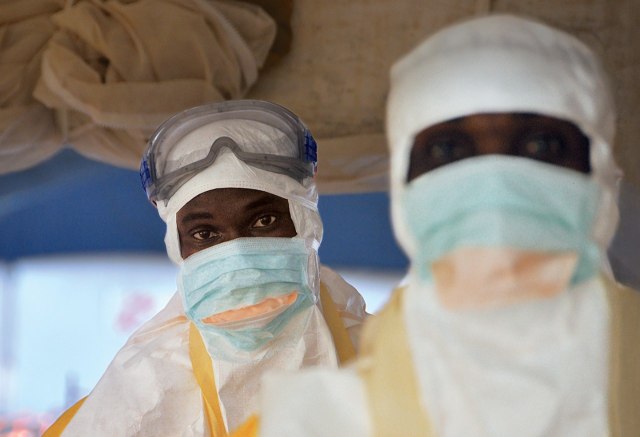
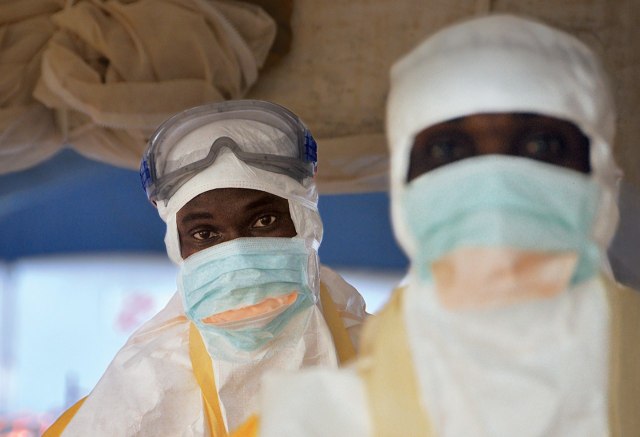
DON’T TOUCH Health workers in protective gear prepare to see patients at the Ebola-treatment center in the courtyard of Donka hospital, in Conakry, Guinea. by Jeffery E. Stern
The tiny village of Meliandou, nestled in the Forest Region of southern Guinea, has begun to see flashes of the outside world. A Messi soccer jersey, three sizes too big, on a little boy. A down parka on an old man in the heavy heat, worn as a robe of distinction. You might even come across the occasional teenager on a cell phone, cupping the device from the sun as if lighting a cigarette in the wind. But mostly it is a place from the past–a rutted dirt path between thatch-roofed shacks, on a hillside sloping up toward the forest. It is home to just a few hundred people. Chickens and goats wander freely. Local shamans are the first responders when illness strikes.
In Meliandou, bushmeat has long been a common source of food. As elsewhere in West Africa, hunters wade into the forest and come back with whatever they can find. Once, not so long ago, what they found was a rich and varied bounty: monkeys, antelope, squirrels. That has changed; the whole eco-system has re-arranged itself. After civil wars broke out in Liberia and Sierra Leone, refugees poured over the borders, and the population grew, even as a power struggle in Guinea took an economic toll. People started looking to the rich resource all around them: trees. Trees were felled to make way for farms or burned down for charcoal. Endless truckloads of timber were shipped to construction companies. The forest suffered another trauma as mining interests–the Anglo-Australian Rio Tinto, the omnipresent Chinese–pushed aggressively to exploit the country’s natural resources (bauxite mostly). As the forests disappeared, so too did the buffer separating humans from animals–and from the pathogens that animals harbor.
Ordinary life in Meliandou came to an end on the day last December when the Ebola virus, which had last claimed a fatality thousands of miles away, arrived in the village, most likely in the body of a fruit bat–its natural non-human reservoir, according to a virtual consensus among scientists. Mining and clear-cutting had driven bats from their natural habitats and occasionally closer to people, like those of Meliandou. And fruit bats love palm and mango, which ripen in the village’s remaining trees. Bats also feed in colonies, which makes them tempting targets: a single shotgun blast can bring down 10.
Ebola is one of the deadliest viruses known to medical science, with no specific cure and mortality rates of up to 90 percent. The Ebola epidemic now raging in West Africa is the worst one in history. It has decimated Meliandou and moved far beyond. But the mystery today is not how the epidemic began–it is why a concerted effort by an army of international experts was unable to stop it. Part of the answer is the chameleon-like character the virus displays in this part of the world. An even larger part lies in the international response itself. It was rapid and comprehensive–exactly what you would hope. But there was an unexpected reaction that undermined everything the experts sought to achieve–and at the same time fooled many of them into thinking they had succeeded in their aims. Eventually they understood the truth. By then it was too late.
On the Move
As near as anyone can tell, the outbreak started when a few tiny rod-shaped particles–each merely an attack plan coded in ribonucleic acid and wrapped in a protein shell–found their way from a fruit bat into the body of a child not yet two years old. Perhaps, while the mother was preparing the day’s hunt, some of the bat’s blood was flung in the child’s direction. Perhaps, while the mother’s attention was elsewhere, the child touched the animal, then brought his hand to his mouth, the way babies do. Either way, a few strands of the Ebola virus attached themselves to cells in the child’s immune system and used the cells’ machinery to replicate. The boy developed a fever, then diarrhea and vomiting. His organs began to fail. He began to bleed internally and went into septic shock. In four days, he was dead.
It might have ended there–one child’s death in the jungle, way back in December–with no one ever to know that Ebola had spilled over into the human population. Certainly this happens often–spillovers that produce outbreaks so sudden, and generally so remote, that they don’t spread. People close by attribute the deaths to some other, more common affliction, while people far away never hear about them at all.
In this case, however, a family dispute intervened. After the child was infected but before he died, the mother, who happened to be pregnant, packed up the boy and a daughter and marched across the village to her own mother’s house. Space there was tight, because the grandmother had a houseguest. Beds were shared, and the baby’s symptoms exploded. His mother was infected, his sister, his grandmother, the houseguest too. When the mother miscarried, the midwife was infected. The Ebola virus had started to move.
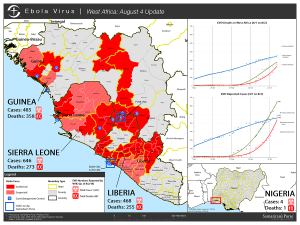
Ebola Epidemic Map Wide
When Ebola strikes, it kills quickly, but it can take up to three weeks to incubate, and usually around 10 days. The period is long enough that contact with a possible source may have been forgotten, and long enough for infected people to travel without symptoms. And even if you tested for Ebola–which nobody in Guinea had the capacity to do–you wouldn’t find it during the incubation period: Ebola can’t be detected in the blood until symptoms show. An epidemic can start slowly and go unnoticed for weeks. This has never been much of an issue before, because Ebola tends not to find its way into large population centers, or places where people are very mobile. This time would be different.
On January 24, more than a month after the first infection, Jean Claude Kpoghomou, a doctor in the town of Tekolo, called a superior to report on something strange happening in a village under his jurisdiction. Three patients had died in the span of two days, he said. All of them came from the same village, a place called Meliandou. The symptoms looked like cholera: diarrhea, vomiting, extreme dehydration. Cholera outbreaks were not uncommon in Guinea. An especially devastating outbreak had occurred just two years earlier, and Meliandou had even been one of the villages targeted for a public-health education campaign. A big pictographic billboard was installed at the entrance to the village, with explicit instructions for the mostly illiterate villagers about how to avoid contaminating the water supply. Dr. Kpoghomou’s superior forwarded the alert from Tekolo on to the health department’s prefectural authority in Guéckédou. Guéckédou sent the alert up to the regional director of health in Nzérékoré, who sent it on to the Ministry of Health in Conakry, the country’s capital, a city of a million and a half on the coast several hundred miles away. The national government had now been alerted: a potentially serious crisis was developing down in the Forest Region.
Mistaken Identity
A mid the constellation of public-health crises that Guinea must contend with–under-resourced and overburdened as it is by a constant onslaught of ordinary killers like malaria, tuberculosis, and automobiles–it was not surprising that three deaths in the Forest Region did not warrant immediate intervention. But officials in Guéckédou organized their own small investigative team and dispatched it to Meliandou.
Here, then, still in January, long before the outbreak took off, a team of doctors stood at ground zero, staring at some of the first casualties. They had no idea what they were looking at.
The way Ebola kills would seem impossible to mistake. What the casual observer knows of Ebola are its most spectacular cases, or the cinematic depictions of them: prodigious bleeding from eyes, ears, nose, anus, and nipples. Symptoms like these, presenting all at once, would be impossible to miss or misinterpret. But not every Ebola case ends with such a biblical scourge, and many of Ebola’s symptoms are identical to those brought on by other diseases. Until its final stages, Ebola can easily be mistaken for cholera. It can also look a lot like malaria, another long-tenured killer in Guinea. What no one has ever died of anywhere close to Guinea is Ebola. The last big Ebola outbreaks–in Uganda and the Democratic Republic of the Congo in 2012–were more than 2,000 miles away. They might as well have been in another world. If you’d told any of the investigators, as they considered the crisis developing in Meliandou, that they were looking at Ebola, they either would not have believed you or, just as likely, would have asked you what Ebola was.
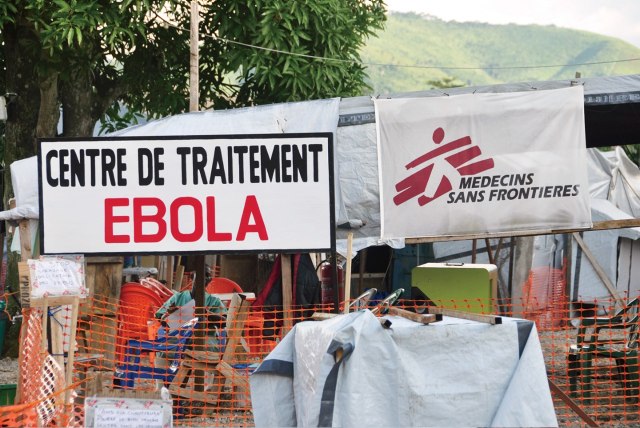
THE PLAGUE A treatment center established by Doctors Without Borders in Guéckédou, Guinea, a town near the original source of the outbreak. By Jeffrey E. Stern
On January 26, officials at the prefectural health authority held a meeting in Guéckédou. They now knew that something was wrong in Meliandou, but they didn’t know what. They consulted foreign health professionals stationed in town; Doctors Without Borders, or M.S.F. (for its French name, Médecins sans Frontières), had a malaria project there. Officials decided to make another visit to the village, this time with a more experienced medical team, on January 27.
For a second time, health workers stood at the epicenter of the Ebola outbreak, and for a second time they did not understand what they saw. By now there had been eight Ebola infections and seven deaths.
Meanwhile, the virus had slipped out of the village. When the grandmother of the infant victim fell sick, she decided that the way the villagers were approaching the illness–summoning a shaman to brandish his fetishes and work his spells–was not satisfactory. The grandmother had a friend in Guéckédou who was a nurse, and when the grandmother’s symptoms began to worsen, she went to see what real medicine could do for her. The nurse tried to help, but he had no idea what he was dealing with. The grandmother went back to Meliandou, where she died.
In early February, the nurse himself developed a fever. Now the virus was in Guéckédou, a bustling trading hub where people converge from Liberia and Sierra Leone. When the nurse’s condition deteriorated, he sought help from a friend who was a doctor in Macenta, in the next prefecture over. The nurse stayed just one night in Macenta–sleeping in the doctor’s own house, sharing a room with the doctor’s own son–and died the next day, February 10, in the waiting room of the local hospital’s lab. The doctor in Macenta was shocked. He didn’t know what he had just witnessed, but it was unlike anything he had seen before, and he immediately sent an alert to the regional director of health in Nzérékoré. Then the doctor developed a fever. He set off for the capital, where he hoped someone might have answers. But along the road–a jolting, treacherous passage lined by burned-out cars and always a few freshly rolled tractor-trailers spilling timber–the doctor died. His body was sent to Kissidougou, a city of more than 100,000, where a funeral was held. Before long, Kissidougou was experiencing an outbreak of whatever it was that had killed the doctor.
If the virus had failed in its first attempt to reach the capital, it was gaining momentum elsewhere, spreading through the forest and venturing dangerously close to international borders.
At the hospital in Guéckédou, more and more people were showing up with vomiting and diarrhea. Looking at the nine cases of reported cholera in his wards, a doctor named Alexis Traore began to feel that the diagnosis might be wrong. The staff was highly sensitized to cholera–appropriately so, given the outbreaks they had endured–and the patients had telltale symptoms. But one symptom didn’t fit: the patients all had fevers. Fever generally isn’t associated with cholera. And Dr. Traore saw something else inconsistent with cholera: one of the patients was bleeding from the nose.
Just as Traore began to challenge the diagnosis of cholera, his inquiry was foiled: tests the hospital had run for cholera came back, and seven of the nine were positive. The tests the hospital ran were cheap, easy to use, and highly sensitive; they are designed never to let a possible case elude detection. The downside: more than a few false positives. What this meant for Dr. Traore was that the working diagnosis had to remain unchanged: cholera. He notified his superiors in Nzérékoré.
Nzérékoré had just received a report from Macenta, which was reeling from its own tragedy. The doctor who had fallen ill and died on the way to Conakry–he was just the beginning. Mysteriously, the doctor’s son had also died, and a colleague of the doctor’s who worked in the hospital lab, along with two of the doctor’s brothers and a nurse he had treated. Something was killing people in Macenta. Nzérékoré compiled a report on the two separate crises and sent it up to the capital.
In Conakry, news of a doctor’s death was finally enough to register with the authorities. No one yet knew, but by now Ebola had claimed close to 30 lives and was continuing to spread–to Dandou Pombo, Dawa, Gbandou, Farako, and Baladou. The Ministry of Health and the country office of the World Health Organization set up a joint investigation, sending medical personnel to record the symptoms and backgrounds of patients who had died in Macenta. In the process, the team discovered that one of the victims–the nurse–didn’t live in Macenta but rather had come from Guéckédou.
This was a crucial fact: the team began to suspect that the separate crises in Macenta and Guéckédou were not separate at all. Whatever was happening in the Forest Region, it was a single phenomenon. The team wrote up its findings and sent them back to the capital, where a few doctors began to suspect that the culprit wasn’t cholera or malaria–some even venturing that the disease might be a hemorrhagic fever.
Here, nature threw one more curveball. Guinea, Sierra Leone, and Liberia have the world’s highest incidence of Lassa fever, a less lethal virus that can also produce hemorrhaging. So when a hemorrhagic fever was suspected, that is where the finger of evidence logically seemed to point–toward Lassa.
Three and a half months into the outbreak, no one suspected Ebola.
Collecting Samples
What finally gave the virus away was, of all things, hiccups. On March 14, M.S.F.’s Geneva office received a report from a medical investigation in Guinea. M.S.F. Geneva immediately forwarded the report to Dr. Michel Van Herp, an epidemiologist in its Brussels office, and one of the world’s leading experts on Ebola. When Van Herp opened the document, what immediately jumped out at him was that half the victims had developed hiccups. For reasons not entirely clear to the medical community, hiccups are associated with Ebola. “It is definitely a hemorrhagic fever,” Van Herp told a colleague in Geneva, who was consulting with him by phone. “But we must really take into consideration that it is worse than Lassa. I think it’s Ebola.” Van Herp notified M.S.F.’s Brussels headquarters, presented his suspicions, and then immediately began preparing to leave for Africa.
That same evening, working on the doctor’s hunch, M.S.F. initiated its response. A team on the ground in Sierra Leone was redirected across the border to Guinea with some basic equipment and protective gear. The team was prepared to deal with Lassa, so was not equipped for a sustained response to Ebola, but had enough to make do for the moment. A separate team was assembled in Brussels and made ready to travel. M.S.F. also needed to get blood samples to a lab capable of testing for Ebola and other exotic pathogens. To that end, a charter plane was dispatched from Conakry to an airstrip outside Guéckédou. Blood samples with suspected Ebola virus are categorized for transport by a special code, UN 2814, indicating “infectious substances, affecting humans,” and M.S.F. hired a specialty logistics operator to send the samples, which were packed according to a strict protocol, with three layers of protective and absorbent material. Then–because it was simply the fastest way–the samples from Guéckédou were loaded onto the daily Air France red-eye from Conakry to Paris.
Nobody knew that, as the Air France flight left Conakry, the first infected person had already arrived in the capital–a trader with ties to the Forest Region. In a little more than a week, the virus carried by the trader would infect five other people. Within a month, the number would reach 47.
In Paris, the samples were taken to the Institut Pasteur. But the institute reported a technical problem at the lab and had to move the samples to another facility, 250 miles away, in Lyon, where technicians were put on alert and told to wait up. Once the samples arrived, the technicians worked into the night. By a little after two A.M. on March 20, they had the first results: what they were looking at was a filovirus, meaning it couldn’t be Lassa. Later that day, at seven P.M., the worst was confirmed: the samples were positive for Ebola. The lab notified M.S.F., which notified its team on the ground and the government of Guinea. On March 22, more bad news came from the lab. The samples from Guinea were the Zaire strain, the deadliest known version of the virus.
Connecting the Dots
When the international community responded to the Ebola outbreak, it did so with astonishing speed. One reason for this was the effective coordination by groups such as M.S.F. But there was another reason behind the rapid response: the sheer horror of Ebola has given it a certain cachet. Epidemiologists who study and follow the virus–people such as Michel Van Herp, of M.S.F., and Pierre Rollin, of the Centers for Disease Control and Prevention–constitute something of an exclusive group whose members stand ready to fly anywhere at a moment’s notice whenever Ebola turns up. Because Ebola outbreaks can kill so quickly, there’s an urgency to get on the ground and begin the work of containment immediately. And because they are also rare and usually very remote, they evoke an eagerness, not unlike that of astronomy enthusiasts rushing to witness some rare astral event.
From a scientific point of view, the Ebola virus is intriguing: a contradiction lies at its core. On the one hand, there is something intentional about a virus that creates in its host precisely the conditions it needs to travel. Ebola can pass from one host to another only through direct contact with an infected patient’s bodily fluids, and once it is inside a human body, it activates several different mechanisms that cause a host to release bodily fluids in several varieties. On the other hand, it’s not contagious enough, typically, to compensate for the speed with which it kills. It can’t move through the air; it can’t live in the water. It can be transmitted only when the host is symptomatic, at which point the host will likely die so quickly that the virus doesn’t have much of a chance to lodge someplace new. But its chances of survival improve markedly if it strikes in a part of the world–like Guinea–where funerals tend to be intimate affairs; where the family lays its hands on the deceased, and sweat, tears, and other fluids have the chance to mix. Then, killing the host becomes not a dead end for the virus but an opportunity to travel further.
As M.S.F. continued to mobilize– it would have 60 staff members on the ground in little more than a week–others were making arrangements as well. Under the auspices of the Emerging and Dangerous Pathogens Laboratory Network, an all-star team of lab technicians from all over Europe was assembled in Munich and then dispatched to Africa carrying an entire lab piecemeal as their checked luggage. The Centers for Disease Control and Prevention rushed to complete a computer program it had been developing to track outbreaks; the program needed to be translated into French so it could be used in Guinea. The C.D.C. also dispatched a team, which grew to more than a dozen and was led by Rollin, who arrived in Guinea on March 30. Some 3,000 biohazard suits were flown in. Experts and volunteers poured in from the World Health Organization and the Red Cross.
With help from the W.H.O. and M.S.F., the Ministry of Health set up the “115” Ebola hotline; when a call came in, the ministry would dispatch a doctor on a motorcycle. If the doctor believed a case could indeed be Ebola, he called back to his dispatcher, who then called M.S.F., which in turn sent a team to the scene in full biohazard gear to collect the patient. At the same time, information about Ebola blanketed the country: to get cooperation, you need to explain the gravity of the situation. People all across Guinea were soon told that the virus was highly contagious, that the mortality rate was 90 percent, and that there was no cure–exaggerated versions of the truth, but a message that sank in. Meanwhile, the international groups began the detective work of uncovering the transmission chain, tracing every case back to the origin, an exhausting, tedious game of connect the dots, but a critically important one. If there’s a dot you cannot connect–a patient with no apparent link to any other patient–it doesn’t mean there isn’t a link. It just means you haven’t found it yet. An unconnected dot may mean that an entire branch of the outbreak is out of sight.
Ministry of Fear
By mid-April, Dr. Abdourahammane Batchyli, then working for the Guinean Ministry of Health’s national Ebola-oversight division, was spending his days in his Conakry office fielding calls from the 115 hotline and listening to excited citizens offering fantastical explanations for what was happening around them. A member of the Fula ethnic group, a rival of the sitting president’s Malinke group, explained to Batchyli that “this outbreak isn’t real–how could we be having Ebola here? President Condé made it up because he’s trying to delay elections.” Another said the president had introduced the virus to exterminate the Kissi tribe. A man claiming to be a spiritual guide called to say the epidemic was a plague visited upon the people of Guinea when a certain white snake was killed; it could all be cured by sacrificing seven cows.
At first the theories didn’t bother Batchyli very much. There were those who didn’t believe the outbreak was real. But most did, and took it seriously, which was the important thing; their musings about its origins were secondary. It didn’t matter if people weren’t thinking rationally. Who was? It wasn’t just illiterate villagers who acted out of fear. Educated people were scared. He was scared. So were foreigners: On April 1, Saudi Arabia had stopped issuing hajj and umrah visas to Guineans and Liberians, which meant that people in predominantly Muslim Guinea could not go on the pilgrimage to Mecca. On April 4, passengers on the Air France flight from Conakry were quarantined when the plane landed at Charles de Gaulle Airport, in Paris, and not allowed to leave until each was checked for fever, all because someone had gotten sick in the lavatory. Emirates airline had stopped flying to Guinea. Mining companies had pulled out their foreign staff. In the capital, radio stations were broadcasting ads for the best brands of chlorine, to protect yourself from Ebola, and Batchyli saw an article about “rebels dressed in yellow who attacked Guinea and then disappeared”–the interpretation of a local journalist trying to make sense of all the people in big yellow protective suits who had suddenly descended on the country.
But what soon became troubling to Batchyli were the phone calls from people who saw the hand of foreigners behind the epidemic. The logic followed a pattern: the virus had never been anywhere near Guinea before. Then the white people came, and only at that point did talk of “Ebola” start. The foreigners had come so fast that they had actually out-run their own messaging: there were trucks full of foreigners in yellow space suits motoring into villages to take people into isolation before people understood why isolation was necessary.
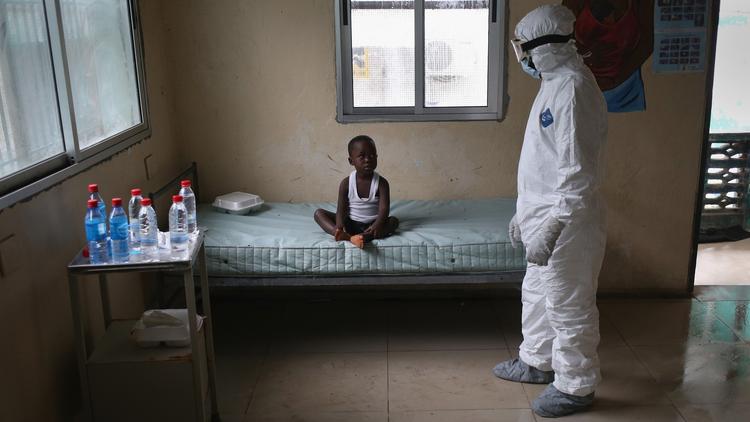
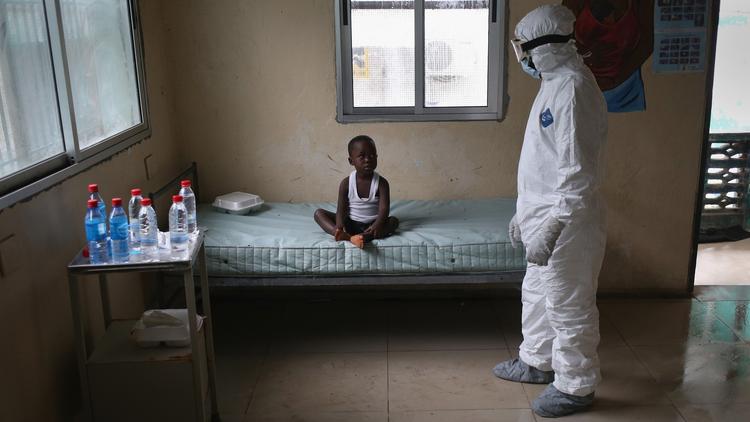
Even if you understood the reasons, the message from the government and the health workers (and the local media) had undercut the incentive to cooperate. If Ebola was a death sentence, what was the point? The public-service announcements had not been subtle–they didn’t explain that mortality rates vary or that, with supportive care, patients do survive (as half the Ebola patients at the M.S.F. treatment center in Conakry had done). To a villager, the isolation centers were fearsome places. They offered a one-way maze through white tarpaulins and waist-high orange fencing. Relatives or friends went in and then you lost them. You couldn’t see what was happening inside the tents–you just saw the figures in goggles and full-body protective gear. The health workers move carefully in order to avoid tears and punctures; from a distance, the effect is robotic. The health workers don’t look like any people you’ve ever seen. They perform stiffly and slowly, and then they disappear into the tent where your mother or brother may be, and everything that happens inside is left to your imagination. Villagers began to whisper to one another–They’re harvesting our organs; they’re taking our limbs.
The process of finding and isolating infected patients was on one level effective and on another deeply disorienting. Batchyli didn’t fully grasp the implications at the time. Nobody did. But people in Guinea were as frightened by the response to Ebola as they were by Ebola itself. As the international community started to make significant progress against the epidemic, people in the Forest Region and in the capital were starting to shut health workers out. Fear was proving to be a contagion: You want to hide from the disease. You want to deny that you have it. You want to retreat to your village behind a phalanx of family members, and when the men in space suits come looking for you, you want to crawl under the bed. And you do–and your family members throw stones at the people in space suits, and so they leave.
This dynamic did not at first register. What the medical teams in Guinea saw was that, barely a month after the international community’s response began, the incidence of reported infections stopped rising, then declined. It continued to drop. In early May, the Ebola-treatment center inside Donka hospital, in Conakry, reached a milestone: a full week had elapsed since its last Ebola case. Another week passed, with nobody testing positive. The work until then had been so intense and so extraordinarily draining–working in the heat in full Tyvek suits, treating patients who often died and who posed a direct threat to care-givers–that the mood after two Ebola-free weeks was one of relief, bordering on celebration.
Another week passed in Conakry with no Ebola victims. Things slowed even further. A few patients came in and were triaged to the “suspected” section of the treatment center; none tested positive. Relief gave way to boredom. The medical team began making work for itself–taking a full inventory of supplies, cleaning and re-disinfecting tents.
Yet another week passed: once again, Ebola-free. Then, in late May, more good news. At the daily coordination meeting, a Ministry of Health representative announced that the last outstanding contact had been symptom-free for 21 days. The implication was clear: if everyone who had come into physical contact with an Ebola patient was symptom-free after the virus’s incubation period had expired, there effectively was no one left who could be infected.
In Guéckédou, medical personnel received the news from the capital by phone. There were still a few patients at the treatment center there, but after an onslaught of 163 Ebola cases in that one prefecture, 119 of them fatal, the team was now following contact cases in only two villages. The news from Conakry tracked with what they were seeing in the Forest Region.
The President of Guinea announced that “for the moment, the situation is well in hand.” The foreigners began to leave. The C.D.C. cycled its staff out of Guinea. At the treatment center at Donka hospital, preparations went forward to hand leadership over to local staff. By this point, toward the end of May, there had been 248 clinical cases of Ebola throughout Guinea, and 171 deaths. But there were no more cases in the pipeline. The worst was over.
Much of the medical community in Conakry savored a moment of respite. But it was illusory. As the doctors would learn all too soon, many people had simply stopped cooperating with health workers. They had gone to ground and taken Ebola with them–until so many people had become sick in a community that it was no longer possible to conceal them.
On May 27, a patient with Ebola was admitted to the treatment center in Conakry–the first such patient in a month. On June 2, five more people with Ebola were admitted. On June 3, two more arrived. The cases weren’t coming from just Conakry. They were also coming from places a hundred miles or more from the capital: Télimélé, Boffa–everywhere. Down in the Forest Region, between May 29 and June 1, there were 15 new Ebola cases. Out of nowhere, from a flat bottom, the curve had begun to rise, and to rise more steeply than ever.
Until 2014, the deadliest Ebola outbreak on record had killed 280 people. As of this writing, 1,427 people have died from Ebola during the current West African outbreak, out of 2,615 confirmed cases. The outbreak has spread from Guinea to Sierra Leone, Liberia, and Nigeria. In early August, the World Health Organization convened an emergency meeting and declared a “public health emergency of international concern.”
In Meliandou, where the epidemic began, village elders say they’ve lost 40 people to the disease. Hunters have stopped hunting. The village has been isolated and ostracized. Moto-taxis are afraid to enter and neighboring villages refuse to trade. These days, the people of Meliandou are worried less about Ebola. Now they worry more about hunger.
The Mano River Union: A Complex Emergency By Kandeh K. Yumkella | The AfricaPaper
United Nations Under-Secretary-General, shares his thoughts on the Ebola Virus Disease (EVD), reminds us of our shared responsibilities, lessons to be learnt going forward and prays for a speedy return to normalcy.
What started few weeks ago as an isolated incident in the forest region of Guinea has now metastasized into a “complex emergency”. Though in the UN we typically reserve this term for countries or regions with major conflicts and wars, others in the humanitarian assistance community use it more broadly to describe situations where “the need for large-scale, multi-faceted humanitarian assistance is required” to end human misery.
Most experts now believe that the Mano River Union (MRU) requires a massive global intervention to fight Ebola. Peter Piot, my former colleague on the UN-Chief Executives Board, now a Professor and Director of the London School of Hygiene and Tropical Medicine, said in the Guardian this week that “the outbreak was now so bad that a UN peacekeeping force ought to be mobilized in Sierra Leone and Liberia with huge donations of beds, ambulances and trucks as well as an army of clinicians, doctors and nurses”. Peter knows what he is talking about! Forty (40) years ago, he discovered the virus in the Congo and successfully led UNAIDS as chief executive for many years. He and I will discuss these and other issues in London at a panel discussion organized by the Royal African Society in October
Emerging global support
The announcement by the governments of China, Cuba, USA and the UK of the deployment of thousands of military and medical personnel, and hundreds of millions of dollars of military assets demonstrates that the Ebola situation in the union is indeed now a full blown complex emergency. Peter’s call has been answered. However, it must be noted that not even the Syrian or the Ukrainian conflicts have garnered such a quick response or deployment of resources from these countries (including boots on the ground) as we have witnessed this week. Those efforts have been reinforced by the support of the UN, World Bank, International Monetary Fund (IMF), African Development Bank (AfDB) and others.
At the Security Council today, Secretary General Ban Ki-moon observed that, “Despite these wide-ranging efforts, the spread of the disease is outpacing the response. No single government can manage the crisis on its own. The United Nations cannot do it alone. This unprecedented situation requires unprecedented steps to save lives and safeguard peace security. Therefore, I have decided to establish a UN emergency health mission, combining the World Health Organization’s strategic perspective with a very strong logistics and operational capability”.
Though some are sometimes quick to bash the so-called international community, or blame them when things don’t work, the community has now come to our rescue twice within 20 years (in order to ensure that our nation states in the MRU do not collapse and become failed states again). Rather we should be grateful – perhaps this is the beginning of the end of Ebola in our region.
Our responsibility
The question is, how effectively will our people integrate this international assistance with local efforts to win the war on Ebola? But more importantly, what will we learn about rebuilding medical institutions and infrastructure for the next generation? As I was checking in at the airport on the way to the UN General Assembly, another colleague was checking in for Irbil in Iraq to support a brewing humanitarian crisis there as well. It is clear that the people of the MRU cannot afford to waste the investments that development partners are now committing to our region because other regions (Syria, Iraq, Ukraine, etc.) might need their attention. Ebola should also be a wake-up call for us about the fragility of our institutions (including education and democracy) and our economies.
Some experts have noted that “disasters can result from several different hazards or, more often, to a complex combination of both natural and man-made causes and different causes of vulnerability, food insecurity, epidemics, conflicts and displaced populations are examples”. In the Ebola saga, natural and man-made factors have converged to make this outbreak the worst in almost half a century. Scientists have already warned that the rapid mutation of the virus might make it air-borne; in which case we will witness a global catastrophe. Therefore, it is in the enlightened self-interest of the rest of the world to support the MRU and West Africa in this time of need.
Learning from Experience
Michael Osterholm, director of the Centre for Infectious Disease Research and Policy at the University of Minnesota is quoted in the International New York Times as saying “we should see all of West Africa now as one big outbreak” and the rest if the world has to join the global effort to contain the disease in all countries with reported case (INT/17-9-14). We hope that the effort will also go further to find a vaccine or cure. More G8 countries, emerging economies, philanthropists, and foundations should now join this new push to defeat Ebola once and for all. Some of us will continue our behind-the-scenes efforts to keep pressing for greater international cooperation and solidarity.
Over two thousand years ago Aeschylus observed that truth is the first casualty of war. In this war on Ebola, we must understand that there are no quick fixes, common sense is not enough, and we must be ready to learn from our mistakes. Later when we review our disaster management services and public policy making, we might learn about what we should and should not do in governance.
Some humility is required in the learning and healing process. Disseminating the correct information, in a simple manner and on time, must be a critical part of the containment strategy. We can assist our governments to make the right decisions by providing information on good-/best-practices, while also highlighting implementation lapses and problems.
Hence, my plea a few months ago that we should go beyond common sense and use the best expertise. Our military and security personnel and those responsible for emergency/disaster response should learn from their colleagues when they are deployed from China, Cuba, US and UK, how logistics planning, crowd control, communications/intel are integrated to respond to disasters. Other decision makers should understand that the externalities, perhaps collateral damage of the Ebola war will be far reaching
The international development agencies must also learn lessons and recognize that our systems were also not adequately prepared to respond to the speed and scale of this crisis. The member states that seat on the boards of these institutions and propose deep reforms and restructuring should not be driven primarily by budgetary considerations, but should also be guided by recognition of the emerging threats and risks to global security, peace and stability. After SARS, H1N1 and Ebola, the question that comes to mind is: Will the institutions be ready for the next major pandemic?
However small, do your part
As individuals we must also play our part, however small it might be. We who can donate rice, onions, cooking oil should continue to do so. We should also not forget the plight of the children who may lose half a year or more from school. A friend of ours is now developing radio programmes for kindergarten and primary school kids to sustain their craving for education.
Today, on October 18, Member States debated the Ebola issue at the UN Security Council, perhaps in recognizing of the fact that the speed and scale of the crisis could easily morph into political instability and conflict. It is gratifying to see the Mano River Women’s Peace Network MARWOPNET/REFMAP contributing to the debate at the UN.
We must continue to mobilize support for our local communities and the families of those who succumbed to the disease. I know the Kailahun, Kenema and Pujehun descendants at home and in the US and UK are already actively mobilizing support for their folks. Groups like NOSLINA, Tegloma and the Krio Descendants Association are also providing much needed support across the country. Others should do the same even before their communities are affected. Everything is needed now, food, used clothing, disinfectants etc.
Post Ebola and Efficacy
We must also brace ourselves for the post-Ebola economic recovery challenges. Already at the World Bank last week, I talked to some colleagues there about how to mitigate the negative impacts of the Ebola crisis on growth, energy access, other development targets and investments. But I have no doubt that we can rise to meet those challenges, as we did after the war.
Finally, the jury is still out on the efficacy and impact of the quarantine measures and the lockdown in all three countries. As Andrew Keili suggests “a man has got to do, what a man has got to do”. Tough times call for tough actions, and sometimes governance means some risky choices – however such decision must be accompanied by well-planned and coordinated actions (especially in a complex emergency).
I have no doubt that we can rise to meet the challenges as we did after the war. As President Koroma noted, “we have shown great resolve as a nation to overcome tragedy and become a symbol of recovery, democracy and peace in the world. But for now, the struggles continue. ALUTA CONTINUA!!!
The AfricaPaper: Dr. Kandeh K. Yumkella is United Nations Under-Secretary-General and the Special Representative of the Secretary-General for Sustainable Energy for All and CEO of the Sustainable Energy for All Initiative.
The press have been discussing the current outbreak of Ebola in West Africa. They stress that it is an awful way to die, that there is no cure, and that health workers are dying despite apparently taking all necessary precautions. More learned writers have been explaining that Ebola is quite hard to catch unless you come into direct contact with contaminated bodily fluids, and that simple precautions should be enough to contain it. Yet other commentators are pointing out that the death rate is very low compared to other well known diseases, and that we need to keep the threat in perspective. So, we have an intelligence test item to solve.
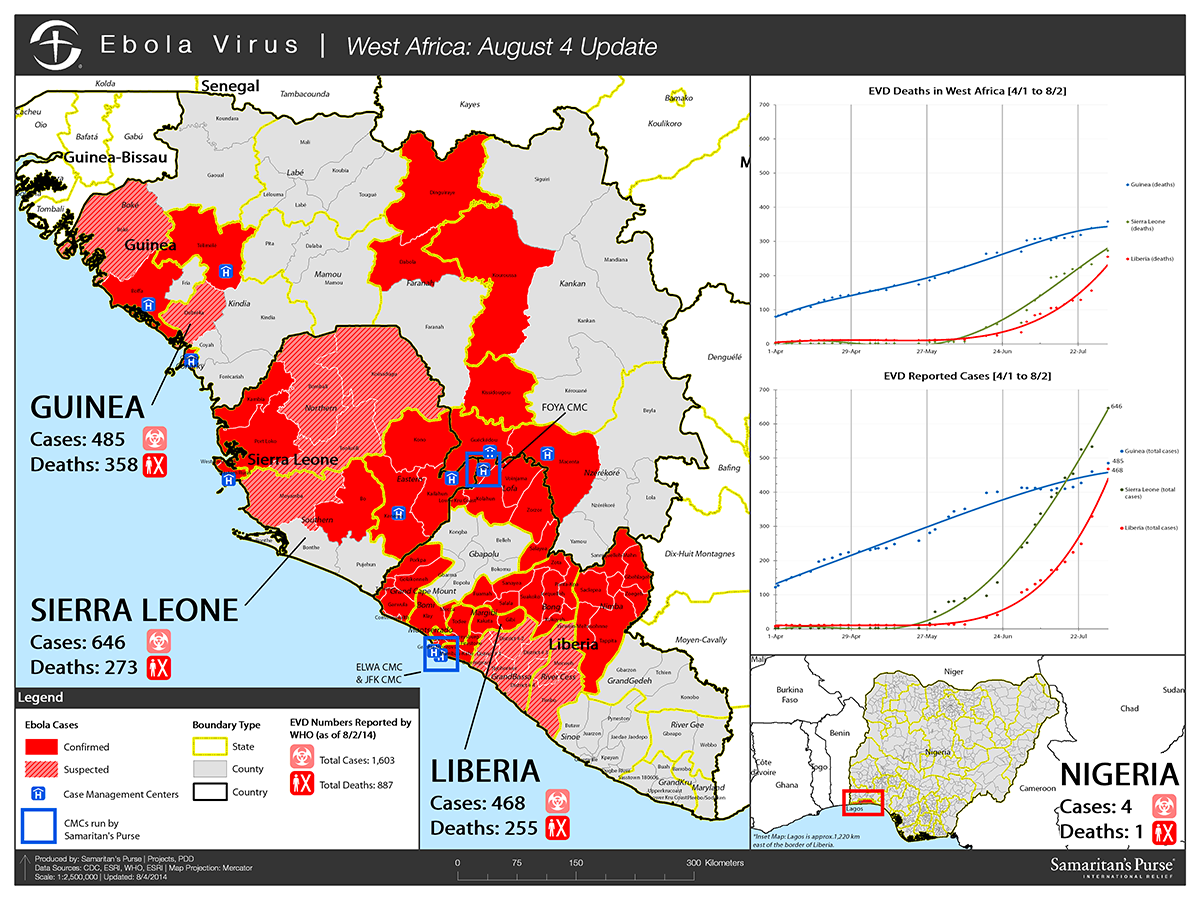
The World Health Organization, in partnership with the Ministries of Health in Guinea, Sierra Leone, Liberia, and Nigeria announced a cumulative total of 1440 suspect and confirmed cases of Ebola virus disease (EVD) and 826 deaths, as of July 30, 2014. Of the 1440 clinical cases, 953 cases have been laboratory confirmed for Ebola virus infection. Previous outbreaks have been more often in the Congo, Gabon and Uganda.
Infectious disease dynamics can be modelled, and controlling this outbreak should be pretty easy, at least from a conceptual point of view. This disease is a short-incubation period (about three weeks), relatively low transmissibility, high lethality infection. Whereas a sneeze can transmit pathogens with great efficiency, hence the easy airborne spread of influenza, avoiding fluids is easier.
Soap, water, disinfectants, protective clothing for nurses, body bags for victims, quick burial in chlorine covered graves or better still cremation, quarantine for all contacts, and the same procedures for those quarantined victims if they die: all of these should be sufficient. In terms of disease control it should be noted that men who have recovered from the disease can still transmit the virus through their semen for up to 7 weeks after recovery from illness. Severely ill patients require intensive supportive care. Patients are frequently dehydrated and require oral rehydration with solutions containing electrolytes or intravenous fluids. No specific treatment is available.
New drug therapies are being evaluated. Barrier nursing is required to protect health staff, but the standards of protection required are very high, and hard to observe when health workers are subject to high ambient temperatures. If treatment is really unlikely to help victims, then in a big outbreak it might best to avoid attempts at close contact nursing, and rely on quarantine and subsequent disinfection as the best way to save more lives. Perhaps hydration packs distributed to homes under quarantine would be best, but that is for public health specialists to judge.
Why isn’t all this happening? Many of the locals either do not understand the transmission method (from forest animals like bats), or chose to disbelieve it, and are not changing their behaviours regarding funereal procedures, which involve bathing and kissing the corpse, all of which are part of altruistic respect for the dead person. The locals are also prey to false correlation: they see people who are mildly ill going into hospital, and then taken out dead soon afterward by space-suited Western health workers. In terms of Kahneman’s Type 1 fast and sloppy thinking, this is understandable.
Ebola hospitals are dangerous places. Westerners in space suits are unusual and disturbing, and in fact even the notion of a hospital may be the wrong strategy in these outbreaks. However, if a populace suspect that health workers spraying disinfectant may be malevolently spreading bottled Ebola, then there is a massive health education challenge to be faced.
Western doctors very much want to help, but getting to the outbreak locations they quickly find that local facilities are inadequate, that barrier nursing is very difficult to achieve to a high standard and, although this is less often conceded, that nursing might be of little real help. However, early treatment improves outcomes, and about 40% are pulling through at the moment. Hence the wish to provide treatment, and some groups like Medecins sans Frontieres have not lost doctors to Ebola.
Wanting to help others is humanity at its best. These missionary doctors write heart-wrenching diaries about families being wiped out, and about their lack of resources, about the stigma with which the afflicted are treated and about their guilt at seeing ill patients dying without comforters next to them. They don’t publically question why the countries in which they operate are in such a mess. The conventional answer is that they are poor and wracked by conflict.
Guinea, Sierra Leone, Liberia, and Nigeria, the countries in the front line of this particular outbreak, share West African environments. Sierra Leone and Liberia have a particular history, in that they were formed and settled to take repatriated American slaves. From some points of view, they should be models of governance.
That has not been the case. If all these countries had been governed well even remote country hospitals would have had basic resources, and there would have been widespread knowledge of basic hygiene and disease control. Quarantine would have been explained, established and monitored.
Can we deduce anything from the failure to deal with the epidemic? The governments of these countries may have regarded their poorer citizens as being of little interest to them, living as they do in poverty in remote villages near tropical forests. Government officials tend to be snooty, and African governments have often disregarded the needs of their citizens. They say that they have given plenty of public health warnings, but the disease keeps spreading. Disasters test the morality of the organising structure, and those structures have often been found wanting.
Could it be that these countries simply don’t understand the threat and don’t understand how to deal with it, or that they don’t do so in sufficient numbers to provide an effective response?
Little is known with certainty about intelligence levels in these countries. Those governments do not measure cognitive ability, nor do they participate in the PISA and other international scholastic studies. If one gathers together various published papers on intelligence test results, then the IQ figures for the Congo are in the 64 to 73 range; for Guinea 70; for Ghana 60-80; for Nigeria 64-70; and Sierra Leone 64. Some of the samples are of reasonable size, one and a half thousand, so it is not all a patchwork of tiny studies, though there is plenty of room for improvement.
The figures are so low by Western standards that they are hard to believe, but when educational elites in South Africa are tested they are often in the IQ 100 range, consistent with being the top 2% of a population which has an actual mean of IQ 70.
Botswana is an exceptional African country in many ways, has put a lot of money into education, and has participated in Trends in International Mathematics and Science 2011, and Progress in International Reading Literacy Study 2o11. Botswana is a test case, an exemplar of the current achievement of an African country which takes education seriously. If you look at their scholastic achievement and compare it with the achievements of countries with well established IQ measures, then Botswana comes out at an estimated IQ of 70. Sub-Sarahan African intelligence test results have been much debated by intelligence researchers, and the estimates range from about IQ 70 from Richard Lynn to IQ 80 from Jelte Wicherts.
The key argument is about the representativeness of samples. The tests seem to be OK, much to popular surprise. Humans in all continents appear to solve basic problems in the same way. Africans have the same cognitive operating system as other continental groups. There are power differences, but not operating system incompatibilities.
Are the behaviours of the average citizens in these countries consistent with these estimates? Western critics of international intelligence testing regard these estimates with considerable scepticism, particularly considering that IQ 70 is seen as too low to lead an independent life and earn a living in Western economies. However, that is the way the results come out, and the match with achievements is reasonably close, certainly when scholastic achievements are measured.
Although all countries have the equivalent of witchdoctors, in the West these are usually a homeopathic side-line and less dominant in public health, but in African countries they still sway many people on important health matters. Seen from afar, the response to Ebola has not been intelligent. Equally, the response to HIV has often been weak and contradictory.
Finally, should we be less alarmed about Ebola, and be more scared of measles, malaria and car accidents? Those who would ask us to bear in mind these comparative statistics misunderstand human nature. New threats demand great fear, which is the prudent reaction till the true nature of the predator is known.
We humans are also concerned about how we die. Bleeding to death from a galloping haemorrhagic fever is far more scary than our favoured exit, to breathe our last as peacefully as possible, expiring gently, entirely unblemished, while lying in clean sheets in our own house with our loving family in attendance. Furthermore, as even the dullest actuary must know, the statistics on Ebola are comforting only at the moment. If this outbreak continues to be mismanaged, the numbers could look very different in a few year’s time. Then we would have to say that we had failed a simple test in public health.