Home Blog Page 43

The case for city status in post-war Gulu

1


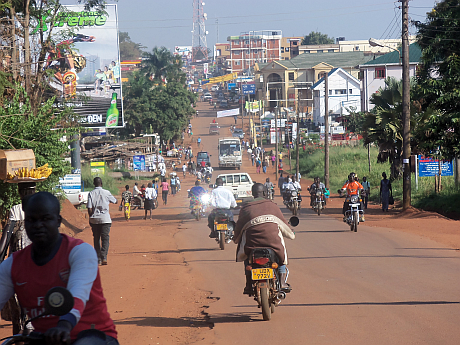
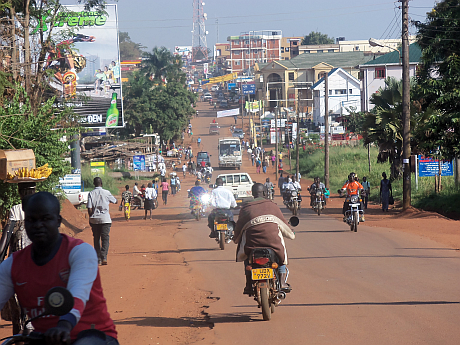
The hustle and bustle in Gulu town. The buzz around the town has energised the demand for a city status by local leaders and residents.
The hustle and bustle in Gulu town. The buzz around the town has energized the demand for a city status by local leaders and residents.

In northern Uganda, local leaders are pushing for Gulu to receive city status. But does the municipality have what it takes to qualify?

By Moses Odokonyero | The AfricaPaper

UGANDA – From atop the Pearl Afrique Hotel, the changing skyline of Gulu town is visible. The thatched roofs of mud and wattle huts that once dotted the edges of the town are no more. The mud and wattle has given way to tiled and iron sheet roofs of new buildings that sprout from the rubble where the huts once stood.

It was a different sight less than a decade ago. Then Gulu was at the epicentre of a vicious conflict pitting the Ugandan government against the rebel Lord’s Resistance Army (LRA). Gulu was a town of the displaced. Fearful of attacks by rebels and bandits, throngs of people flocked to the town, seeking refuge and safety in public places such as hospitals, schools and bus parks. As a result the town’s infrastructure was put under immense pressure.

This changed in 2006 when the Ugandan government entered into peace talks with the rebel LRA in the Southern Sudan capital of Juba. The talks ended inconclusively but nevertheless brought much sought-after peace to Gulu and northern Uganda.

Almost immediately Gulu town with its potholed streets and worn out colonial buildings got a new buzz. Indian traders who had fled came back with gusto and occupied the town centre, opening shops that sell sportswear, phones, computers, generators and even tractor spare parts. Banks rushed to establish branches in Gulu town and there are now 15 banks, whereas there were only two operating less than a decade ago. Traffic on the strategic route linking Uganda via Gulu to South Sudan has also increased, along with the volume of goods transported. As a result, South Sudan has been Uganda’s leading trade partner since 2007.


Telecommunication giant MTN Uganda advertising mobile internet in Gulu town.

Local leaders say if Gulu becomes a city it would lead to an improvement in infrastructure and social services such as safe drinking water and roads. But there are challenges that remain before it gains city status.

Still seeking legal city status

On the streets of Gulu it is common to see banners hanging on shop doors and electricity poles reading “northern city.” There is no doubt that residents consider their town worthy of legal city status but there are questions as to whether Gulu, which considers itself the de-facto capital of northern Uganda, has what it takes to be a city.

Currently, Gulu is classified as a municipality. It is divided into four divisions, each headed by a Division Chairman (who heads the political wing) and a Division Town Clerk (who heads the technical wing). The municipality itself is headed by a politically elected mayor who serves a five-year term.

According to the Local Government Act, a piece of legislation that was passed by Uganda’s parliament in 1997 to introduce the decentralised system of governance, for a municipality to become a city it must have a population of approximately 50,000 people.

The 2002 Uganda population and housing census puts the population of Gulu municipality at 154,300, at that time the second largest population after Uganda’s capital Kampala. However, when the census was conducted a significant section of the population in Gulu municipality had come from elsewhere to escape the armed conflict. And with the end of conflict many have returned to their villages.

However, Gulu’s mayor George Labeja says the municipality has since expanded in size and now has more than the population needed to be a city.

The mayor also says that in 2008 the Gulu district council passed and approved a resolution expanding the size of Gulu municipality to that expected of a city. “The ministry [local government] asked us for 15 justifications why we think we should be a city. We handed it that to them,” said Labeja in an interview.

Infrastructure in need of an upgrade

Historical and geographical positioning may be on Gulu’s side to become a city but that is not the only requirement. A city is also expected to have adequate infrastructure and social facilities such as schools, hospitals, a good road network and markets.

The roads in Gulu municipality that link the divisions and lead to villages in the hinterland are not in a good state. Most, if not all, are made of murram with the exception of a few within the town that have tarmac, which are also not in good condition. Last year locals organised demonstrations to protest the poor condition of some of the roads that had been made impassable as a result of heavy rains.

Wilfred Komakech, a civil engineer who runs a construction and engineering consulting firm in Gulu, says Gulu’s roads need to improve.

“The condition of the roads is generally very poor with high percentage being gravel and/or unimproved roads,” says Komakech. “The few paved roads have also suffered inadequate attention on operation and maintenance leaving most of it having a lot ofpotholes. The development in the road sectors also doesn’t match the rapid increase in traffic.”

The roads are also not well designed and lack planned road parking and have poor drainage, says Komakech. During rainy seasons it is not uncommon for sewer pipes to burst open in the town, sending sewer flowing into the streets. Gulu’s Care Taker Town Clerk, John Oola admits that Gulu’s infrastructure is under pressure and needs improvement:

“The pressure is there but we have a programme to reduce this,” says Oola. According to him, there is already a plan to create four satellite towns, all on the outskirts of Gulu town. Furthmore, says Oola, there are plans to improve Gulu’s facilities.

“The Australian government through Watoto Church [a charity] came up with a structure plan for Gulu municipality. Habitat International has also contracted a firm to come up with a structure plan on how to decongest the town. With these plans Gulu will have a golf course, green belts and other facilities expected of a city,” says Oola.

When it comes to health facilities, Gulu municipality has three major hospitals. These include the Gulu Regional Referral Hospital that serves the northern Uganda region, St Mary’s Hospital Lacor, which is run as a not for profit, and the privately owned Gulu Independent Hospital. There is also the military hospital in the 4th Division barracks of the Uganda Peoples Defence Forces (UPDF), but this is exclusively used by the military and those affiliated with it. To the civilian population the military hospital is mainly known for its mortuary, which unlike the government hospital and health centres, has functioning coolers.

On the existence of health facilities, Gulu based development and management expert Odong Otara, director of Kikomwa Multiconsultants Limited, says Gulu scores well even though gaps in the sector still exist.

“We have the hospitals needed to be a city. All the four divisions in the municipality have health centres, which are distributed according to the population density. But these health centres lack personnel. It is the reason why all patients flock to the Referral hospital.”

Gulu municipality also has an airport that the mayor says will be upgraded to an international airport once Gulu becomes a city. The airport is one of 13 authorised by Uganda’s civil aviation authority to handle flights from neighbouring countries.

Funds for development

For the financial year 2011-2012 Gulu municipality raised 1.7 billion shillings (about $680,000) from local revenue sources, which include market dues, trading licences and property tax among others. Each year, the Gulu Municipality needs 9 to 10 billion Uganda shillings (about $ 4 million) from the central government to run its affairs. The gap between local revenue collected and what is needed to run the town points to a low revenue base and yet a city is expected to significantly meet its running costs.

Despite that, there are indicators that the central government is considering Gulu among the 14 municipalities in the country that will be turned into regional cities. In May, the Uganda government signed a $285 million credit agreement with the World Bank to extend piped water and development of infrastructure in 14 municipalities around the country. Gulu municipality will be one of the municipalities to benefit.

Already a group of influential professional’s and opinion leaders from Gulu have formed the Gulu Development Forum to monitor how funds for this development and others will be used.

“In the past there has been a lot of shoddy work on development projects in Gulu, said forum head Makmot Kitara, former vice chairman of Gulu district. “Our role is to watch this and ensure that every project is implemented as planned.”

Oil benefits

South West of Gulu is Nwoya district. It was only formed in July 2010 yet oil discoveries have been made in the area. Analysts believe with oil discoveries nearby and with Nwoya lacking most basic infrastructure Gulu could end up benefitting more by providing facilities such as hotels.

“Towards conclusion of the war in 2005 Gulu was the fastest growing town in Uganda. The rate of urbanisation in Gulu is very high. Some districts [including Nwoya] don’t have the basic infrastructure. But for Gulu it is a different story,” says Angelo Izama, an investigative journalist and fellow of the Open Society Foundation, researching the oil sector in Uganda.

According to Izama, under a bill that is being discussed in Uganda’s parliament, host districts where oil discoveries have been made could take 7% of oil revenues. If that happens, Gulu, which has better facilities than Nwoya, could see itself benefitting more and consolidating its status as a regional city.

While signs point toward Gulu obtaining city status, this is not yet guaranteed. And if the central government denies Gulu city status that will likely be viewed by those from northern Uganda within the prism of historical animosities that have existed between the north and southern parts of the country. Already, northern Uganda feels alienated from the rest of Uganda. Early this year members of parliament called for northern Uganda to secede from the rest of the country as a result of massive thefts of money meant for post-conflict recovery in the region – an indicator of the existing tensions between north and south.

The AfricaPaper: Many thanks to Moses Odokonyero for reporting from Gulu, Uganda.
Egypt: From Rebel to Revolution?

0


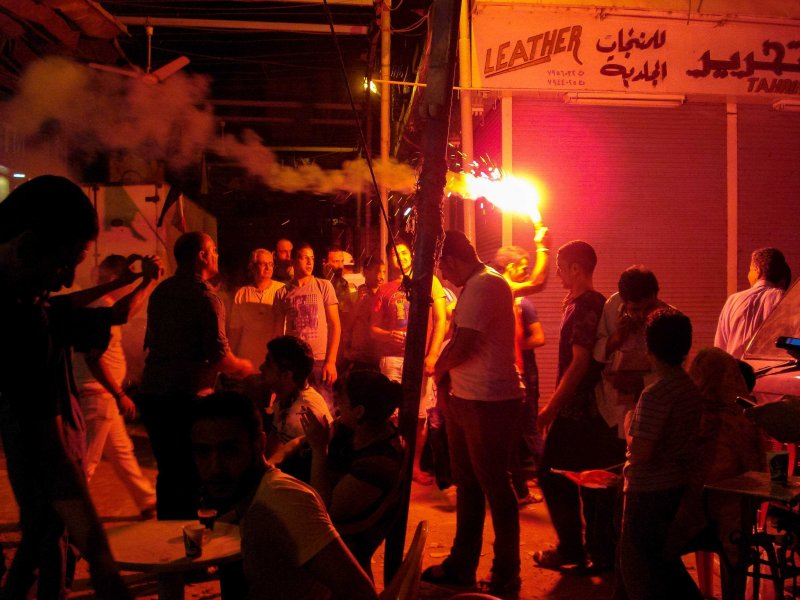
july-1-2013-tahrir-square-cairo-egypt-1

From the revolution’s very beginning in January 2011, western diplomats were keen to reduce the demands of the Egyptian revolution to a call for formal democracy. In doing this, western spokesmen and domestic elites ensured that more substantive reforms – such as an overhaul of the entire socio-economic system – were dropped by the wayside.

By Vivienne Matthies-Boon and Brecht de Smet | The AfricaPaper

There are many ways to interpret the 30 June protests and Morsi’s exit. However, the western media and commentaries have generally taken the formal democratic approach. According to this perspective, president Morsi was democratically elected and thus the legitimate president of Egypt. The recent intervention of the Egyptian Armed Forces was accordingly interpreted as a military coup against a legitimate government.

Formal democracy and its grievances

That the mainstream outlets in the west – such as the BBC, CNN, New York Times, etc. – have adopted this approach did not come as a surprise. From the revolution’s very beginning in January 2011, western diplomats were keen to reduce the demands of the Egyptian revolution to a call for formal democracy.

This push for the implementation of formal democratic procedures was part of the ‘Orderly Transition’ paradigm. This paradigm was espoused by the United States as soon as they finally realized they could no longer hang onto their old strongman, Hosni Mubarak, during the last days of the 2011 revolution[i]. This paradigm basically insisted on a top-down political reform in contrast to a bottom-up overthrow of dominant political and economic institutions and practices, in order to deflect the demands of the revolutionary movement. Street politics and the emergence of grassroots democratic structures were to be contained by the ballot box. As long as free and fair elections were held, the spectre of authoritarianism could be exorcised.

The problems with this formal democratic approach became evident when Egyptians were forced to choose between the lesser of two evils, Mohammed Morsi (the Muslim Brotherhood candidate) and Ahmed Shafiq (who represented the old NDP regime) in the second round of the presidential elections. Whilst the more progressive revolutionary forces had attained a greater share of the vote in the first round of elections, this vote was split between three different candidates (Hamdeen Sabahi, Khalid Ali and Abdel Moneim Abd El-Fotouh). Unwilling to put their eggs in an ex-NDP basket, Morsi won with a small margin of the vote (though there are allegations that Shafiq had in fact won the elections). This strengthened the sense among many Egyptians that although the presidential elections were ‘procedurally correct’, formal democracy did not necessarily represent the will of the people – and certainly not the will of the revolution.

By discursively reducing the demands of the Egyptian revolution to a call for electoral democracy, western spokesmen and domestic elites ensured that more substantive reforms – such as an overhaul of the entire socio-economic system – were dropped by the wayside. By focusing only on the second element of the revolutionary demand for “bread, freedom and social justice”, they turned a blind eye to the profound systemic socio-economic injustices that underpinned the mass uprisings not only in Egypt but across the region.

These injustices are persistently stimulated and aggravated by the neoliberal economic order and international financial institutions – such as the IMF and World Bank. Framing the “Arab Spring” merely in terms of a formal democratic “transition” allowed for a continuation of neoliberal reform in Egypt (which previously underpinned Mubarak’s crony capitalism in Egypt). Despite evidence to the contrary, economic liberalization was presumed to coincide with political liberalization.

Supporters of ousted President Mohammed Morsi protest in front of the Republican Guard headquarters. Demotix/Nameer Galal [13]. All rights reserved.

The Brotherhood’s democracy

This narrative of democratic transition suited the Muslim Brotherhood particularly well. They insisted that their “Islamic” project represented a culturally authentic model of governance vis-à-vis “Western” political and economic practices. Nevertheless, close analysis reveals that their economic model resembles that of other (western) neoliberal vanguards such as that represented by David Cameron. Like Cameron’s ‘big society’, the economic model proposed and pursued by the leadership of the Egyptian Muslim Brotherhood is that of neoliberal reform (i.e. privatization, the selling off of public assets, the support of big business tycoons, etc.) with some charity thrown in. The problem with this modern charity discourse – framed within traditional Islamic terms – is that it fits the neoliberal economic model perfectly, since it literally privatizes both the cause and solution of poverty and inequity, by reducing structural societal problems of redistribution and ownership to a question of individual morality.

Moreover, the democratic transition paradigm, which elevates elections as the only measure of revolutionary legitimacy, allowed the Brotherhood to defend its political position in the eyes of the international community even in the face of mass protests against its rule. However, this perspective does not take into account the deep dissatisfaction across large sections of the Egyptian population with Morsi’s rule. This dissatisfaction resulted from what many saw as the Brotherhoodisation of the state, the increase of violence and torture, the deterioration of living standards and unjust social and political policies.

Many argued that from its very inception, Morsi’s government was not a government for the Egyptian people but merely for those belonging to the Brotherhood. Morsi sought to Islamise Egypt’s main political institutions such as the Judiciary and Ministries – through the imposition of those loyal to the Brotherhood. Evidence for this includes the November 2012 Presidential decree wherein Morsi sought to unite all branches of government under his control (and which resulted in the Palace clashes in December 2012), the rushed and highly controversial constitution written by an all-Islamist assembly, as well as most recently the ousting of the Culture Minister and the ‘cleansing’ of Egypt’s cultural activities.

Moreover, under the pretext of fighting ‘feloulist’ forces of the old regime, Morsi ‘safeguarded’ the revolution by ousting all those critical of his government and dragging critical media personalities (including Bassem Youssef) in front of the courts on charges of ‘insulting the president’. In addition, the Muslim Brotherhood and Morsi supporters drove buses full of their supporters to sites where anti-government protesters were gathering (such as Itihediya palace in December and Moqattam in March), thereby guaranteeing bloody conflicts. Recently they also incited direct violence against the Shia minority in Egypt, resulting in four dead[ii]. They increasingly polarised the country by insisting that all those not loyal to the president were not proper Muslims. Moreover, even when the army insisted on its ultimatum, they made no significant steps towards reconciliation, and instead spoke about the need to sacrifice one’s blood for the legitimacy of the president.

Tamarrod and the Army

The deep dissatisfaction with Morsi culminated in more than 22 million signatures during the Tamarrod (Rebel) campaign, which demanded the removal of the president, the establishment of an interim government, the rewriting of the constitution and early presidential elections. The military estimated that on 30 June 2013, over 30 million Egyptians took to the streets to make these demands heard. Though the exact number of protesters is disputed, their quantity certainly outnumbered the votes Morsi had received in the second round of the presidential election ( 13,230,131). For those who were protesting against Morsi, this signified that Morsi no longer represented the Egyptian people and had lost all legitimacy.

The army stuck to its ultimatum and intervened, after it had come to some understanding with the anti-Morsi movement, as we now know.[iii] So far, it appears to have stood by the demands of the Tamarrod campaign: it immediately installed an interim president (Adli Mansour – the Head of the Constitutional Court). It is also insisting on a inclusive approach through which early presidential and parliamentary elections are held. Thus, from the anti-Morsi’s protesters perspective, the intervention of the army entailed an end to: 1) encroaching Islamisation, 2) a new authoritarianism in Islamist guise; and 3) gross economic mismanagement.

Military spokesmen, such as Colonel Ahmed Ali have furthermore argued that – because of the reluctance of the Brotherhood to give in to the demands of the protesters and the readiness of Ikhwan members to pledge their blood to defend the president – the military intervention constituted a humanitarian solution. It prevented a further escalation of street violence and perhaps even a civil war.

Given the grievances outlined above and the mass character of the anti-Morsi movement, it is not surprising that many Egyptians feel angered by the fact that the western media not only largely remained silent on the past abuses of power by Morsi but now even depicts Morsi as a legitimate president who has been illegitimately overthrown by a military coup. They insist that the military intervention was not a coup, but rather constituted the crowning achievement of a “second revolution” that represented the will of the people.

On the alliance between the Muslim Brotherhood and the military

However, we should be careful to note that this critique of the formal democratic paradigm does not imply a straightforward fiat for military intervention. In order to transcend the conceptual dichotomy between “revolutionary coup” and “democratic legitimacy”, one should carefully analyse the motivations and positions of the different factions involved in the process. One should particularly note the silent alliance between the MB and army, and how this has been interrupted by the Tamarrod campaign and the recent street protests.

Since January 2011, the simple discursive contradistinction between “the people” and the “dictator” has been complicated by the fragmentation and crystallization of different revolutionary and counter-revolutionary actors. The popular uprising of 25 January disorganised the ruling bloc, but it did not overthrow it. The military intervention of the SCAF that forced Mubarak to resign and brought forth a “transitional” regime represented itself as the realization of popular power, while, in reality, it merely replaced popular mobilization from below by its own top-down rearrangement of elite forces. Gamal Mubarak and his cronies were kicked out the ruling coalition and the patrimonial networks of the NDP and the power of the Interior Ministry were weakened in relation to the Armed Forces.

From the March 2011 referendum onwards, the SCAF found a strong but unruly ally in the Brotherhood and the Salafist movement to impose its formal democratic roadmap on the revolution. The torture and intimidation of political activists, especially women, the failure to democratise authoritarian institutions such as the Ministry of Interior and the army itself, the inability to secure economic prosperity and social justice, stimulated new protests against the military-engineered transition. The Brotherhood, for its part, tried to capitalise on the increased discontent with SCAF rule to strengthen its own position vis-à-vis the generals and the other remnants of the old regime.

While the Brotherhood was unable and unwilling to confront these institutions of power, it could negotiate a compromise in which the old guard of the SCAF retired, Thus, Hussein Tantawi (the Commander in Chief of the Armed Forces the Minister of Defense under Mubarak since 1991) and Sami Anan (Chief of Staff since 2005) were pushed to the sidelines of the political game in return for immunity from prosecution. This spectacle was engineered with a great deal of fanfare, which boosted Morsi’s image as a pro-revolutionary civilian president who “sent the army back to the barracks”, thereby completing one of the goals of the revolution. Morsi also promoted more ‘likeable’ military officers such as Abdul-Fattah al-Sisi – who was regarded as a Brotherhood sympathiser – to the position of Defense Minister and Chief of Staff of the Armed forces.

However, as Gilbert Achcar points out in his new book The People Want,[iv] the “revolutionary nature” of these retirements and appointments was grossly overstated both within and beyond the Brotherhood. For, Tantawi and Annan had long passed their retirement age and were severely disliked within the military forces anyway. Furthermore, Al Sisi was not as pro-revolutionary as generally claimed: in June 2011, he even publicly justified the virginity tests on 17 female demonstrators[v]. In fact, Sisi was forced to retract his statement by SCAF itself, as they were such an embarrassment to them in light of international condemnation.

Nevertheless, there was an emerging temporary division of labour between the Brotherhood and the generals, whereby the Brotherhood safeguarded the economic and political interests of the military apparatus, in exchange for the right to govern.

The December 2012 constitution articulated this compromise, as it continued to shield the military’s budget from parliamentary control. Ironically, for the Brotherhood rank-and-file, as well as the revolutionary opposition, this alliance with the military remained a closed book. Instead, the Muslim Brotherhood increasingly depicted itself as engaged in a ‘revolutionary’ battle to cleanse the feloulist elements both within state institutions as well as within revolutionary forces, thereby constructing a revolutionary legitimacy of their own.

Yet, one could say that this ‘revolutionary’ battle was compromised when they grew increasingly sympathetic to corrupt businessmen affiliated to the previous regime. Even feloulist capitalists such as Hussein Salem, who was slapped with a 15 year jail sentence in absentia for illegally acquiring public property and was responsible for the illegal gas deals with Israel, was offered a reconciliatory deal. And more generally, businessmen closely associated to the NDP were asked to return to Egypt in order to improve Egypt’s business climate.

The rise of Tamarrod and the inability of the Ikhwan to contain the movement, alienated the generals from their erstwhile partners. As the Brothers proved incapable of securing political and economic stability, the military apparatus opened negotiations with Tamarrod and the political opposition parties, especially the National Salvation Front. As such, the stand-off between the Armed Forces and the Brotherhood was expressed by a split in the revolutionary movement itself. In the eyes of the anti-Morsi protesters, the Brotherhood had hijacked and betrayed the revolution. The army was conceived of as an instrument of popular power to get rid of the Ikhwan and revive the revolutionary process. In the eyes of the pro-Morsi demonstrators, Tamarrod paved the way for the return of the military and the feloul to power – thus it constituted a counter-revolutionary force. The fight between the Brotherhood leadership and the generals over state power was articulated within the revolutionary movement, splitting it along sectarian lines, with protesters in each camp genuinely believing they represented the revolution.


Protestors celebrating after Morsi was removed from office. Demotix/Amr Abdel-Hadi [14]. All rights reserved.

The revolution continued

Even though Tamarrod underestimated the impact of the military intervention on the political relations of force, it would be wrong to consider the whole process as merely a top-down coup. The magnificent movement represented a new high point in the revolutionary process that started since 2011, re-politicising broad layers of the populace, and re-constituting grassroots instruments of popular power. Despite the presence of feloul and opportunist political figures in the ranks of the campaign, its spontaneous mobilisation and organisation represented the revolutionary aspirations that once had driven the 25 January uprising. The military was forced to intervene because of this mass uprising and could only control it by seemingly allying itself with the movement.

Conversely, although many of the Ikhwan members and sympathisers had at one point resisted authoritarianism and crony capitalism side-by-side with secular liberals, nationalists, and leftists, now they were found defending an authoritarian president, who had allied himself on multiple occasions with the same elite faction (the army and corrupt businessmen) that they loathed. Unlike the Tamarrod activists, who had swept the military into action, the Brotherhood rank-and-file was driven into the streets by their reactionary leadership, which struggled for the survival of its narrow interests.

Right now, in order to enact the revolutionary demands of bread, freedom and social justice, the movement has to overcome three obstacles. Firstly, revolutionaries should be wary of the novel “democratic transition” from above. Without any profound transformation of core state institutions such as the army and the security forces, elections, parliament, the presidency, and the constitution, will remain exercises in formal democracy. The on-going top-down transition should therefore be supervised by the building and expansion of bottom-up committees of popular power. Tamarrod could play an important role in this process, turning popular mobilisation into the organization of people’s power.

Secondly, the current divide between pro-Brotherhood and anti-Brotherhood protesters weakens the revolutionary movement. By distancing themselves from the generals as a ruling elite and from the opportunist opposition leaders, the Tamarrod revolutionaries could try to reach out to the Brotherhood rank-and-file – without having any truck with Morsi or the Ikhwan leadership.

Thirdly, even though the military apparatus presented itself as an instrument of the revolution, it seeks to instrumentalise the revolution for its own purposes, much like the SCAF did in 2011. Revolutionaries should recognise that, whereas the common recruits, soldiers and lower officers might be their natural allies, the higher officers are part and parcel of the ruling bloc and will eventually turn against the revolutionary process to defend their political and economic privileges. This requires a careful campaign of solidarity with the army’s rank-and-file, in combination with a staunch criticism of the general staff. TAP

The AfricaPaper: Sincere thanks to Vivienne Matthies-Boon and Brecht De Smet for this article.

Vivienne Matthies-Boon will be an Assistant Professor in the International Relations of the Middle East at the University of Amsterdam from September 2013. She focuses on Critical Theory and the Middle East, and works closely with a variety of Egyptian activists and civil society actors. Her writings can be found on academia.edu

Brecht De Smet is an assistant professor at Ghent University, Belgium. Since 2008 he is conducting research in Egypt on the contemporary workers’ movement and its relation with political forces. He has published in international journals and is considered an opinion maker on the Egyptian revolution in the Belgian media. Follow his writings can be found on academia.edu

Football, Politics and Protest in Brazil

0


The protests on the streets of Brazilian cities are by no means anti-Brazil (or even anti-football). Rather, they are unquestionably patriotic: people believe that Brazilian public education, healthcare, and democracy should be every bit as admirable as the national football team.

By Jeff Garmany | The AfricaPaper Brazil

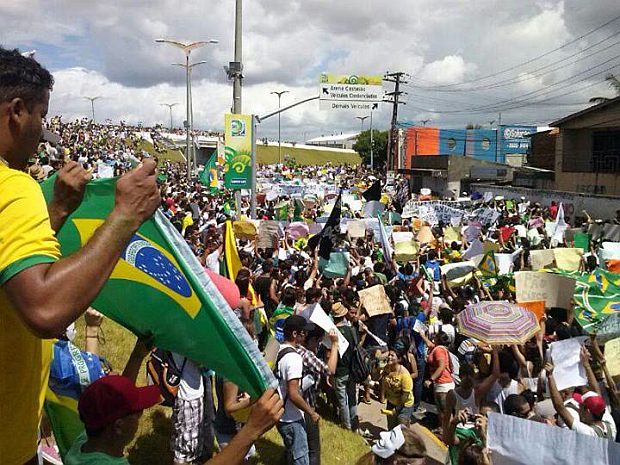
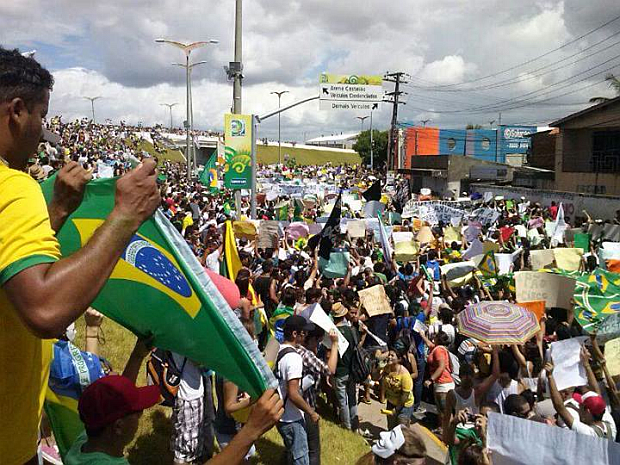
Protestors in Fortaleza. Priscila Dantas.

BRAZIL – As in many countries, Brazilians often joke that one should never discuss politics or football in mixed company. The potential for conflict and/or hurt feelings is simply too great. Yet in June of 2013, something amazing began to happen in Brazil: football and politics seemed the only two issues anyone wanted to discuss, and incredibly, nearly everyone seemed to agree with one another.

Transportation Costs

In the days leading up to the Confederations Cup – the main appetizer for next year’s FIFA World Cup – university students in São Paulo began to organize around increasing public transportation costs. The questions they raised were myriad, but in the most basic since they asked why bus and metro fares should be going up when the quality of bus and metro service was going down? They mobilized in protest on the eve of the Confederations Cup, and very quickly they found themselves brutally confronted by Military Police officers. When images of peaceful student protestors attacked by rubber bullets and pepper spray went viral, the ranks of demonstrators in São Paulo began to swell. And very soon thereafter protesters mobilized in every other major Brazilian city.

That public transportation issues lit the fuse of what’s been burning since the beginning of June is perhaps not surprising: bus and metro service in Brazil’s major cities has grown increasingly crowded, unreliable, dangerous, and expensive in recent years. And it’s something that affects millions of people on a daily basis. So when students took to the streets in protest over these issues – and were battered by police for it – nearly everyone in the country sided with the protestors. This wasn’t a special interest group pushing their own agenda; these were courageous individuals speaking out on behalf of the urban multitude. And to be sure, public transportation is by no means the only issue that has brought people together: since the beginning of June, people all over Brazil have taken to the streets for a host of different reasons, many related to the misuse of public funds, political corruption, and the country’s misguided development priorities.

Broad Spectrum of Demands

What international news media outlets have largely failed to recognize, however, is the broad spectrum of demands that unites this wave of Brazilian protesters. Unlike in past national demonstrations (e.g., the Direitas Já! movement at the end of the military dictatorship in 1984 or the impeachment of President Fernando Collar in 1992), there has been no singular, easily addressable issue raised by these protests. Rather than mobilizing around one, immediate common demand, people have come together to address dozens of very significant, structural issues. Political parties and labor unions have been publically sidelined, and rather than directing their complaints towards a singular political leader or faction, protestors appear united in their dissatisfaction with how Brazil has been managed at nearly every administrative level.

So what is it, then, that brought millions of people into the streets, every single night, in cities large and small all over Brazil, for the better part of June? As the protestors themselves made clear, it’s about much more than just public transportation. Recurring demands include better public education and university opportunities, improved healthcare services, public security, putting an end to (or at least diminishing) political corruption, and better use of public funds. Many Brazilians are appalled by how much public money has been spent preparing for the World Cup while basic urban infrastructural problems continue to grow worse everyday. Who wants to live in country, they ask, that has first-world football stadiums and third-world hospitals, schools, and sewage facilities? Where FIFA sets the agenda and local people are mostly ignored? Taxes are in fact quite high in Brazil, yet the returns that people see are insulting. And at the root of this problem, as everyone in Brazil knows, lies a long history of corruption, legal loopholes, and impunity for business and political elites. Inflation and high costs of living are also concerning to many, and just like nearly every other political leader, President Dilma Rousseff’s approval rating has plummeted in the last few weeks. People have come together, in the streets, online, and around television sets, and they’ve found that they share many of the same frustrations and concerns. Support for the protests has been almost universal in Brazil – excluding, of course, small groups of vandals that garner disproportionate media attention – and politicians are now finding they must address the demands of an engaged citizenry.

Growing Middle Class

As journalists and some academics have recently pointed out, this wave of protests in Brazil, Turkey, and countries elsewhere comes from a growing middle class that expects higher levels of accountability and democratic transparency. This expanding base of people feel they uphold their civic responsibilities – paying taxes, buying homes, investing in education, starting families, voting, following legal protocol, reporting unattended luggage, and so on – and in return, they expect political leaders to follow suit. And needless to say, they’re nonplussed with what they’ve seen from politicians.

To a certain extent, this is very much what’s behind mass mobilizations in Brazil. But there are other, perhaps more nuanced reasons for why the Brazilian multitude should erupt at just this moment. To begin, the domestic economy has been growing, modestly but consistently, for nearly a decade now. And urban Brazilians in particular are no longer so willing to accept the narrative that they live in a poor country that should suffer so many ‘developing world’ problems. Coupled with this are economies in North America and Europe that continue to flounder, and Brazilian politicians are finding it increasingly difficult to blame so many of the country’s infrastructural woes on wealthy foreign profiteers. Yes, many Brazilians recognize, neocolonial interests are harmful to Brazil’s long-term development goals, but equally corrosive can be a domestic culture of political corruption and negligence.

Cities Have Frozen

In just a few short weeks since people took to the streets, protestors have already made significant gains. Many cities have frozen or even reduced bus and metro fares, and PEC-37, the constitutional amendment that would have prevented the Public Ministry from investigating cases of corruption and crime (thereby providing politicians and police even greater levels of impunity), met a very public defeat in the Brazilian congress. People are feeling increasingly empowered, and while this round of protests is likely to fade at the draw of the Confederations Cup, it’s safe to expect that the streets will fill again this time next year, perhaps with even more people, as the World Cup kicks off. The multitude is growing in Brazil, people are becoming better connected and well informed, and until some profound changes have been addressed, demonstrators are unlikely to pass on the international platform provided by upcoming mega events (the 2014 World Cup and the 2016 Summer Olympics).

While rivalries between different football clubs in Brazil can spark bitter debates, one thing that draws nearly everyone together is support for the national team. And throughout the month of June, as the Brazilian football team thrived in the Confederations Cup, protestors made it clear that their message was by no means anti-Brazil (or even anti-football). Rather, it was unquestionably patriotic: there is incredible love for this country, and those in the streets believe that Brazilian public education, healthcare, and democracy should be every bit as admirable as the national football team. It’s a message that’s brought millions of people together, in conversations about politics and football, and it’s sparked a growing sense of passion and excitement. June of 2013 will not be a month that is soon forgotten in Brazil: the team kept winning on the pitch, the people kept winning in the streets, and now, on the eve of the World Cup, there is cautious optimism about the future. This is an incredible time for Brazil, and people will be reticent to let this momentum slip away.

The AfricaPaper: Dr. Jeff Garmany is a lecturer in the King’s Brazil Institute at King’s College London. His research focuses upon political geography and urban development, and he has lived on and off, working and conducting research, for the last 13 years in Brazil.

ICC’s Funders Seek Greater Efficiency

0


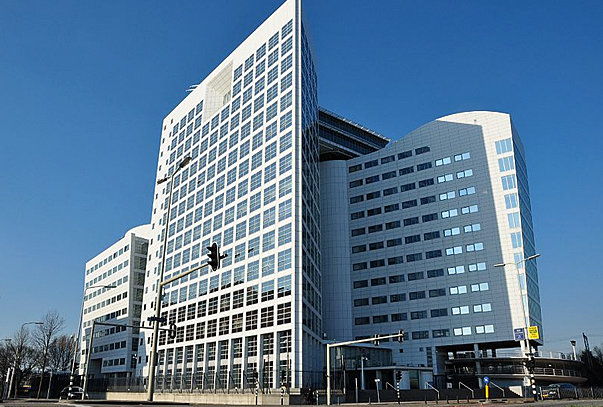
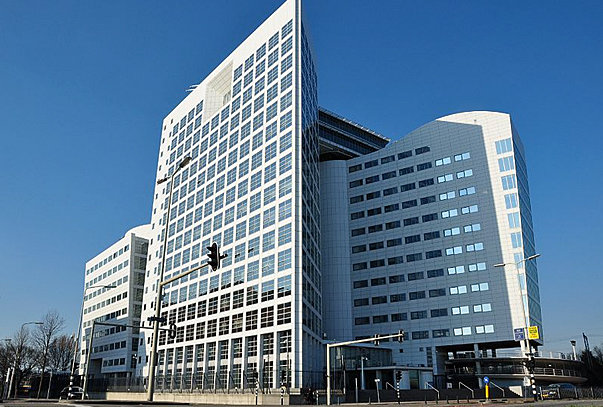
ICC in The Hague
ICC in The Hague
As the court asks for a bigger budget, it will need to consider where cost savings can be made.

The gleaming new front desk which greets visitors as they enter the International Criminal Court’s, ICC, Hague-based headquarters does not exactly scream austerity.

Renovating the entrance lobby, which is jointly shared with Eurojust, a judicial agency of the European Union, cost 50,000 euro, 66,000 US dollars, according to diplomatic sources.

Given that the ICC is due to move to new premises within the next couple of years, such apparently lavish spending rankles with the governments that pay for it, particularly at a time when they are cutting expenditure at home.

The 25,000 euro spent on the lobby – Eurojust paid the other half – is of course just a tiny fraction of the court’s overall budget, set at 109 million euro, 145 million dollars, for 2013. Court insiders say that the new lobby has improved security and saves energy through better insulation, thus reducing costs.

For officials in many of the contributing states, however, this kind of expenditure is symptomatic of the way the court operates, and is one of the reasons why they are reluctant to give it the money it badly needs.

Questions have been raised about a wide range of ICC expenditure, from travel costs to current management structures, and the contributing countries want action.

“We believe there is a need for the ICC to challenge itself more on its needs and required budget so that it can ensure that its operations are as effective and efficient as possible,” a spokesperson for the British Foreign and Commonwealth Office told IWPR. “It isn’t possible to put a price on justice, but there are areas where we need more information from the court as to how certain budget lines are spent and how they contribute to the overall effectiveness and efficiency of the court.”

Other governments that are major contributors to the ICC budget hold similar views, although officials were not willing to be quoted on the record.

DOUBTS ABOUT FINANCIAL PRUDENCE

The ICC’s budget is set by the Assembly of the States Parties to the Rome Statute or ASP, made up of the governments which signed up to the court’s founding charter. In recent years, the ASP has been criticised for adopting a zero-growth policy for funding the court, even though the geographical scope of investigations has greatly expanded.

Many ASP members question whether the court is getting the most out of its current budget. The thinking is that if the ICC cannot be trusted to make every penny count, then it should not be entitled to more money.

Some have voiced concerns, for example, over the amount being spent to furnish the ICC’s new headquarters, which it is due to move into in 2015. New desks in the building reportedly cost 6,000 euro each.

According to the FCO, the British government has asked the court to provide more information about why certain costs are so high, with a view to “challeng[ing] their assumptions in order to reduce costs”.

“These areas include things like the cost of office equipment, travel and provision of services,” the FCO spokesperson said. “We are asking [the court] to be creative and inventive in how it finds efficiencies, for example through procurement, and revising policies so as to reduce costs – [such as] how long computers are kept for – so that this money can be used in support of the court’s work in other areas.”

Herman von Hebel, who replaced Silvana Arbia as the court’s registrar in March, recognises these concerns and has promised to address them.

“It is all about developing trust,” he told IWPR. “What I would like to do is develop a transparent discussion with the ASP to show exactly what our needs are and what we can do with the money that we are being provided with. When we speak about efficiency, there’s always room for critically assessing one’s own working methods.”

Von Hebel says that one of his priorities will be to look at the registry – the body in charge of administrative and financial management at the ICC – and to explore ways of doing more for less money.

“We need to be very specific about exactly what our needs are,” he said. “I think that this is something that could be done not only within the registry, but on a court-wide basis.”

Von Hebel certainly has the credentials for tackling budgetary constraints, and member states seem to have faith that he will make a difference.

He spent three years as deputy registrar and then registrar at the Special Court for Sierra Leone in Freetown, followed by a similar period as deputy registrar and then registrar at the Special Tribunal for Lebanon, based in The Hague.

Both of those courts rely heavily on short-term voluntary funding, which often places tremendous pressure on their budgets.

“In these other tribunals, I led forthright internal discussions about our needs and resources, and was often perceived as tough in terms of the budget,” Von Hebel said. “Perhaps this is my Dutch nationality, but I hope that this is a reputation I will also have with the Assembly [of States Parties].”

PRESSING NEED FOR MORE FUNDS

There has never been greater urgency for the ICC to show that it is a responsible organisation that can be entrusted with more funding.

The court has come in for serious criticism in recent months following a string of failed investigations that have left prosecutors unable to bring enough evidence against suspects. (SeeICC Under Fire Over Investigations)

Supporters of the court say the Office of the Prosecutor is overstretched and needs more funding to enable it to conduct investigations to the necessary standard.

Four years ago, the ICC was investigating just four situations, in the Democratic Republic of Congo, Uganda, Darfur and the Central African Republic. Since then, it has added four more investigations, in Kenya, Libya, Mali, and the Ivory Coast.

At the same time, the court’s budget has barely increased at all, inching up from 101 million euro in 2009 to this year’s 109 million.

“We see that there’s a real problem with the number of investigations increasing whilst the number of investigation teams remain the same,” Jonathan O’Donohue, legal adviser at the advocacy organisation Amnesty International, said. “Staff often have to be moved around in order to cover the increased workload. The ultimate goal must be for the court to function effectively, but this is constantly overshadowed by the zero-growth argument.”

Von Hebel recognises that certain areas of the court are in desperate need of more funding, and he hopes that by making savings elsewhere he can persuade member states to increase the overall allocation.

“The prosecutor is in dire need of more resources to do investigations,” said Von Hebel. “Compared with other courts and tribunals, the number of staff per investigation is extremely low. If you have eight situations and just over 60 investigators, then you have a very tough job. We have discussed already with the prosecutor how we can internally streamline to further support this work. All member states have significant financial challenges at the moment, so we need to recognise this and create a culture of transparency, trust and confidence within our organisation.”

MAKING A DIFFERENCE

It is too early to tell whether the new registrar’s good intentions will make a meaningful difference to ICC expenditure, and there are few signs that member states are prepared to loosen their purse strings just yet.

This year’s negotiations on the budget are under way, and it is unlikely that anything more than a very slight increase will be agreed when member states meet in New York in November.

Still, diplomatic sources indicate that if the ICC is able to increase the ASP’s confidence in it by demonstrating a high level of transparency, subsequent years could see real steps towards addressing its funding needs.

“The court’s willingness to respond to requests from the ASP on how it views and manages its budget has improved over the last few years,” the FCO spokesperson said. “We can see a growing partnership between the ASP and the court to develop and improve the overall efficiency of its operations.”

A source in another ASP member told IWPR, “The ICC has not always fostered a high level of trust with member states, which can make it difficult for the court to clearly show that it should be entitled to more funds. Things have improved noticeably since the low point of 2010, though, and we hope this continues.”

Von Hebel says that it is soon to say which areas can be subject to efficiency savings. Nevertheless, a draft report prepared by the consultancy firm PricewaterhouseCoopers offers some clues.

The document, seen by IWPR, was prepared at the request of the ASP’s Committee on Budget and Finance, which wanted an external assessment of the court’s organisational structure and a view on where savings might be made.

The report focuses primarily on changes to the registry and the judiciary. A separate report looking at the Office of the Prosecutor is being worked on at the moment.

“It can be concluded that the registry should seek to reduce its structural complexity with clear hierarchical and escalation lines, with a view to strengthening internal (and thereby external) cooperation and coordination,” the report states.

In his interview with IWPR, Von Hebel indicated that the registry’s managerial structure was an area he would be looking at.

The report also says that the registry suffers from a lack of adequate performance measurements, hampering efficient and targeted application of budget funds.

The report also recommended better communication among different ICC departments, suggesting that some of their functions may overlap.

The PricewaterhouseCoopers consultants also tackled the issue of staffing, which, according to the latest figures from the court, eats up nearly 70 per cent of the budget.

Finally, the report notes a lack of staff motivation in some areas of the court, largely caused by a lack of career opportunities and general dissatisfaction with the performance appraisal system.

MEASURING JUSTICE

In national courts, it is quite common to use a series of benchmarks to measure the effectiveness of the justice process.

Pim Albers is a policy advisor within the Dutch ministry of justice and a senior researcher at the Hague Institute for Global Justice. He says it is normal practice, for example, to look at the duration of cases of a similar type and the ratio between incoming and completed cases.

However, it is not clear whether this would readily translate to the sphere of international justice, given the many variables that affect the success of any given investigation or prosecution.

“A court is not a factory that produces shoes,” Von Hebel said. “There are all sorts of factors that determine the effectiveness of the court. Whilst it may be useful to have a look at some quantitative factors such as the number of court hearings or the number of ongoing investigations, it’s also a question of what you can achieve on the ground, and it’s far too early in the court’s lifespan to make a complete assessment of this.”

Albers recognises that things work very differently at the ICC, and that there are huge challenges in comparing one trial or country situation with another. However, he thinks that some steps could be taken in this direction.

“It would be useful if the ICC could publish a breakdown of the time required by staff in order to reach a judgement,” he said. “It would be useful to measure how long it takes to prepare an indictment, how much time is spent on the investigation, how long the trial phase lasts. Then the court might be able to draw some useful conclusions about where cost savings would make most sense.”

Albers points out that such performance indicators might also reveal other valuable facts about the process of international justice, beyond merely where inefficiencies lie.

He suggests, for example, that it might be helpful to compare the number of indictments with the number of trials concluding, either in a conviction or an acquittal.

“A particularly high ratio… could indicate a high-level of cooperation with the situation country,” he said. “Conversely, a particularly low ratio may mean the level of cooperation is insufficient and steps should be taken. Performance indicators are useful at showing where the bottlenecks lie.”

Patrick Vinck, a research scientist at the Harvard Humanitarian Initiative, a centre within Harvard university, has been looking at ways in which indicators can be used to measure the effectiveness of outreach – the efforts made to communicate with people affected by the trial in the country concerned.

In the past, the court has been criticised for cutting its outreach programmes too quickly, since they are often viewed as a “non-core” function. This is something that Von Hebel wants to change.

“The key challenge is to decide what exactly you are trying to measure and what you are trying to do with outreach,” Vinck said. “If you are only trying to measure how much people have heard about the court or a particular trial, then things are fairly straightforward. But if you’re trying to capture true understanding of the trials, then measuring the impact becomes much more complex.”

Vinck says the methodology he uses is the same as might be used to measure the extent of a disease.

“We interview representative samples of the population and use this data to measure the prevalence of knowledge, attitudes and perceptions,” he said.

Whilst Vinck does not think it makes sense for benchmarks to be used to shape the budget, he nonetheless sees it as important to gather this kind of data, as a way of finding out whether ICC outreach work is effective, and whether more funding is needed. For example, past research into outreach activities in the Central African Republic, CAR, revealed that awareness of the ICC was especially low among women, even though gender-based violence forms a large component of the ongoing case against Jean-Pierre Bemba, a Congolese politician accused of crimes in CAR.

“The budget for outreach in the ICC is ridiculously small,” said Vinck. “By evaluating their own work and effectiveness, outreach units can better demonstrate what their needs are.”

Blake Evans-Pritchard is an IWPR contributor in The Hague and Simon Jennings is IWPR’s Africa Editor in London.

Egypt: The Opposition’s Next Steps


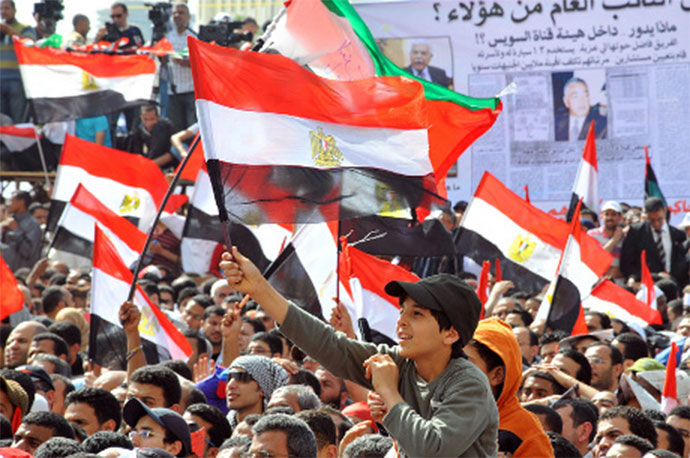
Cairo, Egypt. 8th April 2011 -- Protesters wave flags in al-Tahrir Square on the Friday of Purification to demand the speedy prosecution of former president Hosni Mubarak. -- Protesters gather in al-Tahrir Square on the Friday of Purification to demand the speedy prosecution of former president Hosni Mubarak.
Cairo, Egypt. 8th April 2011 — Protesters wave flags in al-Tahrir Square on the Friday of Purification to demand the speedy prosecution of former president Hosni Mubarak. — Protesters gather in al-Tahrir Square on the Friday of Purification to demand the speedy prosecution of former president Hosni Mubarak.

Summary

Egypt’s Tamarod movement succeeded in its attempt to pressure the Egyptian military to expel former President Mohammed Morsi and his Muslim Brotherhood-led government from office. Now the question is whether Tamarod and the other elements of the former opposition can avoid the kind of fragmentation and divisive infighting that played a significant role in catapulting the Muslim Brotherhood to power in the first place. There are many challenges to overcome, not the least of which is that the military ultimately holds the keys to power — something the Muslim Brotherhood learned the hard way July 3. Going forward, it will be difficult for the disparate blend of liberal, secular and Islamist parties united in their shared desire to see Morsi deposed to maintain their cohesion.

Analysis

The Tamarod movement declared its existence and demands on May 1, and a little more than two months later it had gathered enough momentum to play a critical role in Egypt’s military coup. The military essentially fulfilled all of Tamarod’s demands – besides removing Morsi from office, the Islamist-dominated Shura Council has been dissolved, the constitution has been suspended and the head of the Supreme Court, Adly Mansour, has been installed as Egypt’s interim president.

The Muslim Brotherhood’s Shortcomings

Tamarod’s meteoric rise was enabled in part by the failures of the Morsi government, and in part by structural problems that will plague Morsi’s successor as much as they troubled the previous government. The Morsi government was never able to secure the loyalty of the country’s police and Central Security Forces. In March, police and security officials held widespread strikes and sit-ins to demand better work conditions and benefits, more and higher-quality weapons and the resignation of then-Interior MinisterMohammed Ibrahim. Because of these strikes, the military was called on at times to act in the police’s stead, a fact that severely undermined the government’s credibility in the eyes of the military. Morsi’s inability to establish independent command of police and security forces away from the military, combined with deteriorating economic conditions and an inability to manage the country with direct military involvement, made the Muslim Brotherhood an increasingly unpopular choice for the military to rule through.

The Muslim Brotherhood also never developed a working relationship with the Egyptian judiciary, much less asserted any kind of control over it. Many of the judges were appointed by former President Hosni Mubarak and remained loyal to entrenched interests and the military. The courts halted progress toward completing the constitution and holding new elections at every step. When Morsi tried to institute a younger mandatory retirement age, many of the judges saw it as a way to force them out of the system. And when Morsi overstepped his bounds Nov. 22 by trying to declare his actions beyond judicial review, he united the judiciary’s anger with the frustration of much of the rest of Egypt’s political landscape. Tamarod may have revealed itself to the world in May, but Morsi’s actions helped galvanize much of the overall anger that eventually toppled him. Morsi’s attempts to navigate around the limitations imposed upon him by the military and judiciary ultimately led to the sentiment that he was trying to seize power for the Muslim Brotherhood, and it was this sentiment that Tamarod was able to give voice to and ultimately upon which it capitalized.

Tamarod and Other Opposition Groups

Tamarod was not designed as a political party; on June 28 it announced the formation of its own political front (theJune 30movement), but for all intents and purposes, it has fulfilled its mission. The movement’s stated desires have come to fruition, and if it wants to remain politically relevant Tamarod now will have to transform from a critical external voice to a bona fide functional political entity.However, it will be challenging to maintain its popular momentum during such a change, and it is not even clear that the movement’s leaders desire a political future. One of the pivotal moments of the last few days in Egypt was when the supposed young leaders of Tamarod — themselves former members of an opposition group known as Kefaya that was founded in 2004 to advocate political reform in the Mubarak system — authorized Constitution Party President and National Salvation Front coordinator Mohamed ElBaradei to speak for them in negotiations with the military. At the time, the move demonstrated that the opposition was determined to maintain its cohesion and be disciplined in pursuit of its stated goals. But in the coup’s aftermath, it also indicates that Tamarod has no real program or ideology of its own.

It is important to remember that the National Salvation Front that ElBaradei coordinates is itself an umbrella of 35 distinct political parties and other groups. ElBaradei’s star is ascendant right now in part because of the widespread popular dissatisfaction with Morsi’s regime, and some believe that ElBaradei’sties to the West, where he is generally respected because of his tenure as director general of the International Atomic Energy Agency from 1997 to 2009, will enable him to secure greater foreign investment and perhaps close a deal with the International Monetary Fund on a $4.8 billion loan. But ElBaradei will struggle to keep his support unified as Egypt moves from the excitement of its “revolution” to the mundane tasks of holding new elections and redesigning the political system. That phase will be marked by political jockeying among disparate groups, from the National Salvation Front’s 35 member groups to Salafist parties, such as al-Nour, that soured on Morsi’s rule toward the end. And although the Muslim Brotherhood for now is maintaining a defiant tone, it is likely to try reassimilating into the political process. It has suffered a setback, but it would be a mistake to underestimate the potential efficacy of the group in the opposition.

But such speculation about the upcoming political jockeying is in some ways premature and also misses the more salient reality. Little is known about interim President Adly Mansour, but it is known that he was appointed to the court by Mubarak and that he was instrumental in blocking the passage of a political isolation law that would have prevented old regime officials such as Ahmed Shafiq from running for president against Morsi in 2012. The military has granted him unilateral authority to determine interim constitutional measures while the current constitution is suspended. Whoever comes to try to govern Egypt as president will face many of the same obstacles that Morsi and the Muslim Brotherhood did, such as its structural economic issues, the role of the Central Security Forces and its relationship with the judiciary, not to mention maintaining a stable electoral base. The successor to Morsi and the Muslim Brotherhood will have to understand that its role will be to manage the affairs of the state while being a caretaker of the military’s interests, and that it will be difficult to pursue a political agenda independent from the military’s interests. And all the while the military will be there, as it was in the last year when it assured that the constitution that the Brotherhood tried to force through the system maintained the military’s political and economic interests, and as it was onJuly 3when it deemed it necessary to expel Morsi to maintain its grip on Egypt.

The AfricaPaper: The Next Phase of the Arab Spring republished with permission of Stratfor.