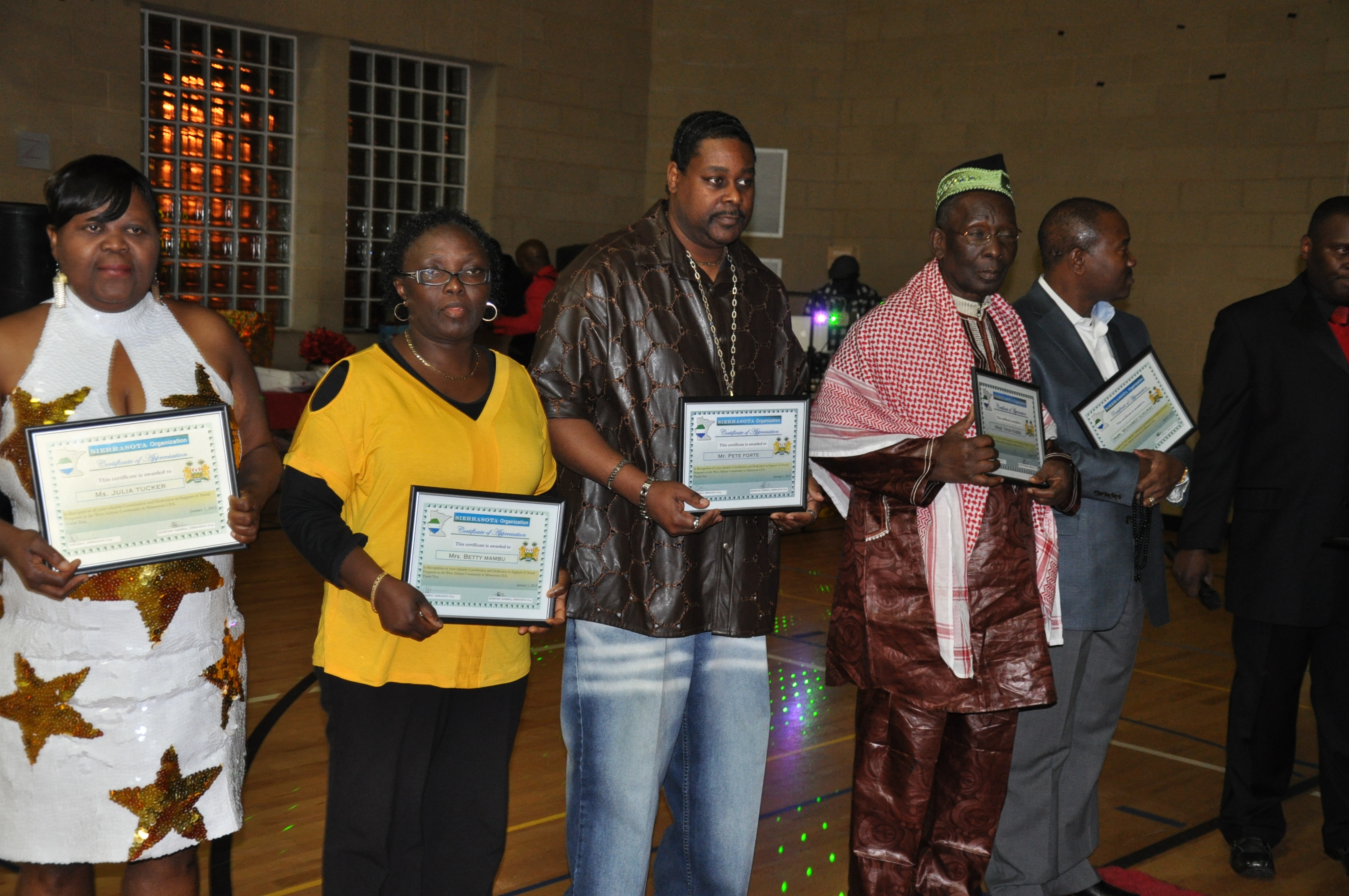
The AfricaPaper will bring you the full story soon.
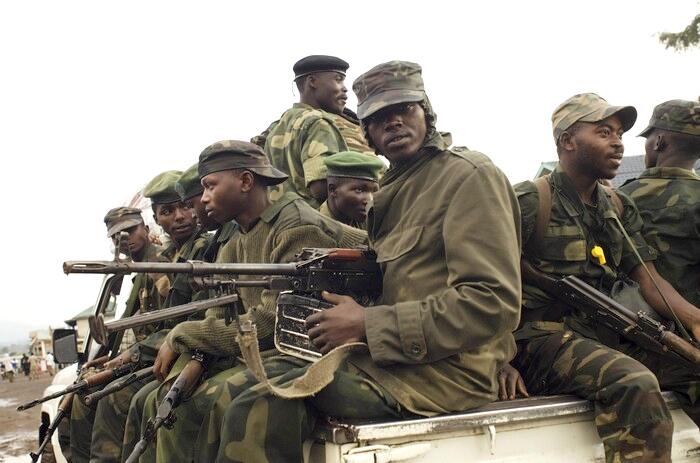
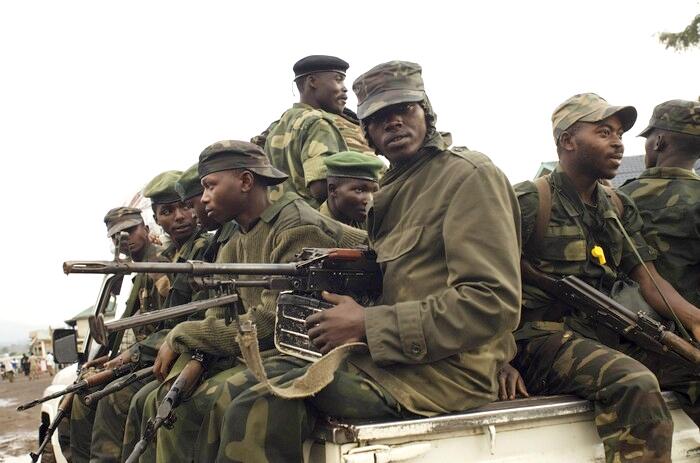
Washington – President Obama telephoned Rwandan President Paul Kagame to underscore that any support to Congolese rebel group M23 is “inconsistent with Rwanda’s desire for stability and peace” in eastern Democratic Republic of the Congo (DRC), and he urged Kagame to abide by commitments made in November to permanently end all support for armed groups in the country.
According to a December 18 White House summary of the call, Obama told Kagame that it is important to reach “a transparent and credible political agreement that includes an end to impunity for M23 commanders and others who have committed serious human rights abuses” and that the crisis in eastern DRC should be resolved by a “political agreement that addresses the underlying regional security, economic and governance issues while upholding the DRC’s sovereignty and territorial integrity.”
Obama told Kagame he welcomed the Rwandan leader’s “commitment to moving forward in finding a peaceful solution for eastern DRC,” according to the White House.
An estimated 5 million people have been killed and millions displaced since 1998 by a variety of rebel groups battling to control the eastern DRC. In 2012, a new group of rebels rose up. Known as the M23, these rebels are mostly breakaway officers from the Congolese army.
In November, the Congolese, Rwandan and Ugandan governments met in Kampala and agreed to end outside support to the M23 and other armed groups in the eastern DRC.
Speaking before a U.S. House of Representatives subcommittee December 11, Assistant Secretary of State for African Affairs Johnnie Carson said external support to M23 by Rwanda and other sources has made the group “the threat it is today,” and there is “a credible body of evidence” that shows that the Rwandan government has been supplying M23 with “significant military and logistical support, as well as operational and political guidance.”
In response, Carson said, the United States has suspended foreign military financing funds to Rwanda.
Carson told U.S. lawmakers that M23’s commanders “represent a ‘who’s who’ of notorious human rights abusers in the eastern DRC. They include Bosco Ntaganda, who faces an International Criminal Court arrest warrant for sexual violence and other crimes against humanity and continues to play an active role in the militia.”
State Department spokeswoman Victoria Nuland told reporters December 18 that the Obama administration is continuing to call for Ntaganda’s arrest, as well as that of Sylvestre Mudacumura, who is also charged with committing atrocities and has been issued an ICC warrant.
“The current conflict in the eastern Congo with M23 underscores the continuing impunity the perpetrators of violence and human rights abuses continue to enjoy in the Congo,” Nuland said.
Along with identifying individuals on the ground who commit abuses and subjecting them to U.S. sanctions, Nuland said, the United States is also reviewing its list of those who are aiding and abetting armed groups for possible sanctions designation.
“We look at the whole landscape,” Nuland said.
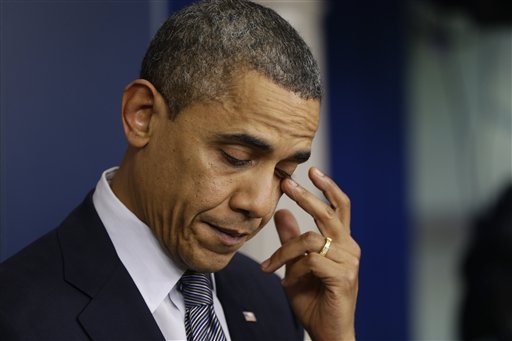
REMARKS BY THE PRESIDENT
AT SANDY HOOK INTERFAITH PRAYER VIGIL
Newtown High School
Newtown, Connecticut
8:37 P.M. EST
THE PRESIDENT: Thank you. (Applause.) Thank you, Governor. To all the families, first responders, to the community of Newtown, clergy, guests — Scripture tells us: “…do not lose heart. Though outwardly we are wasting away…inwardly we are being renewed day by day. For our light and momentary troubles are achieving for us an eternal glory that far outweighs them all. So we fix our eyes not on what is seen, but on what is unseen, since what is seen is temporary, but what is unseen is eternal. For we know that if the earthly tent we live in is destroyed, we have a building from God, an eternal house in heaven, not built by human hands.”
We gather here in memory of twenty beautiful children and six remarkable adults. They lost their lives in a school that could have been any school; in a quiet town full of good and decent people that could be any town in America.
Here in Newtown, I come to offer the love and prayers of a nation. I am very mindful that mere words cannot match the depths of your sorrow, nor can they heal your wounded hearts. I can only hope it helps for you to know that you’re not alone in your grief; that our world too has been torn apart; that all across this land of ours, we have wept with you, we’ve pulled our children tight. And you must know that whatever measure of comfort we can provide, we will provide; whatever portion of sadness that we can share with you to ease this heavy load, we will gladly bear it. Newtown — you are not alone.
As these difficult days have unfolded, you’ve also inspired us with stories of strength and resolve and sacrifice. We know that when danger arrived in the halls of Sandy Hook Elementary, the school’s staff did not flinch, they did not hesitate. Dawn Hochsprung and Mary Sherlach, Vicki Soto, Lauren Rousseau, Rachel Davino and Anne Marie Murphy — they responded as we all hope we might respond in such terrifying circumstances — with courage and with love, giving their lives to protect the children in their care.
We know that there were other teachers who barricaded themselves inside classrooms, and kept steady through it all, and reassured their students by saying “wait for the good guys, they’re coming”; “show me your smile.”
And we know that good guys came. The first responders who raced to the scene, helping to guide those in harm’s way to safety, and comfort those in need, holding at bay their own shock and trauma because they had a job to do, and others needed them more.
And then there were the scenes of the schoolchildren, helping one another, holding each other, dutifully following instructions in the way that young children sometimes do; one child even trying to encourage a grown-up by saying, “I know karate. So it’s okay. I’ll lead the way out.” (Laughter.)
As a community, you’ve inspired us, Newtown. In the face of indescribable violence, in the face of unconscionable evil, you’ve looked out for each other, and you’ve cared for one another, and you’ve loved one another. This is how Newtown will be remembered. And with time, and God’s grace, that love will see you through.
But we, as a nation, we are left with some hard questions. Someone once described the joy and anxiety of parenthood as the equivalent of having your heart outside of your body all the time, walking around. With their very first cry, this most precious, vital part of ourselves — our child — is suddenly exposed to the world, to possible mishap or malice. And every parent knows there is nothing we will not do to shield our children from harm. And yet, we also know that with that child’s very first step, and each step after that, they are separating from us; that we won’t — that we can’t always be there for them. They’ll suffer sickness and setbacks and broken hearts and disappointments. And we learn that our most important job is to give them what they need to become self-reliant and capable and resilient, ready to face the world without fear.
And we know we can’t do this by ourselves. It comes as a shock at a certain point where you realize, no matter how much you love these kids, you can’t do it by yourself. That this job of keeping our children safe, and teaching them well, is something we can only do together, with the help of friends and neighbors, the help of a community, and the help of a nation. And in that way, we come to realize that we bear a responsibility for every child because we’re counting on everybody else to help look after ours; that we’re all parents; that they’re all our children.
This is our first task — caring for our children. It’s our first job. If we don’t get that right, we don’t get anything right. That’s how, as a society, we will be judged.
And by that measure, can we truly say, as a nation, that we are meeting our obligations? Can we honestly say that we’re doing enough to keep our children — all of them — safe from harm? Can we claim, as a nation, that we’re all together there, letting them know that they are loved, and teaching them to love in return? Can we say that we’re truly doing enough to give all the children of this country the chance they deserve to live out their lives in happiness and with purpose?
I’ve been reflecting on this the last few days, and if we’re honest with ourselves, the answer is no. We’re not doing enough. And we will have to change.
Since I’ve been President, this is the fourth time we have come together to comfort a grieving community torn apart by a mass shooting. The fourth time we’ve hugged survivors. The fourth time we’ve consoled the families of victims. And in between, there have been an endless series of deadly shootings across the country, almost daily reports of victims, many of them children, in small towns and big cities all across America — victims whose — much of the time, their only fault was being in the wrong place at the wrong time.
We can’t tolerate this anymore. These tragedies must end. And to end them, we must change. We will be told that the causes of such violence are complex, and that is true. No single law — no set of laws can eliminate evil from the world, or prevent every senseless act of violence in our society.
But that can’t be an excuse for inaction. Surely, we can do better than this. If there is even one step we can take to save another child, or another parent, or another town, from the grief that has visited Tucson, and Aurora, and Oak Creek, and Newtown, and communities from Columbine to Blacksburg before that — then surely we have an obligation to try.
In the coming weeks, I will use whatever power this office holds to engage my fellow citizens — from law enforcement to mental health professionals to parents and educators — in an effort aimed at preventing more tragedies like this. Because what choice do we have? We can’t accept events like this as routine. Are we really prepared to say that we’re powerless in the face of such carnage, that the politics are too hard? Are we prepared to say that such violence visited on our children year after year after year is somehow the price of our freedom?
All the world’s religions — so many of them represented here today — start with a simple question: Why are we here? What gives our life meaning? What gives our acts purpose? We know our time on this Earth is fleeting. We know that we will each have our share of pleasure and pain; that even after we chase after some earthly goal, whether it’s wealth or power or fame, or just simple comfort, we will, in some fashion, fall short of what we had hoped. We know that no matter how good our intentions, we will all stumble sometimes, in some way. We will make mistakes, we will experience hardships. And even when we’re trying to do the right thing, we know that much of our time will be spent groping through the darkness, so often unable to discern God’s heavenly plans.
There’s only one thing we can be sure of, and that is the love that we have — for our children, for our families, for each other. The warmth of a small child’s embrace — that is true. The memories we have of them, the joy that they bring, the wonder we see through their eyes, that fierce and boundless love we feel for them, a love that takes us out of ourselves, and binds us to something larger — we know that’s what matters. We know we’re always doing right when we’re taking care of them, when we’re teaching them well, when we’re showing acts of kindness. We don’t go wrong when we do that.
That’s what we can be sure of. And that’s what you, the people of Newtown, have reminded us. That’s how you’ve inspired us. You remind us what matters. And that’s what should drive us forward in everything we do, for as long as God sees fit to keep us on this Earth.
“Let the little children come to me,” Jesus said, “and do not hinder them — for to such belongs the kingdom of heaven.”
Charlotte. Daniel. Olivia. Josephine. Ana. Dylan. Madeleine. Catherine. Chase. Jesse. James. Grace. Emilie. Jack. Noah. Caroline. Jessica. Benjamin. Avielle. Allison.
God has called them all home. For those of us who remain, let us find the strength to carry on, and make our country worthy of their memory.
May God bless and keep those we’ve lost in His heavenly place. May He grace those we still have with His holy comfort. And may He bless and watch over this community, and the United States of America. (Applause.)
END
8:55 P.M. EST
Source: THE WHITE HOUSE
Office of the Press Secretary. Release – December 16, 2012


WASHINGTON, DC – On Friday, China’s largest English language newspaper China Daily launched Africa Weekly, a supplement that “will look at the precise nature of Chinese involvement in Africa and also the prominent role many Africans play in China.”
The announcement on the government-owned China Daily, featured quotes from Chinese and African diplomats falling over each other to praise how this initiative will improve mutual understanding, especially Africans understanding of China: “Minister of Culture Cai Wu said the weekly will will give African people a comprehensive and reliable guide to China” and “Abdul’ahat Abdurixit, president of the Chinese-African People’s Friendship Association, said the launch of an Africa edition by China Daily “will surely help improve communication between China and Africa.”
Improving African understanding of Chinese is a great goal, though it probably wouldn’t hurt if Chinese expanded their views of Africans. During a China-Africa summit in 2006 billboards lining the road to the airport featured purporting to “glorify” Africans; though at least one, featuring a tribesman with a bone through his nose, depicted a Papua New Guinean. A month before a 2012 China-Africa summit in July, Africans rioted in Guangzhou after a Nigerian was found dead in police custody; “the Chinese social media response to the latest protest in Guangzhou was dismayingly xenophobic,” wrote Time‘s Hannah Beech, who also noted that the districts were Africans congregate in Guangzhou are known as ‘chocolate city.’
While there’s plenty of anecdotal evidence out there, it’s hard to generalize about what Chinese think about Africans without being hypocritical, so I’ll just quote what a Chinese English teaching recruiter once told me in Beijing: “We try not to hire black people. They tend to scare the children.”
One prominent example of the gulf in racial understanding between Chinese and Africans is “Black People Toothpaste,” one of the most popular toothpaste brands in China, which I wrote a story about for Newsweek in 2010, and which a Colgate spokesman I spoke with on Friday confirmed is still 50 percent owned by his company.The logo features a minstrel singer wearing a top hat, backed by a white halo and flashing a smile of blindingly white teeth. The brand is so widespread it’s even engendered a popular knock-off brand, “Black Younger Sister Toothpaste.”
Black People Toothpaste used to be called Darkie in English, but an outcry against Colgate when the news was reported in the United States in the late 1980s caused the brand to change the English name to the less offensive Darlie, and to change the logo from offensive and sinister to just offensive.
“The only difference between black people and white people is that black people have whiter teeth,” Wu Junjie, who works for a Taiwanese fast food restaurant in Beijing, told me in 2010.
Before China Daily and other state organs can successfully highlight the “prominent role” Africans play in China, it probably wouldn’t hurt if less Chinese people associated black people with toothpaste.
The AfricaPaper: Isaac Stone Fish is an associate editor at Foreign Policy Magazine in Washington, DC. Previously a Beijing-based correspondent for Newsweek and The Daily Beast, he has written on subjects ranging from China’s love affair with rogue states, Xinhua News Agency’s global expansion plan, and the Dalai Lama’s effect on international trade. His articles have also appeared in The Economist, Los Angeles Times, and the International Herald Tribune.
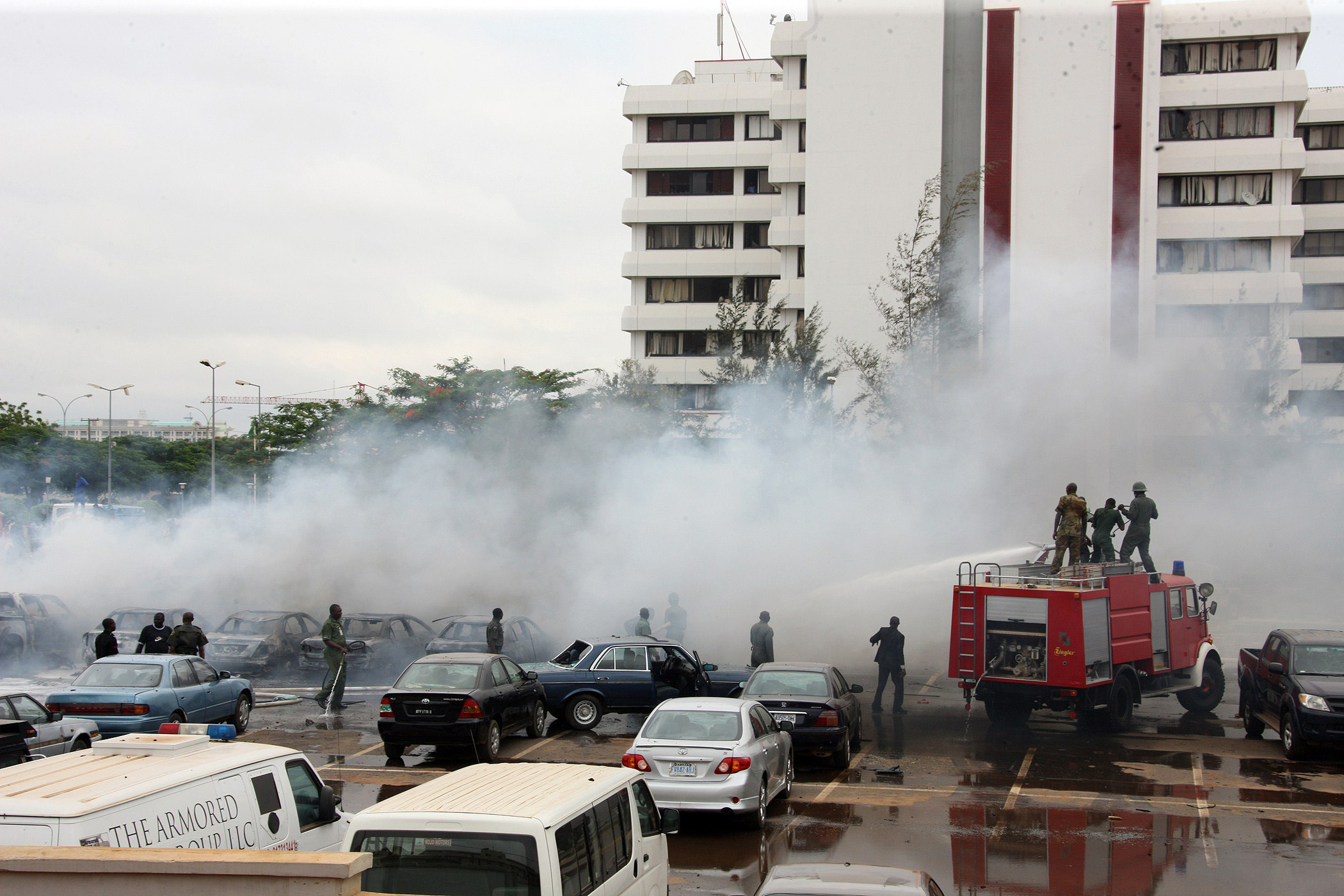
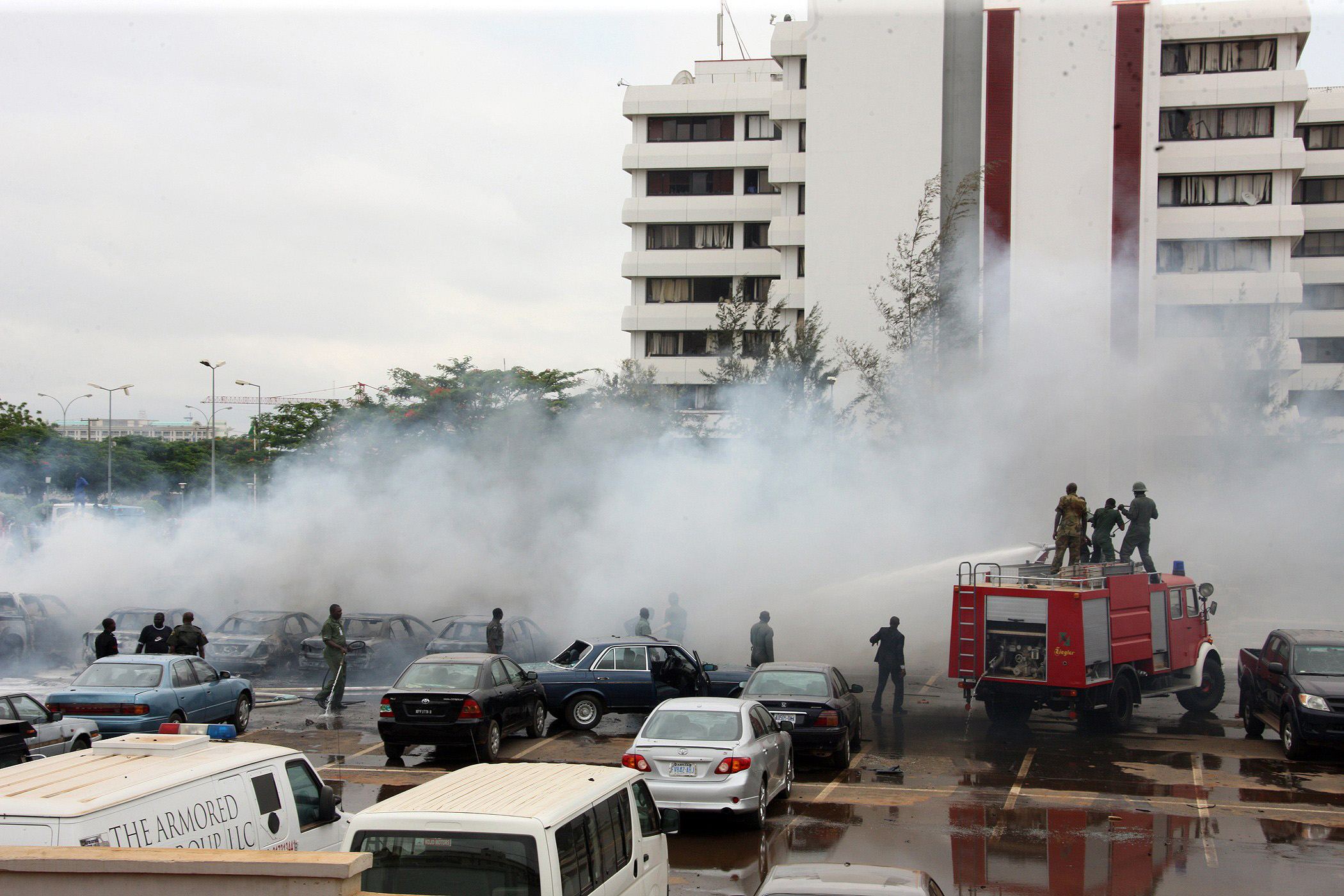
NIGERIA – On Nov. 25, Boko Haram, an Islamist militant group from northern Nigeria, attacked a church in Jaji, Kaduna state, using two suicide bombers during the church’s weekly religious service. The first bomb detonated in a vehicle driven into the church, and the second detonated approximately 10 minutes later, when a crowd of first responders gathered at the scene. About 30 people were killed in the attacks; the second blast caused the majority of the deaths. The incident was particularly symbolic because Jajiis the home of Nigeria’s Armed Forces Command and Staff College, and many of the churchgoers were senior military officers.
In the wake of the Jaji attacks, media reports quoted human rights groups saying that Boko Haram has killed more people in 2012 than ever before. The group has killed roughly 770 people this year, leading many to conclude that Boko Haram has become more dangerous.
However, it is important to look beyond the sheer number of fatalities when drawing such conclusions about a group like Boko Haram. Indeed, a less cursory look at the group reveals that while 2012 has been a particularly deadly year, the Nigerian government has curtailed the group’s capabilities.In terms of operational planning, the group has been limited to simple attacks against soft targets in or near its core territory.In other words, Boko Haram remains deadly, but it is actually less capable than it used to be, relegating the group to a limited, regional threat unless this dynamic is somehow altered.
Boko Haram, Hausa for “Western Education is Sinful,” was established in 2002 in Maiduguri, the capital of Nigeria’s Borno state. It has since spread to several other northern and central Nigerian states. Its official name is Jama’atu Ahlis Sunna Lidda’awati wal-Jihad, Arabic for “Group Committed to Propagating the Prophet’s Teachings and Jihad.”While Boko Haram is a relatively new phenomenon, Nigeria has struggled with militant Islamism for decades. For example, the Maitatsine sect, led by Mohammed Marwa, fomented violence in the early 1980s in the very same cities that Boko Haram is presently active.
Initially, Boko Haram incited sectarian violence and attacked Christians with clubs, machetes and small arms. But by 2010, the grouphad added Molotov cocktails and simple improvised explosive devices to its arsenal.In 2011, Boko Haram madea major operational leapwhen it unexpectedly began to use large suicide vehicle bombs. They were used first in the botched attack against thenational police headquartersin Abuja in June 2011, and they were later used in the more successfulattack against a U.N. compound in Abuja in August 2011.
The leap from simple attacks in Boko Haram’s core areas to sophisticated attacks using large vehicle bombs in the nation’s capital skipped several steps in the normal progression of militant operations. The group’s progression suggested that it had received outside training or assistance. The sudden increase in operational capacity appeared to have corroborated reports circulating at that time of Boko Haram militants attending training camps run by al Qaeda in the Islamic Maghreb.
This rapid progression, which came in the wake of a Nigerian operative being involved in al Qaeda in the Arabian Peninsula’s plot to bomb a Detroit-bound airliner, led to a concern that Boko Haram had the capability and the intentto become the next transnational jihadist franchise capable of threatening the United States and Europe. These fears were further stoked by warnings from the U.S. government inNovember 2011that Boko Haram was planning to attack Western hotels in Abuja.
To counter the perceived growing Boko Haram threat, the Nigerian government, aided by intelligence and training provided by the United States and its European allies, launched a major offensive against the group. Since January, the government has arrested or killed several leaders of Boko Haram, disrupted a number of cells and dismantled numerous bombmaking facilities. In addition to government efforts, there has been a grassroots backlash against Boko Haram, asevidenced by the formation of anti-Boko Haram militant group Jama’atuAnsarul Muslimina Fi Biladis Sudan, or “Supporters of Muslims in the Lands of Sudan,” commonly known as Ansaru.
 Boko Haram has lashed out viciously against these countermeasures. From June to August, the group conducted nine suicide bombings, mostly directed against churches and police or military targets in its home territory. Since August, the operational tempo of its suicide bombings has slowed to about one attack a month. Boko Haram operatives have also conducted a number of armed attacks and non-suicide bombing attacks. Many of these were directed against churches and police or military targets, but several of them were also directed against mosques that denounced Boko Haram. Despite warnings that Boko Haram would target Western hotels in Abuja, the group has not attacked an international target since the U.N. building inAugust 2011.
Boko Haram activity has remained heavily concentrated in its core areas with occasional operations in Abuja. There have been only two Boko Haram attacks in Abuja in 2012: a large suicide vehicle bombing attack against a newspaper office in April and a small bombing attack against a nightclub in June. It appears that the group’s ability to conduct large attacks in Abuja has been constrained by government operations.
Tactically, Boko Haram’s attacks in 2012 have focused almost exclusively on soft targets. Even its attacks against military and police targets have been directed against police on patrol or isolated police stations with little security or have been a target like the church at the military base in Jaji.
So while Boko Haram progressed rapidly in terms of operational ability in 2011, it is still struggling to conduct sustained operations outside its core geographic territory, and it has yet to successfully strike a hardened target. Even theAugust 2011attack against the United Nations, while demonstrating some geographic reach and a focus on an international target, was directed against a relatively soft target instead of a harder target like a government ministry building or a foreign embassy. It is also notable that the group has not conducted an attack in Lagos, Nigeria’s most populous city, or in Niger, Chad or Cameroon, which are all closer to the Boko Haram home territories than Lagos.
However, in Nigeria, the use of militant proxies has long been part of the political process. Just as Niger Delta politicians have used groups like the Movement for the Emancipation of the Niger Delta for their own purposes, politicians in Nigeria’s northeast have supported and used Boko Haram. In fact, an alleged senior member of the group was arrested at the home of a Nigerian senator in Maiduguri inOctober 2012,and a previous governor of Borno state is allegedly a sponsor of the group.
This type of political and financial support means that despite the efforts of the central government, the group will not be easily or quickly eradicated. Any serious attempt to curtail the group will require a political solution, which will be highly unlikely during the next two years due to the usefulness of such proxies in the lead-up to Nigerian national elections in early 2015. Therefore, thecentral government’s options will be limited. The best it can hope for is to continue to pursue the group to contain it and limit its reach and lethality.
Certainly, Boko Haram retains the capability to kill people, especially in attacks against vulnerable targets on its home turf. But as long as the Nigerian government maintains pressure on the group and as long as the group remains on the defensive, Boko Haram is unlikely to be able to further develop its operational capabilities and pose an existential threat to the Nigerian government — let alone become a transnational terrorist threat.