Home Blog Page 47

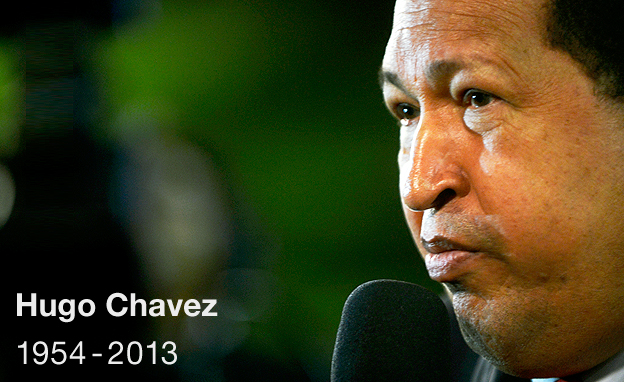
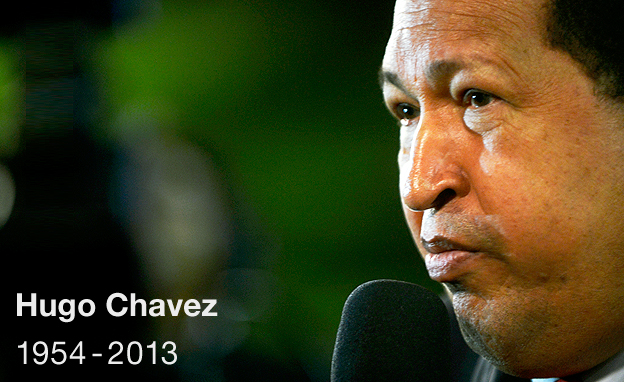
Chávez To Eternity

0


Chavez Obituary

By Ivan Briscoe | The Hague

This indeed is the authentic measure of the late president’s achievements: there is now no simple switch in Venezuelan public ideology – no going back. The turn in the post-colonial history of the region is unequivocal.

A slogan, now infamous, was daubed on the walls of Buenos Aires in July 1952 to mark the imminence of Evita Perón’s death. Viva el cáncer (long live cancer), the graffiti declared. The atrocious sentiment has not surfaced much in Venezuela in the long lead-up to President Hugo Chávez’s death on Tuesday, but it is safe to assume that opponents who essayed a coup and a general strike as well as innumerable protests, campaigns and candidacies aimed at bringing down the late leader may have harboured the thought.

“Why did you not kill him when you could do so?” This, I have been reliably told by a witness, was the question directed during dinner at the US ambassador of a Central American country by a leading business figure in the country, exasperated at the effect Chávez was having on popular sentiment during his pan-continental apogee between 2004 and 2008. The ambassador’s reply was furious and lapidary. “If that is what you think, then don’t be surprised if you are not around much longer.”

It is a revealing remark. On one side, we have the typical excrescence of reactionary Latin American politics, harking back to the Cold War benchmark of US support for anti-communist national elites. And on the other, we have a US ambassador that we may assume was not greatly fond of Chávez, nor his inflammatory rhetoric, but who in the style of President Obama was worldly enough to recognize that the Bolivarian was no extremist distortion, but an integral part of his society’s history and expectations.

This indeed is the authentic measure of the late president’s achievements, the reason he was rightly praised by Brazil’s Dilma Rousseff on Tuesday evening as a “great Latin American”: there is now no simple switch in Venezuelan public ideology – no going back. The turn in the post-colonial history of the region is unequivocal. Until Chávez and his cohort in Ecuador, Bolivia and elsewhere took power through the ballot box, every period of revolutionary or radical, progressive government in Latin America was reversed at the moment of its fall, often with the aid of military-led violence. The pattern can be found in Guatemala in 1954, Chile in 1973, Argentina in 1976 or Nicaragua in 1990; elsewhere, the radicals were not ever allowed close to power. This is the case of Colombia in 1948 (the Bogotazo [13]), described by Eric Hobsbawm as “an abortion of a classic social revolution” for which the country, still one of Latin America’s most violent, continues to pay the price.

Chavez Supporters
Supporters of the late President Hugo Chávez. Demotix/Jesus Gil [12]. All rights reserved.

In several of these cases, the radical forces that were stripped of power had not excelled in government. There were instances of political naivety, or, as the Sandinistas in Nicaragua proved, galloping corruption; the (hardly progressive) government of Isabelita Perón that was usurped by the Argentine military set a high bar for ruling incompetence. Similar charges can be laid at the feet of Chávez. For years, the Venezuelan opposition and its myriad sympathisers have berated with good cause economic mismanagement, corruption, spiralling crime rates, misuse of power, dubious foreign friends and meddling in the judiciary; the latest devaluation of the national currency, the Bolívar, is an augury of a fiscal and monetary restructuring that will cause deep pain for the country’s post-Chávez rulers and population.

Raúl Baduel was one very knowledgeable critic who I interviewed in Caracas in 2008, one year after he left his post as defence minister. His summation of “socialism in the 21st century” has stood out as the neatest encapsulation of the opposition’s swarm of valid criticisms and fevered resentments. “The repetition of basic slogans empty of content, which was aimed at sustaining nothing but the personal ambition of President Chávez to become life president of a Venezuela that grows ever poorer.” Wrong in at least one respect: Chavez has passed away. Baduel, meanwhile, has been in a military jail since 2009, accused of fraud.

Many other commentators, in all manner of outlets, have rehearsed and reiterated the late president’s virtues and vices. They will continue to do so, and one senses that these disputes will evolve into a continuous matter for historical inspection. But there remains something fundamentally amiss in the argument, a misreading of Venezuelan politics that assumes Chávez to have been either a deranged paratrooper, or, in the eye of his supporters, a charismatic visionary wearing the mantle of Bolívar and Ché Guevara, when in fact he was a perfect outgrowth of his time and place. And his faults in government, which cannot be denied, were as much the results of these initial conditions as they were effects of his strategic masterwork.

Throughout his career, from his inception as a clandestine military conspirator in the 1980s, to his emergence as coup leader, political mobilizer and presidential candidate in the 1990s, and finally to his enthronement as elected and re-elected president, two elements of Venezuelan public life shaped his acquisition and use of power. These were the utter corrosion of the party duopoly that had run the country since 1958, and which had converted formal office into a façade for handing out spoils and oil revenues; and the magnification of social and political polarization through income differentials and an apparatus of social segregation, whose consequences were first displayed to the world via the Caracas riots [14] of 1989.

Throughout his presidency, but particularly after his referendum victory in 2004, Chávez ruled through informal channels, as his predecessors had done, and harnessed the tremendous social polarization that festered in the 1990s, forming an extraordinary emotive connective tissue with the low-income majority. There are many good reasons to condemn Chávez’s rule. But there is no erasing the first sights I had of Caracas in 1993, where small huts clung to eroding hills while the national press ran pages and pages of photos from what were supposed to be philanthropic cocktail evenings.

The new geometry

From this soil, Chávez proved exceptionally adept at agglomerating groups, forming coalitions, scenting opportunity and building a tremendous and durable power bloc; helped all the while by soaring oil prices. His skills as president were great, though not infallible: he needed the outrage of the urban poor to save him from the coup of 2002, and he certainly required a dose of enforced moderation to recover from his vainglory of 2007, when he pursued the “corpse” of President Bush up and down Latin America and lectured Venezuela’s National Assembly for six hours on the need to redraft the Constitution in ways that best suited him. He lost the ensuing referendum, his only clear defeat at the polls.

Without him, the chavista regime will face stiff challenges, not helped by the strong possibility of factional disputes unresolvable through their Leviathan. A coherent plan was laid out by Chávez ahead of his final duel with cancer: a civil and military compact at the heart of a new geometry of chavismo. This would combine a civilian political centre, doubtless fought over by interim President Nicolás Maduro and the speaker of the Assembly Diosdado Cabello, and a string of regional bosses allied to the military establishment: 11 of the 23 state governors are now former officers. But amid economic stresses, factional infighting and the presence of various armed militia, the stability of this equation remains in some doubt.

A provisional verdict

However, these are matters for the coming weeks and months. They shadow any conclusions as to Chávez’s record, make any attempt at establishing his achievements provisional at best. Yet at the risk of entering an early verdict that is abruptly overturned, it would seem there are three aspects of the Chávez years that can be counted as a legacy.

The first derives from his own egalitarian and levelling ambitions. If we take the latest Social Panorama of Latin America, published by the UN Economic Commission for Latin America and the Caribbean (known in Spanish as CEPAL), we find possibly the most reliable evidence of Venezuela’s social progress: poverty rates fell from 49.4 per cent in 1999, when Chávez took power, to 29.5 per cent in 2011. Venezuela, the report adds, is the most egalitarian country of 18 nations in Latin America, and has the third lowest perception of unfairness in income distribution. Furthermore, polls provided from Latinobarómetro have long shown that Venezuelans are amongst the most satisfied with democracy in the entire region.

These are impressive statistics, but should be qualified. Obviously, the resources to achieve such progress have come from an economy that is more oil-dependent than ever. They also fail to take into account the country’s colossal crime and murder rates, and their corrosive effects on social capital. Lastly, and most importantly, they also mirror achievements across the region as a whole: a World Bank study from last year indicated that Latin America’s middle classes have grown by 50 million over the last decade, while poverty rates as a whole have fallen from a high point of 44 per cent in 2002 to 29 per cent in 2012. Thus, far from making an exceptional contribution to social welfare, the late president appears to have formed part of a broader phenomenon in which he is condemned to share plaudits with the centre-left in Brazil, or the right in Colombia and Panama. His outstanding achievements in reducing inequality may in turn owe much to the steady emigration of upper and middle classes: 244,000 Venezuelan were registered as living in the United States last year.

A little more confidence can be attached to Chávez’s efforts to rebalance relations between his country, Latin America and the rest of the world. His contribution to processes of regional integration, though not always consistent, was crucial, not least in the creation of UNASUR [15] and the Community of Latin American and Caribbean States (CELAC). His military spending (an estimated 11 billion US dollars to Russia from 2004 to 2011), his anti-imperial harangues and his friendships with assorted tyrants were perhaps not to everybody’s taste, but they successfully worked as decoys for the new independent diplomacy of Brazil, and created the sort of geopolitical atmosphere in which Latin American countries for the first time ever could demand a new global regulation of drugs.

Inequality and revolution


Crowds at Bolívar Plaza in Caracas mourn Hugo Chávez. Demotix/Jesus Gil. All rights reserved.

At least until 2011, his was never a quiet or exhausted presidency. Such energy served a crucial role in reanimating publics left without purpose or resources in the neo-liberal winter of the early 2000s. But it was the manner in which he did this which will survive as a second legacy: far from allowing differences and divisions to be naturalized as part of the unbreakable social order, the norm throughout Latin American history, he dramatized them, flavoured them for his audience (“we are the rabble who followed Bolívar”, protesting students were “daddy’s little kids” etc.), and then made points for political action.

This struck many in and outside Latin America as deeply offensive: one only need think of The Economist‘s praise in 2010 of the new British prime minister and his deputy to sense how many in the world’s metropolitan elites have reacted to such diatribes (both were “well-adjusted human beings. You search in vain on both men’s shoulders for the chips that typically burden and motivate politicians”). Exceptionally chippy though he was, Chávez was not the first to name inequality; but he was the first post-Cold War democrat to make systematic use of it. And so long as the issue is alight in Latin America’s public consciousness, it remains more probable that the continent’s inequities will remain free of government neglect.

His last legacy, however, is less certain to garner praise. Chávez’s weak spot is the one that has plagued almost every Latin American revolutionary, and which for now, judging from experiences in Argentina, Bolivia, Ecuador or Nicaragua, remains ineradicable. At root, the changes Chávez established were not of systems but of personnel; those who were poor, mestizo or excluded have entered power, but in the process have not managed to change the way power works, nor the circuits of patronage and dependence it relies upon. They have simply become the new oligarchs: the boli-bourgeoisie. In this respect, it spoke volumes that the great dame of Mexican trade union politics, Elba Ester Gordillo, who was born into dire straits in Chiapas and donated a kidney to her dying husband at the age of 20, was arrested late last week for embezzling over 150 million US dollars.

From what we know, Chávez had no interest in his own economic fortune. His family and allies, however, certainly did. Whether they will follow the radical pursuits of the pioneer or settle back into oil-fed inanition is unclear. Chávez has gifted a style and method of government that is now part of Latin America’s democratic furnishings, but he can only reprimand his colleagues in the language of dreams.

The AfricaPaper: Thanks to Ivan Briscoe and OpenDemocray for this story.

About Ivan Briscoe

Ivan Briscoe is a fellow of the Conflict Research Unit, which is part of the Clingendael Institute of International Relations in The Hague. After working as a journalist and newspaper editor in Argentina, France and Spain for over a decade, he now specializes in the study of fragile states, the effects of inequality and the emergence of organized crime.
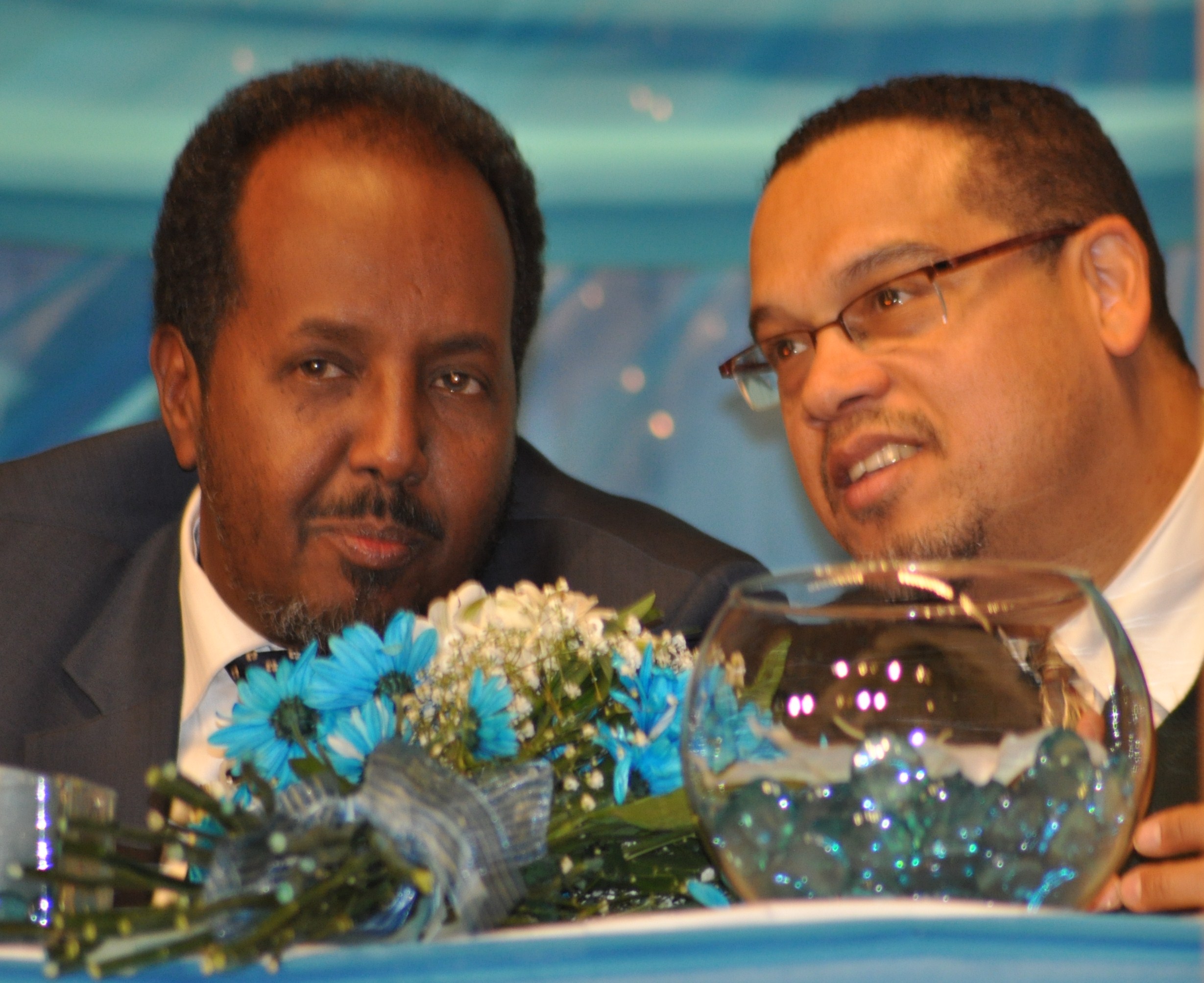
War-Ravaged Country Needs Help To Rebuild; President Appeals To Minnesota Somalis

0


After opening a new diplomatic chapter inU.S.-Somali relations, Somalia’s newly elected president visited Minnesota to share his government’s achievement and appealed to his compatriots to help rebuild their broken homeland. The AfricaPaper was there and brings this report.

By Issa A. Mansaray | The AfricaPaper

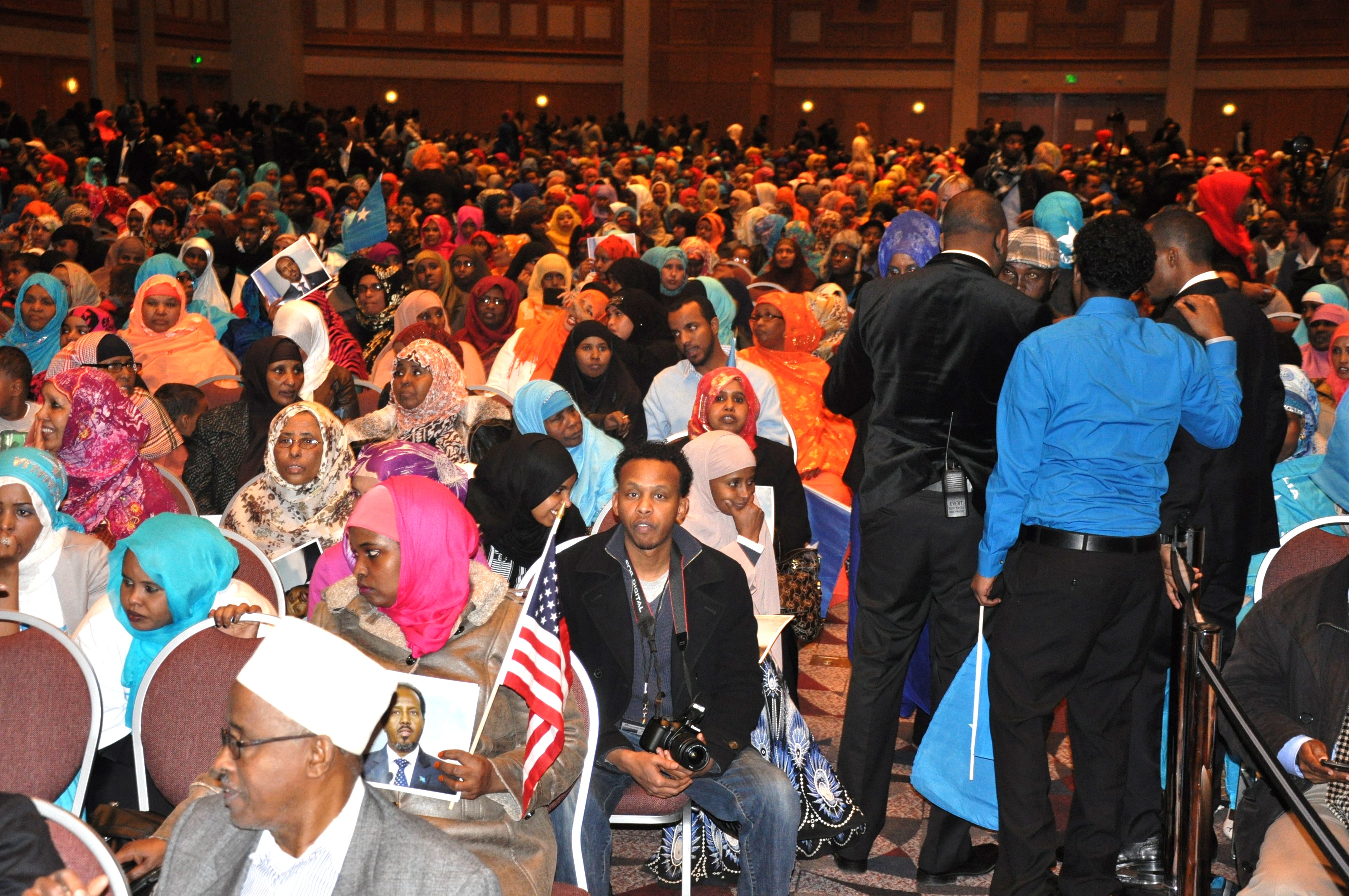
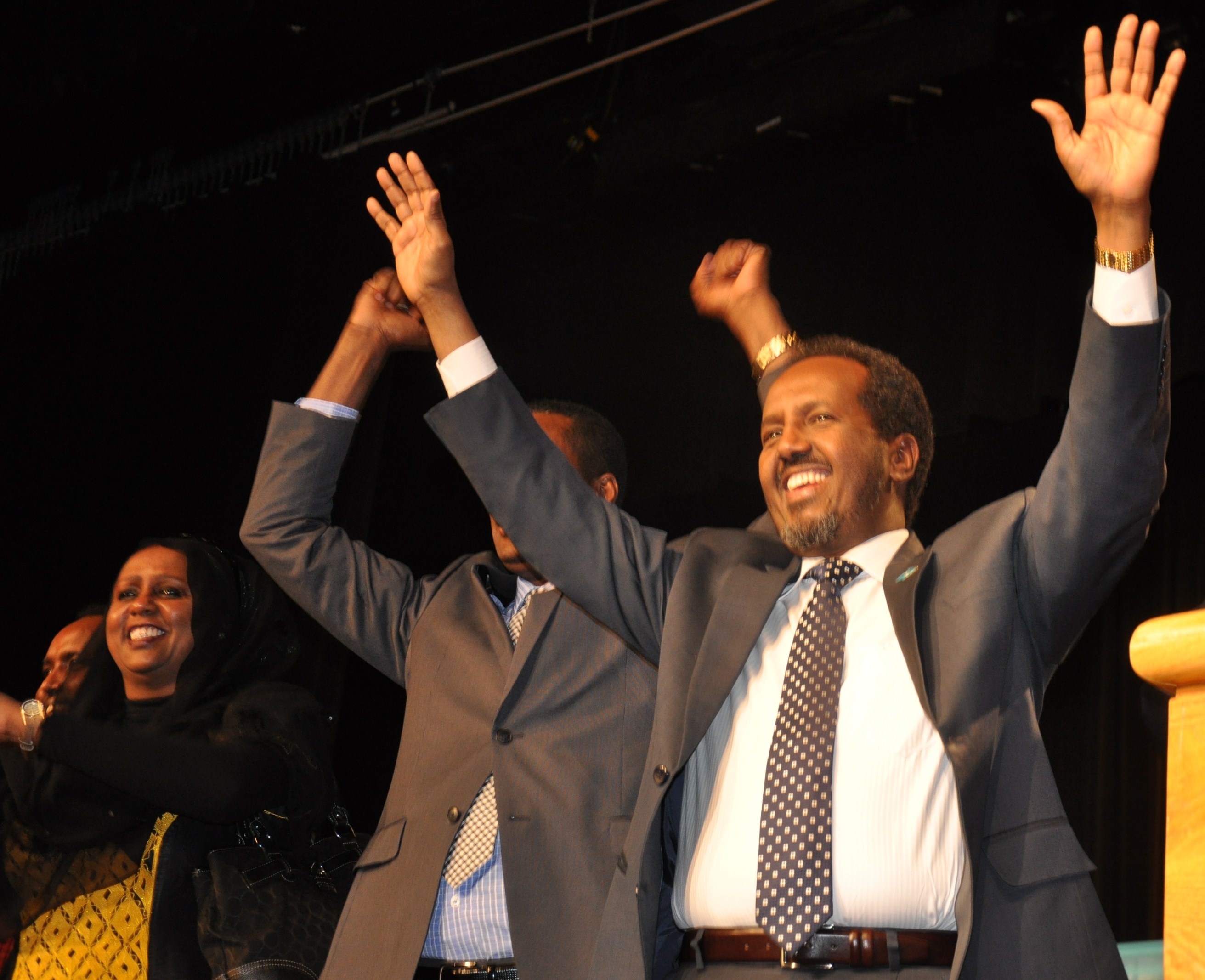
Minneapolis, Minn – Speaking mostly in Somali to a cheering crowd of about 5,000 at the Minneapolis Convention Center in Minnesota on Friday, Jan. 18, President Hassan Sheikh Mohamud asked his compatriot to help rebuild their country.

“There is a price to pay in order to get that good Somalia,” the president said, adding that this is “the new beginning of a new foundation [for Somalia].”

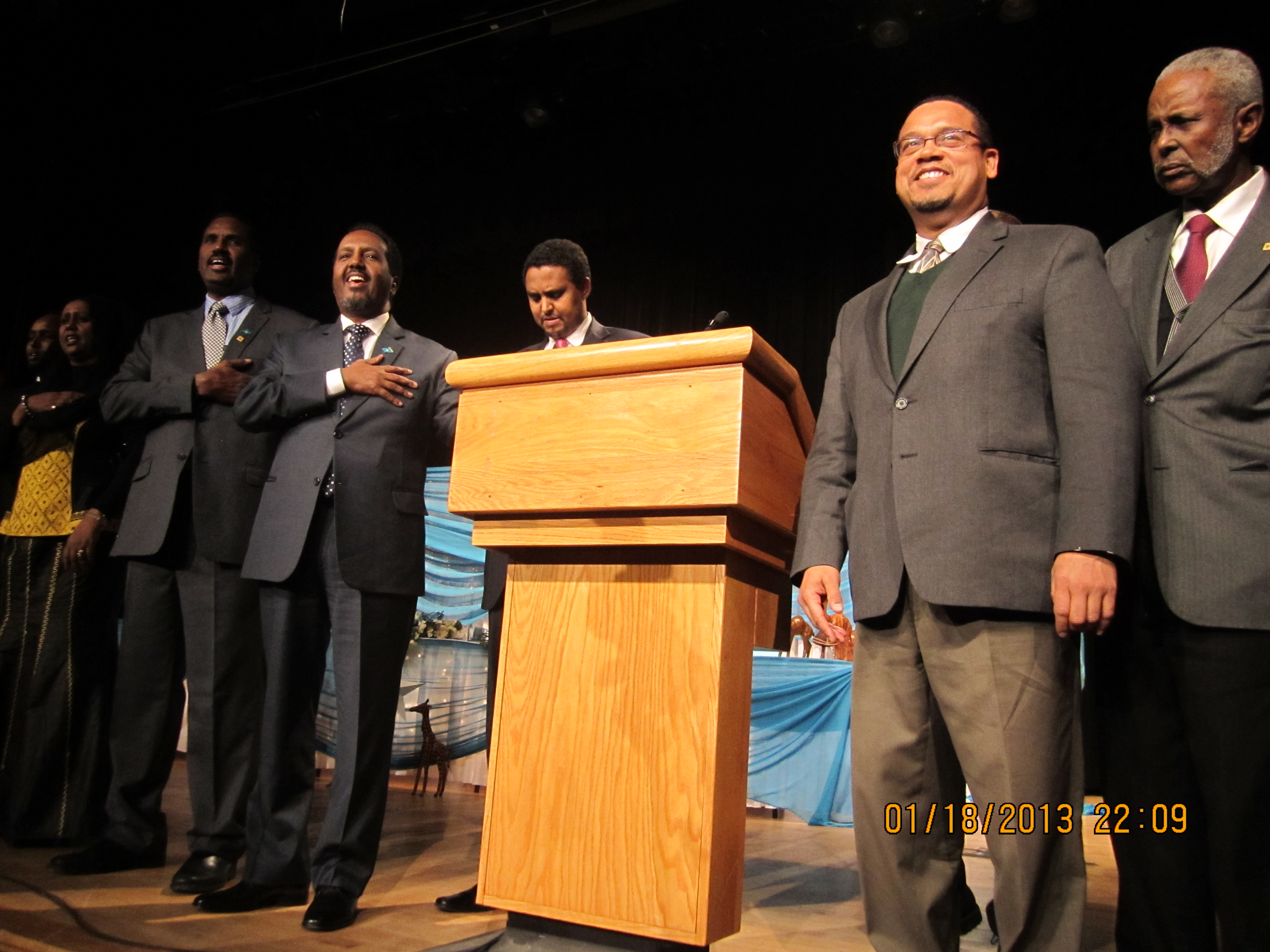
Mohamud and Rep. Keith Ellison Photo: (c) The AfricaPaper

Help from Minnesota

U.S. Rep. Keith Ellison, D-Minn., drew a standing ovation as he took the podium to welcome President Mohamud to Minneapolis late Friday night. The crowd shouted the president’s name … Mohamud!!! He was acivil and political activist who previously served as a professor anddean at the Somali National University.

Congressman Ellison described the president as the best man to lead Somalia. He reminded the crowd that Mohamud, 57, stayed in Somalia during the country’s years of political turmoil.

“I don’t think people should be blamed for leaving,” said Ellison. “But, I think people get credit for staying.”

He added that though it is appropriate to sing, shout, and clap, there is work ahead to be done. And citizens have the right to demand that America builds an excellent relationship with Somalia.

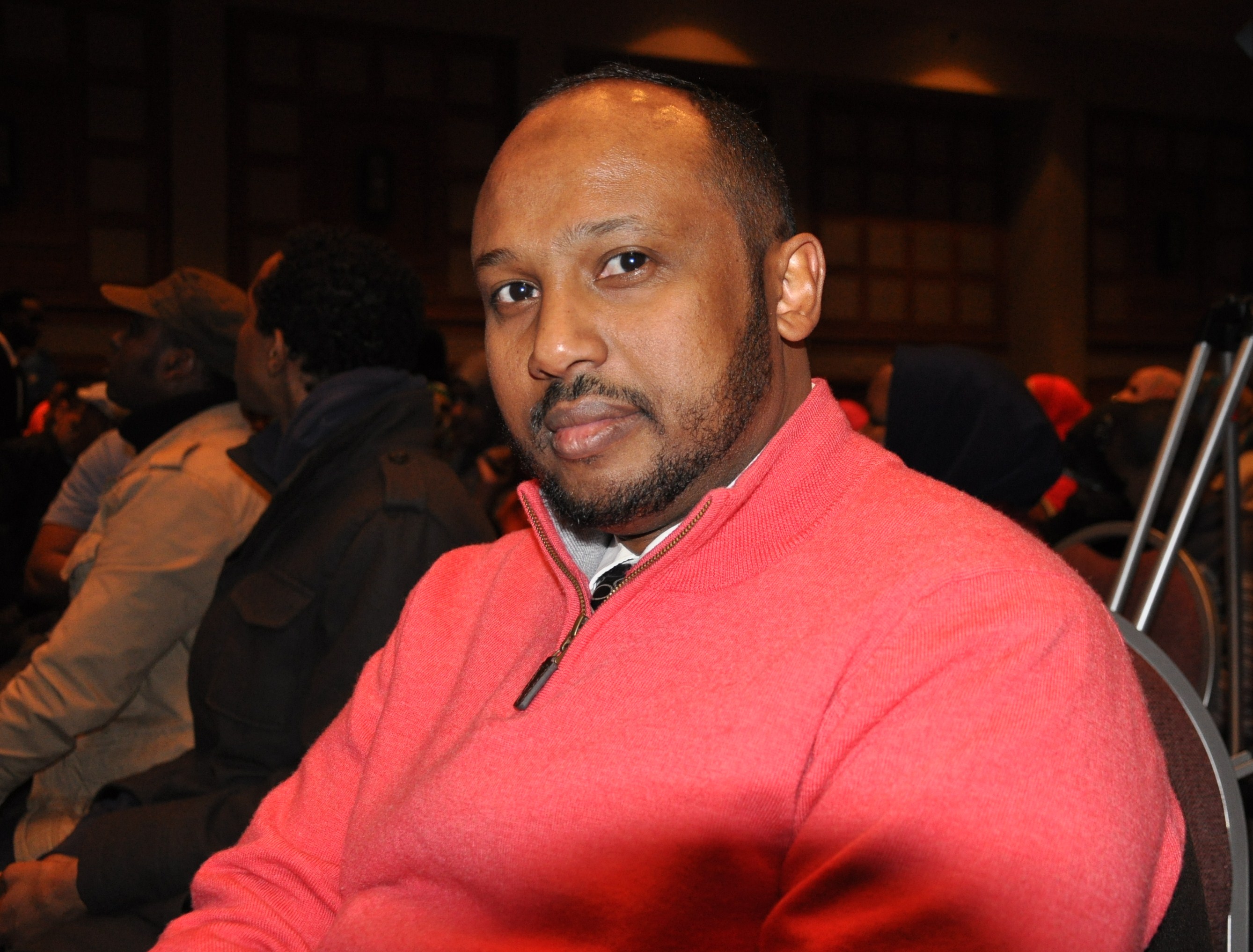
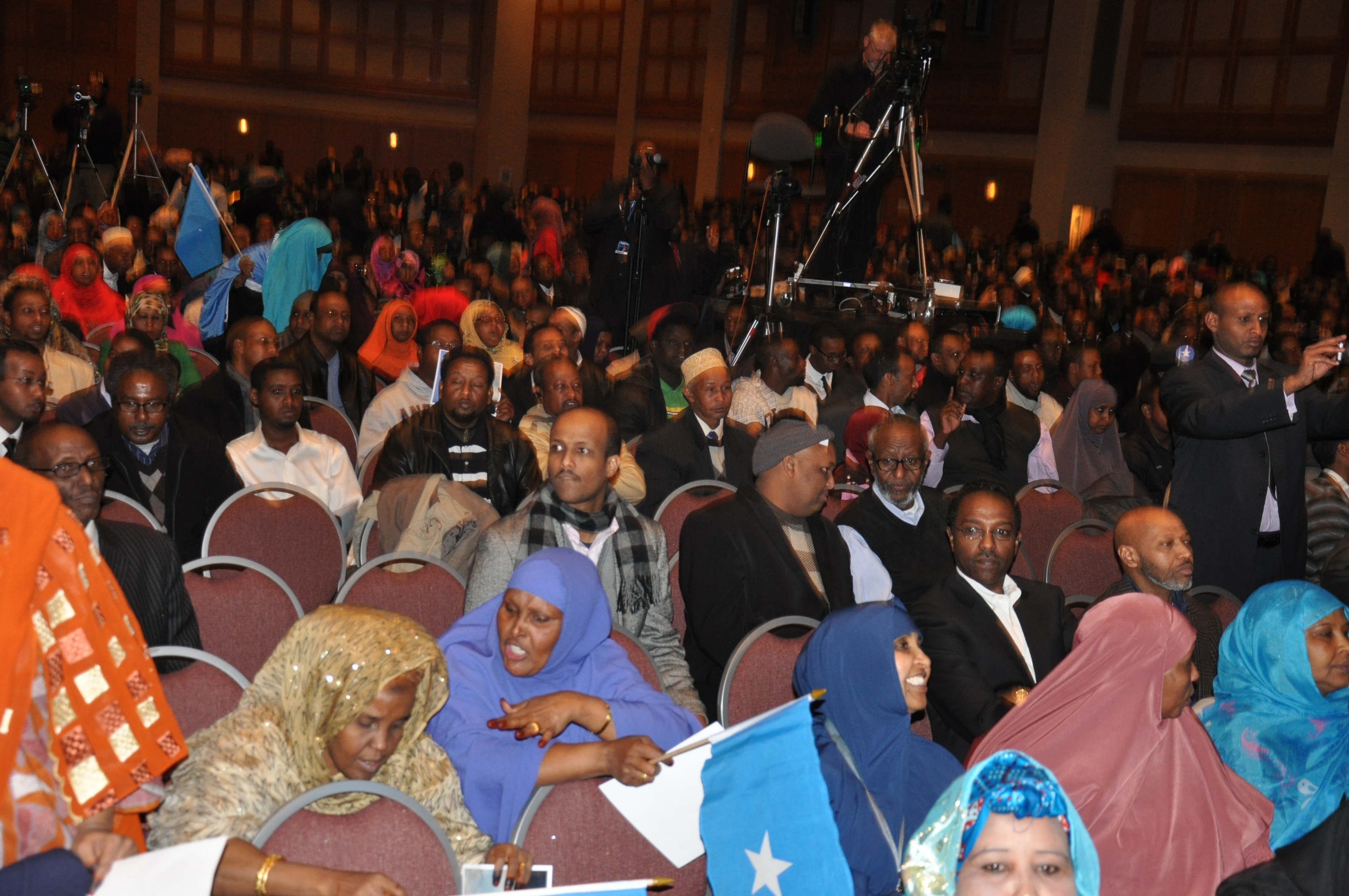
Somalis at the Convention Center. Photo: (c) The AfricaPaper

“You know, we really have a lot of work in front of us to do. And I want you to remember that Somalia needs you right here in America. To stand up for the United States – Somalia relationship,” said Ellison. “We are depending upon you to call on the American government to give Somalia full assistance.”

Mohamud thanked the jubilant crowd for their help and persistent effort to end the war and rebuild Somalia. After years of political upheavals, the president emphasized the need to restructure and strengthen the broken security, economy, and judicial system. He acknowledged the long-standing absence of diplomacy and political order in his country.

He told the blue and white-star flag-waving crowd that they can help in rebuilding Somalia either by going home or supporting from their base here. The president said that the diplomatic recognition was possible because of the strong and united voices from the Somali community here; adding that he is proud of the Minnesota-Somalis.

Somalia is “very much aware of past mistakes,” said Mohamud. “We are ready to move on.” Taking over a corrupt and dysfunctional transitional government, he thanked the U. S. for providing humanitarian aid when Somalia was almost “…wiped out.”

Mohamud and Rep. Keith Ellison at the Convention Center Photo: (c) The AfricaPaper

Diplomatic Relations

The president’s visit came a day after the United States officially recognized the government ofSomalia for the first time in two decades of diplomatic isolation. The U. S. did not officially cut its diplomatic relation but distanced itself from Somalia and its politics.

It announced a change in relation with the war-ravaged country on Thursday, Jan.17, after Mohamud’s meeting with President Barack Obama and members of congress. Somalia has waited U. S. recognition for many years.

Secretary of State Hillary Clinton said the political situation in Somalia has changed considerably over the past years, and thus the renewed diplomatic relation and ready to work with the new government to rebuild the war-torn nation.

This will pave the way for it to receive economic aid from abroad and work with multinational institutions such the World Bank, the International Monetary Fund (IMF), and U.S. aid agencies for financial support.

“You got to be there for the long haul. You should ask yourself, what can I do to help Somalia?” he challenged the crowd and prayed for a strong economy, political and cultural system in the country. “I just want you to know that I was not born in Somalia like you, but I don’t belief anybody in this room is happier than I am tonight.” The crowd roared and clapped.

In Washington, D.C., about 25 U.S. Congressmen [Democrats and Republicans] on a day notice crammed into a room to meet with President Mohamud and his cabinet.

“We can’t work together on the budget. We fight over the budget, but we came together on Somalia,” said Ellison. “We argue on Social Security and Medicare, but on Somalia, we come together… Somalia is not alone. Somalia has many friends in America.”

Community Activist Sadik Warfa

New Beginning

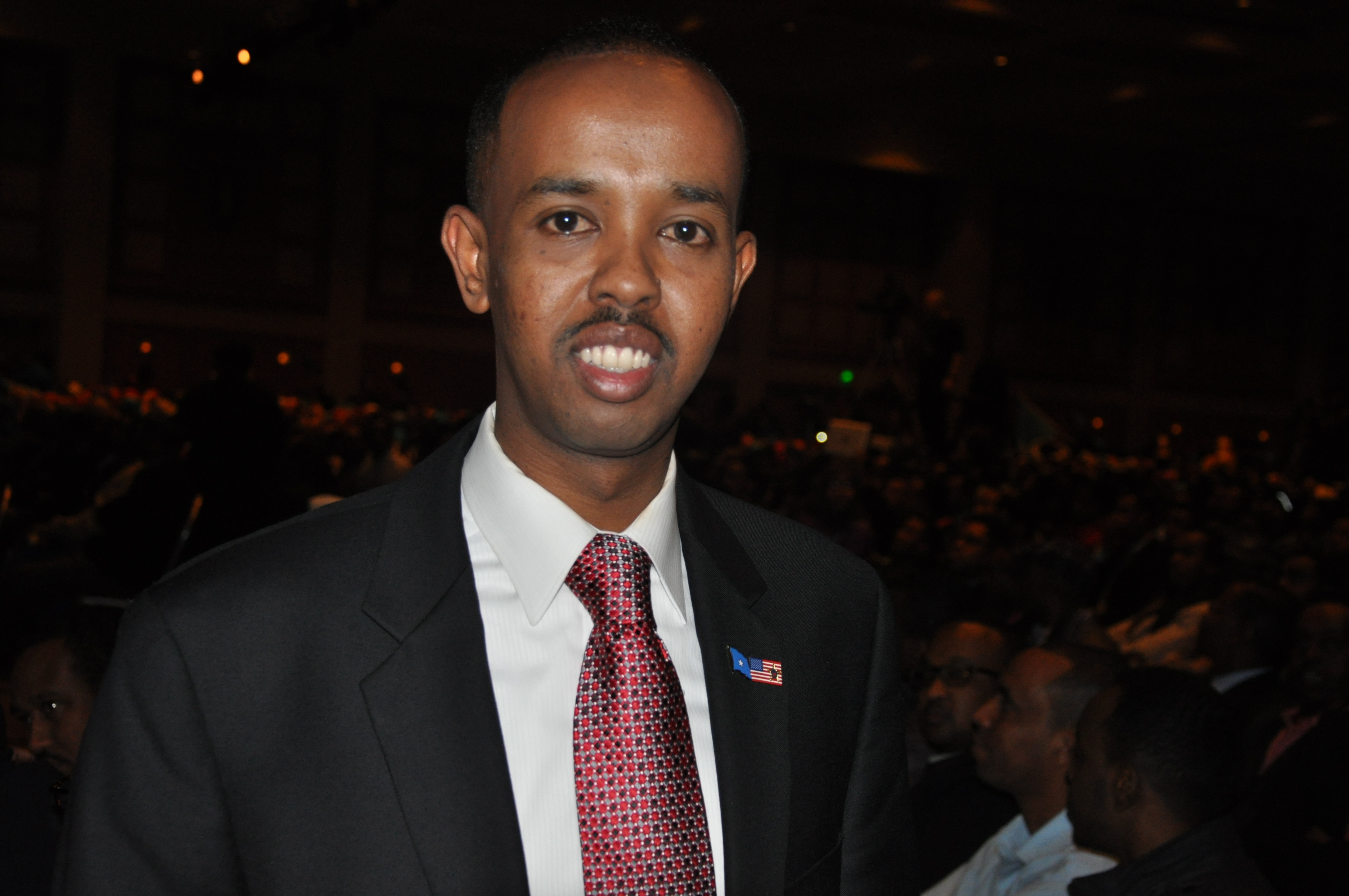
Before President Mohamud’s arrival, community activist Sadik Warfa took the podium to electrify the crowd and encouraged them to work as a nation.

“For 21 years, Somalia has been at war. The country is now coming together. I was telling people to forget about the past and embrace the future,” said Warfa, who once ran as a candidate for the Minnesota House of Representatives. “My message was about unity. Somalia needs unity… Somalia has been wounded. They [Somalis] have to forget the past.”

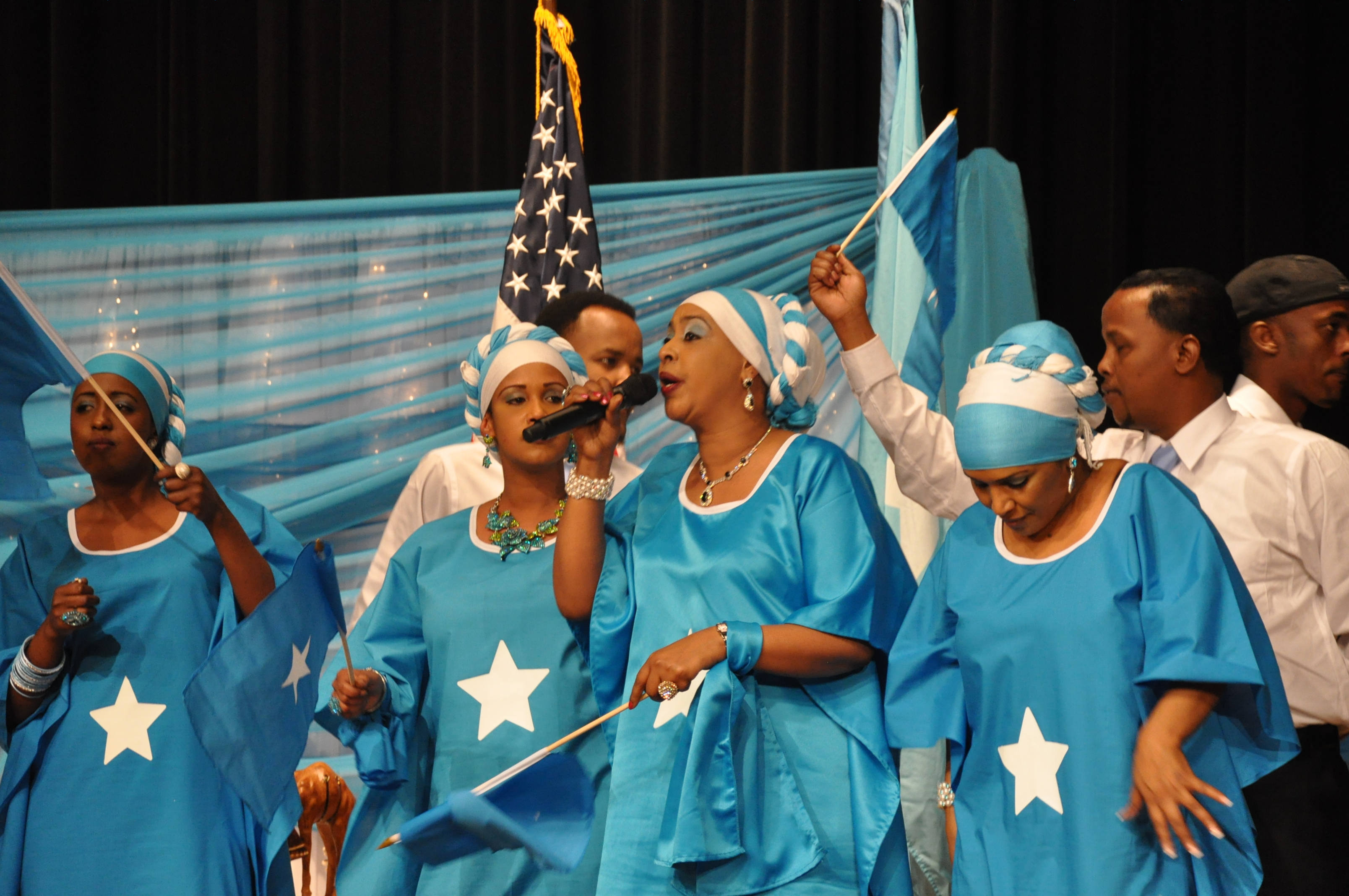
Somalis traveled from almost every county, and suburbs in Minnesota to witness the occasion at the Convention Center. Various folk groups took turns on stage as they sang and danced for hours in the jam-parked hall before the president’s arrival.

“With unity, we can do great things,” said Warfa, who also served as one of the organizers for the president’s visit. “We need unity forever.”

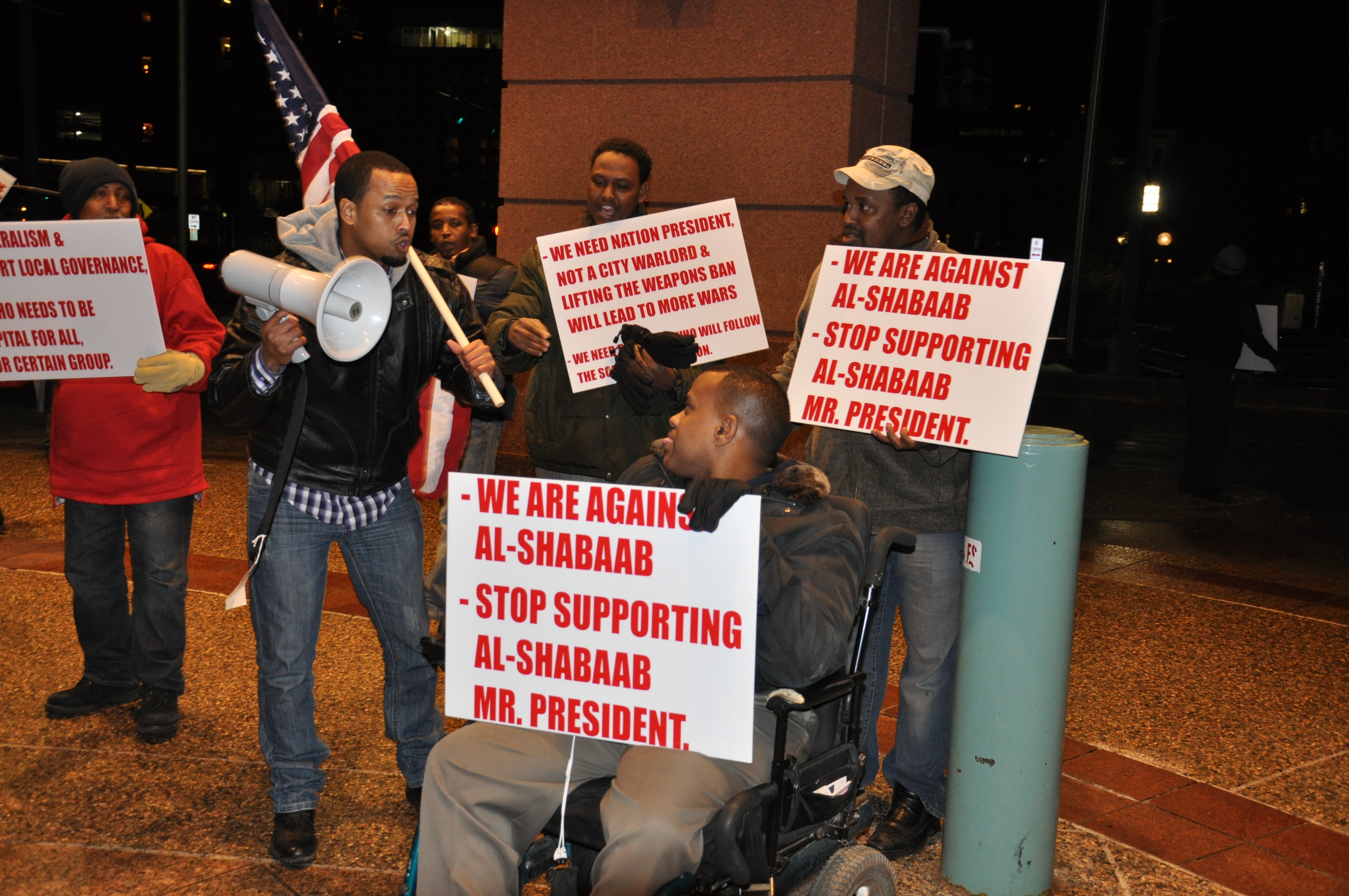
Protesters at the Convention Center Photo: (c) The AfricaPaper

Protest and Dialogue

Mohamud was not welcomed by all on his first visit to the United States. A group of about 50 protesters at the front doors of the Minneapolis Convention Center carried placards. Some read: “We need a nation president, not a city warlord…”

They protesters said the new government has failed to reconcile different clans in the country after the Sept. 2012 election. They added that Mohamud is more interested in working with his supporters in the capital, Mogadishu, and leaving the countryside to militant group Al-Shabaab.

In his almost hour-long speech, the president responded to the protesters and his willingness to dialogue, listen to their misgivings, and apologize if his government wronged any of them. He cited that the support he received from the thousands of Somalis in the hall far outnumbered the protesters outside.

“This evening, when I arrived in the Twin Cities, I was informed that there are few protesters,” said President Mohamud wishing he could have dialogue with them. “I’m glad that these people are protesting peacefully, holding placards and not AK47s.”

He added that his government wants all Somalis to have a decent life.

Mohamed Abdi Ismail from St. Paul resident Photo: (c) The AfricaPaper

Young and Hopeful

Many of those interviewed by The AfricaPaper believe the new government can make use of the vast Diaspora human resources and potentials to rebuild. They believe better days are ahead for a new Somalia.

“Tonight is a very historical moment. Since 1998, Somalia has no central government…” said Mohamed Abdi Ismail, a St. Paul resident. “United States recognizing Somalia opens a big door … to deal with Somalia internationally. I am very happy for Somalia to be part of the international community.”

He added that those who have been educated in Minnesota should use their skills to develop Somalia. “Somalia needs the Diaspora’s [Somali-Americans’] abilities to help back home,” Ismail said.

After Mohamud’s late Friday speech, many youths at the Convention Center continued the festive political evening as they walked out of the hall feeling inspired and hopeful of their country’s “new beginning.”

Though born in Minnesota, most of the youths who listened to his speech said they now have a place to call home. Young women in the hall were also hopeful that their president promised to improve the country, curb corruption, and work hard to discourage clan and internal frictions. That one day they could return and get their education in Somalia as it use to be in those days.

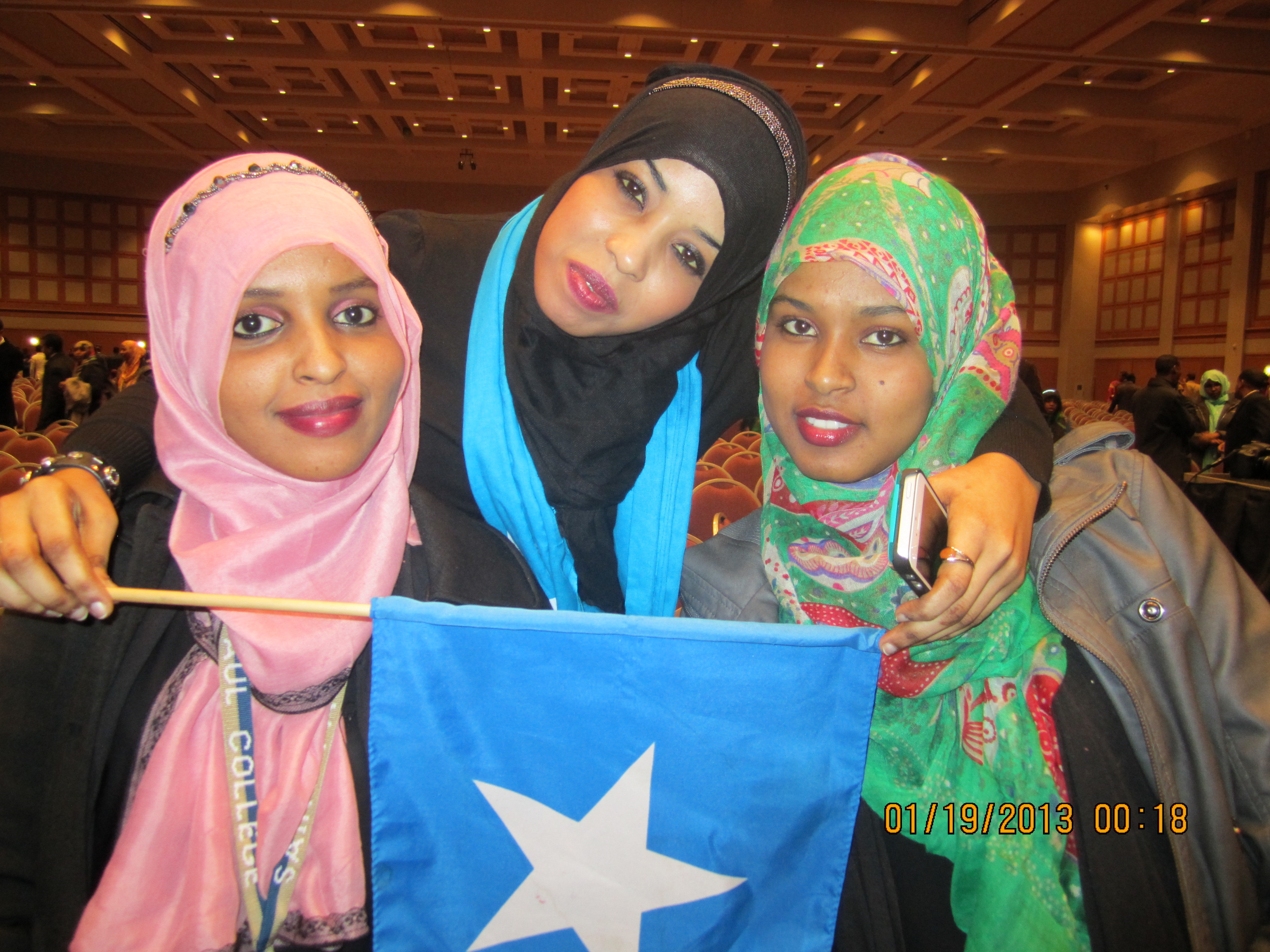
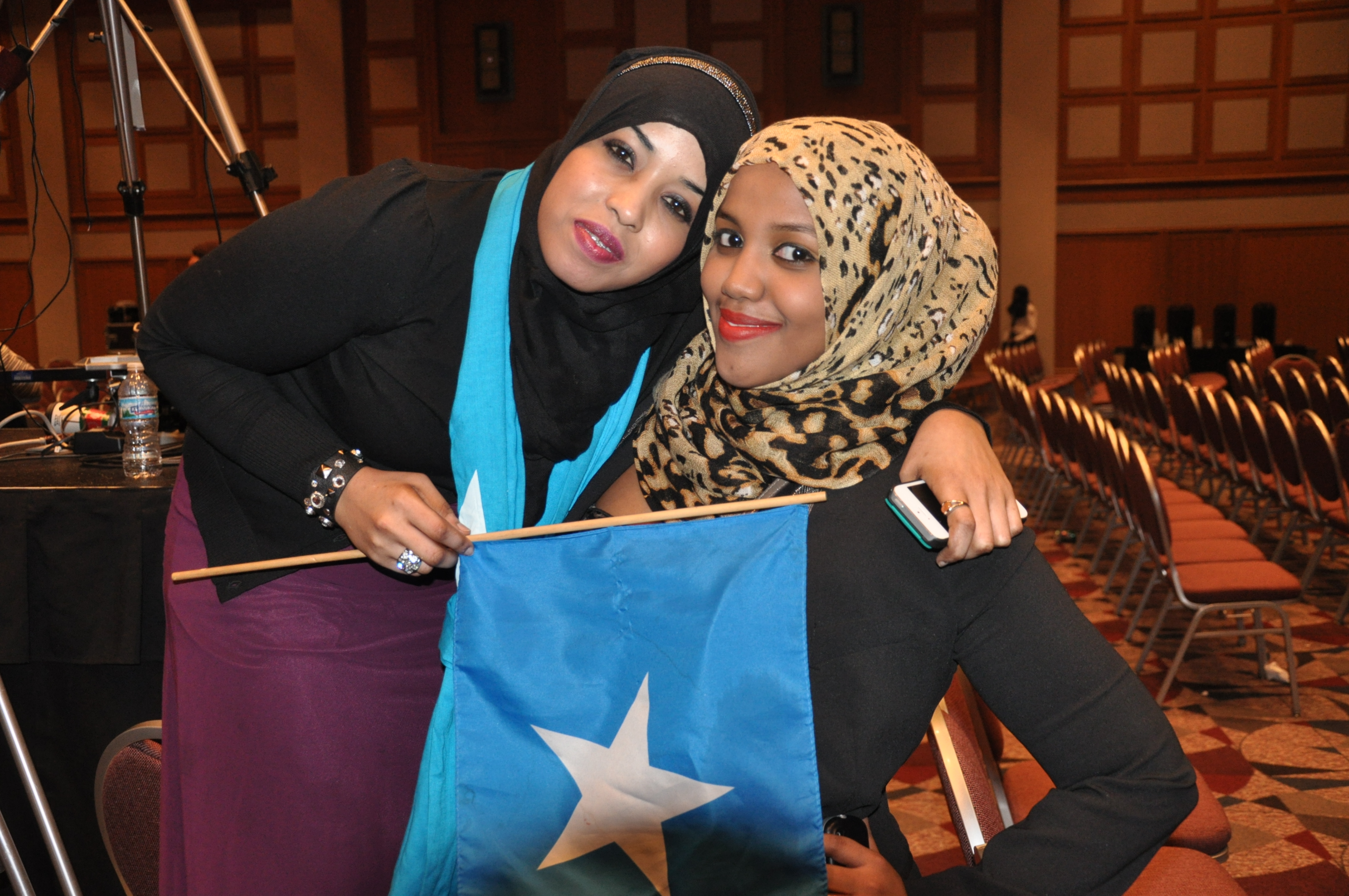
Young Somalis. From L to R. – Hamdi Hassan, Zamzam Hussien and Ifrah Yussuf.Photo: (c) The AfricaPaper

“What he said is really powerful. He gave us a lot of hope. I think that will be a reality in the next four or five years,” said Hamdi Hassan, 21, as her friend Zamzam Hussien waved the Somalia flag above her head. “That everything will be OK, and one day we’ll be back together. It is just a matter of time that we have to be patience and pray for him.”

Political Hub

With an estimated 70,000 Somali immigrants, Minnesota is home to the largest Somali population in the U.S. and probably in North America. It also serves as hub for most Somali political activities, as different leaders frequent the Twin Cities to fundraise or rally the Somali Diaspora base for support.

“We are calling upon you to call on the American government to give Somalia full assistance,” said Ellison.

U.S. authorities keep close watch on the Somali community here. In previous years, many Somali activists bitterly complained that the FBI raided their businesses, especially those dealing in money transfer. The president plans to open a Somali Consulate in Minnesota.

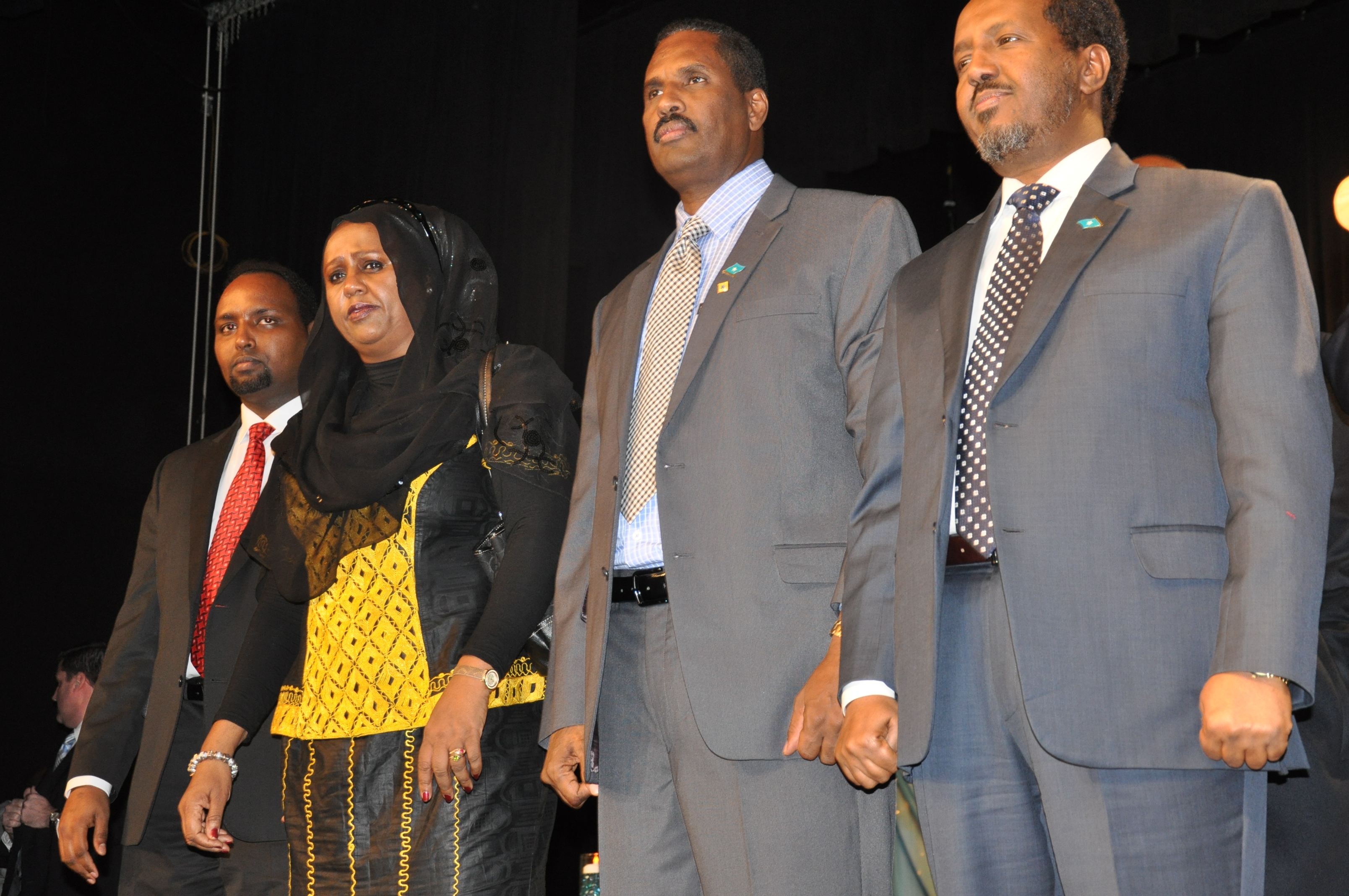
Foreign minister Fawzia Yusuf Haji Aden, first woman to hold such a senior position. Photo: (c) The AfricaPaper

Somalia’s connection to Minnesota runs deep, and sometimes politically problematic. Mohamud’s new cabinet includes Minister of Information and Telecommunication, Abdullahi Ilmoge Hersi, once an advocate for the Somali community in the Twin Cities.

Former Somali activist, Omar Jamal from Minnesota, now serves as first secretary of the Somali Mission to the United Nations in New York.

President Mohamud was joined by his Deputy Prime Minister and Foreign Affairs Minister Fawzia Yusuf Haji Aadan, the first woman to hold such a senior position. Somalia’s ten-member cabinet is one of the smallest in the country’s history and includes two women ministers.

Mohamud came into power in 2012 in the first election conducted since the fall of late dictator Maj. Gen. Mohammed Siad Barre in 1991. Though not associated with the country’s bloody violence and corruption, President Mohamud faces an uphill battle to repair a war-ravaged country with no foundation for a functioning justice system and rife with warlords.

“While serious challenges remain, I am optimistic and excited about Somalia’s future,” said Congressman Ellison in a released statement.


PHOTOS: President Mohamud’s Night On Camera


Singers: In Praise of Somalia. Photo: (c) The AfricaPaper


Somalia’s Hopeful Youths at the Convention Center. Photo: (c) The AfricaPaper
Somalis at the Convention Center. Photo: (c) The AfricaPaper


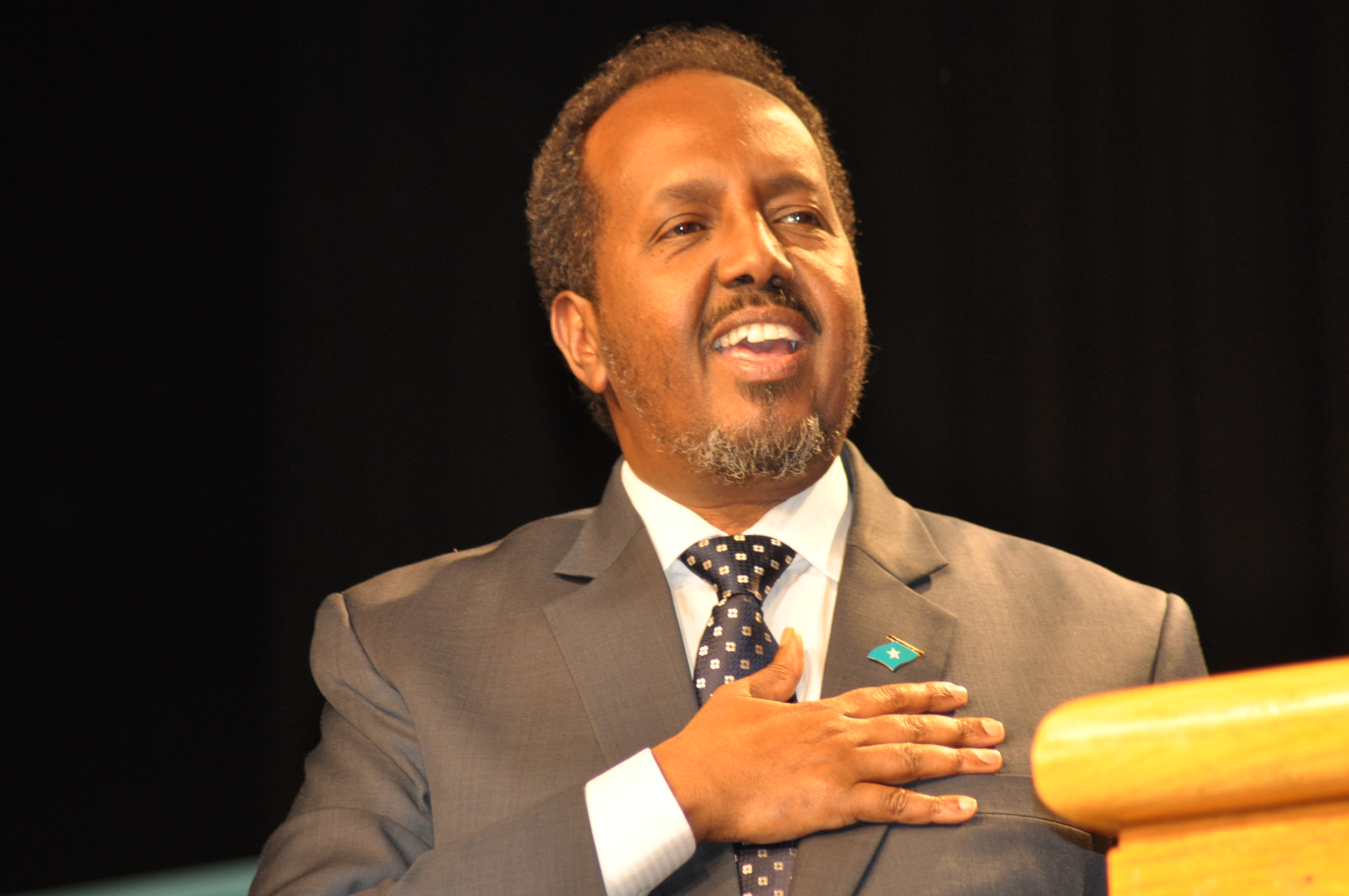
President Mohamud. Photo: (c) The AfricaPaper.


World Copyright 2013 – The AfricaPaper, USA. All rights reserved. Photos and text may not be published, broadcast, rewritten, redistributed or used in any form without the written permission of The AfricaPaper Media Corporation and AIIR.

FUEL CRISIS HITS SIERRA LEONE


As fuel dealers test President Ernest Bai Koroma’s ‘Agenda for Prosperity,’ the black markets

Pump up prices at will. From Sierra Leone’s capital, Freetown, our correspondent reports.


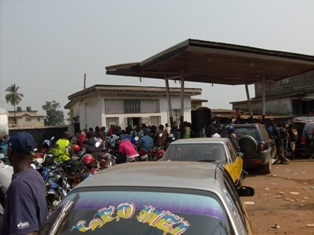
Sierra Leone’s pumped up fuel prices. Photo: The AfricaPaper

By Abubakarr Kamara | The AfricaPaper


Freetown– The country’s imported refined fuel is yet to arrive at the Queen Elizabeth II Quay in Freetown; several petrol dealers are testing President Ernest Bai Koroma’s ‘Agenda for Prosperity’ by refusing to sell the available petrol in their respective stations to vehicle owners. Many prefer giving it to black-marketers to make more profit.

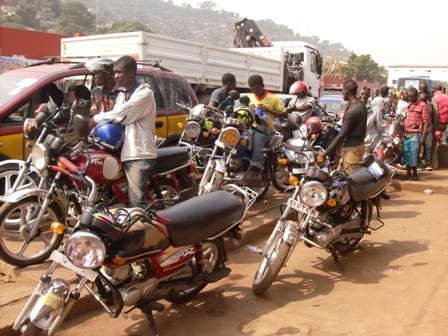
Black marketers queue up containers to buy fuel from filling stations. Photo: A. Kamara/TAP

Black Market

“Some of these petrol dealers are not patriotic and therefore prefer profiteering to rendering national service,” Theodore Renner-a vehicle owner says yesterday as he struggled to get few liters of fuel for his Benz 190 car. “They are selling the fuel to black marketers and leave us to suffer. The government must do something about it.”

Mr. Renner stood on the line for more than five hours at the Kissy Shell filling station but could not get a liter and ended up buying a liter at a black market adjacent to the filling station for Le8,000.00 (about $1.85).

“These black marketers are agents for dealers and therefore have petrol at all times. Government should come down heavily on dealers, who are saboteurs and make black market an offence,” Mr. Renner added.

Longest Fuel Crisis

Sierra Leone has been hit with one of the longest fuel crisis since President Koroma took over in 2007 and this could mean the presidential nominee for the Minister of Trade and Industry, Alhaji Usman Boie Kamara, faces an uphill task to handle this situation once he received the nod from the House of Representatives.

Artificial Shortage

The fuel shortage started two days to Christmas and most people had attributed the shortage to the rise in petrol demand during the festive season but this scenario has continued since then and there seems to be no solution.

Vehicles queue at the Kissy Road Safecon Filling Station. Photo: A. Kamara/TAP

Pump Up Prices

Thousands of people nationwide had to park their cars and join the mad rush for commercial vehicles making it a very interesting and lucrative market for commercial drivers, who can afford to buy petrol at inflated black market price to have a field day. Transport prices doubled and the routes shortened while those who cannot afford the new prices had to trek to and fro their places of work or business on a daily basis.

“People are looking at us with scorn but it is not our fault. The government has to put modalities in place to ensure that the distribution of fuel to this country is prompt,” says fuel dealer Mohamed Bah.

Mr. Bah pointed out that ships bringing fuel into Sierra Leone are owned by foreign companies noting that “we need to be paying in advance to ensure that fuel is available at all times.”

Delayed and Rationed

Outgoing Minister of Trade and Industry, Dr. Richard Konteh, who is now a presidential nominee for the Chief of Staff position says “fuel is now being rationed in Sierra Leone with half the daily quota being pumped out”.

Dr. Konteh explains that there is delay in the arrival of refined fuel to Sierra Leone, which is now being imported from Europe and America because “there is a general shortage of refined oil product in West Africa.”

Commercial bike riders also have their own queue at the Safecon Filling Station. Photo: A. Kamara/TAP

Fuel Promises

The minister had earlier assured that the vessel bringing fuel to Sierra Leone will arrive on Wednesday or Thursday last week, but up till now the situation remains the same.

However, business expert Osman Kamara described the crisis as an artificial scarcity and a ploy by dealers to hike the price at the fuel pump even though fuel oil is yet to increase in the world market.

World Copyright 2013 – The AfricaPaper, USA. All rights reserved. Photos and text may not be published, broadcast, rewritten, redistributed or used in any form without the written permission of The AfricaPaper Media Corporation and AIIR.

Unidentified Rapists Robbed Women and Threatened to Shoot


Rape prevailing Zone KAK3


The AfricaPaper | KANERE

Kakuma Refugee Camp, KENYAA Somali woman aged 50 was gang raped, while two others aged 36 and 37 suffered similar assaults at gunpoint in Kakuma 3 settlement area.

Rapist

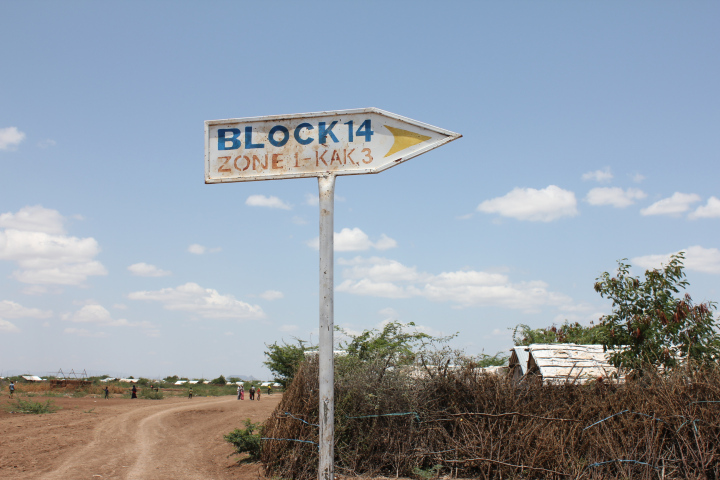
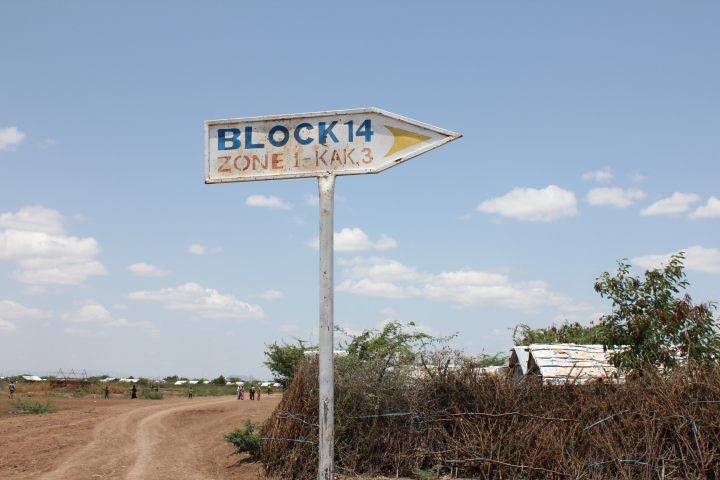
Habbi Moha was raped at her homestead while Wami and Sopa (not real names) suffered a similar assault outside their residential plot, both in Kakuma 3 zone 1 block 14 section of the camp where incidents of insecurity are frequent. The unidentified rapists robbed the women of their personal cell phones and threatened to shoot them if they screamed. To save their lives the women had to cooperate with their assailants.

Armed

On the July 19, 2012, Habbi Moha, a mother of five children, was raped at gunpoint. The attackers accessed her residential compound after destroying a perimeter fence and breaking into the family house at around 2 a.m. A gang of three men all armed with AK 47s, started beating Habbi after demanding money. They dragged the old lady outside her house and gang raped her. According to Habbi, one of the rapists was undressing her while the other held her by neck. “I tried to plead, but those men are cruel, my kids were helpless,” she told Kanere.

Gun Fire

According to the block leader the neighbors were trying to rescue the victim when a gun was fired that scared away block residents from accessing the victim’s compound. “I reached there but was astonished to find Habbi on the ground, I alerted the security group immediately,” said the Block 14 Chairman.

Hospital

Habbi was admitted to Kakuma refugee hospital and spent twelve days waiting at the hospital due to the fear of going back to her own house in her community. She was admitted on the night of 19th July and discharged on July 24, 2012. The medical admission report seen by Kanere shows the victim suffered rape and grievous bodily harm. Habbi had wounds and scars on broken ribs and face when interviewed by a Kanere journalist. “I still feel a lot of pain; I can’t walk or even sleep due to fear for my life and children.” She appealed.

Killed

Habbi’s husband was killed in the civil war in Somalia. With her five children she fled first to Dadaab in 2008. Habbi arrived in Kakuma in August 2009 together with the first groups of Somali relocated from Dadaab. The family had a lot of concerns as they live in fear. Among Habbi’s children an elder daughter aged 23 has run away from home due to fear of being attacked and spending nights with neighbours in the area.

Attempted

On June 23, 2013, Wami Ali and Sopa Daudi aged 36 and 37 respectively were ambushed by armed men in Kakuma 3 zone 1 block 14. It was past midnight when the two neighbors left their compound to assist a woman in labour whose house is opposite their plot fence.

All of a sudden they were caught unawares when three men emerged out of the darkness pointing guns at them and ordering them not to make any move or noise. According to the two ladies, the men who appeared in a very aggressive manner started asking them to produce mobile phones. They immediately started beating them with the gun butts.

“A man hit me with the sharp point of a gun on my back and ribs. I screamed loud, he started lying down on me; I could hear people shouting all over…” said Wami in an interview.

“I was beaten on my back and kidney, I fell down. Another man told me to sleep on the ground. He told me to remove my clothes…,” said Sopa. According to the victims interviewed by Kanere, the men who were rapists were dressed with caps, guns, earrings, smelling very dirty and with short tight pants!

Despite the attack, no penetrations were successful as many block residents woke up in the dead of night to protest against the attackers by shouting in order to disperse them away. According to the medical report seen by Kanere, both women suffered bodily harm.

Police

A statement from Kakuma 4 Police Patrol states that both women were alleged to be assaulted by unknown people at night. Kanere had recorded police Occurrence Book (OB) numbers but police statements confirmed that the case is pending investigations. All the three women complained to have been robbed of cheap cell phones. They were appealing over suffered assault, trauma and stigmatization.

In the Somali community people regard the act of rape and sexual assaults as a shameful act which should not be exposed. Therefore women or girls who are victims of rape and other forms of gender based violence remain stigmatized in the refugee community, while UNHCR is slow to take action to solve this problem.

The AfricaPaperOur appreciation to KANERE for this report. Kakuma News Reflector, or KANERE,is an independent news magazine produced by Ethiopian, Congolese, Ugandan, Rwandan, Somali, Sudanese and Kenyan journalists operating in Kakuma Refugee Camp, Kenya. The AfricaPaper is providing free space to publish any story for – TAP’s CAMPAIGN TO STOP VIOLENCE AGAINST WOMEN! Send your stories to: editors@fbg.358.myftpupload.com.

Sierra Leonean Organization Honors Community Leaders

0


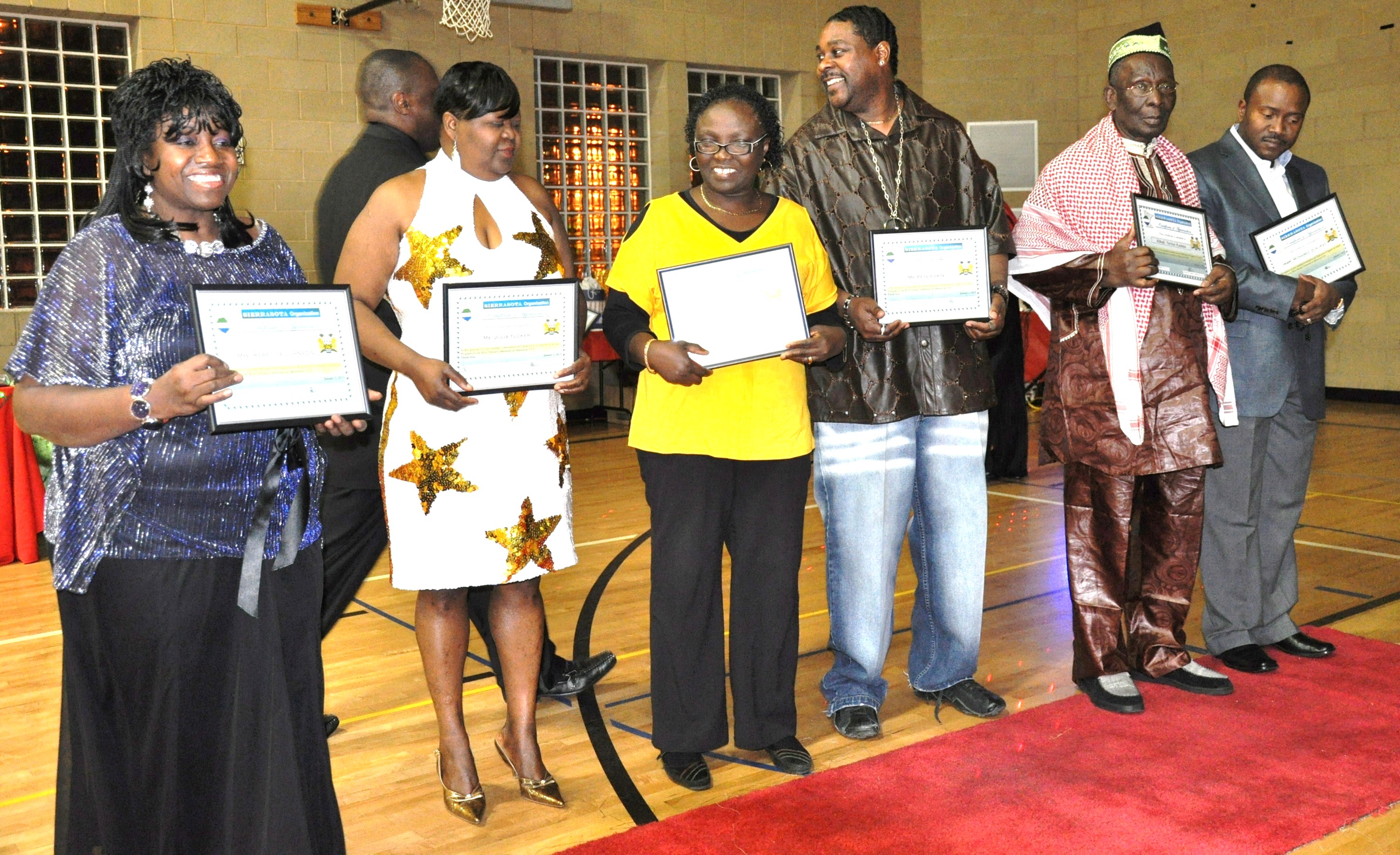
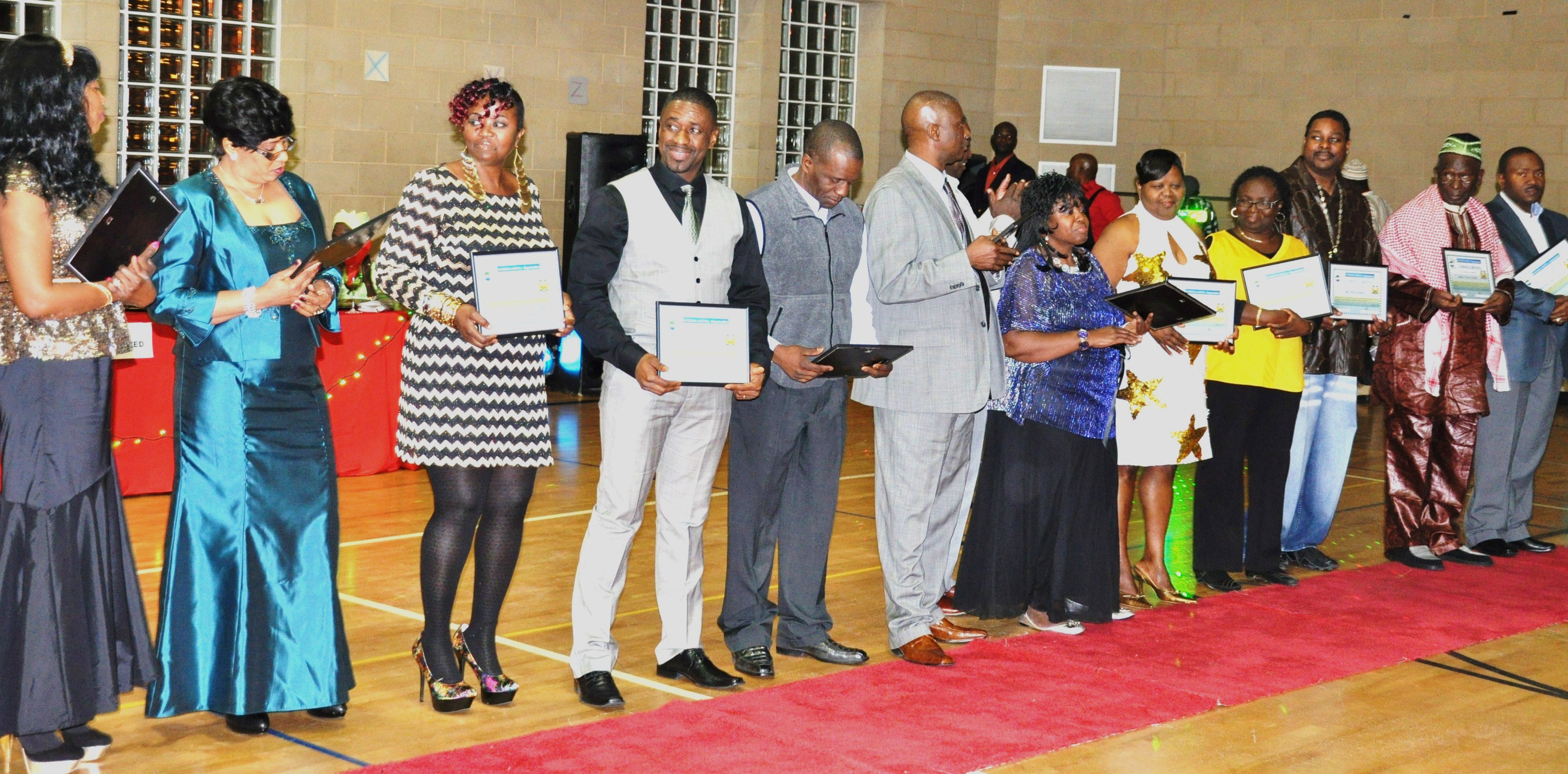
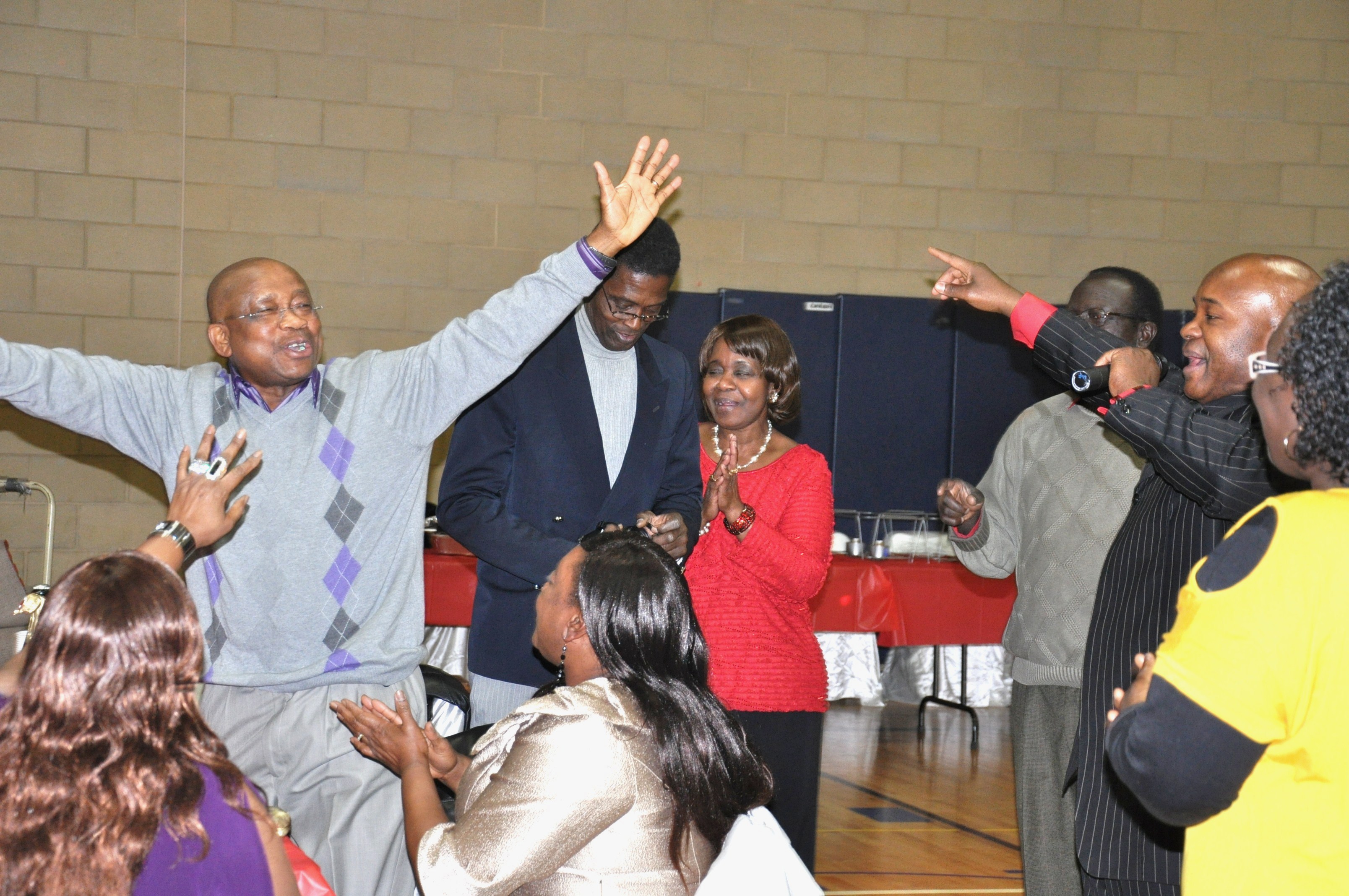
SIERRASOTA Award Winners

By Issa A. Mansaray | The AfricaPaper

Minneapolis, Minn- Members of Sierrasota, the Minnesota-based Sierra Leonean organization held their first Awards Night at the East Side Neighborhood Services Center to honor 19 community leaders and three organizations on Monday, Dec. 31, 2012.

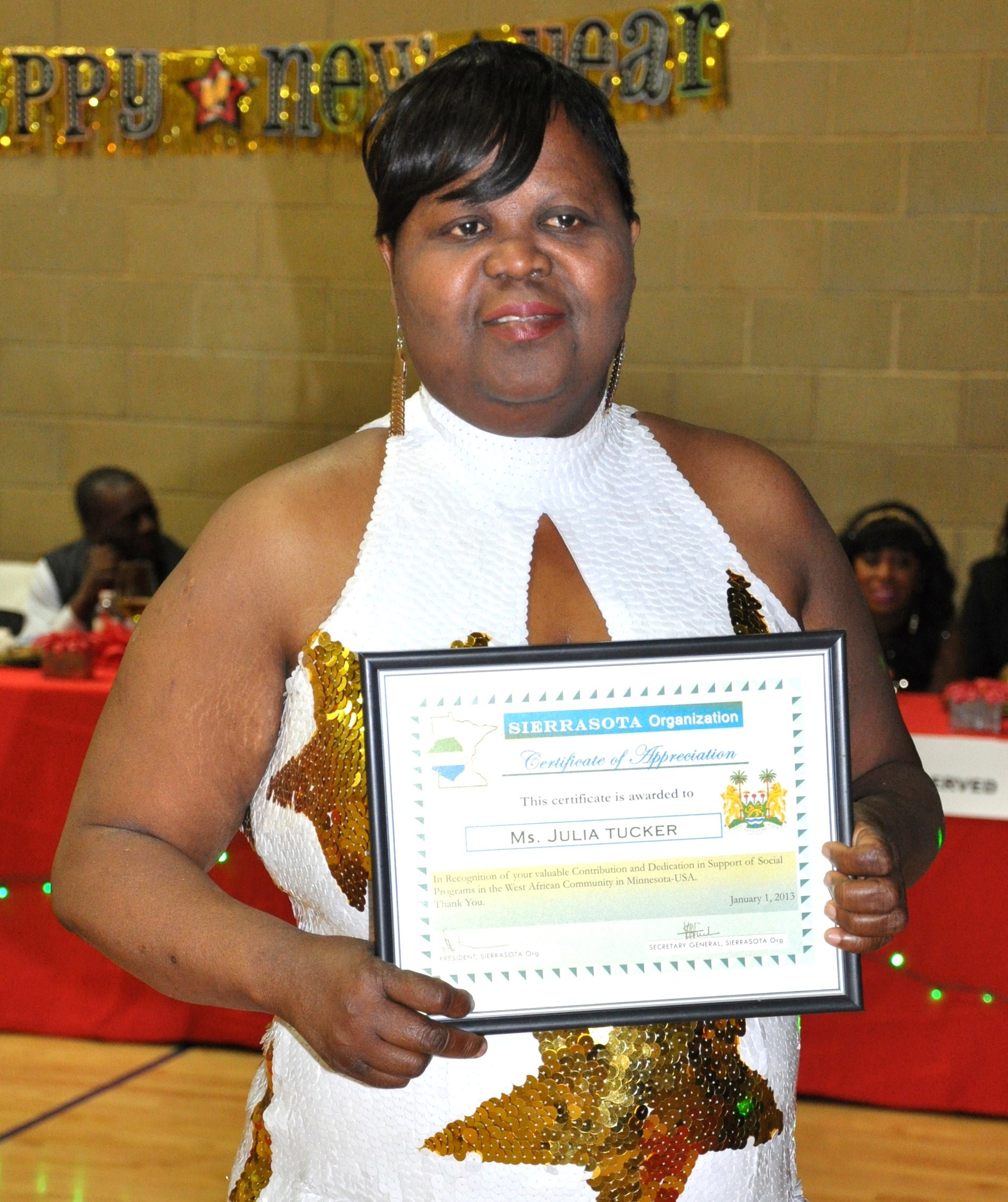
“I feel honored,” said Julia Tucker

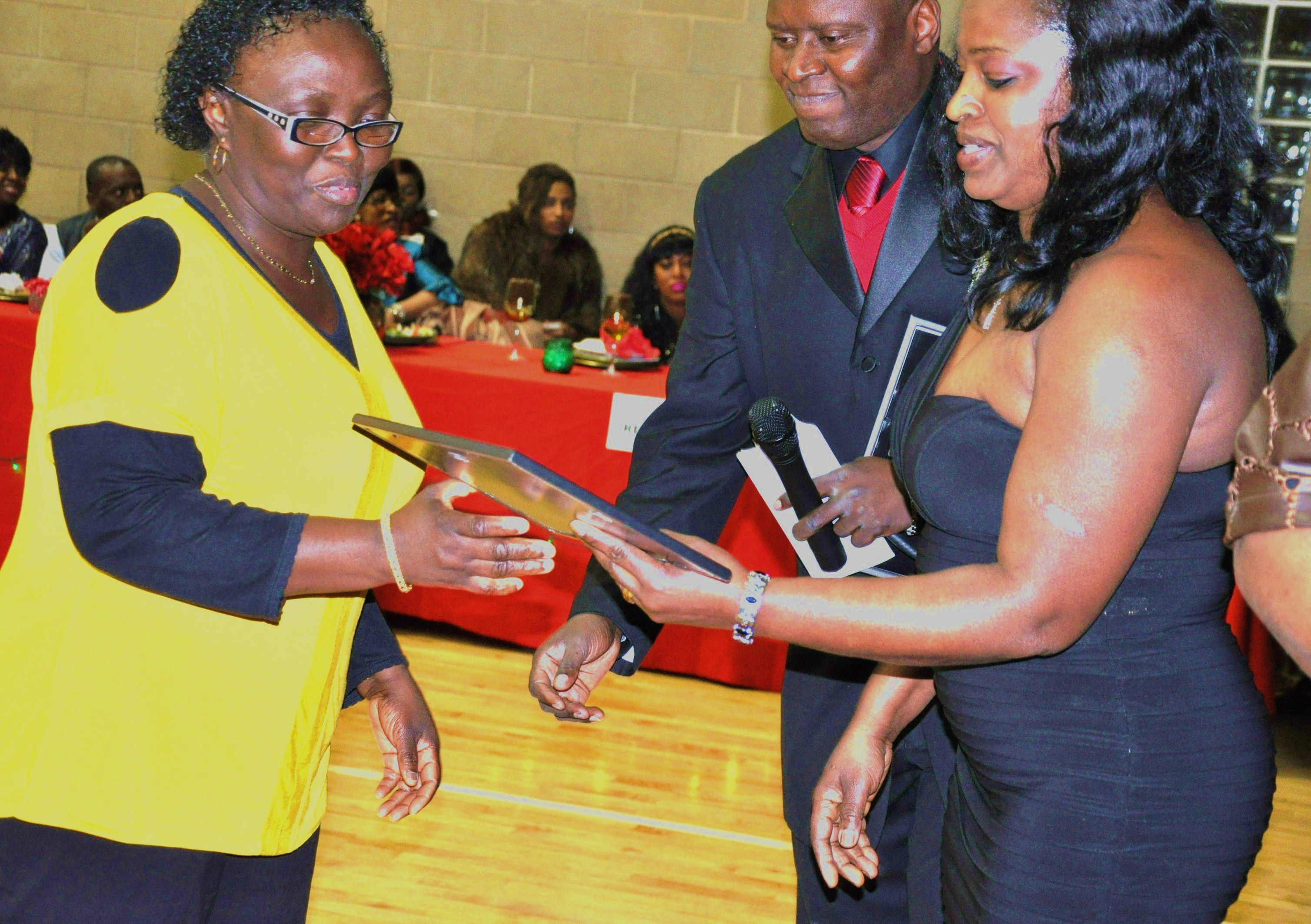
“It shows that people do care. That people recognize your contribution in the community,” said Julia Tucker, vice president of the Twin Cities-based One Big Happy Family who also walked the red carpet to receive her award from Mrs. Kumba Parsons. “It shows the community’s appreciation and an honor to be recognized. I feel honored.”

It was a great evening as more than 150 people were entertained with food and fantastic music according to Sierrasota member Osman Kamara. The DJ started with music of the ’80s, but later tuned up his speakers with African beats that moved the crowd to the dance floor.

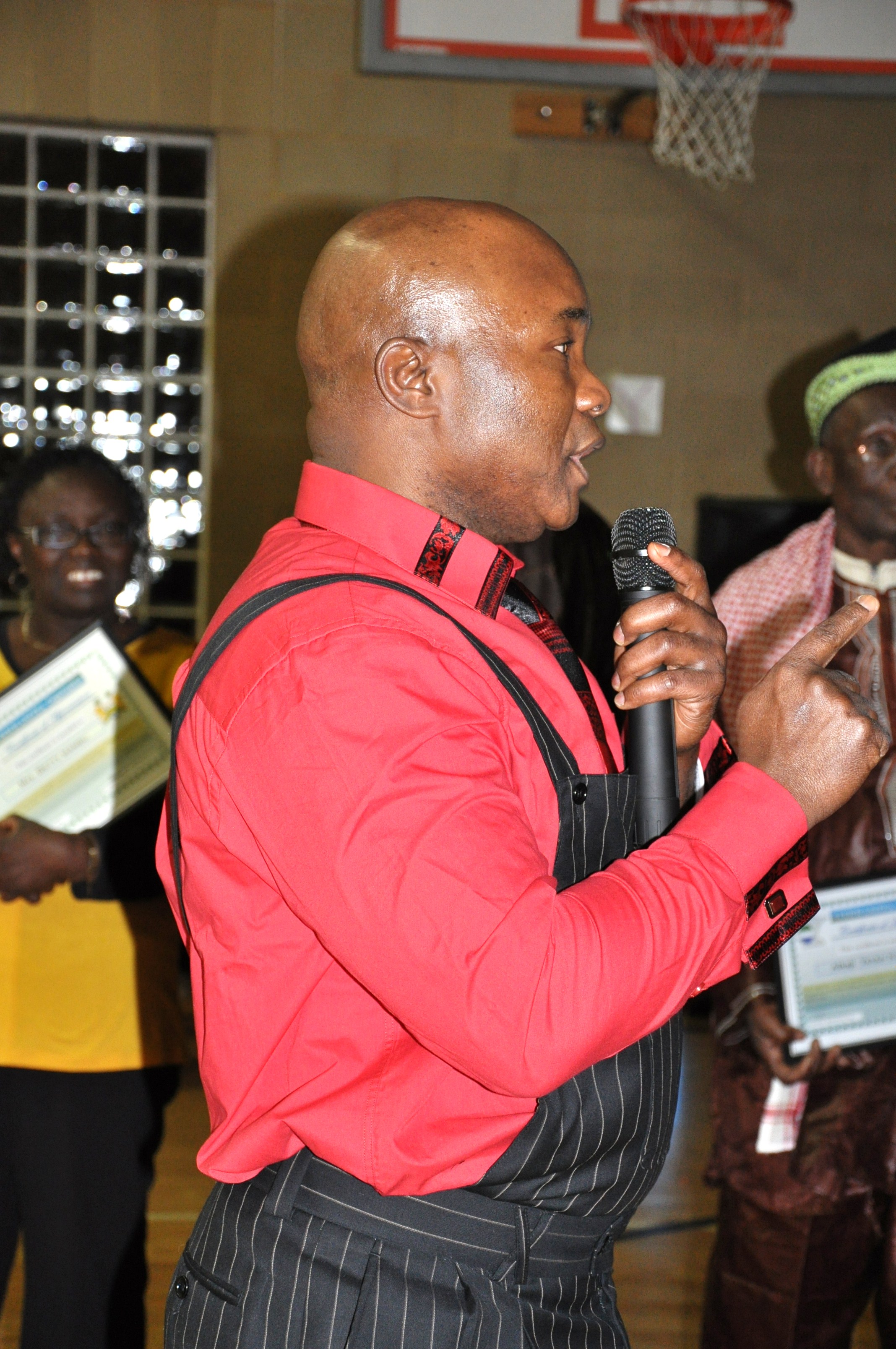
Komba Fayia the MC of the night said they deserve the awards as they have served and contributed to their community in various ways. Those present at East Side had a chance to learn something new about the individuals and organizations that received the awards, their activities in the community, and their journeys to the Sierrasota night.

“A lot of things are happening in the Sierra Leonean community and the Africa community in general,” said Fayia, former Sierrasota

president. “A lot of sadness and prayers for those who have gone … and remember the fun summer.”

Mohamed Khan, Sierrasota president

He reminded those present about the Fiscal Cliff, calling it an “American thing,” since African economies have always been “down the cliff” – the crowd laughed!

“People do many things, but they are not recognized,” said Fayia. “… Great people move communities.”

The red and black night also had a positive response with the crowd, getting a few laughs as more than 20 people that “have done things for the community” were called to receive their awards.

Mohamed Khan, president of Sierrasota said many people were unable to participate in the occasion due to illness, but those present should at least “share some love” with each other as the year drew to a close.

“I am very proud of you,” said Khan. “You, actually deserve it.”

Food including fried rice, fried fish, baked and peppered-chicken, etc., was served in a buffet style and award recipients from the high-table were invited to “help themselves first.”

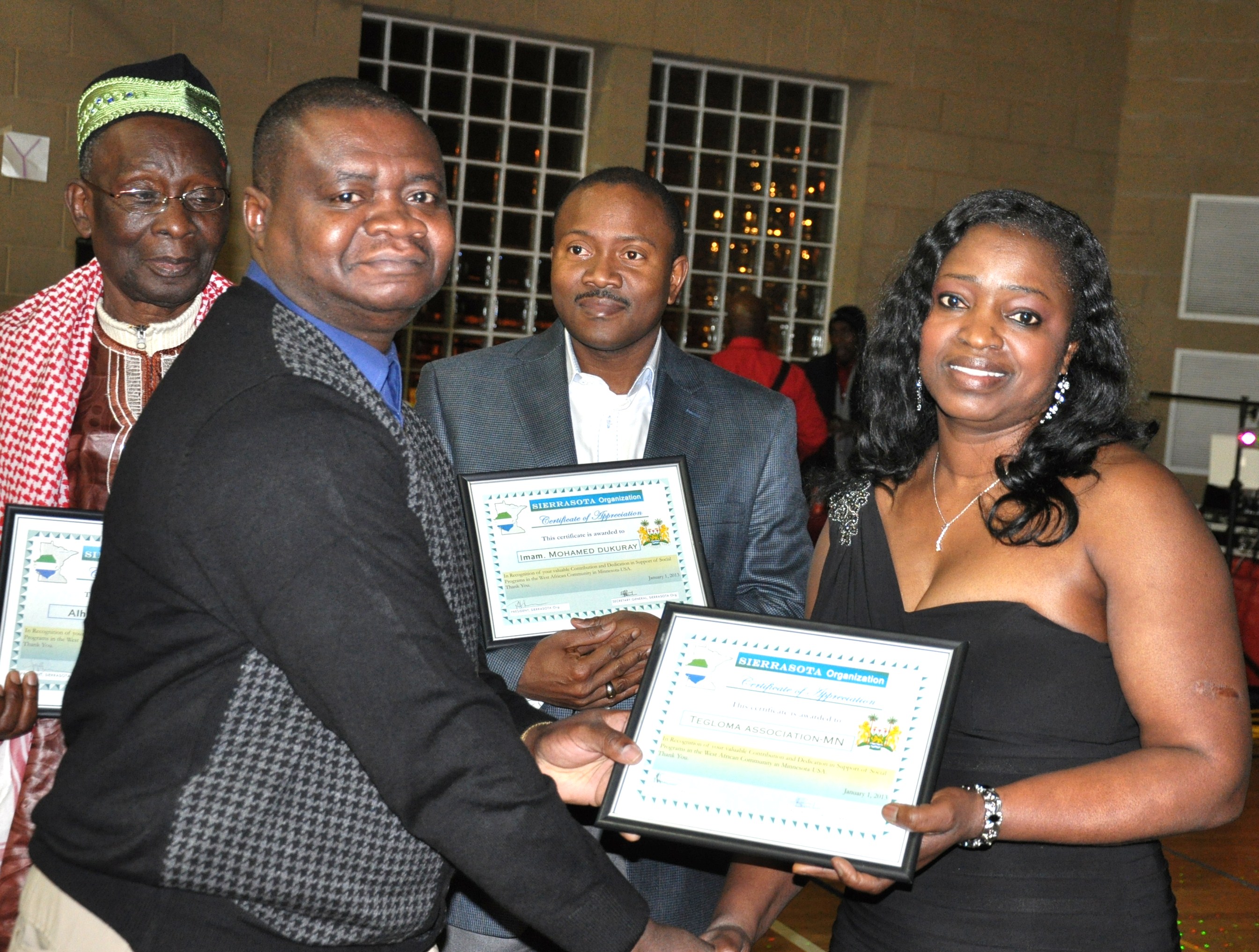
Khan also thanked the three community organizations: United Sisters, Sierra Leone Community in Minnesota (SLCM), and Tegloma Association for their support. The fundraising night was capped with prizes through the early wee hours of the night.

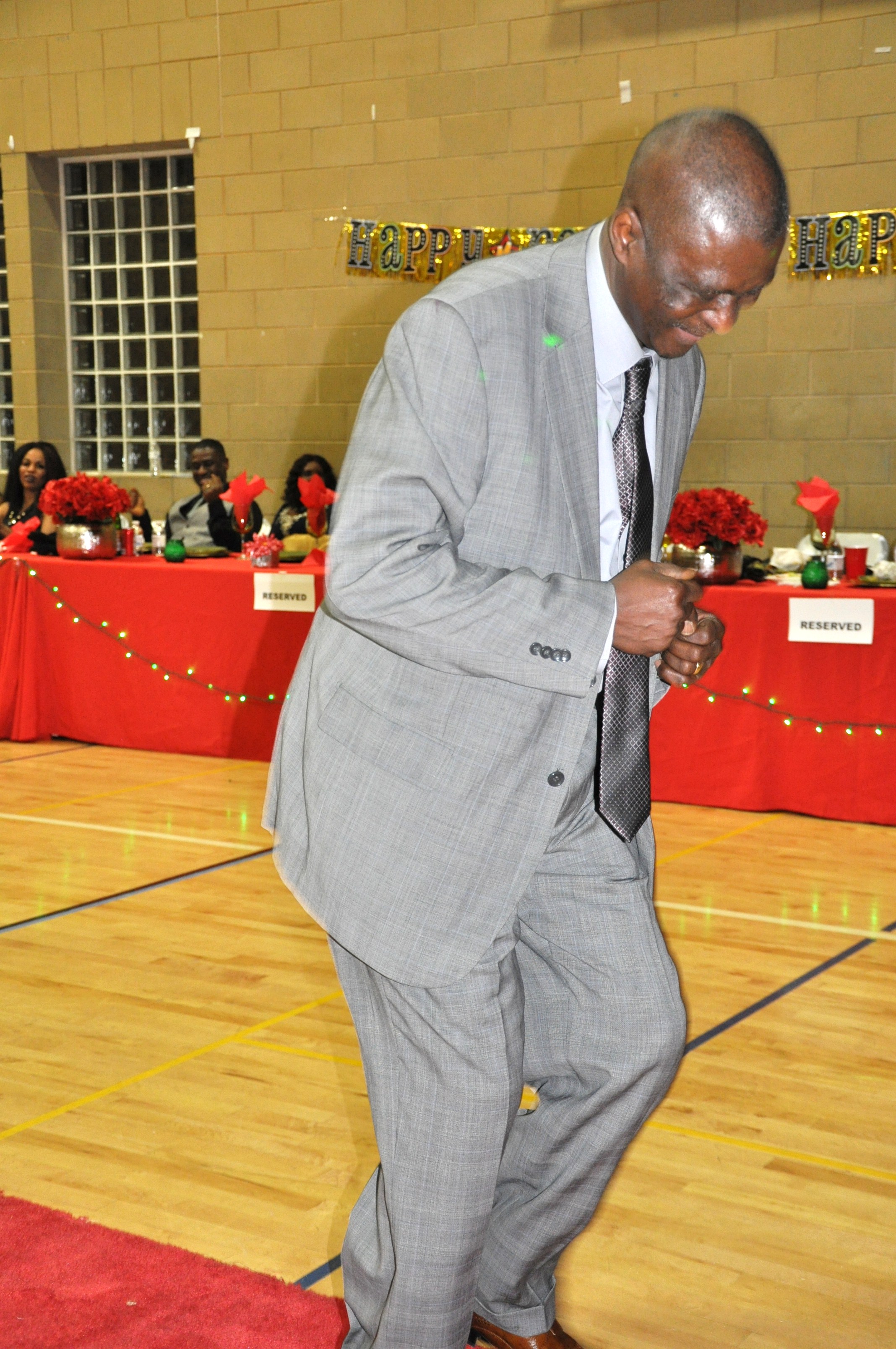
Awardee Aruna Wurie in happy mood

“I feel recognized. An encouragement to do more,” said Agatha Nyanda Hindolo, president of United Sisters, a Minnesota-based community social club on receiving her organization’s award. “There is pride in recognition that brings the feeling to do more …you bring people together when you recognize them.”

“It means a lot. I have been coming to many of the community activities,” said Steve Forte, one of the award recipients. “I love my African culture.”

The following were presented certificates in “recognition of their value contribution and dedication in support of social programs in the West African community in Minnesota, USA” according to Sierrasota -Sierra Leoneans in Minnesota:

Mr. Alpha Bah, Mrs. Isatu Bah, Mr. Albert Bangura, Ms. Saliana Bangura, Imam Mohamed Dukuray, Mr. Komba Fayia, Mr. Steve Forte, Mr. Mohamed Jabbie, Mr. Mohamed Juldeh Jalloh, Mr. Karifa Jalloh, Mrs. Rebecca Johnson, Alhaji Alpha Yayah Kabba, Mr. Ismail Kamara, Mr. Osman Kanu, Mrs. Elizabeth Mambu, Mrs. Fatima Massaquoi, Ms. Alicia Momoh, Ms. Julia Tucker, Mr. Aruna Wurie.

Organizations:

Mr. Hassan Kamara – Tegloma Association; Mrs. Agatha Nyanda Hindolo – Untied Sisters, MN; Dr. Jonathan Rose – Sierra Leonean Community in Minnesota (SLCM).


PHOTOS: Awards Night on Camera

Tegloma President Mr. Hassan Kamar and Mrs. Kumba Parsons
Mrs. Elizabeth Mambu, Mrs. Parsons and Mr. Kumba Fayia.
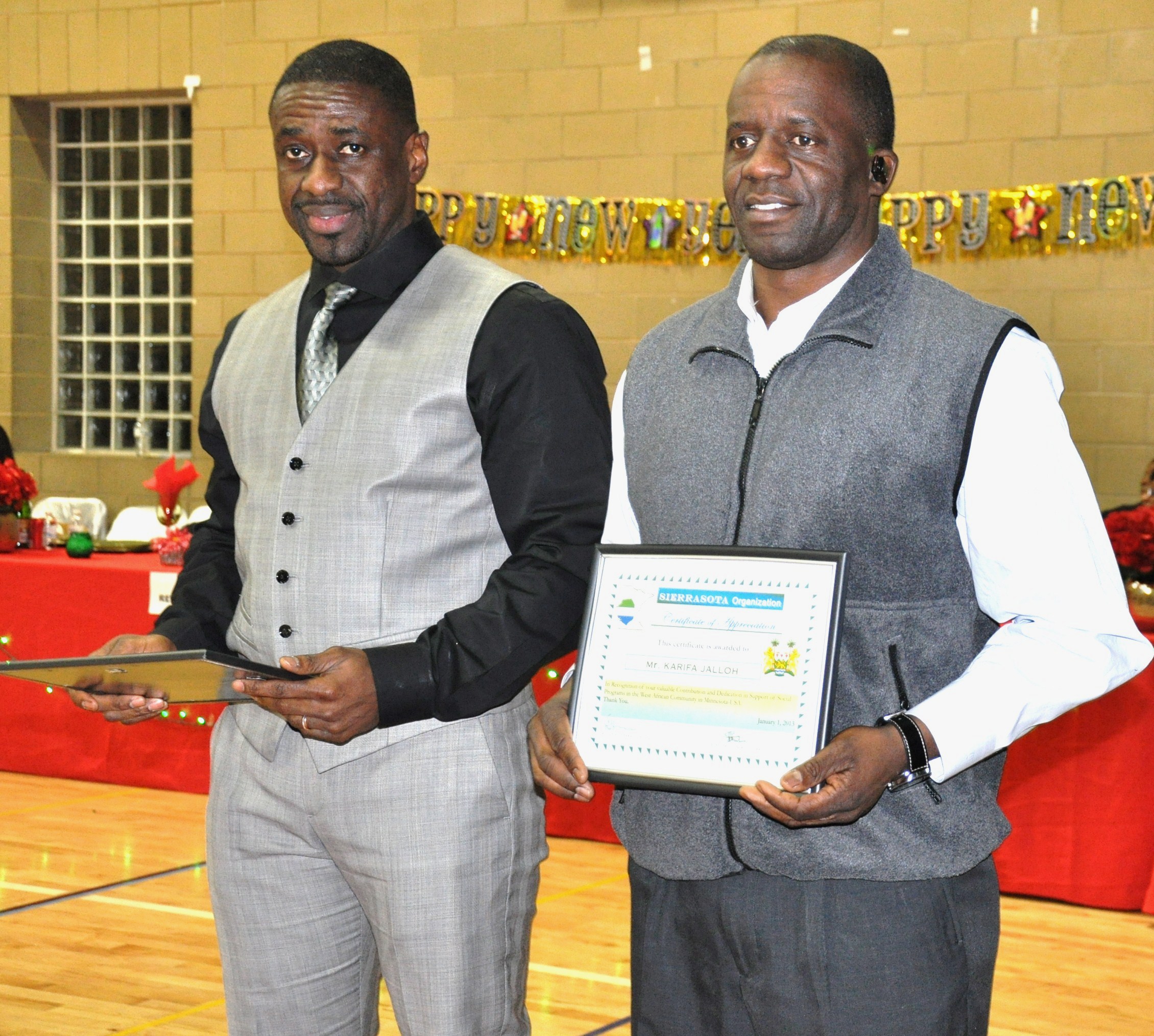
Mr. Osman Kanu and Mr. Karifa Jalloh
“Happy Birthday!” All Photos: The AfricaPaper


The AfricaPaper is preparing a Special Report on SIERRASOTA to be published this year. Please send your comments, views, ideas and any source of information on SIERRASOTA to: DIASPORA FOCUS at The AfricaPaper – email: info@fbg.358.myftpupload.com. Subscribe to The AfricaPaper print edition for detail stories – coming out soon.

World Copyright 2013 – The AfricaPaper, USA. All rights reserved. Photos and text may not be published, broadcast, rewritten, redistributed or used in any form without the written permission of The AfricaPaper Media Corporation and AIIR.