Nairobi, Kenya – Former United States President Barack Obama is set to visit Kenya this month during which he’s expected to travel to his ancestral village of K’Ogelo, Siaya County northwest of Nairobi. His visit is a stop-over while enroute to South Africa where he is invited as special guest at the sixteenth Nelson Mandela Annual Lecture in Johannesburg.
Talks
Mr. Obama is expected to jet into the country 16 July 2018 via Nairobi, after which he would hold talks with President Uhuru Kenyatta and opposition leader, Raila Odinga at the State House in Nairobi. According officials, after meeting with both leaders, Obama would then travel to his native village of K’Ogelo to meet with his relatives.
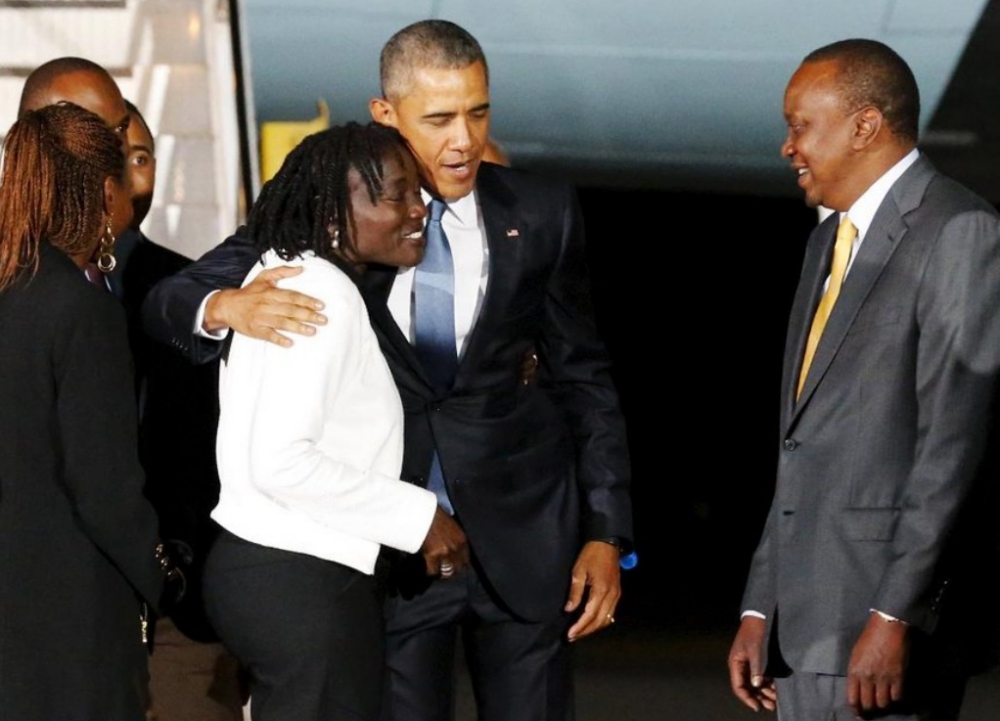
Former US president Obama hugs sister Dr. Auma as President Kenyatta looks on. Photo: Henry Owino/The AfricaPaper
Obama is also expected to hold discussions with leaders of smaller opposition groups in Kenya during his one day trip to the East African nation. This trip would be the fifth by the Kenyan-American born Obama to his ancestral home prior to, and during his tenure as US President.The visit is also in fulfilment to his earlier promise few years ago that he would go back to visit his traditional home.
Promise
During a visit to Kenya in July 2015, then US President Obama had promised that he would come back another time to visit but as a private citizen, a time when his itinerary and trapping of power would be relaxed.
“The Secret Service does not like me climbing mountains but as a private citizen hopefully, I can get away with something like that,” he told Kenyans at the time.
“I know that there are still places in this beautiful nation that I have not discovered. I am going to make sure that I get back.Climbing Kilimanjaro seems like something that should be on my list of things to do once I get out of here,” he said.
Speaking further, Obama maintained: “I will be back to Kenya next time, maybe not in a suit. I would also come with my daughters; Malia and Sasha. My family loves Kenya.”
Excitement
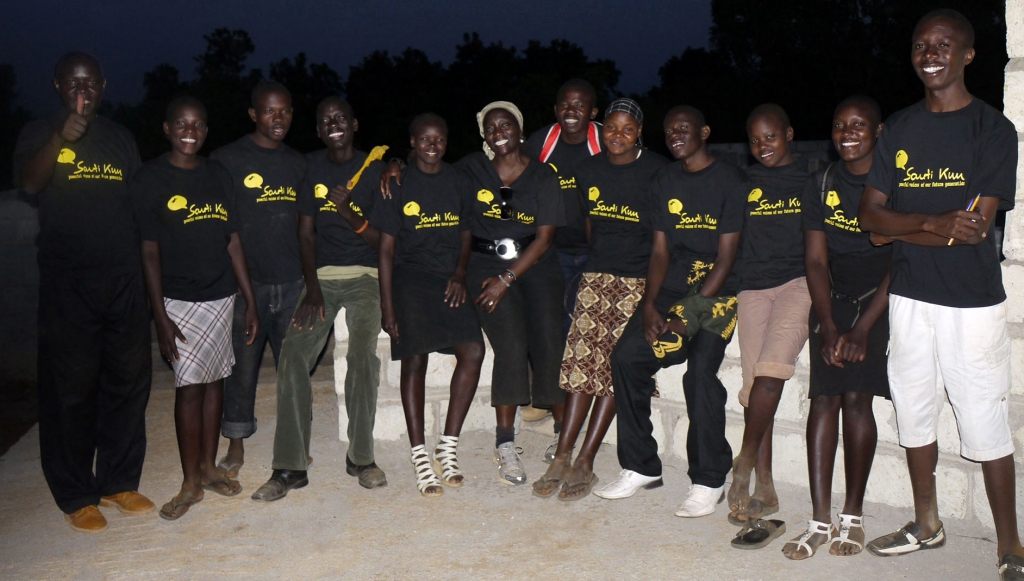
Sauti Kuu Foundation beneficiaries at K’Ogelo village in Siaya County. Photo: Henry Owino/The AfricaPaper
Meanwhile, Kenyans in general are excited about Obama’s visit and some are eagerly waiting to see this 44th US President dine with relatives in his village of K’Ogelo.
“Mr Obama always remembers his ancestral roots and that is why he is blessed. We want to sing for him, dance with him for the world to know he is our son. In America, he went to seek for greener pasture which he got more than enough as a result of his respect to ancestral family,” John Odongo, a clan elder told The AfricaPaper.
In K’Ogelo Village itself, news of Mr. Obama’s visit has turned the entire atmosphere into one of a festive mood with both the young and the old preparing ahead to receive their beloved son. One whose perseverance at challenging the status quo altered the course of American history.
The event will perhaps allow hundreds of people including elders of the region to meet, greet and have handshake with the former US president amid traditional celebration that befits a king – all this time, the villagers, elders, men and women, and youth groups are expected to shower Obama with gifts as African tradition demands.
Youth Project
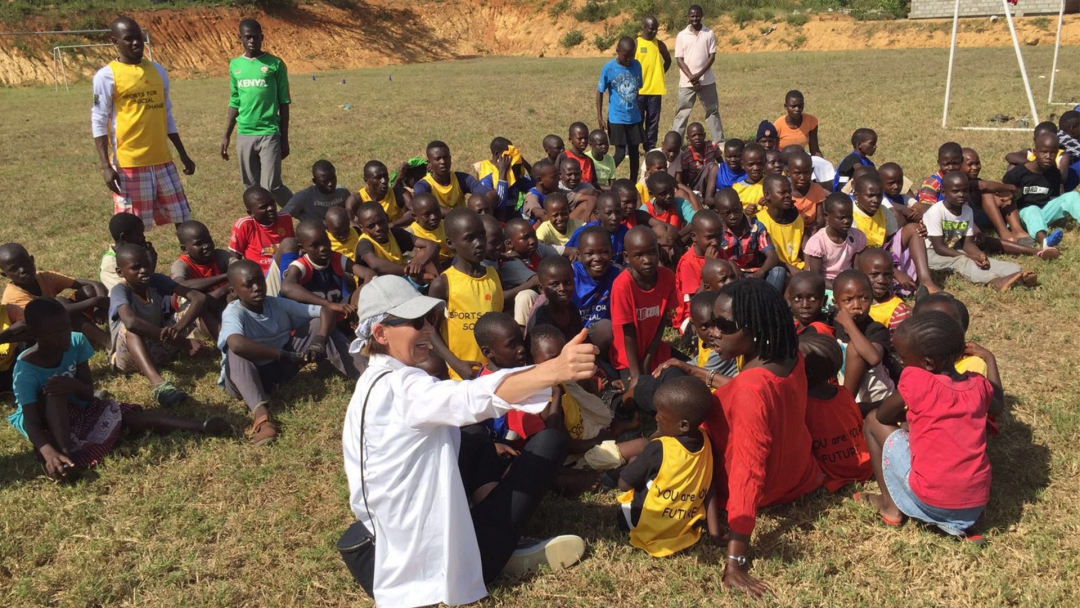
Dr. Auma Obama with some of Sauti Kuu Foundation beneficiaries. Photo: Henry Owino/The AfricaPaper
While in K’Ogelo, Obama will launch the “Sauti Kuu” Foundation, an initiative of youth development project for the county. The project is the brainchild of Dr. Auma Obama, (President Obama’s sister), and is aimed at empowering local youths. Sauti Kuu is a Swahili word which is loosely translated to mean “Loud Voice.”
Born and raised in Kenya, Dr. Auma studied in Germany, obtaining a Masters degree at the University of Heidelberg. She completed her doctorate studies at the University of Bayreuth and also graduated from the Berlin Film and Television Academy.
A key component of Auma’s work abroad included using sports to effect social change – an idea she took home that gave birth to Sports for Social Change Network. Her network has united grassroot organizations in East Africa and beyond such as Bangladesh with motive to use sports as tool for social change particularly for women.
Reportedly, the project has succeeded in empowering village girls in the K’Ogelo region through vocational trainings thereby helping the girls to increase their self-esteem as well as building their self confidence.
Mandela Lecture
While in South Africa, Mr. Obama is expected to make a presentation on this year’s lecture theme titled: Renewing the Mandela Legacy and Promoting Active Citizenship in a Changing World. The lecture begins July 17, 2018, through the Nelson Mandela International Day which takes place at Ellis Park Arena, Johannesburg.
“For most of his life, Nelson Mandela fought for democracy and equality. His presidency was defined by his efforts to solidify the fragile democracy of South Africa, and by his lessons on the politics of ‘bridge-building’ over the politics of division,” said a joint statement by the Community Development Foundation Western Cape, and the West Coast Community Foundation.
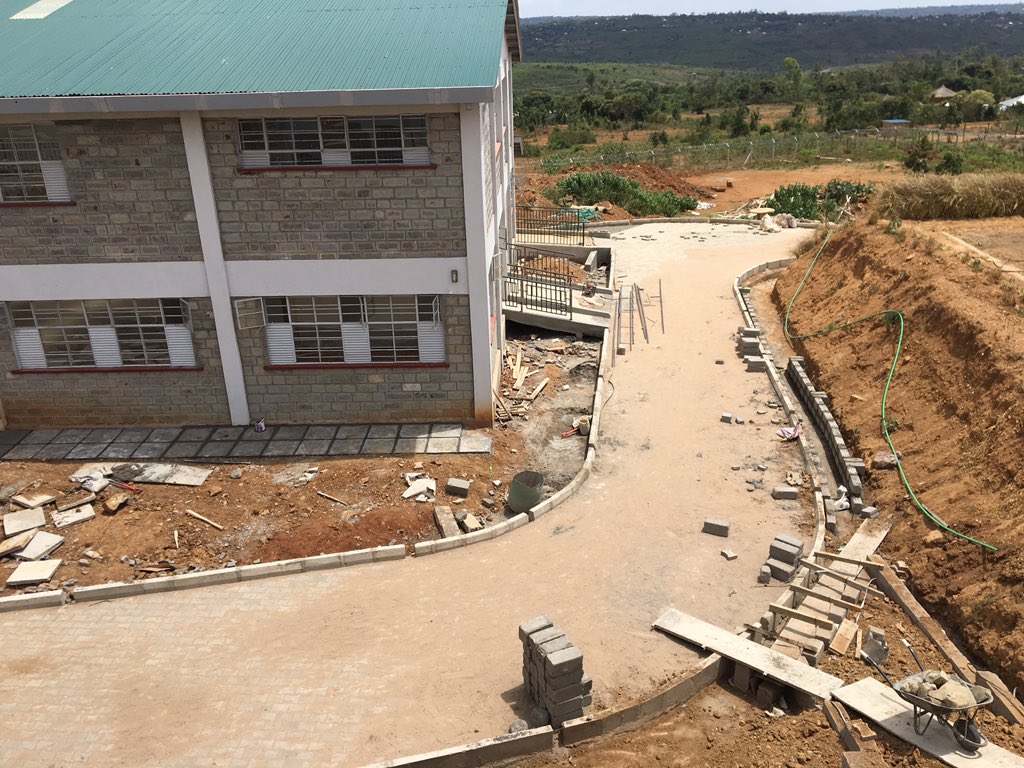
Sauti Kuu Foundation construction projects coming up in K’Ogelo, Siaya. Photo: Henry Owino/The AfricaPaper
The Obama Foundation plans to invite 200 young people to Johannesburg around the same time in mid-July for five days of workshops and technical training. According to The AfricaPaper sources, Mr. Obama will speak at an event slated to mark the 100th birthday of late South African president and civil rights icon, Nelson Mandela, who died at age 95 in 2013.
“It gives him an opportunity to lift up a message of tolerance, inclusivity, and democracy at a time when there are obviously challenges to Mandela’s legacy around the world,” Benjamin Rhodes, former Obama speechwriter.
This will be the fifth visit Mr. Obama will be making to Kenya; the first being in 1987, later in 1992, 2006, and in 2015 when he was serving his second term as US president.
A former Catholic altar boy and a sociable student from northern Uganda, Joseph Kony waged war against his people in central Africa for almost three decades, killed thousands of children and eluded authorities.
Brenda Banura | The AfricaPaper
KAMPALA,Uganda – The period was 1986 and beyond. With the stars twinkling bright up in the sky the villages went to sleep and silence prevailed as people retired to bed. But not everyone did. Stealthily, the rebels walked up to homes rudely awakening men, women, boys and girls. And these seemed like a lucky bunch as others woke up to find their houses had been set on fire with them trapped inside.
On such nights cries filled the air as children were murdered mercilessly. Some managed to escape. But majority were forced to watch scenes so horrific that you could gag. Husbands watched as rebels took turns raping their wives.
Young boys were told to kill their own brothers or both die, and then forced to carry loots and later become child-soldiers. Girls were given off as rewards to the rebels. Those that disobeyed orders had their ears and mouths sliced off.
It is on this note that Joseph Kony, 56, came to prominence so wide that he is Africa’s most wanted man and elusive warlord and perhaps in the entire world. He is the leader of the Ugandan guerrilla group the Lord’s Resistance Army (LRA), engaged in a violent war to establish a government based on the Ten Commandments in northern Uganda.
Holy Spirit
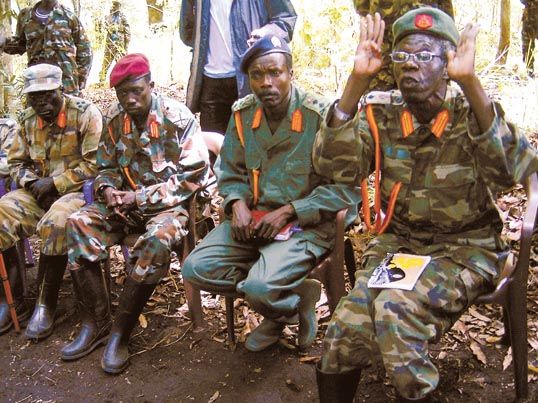
Kony and commanders
Kony’s LRA is immensely influenced by the Holy Spirit Movement. The movement formed in the 1980s, by Alice Auma, represented the Acholi people in northern Uganda. When Auma, a former prostitute also known as Lakwena was forced to flee the country, her cousin, Kony used the same tactics to encourage people to join him.
He spread a similar fallacy encouraging soldiers to use oil to draw a cross on their chests as a protection from bullets. Before long he had attained a reputation of being possessed by spirits.
In fact, he has declared himself a “spokesperson” of God and claims he can channel the Holy Spirit. In an interview aired on ABC TV’s Foreign Correspondent in 2006, he was asked how many spirits spoke to him.
“Very many. I don’t know the number but they speak to me, they talk to me,” answered Kony, while at a bush hideout in Uganda. “You know we are guerrillas. We are rebels. We don’t have medicine. But with the help of spirits, they will tell us. You, Mr. Joseph, go and take this thing and that thing.”
There were also tales that when the Uganda People’s Defense Forces (UPDF) were about to capture him, he turns into wind and if he is killed he rots and resurrects.
“When we were young they used to tell us Kony is some kind of spirit,” recalls Collines Angwech, a student at Gulu University. “They said he walks on water and is related to Alice Lakwena.”
Unpredictable
Kony was born in April 1963 in a strong Catholic family at Awere 300 metres from Odek, a village east of Gulu in northern Uganda. He was the second youngest of six children of village teacher and catechist, late Luigi Abol. His late mother Nora Oting was a house wife.
As a teenager, Kony was a Catholic altar boy who never graduated from high school. Now he says he gets strategic advice from angels. There are eight of these angels, he says – three Americans, two Sudanese, two Chinese, and one Congolese.
Kony has tormented thousands of Ugandans. About 1.5 million people in northern Uganda fear him for his ruthless killings. In 2005, Dr. Riek Machar Teny-Dhurgon, vice president of Southern Sudan and Chief Mediator of the Ugandan peace talks, waited for six days to meet Kony for the peace negotiations.
Kony known to be unpredictable took another full day to emerge from the bush to meet Machar. At the end, he refused to sign the final peace agreement. He wanted assurances that he and his LRA would not be prosecuted for war crimes.
“Those atrocities which was happening, those are not me or my people,” said Kony, arguing that he shouldn’t be tried for crimes against humanity.
Since 1986, the LRA has abducted and forced an estimated 70,000 children to fight in northern Uganda and neighboring countries. It has also displaced over two million people internally.
The Dancer
Otto Ber Mario, 50, a childhood friend and classmate to Kony says he has never come to terms with how a humble, polite and sometimes jocular fellow like Kony turned out to be one of the most wanted criminals in the world.
Speaking to the Ugandan-based Daily Monitor newspaper, Mario says, “In class he would be drawing pictures as others made noise in class, he joked and many pupils liked him because of his dancing skills.”
“He was quiet, but liked joking very much and playing football. He was also prominent for one thing; he beat everyone at Larakaraka (the Acholi traditional dance),” said Mario. “He was always encouraged by cheers and he would dance in the class circle longer and better than anyone.”
But shortly, after Kony and Mario sat their Primary Living Examinations in 1981 the two did not see each other again.
Killer-Husband
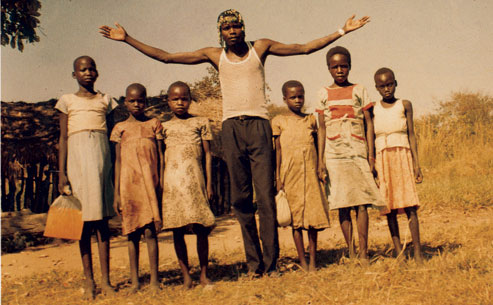
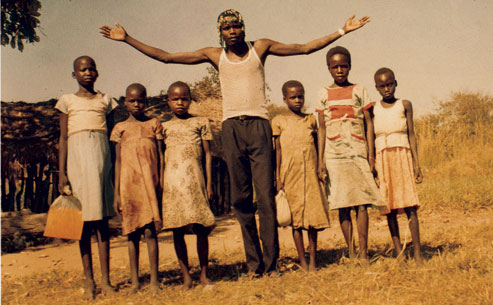
Kony with children.
Kony is said to have at least 60 wives, reportedly, he and his senior commanders pick from the girls they abduct. Some of his former wives released from captivity have reinforced the image of the rebel leader as a good husband.
“I think Kony is a very good father; he bought me gifts and always apologized when he did wrong,” said Cecilia Atuku who was Kony’s oldest wife for over 13 years.
But Evelyn Among who was Kony’s wife for seven years is torn between love and hate. “I actually think he is a good husband, he loved me really but when I escaped I found he had killed all my family members,” she said. Unverifiable estimates place the number of children fathered by Kony in the bush at 100 or more.
Years of Anguish
“I think he is very intelligent seeing the things he has done for all these years without being captured. He has gone on nonstop for over 20 years and he plans for each of his moves carefully,” says Angwech. “This is why he is a step ahead of all those that have attempted to capture him. To capture Kony, we need to be on top of our game.”
“Kony is a terrible person. What else would you call someone who has no problem wiping out a whole village of homesteads?” inquires Bernadette M. Nagita, 23, who hails from Aboke, Kole District close to Lira. “I hate him and can’t wait to see him captured. That is why I am happy about the Kony 2012 video. I think it is powerful and it is a good way to tell the world about what Kony has done so we can join forces to stop him.”
Nagita says sending 100 US troops is not enough, that Ugandans need many more, to intensive the hunt for Kony and to be stopped completely. As a former student of St. Mary’s College Aboke Girls [one of the numerous schools Kony has abducted students from] Nagita remembers how he attacked and abducted twice from St. Mary’s, taking 139 girls in his last abduction. At school, they lived in fear of the rebels coming back to collect them years after the incident.
“In 2002 there were rumors that the rebels were one kilometer away from the school and we had to run for over 30 kilometers to Lira town at midday under the scotching sun so that we are not captured,” She recalls.
Instability
Kony is responsible for causing instability in northern Uganda and South Sudan, spilling over into the Democratic Republic of Congo and the Central African Republic. Believed to have massacred civilians inside churches, forced them off cliffs, burned them alive and even made them eat dead bodies, Kony is infamous for abducting children, rape, torture, sexual enslavement.
In 2006, an LRA child soldier told Foreign Correspondent that he was ordered to stab a woman three times, “If she didn’t die I would be shot myself. So, I stabbed her three times and others bashed her.”
This is reason for his arrest warrant on charges against humanity. In 2005, the International Criminal Court indicted Kony for war crimes.
Elusive Warlord
For 27 years, the Uganda People’s Defence Force (UPDF) has battled with the rebels and managed to displace them from northern Uganda for a long time. Life in the region is returning to normal. Kony fled northern Uganda in 2005, into the Democratic Republic of the Congo, and later, the Central African Republic.
Capturing Kony has always been a demoralizing task for the government. On several occasions, he has narrowly escaped. In October last year, Kony was suspected in Ndjema, in Center Africa Republic, when officials raided the hideout, they only found a towel and a water basin just been abandoned. Kony had disappeared.
Ugandan forces missed him in the Garamba National Park in northeastern Congo in late 2008. He left the park before the raid. Kony is crude and careful. He banned the use of satellite phones close to his location.
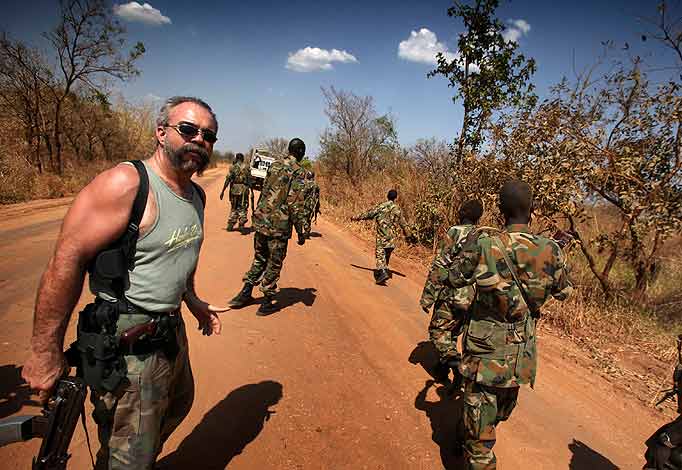
Sam Childers in search of Kony
In a bid to show the world just how bad the situation is, a movie titled Machine Gun Preacher has been made. It tells a story of Sam Childers, a former drug abuser who found God and embarked on a mission to save kidnapped and orphaned children.
Recently, the social media has been lighting up with a new campaign aiming to make Joseph Kony “famous.” The California-based non-governmental Invisible Children campaign says it wants to harness the power of the internet to raise awareness and bring the indicted war criminal to justice.
The move has backfired. Kony 2012 has raised lots of negative feelings amongst many Africans. People in northern Uganda are against the idea of making Kony famous and asked that t-shirts bearing his face should not be sent to Uganda because they will only bring back the bad memories.
“Telling the world about Kony and the atrocities he has committed is a good idea. But how it is done also matters,” opined Regina Namugere, a business woman in Kampala who believes the video should have indicated that Kony was driven out of Uganda years ago. And that, the UPDF should have been applauded for their role.
“We don’t need to see Kony’s picture on t-shirts. Seeing him automatically makes you remember the beloved that have been lost at his hand and the brutal way they died.”
Kampala, Uganda – Ugandan Member of Parliament (MP) for Arua Municipality, Ibrahim Abiriga was shot dead on Friday, June 8, 2018 at Bombo Road in Kawanda, Wakiso District on his way home. He was killed together with his brother cum-bodyguard Saidi Buga Kongo at about 6:30 p.m. according to eyewitnesses.
Fear and Tension
The murder of the MP and his bodyguard has since caused tension and fear among Uganda citizens. Ugandans are now contemplating on their own security and lives, wondering if people of such a high stature in society and more so, guarded are killed, what of ordinary citizens.
Many reactions are currently coming from citizens who fear for their lives claiming security apparatus seems compromised or in laxity. They question the seriousness of Uganda police officers’ task in providing security to all citizens regardless of one’s social status, religious and political party affiliation.
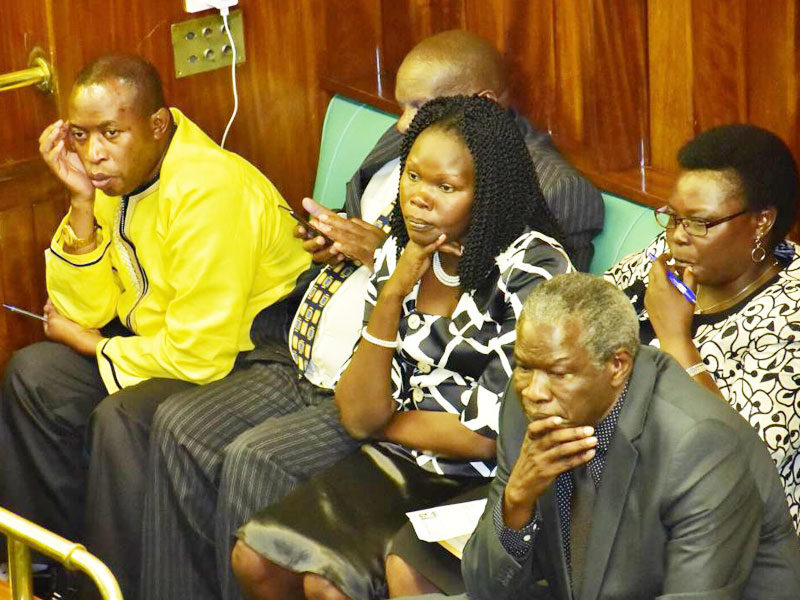
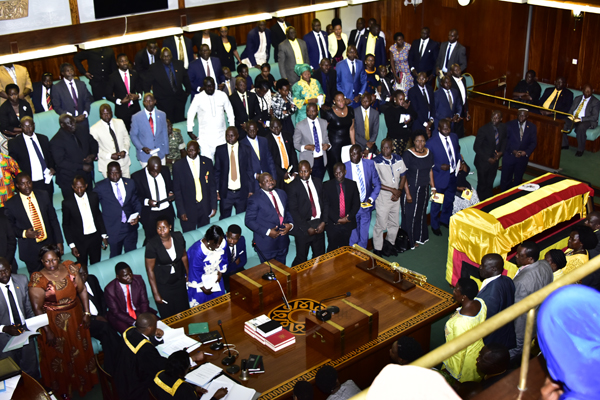
Parliament in somber mood for slain Abiriga. Photo: Henry Owino/ The AfricaPaper
“I strongly believe that Abiriga was murdered for his firm position in supporting the government and his critics were not happy. As results, he had many domestic enemies who are well known by the people in Arua, west Nile and in Parliament,” Kent Mawa alleged.
Mawa claimed Abiriga’s murderers must have been well trained assassins within security forces. He said they mastered Abiriga’s movements and trailed him for long before they finally shot him to death.
“We demand his killers to be brought to book, charged and imprisoned for life,” said Mawa.
Residents are now demanding for the arrest the late Hon Abiriga’s killers. They claim many Ugandan citizens holding senior positions or appear to be supporting the opposition party are always killed in cold blood.
Unknown Assailants
Abiriga is not the first sitting Ugandan MP to be shot dead, though the practice was rampant before NRM came into power in 1986. Abiriga now joins other MPs who have died in the same way by unknown assailants.
Killing the MP for Arua Municipality sparked tension amid demonstrations by citizens in the streets demanding arrest of the assailants. Many citizens however, have varied opinions of possible cause of his death.
The most outstanding speculations from residents is that of Abiriga was a diehard of National Resistance Movement (NRM) and staunch supporter of President Yoweri Museveni. His support for Museveni and crucial role played in amending the constitution, earned him many enemies.
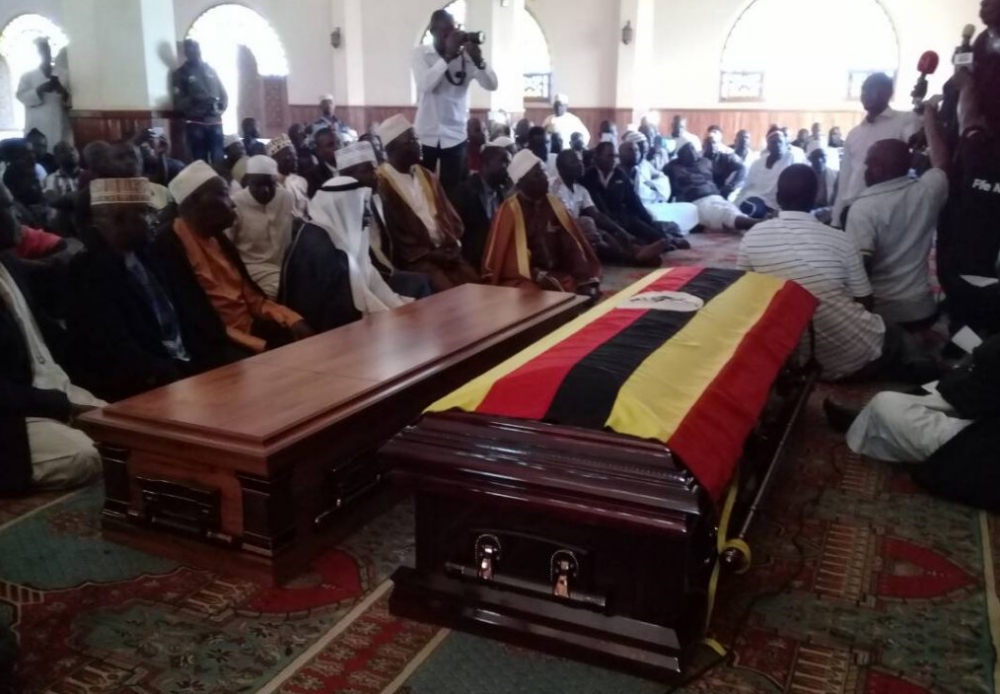
Abiriga accorded State funeral. Photo: Henry Owino/ The AfricaPaper
Abiriga was one of the champions for the recent constitutional amendment for the removal of the presidential age limit in the constitution. He was among the initiators of the move to amend the Constitution to remove Article 102b to have the 75 year upper age limit for the president repealed.
According to Jamick Mwanga, it is very sad that Uganda is heading back into the cycle of violence. “Why must people die because of their firm ideologies in politics or boldness in principles?” he asked. The role Abiriga played could be the possible motive of his assassins.
“I think many people seem not to know Abiriga well, apart from his yellow attire and comical act within parliament. This man was a NRA Commander of the 32nd Battalion based in Palabeck, the current Lamwo district in 1990-91,” Mwanga recalled.
“It is documented that Abiriga was responsible for many atrocities, killings in areas in Palabek Kal, Gem, Ayuu. It is documented, and political scholars know about it. However, revenge is not always a solution to any political problem.”
Public Appearance
According to Uganda Police Spokesman, Emilian Kayima,Abiriga’s last public appearance was at the presentation of the State of the Nation Address on a Wednesday, June, 6, this month. He was spotted at the Kampala Serena Hotel’s International Conference Centre. Abiriga was in his trademark yellow Kaunda suit matched with yellow shoes.
“It is a very unfortunate evening where I had to confirm the assassination of the Hon. Ibrahim Abiriga. He was killed near his home in Kawanda, Wakiso district,” Uganda Police Spokesman, Kayima said.
The Speaker of Parliament Rebecca Kadaga said she learnt with great shock of the shooting and death of Arua Municipality MP, Hon Ibrahim Abiriga.
“[The] Death of Abiriga shocked me and I hereby send my condolences to the family, relatives and the people of Arua and the country at large. I am also urging the security agencies to start investigations immediately,” Kadaga posted on the parliament twitter handle.
“Urban Terrorism Activities”
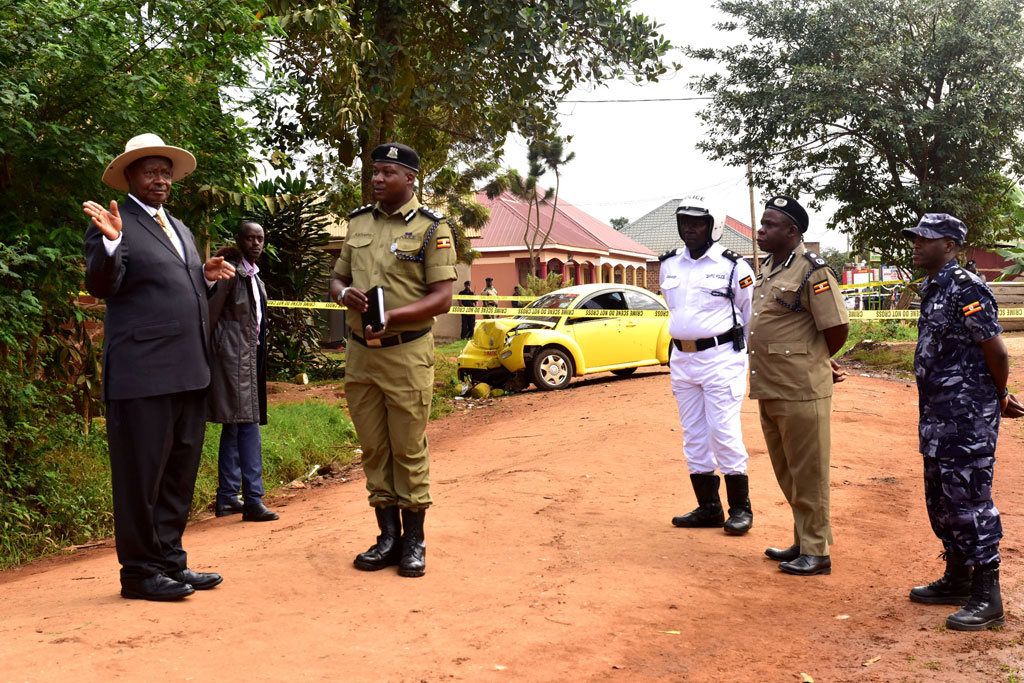
Museveni says those who killed Abiriga are fighting NRM Party. Photo: Henry Owino/ The AfricaPaper
Surprisingly, the death of Abriga comes just a day after President Museveni assured Ugandans that the government will defeat masterminds of the new wave of what he called “urban terrorism activities” like kidnaps and murder.
President Museveni had also promised that the government was going to put in place mechanisms to build the intelligence gathering capacity in towns and along major highways. The president pledges must have been a wakeup call for assassins to act fast ahead of its implementations.
Moments after he was gunned down, President Museveni made a phone call to late Abiriga’s wife, Sijali Amina to console her. Amina had just returned to Arua Municipality two days from Kampala before her husband met his death.
Meanwhile, the mood at Abiriga’s home was wilder with irate mourners ordering security personnel who had been deployed at Abiriga’s home to vacate. They accused them of failing to protect Abiriga’s life hence part of the plot for his murder.
Furious Reaction
Group of women who had rushed to console and comfort late Amina at home following the news of her husband demise, did not find it easy either. It was chaotic. Police and soldiers had to shoot in the air to disperse mourners who were ready to bite the bullet for Abiriga’s death.
As news began to spread at around 7:30pm, members of Muslim community in Arua, NRM supporters in the municipality and Lower Madi community received it with lots of distress.
Members of Uganda Muslim Supreme Council, Arua district reacted furiously to the news of Abiriga’s death and vowed to revenge on whoever participated on his death. Back at Abiriga’s home at Anyafio village, mourners parked to capacity as they tried to get live updates from various television channels.
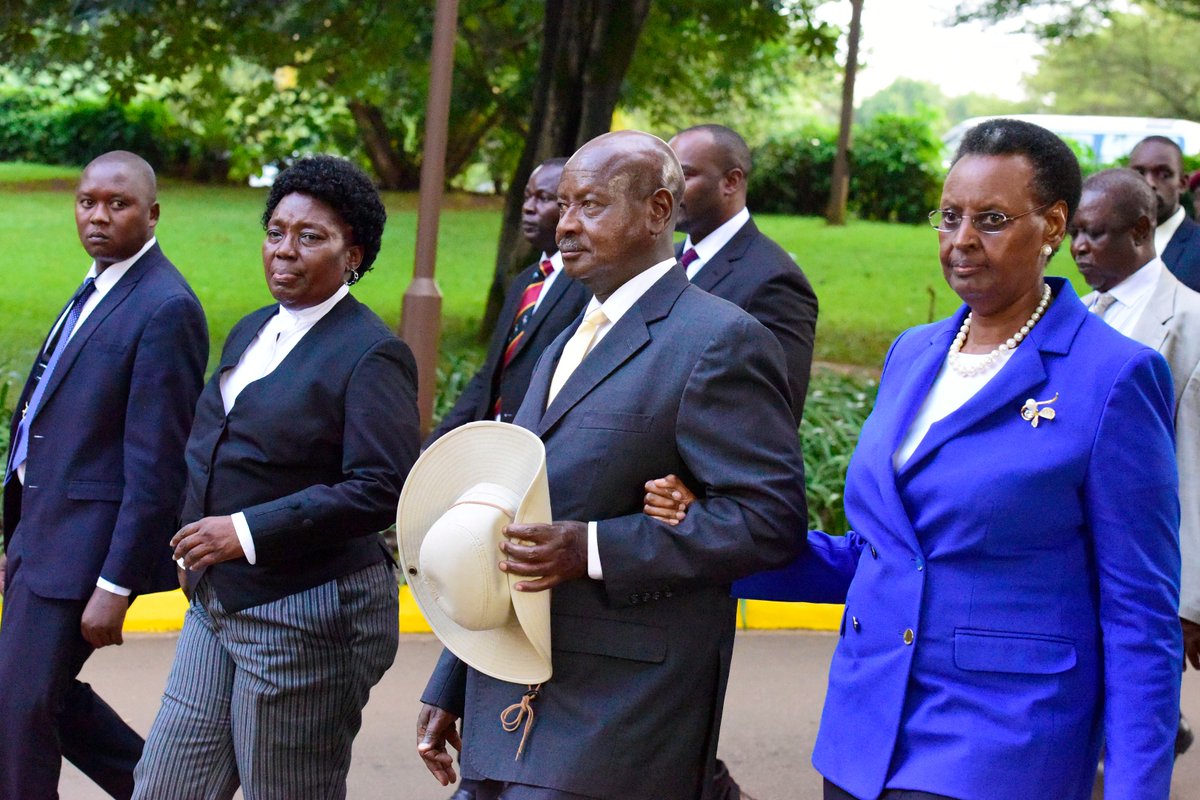
Museveni arrives at Abiriga’s funeral with wife, Janet Museveni. Photo: Henry Owino/ The AfricaPaper
Before becoming MP, Abiriga served as the Resident District Commissioner (RDC) for Arua district for 12 years (2001-1013). He was later transferred to Yumbe in the same position. He resigned from the post to contest for a parliamentary seat, which he won in Feb. 2016.
However, his election was contested by his main challenger, Musema Mudathir Bruce, a member of the opposition party, Forum for Democratic Change (FDC) on the basis of lack of academic documents.
Bruce has since maintained that Abiriga did not have an advanced level certificate, the minimum education requirement for anyone contesting for a parliamentary seat in Uganda.
Catching Culprits
President Museveni promised in 1989 just three years after gaining power, option of not superintending a country in which a citizen is killed without state authorities catching up with the culprits.
“I will not preside over a country where a Ugandan is killed and the authorities do not know who has killed him,” he said in a Uganda Broadcasting Corporation video clip now widely circulating on social media.
During Abiriga’s funeral service, mourners reminded Museveni of what he promised at least 32 years down the line in office. The Arua District chairman, Mr. Sam Wadri Nyakua, tasked the President at the burial to explain why “Ugandans are being killed like chicken.”
“Your Excellency, you are the Commander-in-Chief of the Armed Forces, you have fought many wars and defeated the enemies. Why are these types of killings happening?” Nyakua asked, referring to the brutality with which gunmen eliminated Abiriga and his brother-cum-bodyguard, Mr. Kongo.
Experienced Assassins
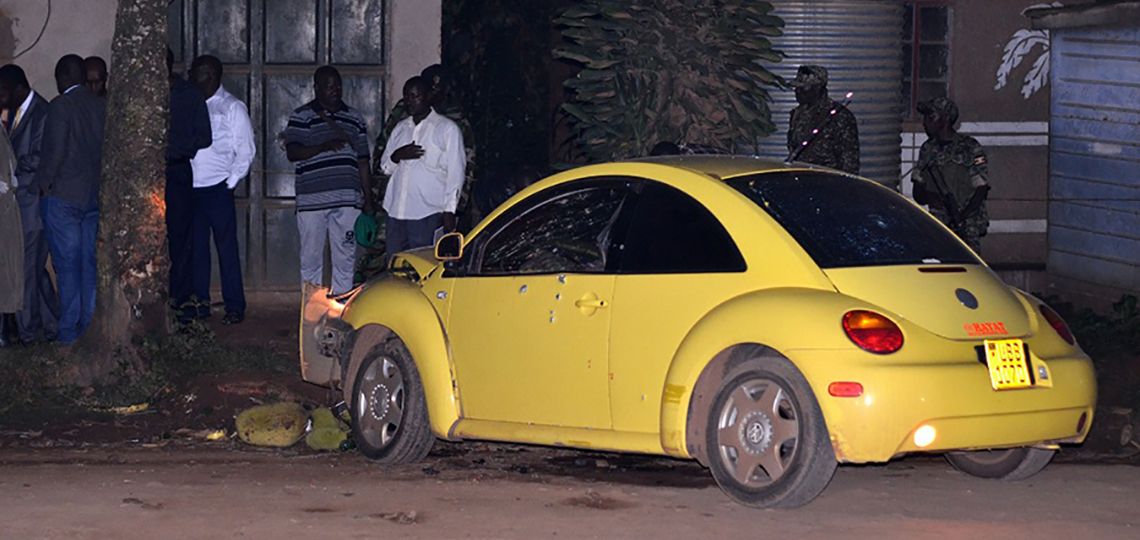
Scene where Abiriga where murder. Photo: Henry Owino/ The AfricaPaper
Motorcycle-riding assailants have over the past five years trailed their victims, shooting them multiple times in a manner that suggests the handiwork of experienced assassins.
Abiriga and his brother were brutally and abruptly assassinated in the same manner. Ending their lives at about 6:30 p.m. on a Friday.
Former police spokesperson Andrew Felix Kaweesi and the then senior State Prosecutor Joan Kagezi alongside more than half-a-dozen sheikhs have suffered a similar fate.
No suspect was arrested for Kagezi’s killing in 2015, but dozens were incarcerated over the deaths of the sheikhs and Kaweesi, with either the court or police themselves freeing several for lack of evidence.
Fear and Panic
This pattern of unexplained killings, which some legislators said had placed them on the tenterhooks, formed the main theme of talk for officials at Abiriga’s interment at his Rhino Camp ancestral home.
“We are living under fear, under panic because I don’t know if I’m going to be shot today or tomorrow,” Arua chairman Nyakua said to applause from mourners. “You are still in-charge and these types of killings must stop, Your Excellency.”
MP Peter Ogwang (Usuk, NRM) said MPs have been receiving threats, sometimes from colleagues, warning of their plans to kill them and their children.
Parliament holds a special sitting honor the late Ibrahim Abiriga. Photo: Henry Owino/ The AfricaPaper
“This country is degenerating into a situation where it will soon be ungovernable,” Mr. Ogwang warned, disclosing that his wife and children weep whenever he leaves home because they are not sure if he will return alive.
There was a chorus from across the political divide for a faster solution to the killings. In a rejoinder, President Museveni acknowledged the problem but downplayed it as non-military challenge, likening it to spotting a needle in a haystack, which he said can be handled through better intelligence gathering and civilian vigilance.
Evil Spirits
“Now people are worried, they are sad, they are angry. Me, I am sad, angry but I’m confident we are going to defeat these people,” said Museveni.
“They have opened war; they have killed our people and they will know what NRM means when it fights back. Why do you kill an elected leader of the people of Uganda? Museveni inquired. “If you start war with NRM, you know you will lose. You find a man in his house or a car and you kill him?”
“You are a pig!” he exclaimed. “Such characters are part of “orindi onzi (evil spirits).”
President Museveni said “Abiriga was influencing people by example; I did not know some of his works. The ones who killed him are sons of ghosts of Uganda.”
Unusual Violence
Odonga Otto, Aruu MP: “I can say with certainty that the terrorists targeted the wrong person. Death is death and it must not be used to derive political dividends whatsoever.”
Issa Kato, Arua Municipality Mayor: “In our culture, these acts of violence are unusual. You lose someone like that (Abiriga), you lose your brain and behave anyhow.”
Ms. Kiiza said Abiriga will be missed around Parliament because despite being a man of few words, he has been a morale booster to others parliamentarians.
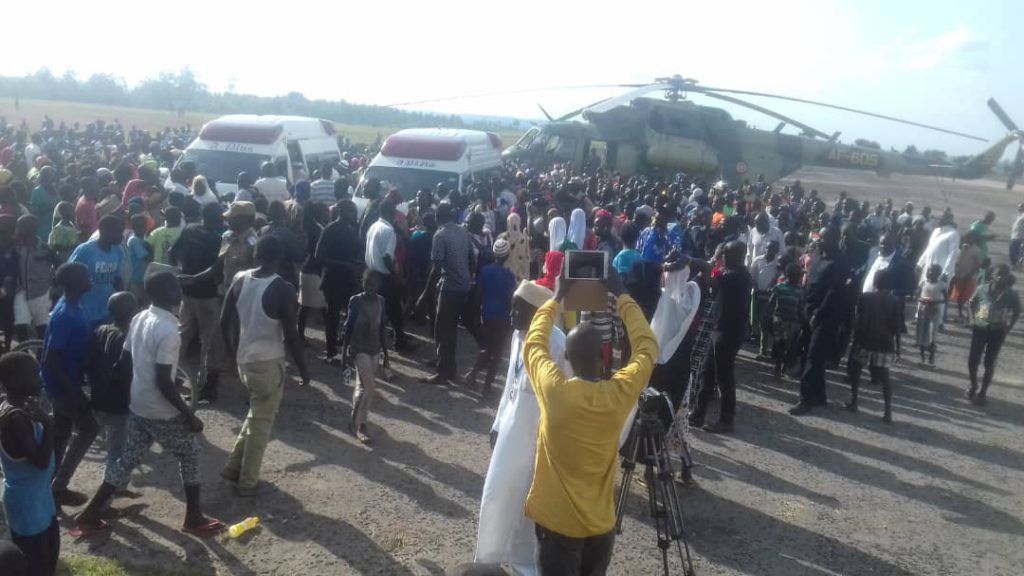
Citizens at airstrip to welcome body of slain Abiriga as situation normalizes through military intervention. Photo: Henry Owino/ The AfricaPaper
“I say sorry to the people of Arua Municipality and Uganda at large. He has been a man of few words and a morale booster for us in Parliament. I wonder why one would target Abiriga to kill him because as far as I know, he had no grudges against anyone,” said Kiiza.
“It is unfortunate that Hon Abiriga has died the way it has happened, but we appeal to the security agencies to wake-up and save this country from such kind of murders.”
The Uganda People’s Defence Force (UPDF) spokesperson Brig. Richard Karemire described the killing of Abiriga as a cowardly act.
“We condemn this act in the strongest terms. We shall continue to work together with other security agencies so that we guarantee peace and security,” said Karemire. “UPDF commiserates with the family of the deceased and patriotic Ugandans. Abiriga has been known for his dressing code that is fanatic to the ruling National Resistance Movement by donning all yellow to express his endless support to the party.”
However, his participation in ensuring that the age limit is removed was interrupted by a court case in which he was accused of urinating in public near the Ministry of Finance head offices in Kampala. Abiriga would later be fined Sh40,000 (about $10,400) by City Hall Court for being a public nuisance.
World Copyright
The AfricaPaper, USA, 2018. All rights reserved. Photos and text may not be published, broadcast, rewritten, redistributed or used in any form without the written permission of The AfricaPaper, and AIIR. We take legal action for any copyright infringement.
Former President Ellen Johnson Sirleaf, often considered a democratic reformer, has civil war blood on her hands, according to evidence made public in the trial of a former Liberian warlord.
By Staff Writer | The AfricaPaper
Philadelphia, PA – The historic transfer of power to a new government in Liberia last January, the first in 70 years, was hailed and celebrated as a milestone in the country’s turbulent political history. However, the woman credited with all this – former president Ellen Sirleaf- is notorious for the complex roles she played in shaping Liberia’s destiny over decades, actions which eventually culminated into a full-scale bloody civil war.
“Iron Lady”
Affectionately known by her supporters as “Iron Lady,” Sirleaf has either sponsored or masterminded a series of failed plots in attempts to overthrow former Liberian dictator Samuel Karyon Doe from power, according to an investigation backed by substantial documentation. Sirleaf’s desperate quest to seize power began almost immediately after Doe, a native born Liberian, overthrew late president William R. Tolbert – ending an Americo-Liberian dynasty that ruled for more than 133 years and marginalized the native majority.
Ms. Sirleaf is reported to have backed every incursion into Liberia against Doe except the infamous “Nimba Raid” of 1983, apparently prompted by Doe’s misrule and led by disgruntled Nimba dissidents who targeted Doe’s officials who were members of the Krahn tribe. Reportedly, Sirleaf personally provided substantial financial support to each of the dissident groups that staged coups or invasions on the presidency – beginning with the November 12, 1985 coup by late Brigadier General Thomas Quiwonkpa and going through the December 24, 1989, invasion by Charles M. Taylor.
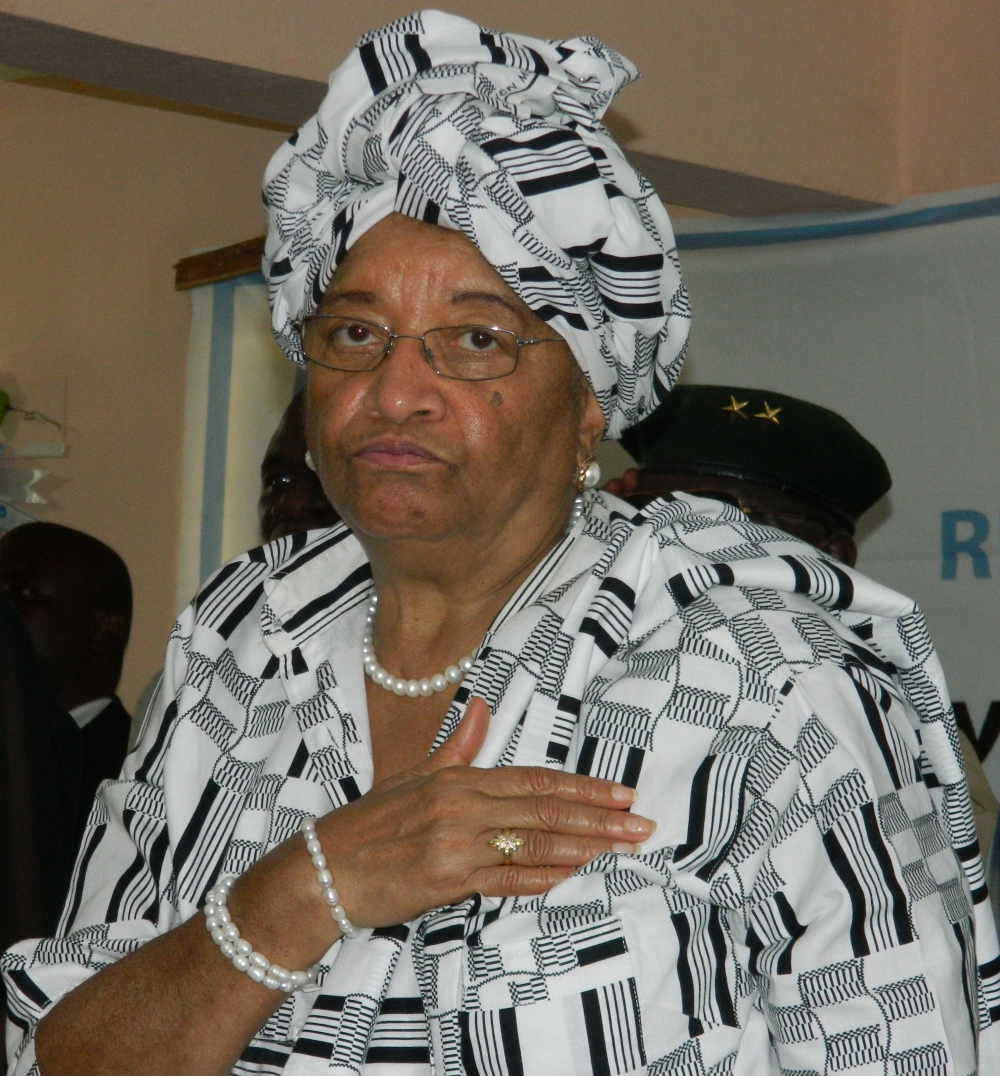
Former Liberian Ellen Johnson-Sirleaf, also known as “Iron Lady.” Photo: (c) James K. Fasuekoi/The AfricaPaper
NPFL Support
Jucontee Thomas Woewiyu, the former National Patriotic Front of Liberia (NPFL) spokesperson and Minister of Defense currently standing trial for alleged war crimes, immigration fraud and perjury, outlined Sirleaf’s personal support to the NPFL in the tune of about US$1.5 million according to an open letter addressed to Sirleaf and published Aug. 30, 2005.
After more than three decades after Sirleaf ruled the country for two consecutive terms, those deeds are coming back to haunt her.
Sirleaf, has never denied her membership in the rebel NPFL, nor her financial support for the front led by now indicted war criminal Charles Taylor. In fact, during her 2009 appearance before the country’s Truth and Reconciliation Committee (TRC), Sirleaf admitted to supporting Taylor and his rebel movement during the war. What she disagrees with critics on actually has to do with the scope of any financial and military assistance she provided to the NPFL.
Because of Sirleaf’s roles in abetting atrocities committed by the rebel NPFL, the TRC recommended in its final report submitted to the Liberian Parliament that she and 49 other prominent figures within the government and Legislature be barred from holding public office for 30 years. The recommendation was never carried out.
War Efforts
The complaint filed against Woewiyu in the US District Court for Eastern Pennsylvania chronicles pre-trial testimonies by over 50 witnesses. It cites the name of “Ellen Johnson Sirleaf” multiple times and her alleged roles she played in NPFL war efforts.
In the coming week, prosecution lawyers will present several witnesses that had contact with NPFL, support from former Burkinabe president Blase Campaore, and late Libyan leader Muammar Gaddafi. For example, Witness S, is expected to explain how Sirleaf provided financial support to NPFL guerrillas while they were still in training at Mataba military camp in Tripoli, Libya.
Witnesses
Witness S was a soldier in the Armed Forces of Liberia (AFL) when Msgt. Samuel K. Doe seized power, but fled to Cote d’Ivoire when Gen. Thomas Quiwonkpa’s coup failed. The witness will testify about his encounter with defendant Jucontee Thomas Woewiyu in Libya and how Sirleaf sent “$10,000 to Libya with Woewiyu for the NPFL forces, but… that the money had been stolen.”
Sirleaf confirmed in the past that she gave NPFL $10,000 during the initial stage of the war when pinned down by the media on the matter. However, she described the amount as “insignificant” arguing it was a “drop in the bucket,” taking into account the scope of the NPFL war to remove Doe.
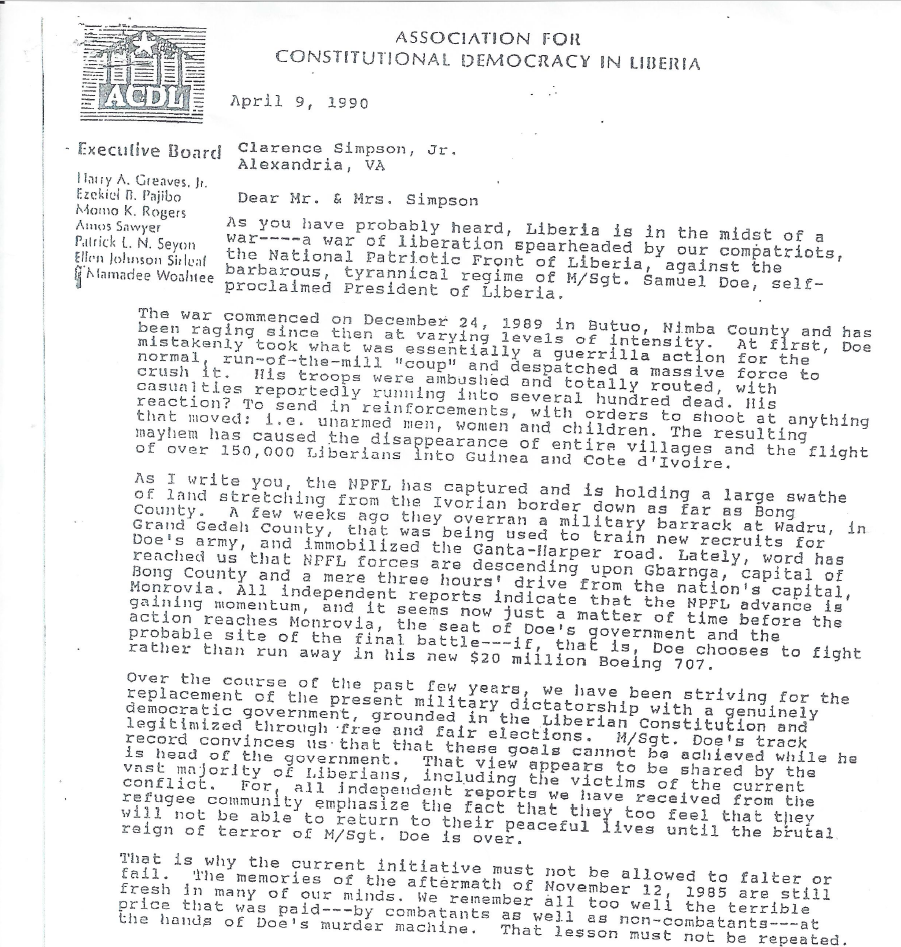
Part of ACDL document obtained by TAP
Sirleaf later severed ties with the brutal NPFL rebel forces, though it’s still unclear when she fully distanced herself from the NPFL. Some believe that probably occurred after the NPFL had committed its first major massacres of civilians in Barkiedu, a border town in the Mandingo chiefdom in Lofa County.
Initial Amount
However, a sharp rebuttal to Sirleaf’s claim by former NPFL defense minister Woewiyu, listed $25,000.00 as the “initial amount” he said Sirleaf gave the NPFL leadership through her own business consortium, represented by both “Clarence Simpson and Taylor Major.”
Woewiyu’s letter, addressed to Sirleaf, also alleged that she contributed $50,000 in another instance to the NPFL’s war efforts through Allen Brown Sr., who ran an insurance business in the Ivory Coast. “You [Sirleaf] had earmarked the money to specifically buy rice for the fighting men and it was done” the letter says.
“Another $150,000.00 was contributed by some of your friends and delivered to Dew Mayson, Ethelbert Cooper and Emmanuel Shaw to be forwarded to the NPFL. If you recall, those bad boys ate the money and we were only able to recover $75,000.00 of it six months later,” Woewiyu’s letter says .
Woewiyu, a former president of the Union of Liberian Associations of the Americas, a Liberian umbrella organization in the US from 1983 to 1987, is also founding chairman for the now controversial Association for Constitutional Democracy of Liberia (ACDL). The ACDL,a US-based Liberian diaspora organization through whom Sirleaf often claimed she gave a $10,000 in aid to the NPFL, is said to have backed a series of coups and instigated instability in Liberia.
Other Contributions
Woewiyu also claimed there were other contributions made by Sirleaf toward Taylor’s jungle war prior and during the war but that they were “undocumented.” These, he said included a trip Woewiyu made to Paris with Sirleaf to meet Charles Taylor – and several trips she made to “the Liberian border to meet with Taylor and the fighting men” as the war progressed.
Woewiyu testified that the funds Sirleaf gave to Taylor while Taylor was still in Paris, and during each trip she “made to the frontline[s],” when multiplied, “should be far substantial” and would push Sirleaf’s overall contribution to “about half of million United States dollars.”
Invasion from Butuo
Taylor, a disgruntled former cabinet minister in the Doe government, launched an invasion into the country in 1989 from the border town of Butuo, in a move to forcibly remove Doe from power. Gen. Quiwonkpa, a former Doe ally, had invaded Liberia four years earlier under the same banner, the National Patriotic Front but that attempt ended deadly and Quiwonkpa was killed.
Gen. Prince Y. Johnson, a Gio from Nimba where people had long endured persecution by the government, joined forces with Taylor, Ellen, and Woewiyu who appeared capable of providing both political and financial resources to unseat the Doe regime. Gen. Johnson repeatedly grieved over the Quiwonkpa episode over the years, returning to remove reproaches left hanging over Nimba by the Doe regime, eventually capturing and killing Doe on Sept. 9, 1990.
World Copyright
The AfricaPaper, USA, 2018. All rights reserved. Photos and text may not be published, broadcast, rewritten, redistributed or used in any form without the written permission of The AfricaPaper, and AIIR. We take legal action for any copyright infringement.
The prosecution spent yesterday establishing Thomas Woewiyu’s role as a senior member of the NPFL, Charles Taylor’s rebel group known for mass murder, torture, and the use of child soldiers.
By Carmen Russell | The AfricaPaper
Philadelphia, PA – It was a day of gripping testimony Wednesday in the trial of Jucontee Thomas Woewiyu, 72, the former spokesman – and, later, Minister of Defense – for former Liberian President Charles Taylor’s National Patriotic Front of Liberia (NPFL). Woewiyu is currently charged with several immigration offenses but conviction may hinge on whether the prosecution can show he was responsible for war crimes in his native Liberia.
“I Will Kill You All”
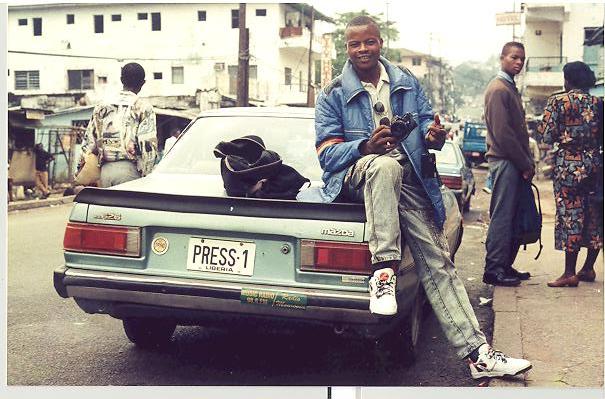
James Fasuekoi as a War Photojournalist. Photo: Fasuekoi/The AfricaPaper Archive
The first to take the stand, Liberian photojournalist James Fasuekoi told the story of how he and his family evacuated from their home in Gardnesville, a suburb of the capital during the civil war. Headed for the University of Liberia Fendall Campus located along Monrovia-Kakata Highway, they encountered several checkpoints along the way, each presenting the possibility they would be killed. At one, Fasuekoi testified, a rebel soldier with the NPFL, assisted by an armed child soldier, searched their luggage finding a fired pistol shell in his uncle’s bag.
“My uncle started trembling; he was afraid,”Fasuekoi recalls. “He said, ‘I had a pistol. It was before the war.’ The rebel said, ‘I’m going to kill all of you.'”
The soldier told them to stand in a line and Fasuekoi knew death was imminent. Just as he began to look for an opportunity to “make a move and seize his weapon,” local villagers started to appear and plead for their lives.
The rebel relented and the family survived. They weren’t all so lucky later when they were apprehended again and held for several days. They were only released when Fasuekoi’s cousin – a young woman the rebel commander had taken an interest in – agreed to stay behind.
“She sacrificed herself,” Fasuekoi told the court. He never saw her again.
Photographic Evidence
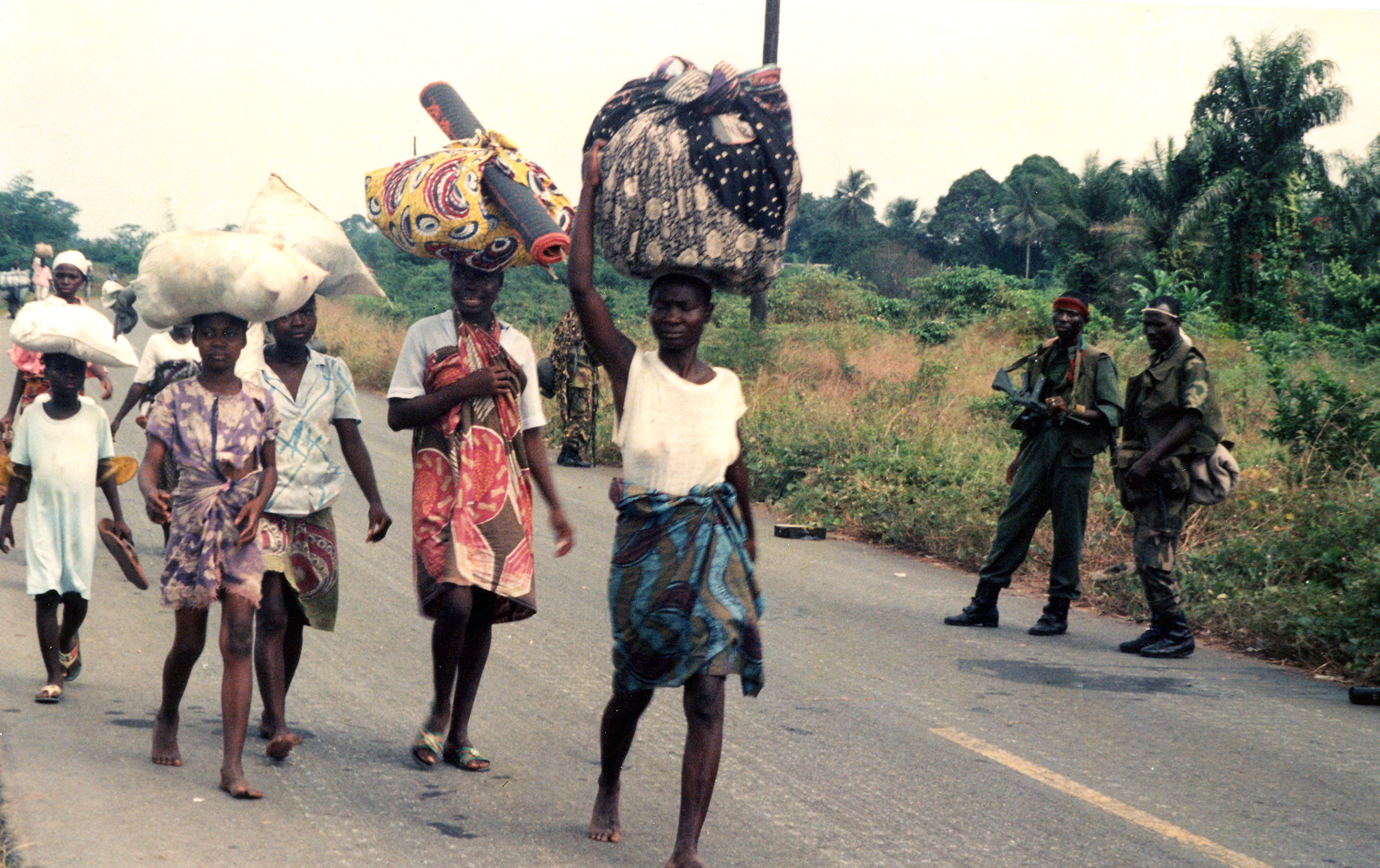
Civilians heading to Monrovia after fleeing NPFL-ULIMO gun battle in Tubmanburg in August 1992. Photo: (c) James Fasuekoi/The AfricaPaper
Eventually, Fasuekoi returned to his photojournalism activities, shooting the symbols of war including corpses, child soldiers, and senior rebel leadership. Many of those photos have been deemed essential to the prosecution’s effort to establish Woewiyu’s role with the NPFL and, therefore, his role in war atrocities.
[Editor’s Note: For full disclosure, James Fasuekoi is a member of The AfricaPaper staff. The AfricaPaper and AIIR holds one of the largest collections of West Africa war photographs. Fasuekoi was subpoena by the court to testify in Jucontee Thomas Woewiyu’s case.]
As his photos of the defendant were presented to the jury, Assistant US Attorney Linwood C. Wright, Jr asked Fasuekoi to confirm the identity of subjects in the photos – some of himself, some of victims of the war, some of children posing with large rifles. Of particular interest to the court are the clear shots a younger Woewiyu, speaking to crowds or standing next to other faction leaders and members of the NPFL.
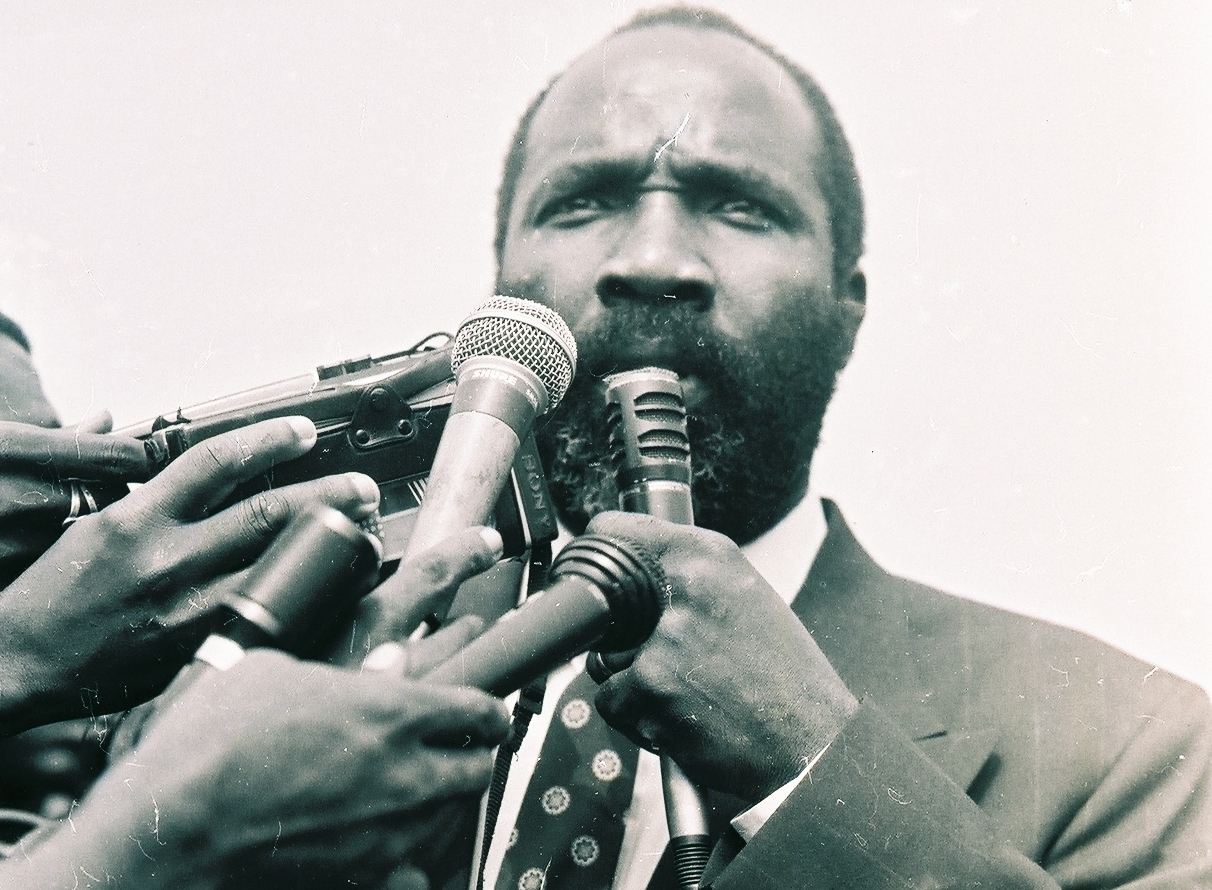
In one, Woewiyu holds a microphone talking to – as Fasuekoi explains – members of the foreign press to announce the opening of roads into and out of Monrovia. Monrovia, still being controlled by government forces, was largely cut off from the rest of the country which had become less-than-affectionately known as Taylor Land, after NPFL’s leader – and Woewiyu’s boss – Charles Taylor.
“It was forbidden to leave from the other side but, for some reason, the NPFL decided to open the roads so they had this elaborate event [to announce it],” Fasuekoi told the court. Asked about another photo showing large crowds at the announcement, Fasuekoi further explained that “People had been anticipating it greatly because they had been cut off from their family for almost two years.”
The opening was temporary, however, and Taylor’s forces soon went back to shelling the capital, eventually taking control.
In finale, Wright asked Fasuekoi if Woewiyu was sitting in the courtroom.
“Yes,” Fasuekoi responded. “He is wearing a blue, maybe dark blue coat and a red tie.”
“Let the record show the witness has identified the defendant,” Judge Anita Brody said.
NPFL Spokesman
Jucontee Thomas Woewiyu as a NPFL Spokesman. Photo (c) The AfricaPaper/James K. Fasuekoi
Following Fasuekoi, the government brought two representatives of the US State Department to the stand. Both testified to communications they had with Woewiyu, helping the prosecution demonstrate that he spoke for the NPFL and led its armed contingent.
James K. Bishop, who served as the US ambassador to Liberia, started his term the day Samuel Doe’s coup brought him to power in 1980. He was scheduled to be transferred from the post after the start of the war.
While attempting to organize peace talks between the NPFL and government forces, there was no doubt who would be present for NPFL.
“We were informed that Thomas Woewiyu was going to engage in the talks that we had in mind,” Bishop said. He later explained that he was given clear indication that Woewiyu also served as Minister of Defense “or some such title” but, whatever the title was, he was “in charge of the military.”
Legal Strategy
Jucontee Thomas Woewiyu has lived in the United States for nearly 50 years, returning home to Liberia to help in Charles Taylor’s coup in the 1980s. Woewiyu has never been charged with crimes specifically related to that effort in Liberia or elsewhere. Even in this case, prosecutors are focusing on questions of immigration fraud stemming from whether Woewiyu was required to make his NPFL activities clear on his application for citizenship.
The prosecution contends that he committed fraud by omitting that information, a contention bolstered by the fact that his application would likely have been rejected if he had.
“You can’t commit human rights abuses in your own country and come here and expect to obtain citizenship,” Assistant US Attorney Nelson S. T. Thayer Jr. said in the prosecution’s opening remarks on Tuesday.
However, the defense contends that the US District Court for Eastern Pennsylvania is the wrong venue for adjudicating Woewiyu’s activities from more than 20 years ago.
“Perhaps they genuinely want to hold someone accountable for the trauma the Liberian citizens experienced in Africa three decades ago,” Woewiyu’s lawyer Catherine Henry said in opening remarks for the defense. “But the United States doesn’t have the jurisdiction to prosecute war crimes that happened in Africa. There’s nothing they can do in this courtroom to change that.”
The prosecution has a reason to feel confident, however: A jury in the same court convicted another former Liberian warlord, Mohammed Jabateh, last year, for very similar charges. One possibly key difference likes in the fact Jabateh was seeking asylum and residency, claiming he faced grave danger in Liberia – an ironic contention given his proclivities. Woewiyu, however, already had permanent residency and the defense contends he did not try to hide his Liberian activities.
World Copyright
The AfricaPaper, USA, 2017. All rights reserved. Photos and text may not be published, broadcast, rewritten, redistributed or used in any form without the written permission of The AfricaPaper, and AIIR. We take legal action for any copyright infringement.