Home Blog Page 9

Sierra Leone Joins UNFPA in Launching the 2018 State of World Population Report


By Anthony A. K. Kamara, Jnr | The AfricaPaper

In this story, the UNFPA launches 2018 State of the World Population Report globally. While in Sierra Leone, the Country Office partners with the Ministry of Planning and Economic Development. We also focus on the State of Reproductive Health and Rights in Sierra Leone. Our correspondent reports.

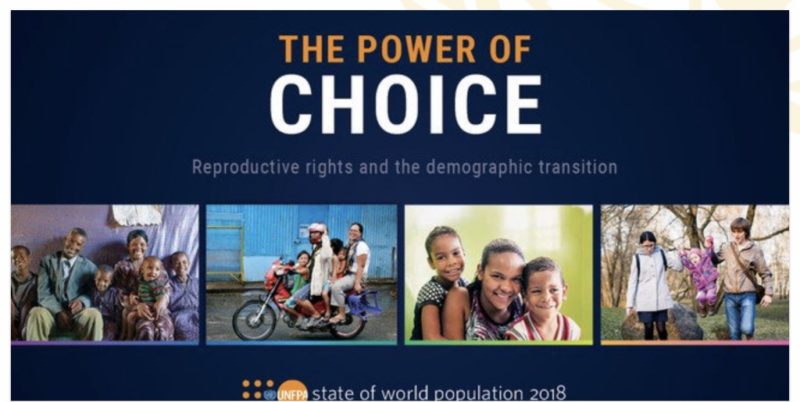
New York, USA/ Freetown, Sierra Leone – The Power of Choice: Reproductive Rights and the Demographic Transition, is the title of the 2018 State of the World Population report launched in New York and around the world by UNFPA, by the lead UN entity responsible for delivering a world where every pregnancy is wanted, every childbirth is safe and every young person’s potential is fulfilled.

According to the United Nations sexual and reproductive health agency, the report confirms that “the power to choose the number, timing and spacing of children can bolster economic and social development.”

“The report found that the lack of choice in reproductive life “can have a long-term impact on fertility rates, often making them higher or lower than what most people desire.”
A t is shown in the water.
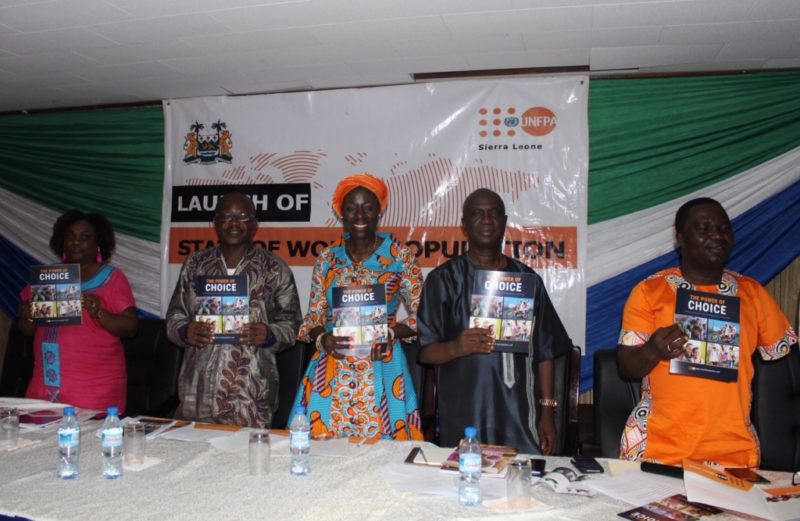
UNFPA Country Representative Dr. Kim Eva Dickson launches the State of World Population 2018. Photo: Abdul A. K. Kamara/The AfricaPaper

Writing in the report’s foreword, Dr. Natalia Kanem, Executive Director underscored that “Choice can change the world. It can rapidly improve the well-being of women and girls, transform families, and accelerate global development.”

When a woman has the power and means to prevent or delay a pregnancy, for example, she has more control over her health and can enter or stay in the paid labour force and realize her full economic potential.

The Global Context

Since the 1994 International Conference on Population and Development in Cairo, Egypt, there has been a substantial improvement in the reproductive health and rights around the world. However, while there is proof that shows a notable increase in the reproductive health and rights, the report notes that, “no country can claim that all of its citizens enjoy reproductive rights at all times.”
A t is shown in the water.
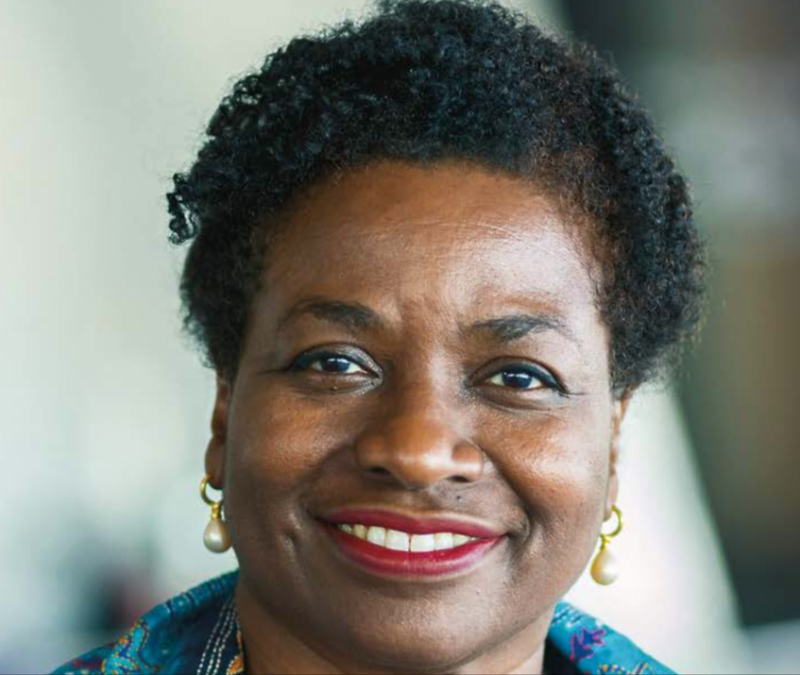
UNFPA Executive Director Dr. Natalia Kanem. Photo: Abdul A. K. Kamara/The AfricaPaper

In fact, as it is today, most couples cannot have the number of children they want because they either lack economic and social support to achieve their preferred family size, or the means to control their fertility. The unmet need for modern contraception prevents hundreds of millions of women from choosing smaller families.

The report classifies all countries in the world by the current dynamics of their populations’ fertility and makes specific recommendations for policies and programmes that would help each country increase reproductive choices.

The Sierra Leone Context

“The report is about global fertility trends, but it is also about choice- or lack of it – and what that means for women, for couples, and for countries’ prospects for development,” said Dr. Dr. Eva Kim Dickson at the country-level launch of the same report at the Sierra Leone Parliament. The launch was in partnership with the Ministry of Planning and Economic Development.
A t is shown in the water.
Dr. Kim Eva Dickson and Mrs. Nabeela Tunis – Ministry of Planning and Economic Development. Photo: Abdul A. K. Kamara/The AfricaPaper

“In Sierra Leone where the total fertility rate is 5.7 children per woman, we need to continue to extend the reach of reproductive health-care services and improve quality, and make sure everyone knows their reproductive rights and how to exercise them,” said UNFPA’s Country Representative Dr. Dickson.

Whilst acknowledging in her keynote remarks that the report calls on countries to confront their demographic challenges by enhancing rights and choices, Mrs. Nabeela Tunis, Minister of Planning and Economic Development said President Bio’s Government is aware that “investments in reproductive health ensure reproductive rights for all If people.”

However, she fell short in sharing specifics on what specifically that the Bio government is doing to ensure women in Sierra Leone have their reproductive rights respected. Said she, “If people are unable to access sexual reproductive health and family planning services, it threatens the development of our country.”

Family size is closely linked with reproductive rights, which, in turn, are tied to many other rights, including the right to adequate health, education, and jobs. Where people can exercise their rights, they tend to thrive. Where these rights are stifled, people often fail to achieve their full potential, impeding economic and social progress, the new report affirms.

Sierra Leone’s Reproductive Health and Rights

The Government of Sierra Leone had identified reproductive and maternal health as a priority area: reproductive health was prioritized in the 2013-2018 PRSP the ‘Agenda for Prosperity’ and in 2010 the ‘Free Health Care Initiative’ launched for pregnant women, lactating mothers and children under five.
A t is shown in the water.
UNFPA Report – State of World Population 2018. Photo: Abdul A. K. Kamara/The AfricaPaper

Like other nations in the sub-region or sub-Saharan Africa, people in Sierra Leone have more information about their reproductive rights and choices, and a greater capacity to claim their rights, as the report claims.

“The historic transition to lower fertility,” says the report, “has emerged through people claiming their right to make choices about their reproductive lives, and to have as few, or as many, children as they want, when they want.”

|TAP| Africa’s Newspaper of Record | Twitter: @theafricapaper

World Copyright

The AfricaPaper, USA, 2018. All rights reserved. Photos and text may not be published, broadcast, rewritten, redistributed or used in any form without the written permission of The AfricaPaper, and AIIR. We take legal action for any copyright infringement.


 

Rwanda – ‘The Heart of Africa’ Hosts First Ordinary Session of the Fifth Pan-African Parliament


By Anthony Abdul Karim Kamara, Jnr | The AfricaPaper

In this story, President Paul Kagame and Rwanda hosts Pan-African Parliament high-level session, 40 new Members of Parliament to be sworn in, and questions about PAP’s relevance in the continent. From Rwanda, The AfricaPaper’s correspondent reports.

KIGALI, Rwanda – The Pan-African Parliament (PAP) is holding its first Ordinary Session of the fifth Parliament in Kigali, Rwanda from 18 October – 2 November 2018 with the official opening slated for Monday, 22 October.

Paul Kagame, President of Rwanda and current Chairperson of the African Union will on behalf of his government and people welcome high-level participants from around Africa to Kigali’s magnificent Convention Centre.

A t is shown in the water.
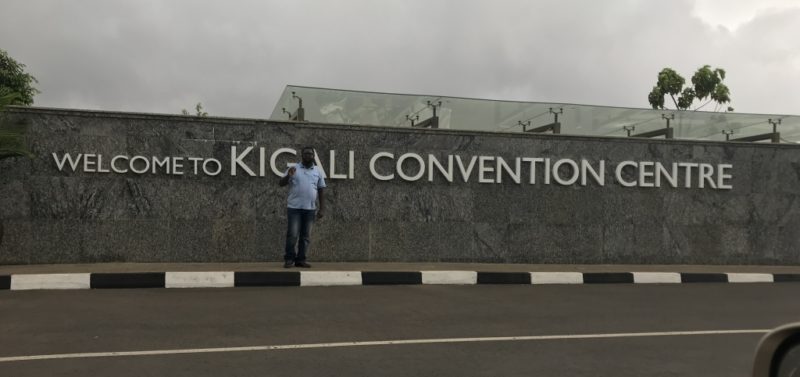
Kigali Convention Centre, Rwanda. Photo: Anthony A. K. Kamara, Jnr / The AfricaPaper.

Session’s Theme and Swearing-In Ceremony

Held under the theme “Winning the Fight against Corruption: A Sustainable Path to Africa’s Transformation,” Paul Kagame, the session will also discuss peace and security in Africa, the role and impact of the African Union electoral observation missions in terms of cases of electoral disputes in the continent, transitional justice in Africa, the draft model disability law and African Peer Review Mechanism (APRM) Country Review Reports.

As Guest of Honour, President Kagame will also help to swear in 40 new delegates from different countries as new Members of the Pan-African Parliament following elections in their respective countries and rotation within delegations during the opening ceremony.

Egypt Passes the Baton

“We are grateful to the Government of Rwanda for accepting the baton that enhances parliamentary public outreach from the Republic of Egypt that hosted the PAP session in October 2016,” said officer-in-charge at the Office of the PAP Clerk, Yusupha M. Jobe of The Gambia.

Jobe hopes events like this being held in Kigali provides “opportunities for NGOs, CSOs, Youth organizations among others to witness the sittings and explore ways in which their voices can be heard and incorporated in the African agenda.”

Kigali – “Rwanda’s Ambassadorial and Commercial City”


A t is shown in the water.
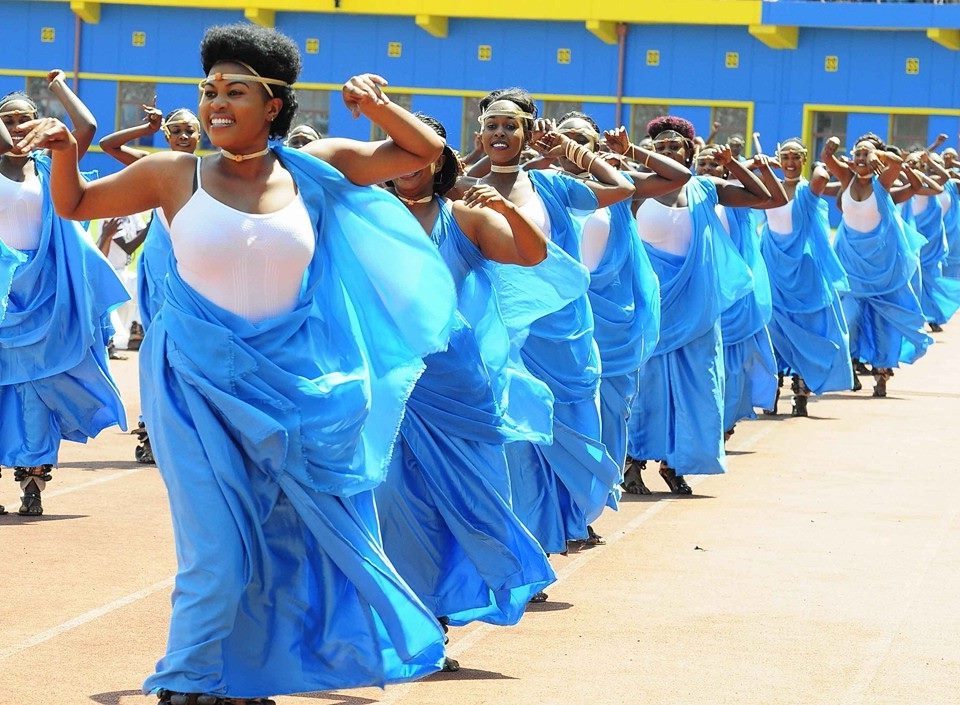
A colourful display of Rwandan culture. Photo: Anthony A. K. Kamara, Jnr / The AfricaPaper.

A clean, safe, friendly and stable city, Kigali has transformed itself through strong and principled leadership into a vibrant hub for hosting high-level conferences in Africa. Thanks to a very good infrastructure system, new international class hotels have emerged over the years as it positions itself as the location for your next high-level conference.

A warning for all, however, is that what happens in Kigali does not always stay in Kigali. That is not to be expected given that country’s president Kagame is the leading cheer leader for a country that once epitomizes gruesome tribal and civil conflict.

With his vibrant social media following, he keeps not only his people and the world at large – informed about happenings and what a determined people can do for themselves, but visitors including tourists or event participants can’t help but promote the city, the land of a thousand hills described aptly because of its rolling green hills and valleys.

About Pan-African Parliament (PAP)

Originally headquartered in the Ethiopian capital of Addis Ababa, the PAP was moved to its current location in Midrand, South Africa – an industrial town halfway between Pretoria and Johannesburg.

It held its inaugural session in March 2004. In October 2009, the second legislature of the PAP opened its first ordinary session and began a new 5-year mandate. The PAP holds two ordinary sessions (May and October) per annum. Rwanda is the second member state to host a session of its Midrand seat.


A t is shown in the water.
Pan-African Parliament- First Ordinary Session of the Fifth Parliament. Photo: Anthony A. K. Kamara, Jnr / The AfricaPaper.

Currently, the parliament has more than 275 members representing the 55 AU Member States that have ratified the Protocol establishing it. Each country is represented by five members and must include at least one woman to reflect the gender diversity and political representation in the National Parliament or deliberative organ.

PAP And Its Relevance

Widely criticized as just another “talk shop” or a “discussion platform” PAP has struggled to make its voice heard and its fitness for purpose as it should in the continent. Hon. Dr. Kandeh Yumkella from Sierra Leone remains “hopeful.”

Describing himself as an “eternal optimist,” he believes, “change is possible with a few committed men and women.” Africa, he said has “many sons and daughters” who can rise-up to change the continent’s narrative and demand accountability and good governance for what every citizen deserves in our quest for peace, unity and prosperity.

Given the difference of opinions on what PAP stands for on paper as the legislative branch of the AU but, others describing it as having only consultative powers, perhaps new members may help ensure PAP remains an effective voice, raise its profile and ensure its recommendations lead to real action for the people they represent.

|TAP| Africa’s Newspaper of Record

Anthony Abdul Karim Kamara, Jnr, is The AfricaPaper’s correspondent reporting across Africa.

A t is shown in the water.
Journalist Anthony A.K. Kamara, Jnr at the Convention Centre in Kigali. Photo: The AfricaPaper

World Copyright

The AfricaPaper, USA, 2018. All rights reserved. Photos and text may not be published, broadcast, rewritten, redistributed or used in any form without the written permission of The AfricaPaper, and AIIR. We take legal action for any copyright infringement.
US-Liberian Pastor Receives Minnesota Governor’s Award


By The AfricaPaper Syndication | USA

Minneapolis, Minn – Pastor Alexander B. Collins, head of Redeemed Life Church in Minnesota, has been awarded the 2018 Governor Mark Dayton’s Community Leadership Award. The pastor runs a multinational congregation in the City of Mounds View.

Award

Pastor Collins’ selection was based on his works within the community, some dating as far back to Barway Collins’ [not related] 2015 episode and later, the 2014 Ebola crisis that gripped several West African nations including Liberia. Pastor Collins, continues to serve his community in various capacities over the years.

Governor Mark Dayton is the 40th governor of Minnesota and each year his office gives awards to distinguished personalities from diverse background who have made a difference in various spheres of life in their respective communities within their cities, and the State of Minnesota.

A t is shown in the water.
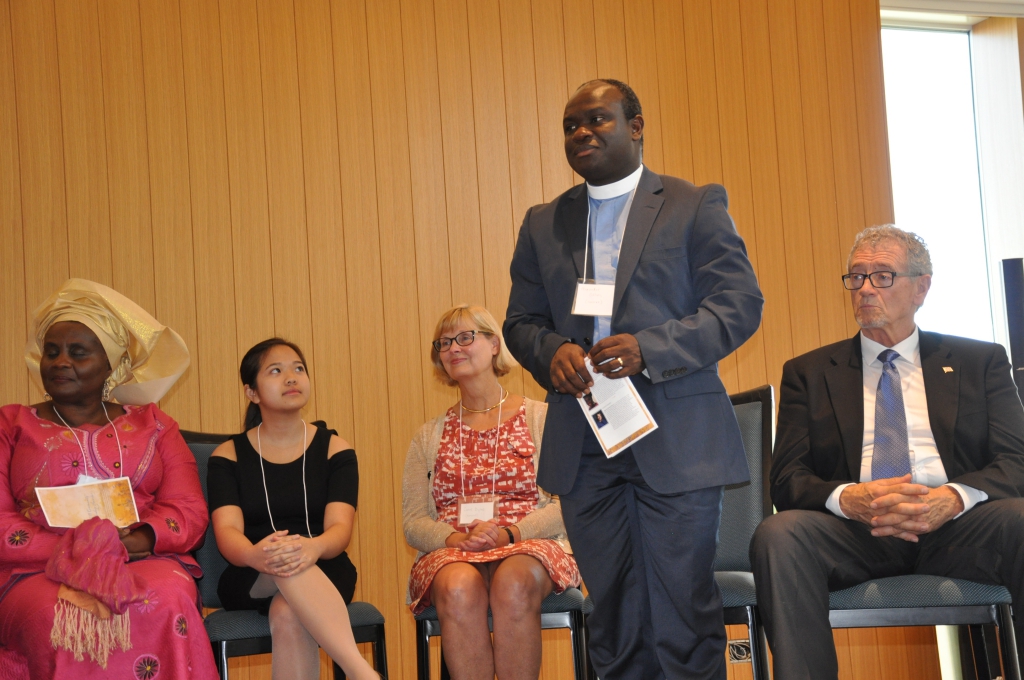
Pastor Collins (Standing) with other award recipients. Photo: The AfricaPaper

Impact

In presenting this year’s awards, Center for women in Leadership and Diplomacy along with the American Swedish Institute that facilitated the event, said this was a special occasion aimed to honor outstanding community leaders whose works impacted lives several areas. They named them as “Advocating for and supporting victims of human and sex trafficking; Aiding homeless people across the state, and Building more peaceful, diverse, and inclusive communities.”

In a brief interview with The AfricaPaper (TAP) shortly after receiving his award, Pastor Alexander Collins expressed great appreciation for the award and honor. He thanked the Governor’s office together with program facilitators.

“This award speaks volume of what we are doing for our community. It shows people are watching,” said Pastor Collins, when TAP asked what he thinks prompted such award.

Needed Savior

A t is shown in the water.
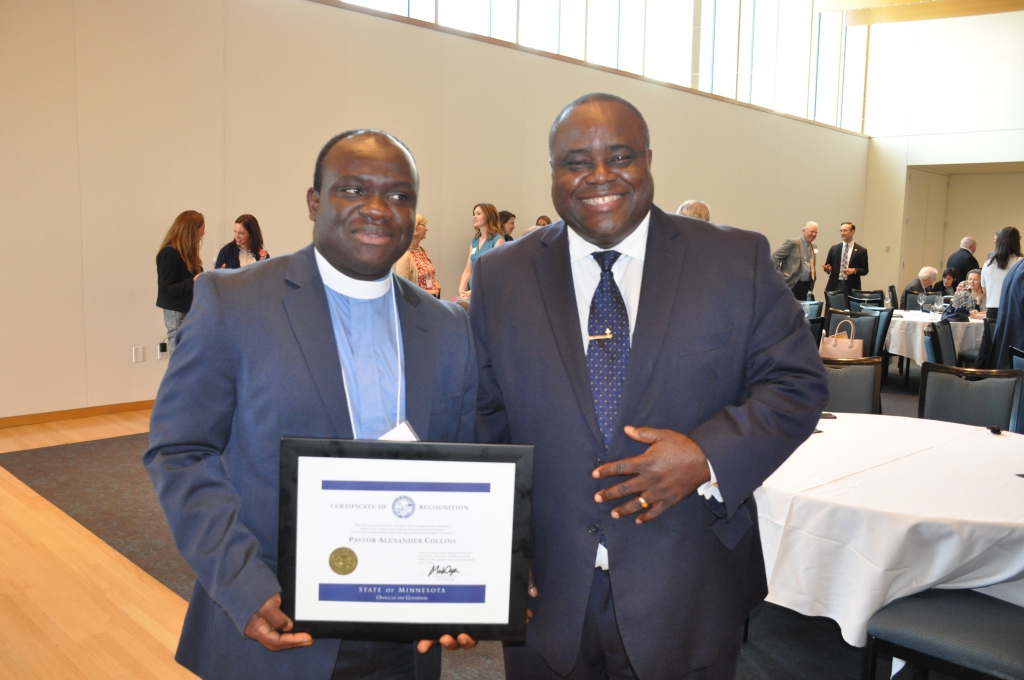
Pastor Collins and Bishop Harding Smith. Photo: The AfricaPaper

According to the church’s website, Pastor Collins discovered Jesus Christ when he was 10 years old. “It occurred that while sitting at home, I saw a group of people signing Christian songs on the streets; I was attracted to the melody of the songs and followed them to the church,” Collins wrote.

“And while at the church that evening listening to the songs, I was convicted of sins and convinced of my need of a savior; so I gave my life to the Lord.”

He later became a music director of that church and then a youth leader. Since then, Pastor Collins has devoted time to learning about leadership.

Performance

He stated his goal is to help the community whenever the needs arise and maintained he would continue to play such role irrespective of whether or not he receives award.

The Governor Mark Dayton Community Leadership Award is the second major award within six years given to Pastor Collins. In 2012 he received the Mayor of Brooklyn Park Community Leadership Award for excellent performance.

Collins, a native of Liberia, is credited for the establishment of a Sister Cities’ relations between the City of Brooklyn Park in Minnesota, and two key Liberia war-affected cities- Kakata and Voinjama- both located in the country’s heartland.

The Pastor holds a Masters in Divinity and presently a candidate for for a Masters of Global Leadership with emphasis in Community Development and International Education at Crown College.

Leadership

A t is shown in the water.A two-term executive director for the Liberian Ministers Association in Minnesota – a conglomerate of 50 immigrant churches, Collins heads the New Horizons Resource, a nonprofit organization based in Minnesota that caters to needy people.

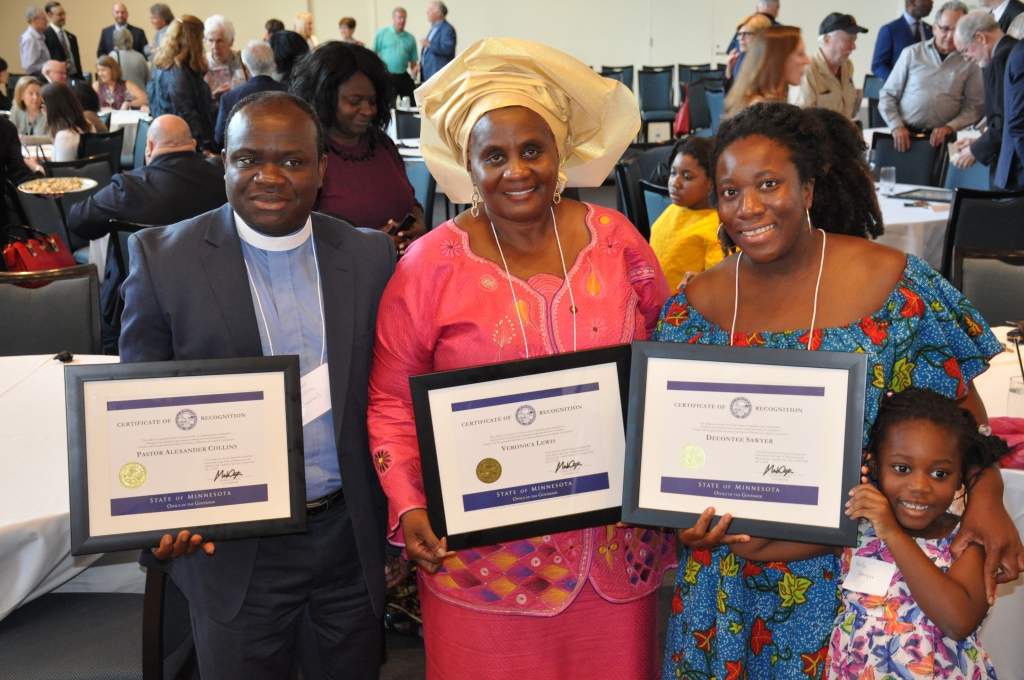
Of the eleven honorees, four were men while the rest were women, two of whom are immigrant Liberians – Pastor Veronica Lewis, founder of Meeting at Elm Ministries, and Decontee Sawyer who became an activist highlighting the Ebola devastation in Liberia after her husband Patrick Sawyer, became the first Liberian American to die of the virus in 2014.

Recipients

Award recipients included US banks executives, writers, editors, TV producers, as well as business entrepreneurs. Claire Prestwood, one of the honorees, had served ten years as an FBI agent. Her assignments ranged from combating terrorism, drugs trafficking to other criminal threats against the Western Hemisphere.

Deborah Pierce, the keynote speaker, is also a retired FBI agent with 27 years field experience and headed the FBI Minneapolis office that conducts criminal and terrorism investigations at one time.

The youngest of the honorees, Mimi Le, is a Spanish tutor. Le, a junior at Eastview High School, serves on the debate team and students council. Earlier this year, Le worked as an intern for the Legal Rights Center. She intends to become an attorney to advocate for undocumented immigrants’ rights in America.

|TAP| Africa’s Newspaper of Record on Twitter: @theafricapaper

Sponsored Content: Free to reproduce, reprint, and redistribute with direct link to The AfricaPaper website. ALL Credit and World Copyrights – The AfricaPaper.

Tom Vens, EU Ambassador Honors Parliamentary Select Committee on Foreign Relations’ Open Hearing Invitation


By Anthony Abdul Karim Kamara, Jnr | The AfricaPaper

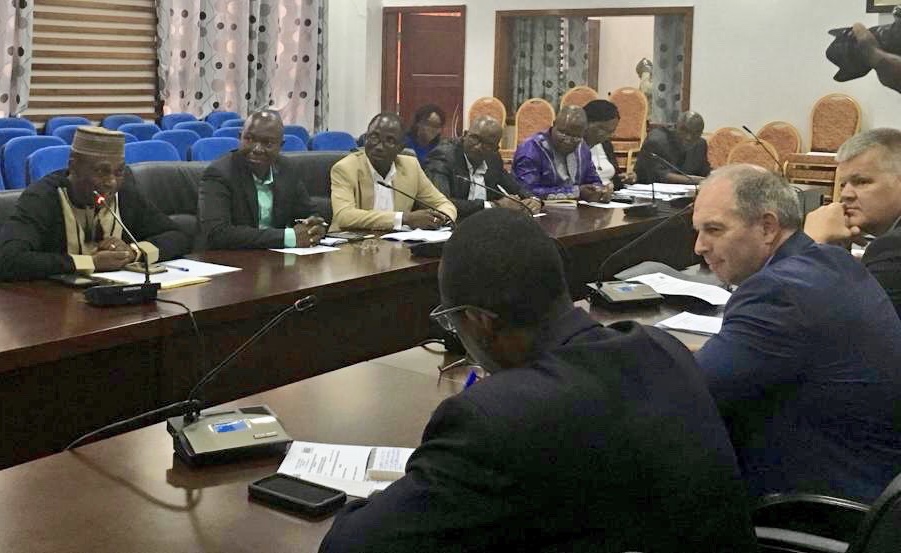
FREETOWN, Sierra Leone – Head of the European Union Delegation to Sierra Leone, Ambassador Tom Vens, has appeared before Sierra Leone’s Parliamentary Select Committee on Foreign Affairs and International Cooperation (PSC-FAIC) on Wednesday,17 Oct. following an invitation to update the committee on his delegation’s work and impact on the West African nation.

Vens who has had the pleasure to engage with several Parliamentary Committees of this Parliament – thought this was unique in that it was the first open session he has held.

“I have been impressed with the sincerity and commitment that the leadership and members have demonstrated.”

Parliamentary Oversight

A t is shown in the water.
PSC-FAIC Chairman Hon. Kandeh Yumkella shares objectives of the symposium. Photo: Anthony A. K. Kamara, Jnr./The AfricaPaper

Under section 93 of the 1991 Constitution, the Parliamentary Select Committee has oversight responsibilities over the Ministry of Foreign Affairs and International Cooperation.

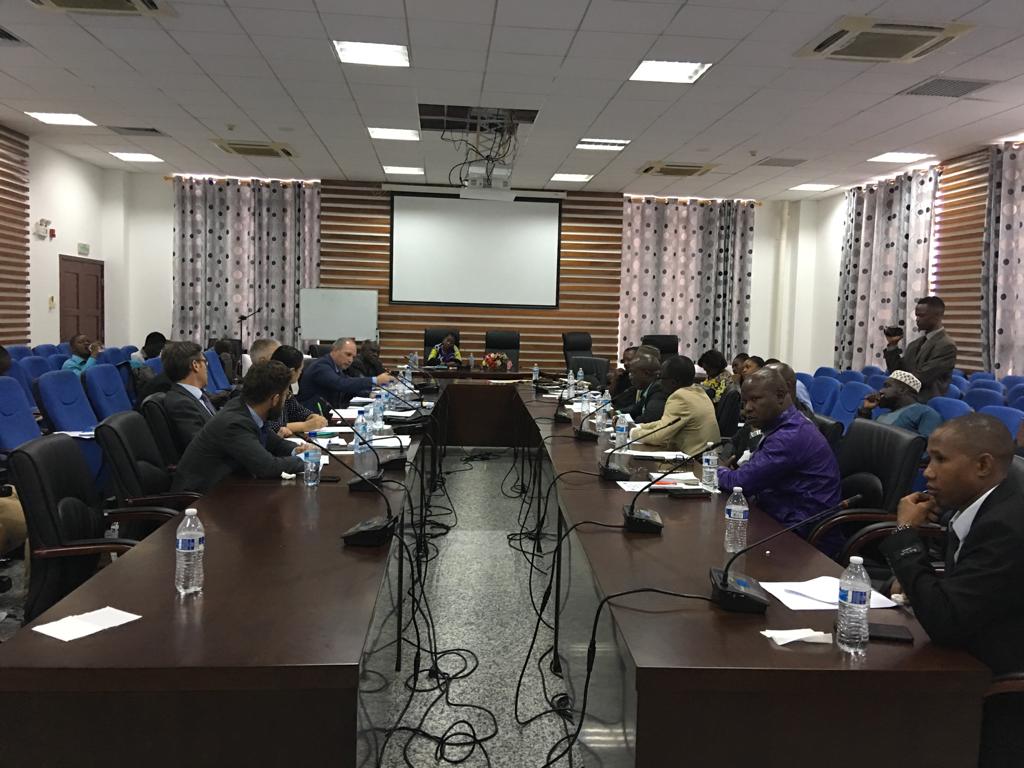
As part of its oversight functions, the committee, which comprises of 16 Members of Parliament (NGC-3, SLPP-4, Independent-1 and APC-7 and a Committee Clerk) held its first of four symposia scheduled for 2018 on bilateral and multilateral collaboration for sustainable development – with the Ministry of Foreign Affairs and International Cooperation hosting the moderated and interactive discussion at its Freetown conference hall.

The initiative showcases a unique collaboration between the Parliament and two key ministries; Ministry of Foreign Affairs and International Cooperation and the Ministry of Planning and Economic Development.

Purpose of Symposia

According to Hon. Kandeh Yumkella, Chairman of the PSC-FAIC, “these symposia provide an opportunity for them to highlight their programs and activities locally while assessing their overall impact to our country’s development.”

“These moderated discussions of development issues among panelists with our development partners are for them facilitate networking and collaboration among policymakers, numerous local stakeholders, international donors and implementing partners.”

For the EU, as Ambassador Vens confirmed, this is “the first time that the Foreign Affairs Committee (FAC) of Parliament has organised such hearings.” Not sure why he became the first ambassador to be heard by the committee, however, he warmly welcomed the initiative.

“I see it as the duty of parliament, and the FAC within, to have a good understanding of the activities and views of the diplomatic missions present in the country and to engage on matters of interest, ” said Ambassador Vens.

A t is shown in the water.
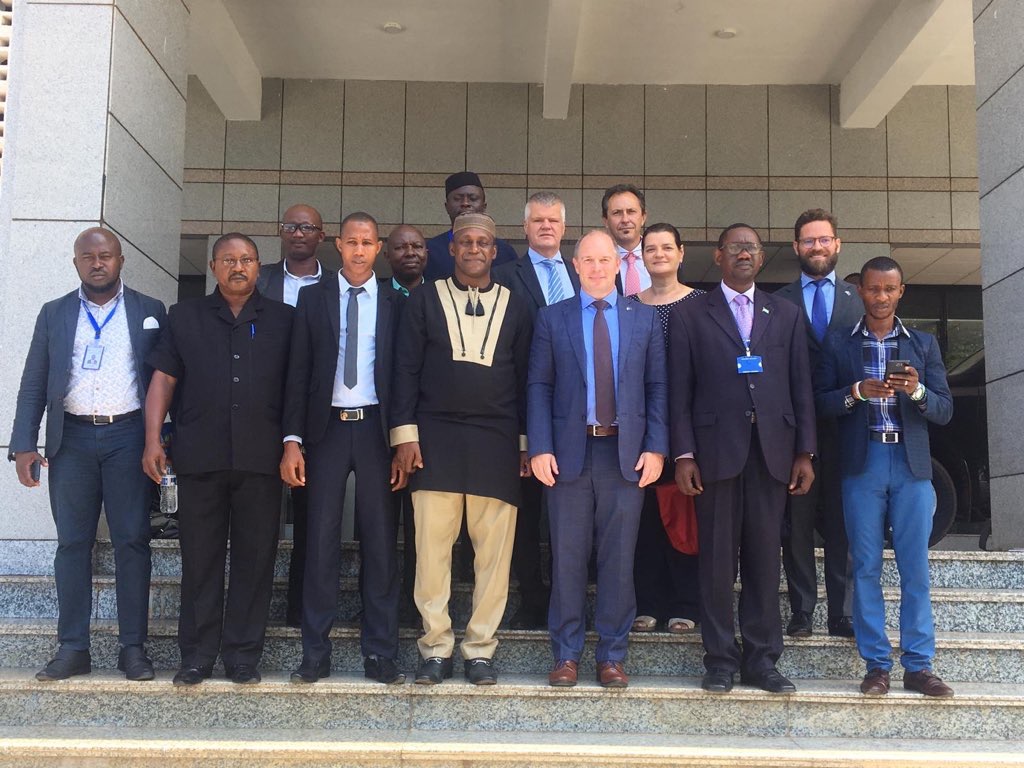
Group photo of PSC – FAIC Committee Members and the EU team. Photo: Anthony A. K. Kamara, Jnr./The AfricaPaper

“As EU, we very much encourage openness and dialogue. Dialogue, not just with the Executive, but also with Parliament, is one of the essential elements that underpin our partnership with Sierra Leone.”

EU and Multilateralism

The European Union’s ambition is clear: remain a predictable and consistent partner for peace, security and human development worldwide. Given its ambition, it has continued to maintain a strategic partnership with the United Nations and its trilateral cooperation through the UN-EU-AU underscores their shared commitment on development, migration, crisis management and peace operations.

The Cotonou Agreement, due to expire in 2020, provides the overall framework through which the EU engages with Sierra Leone on political, trade and cooperation matters. The just started negotiations on a new partnership agreement not only opportunities for the EU and Member States to deepen their partnership but affords an opportunity to adapt cooperation agreements based on today’s realities.

EU – Trade, Investment, and Budget Support

“EU is still Africa’s largest trading partner,” said Vens “accounting for 36% of Africa’s trade in goods” as he gave a retrospective overview of the importance of Africa’s relationship with the European Union. “In 2017, 75% of exports from Sierra Leone to the EU amounted to €300 million with 20% of the imports to Sierra Leone originating from the EU.

The EU and Member States provide support to Sierra Leone for growth, job creation and for the provision of a business-friendly environment. However, lack of a stability, lack of confidentiality and trust, unfair competition, weak banking sector, complex tax regime and deficient tax revenue collection, lack of skills, lengthy and opaque export and import processes hamper the growth of a favorable private sector ready for investment.

There is the crucial need to stop illegal, unregulated and unsustainable (IUU) fishing, and the support that they will provide for lifting the “Yellow Card” sanctions imposed on the country’s fishing sector.

The EU’s current program of about €376 million including budget support and specific interventions is focused on three focal sectors namely, Technical and Vocational training with plans to build 100 schools in four districts and training 2300 teachers and supporting capacity building in the ministry, boosting agriculture and food security through value chain development and enhancing agribusiness investments and governance.

Democratization and Election

A t is shown in the water.
EU Amb. Tom Vens engages the Parliamentary Select Committee on Foreign Relations and International Cooperation. Photo: Anthony A. K. Kamara, Jnr./The AfricaPaper

The EU affirms the six key recommendations (29 in total) offered by their Observer Mission and challenges Members of Parliament to take their normative role in governance seriously especially when it comes to electoral reforms.

Out of the 29 recommendations offered in their report, 25 will require new legislation including 9 constitutional changes. These include making the date of elections fixed and predictable so that the beginning and end of a five-year tenure is known by the people, increasing the number of women in various levels of governance, support to the disabled, and ensuring that people do not have to resign their jobs 12 months before presidential or parliamentary elections.

Foreign Affairs, Development and Planning

Describing the symposium as a “significant milestone,” Minister of Foreign Relations and International Cooperation, Mr. Alie Sajjan Kabba, emphasized the valued relationship that continues to exist between Sierra Leone and the EU as he expressed profound gratitude to Chairman Yumkella on behalf of his ministry for having convened the high-level event.

“For every partnership to succeed, there must be mutual respect, laws and regulations that govern it,” said Peter Nuyuba Sam-Kpaka, Development Secretary at the Ministry of Economic Development and Planning representing Mrs. Nabilla F. Tunis, the substantive minister.

EU Coordination and Cooperation

Said Vens, “I was pleased that the Ambassador Catherine Campbell of Ireland was also in attendance. As EU ambassador I do not just represent the EU institutionally but the interests of the EU more broadly. We work in full coordination and close cooperation with our Member States.”

Future Hearings

Following the spotlight on the European Union, the next partner to face the committee’s open hearing will be the United Nations System and Country Teams on 14th November to be followed by the United Kingdom’s High Commission and the Department for International Development (DFID) on 21st November 2018.

The Mano River Union closes the event calendar for the year 2018 on Nov. 28 and will address regional integration and trade facilitation among its member states.

“I hope that indeed this will not be the last opportunity to engage in this format,” maintained Vens “the first of its kind in recent history.”

World Copyright

The AfricaPaper, USA, 2018. All rights reserved. Photos and text may not be published, broadcast, rewritten, redistributed or used in any form without the written permission of The AfricaPaper, and AIIR. We take legal action for any copyright infringement.
|TAP| Africa’s Newspaper of Record

A Man of Extraordinary Character, An Obituary


Many know his name, but don’t know much about his life. For others, he was simply called “Teacher.” He spent a major part of his life in educating children in his home country. As a photographer, he captured the earlier years of politics and power from different parts of Sierra Leone before and after it gained independence. In his last days, he told his children “I’m tired, let me go.” So ends the time and life of Alfred Kabba Bangura, also known as AKB.

By James K. Fasuekoi | The AfricaPaper

Brooklyn Center, MINN – Alfred Kabba Bangura, a noted school teacher and professional photographer from Lunsar died peacefully on Wednesday at 12:39 PM, July 25. He was 93 years old.

Teacher Kabba, as his friends and relatives fondly called him, died naturally, according to medical records. He took his last breath as his children gathered and prayed at his last residence in Brooklyn Center, Minnesota, USA. Bangura was born in Mayan, in the Kambia district of Sierra Leone.

He settled in Lunsar where he also served as the Sierra Leone People’s Party (SLPP) chairman for several years at the earlier beginnings of multiparty politics in his country.

The Giver

By all accounts, elder Bangura, one of Sierra Leone’s longest serving teachers stood for his community as a trusted leader. For much of his life, Bangura gave wholeheartedly to the poor and his community without complaining or expecting special recognition from others. He served and worked in quiet privacy.

Out of compassion he helped a multitude of people, many of them who were total strangers – at times, even to the dismay of his own family members in a country where an individual survives on one U.S. dollar per day. Then, when he served as president of St. Vincent the Poor, he fed many people from neighboring towns and villages.

Adopting Kids

During his teaching career, which spanned more than 40 years, Bangura adopted ten children – some as young as two days old – including a blind boy, whose parents survived on little means in the northern town of Lunsar.

Stories abound that, while he worked as a school teacher and, later, a missionary in the country’s northern district, he would quietly leave home only to later be seen returning with an adopted child.

Mr. Bangura’s elder daughter, Elizabeth Bangura, a professional nurse and resident of Brooklyn Center, vividly remembers an incident after her father had left home to teach as he did everyday. He traveled to a nearby village where he saw a blind teenage boy sitting alone without parents.

“He asked the boy where are your parents and the boy said they were all at the farm,” Elizabeth, fondly known as “Betty,” explains.

Bangura, a young man walked with the boy, N’Fah Alie, to the parents’ farm and arranged to adopt him. This was 1982 and N’Fah was three years old. By this time, Sierra Leone had a school for the blind. Betty who worked at a military hospital, registered N’Fah to start brailclasses.

Most Bizarre

It was 1973 when the most bizarre moment of all happened. Father Bangura caused awe when he arrived home with a large basket gently sitting on his head.

“We quickly ran to him wonde ring what he had in the basket,” said Betty.

In it were two babies, a girl and a boy. Their mother had died after giving birth and their distraught father, Bangura’s cousin, had given them to him for adoption the moment he asked. As the only son to his mother, he often felt he could not refuse taking children to help them. The boy later died, but the girl, Theresa Kamara, survived and still lives in Sierra Leone.

Beneath much of the action Bangura took underlies one thing that many may not know: he, too, was adopted by another family at age 17, says Betty. It was at that point he started school and eventually became a Christian, having converted from Islam.

Now on his death, Bangura’s children, including his many foster ones, friends and family members, gather daily at Betty’s Brooklyn Center home where they sit in a circle, sharing memories of their late father’s life.

At his request, his body will be flown back to Sierra Leone for interment in Lunsar, where most of the family members, including N’fah Alie still resides. Alie now holds a master’s degree and serves as commissioner for the National Commission for Persons with Disability in Sierra Leone northern region.

Education

After high school, Bangura attended several colleges in Sierra Leone at a time attending a college in Africa was a luxury. These included Gbedebu Bible College and N’jala College where he earned a certificate and diploma. He later graduated from Fourah Bay College, earning a Teacher’s Elementary Certificate (TEC).

“He was very jovial and likes to tell stories,” said Bangura’s longtime friend and schoolmate Pastor Komboh Kargbo of Minnesota. “He was very obedient to teachers.”

A t is shown in the water.
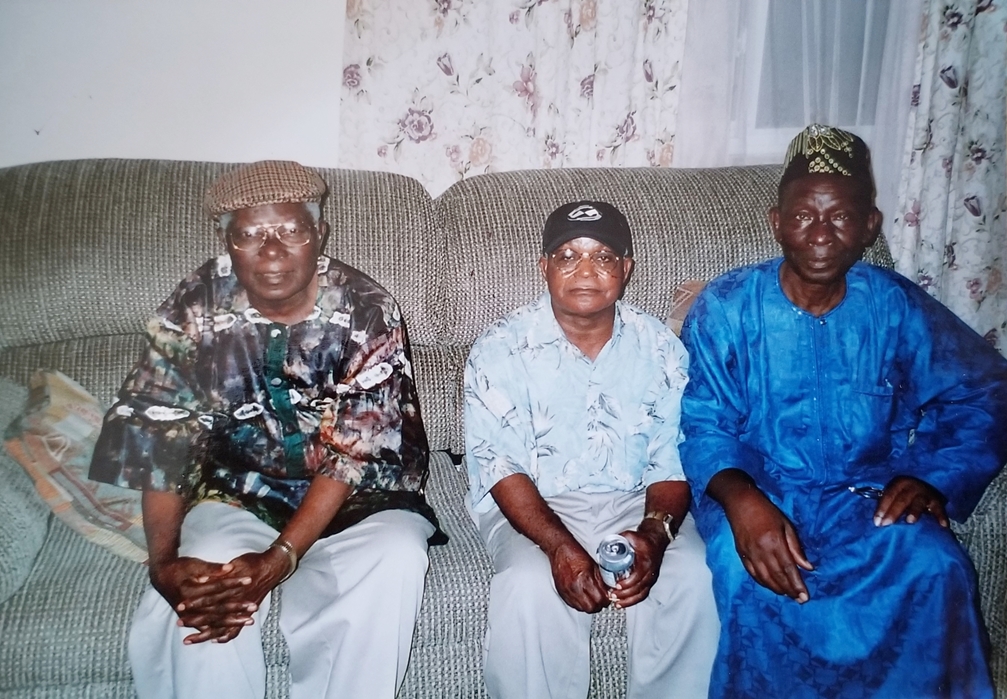
Alfred Kabba Bangura, Pastor Komboh, and Alhaji Yayah Kabba. Photo: Family/The AfricaPaper

Born in a muslim family, he was named Alpha Kabba Bangura, he later became a christian. “He likes to pray,” says Kargbo. “But the influence of the Christians made him convert from Muslim to Christianity.” Bangura was an active member of St. Peters Claver Parish in Lunsar.

The Teacher

When he finished schooling, Bangura settled on teaching, the most popular career in much of Africa at the time. He was hired by the American Weslyn Mission (AWM), a coveted place to work by his peers.

From the mid 1950s through the 60s, he would travel and teach in several large and small towns in northern Sierra Leone, including Port Loko, Kambia, Bimkoloh, Kamabia, Foredugu and onto Lunsar.

By the time Bangura retired from government teaching in 1983, St. Joseph Vocational Center in Lunsar re-hired him to teach history and social studies. He taught at St. Joseph till retirement in 1993 in Lunsar, 75 miles north of Freetown, where the country’s brutal civil war caught up with him two years later.

The Photographer

Bangura was an accomplished photographer. According to Betty, he created his own photo studio and a darkroom when they lived at Port Loko from where he photographed and processed films.

He took deep interest in documenting not only his family’s life, but also those of ordinary Sierra Leoneans and visiting dignitaries. It was a rare activity given purchasing a camera in Africa around that time could cost one a family’s savings.

He captured key figures like England’s Queen Elizabeth on her visit to Port Loko and a British Governor who ruled Sierra Leone in the late 60s. The result is a trove of photographs, much of them in black and white and marked with the dates Bangura shot them.

Betty recounts the day a vehicle ran out of control, killing a young woman who sat by the road selling goods. Her father ran to the scene and shot a couple of pictures. After the accident scene had been cleared up and the lady buried, the police started to investigate but had little evidence to go on.

“My father provided [the police] with photos from the scene and through that they were able to do their investigation,” said Betty.

Thereafter, the police department offered to hire Bangura as crime photographer but he refused, apparently preferring his teaching job.

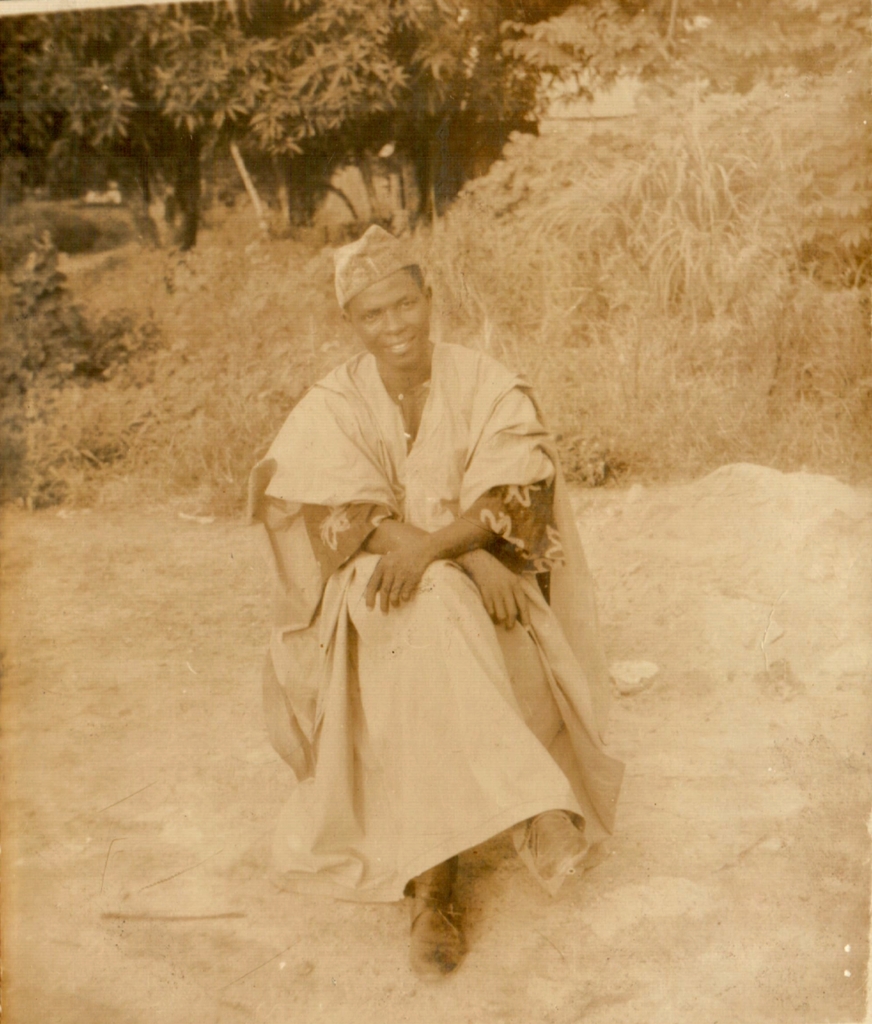
Among memorable photographs discovered following his death are a casual photo of him standing with Betty, a toddler at the time, strapped to his back in a colorful fabric carrier. In another he’s clad in a beautiful traditional African gown.

AKB Foundation

A t is shown in the water.
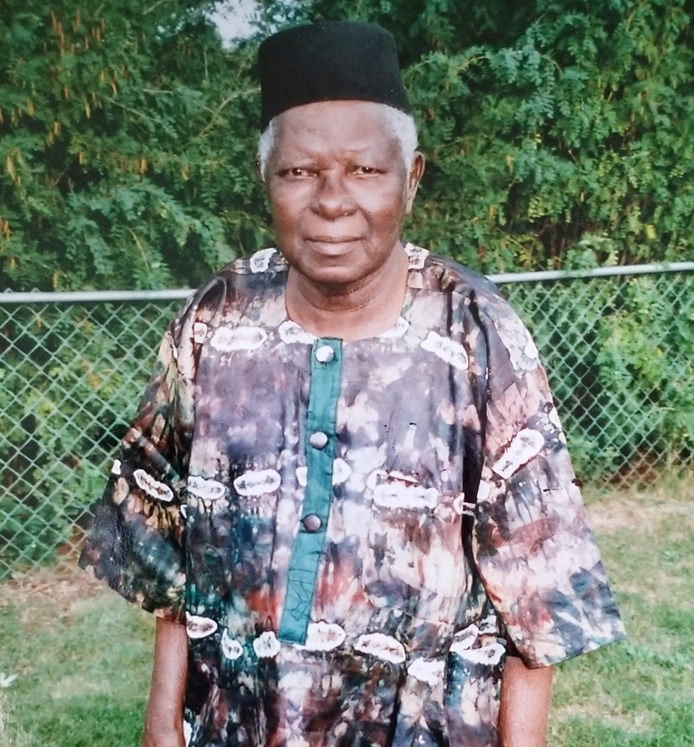
AKB as a young man dressed in an Africa gown. Photo: Family/The AfricaPaper

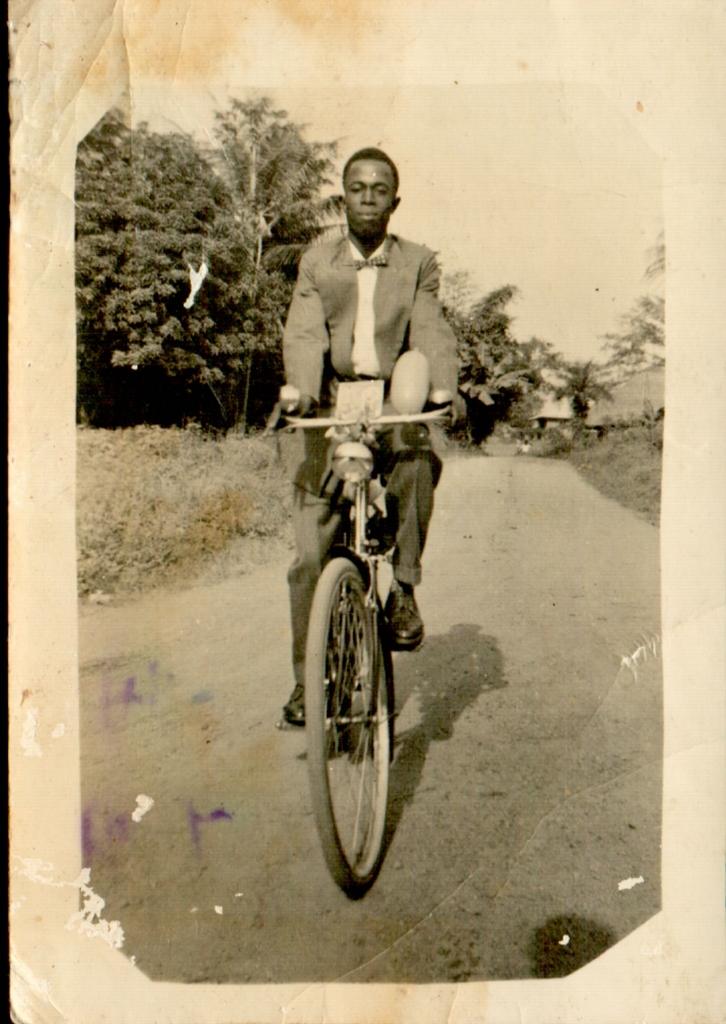
There are other equally stunning pictures like the four shirtless teens- some of his adopted children – at play in the blistering heat from the sun and a man dressed in suit coat riding a bike in the middle of town who would later become a paramount chief for the region.

Bangura’s children say their father’s act of giving didn’t cease even when the war forced him and his huge family out of Sierra Leone, first landing them in neighboring Guinea before relocating to the United States in January of 2004.

They said their father would save money he received as gift and wire it back to the war-ravaged nation to be used to feed people and help with community projects he started. In his honor, his children started the AKB Foundation to feed and educate the poor in Lunsar.

To keep his fine legacy alive, his children and admirers have begun working on ways to continue his legacy hoping to fulfill his lifelong wish. Bangura is missed and remembered by his relatives, friends, several children and grandchildren and in-laws around the world.

Late Alfred Bangura is survived by a host of relatives including a number of children residing in Africa, Britain, Italy and the USA. Funeral services begins at 10 A.M. on Friday, 10 August 2018, at St. Alphonsus Catholic Church, 7025 Halifax Ave. N Brooklyn Center, MN 55429.

|TAP| Africa’s Newspaper of Record

Editor’s Note: The author James Kokulo Fasuekoi is Associate Editor for The AfricaPaper. Fasuekoi covered civil wars in Liberia and Sierra Leone during the 90s and came to love Sierra Leone and her history. Once visiting the home of Betty, he met the elder Bangura and learned he too had been an ace photographer long before the war struck. Fasuekoi promised to do a profile of Bangura, but, unfortunately, the old man passed away before time allowed for it. In fulfIlling that promise, Fasuekoi returned to Brooklyn Center, Minnesota to bring you this obituary. Some of late Pa Bangura’s photographs will be curated by The AfricaPaper.

ON CAMERA: Photos as Captured by Late Alfred Kabba Bangura[More Later]

A t is shown in the water.
Photo as captured by AKB