Home Blog Page 21

Malawi Public Hospitals Turn Death Waiting Shelters


By Henry Kijimwana Mhango | The AfricaPaper

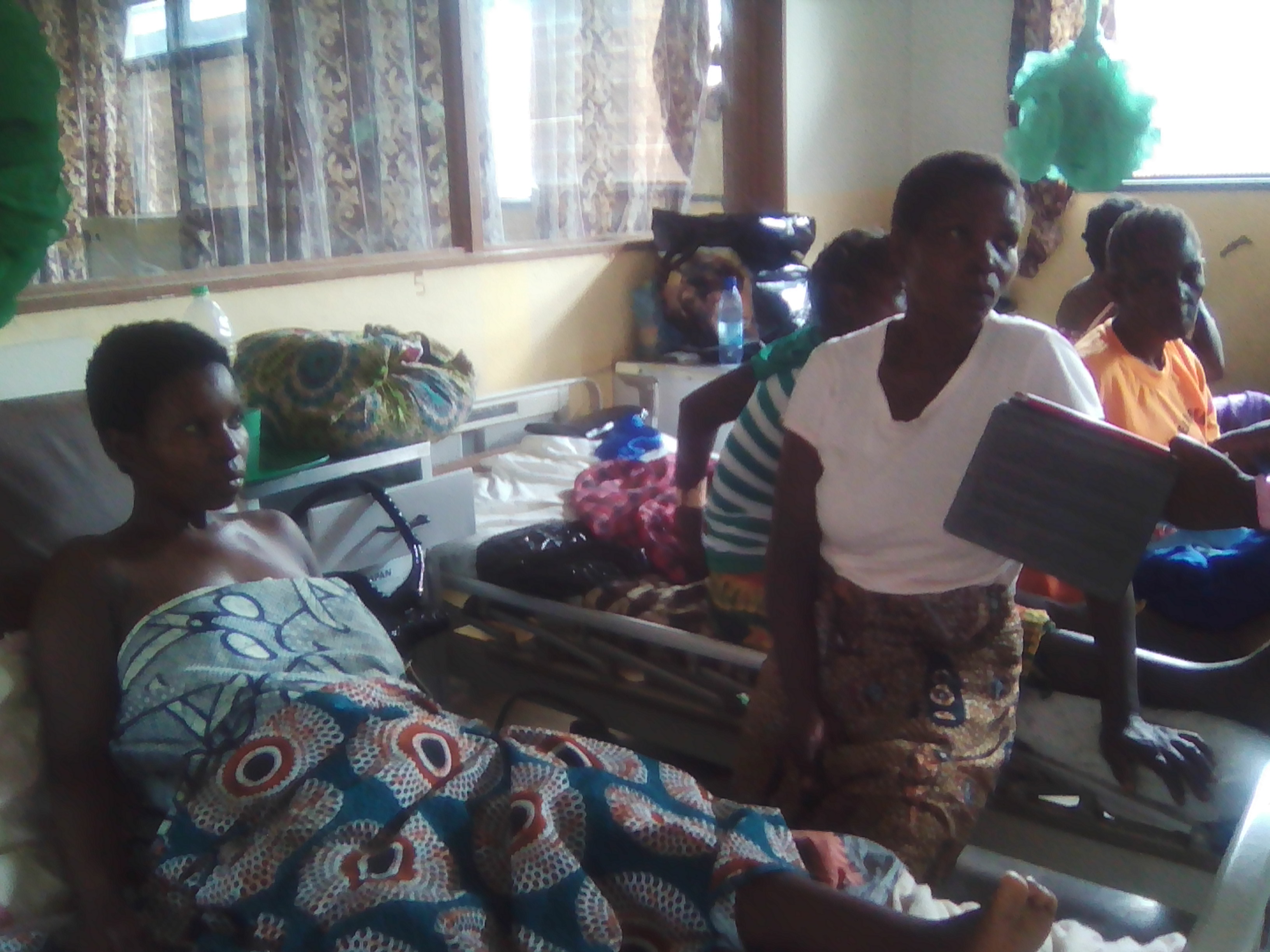
Lilongwe, Malawi – A significant number of people are dying in Malawi’s public hospitals from what may seemed curable diseases due to shortage of critical medicine and food to feed patients while in hospitals. The shortage has continued to affect many people, mostly the poor and putting lives in danger in this country of more than 17 million people.

“My patient suffers from Tuberculosis,” said Eliza Banda, one of the guardians of Mzuzu Central Hospital. “The medicine she takes demand her eating frequent balance diet food, but here she eats only once a day normally at 3 o’clock because the hospital has no food to feed patients.”

Under-Funded

Most hospitals are failing to procure adequate medicine from the country’s Central Medical Stores Trust. The Ministry has cut off funding for its hospitals by more than fifty percent, following the freezing of aid by some donors to Malawi because of mismanagement of public funds at Capitol Hill in Lilongwe.

Funding meant to buy drugs and pay for essential services at district hospitals has been slashed from approximately MWK 14 million (equivalent to $21,500) per month to MWK 6 million ($9,230).

Many hospital administrators are accusing the national government of doing little to curb the deplorable health problem. In hospitals such as Ruphi, Karonga, Nkhata Bay and Kasungu, patients are taking medications on empty stomachs, At these facilities, scores of patients were found crying uncontrollably after being told by the medical personnel to buy medicine in private pharmacies because there are limited and in some cases no drugs to treat them.

“My patient is in critical condition and I don’t have any money to buy the drugs,” said Josephine Munthari, another guardian at Mzuzu. ” I’ve been told to buy it at the pharmacy but I don’t know what to do,”

Medical Staff Affected

Public Relations Officer for Mzuzu Central Hospital, Frank Banda alluded to the ongoing health problem adding that the budget cut has also led to poor services. He also stated that it is difficult to carryout essential services with limited supply of materials and in some cases most hospital lack functioning equipment used to diagnose simple illnesses. He said another problem they face is shortage of medical staff.

“Since we have limited number of staff that can not carter for day and night shifts, we deliberately introduced hardship allowance scheme known as Locum for those doubling their shifts, and we could at least be able to reach many patients in wards,” Banda said..

“Now that we have been deducted our funding by over 50 percent, we have terminated this scheme and we should expect crisis to our service delivery.

No X-Ray Services
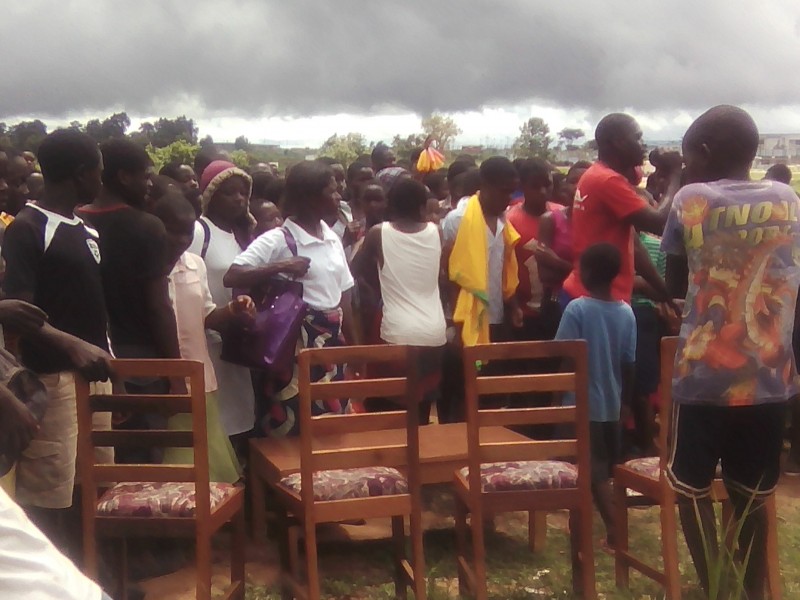
A cross section of concerned locals meeting at Rumphi District hospital after protesting on the streets to influence government address food and drug shortages at the hospital. Photo: The AfricaPaper/Henry Kijimwana Mhango

Officials at the hospital say the facility has since suspended X-ray services because the facility’s X-ray machine is no longer functioning due to lack of money for repairs.

“Patients are referred to Bwaila (bottom hospital) for X-ray, and go back to Kamuzu Central with results,” says one of the medical doctors at the hospital also refused to be named for fear of reprisals. “This is dangerous because some are dying while going through these delays.”

The doctor says there is also critical shortage of some essential drugs at the hospital such as Tramadol hydrochloride, dicpofenac sodium, ceftriaxone, benzypenicillin sodium and many others.

“These are drugs which must always be there at a central hospital level. Not just drugs, but also a wide variety of other medical supplies,” he added.

Maternal Complications

The AfricaPaper’s visit to Rumphi District Hospital, in the country’s northern region established that these challenges make most workers to develop a negligence work spirit, which is leading to many maternal complications at facility.

For instance, our visit to the hospital’s maternity ward found a young lady, Tionge Kasanga, in critical condition after losing her baby due to negligence by health workers.

“There was no or any medical personnel by the time I started feeling severe pains, some came after some 10 hours at night but could not assist me, claiming the one on duty was not available,” Kasanga explained.

By the time the staff on duty arrived, things had already gone worse for Tionge, 28. She was taken to the delivery theatre but the medical officer only managed to save the victim’s life because the baby had already dead.

Malfunctioning Mortuary

The Hospital’s Nursing Officer only identified as Mr. Nyasulu said the financial constraints have heavily hit the institution to the extent that it is even failing to repair it mortuary which has been malfunctioning for several months.

“The mortuary’s refrigerators are broken, and the hospital has no money to repair them,” said Mr Nyasulu. “Therefore, we don’t allow corpses to spend a day here because we have no place to keep it.”

Losing Innocent Lives

At Dedza District Hospital based in the central region, at least six patients are reportedly dying every day due to critical shortage of essential drugs.

Spokesperson for workers at the hospital, Aaron Chirwa told the media recently “medical practitioners are traumatized with the dare drug situation at the hospital, we are losing innocent lives that would have been saved if we had medicine.”

Mismanaged Public Funds

But despite all these challenges, government continues to mismanage public funds that would have helped to address the worrisome health problems in the country.

For instance, a Parliamentarian for Rumphi East Constituency, Mr Kamlepo Kalua who is also Vice Chairperson for Parliamentary Public Accounts Committee, recently accused the administration of President Peter Mutharika for misusing about US $ 4.5million to buy posh cars for the President, his Vice, Saulos Chilima and other government officials while Malawians are suffering.

“Government recently bought four posh vehicles for the President, two for his Vice all together worth MwK One billion, a Land cruiser vehicle for the Chief Secretary George Mkondiwa, and ten Prado’s for the principal secretaries,” Kalua claimed in Parliament.

“We have all the evidence to prove this, we have the chasis numbers, we have the engine numbers,” he revealed.

But government spokesperson Jappie Mhango denied the claims.

Tax Payers’ Millions

In October 2015, President Mutharika also attracted public criticism for travelling to the United Nations general assembly with 111 crew which drew a lot of tax payers millions of dollars intended for various developments to uplift their livelihood.

Reports indicate that government spent about US $2,000 for each individual return ticket to New York, United States of America, and US $ 250 for accommodation per night.

On airfare alone, Malawi is reported to have spent about US $270,000, and US $ 310 on accommodation for 111 delegates per day for a period if two weeks.

Though government is reluctant to disclose to its citizens the amount of money spent for the trip, our additions suggests that a minimum of US $640,000 was used for the trip.

Looking at budgetary allocations of district hospitals in Malawi, that in a month get almost US $3,7000, the financial resources that government used to send this huge delegation to the UN is enough to fund 14 district hospitals in a month.

“As small as Malawi’s economy is, it is surprising therefore that the country can afford to send a delegation of 111 people to a UN meeting, more especially at a time the economy is in shambles,” said Timothy Mtambo, human rights activist.

Public Protest

The government financial resources management and critical food and drug shortages have influence protests by workers in various public hospitals, joined by civil society organizations and the public at large to pressurize government improve the situation.

However, the ruling Democratic Progressive party supporters have been interfering such protests by staging counter protesters on the streets of Malawi.

As the situation escalates, the hospitals officials are depending on begging food for the patients from local well-wishers such as parliamentarians, business persons and district councils.

Minster Blames Suffering Staff
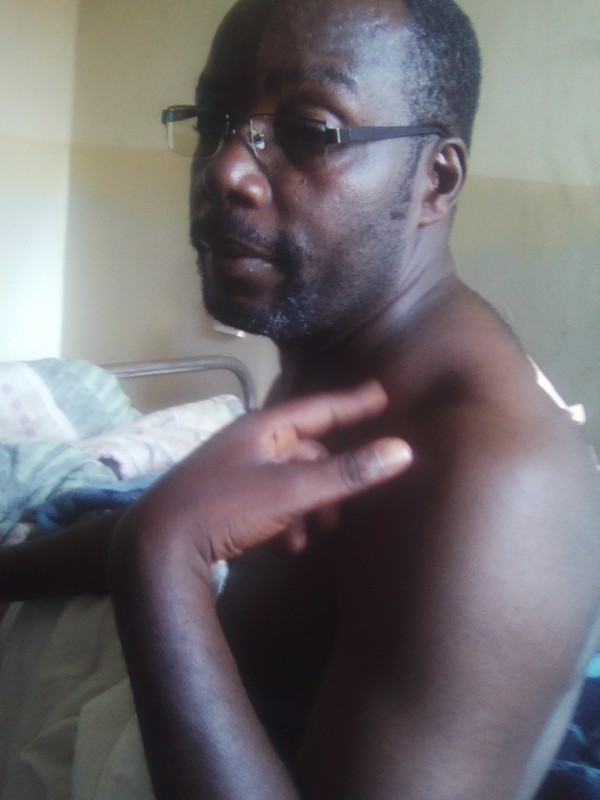
A male patient shot by thugs and is languishing in hospital because because there are no medical experts to remove bullet on his shoulder. Photo: The AfricaPaper/Henry Kijimwana Mhango

But responding to the concerns, Jappie Mhango, the government spokesperson who also serves as Minister of Information pours the blame on the health workers for what he calls, stealing drugs and misusing public resources allocated for running their hospitals. But, Jappie can’t produce any evidence to buttress his claims.

“Our health workers are not honest, otherwise we have never cut budgetary allocations for our health system,” Jappie Mhango told the media.

But healthy officials have heavily attacked the minister’s claims.

“As soon as reports of food and drugs shortages reached him, a responsible Minister’s remedial action should have been taken right away,” said concerned medical officials at Mzuzu central hospital who opted for anonymity.

“The public would have been informed about what was uncovered (drug theft), who did that? who got arrested, or dismissed? And finally preventive measures or the way forward.”

Failing Malawians and the Country

According to many interviewed by The AfricaPaper in various hospitals, Minster Jappie Mhango failed to do the country justice by not taking the actions stated above. Instead, the minster continues to blame suffering medical staff in hospitals that he has not visited in many months, according to people interviewed.

Other Medical officials from Kasungu, Karonga and Rumphi District hospitals, also declined to have their names published for fear of reprisals said “what the Minister of Information says is incorrect, and tantamount to legal suits, no hospital in Malawi has got its whole proposed budget.”
Recently, the Ministry of Health imposed a policy, barring District and Central Hospitals’ officials to give out information to the media, a move several quarters feel is deliberately put by government to harass and mute health officials from expressing out challenges affecting their service delivery and the collapsing medical system in the country . |TAP| Africa’s Newspaper of Record

The AfricaPaper: Based in Malawi, Henry K. Mhango writes for The AfricaPaper. He has worked for various media organizations including the state Malawi News Agency, the Big Issue Malawi Magazine, Capital Radio Malawi, and International Network of Street News Service (UK). His work has also been published by The Guardian (UK). He covers politics, economy, human rights, environment and development for The AfricaPaper.

Photos From the Runway

0


AMANDA LAIRD CHERRY at South African Fashion Week

2. Amanda Laird Cherry SAFW AW 2016IMPRESSED

Get impressed by African designer Amanda Laird Cherry, as she presents her actual rock, flora and fauna collections in the annual South African Fashion Week. She gets inspired by Table Mountain that explains her choice of designs for her collections. She also creates a mountain and floral print to give the feel of winter picnic. This season, her collection explores amazing color palette with a touch of simplicity and freshness.

Amanda Laird Cherry SAFW AW

NEWBIES

JJ Schoeman SAFW AW 2016

For all the fashion newbies, JJ Schoeman is one of South Africa’s most high-profile fashion designers and his Autumn/Winter 2016 collection clearly showcases his classic yet dramatic style with the focus on cut, quality, fit and purpose. He made a perfect coat for his winter inspired collections for this season. Get ready for a beautiful and colorful glossy night as he presents his commercial ‘Clinical look’ as well

WorldViews: Economic Empowerment for Black Society

0


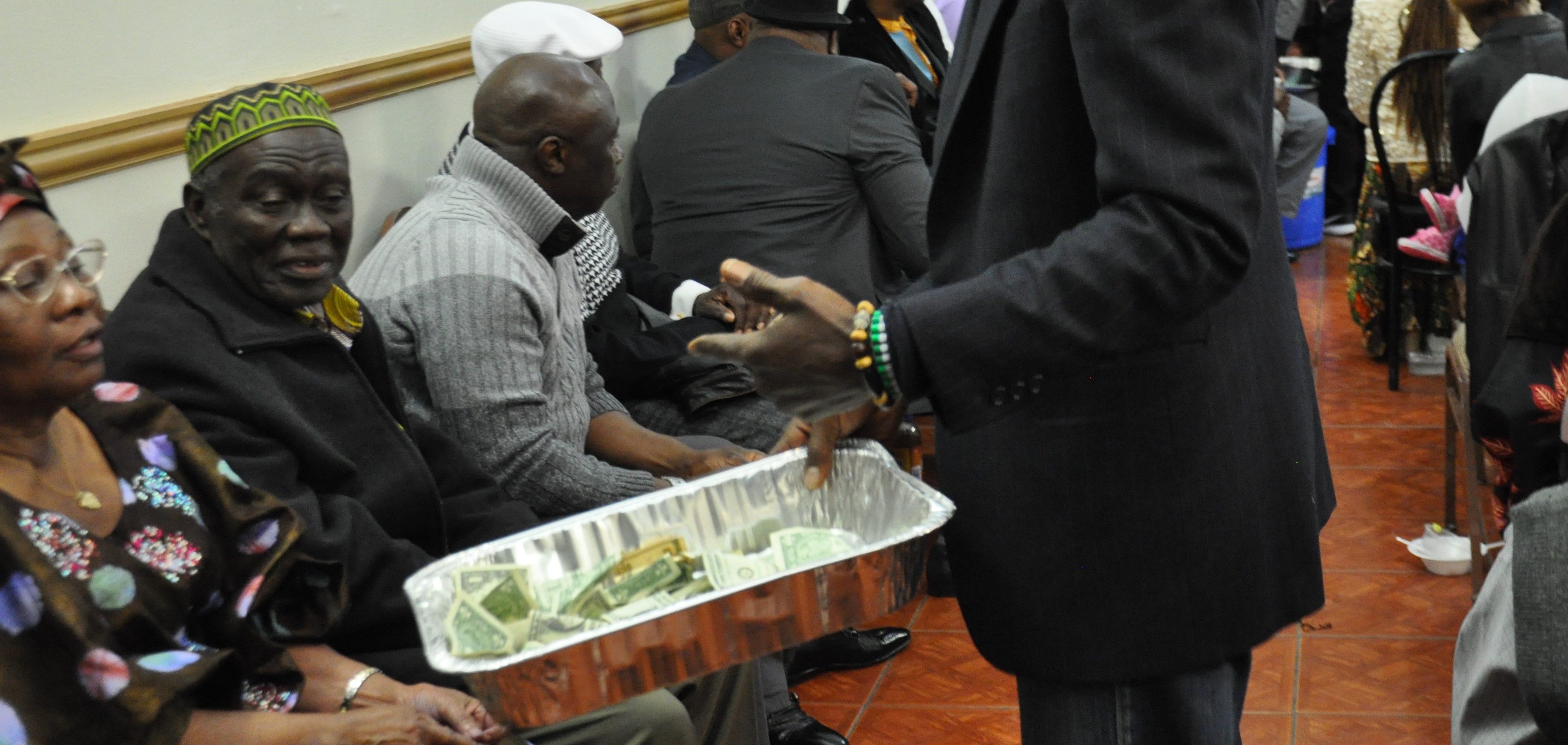
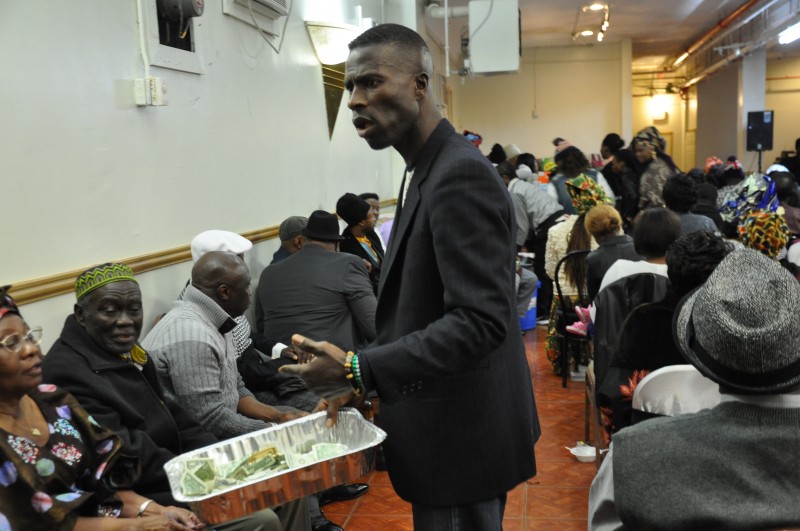
Collecting donation in Staten Island, New York. Photo: The AfricaPaper/Issa A. Mansaray

By Lucas Jallah-Acosta | The AfricaPaper

Minneapolis, Minn – During these last couple of years many events have occurred worldwide, especially in the United States. The most controversial or widely known subject matter in our country is the inevitable mass murders of black males by police. According to the BBC, “Black people are three times more likely to be killed by police in the United States than white people.

Main Issues

More unarmed black people were killed by police than unarmed white people last year. Even in Brazil where a total of 2,212 blacks were killed. The list can go on and on, from place to place. Wherever you go in this world there’s always some type of mistreatment of a person of African descent. In regards to all these murders of black males, one may say the main issue is racism, civil rights or basic human rights issue. Yes, those are a few factors. However, there’s a bigger picture in front of us here in America and abroad to figure out. The real issue is simply economics.

Money Allocation

The problem with black society is that we tend to allocate our money to other races of people way too often than we do with ourselves. Thus, the majority of black people do not produce anything that involves wealth, power, and influence to benefit themselves collectively. The Honorable Marcus Garvey said, “A race without power is a race without respect.” And because of this, black society has allowed themselves to be placed last at the very bottom of society.

Distrust and Downfall

There are many problems in black society worldwide that makes it difficult to come together and get our priorities down. For one, there is a distrust among our people; we disconnect ourselves by claiming the land of which we’re from than to claim the title of being African or black. Although white supremacy has had an influence on our downfall as African people on this planet, it is no excuse to dwell on for not coming together to build an empire of our own. We have all the resources and opportunity to build an economic infrastructure.

Power and Influence

Our main goals that we should aim for is power, wealth and influence. Simple as that. As a person of African descent, you really have to stop and think about this. If African people could accomplish so much in the past, shouldn’t we have an empire that we’ve built by us and for us by now? Unfortunately, the answer is no. Let’s look at it this way– Europeans for example have not always been united. The English back then had a distaste for the Irish, and many Europeans during a point in history had a dislike against European Jews, but there came a point in time where they had to come together for not unity but for empowerment and decide how they’d rule the world we live in today. And now, Europeans all over are prospering and have formed an alliance.

Betrayal and Enemies

One of the few many reasons that black society worldwide is failing is due to the fact that whenever there is an issue due to racism for example, we as a people are quick to betray our brother or sister than to defend them. When the Arabs get discriminated against or harmed they form an alliance against whomever did them harm, get their media involved, businessmen, and lawyers. However, with black society, if someone discriminates against one of us, we don’t go hard at them like the Arabs, Asians, Jews, Whites, etc. This is why we have so many countless enemies. On top of it all, we have no source of wealth for our voice to be heard. The same thing applies to every other race in this world, but as Africans we’re doing the exact opposite.

Own, Build, and Produce

Sooner or later, if we don’t come together on an economic agenda to compete with other groups, we’ll perish in the 21st century. In order to flourish in this world we must own, build, and produce for ourselves as a race. One of the main problems is the differences we have of one another.

“We are a race of people cursed with petty differences,” Marcus Garvey once said.

Unfortunately, he was on point. The African race cannot move forward until we set our differences aside and do what’s most important for the benefit of the race. What many black people fail to realize is that our world operates off of money and in order to survive and get respect, we must build a progressive economy or we’ll be left behind and destroyed.

Questions

Think about these questions: Do blacks own vast companies that are currently competing with Target, Walmart, or Best Buy? If the answer is no, this is a wake up call for all of us.

Recommendations

Check out: Jason Black, formerly known as “The Black Authority” on Youtube, and also has his own radio called “The Black Channel”. He was the director of his new film called “7a.m,” which is a documentary on black/african economics (which I highly recommend to watch).

Along with Professor Truth known on his Youtube Channel as “Black Truth Forever”. He discusses the subjects of black economics, racism, and other issues affecting Africans and African-Americans.

Lastly, follow up on the “father” of black economics known as Dr. Claud Anderson. He is a guide for Black America to become more economically self-sufficient. He’s published books such as: Black Labor, White Wealth: A Search for Power and Economic Justice and Powernomics, and many more. |TAP| Africa’s Newspaper of Record

The AfricaPaper: Lucas Jallah-Acosta, covers film, music, and entertainment for The AfricaPaper. WorldViews are opinions and commentaries from different parts of the world highlighting various issues relating to Africa and its people.

Community Say Farewell to Henry McCabe

0


More than 500 people gathered at the Brooklyn United Methodist Church in Brooklyn Center on Sunday, December 19 to bid farewell to the late Henry McCabe. It was an emotional day for family members, friends and workmates. The atmosphere in the church was somber, and some relatives cried aloud. Many came from as far away as Ohio, California, Atlanta and other states to pay their final respects.

The story of McCabe’s death is still a mystery. He disappeared on September 7, 2015, Labor Day, and was later found dead in the waters of Rush Lake in New Brighton, about seven miles from Fridley where he was last seen. His relatives and many in the Liberian community still can’t understand how McCabe’s body ended up in the lake.

Since McCabe, 32, died, his family and community members question the autopsy report stating that he died by drowning in fresh waters. “In our darkest moments, where there is the presence of Jesus, there cannot be hatred,” preached Pastor Charles Goah, United Christian Fellowship in Minneapolis at the funeral.

McCabe’s elder brother Timothy Borbor said, “My brother was found in Rush Lake. I believe he was murdered.” It is a suspicion and sentiment shared by many in the Liberian community interviewed by MSR. What really happened to him from the day he went missing to the day he was found dead raises many concerns.

McCabe’s daughter with Kareen McCabe, 10-year-old Yve, asked, “Why did he have to die like this?” adding that it is the “worst punishment ever.” Yve held back her tears as she returned to her seat.

Kareen McCabe shared her memories of meeting Henry in California about 11 years ago. She doesn’t ordinarily give her phone number to men who ask for it, but when she met McCabe at a Liberian party, she did.

“I would normally give out a fake phone number when a guy asks,” recalled Kareen. “But before I knew it, I had given him my real number.” She added that “he taught me how to cook” and in the process she made him “skinnier” as she practiced cooking African food.

For her, Henry McCabe never changed. “He just cares about people’s need. Pushing for paid parental leave, [caring] for those that are oppressed and in need. Material things were nothing to him,” she said in an interview.

Henry McCabe was friendly, and familiar to many Liberians and Africans in Minnesota and California. At work, one of his friends recounted that he even shared his lunch with friends and workmates. He was easygoing, liked politics, and had an open, intellectual mind for understanding local and international issues.

His cousin Saah J.D. Kpakar referred to his writings on his Facebook page, where McCabe tried to address the question of justice. He asked “What is justice?” and how it can be achieved. At his funeral, friends, relatives, and community members promised to seek justice for his death.

In the short time that he worked with the Minnesota Revenue Department, Deputy Commissioner Ryan Church said that McCabe touched many staff members and that the department would always remember McCabe at work.

“It is really striking in that short time the impact Henry had. If you’re greeted by Henry in the morning, you are greeted by an unforgettable smile,” said Commissioner Church, extending condolences to the entire family on behalf of the Revenue Department. “He would cook and share with people around him… People just liked to hang out with Henry. It was Henry’s magnetism that makes him a natural leader,” noting that McCabe rose quickly in leadership roles and how he really cares about people.

“We miss him” continued Church. “To Henry’s mother, to Kareen, to Ivy and to Yve [his daughters], we are sorry for your loss… All I wish for you [is that] your memories of Henry keep you and hold you for always.”

McCabe’s cousin from Atlanta remembered when they landed in California from Ghana, where they spent many years in a refugee camp. McCabe, she told the audience, was seen as a father figure and allocated funds sent to them from relatives abroad appropriately for use at the camp, cautioning them not to spend it excessively.

Many expected the late Minnesota Revenue auditor’s mother, Esater Karmoh, would have been granted a visa to say farewell to her son, but that never happened. From Liberia she sang the last farewell song that brought tears to many in the church.

“I want justice for my husband. He didn’t deserve to die. Someone did this to him. There is a God and he knows what happened and hates an injustice,” said Kareen in tears as the church congregation shook their heads and murmured in unison. “Whoever did this, God will deal with you.”

Henry McCabe is remembered by his two daughters, Yve and Ivy McCabe, wife Kareen McCabe, mother Esater Karmoh in Liberia, family members at home and abroad, many friends, and workmates. He was buried on December 19 at the Mound Cemetery in Brooklyn Center.

Cattle Farmers’ Clashes Threaten Nigeria’s Agricultural Sector


By Mohammad Ibrahim | The AfricaPaper

Kaduna – Nigeria for decades has continue to witness bloody battles between farmers and nomadic herdsmen which claimed lives and property worth millions of dollars in northern part of the country.

Such crisis have for long-running problem in the region thereby threatening the Agricultural development in the country, particularly in the North. Northern region is often the sight of violent clashes between farmers and herdsmen over the north-central and Middle belt great swaths of arable land that is key to the agricultural revolution of the region.

Causes

Farmers always complain that nomadic cattle destroy their crops. Herdsmen, who are predominantly of the Fulani ethnicity, say they have nowhere to graze their cattle. Such disagreement from both groups often leads to conflict that claim money and lives in the region.

The farmers- herdsmen clashed affected states like Katsina, Kaduna, Kano, Jigawa, Zamfara, Kebbi, Sokoto and Niger in the Northwest and Plateau, Benue and Nasarawa in the North Central.

Due to lost of lives and properties as a result of the crisis all governors of the affected states met and fine tune way out because farming and cattle rearing are two major source of livelihoods for the people of the region.

Effect

Expert believe that the overall effect of rising farmer-herder violence has been nothing short of disastrous for Nigeria. Apart from lost of lives and properties such crisis have also resulted to low development of agriculture in northern region.

Farm produce are often destroyed during the crisis because farmland are destroyed and thousands of cows got killed. Such destruction had really affected farming activities in the region. Both parties benefit from each other because cows are often used to produce local manual for farmers while the cows feeds from farmers left overs.

Deaths

A t is shown in the water.
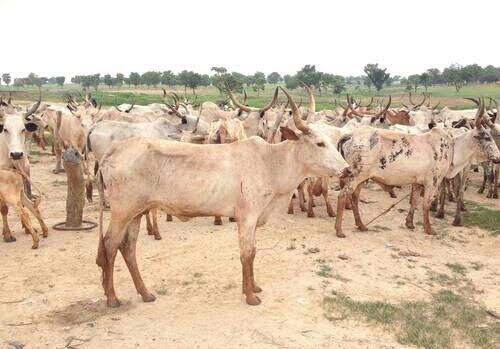
Cattles ranch in Kaduna. Photo: The AfricaPaper/Mohammad Ibrahim

Few weeks ago four persons were killed in a clash between local farmers and Fulani herdsmen at Bungel village in Maro’a chiefdom of Kaura Local Government area of Kaduna State north West Zone. Several other people from both sides were reportedly injured during the clash. Similar clashes do occur regularly where lives are lost.

In one particularly violent period from December 2013 to mid-April 2014 witnessed over 1,000 deaths, according to Human Rights Watch. A single day clashed between herdsmen and farmers in Benue State north central in past January allegedly left thousands of people homeless with many deaths.

Mistrust

National Secretary of Miyyati Allah Cattle Breeders Association of Nigeria, Baba Usman Nzelgarma blamed herdsmen from neighboring countries for the crisis.

“In the past we have cordial relationship between herdsmen and farmers before things became bad,” said Nzelgarma. “Now there is mistrust among the two groups and that is responsible for the crisis between us. But the fact, remain that most of these crises are caused by herdsmen from neighboring countries.”

Solution

Founder Peace Revival Foundation of Nigeria Pastor Yohanna Buru urged government to find a way to end the bloodshed among farmers and herdsmen in the country.

“Government must find a way to create grazing reserves for herdsmen to take their cows to graze so that they will stop going into people’s farms with their cows.

“Farmers too must see herdsmen as their friends because each cannot do without the other. Killings each other is not the best,” said Buru. “In my community in Southern Kaduna we live with Fulani for years and we have not been witness such crisis until few years back and such clashes are really affecting the growth of Agriculture in the country.”

“Today farmers don’t feel safe going to their farm and herdsmen don’t feel safe taken their animals to bush because each fear attacks,” he added.

Pastor Buru added that if agricultural sector is to develop there is the need for a dialogue forum between farmers and herdsmen to be established under the watchful care of traditional and community leaders across states in northern part of the country.

|TAP| Africa’s Newspaper of Record

The AfricaPaper: Mohammad Ibrahim is The AfricaPaper’s correspondent in Nigeria, covering Kaduna