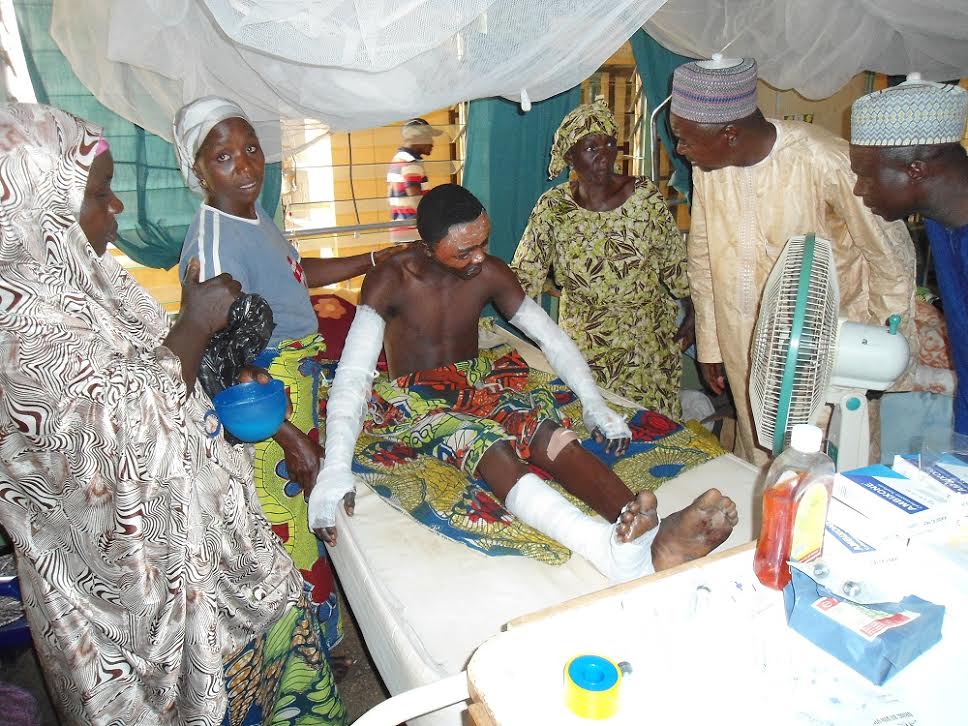
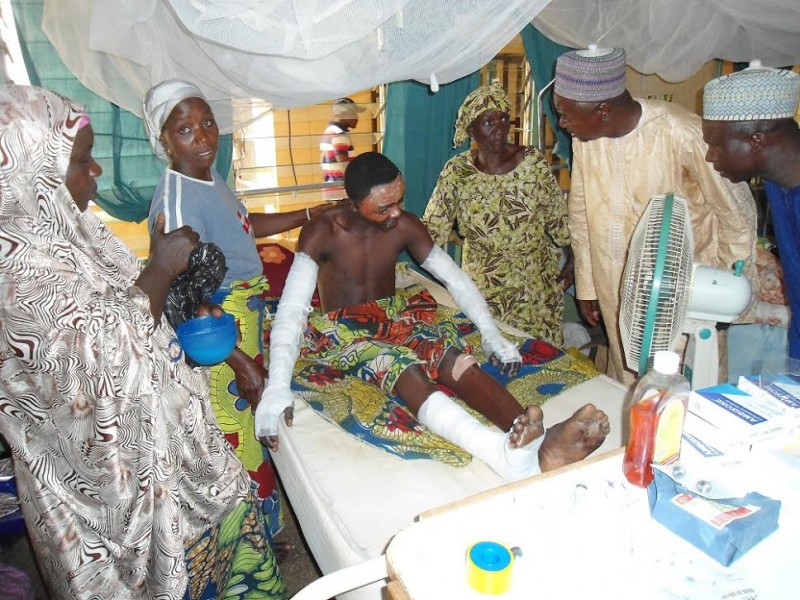
Mohammad Sani, Bomb victim in Kaduna. Photo: The AfricaPaper/Mohammad Ibrahim
By Mohammad Ibrahim & Alie Sheriff | The AfricaPaper
Kaduna, Nigeria – Nearly five days before the self-imposed deadline by President Muhammadu Buhari to stamp out Boko Haram by December 31, the Islamic extremist group defiantly responded in a spate of suicide attacks this week killing more than 50 people and wounding several others in Northern Nigerian cities.
Female Bombers
Two of the bombings occurred just outside of Maiduguri, Borno state including an attack at a local mosque that left about 20 people dead. The other attack was carried out by two female suicide bombers at a crowded market in Madagali, Adamawa state killing more than 28 people.
Off Guard
In August, Mr. Buhari ordered his country’s military to reclaim territories held by the insurgent group by the end of December. However, this week, the president and his Minister of Information and Culture, Lai Mohammed, were caught off guard, just hours after Mr. Buhari claimed the Nigerian military had “technically” won the war against Boko Haram, and Mr. Mohammed announcing the military had met the deadline and “the war against Boko Haram is largely won,” the militant group continued its onslaught in a territory it once briefly held or had threatened to usurp.
20,000 Deaths
Boko Haram started its war against Africa’s most populous country six years ago with its quest to create an independent Islamic state in Northern Nigeria. Since its inception the group is responsible for more than 20,000 deaths and about 1.5 million displaced as a result of its activities.
Several news reports have pointed out that majority of the displaced people now live in neighboring Chad, Niger and Cameroon, while others have taken refuge in other parts of the country. Many Nigerians have called for an end to the crisis.
Matching Order
Mr. Buhari has vowed to crush the militant group by given a matching order to the country’s Security chiefs to end the insurgency by the end of the year, but bombings and attacks are still carried out in several parts of the country.
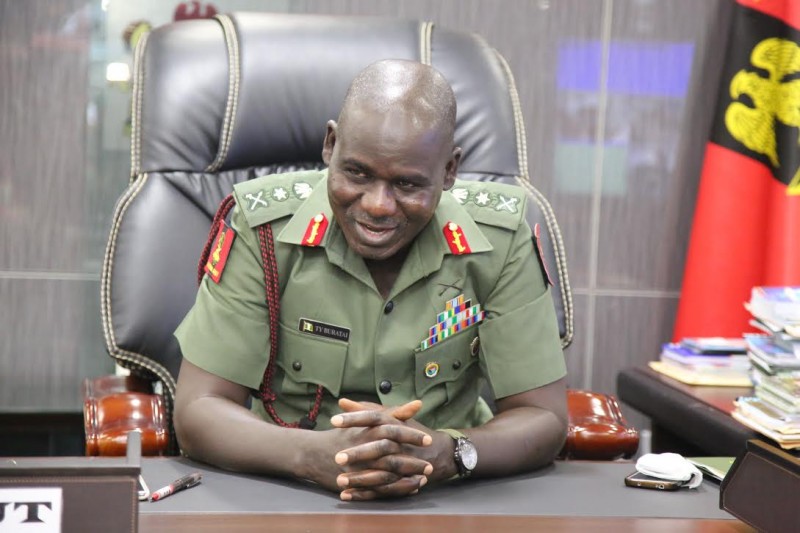
Nigerian Military Chief Tukur Yusufu Buratai. Photo: The AfricaPaper/Mohammad Ibrahim
In fact, Boko Haram have stepped up its attacks on civilians by detonating bombs in different parts of Maiduguri, Borno state, Damaturu in Yobe, Kaduna, Jos capital of Plateau state , Kano and parts of Abuja, the national capital.
Wave of Violence
Since Mr. Buhari’s inauguration this year, the wave of violence has claimed hundreds of lives, leaving many citizens in doubt as to whether the government can crush the militant group by December 31. Even though, Multinational Joint Task Force comprising of Nigeria, Niger, Chad, Cameroon and Benin collaborated against Boko Haram, yet the bombings and attacks have continued with the latest occurring just three days ago.
While many Nigerians believe they are making progress fighting Boko Haram, this week’s attacks is a reminder that the Islamic extremist group is still alive and perhaps not ready to disappear as the government had hoped.
Guerrilla Warfare
A number of analysts believe the group will remain active beyond the self-imposed December deadline.
“Two thousand and fifteen has seen Boko Haram shift back from a short-lived campaign of conventional warfare to guerrilla warfare, which has dominated its insurgency against the Nigerian government,” said Ryan Cummings,” security analyst at Red24, a risk consultancy firm.
Cummings warned, “the term defeat would suggest that the Nigerian government has effectively curtailed the threat Boko Haram poses, which is clearly not the case.”
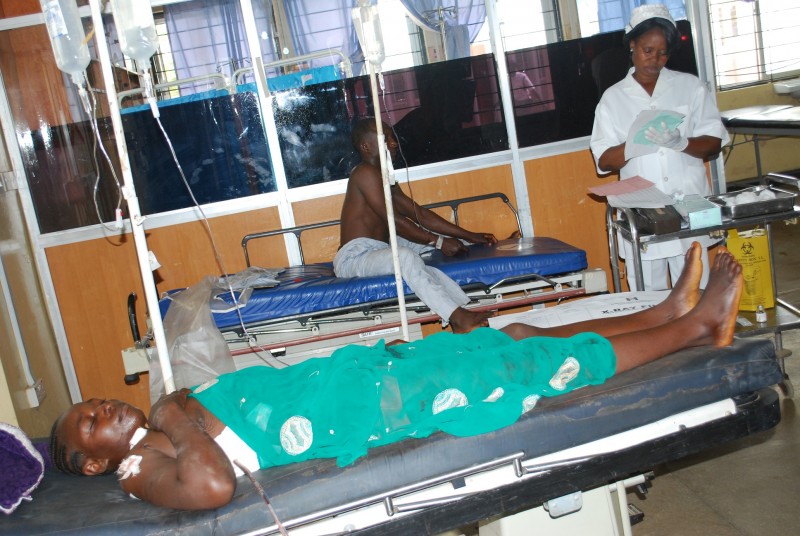
Victim of a Bomb blasts in Nigeria at different locations in Kaduna, Nigeria. The AfricaPaper/Mohammad Ibrahim.
Here are some of the deadly attacks carried out by the insurgents since May 2015.
Maiduguri: June 5, 2015
A suicide bomber exploded a car at a checkpoint outside a military barracks killing eight soldiers in Maiduguri.
Borno: June 28, 2015
At least five people were killed and 10 wounded after a suicide bomber blew himself up outside a leprosy hospital on the outskirts of the northeast Nigerian city of Maiduguri. The bomber tried to gain access to the hospital but detonated his explosives outside the building.
Zaria: July 7, 2015
Female Suicide bomber killed herself and 26 civil servants in the ancient city of Zaria Kaduna State north West Nigeria. Among those killed were mostly teachers who were undergoing verification exercise set up by the governor.
Jos: July 7,2015
A bomb exploded inside a Mosque in Jos capital of Plateau State north central Nigeria while Muslims faithfuls were listening to Ramadan Tafsir Lecture by a popular Islamic Scholar, Sani Yahaya Jingir. About four people were killed and many injured.
Maiduguri: July 31, 2015
Twin blasts rocked a densely-populated area of Maiduguri city on Sunday, the stronghold of Boko Haram Islamists. There was no immediate report of casualties.
Maiduguri: July 31, 2015
A female suicide bomber blew herself up at a market in Maiduguri.
Damaturu: July 31, 2015
A 12-year-old girl killed six people and injured 47 when she detonated explosives outside a bus station in Damaturu, the capital of Yobe state north Eastern Nigeria.
Maiduguri: August 26, 2015
September 21, 2015
Another Multiple bomb blasts in two locations on the outskirts of the Nigerian capital, Abuja, killing at least 15 people.
Maiduguri: October 4, 2015
Multiple explosions were heard on Sunday on the outskirts of Maiduguri killing 10 people and wounding several others.
The AfricaPaper:Mohammad Ibrahim is The AfricaPaper’s correspondent in Nigeria, coveringKaduna, and Alie B. Sheriff is The AfricaPaper’s Political and Business Editor in USA.
Newly reelected Ivorian President Ouattara could consolidate peace and economic prosperity during his second term by addressing past violence in Cote d’Ivoire. This month’s piece on Worldviews, calls on the Ivorian President to make firm steps to deliver justice and reparations to victims and engage more fully on efforts to acknowledge the truth about Cote d’Ivoire’s past. It points out that as previous polls in Cote d’Ivoire and experiences elsewhere have shown, peaceful elections alone cannot guarantee a stable peace nor close the book on past grievances.
By David Tolbert | The AfricaPaper
Last month’s presidential election capped four years of relative peace in Cote d’Ivoire. To make the West African country of 23 million an example of how to address a legacy of violent civil strife, newly reelected President Alassane Ouattara can now do more to acknowledge and account for past violence.
Post-election Violence
On the heels of a decade of north-south division and brutal post-election violence in 2010-2011 that left 3,000 people dead, Ouattara prioritized security and economic recovery during his first term. Thousands of former fighters were demobilized with United Nations support, while annual economic growth in the country, the world’s leading cocoa producer, topped eight percent.
The legacy of violent political and interethnic turmoil hangs heavy in Cote d’Ivoire. Politics in the country have long been characterized by hate speech, manipulation of youth groups to commit violence, and marginalization of whole sections of society. However, divisive rhetoric was thankfully in short supply during this year’s campaigns. Still, many Ivorians were quietly apprehensive ahead of the polls, and sporadic violence during a few demonstrations in September and October led to at least three deaths.
Consolidating Peace
The October 25 presidential election – deemed credible and transparent by both Ivorian civil society and international observers – marked an important milestone in consolidating peace. Of course, as previous polls in Cote d’Ivoire and experiences elsewhere have shown, peaceful elections alone cannot guarantee a stable peace nor close the book on past grievances.
During a campaign centered on the economy and social issues, Ouattara also condemned impunity and committed not to interfere with the justice system’s efforts to prosecute those most responsible, on all sides, for the massacres, rapes, community destruction, and other abuses that were committed during the 2010-2011 post-election violence. In 2015, two newly created or revamped governmental bodies –National Commission for the Reconciliation and Compensation of Victims (CONARIV) and the National Program for Social Cohesion – launched processes to identify victims of past violence and begin providing reparations.
Justice and Reparations
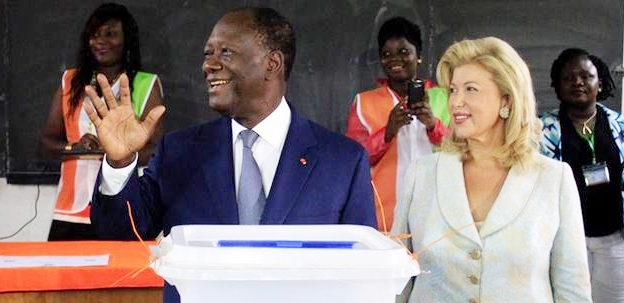
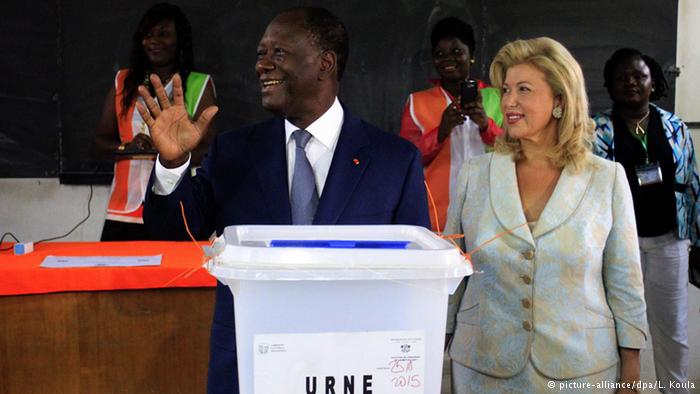
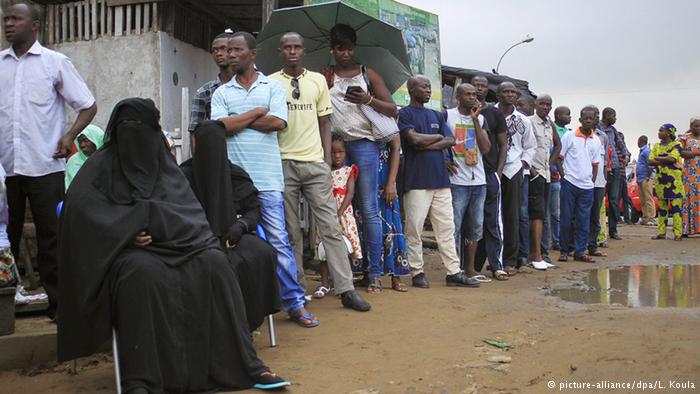
Ivorians on election day
Given this progress and Ouattara’s previously stated commitments to justice and victims’ rights, Ivorians have come to expect concrete results during Ouattara’s second term. In particular, the next administration should aim to speedily deliver on justice and reparations and promote fuller engagement on efforts to acknowledge the truth about Cote d’Ivoire’s past violence.
On justice, Ouattara must go beyond his commitment not to interfere with the judicial system, and take specific action to strengthen its impartiality and capacity to prosecute individuals for serious violations committed during the post-election violence. Those named to key Justice Ministry posts must also act impartially.
Ouattara should also ensure that the Justice Ministry’s special unit for post-election violence, known as the CSEI, has sufficient resources for the task. In addition, the Ouattara administration should give its full support for a draft law on witness protection now working its way through the National Assembly, which would enable more victims to testify and thereby bolster the credibility of the prosecutions and trials.
National Prosecutions
There is no doubt that serious progress on fair and balanced national prosecutions would help deliver justice for Ivorian victims of conflict-related abuses. The International Criminal Court (ICC) is due to begin its trial against former President Laurent Gbagbo and his co-defendant, Charles Blé Goudé, in January; while playing a very important role, the ICC alone cannot respond to the need for justice in conflict-related cases. Indeed, effective national prosecutions Cote d’Ivoire would be a critical way to show victims and society that the state is committed to guaranteeing human rights and the rule of law.
A far-reaching reparations process for victims, which had a solid start in 2015, must continue to make progress. The relevant governmental bodies should expand their outreach to victims’ groups and civil society to inform their policies and actions.
Lack of Communication
A newly created commission, CONARIV, made progress this year to finalize a victims’ list while making a solid effort to listen to victims and integrate their views. And the National Program on Social Cohesion began implementing financial compensations to victims in August, drawn from a $16.7 million fund. But the work of these institutions has at times suffered from blurred roles and responsibilities and a lack of communication between the two, which President Ouattara should seek to improve by naming a coordinator for reparations among his senior staff.
During his swearing-in ceremony on November 3, Ouattara proposed “new consultations with CONARIV” as part of further reconciliation efforts. While this is a positive step, the Ouattara administration must clarify as soon as possible how such consultations will be managed, and how they will complement previous and existing efforts to determine the truth about past conflicts and provide reparations to victims.
Dialogue, Truth, and Reconciliation
Last, Ouattara should use his office to promote further acknowledgement among all Ivorians about the country’s violent past. Official efforts to seek the truth about past conflicts stalled in the previous term. The work of the Dialogue, Truth, and Reconciliation Commission culminated in a report in December 2014, which has yet to be made public.
Several Ivorian youth groups have made strides in acknowledging a painful past by apologizing for their role in the post-election violence of 2010-2011. Their brave and honest admissions should be followed by acknowledgement from the president and other political leaders, past and present, for the roles they themselves and their supporters played in the violence.
Account for Grave Abuses
Serious, careful, and effective efforts to acknowledge Cote d’Ivoire’s past and account for grave abuses can strengthen the country’s economic and social progress. Ouattara’s campaign promised that, with him, Ivorians would “succeed together.” Pursuing truth and justice can help him make good on that promise.
The AfricaPaper: The piece is written by ICTJ President David Tolbert. International Center for Transitional Justice has been working on justice issues in Cote d’Ivoire since 2012.
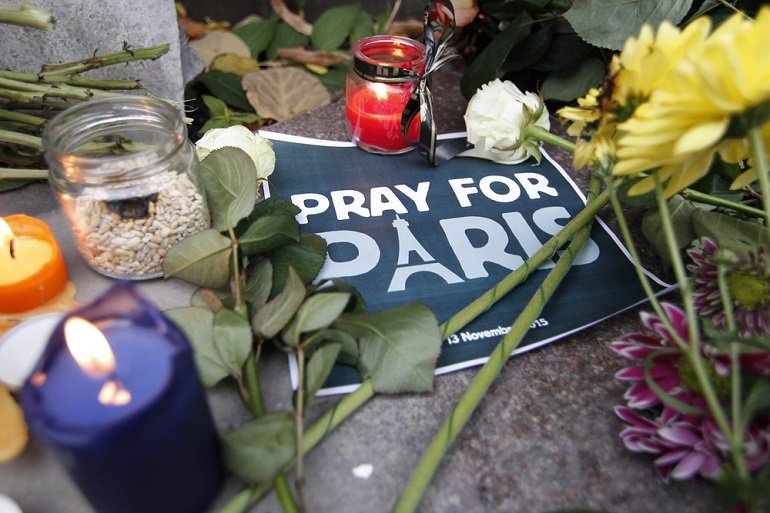
The “13/11” massacre reveals the scale of the ISIS threat, writes David Hayes in London. That makes a coherent response vital.
By David Hayes | The AfricaPaper
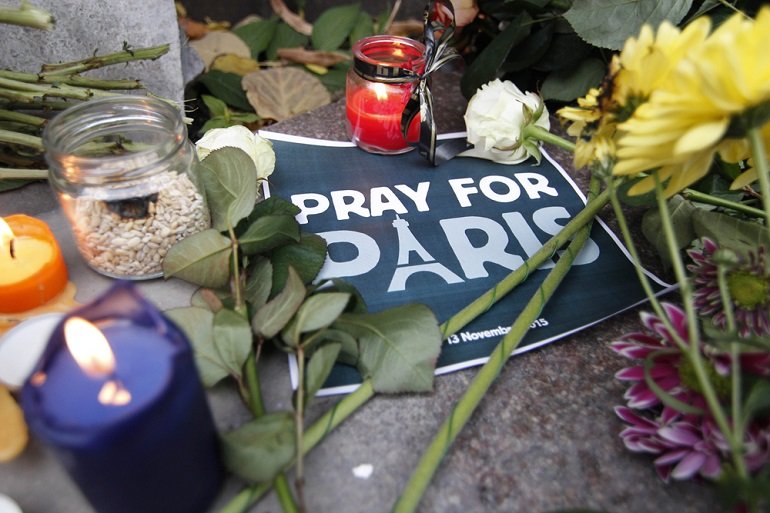
London, UK – The bomber will always get through.” In the deep valley of the 1930s, a phrase used by the British conservative politician Stanley Baldwin came to stand for the sense of foreboding with which beleaguered European democracy envisaged the prospect of another war. Today, after the latest massacre of innocents in Paris by a jihadi cell, it is hard for many citizens of France and its neighbors to escape the same mix of pessimism and fatalism.
Shell-Shocked
So unequal were the odds on that convivial Friday evening, so “easy” the targets in the restaurants and clubs where young Parisians were gathering, and so infinite the opportunities presented by open societies to those intent on killing without discrimination or restraint: no wonder that the outpouring of grief and solidarity following the events of 13 November has been shadowed by a “fear of the future” of the kind expressed by Baldwin in 1932. By shell-shocked Saturday, when the unleavened horror of the night before was becoming plain, the bleakest thought of all (to adapt Albert Camus) was that those in the grip of a nihilistic ideology will always “get through” to kill and die in a happy city.
Charlie Hebdo
In this respect the response in France is already a contrast with that following the murders in January of seventeen people at the satirical magazine Charlie Hebdo and at a Jewish kosher supermarket, when hundreds of thousands marched behind an array of world leaders under the rubric “Nous sommes tous Charlie” (“We are all Charlie”). It’s not just that France’s state of emergency prevents any such major show of unity in the historic Place de la République, though a few hundred did gather there for a candlelit vigil on Saturday night, and another gathering took place on Sunday. This time, the mood is more inward. The difference owes something to the amorphous nature of the assaults, the normality of their setting, their vaster scale, and the intimate, “they-are-us” character of the 132 killed and 350 wounded. (The former total rose by three on 15 November as emergency hospital treatment wasn’t enough to save them.)
Piece Together
The events unfolded in a confusing sequence that took hours for authorities and reporters to piece together. Soon after 9 pm local time, five black-clad operatives made near simultaneous raids in Paris’s bustling 10th and 11th arrondissements. Shootings at a bar, Cambodian restaurant, pizzeria and street near the Place de la Republique killed thirty-nine people in all, while an incursion into the Bataclan concert hall in Boulevard Voltaire (where an alternative rock music band was performing) left ninety dead. Near simultaneously, three companions exploded their suicide vests outside the Stade de France in the city’s north, where France and Germany were playing a friendly soccer match. (They may have aimed to enter the stadium and inflict much greater carnage; at least one had a ticket but was stopped from entering by guards employed by Perth-based MCS Security.)
Explosions Sounded
France’s president, François Hollande, had been hurriedly evacuated from the stadium as the explosions sounded. Within two hours he was announcing the emergency, including a closure of national borders, on television. Three days of official mourning have followed. Across the city and Europe entire, front pages were frantically rewritten and news channels went into rolling coverage of still inchoate fragments. Soon, expressions of sympathy from world leaders were pouring in, along with now customary symbolic gestures: Sydney’s Opera House and London’s Tower Bridge lit in the French tricolour, Barack Obama’s reference to “our oldest ally,” spontaneous vigils and renderings of “La Marseillaise” outside diplomatic missions. France’s universalism, as well as being integral to national identity, still carries global appeal.
“Black Friday”
Yet this time, the aftermath will inevitably demand much more: more thought, leadership, international cooperation and cohesive purpose. In retrospect, the January massacre, and the thwarted attack on an Amsterdam-to-Paris train in August, became too symbolic too quickly. “Black Friday” may prove the real catharsis for France and perhaps beyond, by clarifying the historic scale of the Islamic State, or ISIS, challenge. What, however, might more vigorous “securitisation” do to the very liberty ingrained in the Parisian, and French, soul? Here, many cite Britain’s ubiquitous CCTV as the regrettable price, or a too high one, for notionally greater security. It is not only that there are no easy answers; in diverse Europe there may be no uniform ones either.
Attackers’ Connections
In any event, the authorities’ immediate priority is to map the exact details of what happened and its background, in order to assess and counter live risks. Most urgent is to track the links between what the security agencies call the “point of origin” and the “point of connection”: in this case perhaps Raqqa, the ISIS “capital,” and Paris. Evidence that the perpetrators include three French brothers – now respectively dead, detained and on the run – give the investigation momentum, as do the arrests of suspected associates near Brussels. Other reports, of a Syrian and an Egyptian passport belonging to attackers, and of connections (including arms transfers) with the refugee inflow through Greece and the Balkans, have yet to cohere.
Calm Reloading
The testimony of survivors, often underestimated, is also invaluable at this stage. Amid their trauma, several confirm the unmasked assailants’ clinical approach, youthful appearance, and calm reloading of weaponry. One referred to a “ghostly” enemy who seemed to appear from nowhere to casually mow down people sitting outside at a restaurant table. The prominent French writer Pascal Bruckner echoes the observation: “We are living in a state of war – a special war with invisible enemies striking at us whenever they want.”
The location, timing and horror of the atrocity ensure its worldwide impact. In turn that gives a crucial insight into the minds of those who planned it. In perspective, Paris represents an epicentre of Islamist terror since the mid 1990s (when a wave of bombings struck the city, killing eight people on its rail network). The bloodbath of relaxed youngsters on a night out recalls Bali’s nightclub bombing in October 2002, where ninety-one Australians were among the 202 dead (as does ISIS’s rhetoric in claiming responsibility – Paris as the “capital of prostitution and vice, carrier of the Banner of the Cross of Europe”). Turning victims into hostages, as for several terrible hours at Bataclan before police stormed the venue, has a trace of the Chechen sieges in Moscow and Beslan in the early 2000s.
Targets
The intended targeting of the Stade de France echoes the “spectacle” of 9/11 itself. A major strike on a European capital links to the bombings of Madrid’s and London’s transport hubs in 2004–05. Above all, the mobile, marauding assaults that turned the freedom of the city against itself – as an opportunity for large-scale murder – closely resemble the Mumbai operation of November 2008 (directed from Pakistan), where a ten-man cell killed 166 people.
Along with the explosion on a Russian passenger jet over Sinai, and other recent massacres in Tunis, Ankara, Baghdad, and Beirut (to name only those), ISIS has developed the capacity to apply al Qaeda’s hybrid killing strategy in a more professionally militarised way. The French scholar Jean-Pierre Filiu, author of From Deep State to Islamic State, calls the movement “a successful al Qaeda able to coordinate major terrorist attacks worldwide.”
Deep Indoctrination
It is the Mumbai precedent that most worries British emergency planners, who rehearsed just such a scenario in June. Raffaelo Pantucci, author of We Love Death As You Love Life: Britain’s Suburban Terrorists, says that the “form of horror” displayed in Paris “requires deep indoctrination, preparation and training… Mumbai-style terrorism has reached European shores.”
Many would-be assaults in Britain have already been aborted at the planning stage by good intelligence, or even a later one by luck and heroism. In June 2007, a Bali-type attempt on a nightclub in London’s Leicester Square, followed the next day by a ram-raid bombing of Glasgow airport, both narrowly failed. Everyone in Britain’s “deep state” is inculcated in the chilling reminder from the Irish Republican Army, or IRA, after it killed five people, but just missed Margaret Thatcher, in Brighton in 1984: “We only have to be lucky once.”
Propagandists
Much concern focuses on the approximately 750 young British Muslims who have gone to Syria to join ISIS, of whom around 450 have since returned. Both returnees and stay-at-home sympathisers are subject to what Charles Farr, head of the Office for Security and Counter-Terrorism, calls “ideological grooming” by ISIS’s cyber-caliphate propagandists. Monitoring and deradicalisation programs race to stay ahead. A timely New Statesman analysis by Shiraz Maher of London’s International Centre for the Study of Radicalisation – published on the day of the Paris attacks – notes that the ISIS threat “is diversifying, deepening and becoming ever more sophisticated.”
The Independent‘s Patrick Cockburn developed the point in the wake of the massacre. ISIS “is an effective fighting machine because its military skills… are a potent blend of urban terrorism, guerrilla tactics and conventional warfare.” Its ends, moreover, are clear: to entice Western states further into direct combat via “boots on the ground,” and to foment sectarian hatreds in the West that reinforce alienation among local Muslims and thus make them more receptive to the jihadi message.
Coherent Strategy
One lesson of Paris is the need for world leaders – now meeting in the G20 summit in Antalya, Turkey – to have a coherent strategy whose various elements (political, military, intelligence, hard and soft power alike) emerge from a definite analysis and are tied to a desired result. Stopping criminal violence and its triggers is the vital, day-to-day priority, a whack-a-mole task but not in itself a strategy. The latter has to be linked to democratic renewal, social harmony and economic progress in ways that link Europe, the Middle East and other regions. Above all, the strategy needs what is sorely lacking today: confidence in the West’s own best principles.
There is little sign of this emerging. And Europe’s margin of freedom, as Nick Cohen wisely counsels in the Observer, may be shrinking. (After Paris, he writes, “it feels as if our luck has run out.”) But a small consolation is that an economically straitened Europe, now very pressed too by a huge refugee and migrant inflow, for the moment resists the intercommunal strife longed for by jihadi and other extremists. Paris’s response to the trauma of “13/11,” necessarily less demonstrative than after the Charlie Hebdo atrocity, is so far equally noble.
Fragment Among Millions
The Sunday Times journalist Patrick Bishop, now resident in the city’s northwest, talks to Ammar, the manager of a shoe shop, who says, “Everyone knew this was coming… It takes a certain type of person to set out to kill people when they are having a good time – eating, drinking, watching a band. It shows how much they hate life and want to destroy it.” But is there a chance they will succeed? “Never! I am an Algerian and a Frenchman and a Muslim and proud to be all three. I live here in friendship with my neighbours, Jew, Catholic, whatever. What has happened is dreadful, but we Parisians will sort ourselves out and get on with life and its pleasures. We’ve got to. Otherwise the terrorists have won.”
It’s a fragment among millions. And there is so much the other way. But each fragment, like each destroyed and wounded life, matters. Paris’s sadness is a measure of the beautiful humanity it and the world has lost. Those lives of hope and promise must somehow hold the key to a future beyond fear. “¢
The AfricaPaper: Our sincere thanks to David Hayes. Hayes was Deputy Editor ofopenDemocracyfrom 2003 to 2012. He isInside Story’s UK correspondent.
Kareen McCabe (right). Photo: The AfricaPaper/Issa A. Mansaray
By Issa A. Mansaray | The AfricaPaper
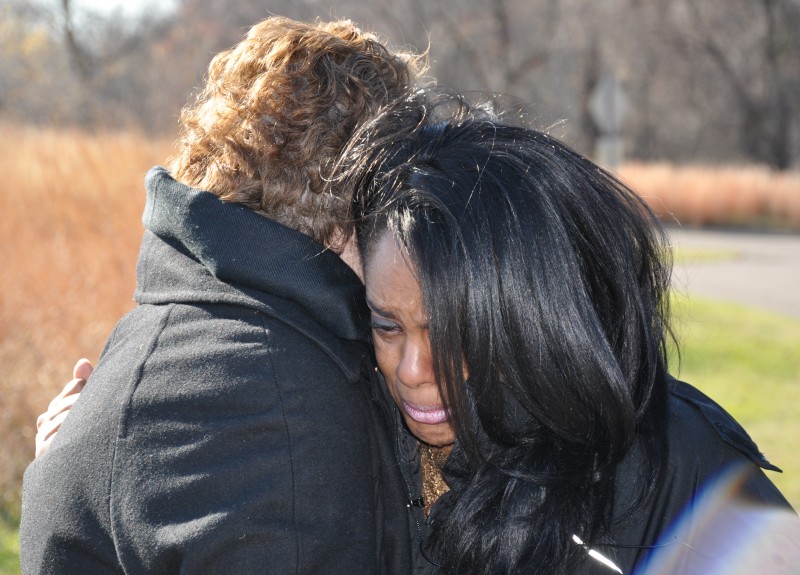
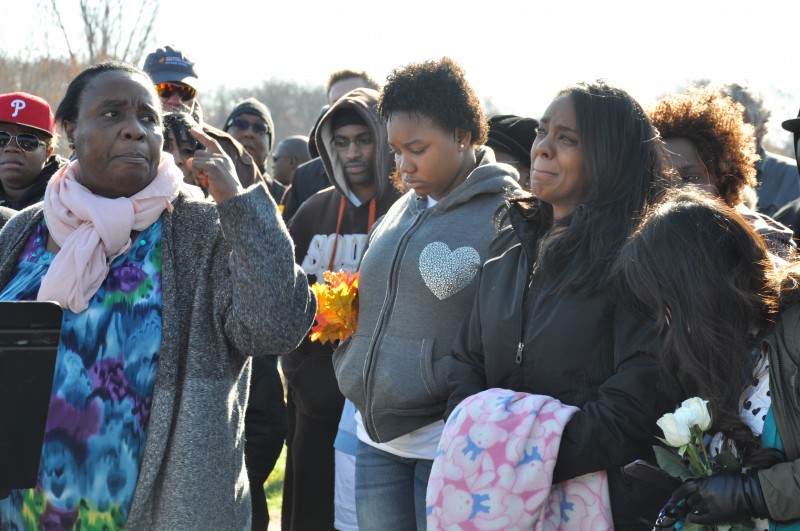
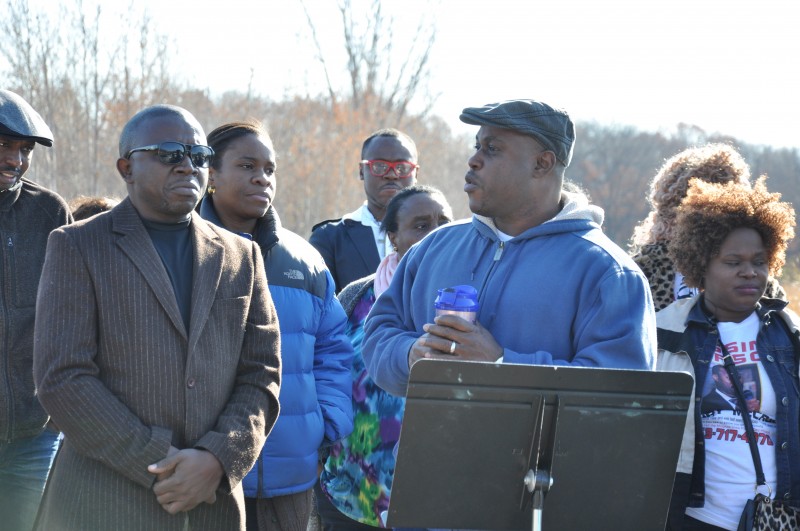
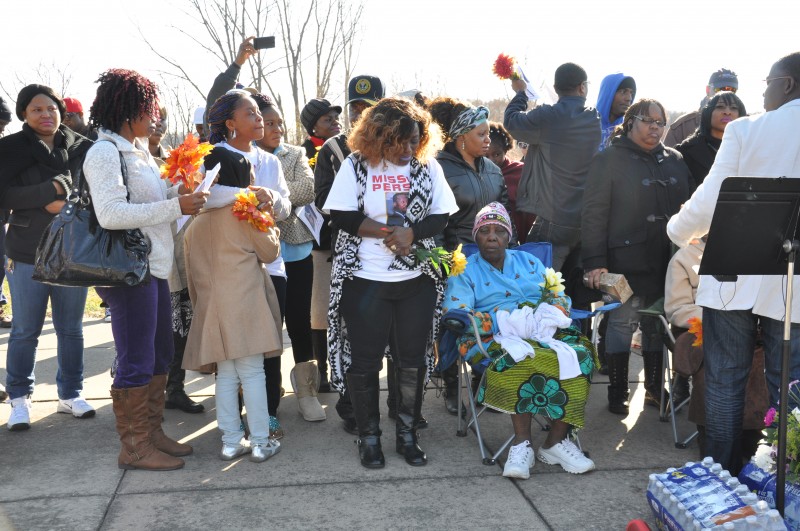
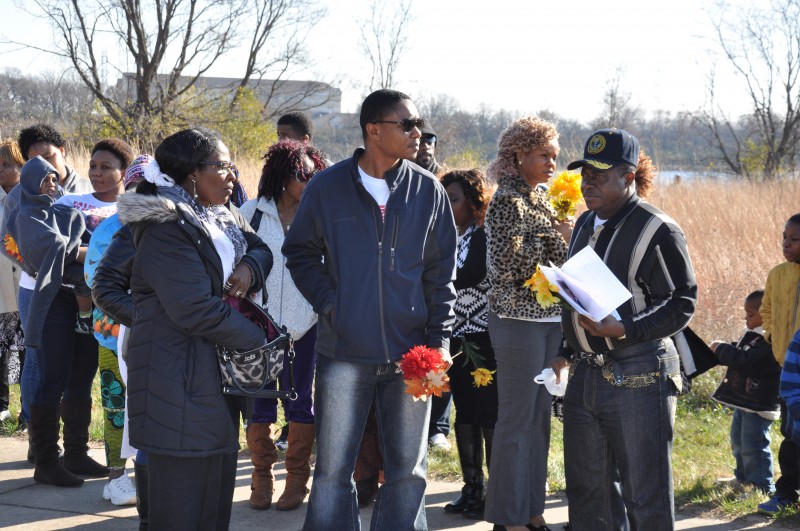
Rush Lake, Minn – More than 100 people attended a vigil for the late 32-year-old Henry McCabe at Rush Lake on Saturday morning, November 7. The atmosphere was somber as they cried, hugged, and consoled his widow, Kareen McCabe. Many had helped in the search for the Minnesota State auditor in Mounds View who went missing after he was dropped off at a Holiday station in Fridley at about 2:05 am on Labor Day, September 7.
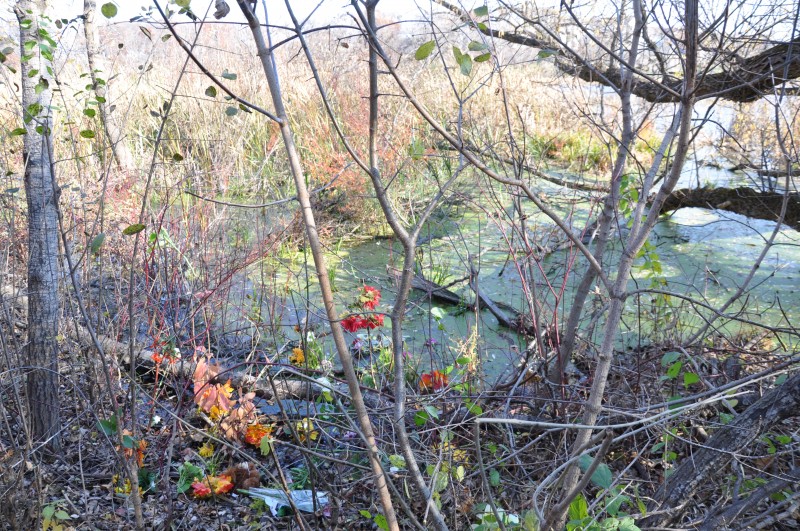
McCabe’s body was found at about 4:20 pm November 2 partially submerged in the water on the east side of Rush Lake in New Brighton. At about 7:20 pm the Minnesota Community Policing Services (MNCPS) was dispatched to the location to observe the recovery of McCabe’s body.
Loving Father
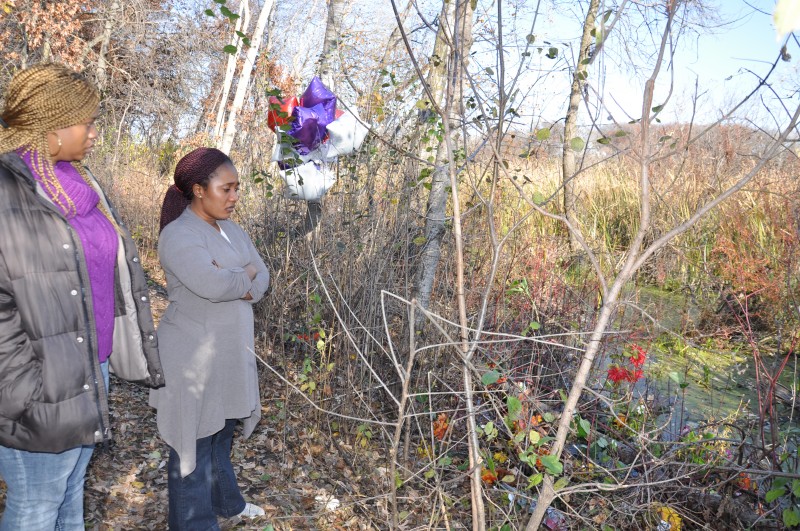
The site where Henry McCabe’s body was reportedly dropped. Photo: The AfricaPaper/Issa A. Mansaray
At the vigil, family, friends and coworkers sang religious songs and prayed for McCabe. Most remembered him as a loving father, jovial, and always willing to help others. But how his body ended up in the lake, about seven miles from where he was dropped off, troubled many in the local African community who don’t want his death to go unaddressed.
“What happened to my son? I want to know, in the name of Jesus,” said Esater Karmoh, McCabe’s mother, on a phone line from Liberia. “I want to tell everybody thank you [for helping in the search]… This is what they did to my son. Somebody killed my son.”
Karmoh told those gathered that she wants to come to Minnesota for the funeral, and community leaders are working on bringing her here. As songs and prayers were offered, many who brought flowers couldn’t hold back their tears. There was moment of silence in his remembrance.
Henry had Friends
“Henry was not an isolated person in the middle of the dark. Henry had a life,” said Pastor Marie Vah (left). Photo: The AfricaPaper/Issa A. Mansaray
“Henry was not an isolated person in the middle of the dark. Henry had a life. Henry had a family, he had children, and he had a mother. Henry had brothers. Henry had friends,” said Pastor Marie Vah. “Before Henry died, he was pleading to someone who dropped him in the dark… Henry paid for you to learn the lesson… When he got off from that car in that morning, he had no idea that he was going to die…
“I want you to go and tell Henry’s friends. We’re not accusing them, but we’re disappointed in them,” said Van, noting that many Liberians didn’t show up to request for justice for McCabe.
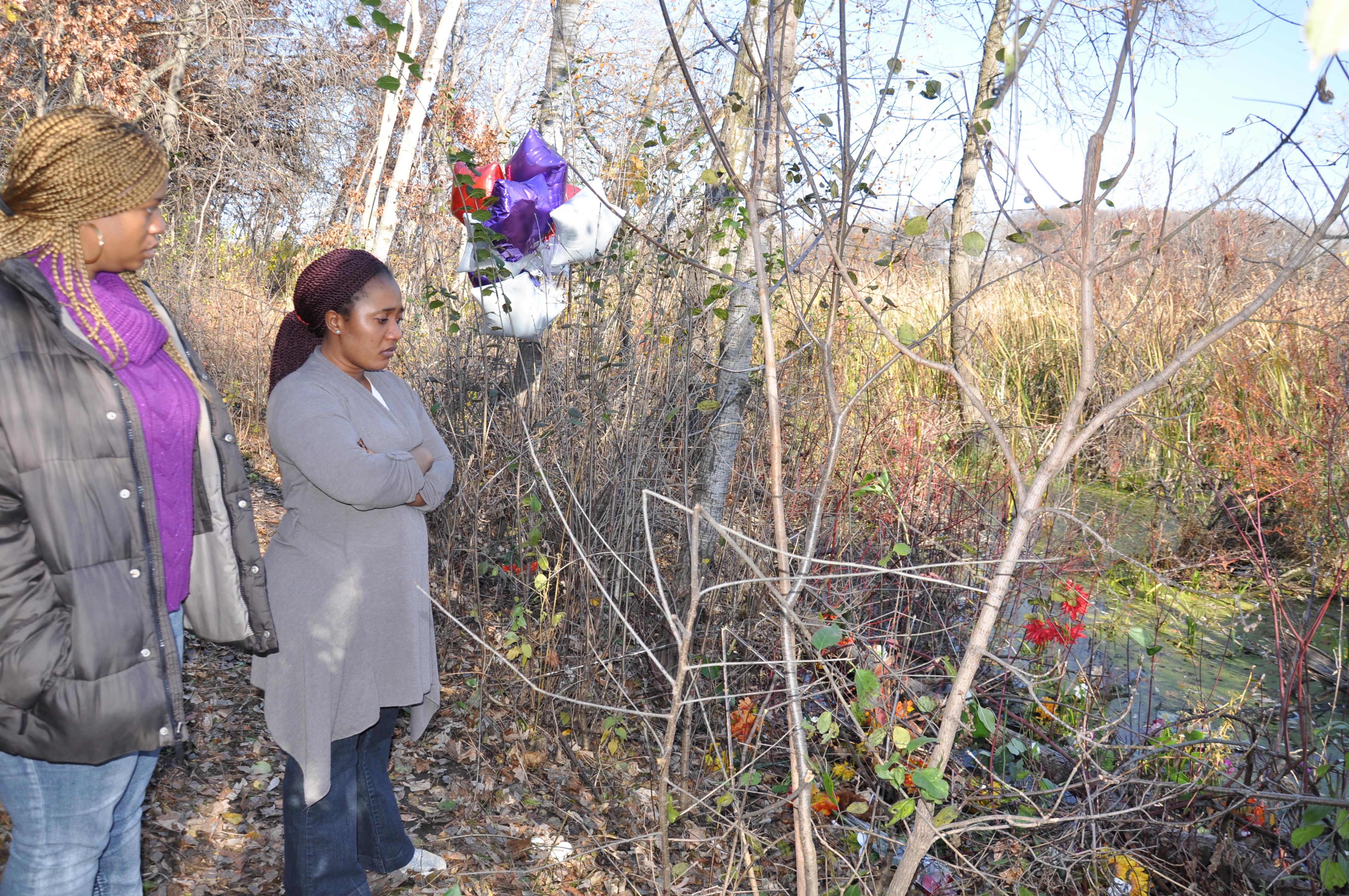
David Kesseh, a family friend, led mourners to the site on Rush Lake where McCabe’s body was reportedly dropped. Many placed flowers there and discussed the distance from where he was last seen to where he was found in the lake 55 days after his disappearance.
Bring Flowers
Mourners placed flowers at the site. Photo: The AfricaPaper/Issa A. Mansaray
“Bring your flowers,” said Seyon Nyanwleh, lead organizer and friend of the McCabe family. “He can’t [have driven] here all by himself” to a location that he pointed out is very isolated and dark after 6 pm. “This is where they found our friend.”
“Someone dropped him in the water,” said a tearful Liberian elder. “Whoever did this to Henry will pay for it.” The mourners agreed in unison.
Pastor Success Roberts led prayer at the site. “I want us to pray. I believe every one of us has specific questions. What happened to our brother, our son, to our father? …Jehovah, give us the grace to go through such a dangerous and painful tragedy.” They left the site singing, “I woke up this morning with my eyes on Henry!”
Keep Praying
“Let’s keep praying that justice will prevail,” said Abubakarr Bundu, newly elected leader of Sierra Leone’s APC-Minnesota Chapter, at the vigil. Photo: The AfricaPaper/Issa A. Mansaray
“At this moment, we’ll leave all options open for the investigation… You can’t expect…a father, a man with no bad record, to just come and find himself back there [in Rush Lake],” said Abubakarr Bundu, newly elected leader of Sierra Leone’s APC-Minnesota Chapter, at the vigil. “Let’s keep praying that justice will prevail. Sierra Leone and Liberia are one. Whatever happens to one country [as represented in Minnesota] will affect the other… We’ll be with you ’til the end [in seeking justice].”
On the morning of November 3, when police informed Kareen McCabe of her husband’s death after confirmation from the Ramsey County Medical Examiner’s Office, family members and friends gathered in their apartment to sympathize and console her. At the Rush Lake vigil, Kareen explained how she felt when the police knocked at her door in Mounds View.
“Until the police walked to my door, I was certain he was alive. I want him to be!” cried Kareen, adding that it will be the first Thanksgiving and Christmas for her two children without their father.
Fridley to Rush Lake
Family members and friends at the vigil. Photo: The AfricaPaper/Issa A. Mansaray
A police statement released on November 3 states, “At this time, the death does not appear to be suspicious, but the cause of death is still undetermined pending toxicology result.” This angered the Liberian community and family members. At the vigil, many asked how McCabe would have walked from a gas station in Fridley to be found dead in the Rush Lake waters in New Brighton.
“He doesn’t appear that he will come here [Rush Lake] on his own. It appears that someone has brought him to this location,” said David Singleton of the MNCPS on Monday afternoon. “Individuals probably would have been aware of this location, or tracked it some type of way. It is not a location that you can get to easily just off the main street… Based on the evidence we have, we believe he was not brought here on his own free will.”
Open Case
Timothy Borbor (with red flower), McCabe’s brother. Photo: The AfricaPaper/Issa A. Mansaray
“This case remains under investigation by the Mounds View Police Department, the New Brighton Police Department and Ramsey County Medical Examiner’s Office,” Chief of Police, Thomas Kinney stated on Monday. He thanked the numerous volunteers who helped in the search for McCabe.
“We [Liberians] have a tradition. No grownup person will walk into that place and kill himself,” said Hon. Jackson George, Liberia’s acting consul general in Minnesota, at the end of the vigil. “From the consulate and embassy’s point of view, we’re not going to close this case until justice is done.”
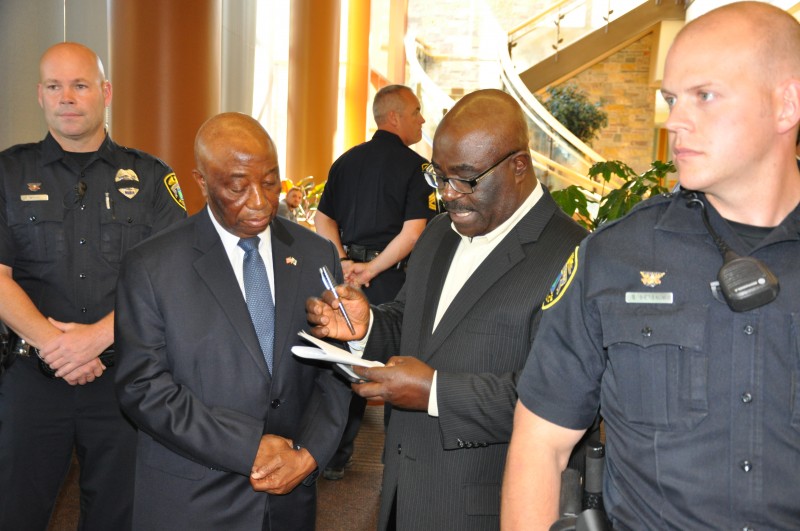
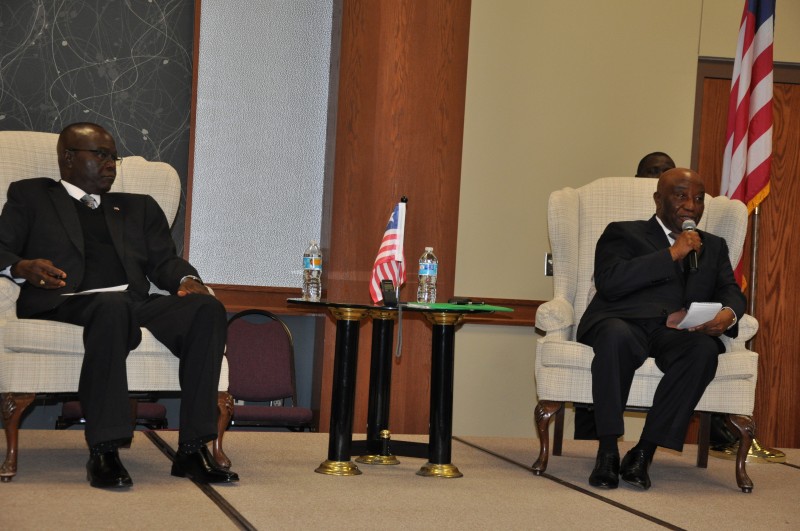
Joseph N. Boakai (left0, and Liberia’s Ambassador to the United States. Hon. Jeremiah Solunteh(right) Photo: Issa A.Mansaray/The AfricaPaper
By Issa A. Mansaray | The AfricaPaper
Brooklyn Center, Minn – Liberia still has problems, and its government is looking for solutions and international help on how to solve the country’s chronic healthcare shortage and needed government services, such as better education, shelters for the homeless and improved road conditions.
Visit
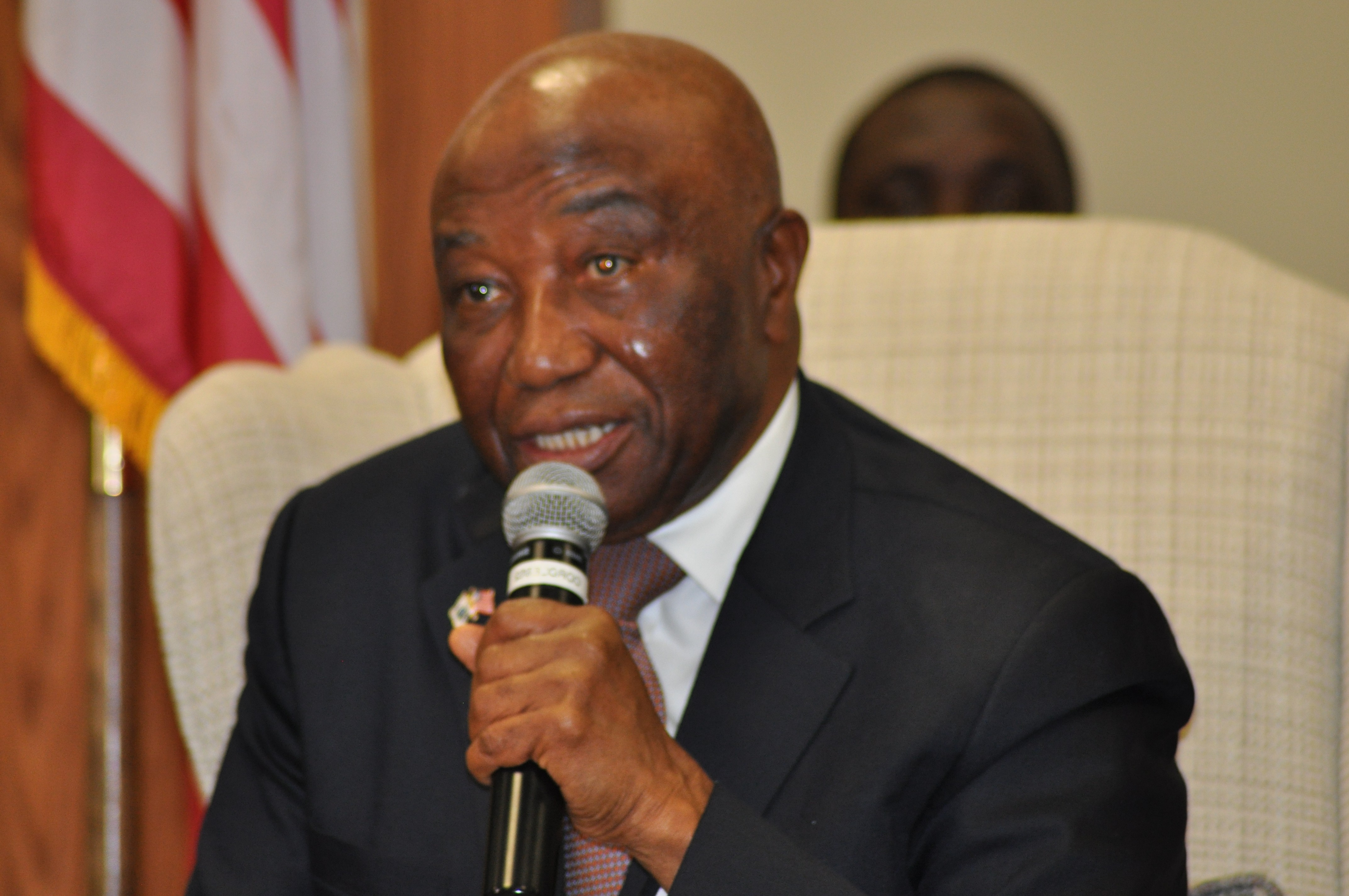
Vice President Joseph N. Boakai’s visit to Minnesota, from October 21-26, included meetings with State officials and the Liberian communities in Brooklyn Park and Brooklyn Center. In an interview with the MSR, Boakai said he came to the Twin Cities to seek help for Liberia and to extended his government’s appreciation to all those who helped during the country’s recent Ebola crisis.
Some waited almost two hours for the vice president to start the town hall meeting scheduled from 6-9 pm on Friday, October 23. When he finally arrived, he was welcomed by Mamadee Sesay, executive director of the Organization of Liberians in Minnesota (OLM), on behalf of the 30,000 Liberians in the state.
Interact
From right, Liberia’s acting consul general in Minnesota Hon. Jackson George. Photo: The AfricaPaper/Issa A. Mansaray
Liberians in Minnesota continue to interact with elected officials from their country, “regardless whether they agree or disagree with them. It keeps our heart [connected] to our country,” Sesay noted, recognizing the OLM board members present and the Liberian leaders representing their various counties in the Twin Cities.
“We have come tonight to interact with our vice president,” Sesay continued, stating that the government “wants to extend its appreciation to those who played a part in helping, and stood by Liberia during the Ebola crisis. He has come to tell you that Liberia is now Ebola free. Also to encourage investors.”
Also in attendance at the town hall meeting was Liberia’s ambassador to the United States Hon. Jeremiah Solunteh, Liberia’s acting consul general in Minnesota Hon. Jackson George, and executives of the Organization of Liberians in Minnesota.
Tell
“It is not all that you read in the media [about Liberia]… We are here to tell you what is back home,” Boakai told his compatriots when he was handed the microphone. “We are happy…to say we are here. Sometimes it is difficult to say thank you,” reminding the audience about other African governments that simply forget to show appreciation to those who helped them in times of national crisis.
Donor
From left, Liberia’s ambassador to the United States Hon. Jeremiah Solunteh, and VP Boakai. Photo: Issa A. Mansaray
Boakai noted that the Liberian community in Minnesota is the largest audience he has seen compared to the other states, such as Texas and Georgia, that he visited prior to spending the week in Minnesota. He then talked about his visit to North Memorial Hospital, which donated an ambulance to the Liberian government on Tuesday.
“It was good that we were there,” Boakai emphasized. Liberia, was enmeshed in the Ebola crisis and the country was caught off guard, unprepared and lacking emergency vehicles such as ambulances.
Press
Like many African countries, the vice president told those at the town hall meeting, in Liberia “there is freedom of the press. You can disagree with the government, there is no offense.” However, “Youth unemployment is still a major challenge,” Boakai said.
Protest
Seyon Nyanwleh, secretary general of the Movement of Liberians Against Corruption (MOLAC) in the U.S. Photo: The AfricaPaper/Issa A. Mansaray
Some Liberians disagree with their vice president, pointing out that after 11 years in power, the government has wasted or mismanaged millions of donor funds marked for development projects in the war-torn and Ebola- ravaged country. “For 11 years, the Ellen-Boakai failed leadership has rendered Liberia the most corrupt country in the world, despite billions of dollars to the Ellen-Boakai government,” said Seyon Nyanwleh, secretary general of the Movement of Liberians Against Corruption (MOLAC) in the U.S.
There is “nothing to show [for all those funds] except, ‘We are trying. We are getting there.’ Is this the vision or exploitation?” asked Nyanwleh, who also represented Concerned Liberians Against Corruption and Impunity. Both groups staged a protest on Sunday.
Setbacks
When the crisis came, the government couldn’t help itself or the people. Ebola created major setbacks from Lofa County in the north of the country to the capital, Monrovia. The government had no system to make money during that period, Boakai noted. Everybody was in a panic in the country during the Ebola breakout.
“Many Liberians started to respond when they saw the seriousness of the outbreak,” said Boakai. People refused to go to the emergency treatment units, and hospitals were sending people away. The international agencies started working with the communities to eradicate Ebola, but the damage was already done to Liberia’s economy and business sector.
Control
“At the end of the day, Ebola was put under control,” said Boakai, adding that “Ebola made a mistake by attacking Liberia… For the first time Liberia introduced cremation… Today Liberia is Ebola free, but thanks to you for stepping in there. Neighboring countries are still not out of the woods yet.”
The medical situation is improving in the country with vaccines for Ebola, but in Guinea and Sierra Leone there are still pockets of outbreaks. Both countries are using Liberia as a research station, with Liberian professionals helping to stop another outbreak despite the improved situation.
Thanks
“As we go around thanking people, asking for help, we thank all our international partners, with many expressing goodwill,” said Boakai. “You are doing very well.”
Liberia now has many mobile phone companies, and more phones are now circulated in the country. The vice president mentioned that some Liberians don’t even know when to call in reference to the time difference between the U.S. and West Africa.
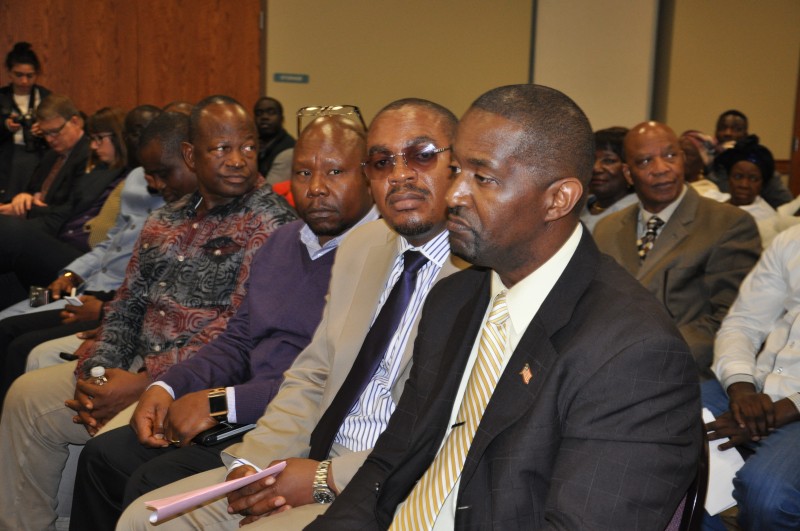
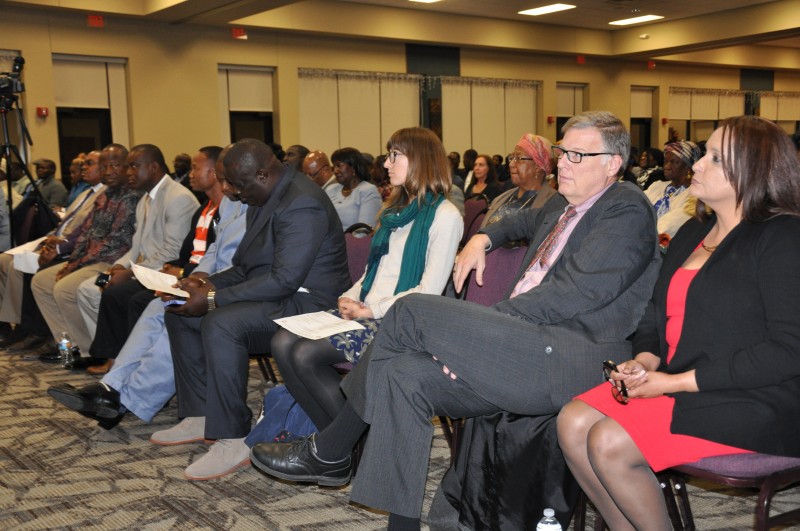
A cross section of attendees at the VP’s Town Hall. Photo: The AfricaPaper/Issa A. Mansaray
He also extended his appreciation to the mayors of Brooklyn Center and Brooklyn Park for donating fire trucks.
“I want to thank you because of your cooperation. We [the Liberian government] want to thank them for the people they are.” Boakai noted the close ties with the U. S., informing the audience that he will join the Liberian Minister of Finance in Washington, D.C. to sign a $2 million aid contract with the U.S. government to develop Liberia after its health crisis.
Call
The Minneapolis-based American Refugee Committee (ARC) received awards on Friday evening from Vice President Boakai. To help Liberia, ARC was also on the ground in Liberia and helped about 68,000 people during the crisis.
“When the call came, we answered,” said Chris Smoot, ARC’s vice president for International Programs, of the organization’s role in Liberia.
The OLM and the newly formed Liberia consulate in Minnesota also gave eight awards through the vice president to individuals for their works in helping Liberia.