Home Blog Page 45

Egyptian military ousts Morsi, suspends constitution


Mideast_Egypt

By , and Sharaf al-Hourani

CAIRO – The Egyptian military removed President Mohamed Morsi from power Wednesday and suspended the constitution in moves it said were aimed at resolving the country’s debilitating political crisis.

In a televised address to the nation after a meeting with a group of civilian political and religious leaders, the head of the powerful armed forces, Gen. Abdel Fatah al-Sissi, said the chief of Egypt’s constitutional court “will assume the presidency” on an interim basis until a new presidential election is held. Sissi said the interim president will have the right to declare laws during the transitional period.

The announcement came as huge crowds of pro- and anti-government protesters massed in the streets of Cairo and the army deployed armored vehicles. In the afternoon, a top adviser to embattled Morsi had declared that a military coup was underway and warned that “considerable bloodshed” could ensue.

“Measures announced by the armed forces’ leadership represents a full coup, categorically rejected by all the free men of our nation,” Morsi tweeted from his official Twitter account Wednesday night following Sissi’s statement.

Liberal opposition leader Mohamed ElBaradei and the heads of Egypt’s Coptic church and highest Islamic institution, al-Azhar, also spoke Wednesday night, following Sissi.

“This will be the beginning of a new start for the 25th of January, that the Egyptian people have initiated to regain their freedom and dignity,” ElBaradei, who had been selected in recent days by other opposition activists to represent them, said in a short address. He referred to the date in 2011 that the Egyptian revolution against longtime autocrat Hosni Mubarak began.

Until its announcement Wednesday night, the Egyptian military had denied that it was staging it a coup. According to the official Middle East News Agency, top commanders were backing Muslim and Christian religious leaders, youth representatives and the head of a liberal opposition alliance in jointly presenting a “roadmap” for a political transition.

[For the latest updates on Egypt, click here.]

Without mentioning Morsi by name in a heavily anticipated eight-minute speech at 9 p.m. Wednesday night, Sissi said the military had responded to the people’s demands in an act of “public service.”

“The armed forces have tried in recent months, both directly and indirectly, to contain the internal situation and to foster national reconciliation between the political powers, including the presidency,” Sissi said. But those efforts had failed, he said. The president, he added, “responded with negativity in the final minutes.”

In a meeting with “religious, political and youth symbols,” the military accepted a “roadmap that will achieve a strong Egyptian society that does not alienate any of its children or strains, and ends this division,” Sissi said.

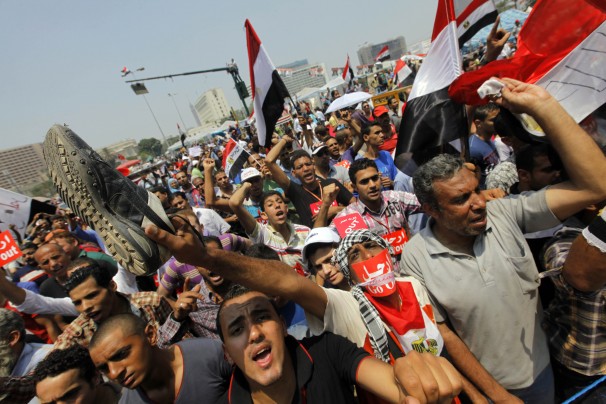
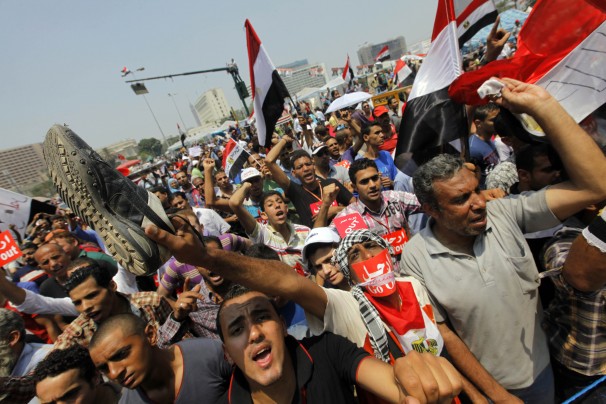
The announcement sparked cheers and celebration among Morsi opponents packed into Cairo’s Tahrir Square.

But in eastern Cairo, supporters of the Muslim Brotherhood, an entrenched Islamist movement that backs Morsi, erupted in angry chants following Sissi’s speech, and stones started flying. The Brotherhood’s two main political channels immediately vanished from the airwaves.

Fearing a further security breakdown, the U.S. Embassy in Cairo on Wednesday ordered the mandatory evacuation of all personnel deemed nonessential.

“We will begin departures immediately, with the expectation that all evacuees will have left for the States by this weekend,” embassy employees were told in an e-mail obtained by The Washington Post.

Some embassy personnel have left the country voluntarily in recent days. Staffers will no longer have a say on whether they can stay.

Ahead of the announcement of the roadmap, dozens of armored vehicles were deployed at eastern Cairo’s Rabaa Adawiya Mosque and outside Cairo University, where hundreds of thousands of Morsi supporters gathered. The president’s supporters and opponents waited all day to see whether Egypt’s army would take action, as promised, once its deadline for Morsi and his opponents to forge a political agreement had expired.

At Rabaa al-Adawiya, Morsi supporters rallied even as army troops set up roadblocks along a main street leading to the mosque. From a stage before the crowd, Muslim Brotherhood officials told the crowd before the military’s announcement that they were calling on all supporters to come out into the streets to join them. One speaker urged the audience to remain peaceful. The army was still with them, he said, and was trying to resist pressure from Morsi’s liberal opposition to carry out a coup.

Earlier, Essam al-Haddad, a top presidential aide, declared Egypt’s predicament “a military coup.” In a post on his office’s official Facebook page at 5:30 p.m. Wednesday, he warned that no coup could succeed without bloodshed.

“In this day and age, no military coup can succeed in the face of sizable popular force without considerable bloodshed,” Haddad wrote. Hundreds of thousands of people have gathered to support the president and Egypt’s pursuit of democracy, the statement continued. “To move them, there will have to be violence.” There would be “considerable bloodshed.”

“As I write these lines I am fully aware that these may be the last lines I get to post on this page,” Haddad wrote. “For the sake of Egypt and for historical accuracy, let’s call what is happening by its real name: Military coup.”

There were unconfirmed reports, meanwhile, that Morsi and the top leader of the Muslim Brotherhood were being banned from travel.

Two top Brotherhood officials reached by phone on Wednesday dismissed rumors that Morsi and his aides had been put under house arrest or barred from leaving the country. “This is not true. This is all empty talk,” said Abdullah Shehata, a prominent Brotherhood member. “Everything is fine.”

The military denied Tuesday that it had any intention of launching a coup against Morsi, 61, who took office June 30, 2012, as Egypt’s first democratically elected president.

Asked whether Wednesday’s events could be considered a coup, an armed forces spokesman said hurriedly shortly before the televised announcement: “No. God willing, no.”

At Cairo University, several thousand Morsi supporters milled about as the sun set Wednesday, and armored vehicles packed with troops pulled up alongside the demonstrators. As they watched the troops arrive, many of the president’s supporters said they were prepared to fight.

“If the army comes out tonight, or tomorrow, the whole country might turn into another Syria,” said Alaa Hossam, a government bureaucrat and Morsi supporter. “It doesn’t mean that we will go fight the liberals,” he added. “It means we will fight against the army.”

Asked whether Morsi is finished, a former member of Egypt’s powerful military council, Gen. Mamdouh Abd al-Haq, said, “God willing.” In a telephone interview Wednesday night, Abd al-Haq declined to comment on what lies ahead for Egypt. But he said, “It is clear what is happening.”

Morsi posted a Facebook message about an hour before the 5 p.m. deadline (11 a.m. Eastern time) calling for a coalition government and an independent committee to propose amendments to the constitution. They were concessions that Morsi’s opponents dismissed as nominal – and far too late.

Celebratory cheers, whistles and fireworks erupted from the thousands of flag-waving, anti-government protesters in Tahrir Square shortly after 5 p.m., as the rumors circulated that the military had placed Morsi and his inner circle under house arrest.

News agencies reported that top military commanders summoned civilian political leaders, including prominent Morsi critics, to an emergency meeting Wednesday. ElBaradei, a former diplomat who once headed the International Atomic Energy Agency, was among those who attended, along with Muslim and Christian religious leaders, the agencies said.

An Egyptian military spokesman, Ahmed Mohamed Ali, said Wednesday night that top military commanders had concluded a meeting with “a number of religious, national and youth symbols,” and that a statement would be issued shortly.

Gamal Abdel Fatah, the head of Egypt’s international media center, denied reports that the military had taken over state media operations at the towering downtown headquarters of Egypt’s state television. “The army is protecting the building, but the situation is normal inside the building,” Fatah said.

In Washington, the Obama administration continued to insist Wednesday that it was not taking sides in the Egyptian crisis. But a State Department official pointedly criticized Morsi for failing to reach out to Egyptian protesters during his televised address to the nation Tuesday night.

“There was an absence of significant specific steps laid out in President Morsi’s speech,” State Department spokeswoman Jennifer Psaki said. “We had said that he must do more to be truly responsive and representative to the justified concerns expressed by the Egyptian people. And unfortunately, that was not a part of what he talked about in his speech.”

Psaki, responding to reporters’ questions about the unrest in Cairo, said the administration could not independently confirm that the Egyptian military was mounting a coup against Morsi, and she declined to criticize the military’s move Wednesday to seal off the presidential palace. “We think that all sides need to engage with each other and need to listen to the voices of the Egyptian people,” Psaki said.

Among those awaiting the military’s statement in Cairo Wednesday afternoon was Mohamed Farouk, a bus driver who stood shoulder to shoulder with other Egyptians in a huge throng at Tahrir Square. “I’m very excited to be here among these crowds as we wait for such a historic moment,” he said. “I trust that the army will force [Morsi] to step down, as the deadline has already passed. And I’m very optimistic about the future of Egypt after Morsi.”

Ahmed el-Shennawy, an accountant, said, “Not since Adam’s time have there been so many people on the street. You see the square is completely full, even in the burning sun.” Shennawy said he had voted for Morsi but rapidly lost faith in the Islamist leader as the year wore on and the nation’s economy slumped. “He thought he was like a god, but he was never accepted by real, free Egyptians,” he said.

“Today: dismissal or resignation” read the bold, red headline in Wednesday’s edition of the state-run al-Ahram newspaper. It was the same font and color that the paper used for its historic front page on February 12, 2011, the day after the ouster of longtime autocrat Hosni Mubarak. That headline stated: “The people toppled the regime.”

Officials with the Muslim Brotherhood, which backs Morsi, said they refused an invitation Wednesday afternoon to meet with ElBaradei and the Tamarod group, which helped organize the massive demonstrations that spurred the military to say it would act. Instead, top Brotherhood officials took to a stage before thousands of the president’s supporters in eastern Cairo, striking angry and defiant tones.

Burnt cars and motorcycles, shards of twisted metal, broken glass and shell casings littered the streets around Cairo University on Wednesday, where supporters and opponents of Morsi had clashed overnight, leaving at least 18 people dead and hundreds injured, according to state television.

“We swear to God that we will sacrifice even our blood for Egypt and its people, to defend them against any terrorist, radical or fool,” the army said in a message posted to its Facebook page overnight.

On Wednesday afternoon, Egypt’s Interior Ministry posted a Facebook message saying police and state security forces were committed “to the safety of the Egyptian people, side by side with the armed forces.”

Morsi delivered a fiery televised speech Tuesday night that made it clear he would not cede power. Waving his hands and shaking his fists, he swore that he was committed to the process that led to the historic elections last year and said that any attempts to subvert the constitution were “unacceptable.”

Morsi acknowledged that he had made mistakes during his year in office as Egypt’s first democratically elected president. But he appealed to Egyptians to give him more time to deal with the country’s problems.

The speech represented a direct challenge to the nation’s military and a signal that efforts to mediate the crisis have so far failed. Earlier on Tuesday, Morsi met with his defense minister, Abdel Fatah al-Sissi, in an apparent bid to reach an accord.

Although Sissi was appointed by Morsi, the general’s announcement Monday afternoon that he would give the president and his opponents 48 hours to resolve their differences before the military implemented its own “road map” for the country was seen here as a direct threat to Morsi’s hold on power.

Morsi’s backers in the Islamist Muslim Brotherhood described the statement as a pledge for “a coup” and vowed that they would not go quietly if their president were forced out.

As night fell Tuesday, bursts of automatic gunfire crackled along the Nile as the president’s supporters and opponents came to blows in the working-class neighborhood of Kit Kat in central Cairo and near the university, where the president’s supporters had gathered.

On Wednesday, the two camps staged rival protests in neighborhoods across the city, awaiting the countdown to the military’s deadline.

By afternoon, fewer than 200 Morsi supporters milled about near the main gate of Cairo University, where thousands had gathered the day before. At another gate a few blocks away, opposition protesters gathered to block Islamists from approaching the area.

“They have beards! They have beards! There are beards inside!” shouted one of those anti-government demonstrators, Mohamed Mustafa, as a minibus approached the gate, packed with more than a dozen Brotherhood supporters.

Mustafa, a lawyer, and his friends, rushed the bus and forced the passengers to flee, leaving behind pro-Morsi banners, several gallons of kerosene and cloth sacks of marbles, stones, nails and screws, which the activists concluded would have been used in slingshots.

Seven of Morsi’s cabinet ministers have resigned in the past two days, including the foreign minister on Tuesday, according to local news media reports. A governor, a military adviser and the cabinet’s spokesman also quit their posts. The ultraconservative Salafist Nour party, which won the second-largest bloc in parliament, distanced itself from Morsi on Tuesday, saying that it supported the protesters’ calls for early elections.

Egyptian police officers have said they will no longer protect the president or his Muslim Brotherhood backers, and protesters have pressed in closer to the palace where Morsi is thought to be staying.

The demonstrations that have raged for nearly a week have been tarnished by a wave of sexual assaults and rape, Human Rights Watch reported Wednesday, saying that at least 91 women had been attacked in just four days of protests.

One of the victims required surgery “after being raped with a ‘sharp object,'” the rights group said in a statement, citing reports from the Egyptian activist group, Operation Anti-Sexual Harassment. The group runs an emergency hotline and rescue efforts for assault victims in Tahrir Square.

Egypt’s government and police force have long neglected what Human Rights Watch calls an “epidemic” of sexual violence in Egypt. Attacks on women, particularly at protests, have been on the rise in recent months.

Analysts say that if Morsi is sidelined – or forced out entirely – his Islamist backers will probably have two options: They either agree to participate in whatever political role the military allows them to occupy, or they go on the offensive.

“Rarely in history do elected presidents leave power without a lot of bloodshed,” said Joshua Stacher, an Egypt expert and a political scientist at Kent State University in Ohio. “The Brotherhood is viewing what happened yesterday as an existential threat.”

Egypt’s Islamists, empowered by Mubarak’s fall and the country’s young democracy, have no intention of going back to the prisons and the torture chambers that they suffered at the hands of previous military regimes, Stacher said.

“So they’re going to fight their way out, because they believe they have an electoral mandate, which they do,” he said.

Amro Hassan in Cairo and Ernesto Londono and Joby Warrick in Washington contributed to this report.

The AfricaPaper: Our sincere thanks to The Washington Post’s reporters and correspondent in Egypt for this Breaking News.
APC North America Chairman Visits Minnesota

0


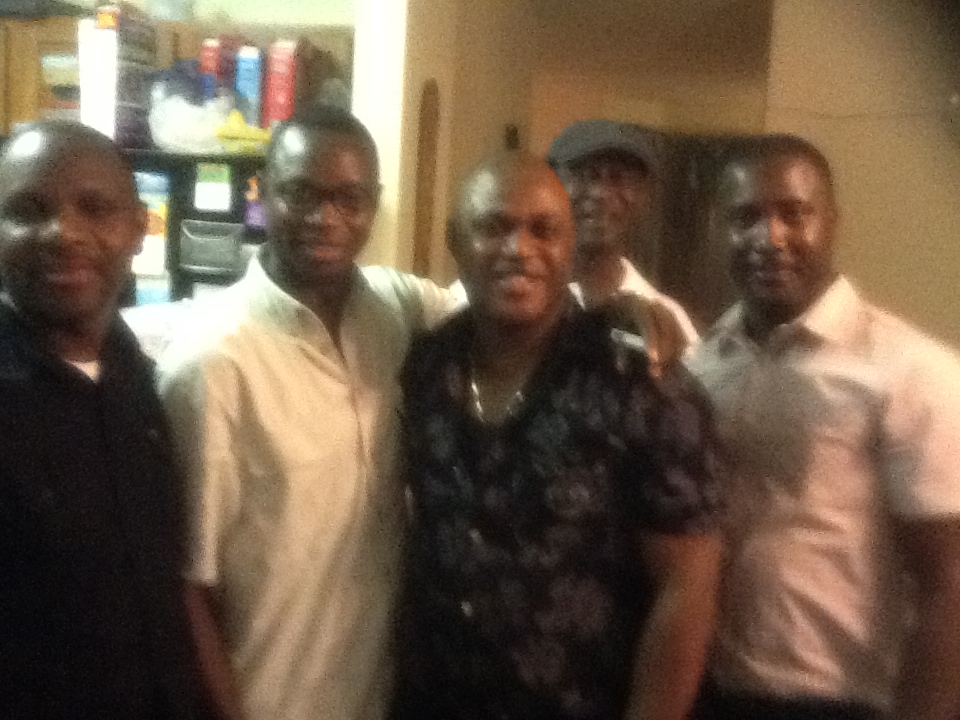
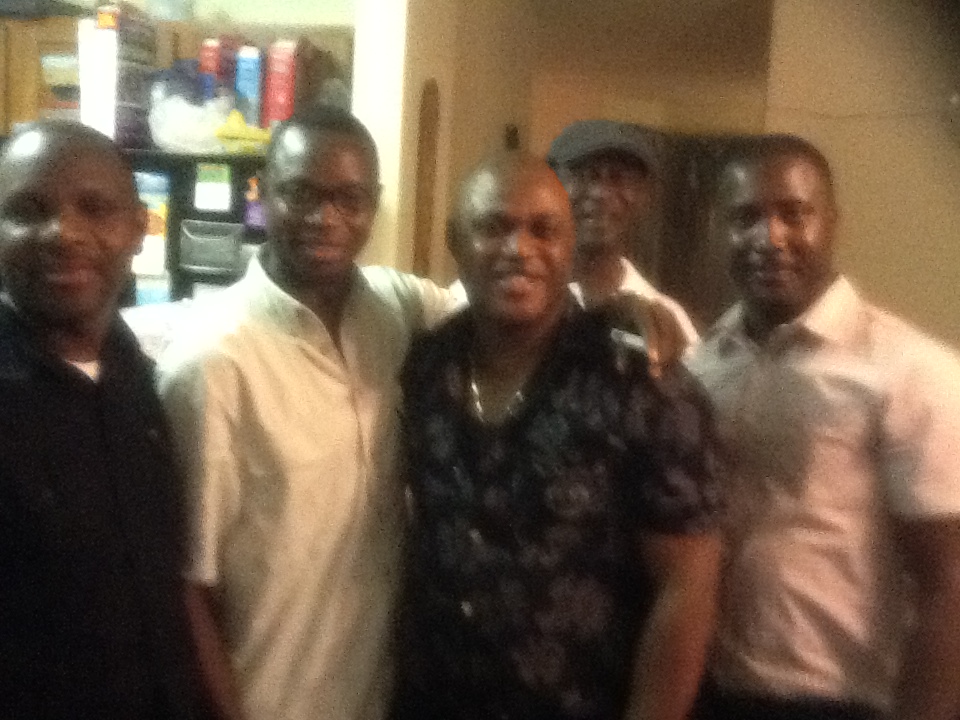
Osman Kamara, former Chief of staff;  Hon Aziz Turay, Chairman APC NA branch; Abubakarr Bundu, Chairman Bye- laws Committee and Chief Electoral Commissioner; Aruna Wurie, MN APC member; Joshua Murray, Candidate APC MN Chapter Chairmanship. Photo: The AfricaPaper
From L to R – Osman Kamara, former Chief of staff; Hon Aziz Turay, Chairman APC NA branch; Abubakarr Bundu, Chairman Bye- laws Committee and Chief Electoral Commissioner; Aruna Wurie, MN APC member; Joshua Murray, Candidate APC MN Chapter Chairmanship. Photo: The AfricaPaper

The AfricaPaper | Minnesota

Brooklyn Park – After his new appointment as Special Policy Analyst on Security Matters in Sierra Leone, Al-Aziz Turay, Chairman of the All Peoples Congress (APC) in North America made a brief visit to Minnesota late Saturday evening, June 22. Turay was received by members of the APC Chapter in the Twin Cities at a private gathering in Brooklyn Park.

“This appointment did not come because of my hard work or smartness…,” Turay noted in a message to APC members. “It came as a result of your support in every different ways.”

Turay in his message said “Before I leave for Mama Salone [Krio for Sierra Leone], I will randomly choose few states to visit and say thanks for their support in my leadership and APC-NA in general.”

This is what brought Turay to Minnesota, an APC member informed The AfricaPaper. Turay said it is germane to work together with all party members to move Sierra Leone ahead. Sometimes, he said, even with individuals trying to discourage their fellow citizens from contributing to the country’s political development.

Though the APC Minnesota Chapter has been troubled by infighting and disappearing finances from its TCF Bank that are still unaccounted for, members were delighted by Turay’s visit to save the Chapter from collapsing.

Mr. Turay inaugurated the first APC Chapter chairman Alpha Sorie Kargbo and his executive in 2010, and reminded Kargbo and his executive team to serve the party, Sierra Leoneans, and the country that year.

Mr. Turay will work with the Ministry of Defense and Internal Affairs in Sierra Leone, a member told The AfricaPaper.

“As I go home to accept this appointment, I count on your prayers, ideas, information, advice, assistance and above all, your love,” noted Turay, who promised to revisit Minnesota before heading to Sierra Leone. TAP

LANDSLIDE KILLED TWO BOYS

0


DSC_0702
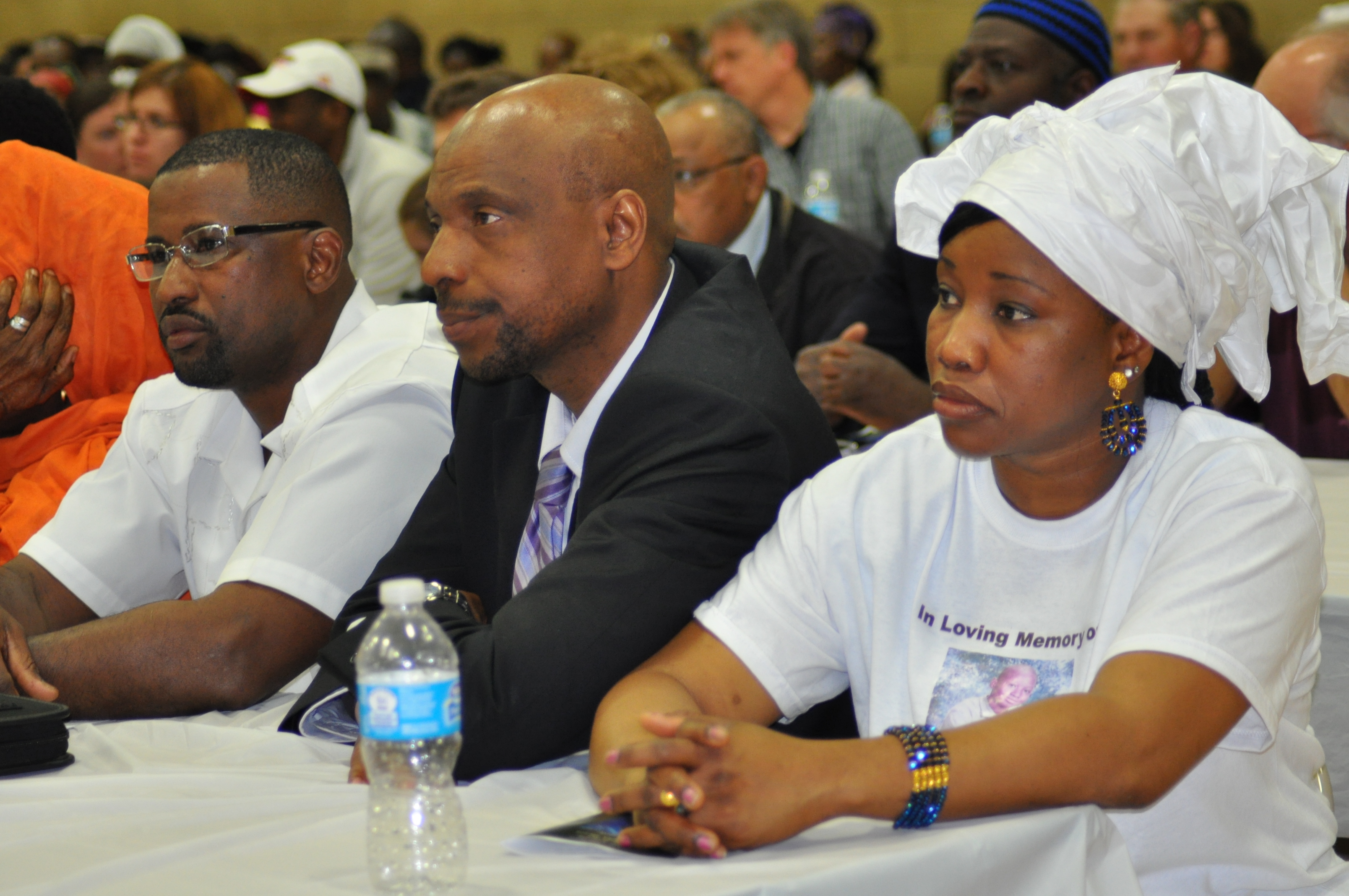
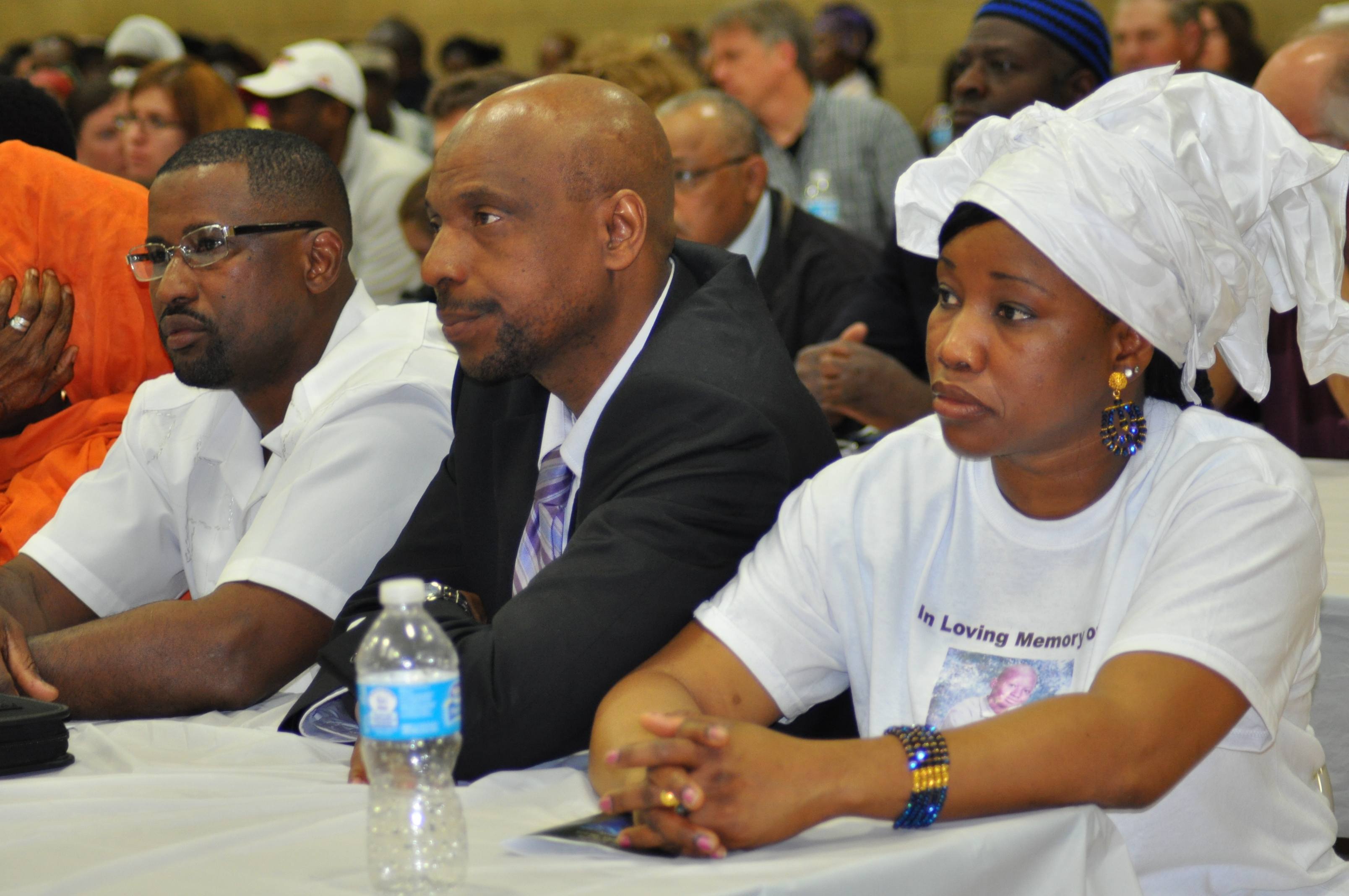
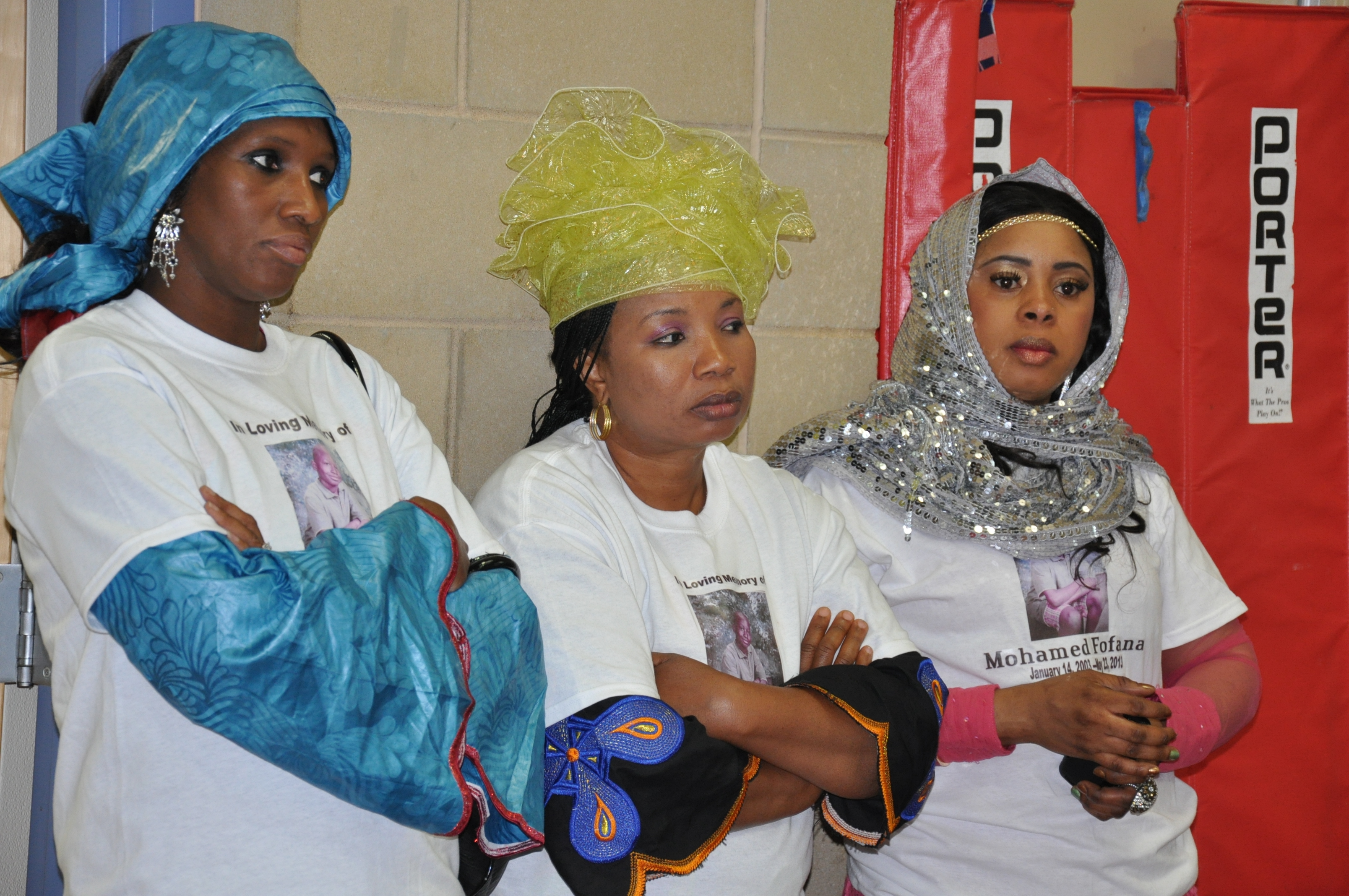
Relatives mourn Zack Mohamed Fofana, 10. Photo: (c) The AfricaPaper

DSC_0716

DSC_0714
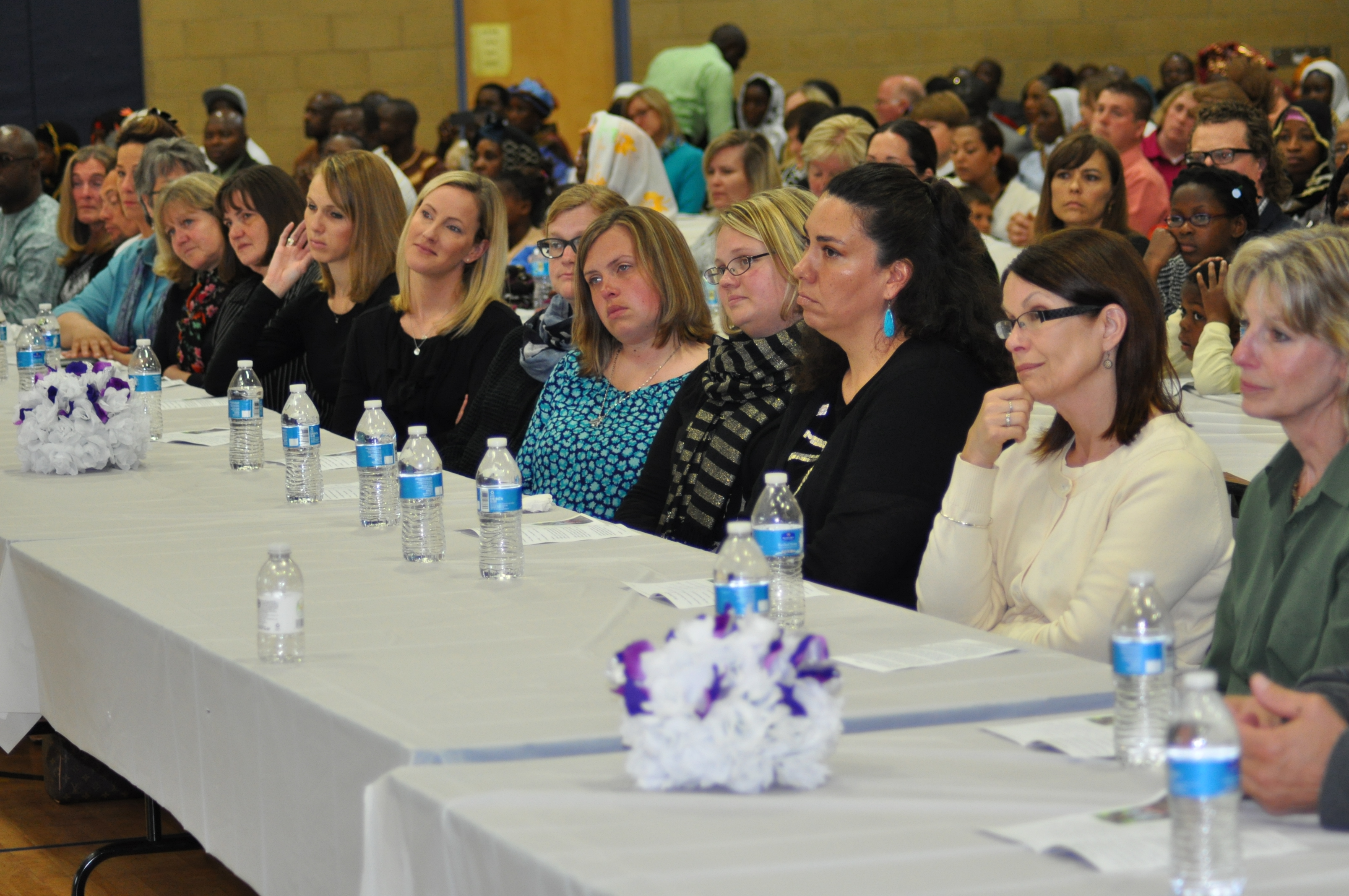
Representatives Peter Hobart Elementary School. Photo: (c) The AfricaPaper


TRAGEDY IN LILYDALE REGIONAL PARK

The AfricaPaper | USA

Minnesota – As officials search for answers and investigation into the landslide

that killed two fourth-grade boys in Lilydale Regional Park, St. Paul, the African community in

Minnesota mourns the death of Zack Mohamed Fofana, 10, and his classmate Haysem Sani, 9.

The AfricaPaper was there and will bring more reports later.

Kenyan Chief Attorney Locks Horns With ICC

0


By Robert Wanjala | Kenya

As Kenya’s president and two other suspects prepare to face trial at the International Criminal Court in The Hague, Attorney General Githu Muigai has disputed claims by prosecutors that his country is not cooperating as much as it should.

Debate

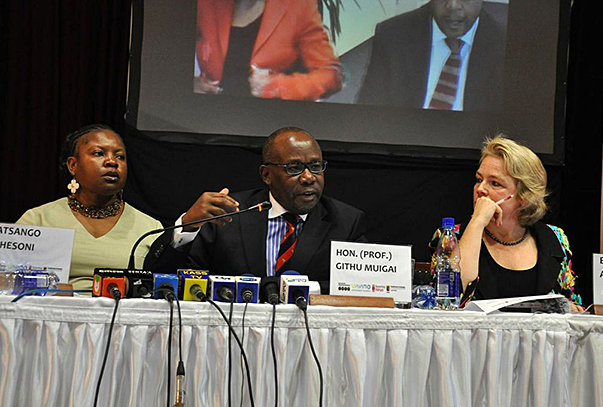
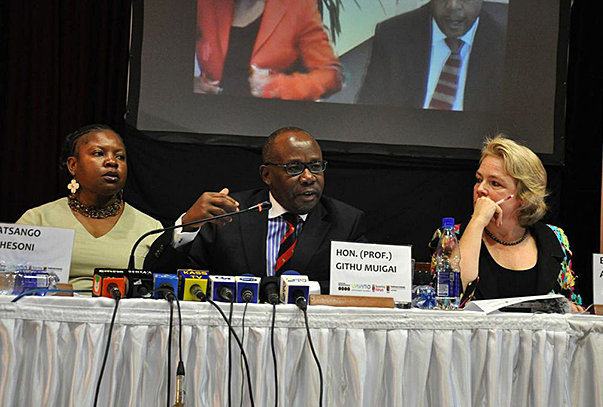
The heated exchange took place during a public debate held in Nairobi on May 24. Entitled The ICC in Kenya: a blessing or a curse?, the event was the third in a series of live debates hosted by IWPR, Wayamo and Strathmore University on the ICC cases and broader questions of justice and accountability.

Muigai accused prosecutors of being “outright unprofessional” and dismissed allegations made by ICC Prosecutor Fatou Bensouda that the Kenyan government had not sufficiently cooperated with her office’s investigations.

“Everything that the prosecutor is entitled to under the law, we have given,” Muigai said. “Everything she has requested which our reading of the law tells us she is not entitled to without a court order, we have asked [for] that to go to court.”

According to Muigai, his office has complied with 35 of the 37 requests lodged by the prosecution since 2010, when it started investigating the violence that engulfed Kenya in 2007-08.

“I do not know of any other country in the world that has assisted this court in the manner that we have assisted it,” he said.

Post-Election

Chaired by Wayamo Foundation director Bettina Ambach, the panel discussion at Strathmore University was attended by Attorney General Muigai; the executive director of the Kenya Human Rights Commission, Atsango Chesoni; the head of Change Associates Trust, Ngunjiri Wambugu; Human Rights Watch’s senior international justice counsel, Elizabeth Evenson; Njonjo Mue of the International Centre for Transitional Justice in Kenya; and Wilfred Nderitu, who is legal representative of the victims of the post-election violence at the ICC.

The ICC’s Office of the Prosecutor was represented by Phakiso Mochochoko, head of its jurisdiction, complementarity and cooperation division, and by its adviser on international cooperation, Shamiso Mbizvo. Both participated via a video link from The Hague.

The prosecutor’s office has repeatedly accused the Kenyan government of failing to cooperate fully with its investigations. This prompted Muigai to write to ICC judges on April 8 insisting that this was not the case and that the Kenyan state should given a chance for its views to be heard.

Kenya’s new president, Uhuru Kenyatta, and his deputy, William Ruto, are charged with crimes against humanity for orchestrating the violence that erupted after a disputed presidential election in December 2007. The bloodshed claimed more than 1,100 lives and forced an estimated 650,000 others to flee their homes.

Kenyatta and Ruto are charged in two separate cases, reflecting the fact that they were part of opposing political groupings at the time of the conflict. Radio journalist Joshua Arap Sang is charged alongside Ruto.

Documents

In a response to Muigai’s submission on May 10, prosecutors outlined to judges how they had encountered “serious difficulties” in getting the cooperation they sought from the Kenyan authorities. Bensouda stated that her office had yet to get its hands on “the most critical documents” for its case.

Among their outstanding requests, prosecutors are want to secure the defendants’ financial records and interview ten police officers about the force’s role in the violence.

“When talking of cooperation, it must not be about the public pronouncements,” Mochochoko told the panel discussion, after Muigai said the Kenyan authorities had welcomed prosecutors into the country and facilitated their work.

“It must be tangible, it must be concrete and must be timely. The prosecution will continue pushing the government for assistance on the outstanding issues,” Mochochoko said.

Stand-off

The legal representative of victims in the Kenyan case, Wilfred Nderitu, called for the stand-off between ICC prosecutors and the Kenyan government to be resolved so that the trials could get under way quickly.

The debate took place less than three months after the March 4 presidential election in which Kenyatta allied himself with his former enemy Ruto to form a winning team. During campaigning, they succeeded in depicting the vote as a referendum on the ICC in Kenya, and the cases against them as an indictment of whole communities rather than of individuals.

Since the election, President Kenyatta and his deputy Ruto have pledged to continue cooperating with the court. Ruto attended a hearing in The Hague on May 14.

Despite this, questions remain about whether they and the Kenyan government will be as cooperative as before.

On May 2, Kenya’s ambassador to the United Nations, Macharia Kamau, wrote to the Security Council asking it to terminate both cases. The UN Security Council has powers to trigger or temporarily suspend an investigation, but not to close a case. Both the attorney general and Ruto have distanced themselves from the request.

Meanwhile, foreign ministers gathered for an African Union summit in the Ethiopian capital Addis Ababa on May 24 tabled a proposal that the ICC should refer the two cases back to Kenya’s domestic judiciary. On May 27, the proposal was endorsed by African Union heads of state.

During the panel discussion, Elizabeth Evenson of Human Rights Watch said it was important that all the states that had signed up to the ICC demonstrated a commitment to support it.

“It is very important that states parties are out there, quite publicly affirming the importance of the mission of the court and its independence,” she said. “The public needs to see the government not only committed on the letter but also the spirit of [the ICC’s founding treaty] the Rome Statute.”

Comply

Other panelists also urged the Kenyan authorities to comply with their obligations under national and international legislation. Kenya is a member of the ICC and has introduced its own International Crimes Act, a domestic version of the Rome Statute.

“There is no way out of this issue of ICC because it has become part of Kenya’s legal system,” Chesoni of the Kenya Human Rights Commission told the seminar.

The debate moved onto the recent election and its potential impact on ICC proceedings. Panelists and members of the audience discussed whether the election victory of Kenyatta and Ruto – both ICC suspects, and both representing previously opposed ethnic communities – was a sign that the country had moved on from the bloodshed of 2007-08.

The election outcome has led some to argue that since reconciliation is obviously happening on the ground, the ICC process is no longer needed. Panelists discussed this erosion of support for the ICC as an institution in Kenya.

“One of the negative effects of this election is that we have a situation where justice was sacrificed on the altar of democracy,” Wambugu said. “I think we just have to figure out how to move on from there.”

He went on to question whether Kenyans still saw the court as a credible force.

Credibility

“If someone can use a case against him at the international court to build enough profile to win an election, then we must accept that there is a credibility issue,” Wambugi said. “You could have indictments over your head at the international court, the international community talking about it, you can have political satirists – and still run and win an election. There is a problem.”

Other members of the panel warned against taking it on trust that the reconciliation process was over and everyone had put the past behind them.

“The country is still witnessing politically-inclined killings in various parts of the country,” said Mue of the International Centre for Transitional Justice. “Kenyans have not moved on.”

Chesoni said it would be “a very dangerous narrative” to assert that all those who suffered in 2007-08 had voted for Kenyatta or Ruto this March, and that they were therefore against the ICC trials.

Chesoni questioned whether Kenya could move forward peacefully without a thorough justice process taking place, irrespective of political developments.

“Any society in the world that shirks its responsibility to follow the judicial system in pursuing criminal matters endangers the entire society,” she said.

“We do need to ask ourselves as a society: when we say we believe in the rule of law, do we mean we only believe in it as long as it is not [directed against] our tribes-people?”

She concluded, “The ICC is just one plank. There are so many other things that we need to do. It is an inadequate measure, but it is the measure that we have.”


The AfricaPaper: This article was produced as part of a media development programme implemented by IWPR and Wayamo Communication Foundation.

About: Robert Wanjala is a freelance reporter in Eldoret in the Rift Valley region of Kenya.

AQIM: MAGHREB to MALI, and BACK

0


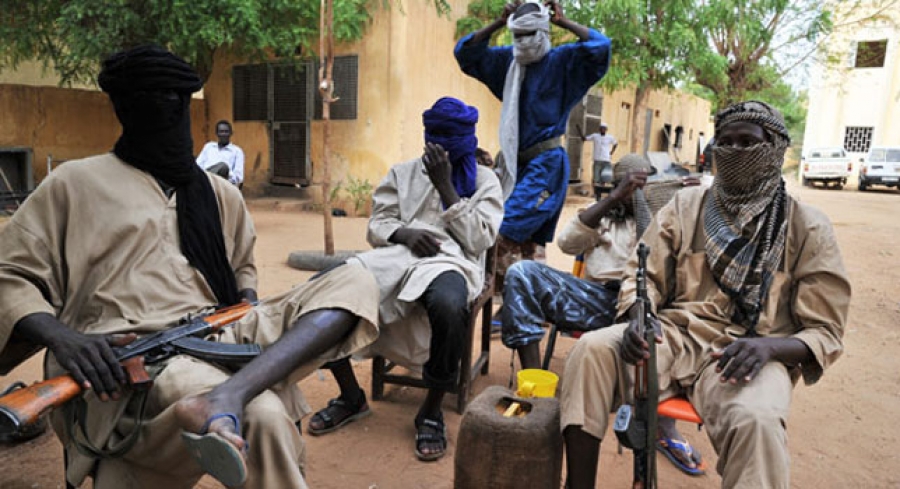
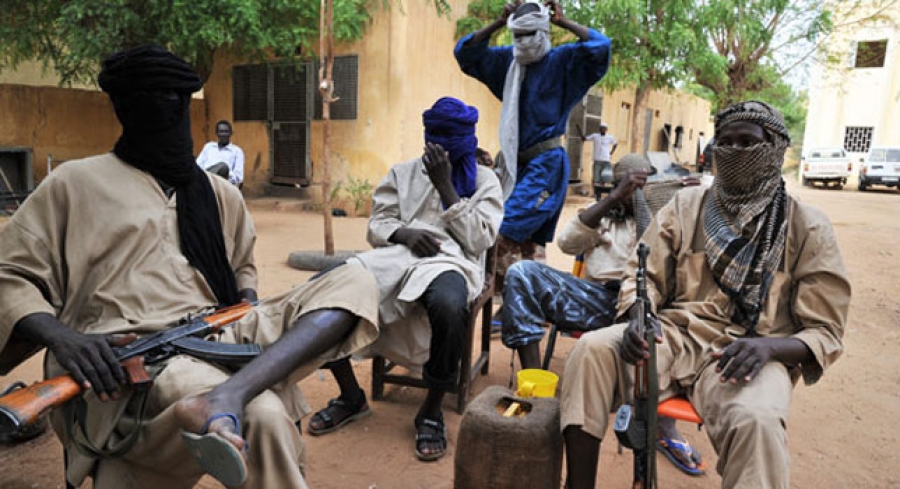
AQIM-Fighters-in-Algeria
AQIM Fighters in Algeria

By Mohammad-Mahmoud Ould Mohamedou | Geneva

The crisis in Mali highlights the distinctive character and trajectory of Al-Qaida in the Islamic Maghreb. A group forged in reactivity and ambiguity, marked by fluid leadership and unarticulated doctrine, finds itself at a crossroads, says Mohammad-Mahmoud Ould Mohamedou.

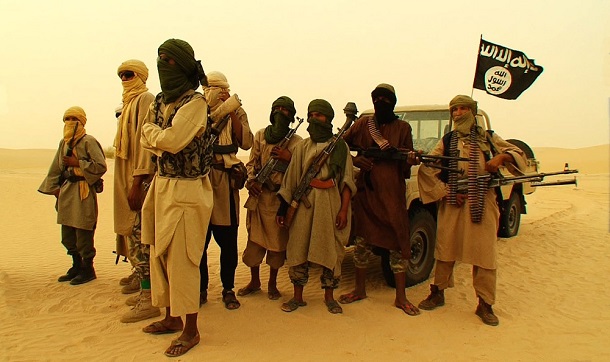
The consequences of France’s armed intervention in Mali in January 2013 are unfolding amid a fluid reality on the ground. As French troops engage in “hot pursuit” forays against operatives of Al-Qaida in the Islamic Maghreb (AQIM), many analysts and media outlets find it tempting to promote the narrative that a successful campaign is underway marked by a series of tactical victories. But a deeper process is underway in the wake of Operation Serval: a transformation of AQIM, the transnational non-state armed group which had been at the forefront of deteriorating security in the Sahel since the mid-to-late 2000s.

In truth, AQIM’s ongoing mutation preceded the intervention. It has for some years been implementing a planned expansion in the Sahel, and any losses it is currently experiencing are arguably due to a combination of mismanagement and overstretch in this process (partly reflecting AQIM’s original anomalous structure, with a leadership in Algeria and a soldiery in Mali). The result now is that, for at least three reasons, the group now faces a limited set of strategic options which might well prefigure a return to its original north African mould.

A Shadowy Evolution

The first factor is that whereas terrorism lives and dies according to a logic of being “ahead of its foe” – and thus forcing the state ever to be playing catch-up – AQIM has consistently been reactive instead of proactive. This is illustrated in five episodes:

* In 1998, the movement was born in Algeria as the Salafist Group for Predication and Combat (GSPC), an offshoot of the Armed Islamist Group (GIA), itself derivative of several local groups (see “The Many Faces of Al Qaeda in the Islamic Maghreb,” GCSP, 2011). Algeria’s brutal civil war more or less coming to an end that year, by way of a mixture of violence fatigue and amnesties, which stripped the GSPC of its initial momentum and then left it conspicuously silent in the first five years of its existence. Indeed, a surprisingly neglected feature of this organisation is how little is known about its activities in 1998-2003 (besides minor hit-and-run racketeering operations near Jijel and Algiers).

* AQIM then moves opportunistically in the post-11 September context to seek and acquire an al-Qaida identity in September 2006, thus capitalising on the fear Osama bin Laden’s group is inspiring worldwide

* It turns subsequently to the Sahel, essentially as a “plan B”, though its attempts in 2007 to shake north Africa (through a series of ambitious attacks, notably in Algiers in April and December of that year) fail

* The group then finds an unforeseen opportunity to increase its military capacity when Libya’s leader Muammar Gaddafi opened arms-caches in an ill-fated attempt to resist the revolution initiated in February 2011

* AQIM then in effect “bandwagons” on the armed rebellion launched in January 2012 by a Tuareg group, the Movement for the National Liberation of the Azawad (MNLA), to conquer the northern part of Mali.

In the same way as the spoils of the “Arab spring” were captured by the Islamists, the rout of the Malian army at the hands of the MNLA was hijacked by AQIM. But AQIM departed from the example of “Al-Qaida al-oum) (the “mother Al-Qaida”) in 2001, when the latter opted for “evanescence” when it realised that direct opposition to United States and British troops would be self-destructive. AQIM, instead of this deterritorialising option, haphazardly improvised a campaign to take control of major Malian cities.

The flaw in this approach was that a territorialising definition precisely rendered AQIM “pin-pointable”. Western drones now had coordinates which could be and in time were entered. This problem was reinforced by dissonance with the MNLA, a century-old Tuareg separatist narrative, and the local population’s alienation on account of human-rights violations perpetrated in the name of a theatrical Islamism. As a result, the attempted push towards Bamako in early January 2013 was even more ill-fated, as it provided the French with a “clear and present danger” argument to land and hit.

An Absent Story

al-qaeda recruits African-Arab countries

The second factor in the evolving mutation of AQIM is what can be termed the absence of a cogent founding narrative. What precisely AQIM is after has never been satisfactorily answered by its multiple and successive leaders. In the heyday of al-Qaida, the group’s casus belli was regularly rehearsed by Osama bin Laden and Ayman al-Zawahiri; but AQIM has moved from a domestic Algerian issue to a regional Sahelian problem to an African continental menace to ultimately a “threat to international peace and security” without explicitly proposing an intelligible agenda.

Indeed, western powers’ acceptance at face value of the group’s religious phraseology and its grandstanding on France’s presence in Afghanistan has given credence to AQIM’s fuzzy notions; without that, the lack of a meaningful narrative would have been exposed. In its absence, AQIM has become known in the last decade mostly for a “day in, day out” political economy of terrorism whereby it has abducted some seventy-two individuals and substantially invested in the region’s drug-trafficking routes (see Franklin Charles Graham, “Abductions, Kidnappings and Killings in the Sahel and the Sahara“, Review of African Political Economy, 38 /130 [December 2011], and Wolfram Lacher, “Organised Crime and Conflict in the Sahel-Sahara Region” [Carnegie Papers, September 2012]).

A Shifting Leadership

The third factor is leadership. Whereas most terrorist organisations feature one or two key leaders who leave an imprint of sorts on the “DNA” of the group, AQIM is again a curiosity in the way a series of shadowy leaders hold sway for a short time (Hassan Hattab, Nabil Sahraoui, Abderrazak “El Para” and Abdelmalek Droukdel); in the way it fields too many high-profile regional leaders (Abdelhamid Abou Zaid, Mokhtar Belmokhtar, Abdelkrim “the Tuareg”); and, as noted, in the way its leadership is based in one country while its soldiery is mostly in another.

AQIM was able to benefit from international neglect of the slow-motion crisis developing in the Sahel from 2005 onwards. The group did indeed generate mimetism in integrating religious drifters and small-time criminals into a region-wide network connecting north Africa, west Africa and the Sahel. In time, AQIM even managed to inspire the formation of two groups loosely affiliated to it: the Movement for the Unity of the Jihad in West Africa (MUJAO ) in December 2011 and Ansar al-Din in January 2012 (In the aftermath of the French intervention, Ansar al-Din split, which led to the creation of a new group, the Islamic Movement of Azawad [MIA]). Yet even then, AQIM was merely replicating al-Qaida al-oum’s franchising strategy launched in 2004 – but late, on its own local scale, and in a context where ethnic tensions rapidly emerged between the group’s north African and Sahelian contingents.

A Movement in Flux

What, then, can be expected next? A group forged in reactivity and ambiguity, which has shown poor decision-making skills: AQIM would logically appear to be ill-equipped to handle its most daunting challenge so far, namely regenerating itself in the face of advancing western troops. If the French intervention is then indicative of a rupture in the AQIM saga, it is so in revealing the limits to the territorial expansion plan allegedly hatched by AQIM leader Abdelmalek Droukdel some years ago. In such a context, AQIM is therefore likely to pursue the retreat strategy it began in January 2013. Yet the continued advanced by the French army towards the Adrar of the Ifoghas, the newfound momentum in Mali’s political transition (especially around the Tuareg issue), and the possibility of a French-led international force settling without any time limit (as has been announced) – all this makes it harder for AQIM to establish a Waziristan-like sanctuary.

As it loses the valuable strategic depth it had briefly acquired in the Kidal-Gao-Timbuktu triangle, two mid-term scenarios are then possible for AQIM. The first is a fall back on the vast Algerian south from where it had originally launched its operations and the subsequent advance on the Sahel (from February-April 2003, under its original GSPC incarnation, the group held thirty-two western hostages in the area, between the cities of Ouargla and Djanet). The In Amenas operation of 16-19 January 2013 indicates the potential of such a development.

The second avenue is the possibility of an additional Maghrebi rerouting through the vortex of insecurity playing out in Libya over the past year and a half, with radical Islamism as a strong feature. In both cases – which are not mutually exclusive – the organisation would in operational terms gradually drop its Sahelian focus, though it will in all likelihood continue to issue unity appeals to the “Tuareg, Fulani, Songhai, Pulaar and Bambara” peoples as it did in its message of 4 April 2013.

To compensate for the loss of territory, the organisation is also likely to increase its communication output. There are already signs in that direction: in the back-to-back messages of February, March and April 2013, in the setting-up of a Twitter account, and in the securing of a warning message to France by al-Qaida leader Ayman al-Zawahiri, released on 8 April. In reactivating its communication, the organisation is primarily reacting to lost credibility amongst its followers in the Sahel.

Finally, the primary threat from the group is likely to emanate from an attempted “spectacular” operation, which could take the form of an attack on French interests in the Sahel, sub-Saharan Africa, the Maghreb or indeed on French soil. In time-honoured terrorism bravado, such an attack would be pursued to demonstrate that the group is still active and has not been defeated; it can be envisioned that the likes of Mokhtar Belmokhtar would deliver that message, also to contradict reports of their death.

If truth be told, well before the Arab spring, north Africans never took Tandhim Al-Qaida fi al-Maghrib al-Islami seriously, and those Malians it affected by occupation experienced the violence it visited on them as something counterproductive. If, from 2003-06, AQIM actively sought the imprimatur of bin Laden – by writing repeatedly to his lieutenant in Iraq, Abu Mus’ab al-Zarqawi – it is because it knew only too well that it needed to borrow a working narrative. Today, AQIM is not so much a spent force as an organisation which has long delayed facing what, by modern terrorism standards, is its original emptiness. In effect, it is probable that the French intervention has only a secondary role to play in that story.

The AfricaPaper: Our thanks to Mohammad-Mahmoud Ould Mohamedou, and OpenDemocray for this story.

About Mohammad-Mahmoud Ould Mohamedou

Dr. Ould Mohamedou heads the Regional Development Programme at the Geneva Centre for Security Policy and teaches at the Graduate Institute of International and Development Studies. He is the author of Understanding Al Qaeda – Changing War and Global Conflict (Pluto, 2nd edition, 2011) and Contre-Croisade – Le 11 Septembre et le Retournement du Monde (Harmattan, 2011), and a contributor to Jussi M Hanhimäki & Bernhard Blumenau eds., An International History of Terrorism Western and Non-Western Experiences (Routledge, 2013)