The AfricaPaper |MinnesotaJabarri takes the dance floor
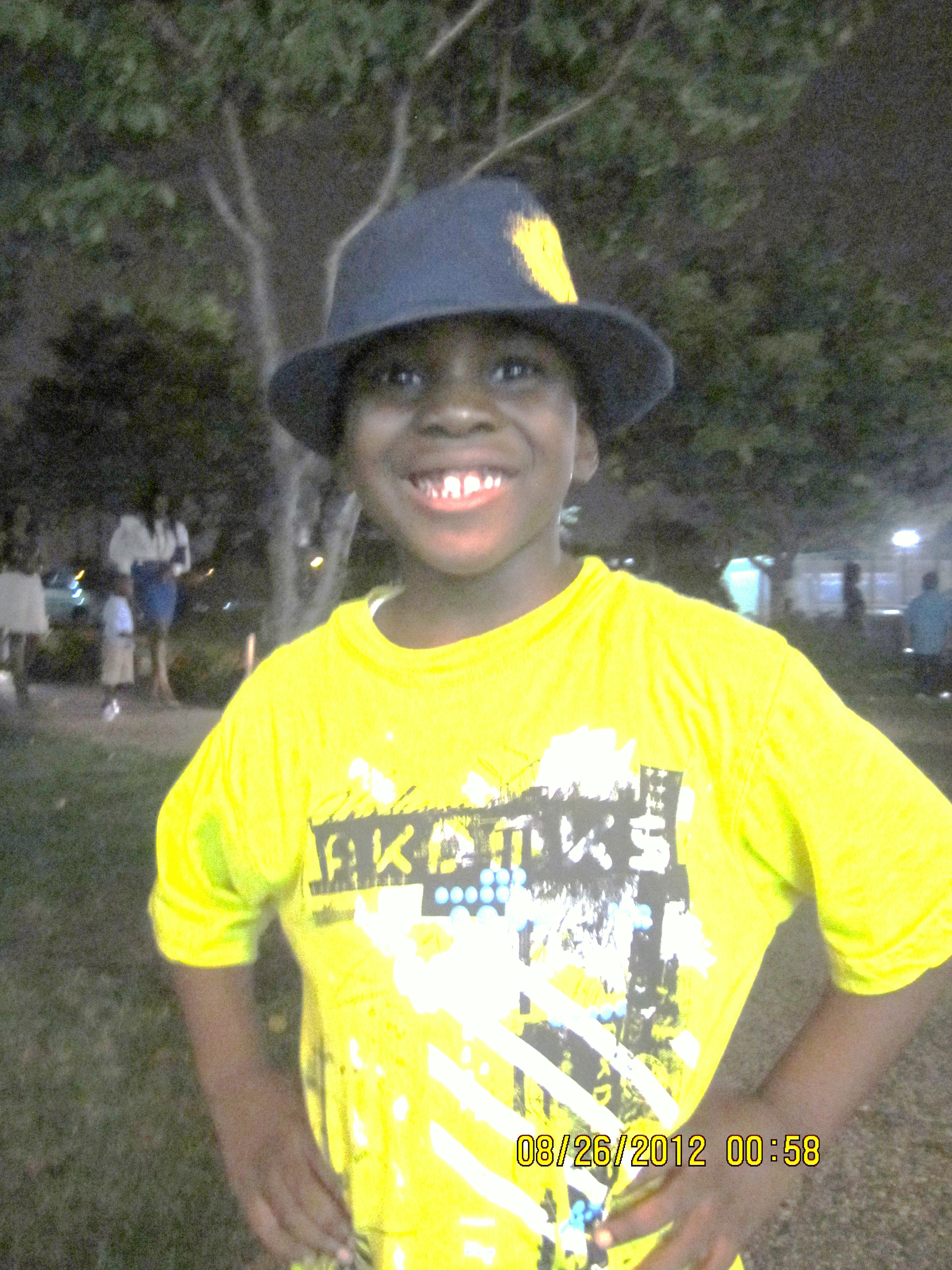
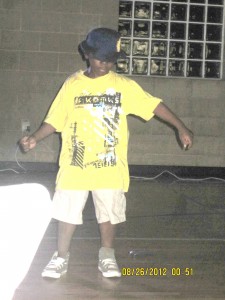
East Side Neighborhood, MN – At age seven, Jabarri Turay holds the dance floor with party-goers’ eyes transfixed on him. Kadie and Abubakarr Bundu’s baby shower at the East Side Neighborhood Services Center gathered a generous crowd from the Sierra Leonean community and Jabarri didn’t fail to entertain his audience.
Pacing his steps according to the rhythms, he shows his different moves with precise musical timing. Young and full of energy, his dad Mohamed Turay stood aside with a smiling face.
“He is an entertainer since he was young,” says Turay, a Sierra Leonean based in Minnesota. “He always entertains his parent at home.”
As the night rolls to the wee hours, Jabarri rushed to the dance floor with his interesting dance patterns. Turay wants his son to decide on whatever career he wants to pursue.
For many Muslims, the month of Ramadan brings them closer to Allah. In Rwanda, The AfricaPaper’s correspondent was invited to attend the nightly Taraweeh prayers at Kigali’s Islamic Cultural Centre.
Mary Katherine Keown | Rwanda
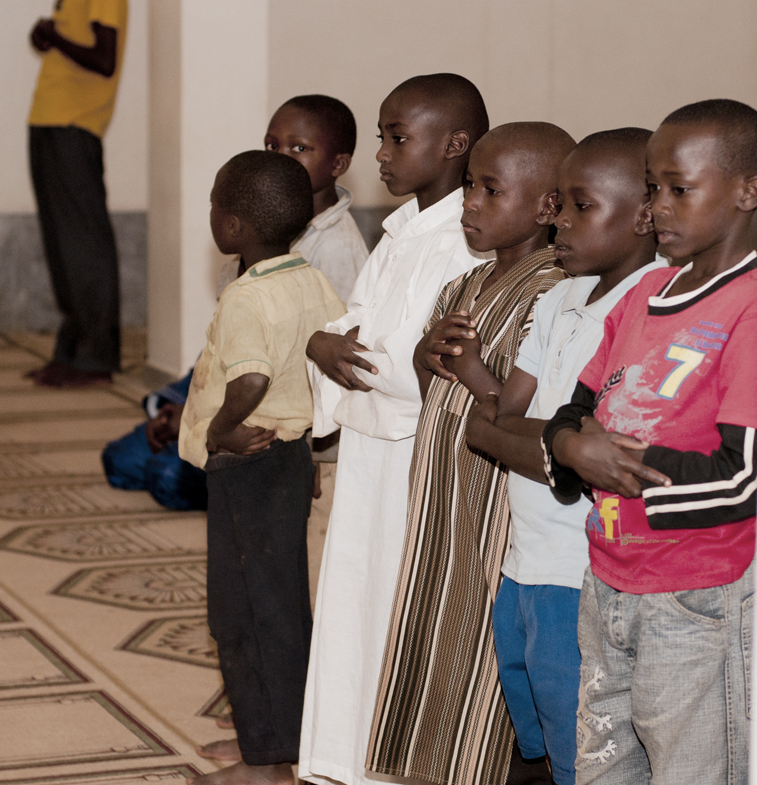
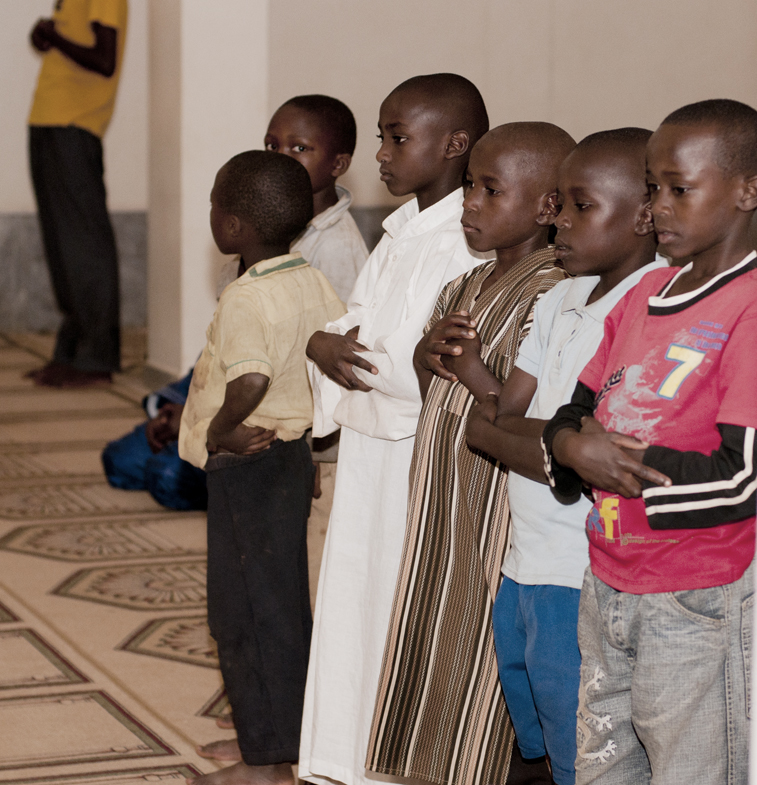
Boys pray during taraweeh prayers
Kigali – They rise in unison, standing solemnly, shoulder to shoulder, embraced by prayer and contemplation. The imam recites verses from the Qur’an as the congregation grows, late-comers arriving with bellies full from Iftar feasts that signal an end to the day’s fast. It is Ramadan, the holy month of fasting and prayer, and I have been invited to attend the nightly Taraweeh prayers at Kigali’s Islamic Cultural Centre.
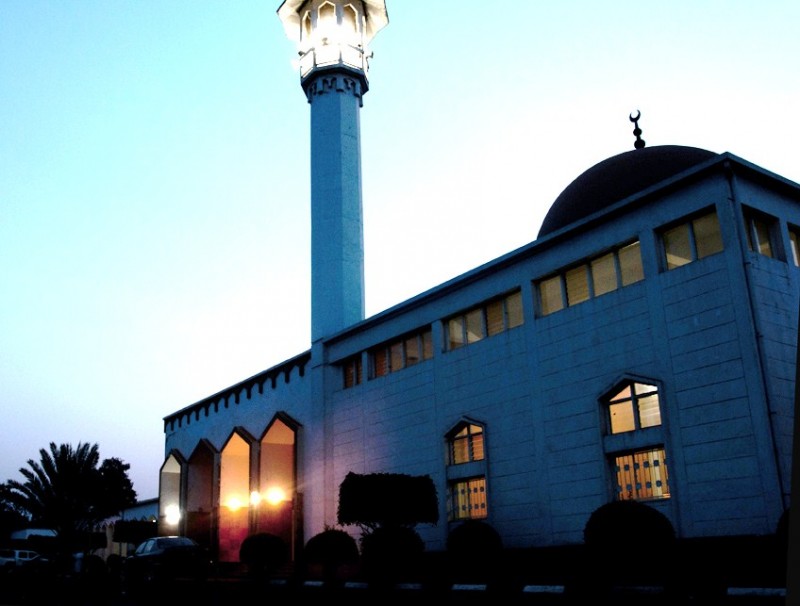
‘Gaddafi’s Mosque’
Gaddafi’s Mosque in Nyamirambo
By the time the imam concludes the prayers and recitations, there are about 200 men in the cavernous white sanctuary of the mosque. Known as ‘Gaddafi’s mosque’ for the late leader who financed its construction, it sits near the end of the main road that snakes through the neighborhood of Nyamirambo, across from the city’s second-largest football field. The centre is a hub of activity.
The Islamic Cultural Centre is arguably the grandest of Kigali’s mosques, but an increasing number of sanctuaries pepper the city’s neighborhoods as Islam gains popularity throughout the country. Mahfoud el-Roinia, director of the Islamic Cultural Centre, and Isaac Munyakrazi, director of the centre’s secondary school, contend about 20 per cent of people living in Rwanda follow Islam, but most sources indicate Muslims account for approximately 14 per cent of the population, up from seven per cent before the 1994 genocide, which tore apart Rwanda at the seams and claimed at least 800,000 lives over the course of 100 days. The bloodthirsty militias, known as the Interahamwe, and other genocidaires hunted Tutsis and moderate Hutus, with the goal of complete extermination. (Some estimate more than one million people were slaughtered during the nightmare of the genocide). Men, women and children were slaughtered indiscriminately, individually or in large groups, often after seeking refuge in churches.
In search of Islam
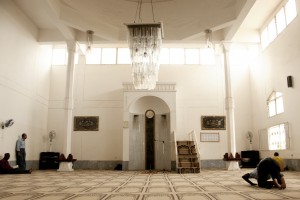
Mosque Interior
Suleiman Kamana understands why so many have converted. Ever a man of faith, 12 years ago he replaced the Bible with the Qur’an. A life-long Christian and a Protestant pastor before the events of 1994, Kamana spent five years studying and contemplating Islam before finally converting in 2000.
“I was attracted to Islam because of the way Muslims conducted themselves in 1994,” he says. “Most did not participate in the genocide, so I was curious to find out why they did not kill. I thought maybe their book condemned such action.”
Kamana was seeking answers. He survived the genocide by taking refuge in Goma, in the North Kivu province of the Democratic Republic of the Congo (DRC). Many Rwandans fled during the genocide – or tried to – into the DRC, via the border towns of Gisenyi and Goma. Crossing the border saved Kamana’s life. All of his family members who stayed in Rwanda – 113 in total – were murdered during those terrible days.
He spent a year reading the Qur’an and discovered it condemns violence against others while espousing equality amongst individuals.
“Man is man and we’re all products of Adam and Eve,” Kamana explains. “If you kill your brother, you have no place in paradise.”
Witnessing Terror
As planning for the genocide got underway, Muslim leaders began denouncing violence and in 1994, witnessing the terror taking place around them, they spoke out against the propaganda fueling the war. They condemned the massacres and implored their congregations to abstain from acts of murder. Mosques were repurposed as the hunted sought refuge from the thugs and militias carrying out the genocide.
“The majority of Muslims did not participate in the genocide,” Sheikh Musa Sindayigaya, the country’s deputy mufti, says. “They announced their condemnation in local mosques, by issuing subtle messages. People pray five times per day, so this allowed leaders to convey their messages effectively.”
Roots of Islam
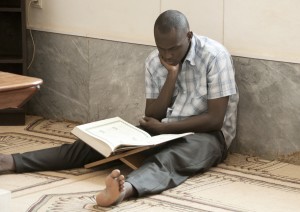
Studying the Qu’ran
Introduced to Rwanda in the 19th century by traders from East Africa, Islam was initially a polarizing force, Sindayigaya says. The colonial government, which had close ties to the Catholic church, discriminated against Muslims. They were made to live in isolated settlements; they were banned from owning land, and barred from farming or rearing animals. In order to pursue higher education, Muslims were forced to adopt secular names and personas.
At independence, wishing to be free from restrictive and oppressive colonial decrees, the Muslim community sided with Tutsis, forging business partnerships and friendships.
“They faced discrimination, as well as the Tutsis. In such cases, you should get together and live together, so that you can face the challenges together,” Sindayigaya says. “This relationship extended to sharing food and sports, but not in politics, as Muslims did not participate in government. Because of the discrimination they faced under colonial rule, they were not educated and couldn’t join political parties.”
Sindayigaya, who claims that until 1994 he did not even know to which tribe he belongs, is adamant that tribe was, and remains, irrelevant. Hutus and Tutsis fought side-by-side against colonial oppression. Today, they stand shoulder-to-shoulder in the country’s mosques.
“We don’t have tribes in our religion. We have no reserved seating in the mosques. It’s ‘first come, first seated in the mosque,” he tells me. “Our system brings people together; it strengthens togetherness.”
Neighbors
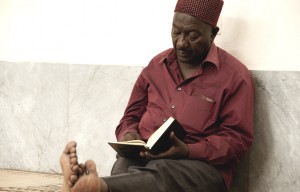
Individual members of the Muslim community also offered shelter to their neighbours and friends during the 1994 genocide.
“Muslims tried to behave positively during the genocide; they hid both Muslims and non-Muslims,” Sheikh Sindayigaya tells me.
Yahaya Nsengiyumva estimates he harboured 50 people. A mechanic with Onatracom, one of Rwanda’s many bus companies, he has warm eyes, a kind smile and, at 65 years of age, the aura of someone at peace with his life. We meet at the garage where he works. Inside this urban bus yard, laden with oil-stained concrete and cluttered with rusting vehicles, the call to prayer – from the large green mosque across the street – fills the stillness of a humid August afternoon and clings to the many gas tanks and the yard’s lone tree.
Nsengiyumva, born into a family of Seventh Day Adventists, turned to Islam at the age of 15. He says the sense of community – a kinship – is a keystone in the foundation of Kigali’s Muslim community. In fact, his home was flagged as a safe haven because he was considered a community leader and many believed Tutsis would be safe in his care. Nsengiyumva tells me he did it quite simply because he loves people. He also “had a big gate,” he says matter-of-factly, which the Interahamwe could not easily penetrate. Nsengiyumva’s son, one of seven children, helped him by standing guard and brandishing weapons on occasion, in order to intimidate the roaming militias.
“I was just trying to follow the Qur’an, which tells us not to mistreat others,” Nsengiyumva says, sitting forward to emphasize his point. “My parents taught us to love everyone as creations of God. I grew up believing we’re all equal, all one.” He tells me his imam also condemned the massacres taking place throughout the country.
“It didn’t matter whether or not they were Muslim – the Qur’an teaches us we’re all equal,” He says. Nsengiyumva’s heroism is chronicled at the Kigali Genocide Memorial Centre and the Rwandan Patriotic Front, the ruling party, has honoured him for his actions.
He still lives in the house he occupied in 1994 and says many of his neighbours are survivors who sought refuge under his roof.
“I’m not a hero, I did what I did because of God. All thanks should go to God,” he says modestly.
Prayers and Forgiveness
Taraweeh prayer
Suleiman Kamana is an ardent practitioner and these days, he relies on regular prayer for comfort, calm and communion with God.
“Your heart is clean and calm,” after praying, he explains. “Prayer is also an opportunity to seek forgiveness from God.”
We are sitting at Simba Café, a popular spot in downtown Kigali, during the month of Ramadan. Kamana is fasting, but even during the summer heat, which is relentless at mid-day, he is undeterred from his spiritual path. During a momentary lapse, I offer him a soda. He declines gracefully. Islam is his eye in the storm.
He is especially contemplative during the holy month and says it teaches adherents how to live on Earth and before God.
“It’s an opportunity to find the road again,” Kamana says. TAP
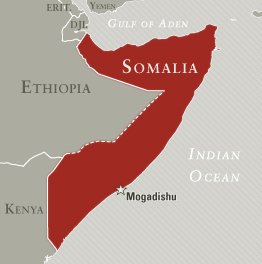
Leaked Monitoring Group’s report highlights widespread corruption by senior TFG officials in Somalia. The group’s report outlines how the Transitional Federal Government (TFG) misappropriated funds and the general mismanagement of passport production and key revenue generating authorities including Mogadishu Port and Airport Authority and funds received from leading financial companies and telecom operators.
Sharif Hassan Sheikh Adan
Sharif Hassan Sheikh Adan
The report alleges that Sharif Hassan Sheikh Adan has been looting and awarding contracts to his cronies since he was appointed as Finance Minister and deputy Prime Minister under the former PM Sharmarke’s TFG.
The report alleges that Sharif Hassan was involved in misappropriating $3 million dollars donated by Oman government in April, 2009. Similarly, Sharif Hassan received $1 million dollar kickback from SKA Air Logistics, a company he awarded management services contract for Mogadishu’s Aden Adde International Airport. Hassan and his business partner Sharif Ahmed Ba’alawi, General Gaafow, Director of Immigration and Naturalization and Ambassador Abdulqadir Sheikhey, the Consul General in Dubai are believed to own shares in Mondial Technology Information, a company that was awarded Somali Passports production contract. Sharif Hassan also negotiated with the Sudanese government to print Somali banknotes of Sh. So. 1,000; 2,000; 10,000; 20,000; 50,000 and 100,000 worth more than $150 million dollars.
Referring to the electronic passports, the report made a damaging allegation that even members of Al-Shabaab were issued passports, while others were issued diplomatic passports. “Fraud and corruption became rampant in the passport business, with multiple passports being issued to the same individuals under false identities and foreigners obtaining Somali passports thanks to the intervention of senior TFG officials. Members of Al-Shabaab, including at least one senior leader, have allegedly received new passports, and the Monitoring Group has confirmed that one of Somalia’s most notorious pirate leaders received a diplomatic passport in his own name with the full knowledge of senior TFG officials,” the report stated.
Prime Minister Abdiweli Ali Gaas
Prime Minister Abdiweli Ali Gaas
The Monitoring group report provided evidence on how the Prime Minister regularly sends letters to custom authorities requesting tax exemptions for companies or individuals that he claims provide services to TFG. The report also alleges that Prime Minister Abdiweli and former Prime Minister Farmaajo’s administration received $15 million from UAE government but the PM denies receiving the money from UAE government and alleges Farmaajo’s government misappropriated $3.5 million of the $10 million received from UAE.
The report further alleges that another million from the Government of South Sudan is unaccounted and the Prime Minister’s office took its cut. The report alleges that “In early 2012, South Sudan donated, through Price Waterhouse Coopers, US$1 million to support TFG reconciliation efforts in Somalia’s newly liberated areas. A senior TFG official confirmed to the Somalia and Eritrea Monitoring Group (SEMG) that the TFG did indeed receive the US$1 million from South Sudan. According to internal TFG documents obtained by the SEMG, the PM instructed the Finance Ministry to disburse the funds directly to individual government officials, MPs and political figures, including US$121,700 to his own office. No further information is available as to what these individuals did with the money, or whether any of these funds were in fact spent on reconciliation efforts.”
The report alleges that the three top in the cockpit of the TFG leadership, that is the president, thespeaker and PM are said to have misappropriated almost 30 percent of the TFG revenues.
Former Prime Minister Mohamed Abdullahi-Farmaajo
Former Prime Minister Mohamed Abdullahi-Farmaajo
Prime Minister Abdiweli alleges that the former Prime Minister Abdullahi-Farmaajo mismanaged $3.5 Million of the $10,000,000 received from the UAE. “The Monitoring Group has confirmed that the UAE donated US$10,000,000 to the Farmaajo administration and US$5,000,000 to the Abdiweli administration. Lastly, TFG PM Abdiweli Ali informed the SEMG that the US$15 million from the UAE had been wrongly reported. He noted that in 2011 the Farmaajo Administration had received US$10,000,000 from the UAE, but only deposited US$6,500,000 to the Central Bank, and that his administration had received US$5,000,000, which was entirely deposited into the Central Bank account. The SEMG could not reach the Central Bank to confirm these claims and the Prime Minister could not understand why his Ministry of Finance had reported a higher amount than that registered by the Central Bank of Somalia.” The Monitoring group did not interview the former prime Minister about this allegation.
President Sheikh Sharif Ahmed
President Sheikh Sharif Ahmed
The report also implicates the president and the speaker in the $3 million the Government of Oman donated to the Somali national Security Agency and that the president may have benefited through a third party clan associate. The report states that “One of the recipients of Omani funds identified by Ambassador Sheikhey was A.S.M.J General Trading, a company managed by Abbas Sheikh Mohamed ‘Jamalo’ (also spelt Jimale), a Dubai based Kenyan-Somali businessman and close clan relation of President Sheikh Sharif Hawiye/Abgaal/Harti/Agoonyar). According to current and former TFG officials, Abbas routinely advances funds to the TFG, and provides meticulous accounts when he wants reimbursement. One of his primary services has been the provision of dry food and daily subsistence to the TFG security forces.”
“Moreover, of the 30 per cent of revenues that the TFG can actually account for, almost one quarter is channeled through the offices of the three principal leaders: the President, Prime Minister and Speaker of Parliament. In 2011, these three offices spent more than US$12.6 million, representing almost 23 per cent of total government expenditure — almost as much as was spent on the TFG security forces (US$13.4 million) or the expenditure of all Ministries combined (US$15.4 million).”
Puntland President Farole
Puntland President Abdirahman Mohamed Farole
President Farole is alleged to have benefitted from the awarding of contracts to foreign corporations in violation of UNSC arms embargo. The report alleges that “Africa Oil, through its subsidiaries and affiliates, has engaged in a mutually beneficial relationship with a Somali security sector institution, namely the Puntland Exploration Security Unit (ESU). For this purpose, the company has contracted the services of a private security company, Pathfinder Corporation. 2. In many
respects, including its exceptional transparency, Pathfinder’s operations in Puntland arguably represent ‘best practices’ for private security companies in Somalia. However, in the assessment of the Monitoring Group, the company’s ‘temporary issue’ of military equipment to the ESU, as well as Africa Oil’s payment of ESU salaries (through its subsidiary, Canmex) constitute violations of the general and complete arms embargo on Somalia imposed by Security Council resolution 733 (1992) and elaborated by subsequent resolutions.
Additionally, President Farole gave contracts to foreign security firms that violate the UNSC arms embargo.
Since the age of 12, I have always known that I would own my own business. It wasn’t until I became an adult that I realized what business I wanted to own. I grew up in a large family with my parents, seven brothers and sisters. One message that was modeled for us as we experienced first-hand was the act of giving to others.
Generosity
This was apparent as my parents opened our home to other families and allowed them to live with us. And then, I got my first job where I was paid $10 per week. I always had to set aside $1 and donate that money to our local church before spending the remaining amount. No matter how much I resisted my parent’s lessons as a child, the seed was planted and began to take root.
Kitchen
In addition to the hospitality that my parents extended to others, it was nothing for me to find my mother and grandmother in the kitchen preparing a delicious home-cooked meal along with fresh from scratch dessert, that they were going to deliver to a family in need or set up shop at our local church to host a fundraiser.
Perfect Desserts
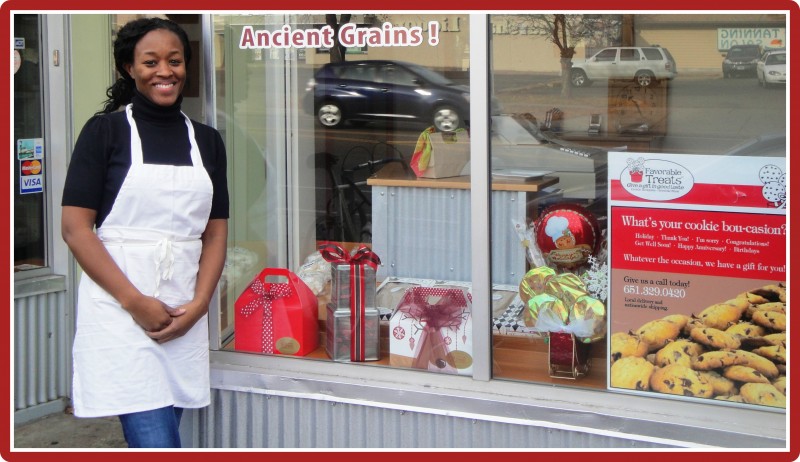
With a background of working in nonprofit organizations that included mentoring, program management, program development to fundraising and more…I have always gained satisfaction in knowing that I was part of making other’s dreams a reality. As a deliberate aspect of my career path, it was important for me to find an out-let that helped me “unload” some of the stresses of a typical work day. I found this outlet by re-creating those desserts that my mother and grandmother perfected for many years and turning those fresh-baked treats into highly sought after gifts for friends and families. I soon realized that the more I created these unique gifts, the more satisfaction and joy I received and Favorable Treats was born.
Cookies and Treats
Favorable Treats is a boutique cookie bakery that specializes in creating custom edible solutions for your gift giving occasions. With over four years of working with my business as a hobby, Favorable Treats now has a full line of cookies and gifts on our website at www.favorabletreats.com and has shipped our fresh baked arrangements throughout the country receiving rave reviews. In addition to our fresh baked treats, Favorable Treats recently launched its line of frozen cookie dough to be sold in grocery stores.
Starting a business
Starting and growing a business is an exciting opportunity filled with extreme highs and sobering lows that lead to a path of satisfaction and fulfillment. I am excited about all that is in store for my business endeavor and I look forward to sharing my experience with others along the way. For more information about Favorable Treats, visit us on the web at www.favorabletreats.com or call us at 651-329-0420.
Journalist’s Verdict Marks Yet Another Dark Day for Ethiopia’s Press Freedom
IPI “Appalled” by Blatant Abuse of Anti-Terrorism Laws to Suppress Dissent
By Barbara Trionfi *| Austria
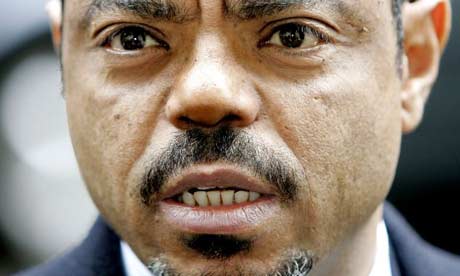
Ethiopia’s Prime Minister Meles Zenawi
Vienna, June 27, 2012 – “Guilty as charged,” was the verdict pronounced by judge Endeshaw Adane in the trial against Ethiopian blogger and journalist Eskinder Nega that took place in Addis Ababa today. Nega was found guilty of “participation in a terrorist organisation” and “planning, preparation, conspiracy, incitement and attempt of (a) terrorist act.” Hefaces life in prison.
During the trial, the persecution stated that “by using the freedom of speech recognized in the constitution these criminals have been trying to destabilize the country … that is why the court should give a grave sentence.”
Sadly, the verdict did not come unexpected to observers around the world, who had recently protested the government’s use of anti-terrorism laws to jail opposition figures and other journalists, including Woubshet Taye of the now-closed Awramba Times, Reyot Alemu of Feteh newspaper and Swedish journalists Martin Schibbye and Johan Persson, who were arrested while reporting on rebel activity in the Ogaden region. All of them were convicted in the past six months.
Reacting to today’s verdict against Eskinder Nega, International Press Institute Executive Director Alison Bethel McKenzie said she was appalled by the blatant use of laws aimed at fighting terrorism to suppress political opponents. “The dissemination of information and the free expression of ideas and opinions can never be considered an act of terrorism,” Bethel McKenzie said.
“If reports questioning the actions of state institutions undermine the political power of the government, this is part of a legitimate democratic process which supports the public interest, and not an act aimed at ‘undermining security,’ as Judge Endeshaw Adane stated,” the IPI executive directoradded.
Ever since Nega’s imprisonment in September 2011, IPI has repeatedly appealed to the Ethiopian government for Nega’s release. Most recently, in a joint letter to Prime Minister Meles Zenawi, the executives of the International Press Institute (IPI), the World Association of Newspapers and News Publishers (WAN-IFRA) and the World Editors Forum (WEF) called on the prime minister to do everything in his power to ensure that the charges against Nega and other journalists detained in connection with their writings are immediately dropped, so the journalists can be released unconditionally.
“As the world’s attention turns to Ethiopia ahead of Eskinder Nega’s expected verdict tomorrow, we call on you to use this moment to affirm your commitment to the rule of law and freedom of the press,” the joint letter said.
Sadly, but not unexpectedly, Zenawi chose to turn a deaf ear to the appeal, and to the respect for international human rights principles.
*Barbara Trionfi is Press Freedom Manager at the International Press Institute

 Individual members of the Muslim community also offered shelter to their neighbours and friends during the 1994 genocide.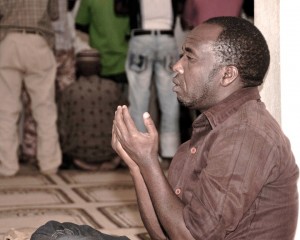
 The AfricaPaper



 Generosity
  Favorable Treats is a boutique cookie bakery that specializes in creating custom edible solutions for your gift giving occasions. With over four years of working with my business as a hobby, Favorable Treats now has a full line of cookies and gifts on our website at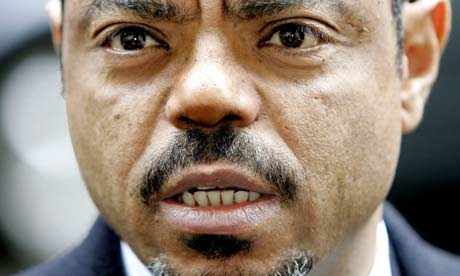
 Ever since Nega’s imprisonment in September 2011, IPI has repeatedly appealed to the Ethiopian government for Nega’s release. Most recently, in a