Home Blog Page 56

Bringing cultures and communities together in Dakota County


The AfricaPaper | Minnesota

“I will say the turnout is great,” said Binta Kawu, surveying the Dakota County Community Action Council (CAC) cultural festival and resource fair on January 12. “Up ’til the last minute, people were calling to say that they wanted to be part of it.” The fair, hosted at a Burnsville church, attracted more than seven hundred people.”We kept adding on the list of participants,” said Kawu. “In the beginning, we thought there wouldn’t be a turnout.” For Kawu, the fact that many more Africans turned out than she expected proves that people are responding to the Community Action Council’s outreach program. The event was a first for the Dakota County Community Action Council’s New American Services Collaborative. The fair brought together forty-one different agencies working with immigrant communities.

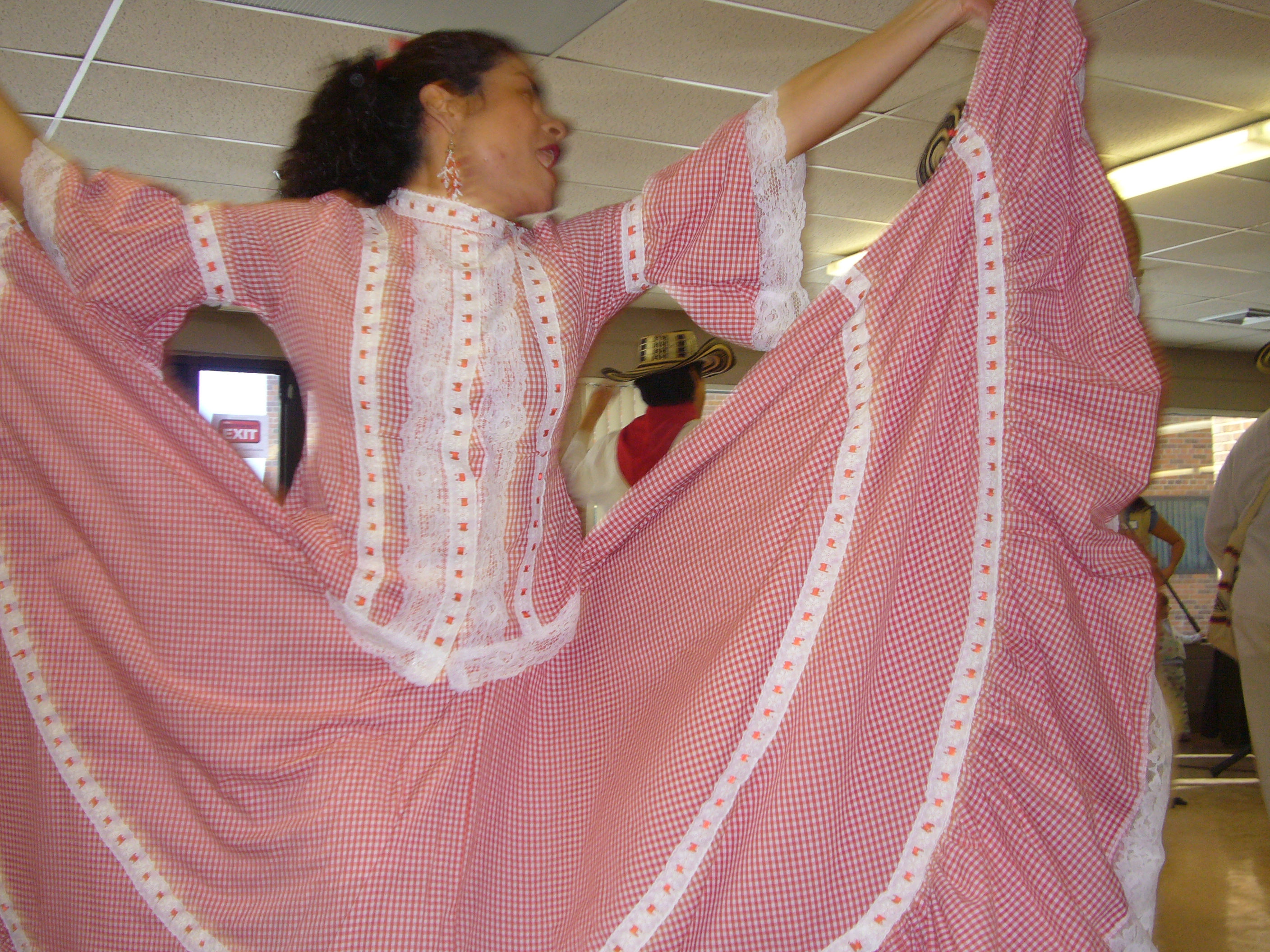
Groups from Africa, Chile, Bolivia, Laos, and other countries played drums and performed traditional dances. For almost half an hour, Chile Sin Fronteras, a Chilean group in colorful folk dresses entertained participants. Nkauj Hmoob Zoo Nkauj and Txhais Nkauj Xwb performed traditional Hmong dance from Thailand and Laos.

“It is to show what the Hmong tradition is,” said Yer Xiong, 16, a dance teacher at the Hmong American Partnership. “It is to show how the cloths look like, and to show what we usually do at big events.”

“People here are having fun,” said Alix Ibarra, director of CAC’s New American Services. “So we have a group from Chile, Colombia, Ecuador, Mexico, and Africa. It is a diverse group that is going to participate.”

The CAC initiative began last July by making contact with many of the community organizations in Dakota County. A collaboration that started with twenty organizations has grown to about forty-five community groups. Through raffles, students at District School 191 raised $4,000 to sponsor the resource fair through raffles. BlueCross and BlueShield of Minnesota, Fairview Ridges Hospital, Dakota County Public Health, and many other nonprofit organizations sponsored the event. BlueCross and BlueShield provided funds for African food. The organizers served free food and drinks for participants.

“We want to do it in part because the African and Latino community are similar in certain aspects,” said Ibarra. “It is why we tried to make it in a certain way that is very attractive, where we can have entertainment for children and a lot of food from different countries.”

According to Ibarra, the Community Action Council also works with almost 48 schools in Dakota County. The CAC tries to deter domestic abuse, help children to be successful in school, and help families to be self-sufficient. In many schools, CAC’s New American Services educate community leaders to understand the different cultures, educate new immigrant community to adapt to their new homeland, and then create resources to help their families.

Storefront, founded 27 years ago to help immigrant parents with children in schools, joined CAC’s community initiative a year ago. “It will help in bringing the community together,” said Somali Asha Guled, parenting empowerment program coordinator at Storefront. “Our mission is to help the immigrant families in schools.”

With increasing health problems among immigrants, insurance and health institutions decided to join CAC’s initiative. “We have a lot of members in this part of Dakota Country,” said Shereese McIntosh, MEDICA regional coordinator. “We want to come out to support the community. Also, we want to engage with members and prospective members in the community.”

For BlueCross and BlueShield, the partnership has been fruitful since joining CAC’s New American Initiative few months ago. “We work with them (CAC) to reach out to the New American Communities,” said Karen J. Major, director of government programs and external relations at BlueCross and BlueShield. “The first thing we’ve done with them is to donate and sponsor funds towards the event.”

Representatives of participating organizations expressed enthusiasm about the event. For Tina Kush from Adult Basic Education (ABE), the fair offered an open opportunity to look for prospective adult students from the immigrant community. The ABE offers free classes for adults who want to learn English, work toward a high school diploma, or prepare for the GED exam.

Ardis Lether and Doreien Busch from the School for Adults said they also offer classes for families in Burnsville and Savage. For them, the resource fair is the best place to recruit new students.

At the fair, the Burnsville Fire Department displayed a huge billboard on emergency medical care and fire safety awareness and distributed information booklets in two languages to visitors. The department hopes to translate the fire safety literature into other languages.

The Dakota County Attorney’s office sees the resource fair as an opportunity to interact with the immigrant community to talk about crime prevention, and available legal resources. “We have been involved in this partnership, in this collaborative, so our office is able to reach out and let the citizens know that we are available,” said Monica Jensen, community relations and crime prevention at the Dakota County Attorney’s office. “So whether a crime has been committed against them, if they are a victim, if they have restitution or services that they need throughout the court process, that we are a friendly face. We do have those materials and resources, and ready with any explanation we can to help bring people through that process.”

Jensen said that while her office has “an obligation to uphold the law and hold people accountable when they do break the law,” at the same time, the attorneys also have “a lot of ways to help those individuals through the process.” Realizing that many new immigrants lack information about U.S. legal processes, Jensen said, “this is our chance to not be the enemy, to show that we’re here to hold people accountable for the good or the bad that they do.” Her office, she adds, “also provides whatever we can to help people out of that situation.”

The CAC plans to make the fair an annual event.

This is an archived story originally published in January 23, 2008. Photos by Issa A. Mansaray. (c) The AfricaPaper
African immigrants face cultural barriers, domestic violence


The AfricaPaper | Minnesota

Pamella Mochama, director of Wings of Africa. Photo: (c) The AfricaPaper

Minneapolis – When Mattu Saidu, 25, started talking with her boyfriend on the phone in 2005, it was all about love, and dreams of living together as domestic partners or getting married. Like many young women with a fixed job in Minnesota, what was missing in Mattu’s life was “love.” After few months of talking on the phone with David, 26, she moved to New Jersey to stay with him.

In New Jersey, the relationship went sour. At a private residence in Brooklyn Center, Mattu explains what went wrong, and how her love crumbled.

“He was not listening to my advice,” Mattu said. “It was always like an argument.” The man she once loved spent hours on his cell phone without even recognizing her presence in their apartment. David refused to listen to her complains.

“He will be up all night receiving these crazy phone calls,” said Mattu. “Sometimes, I have to leave to get some sleep.”

Mattu said David suddenly became jealous of her talking to other people. “I don’t want a man that is jealous and controlling. I can’t stand that,” she said. “He doesn’t want me to talk to anyone except him.”

Mattu became bored. She could not talk to David, who on many occasions was busy on his phone. “I can’t ask who is calling him,” said Mattu in a sad tone. “And we can’t agree on something that can make the relationship work.”

David dictated whom she should talk to, and whom she should not. After staying with him for five months in Jersey City, she finally decided to call off the relationship and returned to Minnesota. Besides David’s frequent phone calls, and domestic arguments, she said he was becoming violent.

One day a co-worker gave her a ride to buy pizza. When he dropped her at home, David became angry. “He asked who bought me the pizza. We went into a big quarrel.”

“He dropped the pizza on the floor and stepped on it,” Mattu recalls that evening. “I was hungry. He hit me on my mouth, I bleed, and we fought from the apartment to the hallway.” She tried to call the police, but David’s cousins seized her cell phone.

For her, it was the basic reason why she left him, fled, and eventually returned to Minnesota. Mattu, like other young immigrant women, is a victim of domestic violence. Many battered immigrant women are not allowed to call the police. Like Mattu, they are too timid to talk about domestic abuse, and what goes on behind their closed doors.

For many African women, it is culturally difficult for them to call the police even when their husbands beat them at home.

“It is justified; according to their culture when a woman is beaten, it is seen that she is been disciplined,” said Kenyan Pamella Mochama, director of Wings of Africa, a Minnesota Based HIV/AIDS counseling organization. “A man is allowed to discipline the woman. So that is the culture that was carried by our forefathers.” She describes the culture as “backward.”

Mochama adds that many women have not been educated enough to know that it is a wrong practice. In some countries, the police, or security system is broken and unable to render quick aid to a woman who has been battered. It is difficult for a woman to know what to do when she is poor, not empowered, and not well educated. Lack of education makes it difficult for some women to seek help.

“It becomes difficult for a woman to know where to go for help,” said Mochama. “Poverty puts them down if they depend on this particular person that is beating them.”

“Violence against women should be addressed, because it is a practice that is continuing through the 21st century,” said Mochama. “Violence against women is an evil that brings women’s self-esteem down.”

A woman is a very important person in the society, Mochama explains. She sees every woman as a leader in her own way, and believes when a woman is suppressed through violence, “she is not able to actually live to her fullness or to her full potential.”

For these reasons, Wings of Africa adds its voice in the campaign domestic violence. “Violence against women is something that should be discouraged totally all over the world,” said Mochama. “When women are beaten, for example, they are not able to seek help. They are not able to protect their children when they are not able to protect themselves.”

“Violence against women is a very serious problem wherever it has been studied, including Minnesota,” said Cheryl Thomas, director of the Women’s Human Rights Program at Minnesota Advocates for Human Rights. “Minnesota is not unique in any way.”

The Women’s Program does not offer direct service to battered women, but works with the legal system to change policies for better response to violence against women. Thomas said Minnesota authorities are very receptive in responding to violence against women as compared to other places in the United States and the world.

“Our laws are very good and our legal system response is better than most,” said Thomas, adding that they also have many obstacles in dealing with immigrant women that face domestic violence. Some of the major problems include language barriers, fear of the police, deportation, and shame from their communities. The rights organization is embarking on variety of women’s program to address domestic violence in Minnesota and aboard.

“All of them are related to legal and government systems improvement to address violence against women,” said Thomas. “To help them better understand what obstacles immigrant women face, and what strategies they can use to better protect their safety.”

“Domestic violence is really sad. Because some women go back to their husbands or boyfriends,” said Mattu. “No matter how hard they hit them, they still go back.” She wonders whether women who return to the men that batter them have low self-esteem in life, personality, appearance, or are afraid of such men.

“For me, I speak about it. It is not supposed to happen to women,” said the 25-year-old Minnesota resident. “Some men want you to work for them. If you don’t do that, they get mad; they kick, slap, push, and then hit.”

“The regret that I have is that: I didn’t know him much,” said Mattu. “Now I’m so scared of going into a love relationship again.”

“I’m taking a break for now,” she added. “I’m not going to be involved in anything now.”

The AfricaPaper archived story originally published on February 01, 2008. (c) The AfricaPaper

New Leadership for Somalia


The AfricaPaper | Minnesota

ST. Paul – As Somalia still struggles with its pirates, rebel factions, lack of a functioning government, and militant Al-Shabaab, a new political party, Hiil Qaran has emerged to help solve the problems in one of Africa’s most troubled nations.

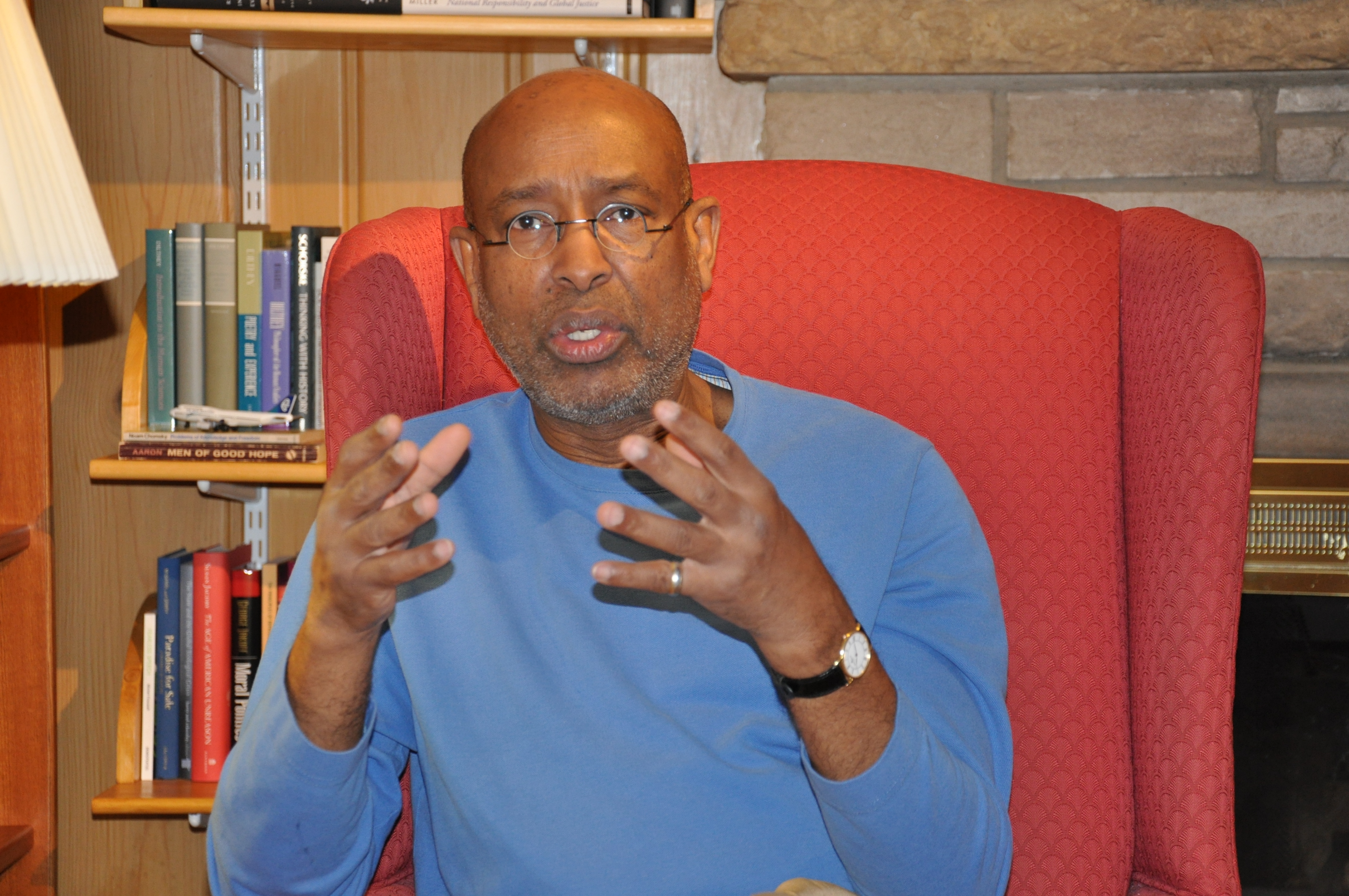
In an exclusive interview with The AfricaPaper on Thursday, Dr. Ahmed Ismail Samatar, Political Chair of Hiil Qaran, explains the need for ‘New Leadership for Somalia’ after years of chaos, and how the new political party is preparing to help rebuild the country.

Dr. Samatar, currently on sabbatical, is the James Wallace Professor of International Studies. Dean of International Studies and Programming (1994-2006) and founding Dean of the Institute for Global Citizenship (2006-2011) at Macalester College in Minnesota.

Samatar, an expert on global political economy, political and social thought and African development, is the author and editor of five books and over thirty articles.

The AfricaPaper will publish the full story for our readers – please check later!!

An ill-fitting Taylor-made trial


Whether or not former Liberian president Charles Taylor will be found guilty of a campaign of terror in neighboring Sierra Leone, Thursday’s verdict will leave a trail of questions about atrocities and his relations with Revolutionary United Front (RUF) rebels during Sierra Leone’s civil war in the nineties.

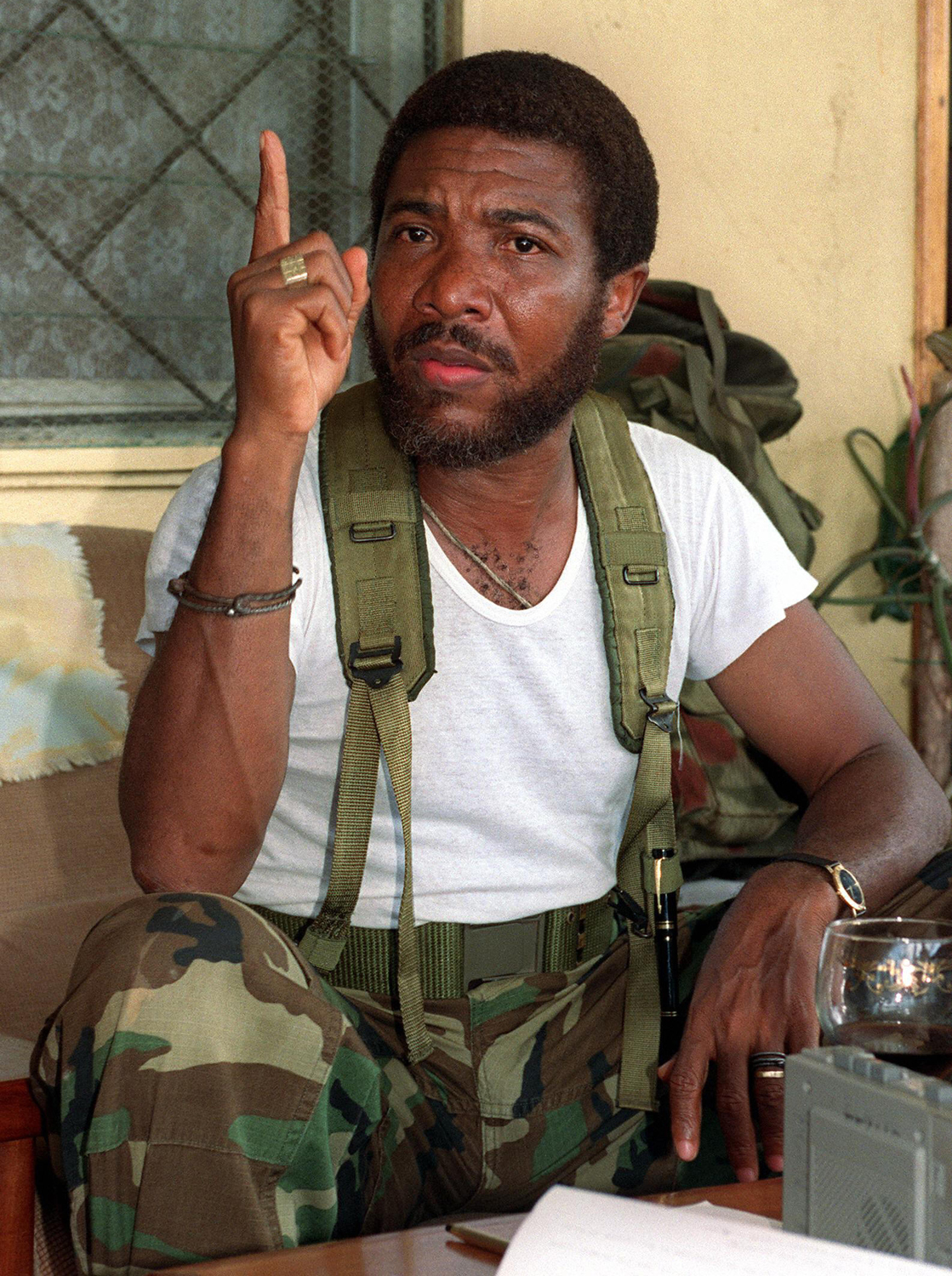
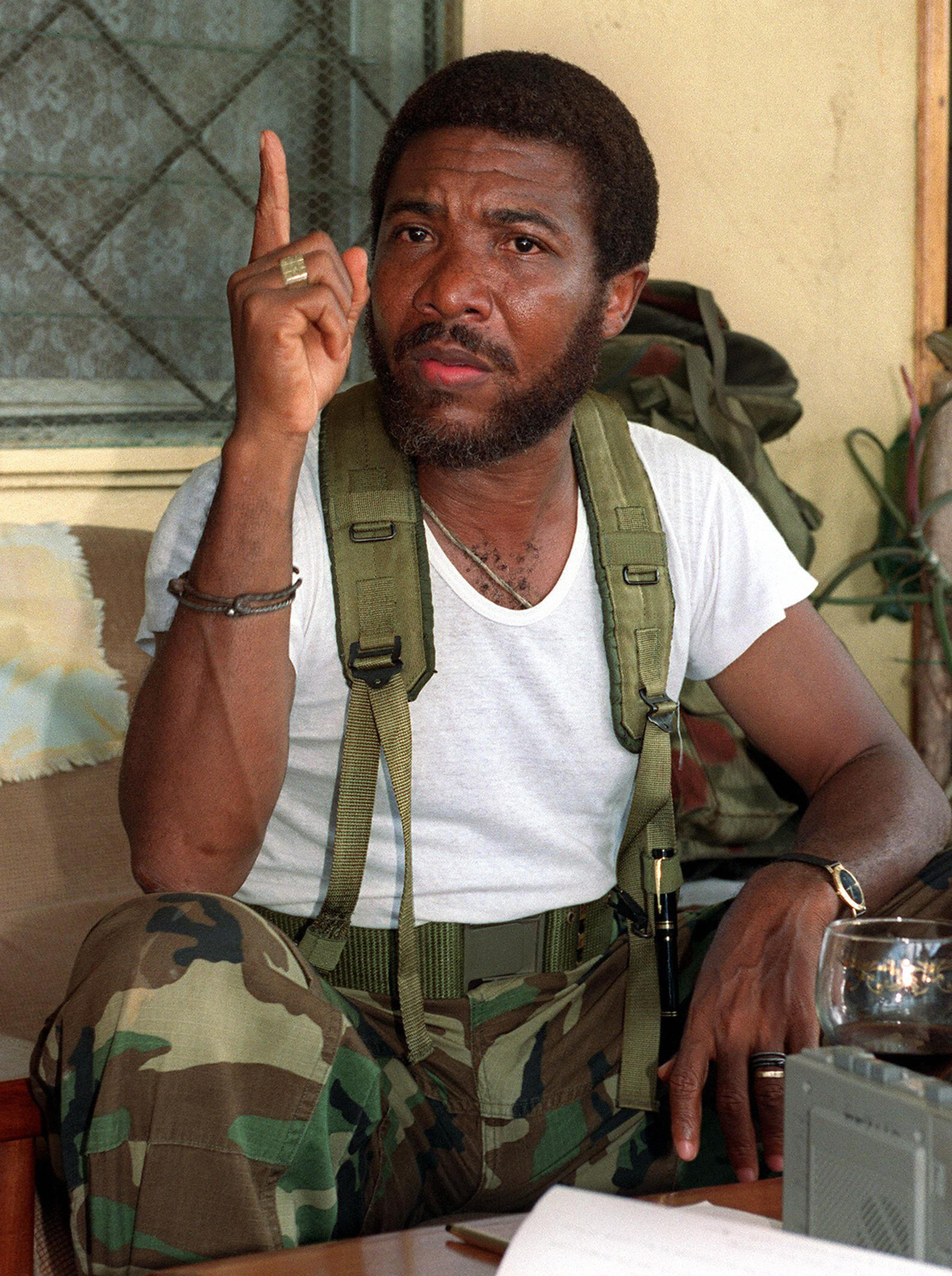
Charles Taylor – Liberia’s former warlord

By THIJS BOUWKNEGT* | The Hague

Taylor awaits the dubious honor of becoming the first former head of state to be judged before an international court. But the criminal case against him on eleven counts of war crimes and crimes against humanity is in no way crystal clear. His prosecution was straitjacketed by the trial’s limited time frame, leaving many stones unturned.

“Most definitely, Your Honour, I did not and could not have committed these acts against the sister Republic of Sierra Leone, […] so most definitely I am not guilty”, Taylor told the judges during his first appearance on April 3rd 2006 in Freetown. ‘Case SCSL-03-01’ the first case file at the Special Court for Sierra Leone (SCSL) concerned Taylor, then president. The indictment was unveiled in June 2003, while he was in Accra for peace talks prompting the Ghanaian government to fly him back to Monrovia on a presidential plane. But it was only after three years of refuge in a luxurious villa at the invitation of former Nigerian president Olegun Obasanjo that the tribunal got hold of him.

Liberia’s “Big Man” spent three months in cell number 3 at the fortified SCSL compound before being sent off to The Hague, where his trial formally began in a borrowed ICC courtroom in June 2007. Taylor fired his first lawyer Karim Kahn but did not try to frustrate further proceedings, unlike his Yugoslav cellmates in the UN prison in Scheveningen. The court even allowed him to take the stand himself for over an unprecedented seven months period, meticulously detailing West Africa’s history.

Dump the evidence
“Throw it in the bin. That is what we submit the court should do with this body of evidence: get rid of it”, said Taylor’s lead lawyer Courtenay Griffiths during closing arguments in March 2011. He argued that the conflict in Sierra Leone was not a Taylor-made catastrophe. On the contrary, he said, Taylor’s “role in Sierra Leone was entirely peaceful.”

Taylor’s ultimate crime, listed in count one of the charge sheet, echoes a post-9/11 American obsession: “acts of terrorism.” It burdened the prosecution with a complex challenge: proving that Taylor forged an illicit conspiracy with RUF leader Foday Sankoh in Libya in the late eighties to conquer West Africa. Their motive: enriching themselves with rough diamonds from Sierra Leone. Their modus operandi: a menacing campaign of terror.

Taylor does not deny an orgy of atrocities took place. He refutes the charge that he was at “the very centre of the web of these crimes.” American prosecutor Brenda Hollis continuously stressed that “the RUF was a terrorist army created and supported and directed by Charles Taylor who, in truth, is the person most responsible for the crimes charged.” “All this suffering, all these atrocities to feed the greed and lust for power of Charles Taylor,” she proclaimed.

Since 2008, the judges have listened to live testimony on how RUF rebels sowed death and destruction, pillaging diamond mines. Mustapha Mansaray, a victim of amputation, testified in a wheelchair: “Why I was willing to testify? It was for one reason. Because there was a man they used to call Charles Taylor. At the time there was war in Liberia: he said […] we would taste the bitterness of that one in Sierra Leone. What he said was what came to pass.”

Former aides and enemies
In an effort to tie Taylor to the crimes in Sierra Leone, the prosecution flew 94 witnesses to the Netherlands. The only direct evidence connecting the massacres in Sierra Leone to Taylor comes from his own former aides and enemies. Some had strong reasons for testifying against their former political rival. Others were criminals, like Joseph Marzah, known as ‘Zigzag’. The former secret service agent confessed to displaying “heads on sticks and car bumpers,” killing babies, cutting open pregnant women and eating “Nigerians and white people,” during a chaotic three-day testimony in March 2008.

The prosecution’s main battle during the trial was against time and space, as the SCSL mandate only covers crimes committed in Sierra Leone from November 1996 onwards, a period during which Taylor was in Liberia. But the prosecution argues that “the indictment crimes did not happen overnight” and focused on the alleged long-standing relationship between Taylor and the RUF. It says this bond lasted throughout the 1990s and when Taylor became president in 1997, he continued to be the “father” and “godfather” of “his proxy forces the RUF and later the RUF/AFRC.”

Some 30 witnesses testified on Taylor’s connection to the RUF and Foday Sankoh. One of them was a Gambian named Suwandi Camara who testified about one of the meetings that allegedly took place Burkina in February 2008. He said that Gambian rebel leader Kukua Sambasanja (known as Dr. Mani) and Foday Sankoh agreed to help Charles Taylor in his war. In return, he would also help them in their war, “because at that time we are very powerless,” said Camara.

Sierra Leone’s child-soldiers at the peak of the rebel war. Photo: The AfricaPaper

RUF connections
“The RUF was in fact a creation of Charles Taylor,” insisted the prosecution. And former RUF commander Isaac Mongor testified that Taylor “had command over the RUF” and that they “took it that the RUF belonged to him [Taylor], although he sent somebody to head the RUF […] that was Foday Sankoy. “So the RUF was in the hands of Mr. Taylor,” he said. Zigzag testified in a similar vein: “We all took instructions from Charles Taylor. Have I made myself clear?”

The bond between Taylor and the RUF allegedly lasted throughout the indictment period and several of Taylor’s former aides indeed testified to regular communication between Taylor and other RUF commanders such as Sam Bockarie and the convicted Issa Sesay. The prosecution’s last linkage witness, radio operator Dauda Fornie – known as DAF – testified in December 2008 that after Sankoh was arrested there was regular communication between Taylor and the new RUF leadership, mainly Bockarie and Sesay.

“I never talked to Sankoh after May 1992”
“Complete lies”, answered Taylor. He admits to working with the RUF in the early 1990s but says it was to fight rival Liberian rebels operating on the border with Sierra Leone. “My relationship with Sankoh was a pure and simple security relationship to protect my border, that we would fight ULIMO [the United Liberation Movement of Liberia for Democracy] in Sierra Leone without having to fight them in Liberia.” But, he insisted: “I say it to these judges: I, Charles Ghankay Taylor never talked to Sankoh after May of 1992 until I saw Sankoh in 1999 July in Lomé. I did not.”

Producing almost 50,000 pages of transcript and over a thousand exhibits, the Taylor trial offers a unique insight into Liberian and Sierra Leonean history. And indeed two competing diametrically-opposed narratives about Taylor’s role in West Africa. In Taylor’s version, he is a peacemaker who is now left carrying the can for the international community, and would have had to be a “superman” to run his own war-torn country, while also planning and ordering the commission of crimes on the other side of the border. In the prosecution’s version, Taylor represents the dark corner of that world.

But the prosecution may only succeed in proving that Taylor – because of his position – “should have known” about the crimes and that he “did nothing to prevent them” while he may have been in a position to do so. The prosecutor claims he did everything to conceal his crimes and destroy evidence of links with the RUF rebels, accusing Taylor of killing his ‘favourite’ RUF general Sam Bockarie and AFRC junta leader Johnny Paul Koroma after they were also charged by the SCSL.

No meeting in Libya
Still, the bench seemed extremely compassionate towards the prosecution in allowing evidence falling outside the scope of the indictment. A lack of precision and proof were at the heart of the testimonies heard in court. And the relationship between Sankoh and Taylor in Libya – where the conspiracy was said to have started – still remains shrouded in mystery. Historian and expert witness Stephen Ellis could only relate that the two met “sometime between 1987 and 1989.” Moreover, prosecution witness Camara confirmed that he had seen Taylor twice in Libya, but that he never saw Taylor and Sankoh together.

The SCSL’s main shortcoming in this trial is that it could not deal with Taylor’s full role in West Africa’s history. Taylor’s role in Liberia’s back-to-back civil wars has been dealt with by historians and truth and reconciliation commissions in both Liberia and Sierra Leone. The Liberian TRC, in its recommendations, even drafted a statute for a Special Court for Liberia. It listed Taylor as number one suspect to be tried for alleged crimes committed in Liberia. But even though the SCSL has delved deeply into this history, it can only make findings on established crimes in Sierra Leone committed after November 1996 – leaving an era of alleged atrocities in Liberia untouched.

(*) THIJS BOUWKNEGT is a PhD researcher at the Netherlands Institute of War, Genocide and Holocaust studies (NIOD). His report first appeared on RNW .

TAYLOR VERDICT ADDS IMPETUS TO ICC EFFORTS


Former Liberian president successfully prosecuted for war crimes, though command responsibility not proved.

Simon Jennings | The Hague


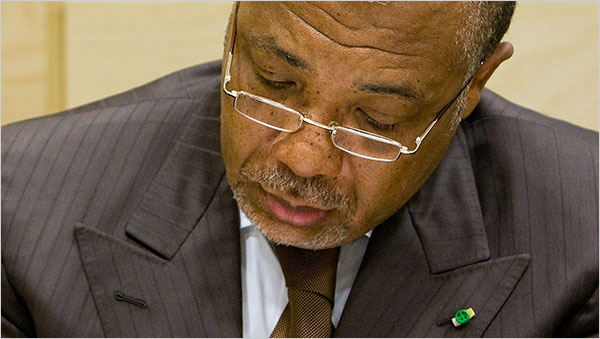
Charles Taylor

Former Liberian president Charles Taylor was convicted of war crimes this week by the United Nations Special Court for Sierra Leone, SCSL. Simon Jennings, IWPR’s Africa editor, looks at the trial and its significance.

What are the wider implications of this verdict for West Africa, and also for international justice?

Taylor was convicted on all 11 charges of aiding and abetting war crimes and crimes against humanity in Sierra Leone between 1996 and 2002, during that country’s brutal civil war. As Liberian president, he instructed and provided operational support to the Revolutionary United Front, RUF, a rebel group operating in Sierra Leone. He was found guilty of aiding and abetting acts of terrorism, murder, rape, sexual slavery and pillage.

He was not, however, found to have had command responsibility for acts committed by the RUF.

The verdict has been welcomed by many in the wider West African region, where leaders have for years acted with impunity and inflicted suffering on civilians.

The ruling will also be seen as a success for the SCSL’s prosecutor, who narrowed down a broader indictment of 17 counts to the 11 heard by the court, and secured a guilty verdict on all of them.

More broadly, the verdict demonstrates that a sitting head of state is not immune from prosecution. Supporters of international justice will welcome this as a massive stride forward, particularly when set against the slow progress of the International Criminal Court, ICC, in The Hague which has so far struggled to bring heads of state and senior rebel leaders to justice.

The question of command responsibility was key to the trial. It wasn’t about whether Taylor committed the acts himself; it was whether he ordered, supported or condoned them. What are the possible implications of the judges’ findings on this?

Judges did not support the view that Taylor was guilty of the crimes at the higher threshold of actually ordering rebel forces to commit them. This will come as a blow to the lead prosecutor, Brenda Hollis, and she is likely to appeal against the decision.

The prosecutor of the ICC, Luis Moreno Ocampo, and his successor-in-waiting, Fatou Bensouda, will also probably be reading that part of the judgement carefully as they seek to convict former
Congolese vice-president Jean-Pierre Bemba Gombo for crimes committed by troops belonging to his Movement for the Liberation of Congo, when they operated in the Central African Republic in 2002-03.

Experts in international law say it is hard to successfully prove a formal, superior-subordinate relationship between a political leader and armed forces on the ground.

International case law, particularly stemming from judgments at the SCSL’s sister court, the International Criminal Tribunal for the former Yugoslavia, ICTY, is arguably setting a high standard of proof for establishing that a defendant had effective control over troops.

When it comes to sentencing, Taylor’s conviction for aiding and abetting may not result in more leniency than if he had been convicted of directly ordering the RUF to commit crimes. Following a sentencing hearing set for May 16, judges will have free rein to assess the importance of Taylor’s contribution to these crimes and to deliver an appropriate sentence.

The western intervention that ended the RUF insurgency in Sierra Leone has been held up as a model for military action for humanitarian goals. Is the process by which Taylor has been brought to justice likely to be viewed in the same light?

Taylor – the warlord who tormented Liberians

While seen as an overall success, this verdict and the work of the SCSL are tempered by the fact that it has so far only convicted eight individuals of war crimes or crimes against humanity, despite the vast array of atrocities and perpetrators during Sierra Leone’s civil war.

Completion of the Taylor trial has also been a long time coming, and he is slightly old news in the region, having been incarcerated in The Hague for six years.

The trial covered crimes in Sierra Leone, but did not address atrocities committed in Liberia itself or in the neighboring countries of Guinea and Côte d’Ivoire where abuses were also reported. While the verdict will be welcomed in Sierra Leone, it has received a more mixed response in Liberia, where Taylor maintains some support.

In this part of the world, criminal trials are only half of the story. Real justice would involve the perpetrator actually accepting responsibility, rather than his guilt just being established in a trial and this has not happened.

So is this case a success for international justice?

The judgment can be seen as capping a rare success story of western intervention, which has achieved both peace and justice after a protracted conflict.

The international community has often faced the conundrum of whether to prioritize peace or justice in conflict interventions.

This case would seem to be a coup for advocates of prioritizing peace and undertaking the justice process later, rather than trying to deliver both simultaneously as has happened with Darfur and more recently Libya.

Despite being charged in March 2003, Taylor was offered safe haven in Nigeria before finally surrendering to the SCSL in 2006. But following this example, it seems unlikely that other fleeing heads of state will agree to safe haven.

In the context of the ICC, the verdict will add significant momentum to attempts to hold heads of state accountable.

With the recent capture of Libya’s former intelligence chief, Abdullah al-Senussi, and now the first-ever African head of state behind bars, there could be less and less room for manoeuvre for the likes of Sudan’s president, Omar al Bashir, who is wanted by the ICC on charges of genocide in Darfur.

The verdict will be welcomed by the ICC as one that could help its cause as a new prosecutor starts work in June and works to boost the court’s credibility on the African continent.

There is an important caveat to this. Western powers are coming under greater scrutiny for their role in the emerging sphere of international justice. It is a much highlighted fact that the ICC has only charged leaders from the African continent, when serious atrocities also occur elsewhere in the world.

The ICC prosecutor has free rein to investigate crimes in any of the court’s member states, and the UN Security Council can refer cases to the court. While the court has broadly been welcomed for holding war crimes perpetrators to account, questions about its
selectivity continue to undermine its legitimacy.

The SCSL has made efforts to relay proceedings in The Hague back to Sierra Leone via radio, print, blogs and seminars. But have people on the ground really been able to follow the trial?

One might well ask whether such a protracted trial has been able to sustain public interest, but that is a necessary evil of international justice, which involves lengthy proceedings.

The Special Court has had a strong record of bringing trials held both in Sierra Leone and in The Hague to the victims of the conflict. Hundreds of people watched the two-hour long verdict proceedings on screens at the SCSL in Freetown. But there are still going to be people who feel the Taylor trial should have been held in the country.

The question of where cases are heard will continue to be debated as the ICC struggles to persuade Libya to hand over Saif al-Islam Gaddafi to stand trial in The Hague. International courts will continue to face this dilemma.

Special TAP report from Simon Jennings, IWPR’s Africa editor, The Hague