


By
Disclaimer: I am fully aware as an Egyptian that what you read next may sound biased, utopian, out of touch with reality, and so on. But I am going to go ahead and write it anyway; firstly because I believe it to be true, and second, because with all the negativity that currently oozes around Egypt’s households, universities and coffee shops on the discontent, hardship and frustration the country is facing, a bit of optimism can go a long way. So here we go.
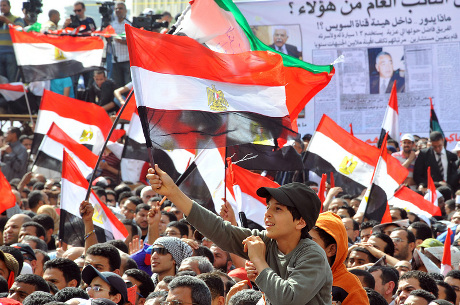
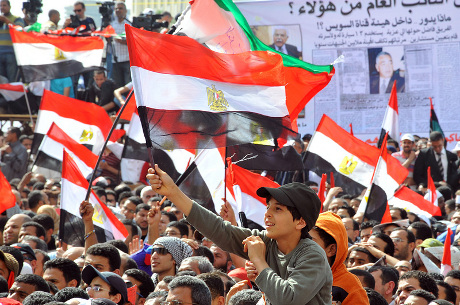
There is no mistaking it. Spend enough time in Egypt and you will soon realize that Egypt to Egyptians is special – something that must be protected, fought over, and loved. “Egypt” is not just a physical territory or the colour of the flag to Egyptians, but can be better viewed through the lens of an abstract ideal, and that was all prevalent well before there was ever something called the 25 January 2011 Revolution, which has since sent the bond between Egyptians and Egypt into over-drive.
Often linked to the ideology and discourse of “natives” who exclude and object to the growing multi-ethnic diversity of a country, nationalism in the Egyptian context is markedly different.
Beth Baron, an academic who works on nationalism and women’s rights explains:
“The nation, according to its proponents, was ‘one family’ descended from the same roots with shared blood. Young men, the foot soldiers of the nation, were its ‘sons,’ and young girls became its ‘daughters.’ At the head of the nationalist movement generally loomed a dominating ‘father’ figure or group of ‘founding fathers.’ Nationalists hoped to replicate the sense of belonging and loyalty experienced within the family on a national scale.”
The “father” figure persona of the leader of the nation could clearly be seen in the rhetoric of Nasser, Sadat, Mubarak, and now Mohamed Morsi. Various idiomatic sentiments within the Egyptian dialect of Arabic, such as, “Whoever drinks from the Nile will always return to it,” and “Egypt is the Mother of the World,” are examples of this surfacing of national pride.
One could argue that Nasser employed his nationalist rhetoric aggressively in the Arab-Israeli wars, but he was doing so in Egypt’s infancy years after colonialism and used the legacy of colonial oppression as a political tool to cement his leadership. On the ground, however, and particularly after the crushing defeat of 1967, there was growing discord, and as historian Derek Hopwood puts it, “there was some feeling that Egypt had suffered enough for the Arabs, and that Egyptians should rely primarily on themselves for their salvation.”
It would be remiss to suggest racism or prejudice does not exist in Egypt – and there is never any justification for that. Yet I would argue this is linked to wider political fear-mongering and suspicion bred from the Arab-Israel conflicts, and before it, colonialism, rather than something inherently sinister or racial like a national superiority complex. It is reactionary rather than pro-active. The good news is that this fear and consequent reaction is dying (literally) as older generations pass on, and their successive generations are children of globalisation who view foreigners with much less suspicion (unless of course you actually believe the president when he blames Egypt’s problems on foreign spies and not his own incompetence).
The question and debate over Egypt’s brand of nationalism is important today because it lies in flux. Perhaps the most celebrated aspect of the 2011 Egyptian Revolution was that it was the true coming together of a nation’s people – indeed the nation itself – morphing from an abstract ideal to a physical reality in Tahrir Square and around the country. Nationalism existed within Egyptian politics before 25 January 2011, but somewhere along the line it was lost. After all, no one for thirty years dared to speak up to the “father.”
But the good news, that Egyptians would do well to remember, particular in hard and frustrating times, is that the course is being corrected. Academics and political analysts have been splitting hairs about what to call January 2011. Some say “revolution” while others prefer “uprising.” I prefer to call it a “national movement,” because it was Egyptian nationalism giving a rebirth to its political child, and that child is now two and a half years old and not happy with the way its father is treating its mother. Egyptians love their country, and that’s a good thing.
The AfricaPaper: AhmedKadryis currently doing his PhD in Arab Cultural Studies at Imperial College London on Egyptiansocio-politicalfeminist identity anddiscourse in the 1952 and 2011 Egyptian Revolutions. He blogshereand tweets@ahmedkadry.